Flashcards · Biology
Material Cycles
-
What are abiotic and biotic components?
Abiotic are the non-living parts of an ecosystem; biotic are the living parts.
-
Why do materials have to be recycled in an ecosystem?
The Earth has a limited supply of matter, so living things must use the same materials again and again.
-
What percentage of the air is carbon dioxide?
About 0.04 percent.
-
Which process takes carbon dioxide out of the air?
Photosynthesis.
-
How does carbon pass from a plant to an animal?
By feeding, in carbon compounds such as carbohydrates and proteins.
-
Name three processes that return carbon dioxide to the air.
Respiration, decay (decomposers' respiration) and combustion.
-
Do plants respire?
Yes, so they put carbon dioxide into the air as well as taking it in.
-
What is a decomposer?
A microorganism, bacteria or fungus, that breaks down dead material and waste.
-
How do decomposers break down dead material?
They release enzymes that break it into small soluble molecules, which they absorb.
-
Why are decomposers important for plants?
They return carbon dioxide and mineral ions to the environment.
-
What would happen without decomposers?
Dead material would pile up and nutrients would stay locked in it.
-
How are fossil fuels formed?
From dead remains that did not fully decay, buried without oxygen, over millions of years.
-
What does combustion do to the carbon cycle?
It releases the carbon in wood or fossil fuels as carbon dioxide.
-
Why is the carbon dioxide level in the air rising?
Burning fossil fuels and deforestation add carbon dioxide faster than it is removed.
-
Why is carbon dioxide a problem in the atmosphere?
It is a greenhouse gas that contributes to global warming.
-
How do you calculate a percentage increase?
Increase divided by the starting value, times 100.
-
Why is the carbon cycle important?
It gives a continuous supply of carbon and keeps the carbon dioxide level balanced.
-
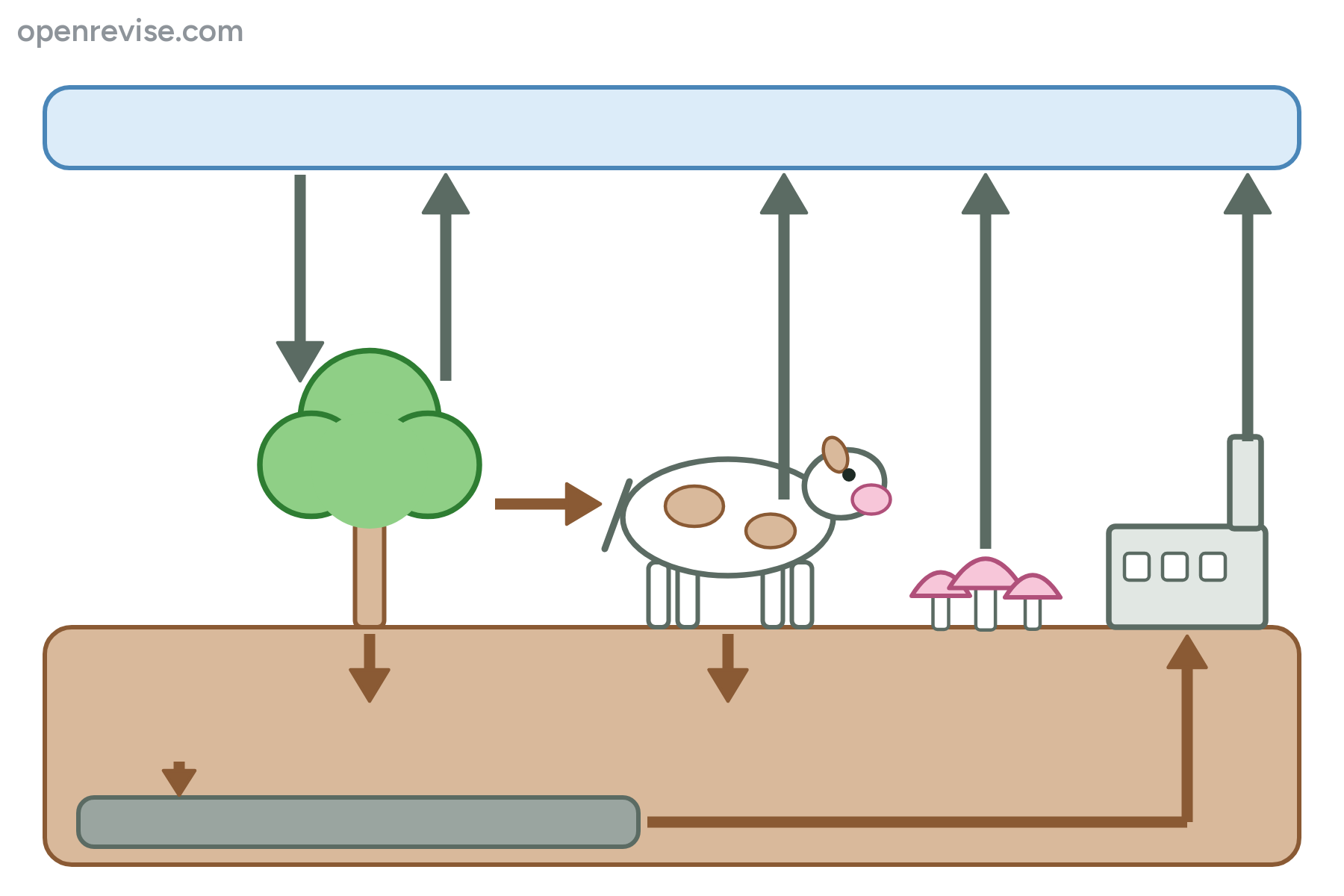 Name each process shown by an arrow in the carbon cycle.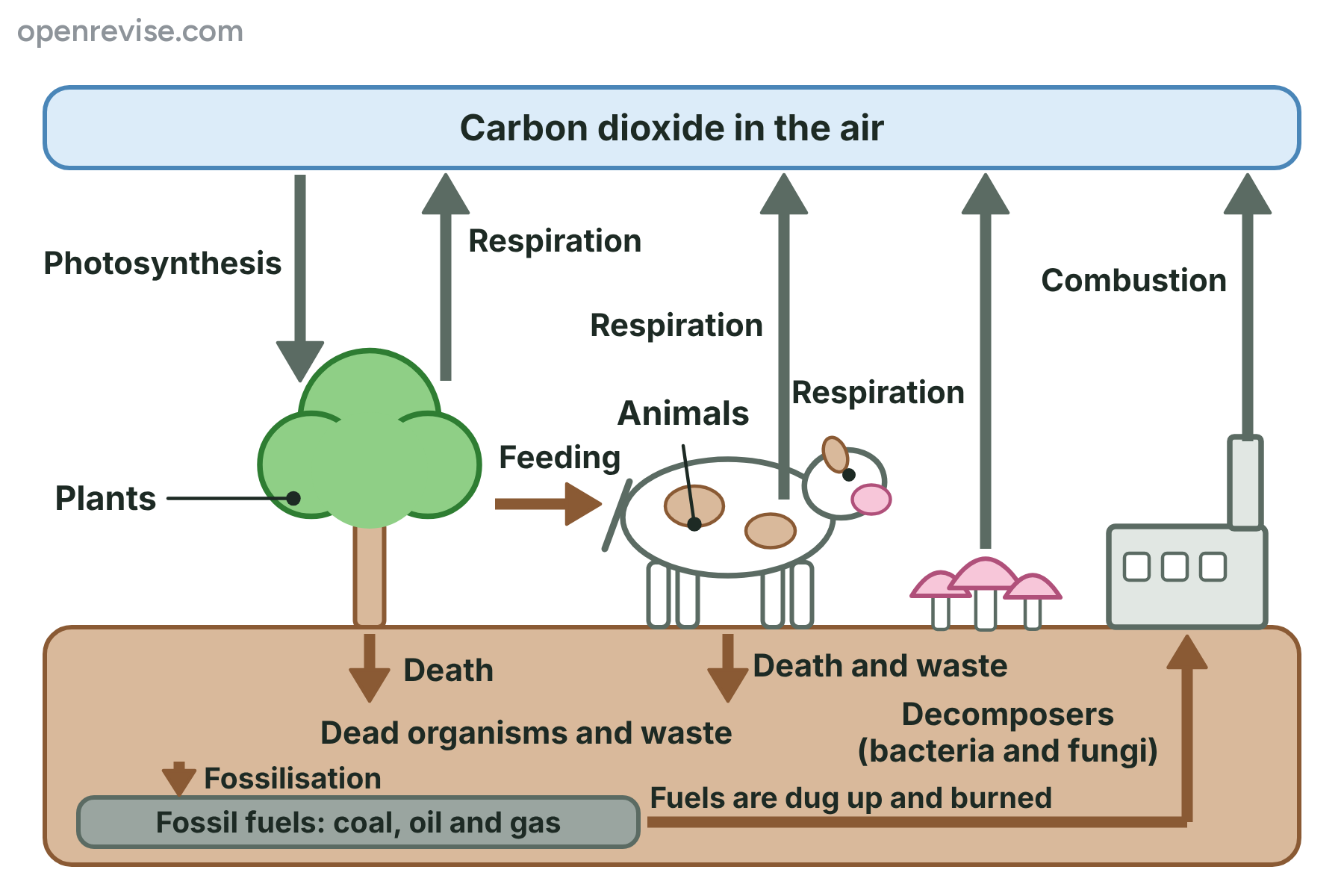
Photosynthesis takes carbon dioxide into plants. Feeding passes carbon to animals. Respiration by plants, animals and decomposers, and combustion, release carbon dioxide. Death and decay return carbon from dead organisms, and fossilisation makes fossil fuels.
-
Which processes add carbon dioxide to the air and which one removes it?
Respiration, decay and combustion add carbon dioxide. Photosynthesis removes it.
-
What powers the water cycle?
Energy from the Sun.
-
What is evaporation?
Liquid water turning into water vapour.
-
What is transpiration?
The loss of water vapour from plant leaves through the stomata.
-
What is condensation?
Water vapour cooling and turning into liquid droplets, forming clouds.
-
What is precipitation?
Rain, snow, sleet or hail falling from clouds.
-
What is run-off?
Water flowing over the land and in rivers back to the sea.
-
Why is rain fresh water, although it comes from the sea?
Evaporation leaves the salts behind.
-
Give two reasons why living things need the water cycle.
It supplies fresh water, and water is needed for cell reactions and photosynthesis.
-
What does potable mean?
Safe to drink.
-
Is potable water the same as pure water?
No. Potable water can contain low levels of dissolved substances; pure water has only water molecules.
-
Name two ways to kill microorganisms in drinking water.
Chlorine, ozone or ultraviolet light (any two).
-
What is the filter bed in water treatment for?
To remove solid particles, using sand and gravel.
-
What is desalination?
Removing the salt from sea water to make potable water.
-
How does distillation make potable water?
Sea water is boiled, and the steam is condensed, leaving the salt behind.
-
How does reverse osmosis make potable water?
Sea water is forced through a partially permeable membrane at high pressure, which keeps the salt out.
-
Give one disadvantage of desalination.
It needs a lot of energy, so it is expensive and may release carbon dioxide.
-
What is left over after desalination?
Very salty brine, which has to be disposed of.
-
Name two other ways of getting water in a drought.
Storing rainwater, recycling waste water, pumping groundwater or piping water in.
-
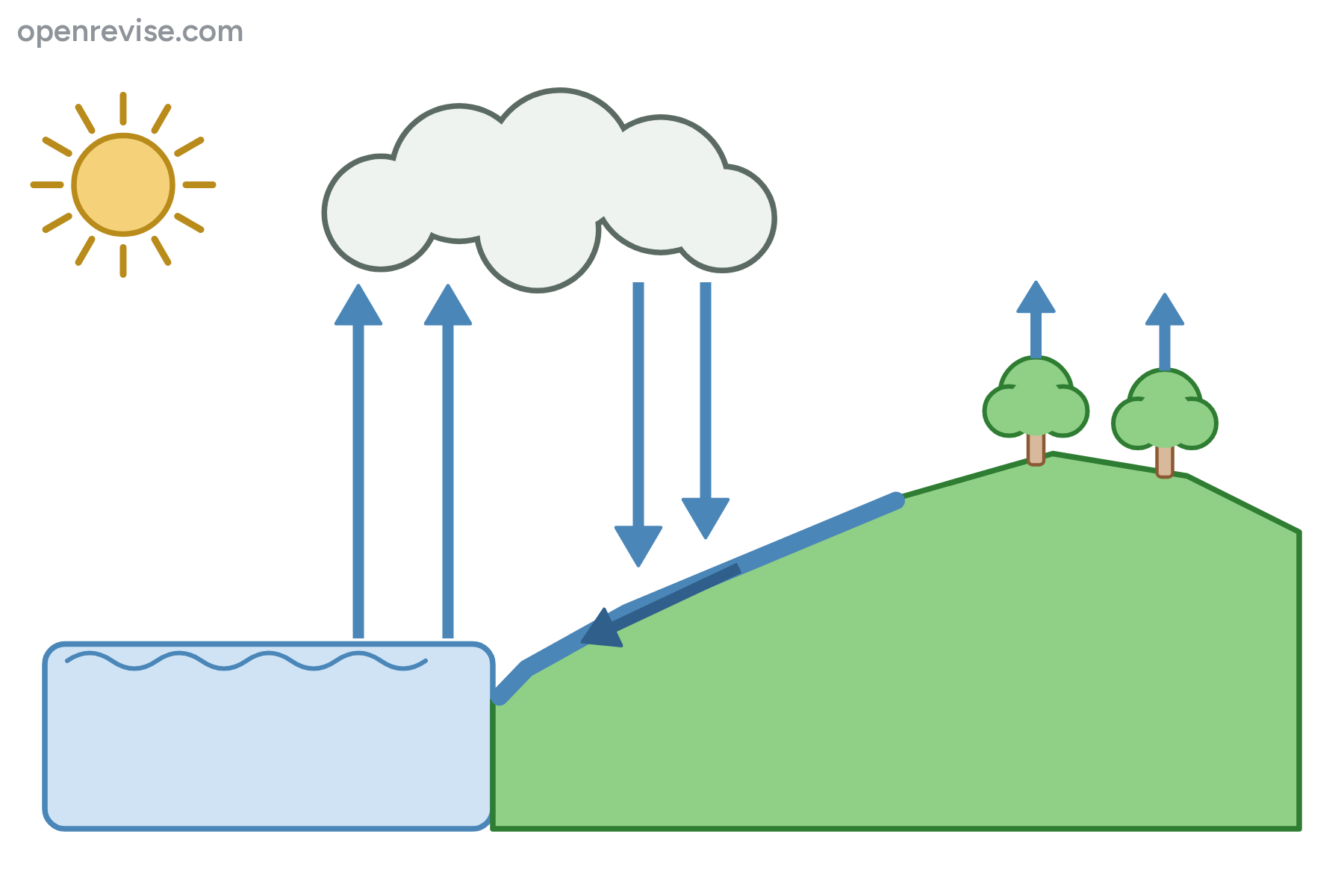 Name each process in the water cycle shown by an arrow.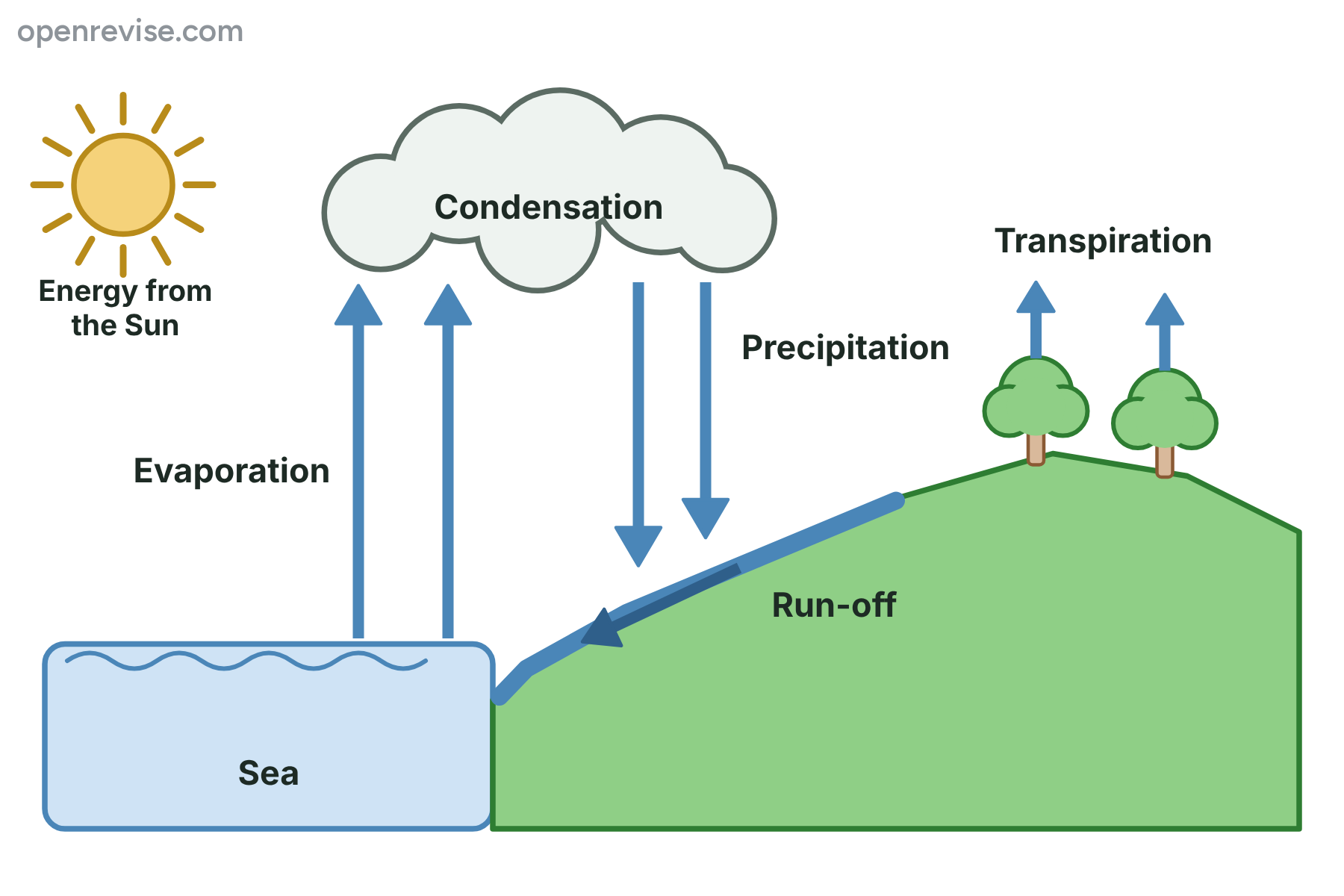
Evaporation from the sea, condensation in the cloud, precipitation from the cloud, run-off down the hill to the sea and transpiration from the trees. The Sun provides the energy.
-
Describe how distillation and reverse osmosis each make potable water from sea water.
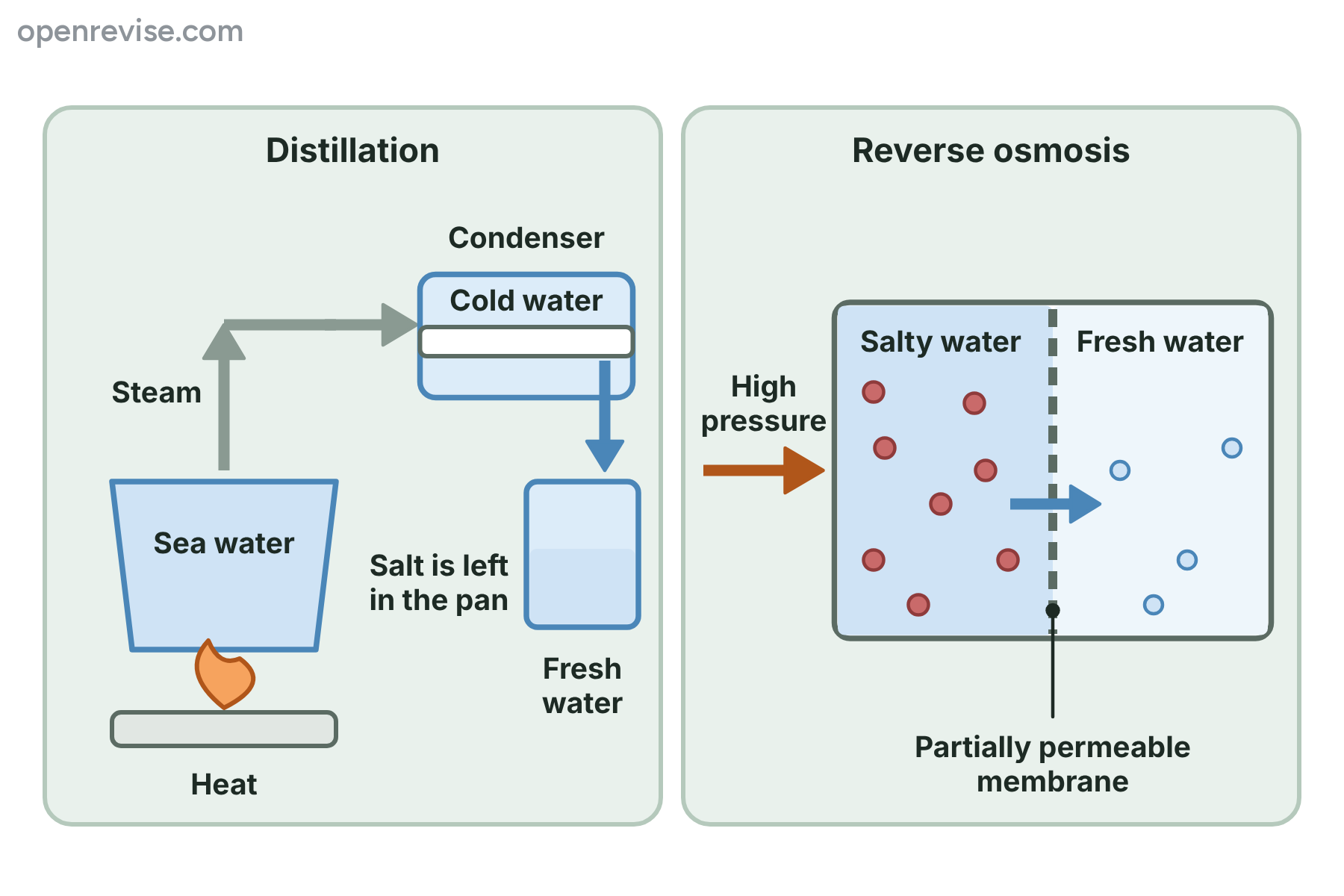
Distillation: the sea water is boiled, the steam is cooled in a condenser to liquid water, and the salt is left behind. Reverse osmosis: the sea water is forced at high pressure through a partially permeable membrane that lets water through but not the salt.
-
What percentage of the air is nitrogen?
About 78 percent.
-
Why can plants not use nitrogen gas from the air?
It is very unreactive, so plants cannot take it in and use it.
-
What do plants make from nitrates?
Amino acids, and then proteins.
-
How do root hair cells take up nitrates?
By active transport.
-
What are the signs of a plant with too few nitrates?
Slow growth and yellow leaves.
-
How do animals get their nitrogen?
By eating plants or other animals.
-
What do nitrogen-fixing bacteria do?
Change nitrogen gas into ammonia and other nitrogen compounds.
-
Where do nitrogen-fixing bacteria live?
In the soil, and in root nodules of legumes.
-
What do decomposers do in the nitrogen cycle?
Break down proteins and urea in dead material and waste, releasing ammonium compounds.
-
What do nitrifying bacteria do?
Change ammonium compounds into nitrates.
-
What do denitrifying bacteria do?
Change nitrates into nitrogen gas.
-
Why does waterlogged soil lose nitrates?
Denitrifying bacteria thrive where oxygen is scarce and turn nitrates into nitrogen gas.
-
How does lightning make nitrates?
It makes nitrogen and oxygen combine into nitrogen oxides, which dissolve in rain as nitrates.
-
Why do farmers add fertilisers?
To replace the nitrates removed when crops are harvested.
-
What is a problem with too much fertiliser?
It is washed into rivers and lakes and can cause eutrophication.
-
What is crop rotation?
Growing a different crop each year, in a repeating order.
-
Why include a legume in a crop rotation?
Its root nodule bacteria fix nitrogen, which adds nitrates to the soil.
-
Name two legumes.
Peas, beans or clover.
-
What is mutualism between a legume and its bacteria?
The plant gives sugars to the bacteria and the bacteria give nitrogen compounds to the plant.
-
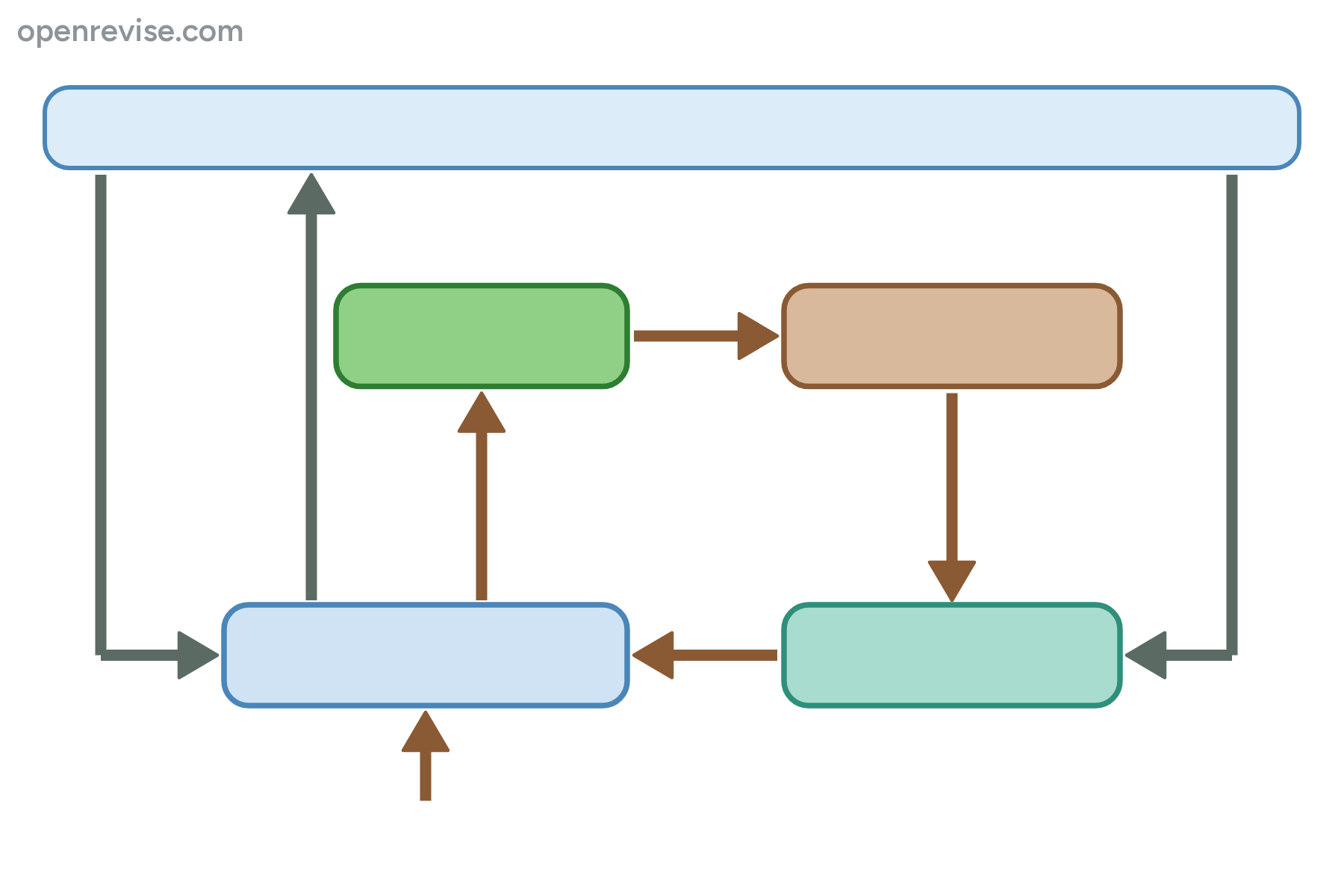 Name each box and each bacterium shown in the nitrogen cycle.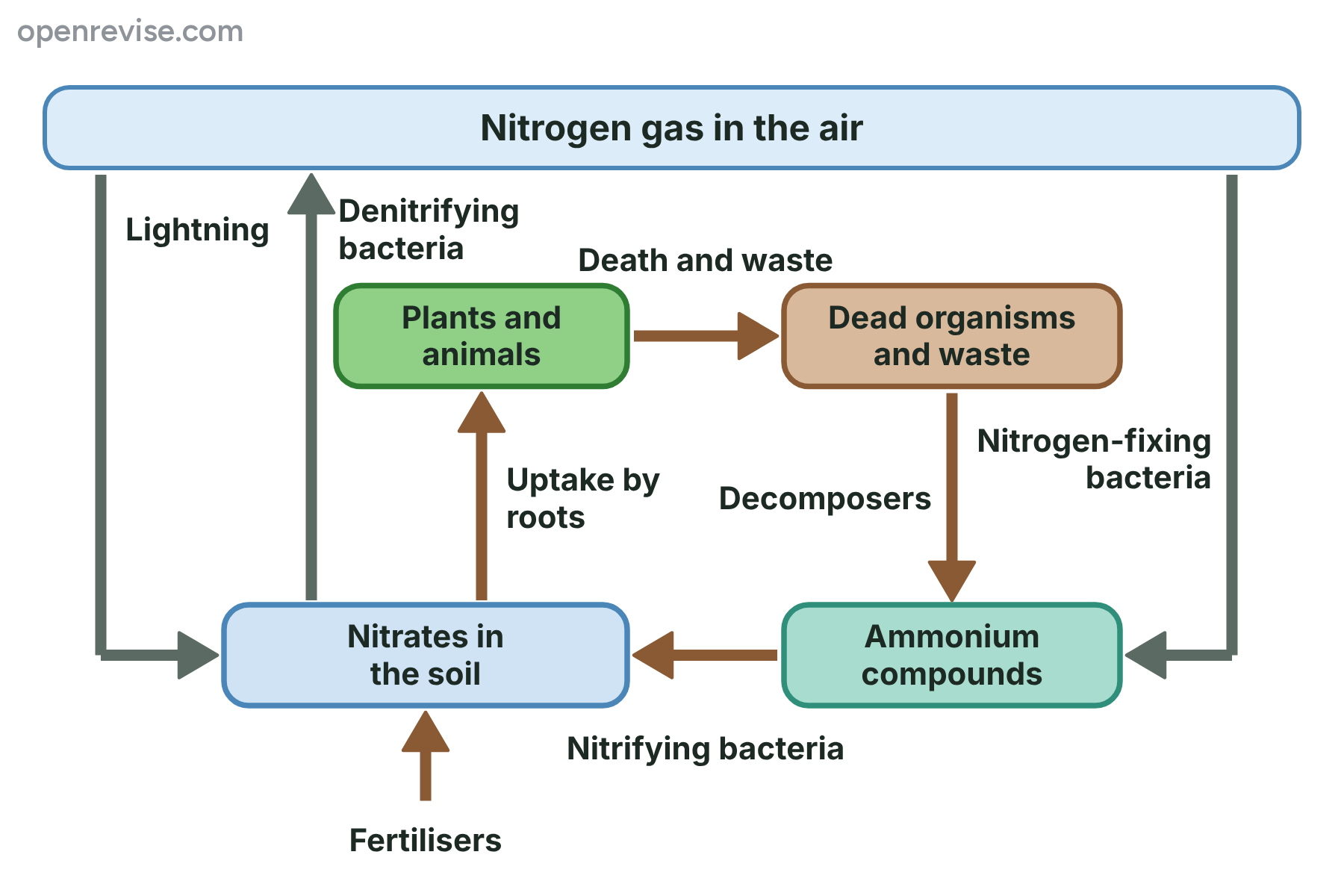
The ring is plants and animals, dead organisms and waste, ammonium compounds and nitrates. Decomposers make ammonium compounds, nitrifying bacteria make nitrates, plants take up nitrates, denitrifying bacteria return nitrogen to the air, and nitrogen-fixing bacteria and lightning bring it from the air.
-
Which bacteria make nitrates, and which remove them?
Nitrifying bacteria make nitrates from ammonium compounds. Denitrifying bacteria remove nitrates by changing them to nitrogen gas.
-
Which three factors affect the rate of decomposition?
Temperature, water content and oxygen availability.
-
Why does decay speed up as the temperature rises?
The enzymes of the decomposers work faster, until the optimum temperature.
-
Why do very high temperatures stop decay?
The decomposers' enzymes are denatured and the microorganisms are killed.
-
Why do decomposers need water?
Their enzymes work in solution and they absorb nutrients dissolved in water.
-
Why do decomposers need oxygen?
Most respire aerobically, which releases the most energy for growth.
-
Why does a fridge slow down food spoilage?
At about 1 to 5 degrees Celsius the enzymes of microorganisms work slowly.
-
Why does a freezer stop food spoilage?
The water is frozen, so the microorganisms cannot grow.
-
How does drying preserve food?
It removes the water that the microorganisms need.
-
How do salt and sugar preserve food?
Water leaves the microorganisms by osmosis, so they dry out.
-
How does vacuum packing preserve food?
It removes oxygen, so aerobic microorganisms cannot respire.
-
Why are cans heated and sealed?
Heating kills the microorganisms, and the seal keeps out oxygen and new microorganisms.
-
What is compost?
Rotted plant waste, made by decomposers, that is spread on soil.
-
Why does a compost heap get warm?
The decomposers respire, which releases heat.
-
How wet should a compost heap be?
As damp as a squeezed sponge.
-
Why does a waterlogged compost heap rot slowly and smell?
The water drives out the air, so only slow anaerobic decay takes place.
-
Why is a compost heap turned?
To let air in, so the decomposers respire aerobically.
-
Why chop up waste for compost?
A larger surface area lets the decomposers work faster.
-
Give the formula for the rate of decay.
Change in mass divided by time taken.
-
Give the formula for the percentage loss of mass.
(Starting mass minus final mass) divided by starting mass, times 100.
-
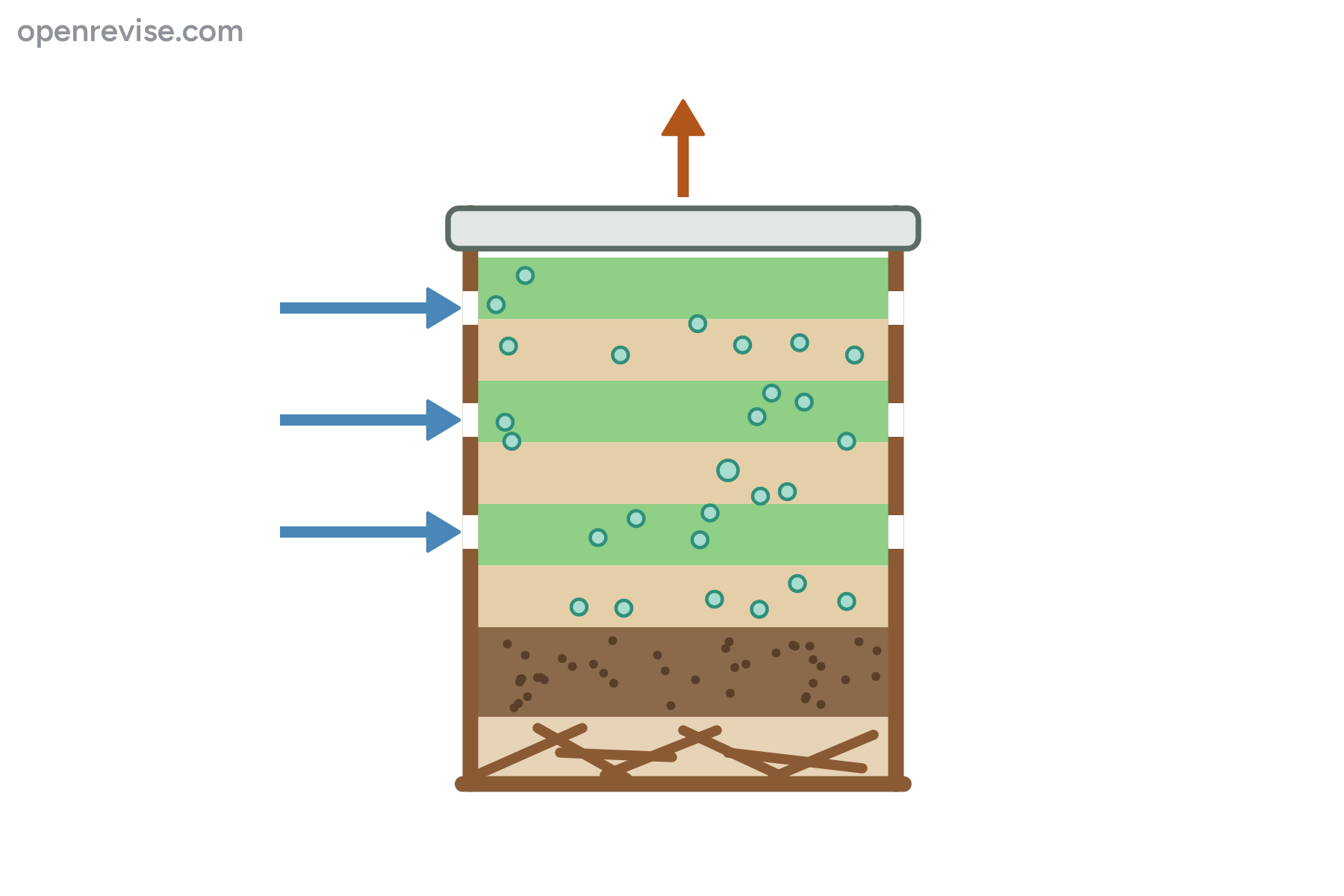 Label the compost bin and say what each feature does for the decomposers.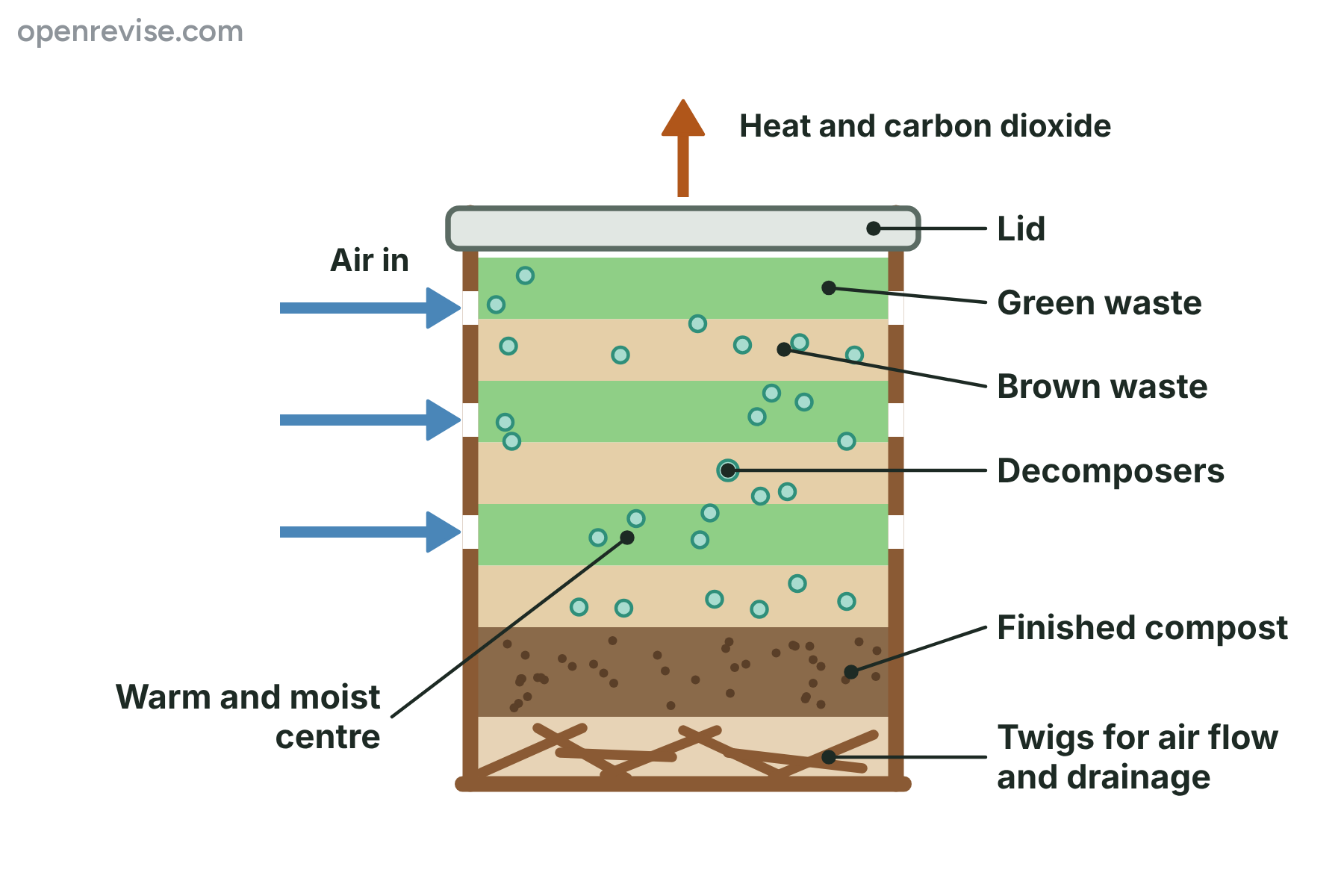
The lid keeps in heat and moisture. Air in through the slots gives the decomposers oxygen. Green and brown waste give food, and the twigs let air in and water drain. The decomposers respire, which releases heat and carbon dioxide.
-
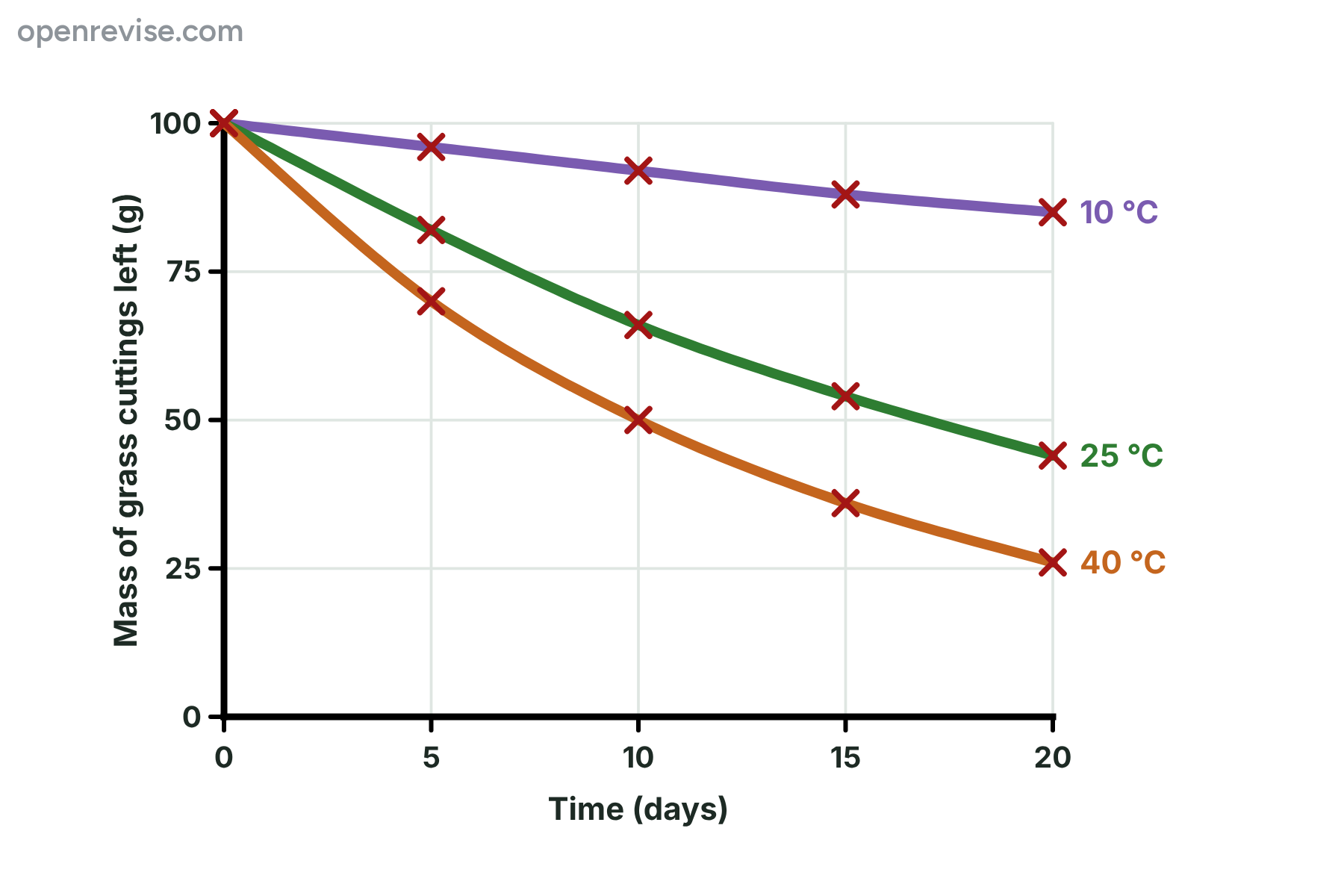 Compare the rates of decay at the three temperatures and explain the pattern.
 Decay is fastest at 40 degrees Celsius, then 25, and slowest at 10. Warmer conditions make the enzymes of the decomposers work faster, so the mass falls faster.