Flashcards · Biology
Exchange and Transport in Animals
-
What is surface area to volume ratio?
The surface area of an object divided by its volume.
-
What happens to the surface area to volume ratio as an object gets bigger?
It gets smaller.
-
A cube has sides of 2 cm. What is its surface area?
6 × (2 × 2) = 24 cm².
-
A cube has sides of 2 cm. What is its volume?
2 × 2 × 2 = 8 cm³.
-
What is the surface area to volume ratio of a 2 cm cube?
24 ÷ 8 = 3, so 3:1.
-
Why can a single-celled organism manage without a transport system?
It has a large surface area to volume ratio, so diffusion across its surface meets all its needs.
-
Why can't diffusion alone supply the cells of a large animal?
The surface area to volume ratio is small and the distances are long, so diffusion is far too slow.
-
Why do multicellular organisms need exchange surfaces?
Their body surface is too small for their volume, so they need specialised surfaces to swap materials quickly.
-
Name the four features of an effective exchange surface.
Large surface area, thin membrane, efficient blood supply (in animals) and ventilation (in animals, for gas exchange).
-
Why does a thin membrane help exchange?
It gives a short diffusion path.
-
Why does a blood supply help exchange?
It carries substances away, keeping the concentration gradient steep.
-
What are villi, and what do they do?
Finger-like folds in the small intestine wall that give a large surface area for absorbing digested food.
-
What is an alveolus?
A tiny air sac in the lungs where oxygen and carbon dioxide are exchanged.
-
How are the lungs ventilated?
By breathing, which moves fresh air in and stale air out.
-
How is a fish's gill adapted for gas exchange?
Many thin gill filaments give a large surface area, with a rich blood supply and water flowing over them.
-
How does a root hair cell help a plant?
Its long thin extension gives a large surface area for taking up water and mineral ions.
-
How are leaves adapted for gas exchange?
They are flat and thin, with air spaces inside giving a large surface area, and stomata to let gases in and out.
-
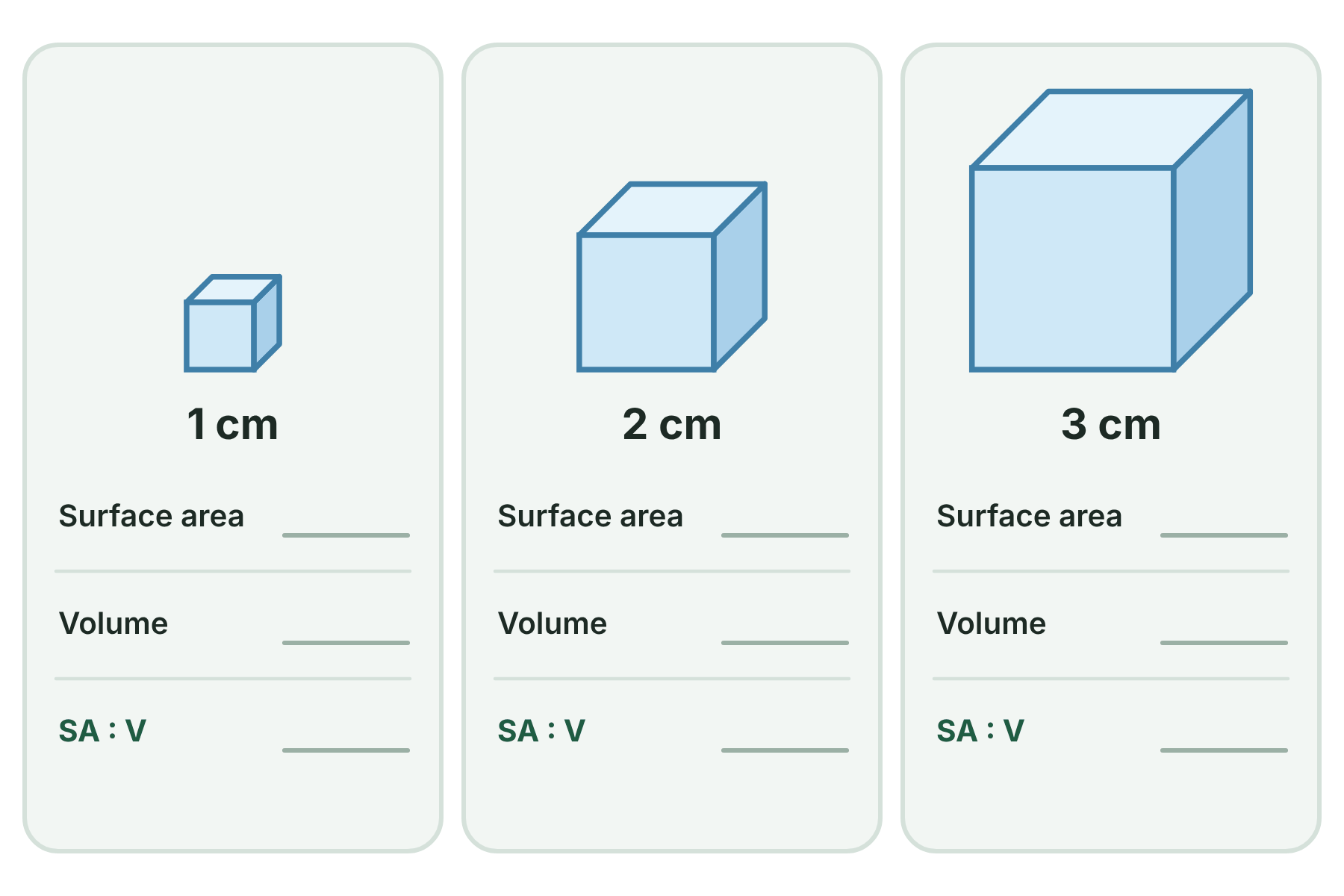 Work out the surface area to volume ratio of each cube.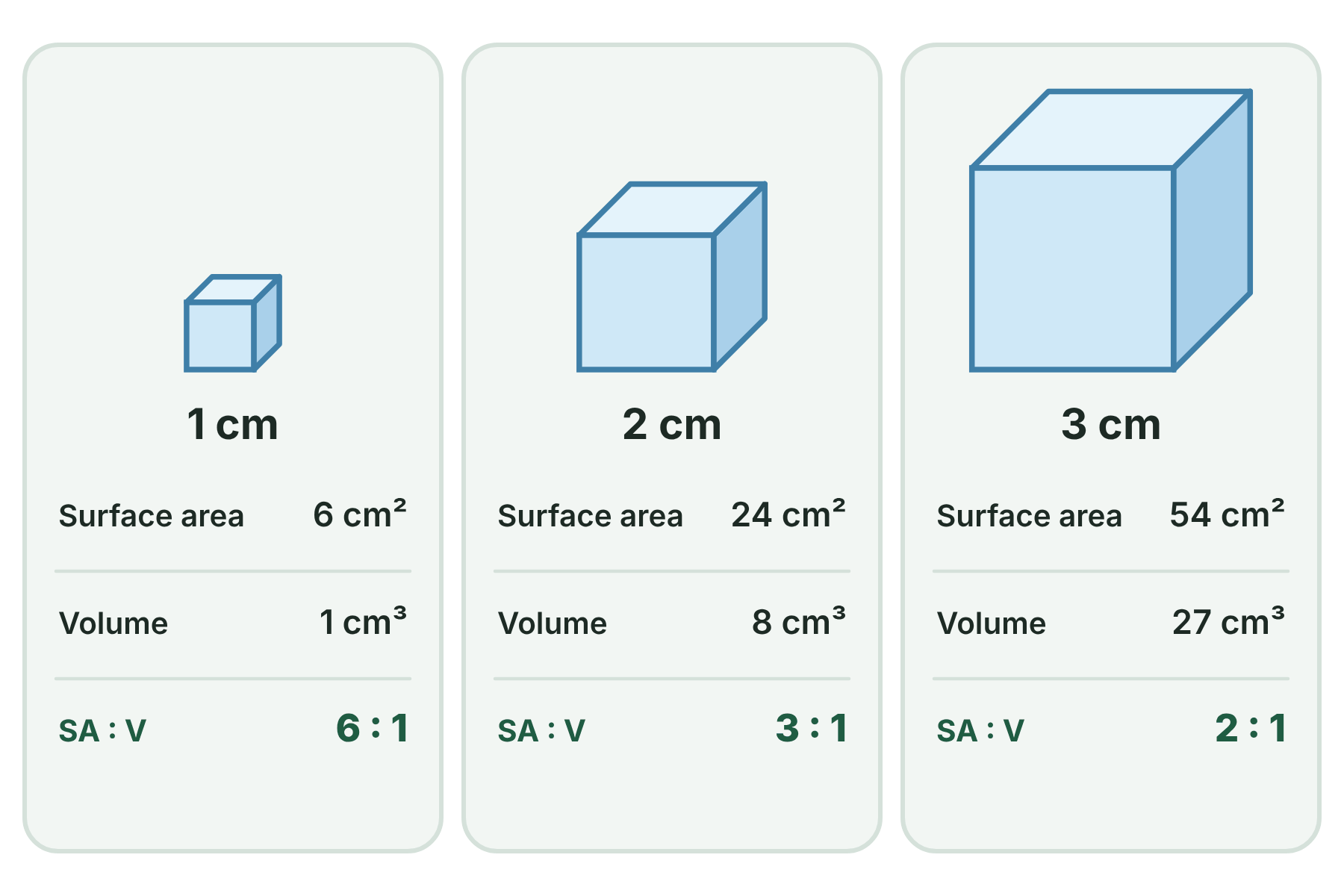
Surface areas 6, 24 and 54 cm². Volumes 1, 8 and 27 cm³. Ratios 6:1, 3:1 and 2:1. The ratio falls as the cube gets bigger.
-
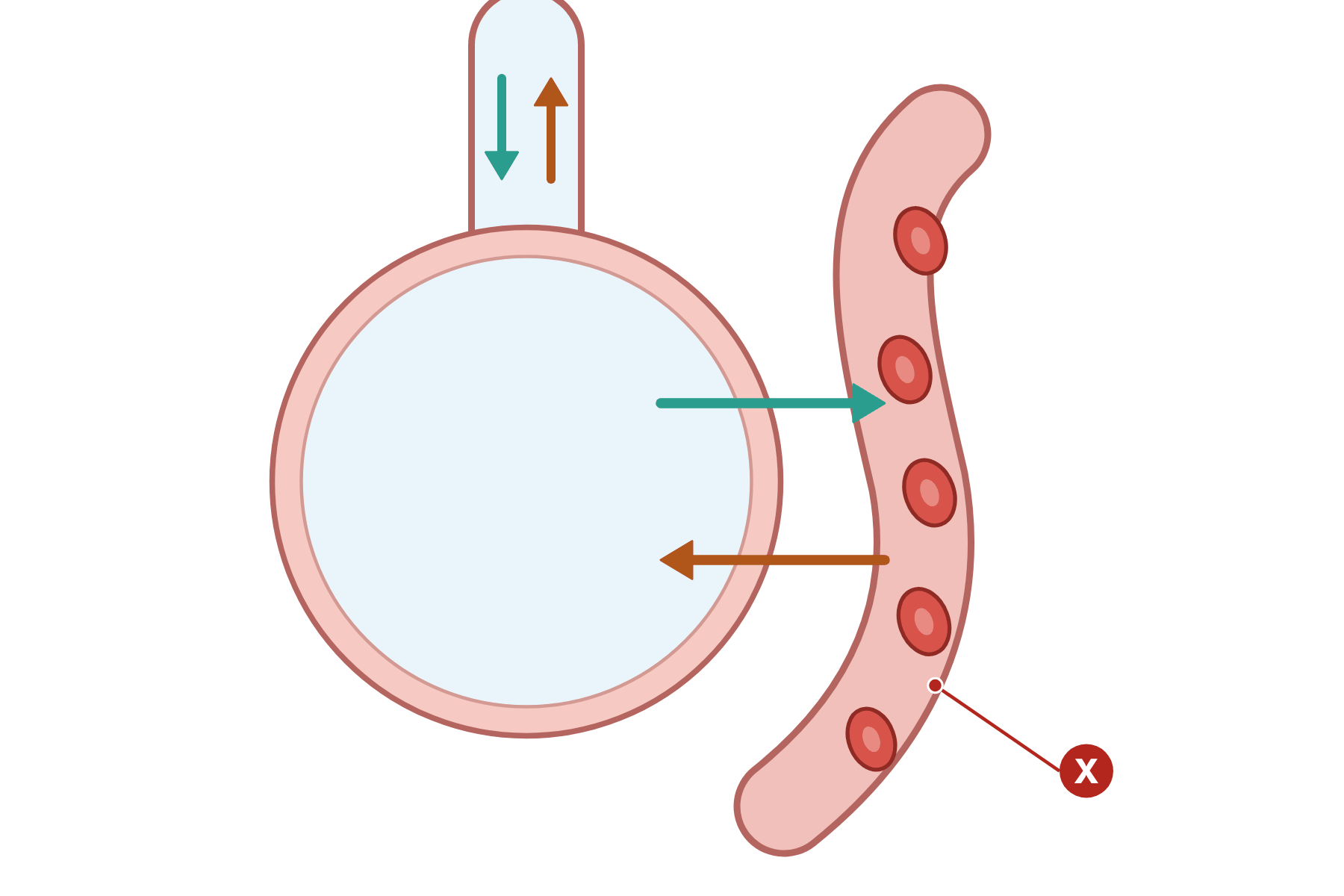 Name the structure marked X in this lung and say how it helps gas exchange.
 A capillary. It carries a rich blood supply that takes oxygen away and brings carbon dioxide, keeping the concentration gradient steep.
-
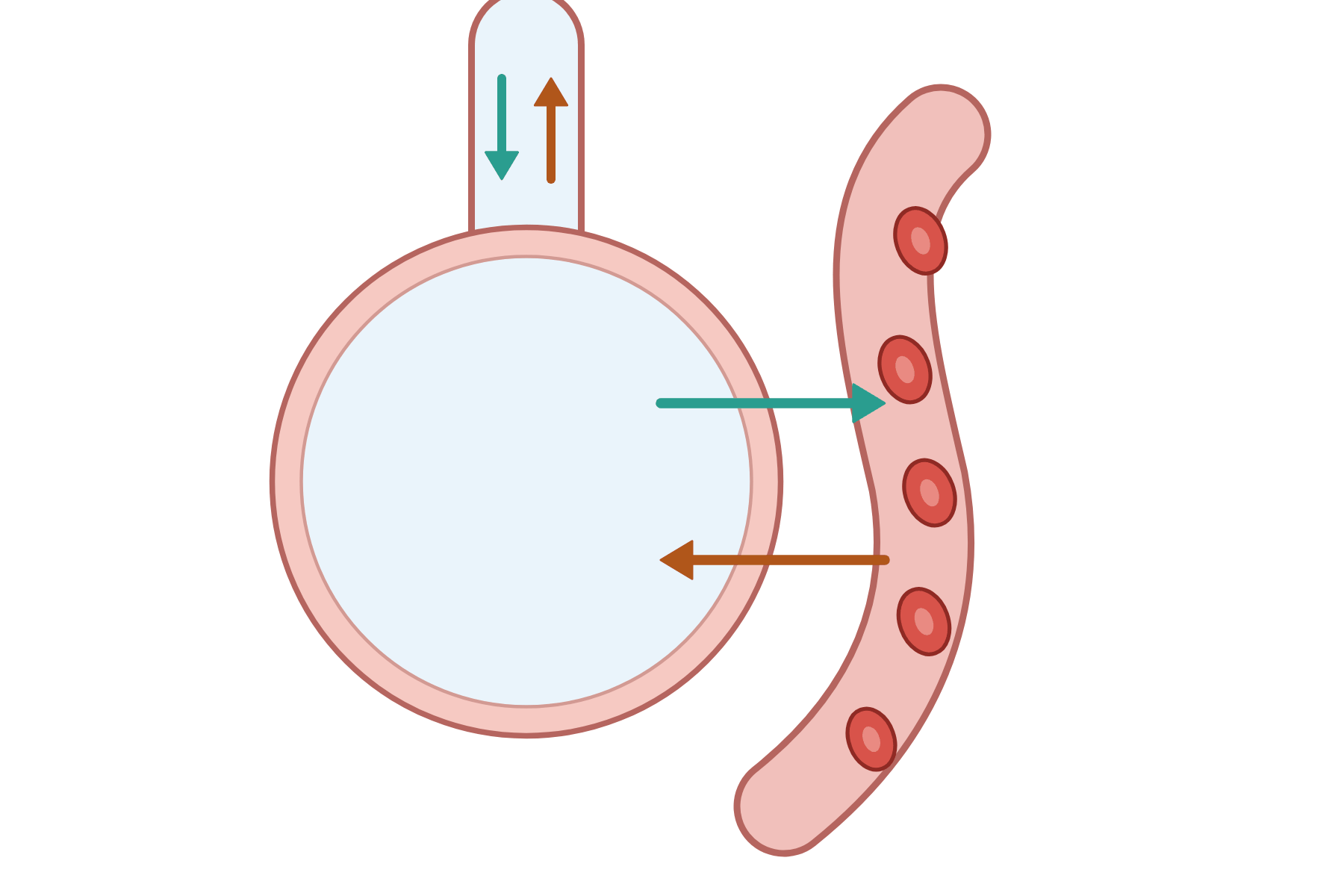 Label every part of this gas exchange surface.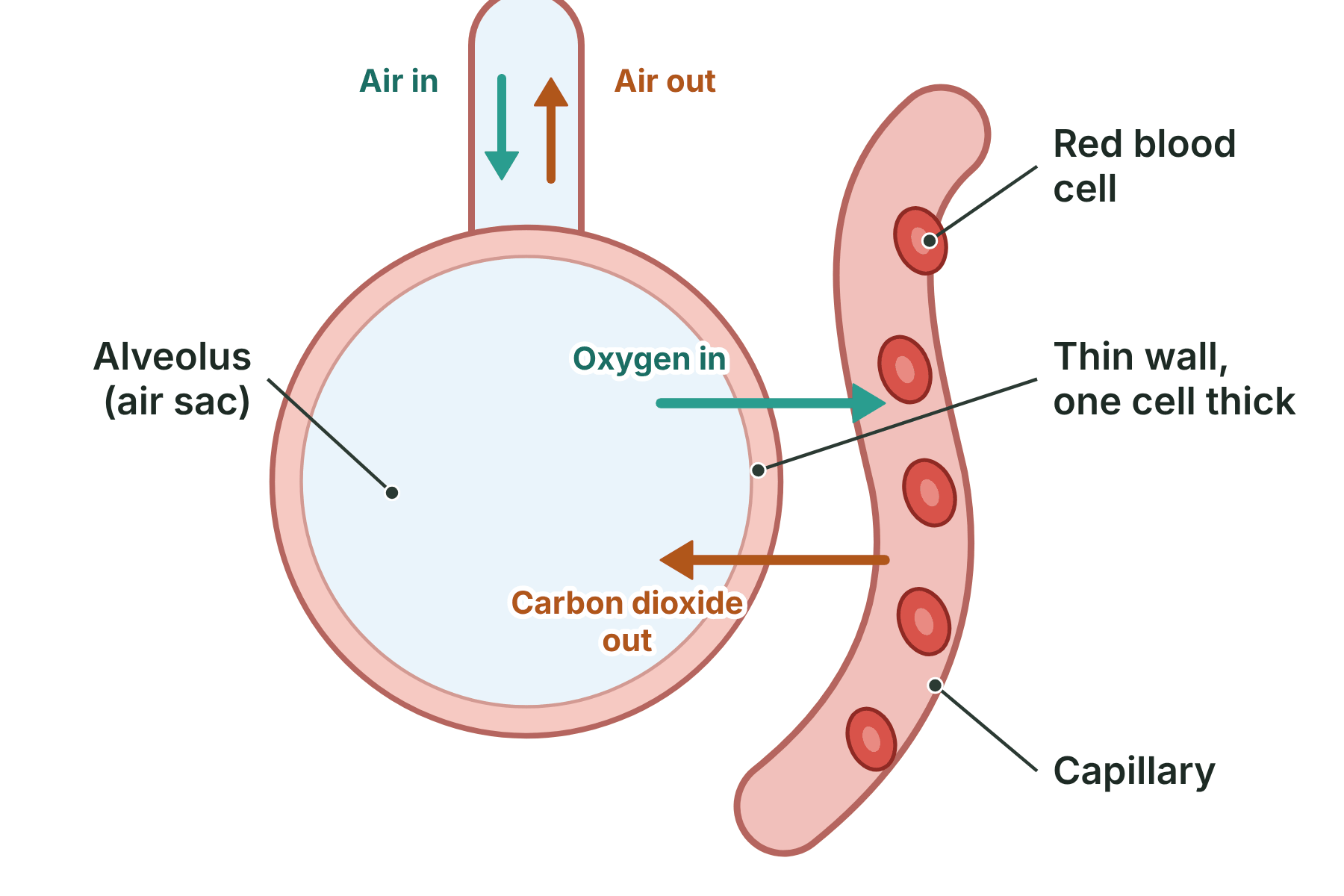
Alveolus, thin wall one cell thick, capillary, red blood cells, oxygen in, carbon dioxide out, air in and air out.
-
What is the heart?
An organ that pumps blood around the body in a double circulatory system.
-
Which chamber receives blood from the vena cava?
The right atrium.
-
Which chamber pumps blood to the lungs?
The right ventricle.
-
Which chamber pumps blood to the body?
The left ventricle.
-
Why is the wall of the left ventricle thicker than the right?
It has to pump blood around the whole body, so it needs more force.
-
What does the aorta carry?
Oxygenated blood from the left ventricle to the body.
-
What does the pulmonary artery carry?
Deoxygenated blood from the right ventricle to the lungs.
-
What does the pulmonary vein carry?
Oxygenated blood from the lungs to the left atrium.
-
What do the coronary arteries do?
They supply the heart muscle with oxygenated blood.
-
Why is it called a double circulatory system?
Blood goes through the heart twice on each complete trip round the body.
-
Why is blood returned to the heart after the lungs?
It loses pressure in the lung capillaries, so the heart gives it a new push to the body.
-
Where is the natural pacemaker?
In a group of cells in the right atrium.
-
What does an artificial pacemaker do?
It sends electrical pulses to the heart to correct an irregular heartbeat.
-
How do you work out a heart rate from a count in 15 seconds?
Multiply the count by 4 to get beats per minute.
-
Do you need to know the names of the heart valves?
No. They are not required.
-
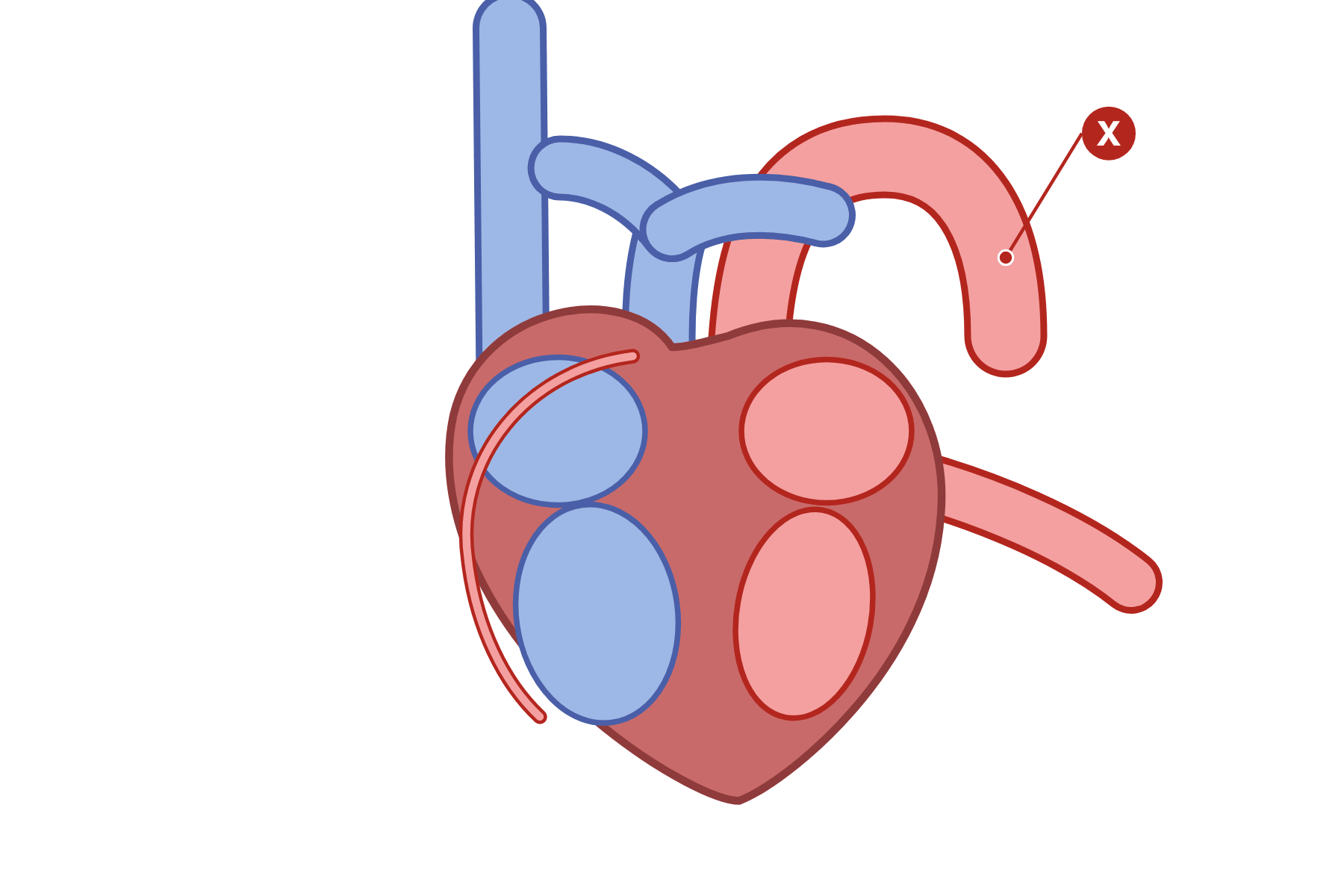 Name the vessel marked X and say what it carries.
 The aorta. It carries oxygenated blood from the left ventricle to the body.
-
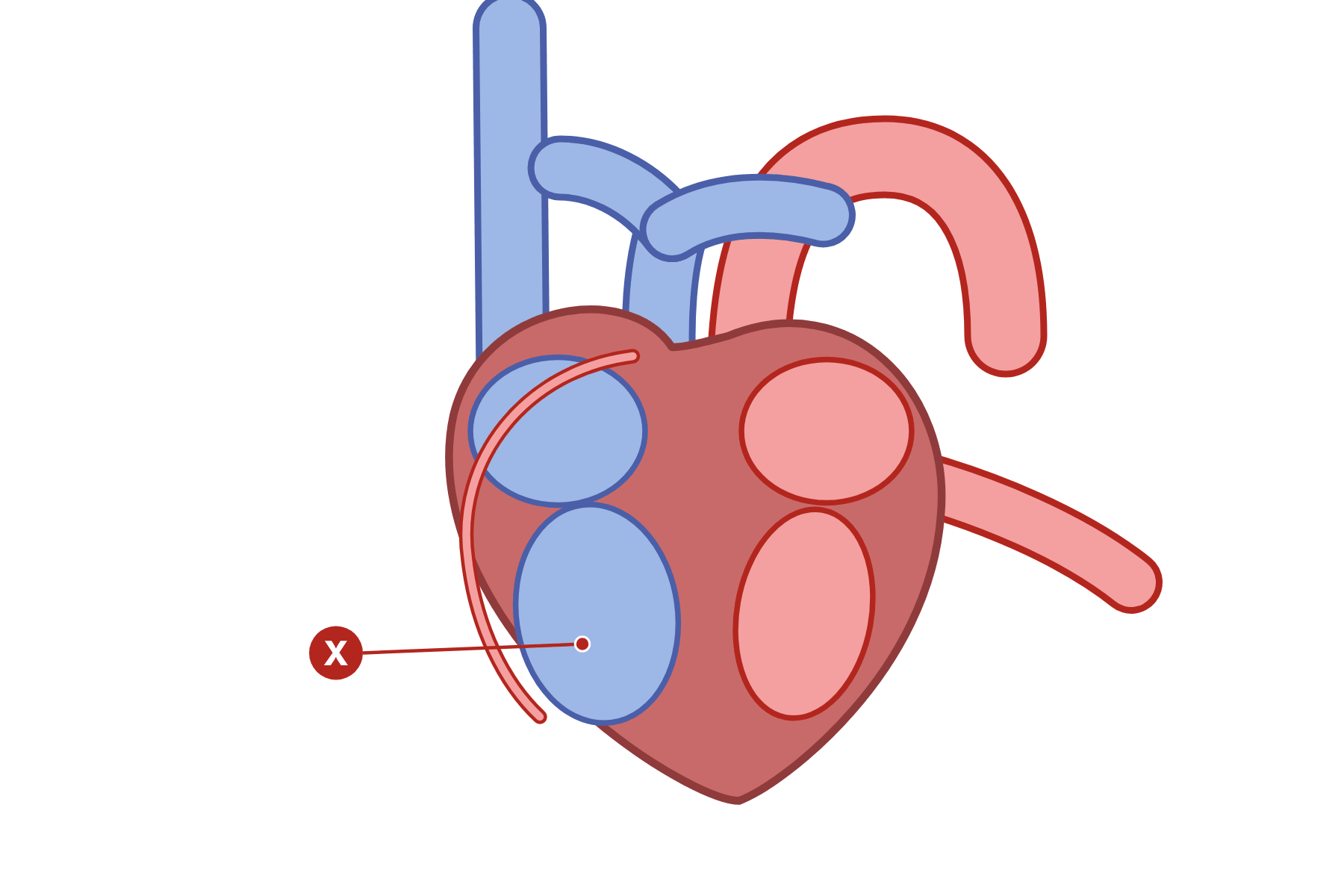 Name the chamber marked X and say where it pumps blood.
 The right ventricle. It pumps deoxygenated blood to the lungs along the pulmonary artery.
-
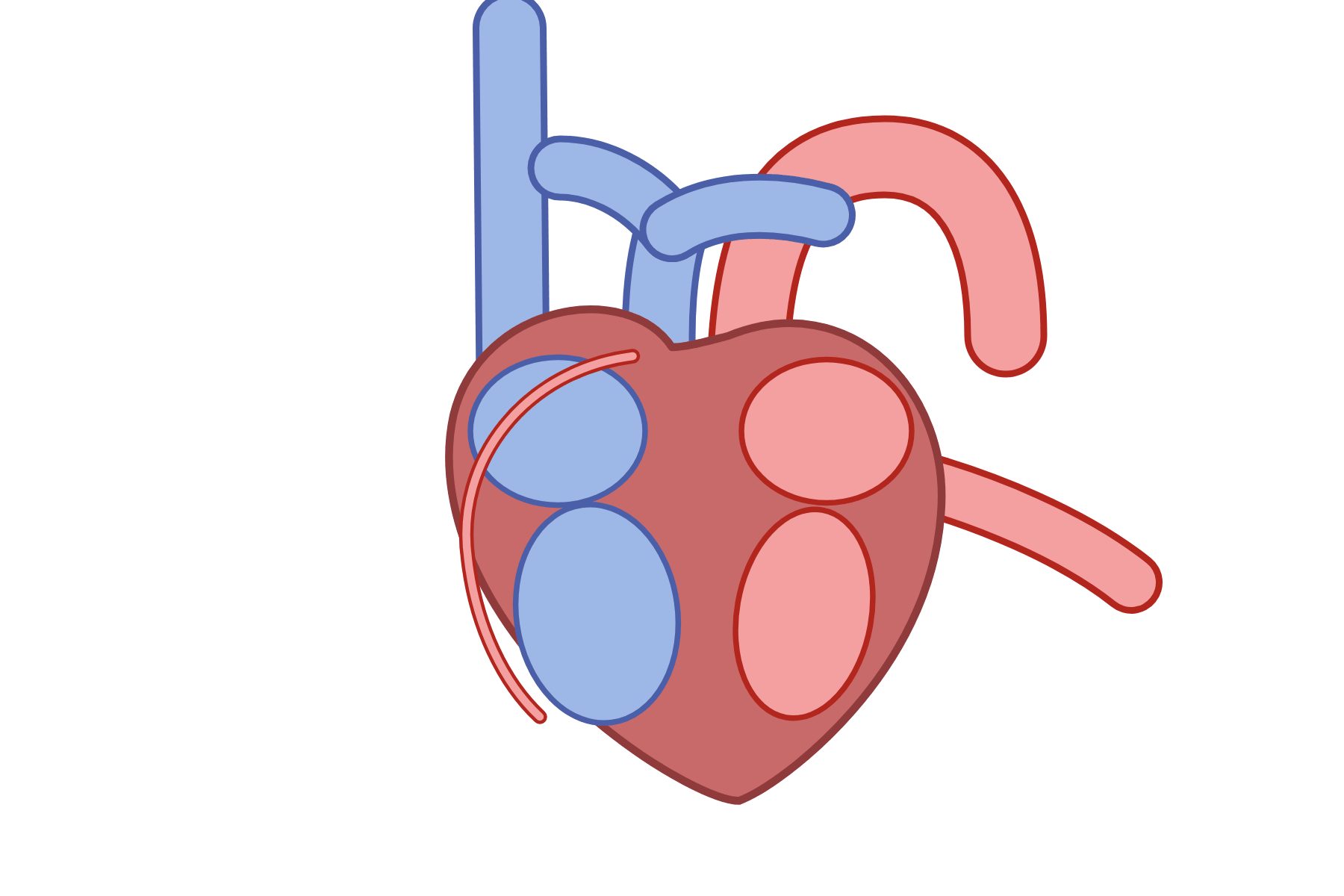 Label every part of the heart.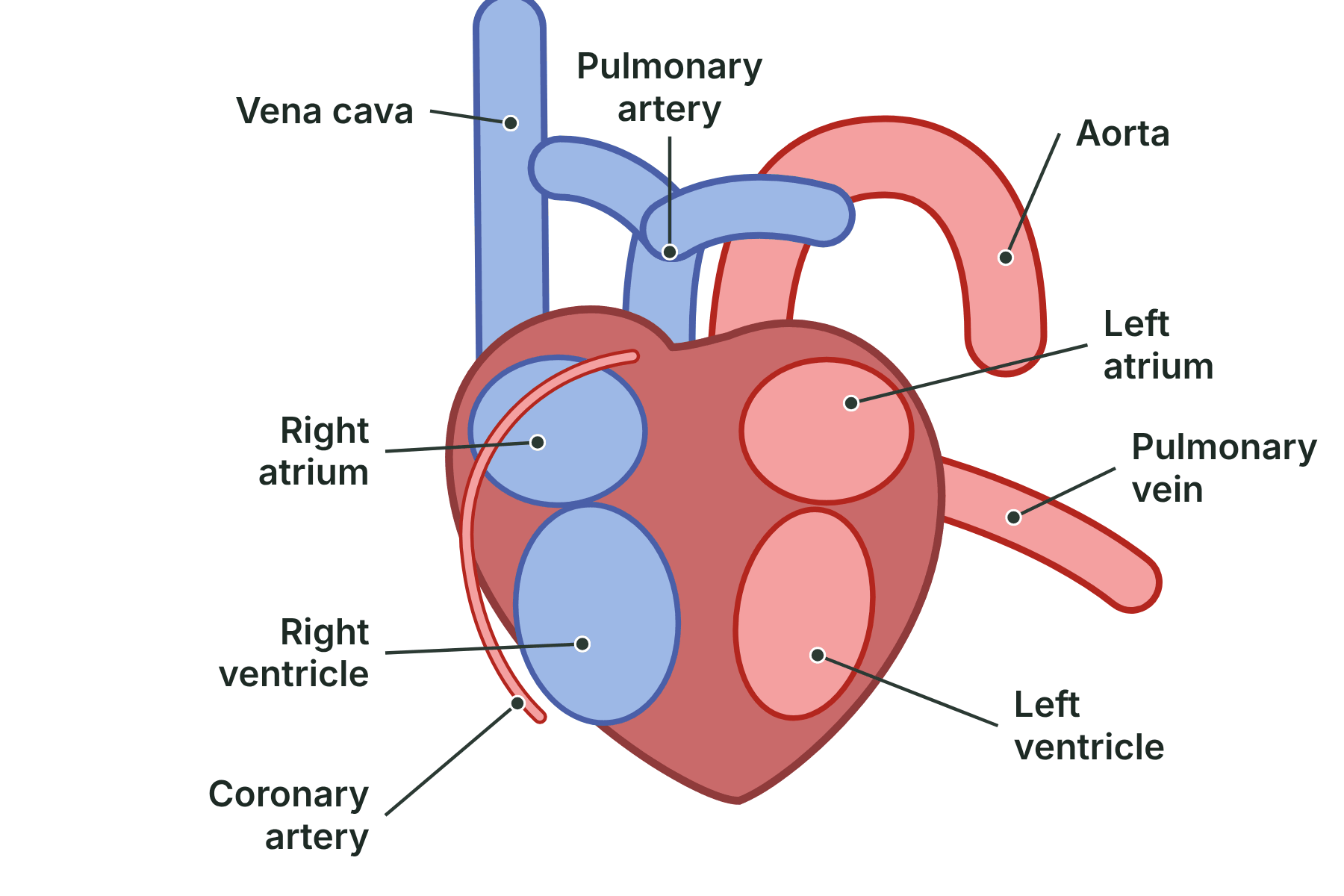
Right atrium, right ventricle, left atrium, left ventricle, vena cava, aorta, pulmonary artery, pulmonary vein and coronary artery.
-
What is an artery?
A vessel that carries blood away from the heart.
-
What is a vein?
A vessel that carries blood back to the heart.
-
What is a capillary?
A tiny vessel with a wall one cell thick, where exchange happens.
-
Why do arteries have thick walls?
The blood is at high pressure, so the walls must be strong and able to stretch and recoil.
-
What are in an artery wall to help it stretch?
Muscle and elastic fibres.
-
Why do veins have valves?
To stop the low-pressure blood flowing backwards.
-
Why is a vein's lumen wide?
It gives less resistance to the flow of low-pressure blood.
-
Why is a capillary wall only one cell thick?
It gives a short diffusion path for exchanging substances.
-
Why do capillaries form huge networks?
They give a large surface area for exchange with the cells.
-
Does an artery always carry oxygenated blood?
No. The pulmonary artery carries deoxygenated blood to the lungs.
-
Does a vein always carry deoxygenated blood?
No. The pulmonary vein carries oxygenated blood from the lungs.
-
What is the formula for rate of blood flow?
Rate = volume of blood ÷ time.
-
600 cm³ of blood flows through a vessel in 2 minutes. What is the rate?
600 ÷ 2 = 300 cm³ per minute.
-
Which vessel type can you feel a pulse in?
An artery.
-
Why does blood move slowly through capillaries?
It gives more time for substances to diffuse.
-
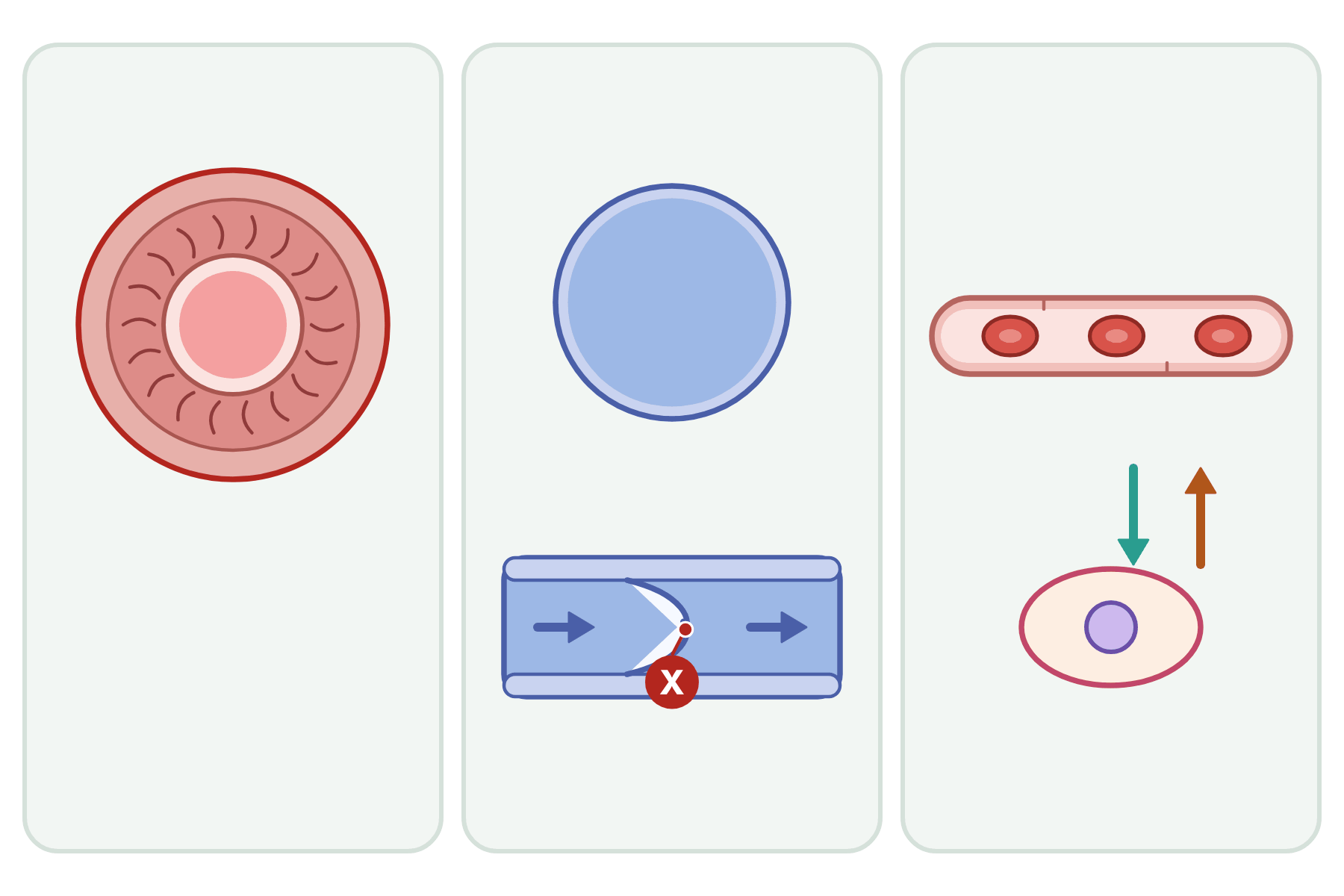 Name the vessel marked X and say how its structure suits its job.
 A valve in a vein. It closes to stop blood flowing backwards, because the blood is at low pressure.
-
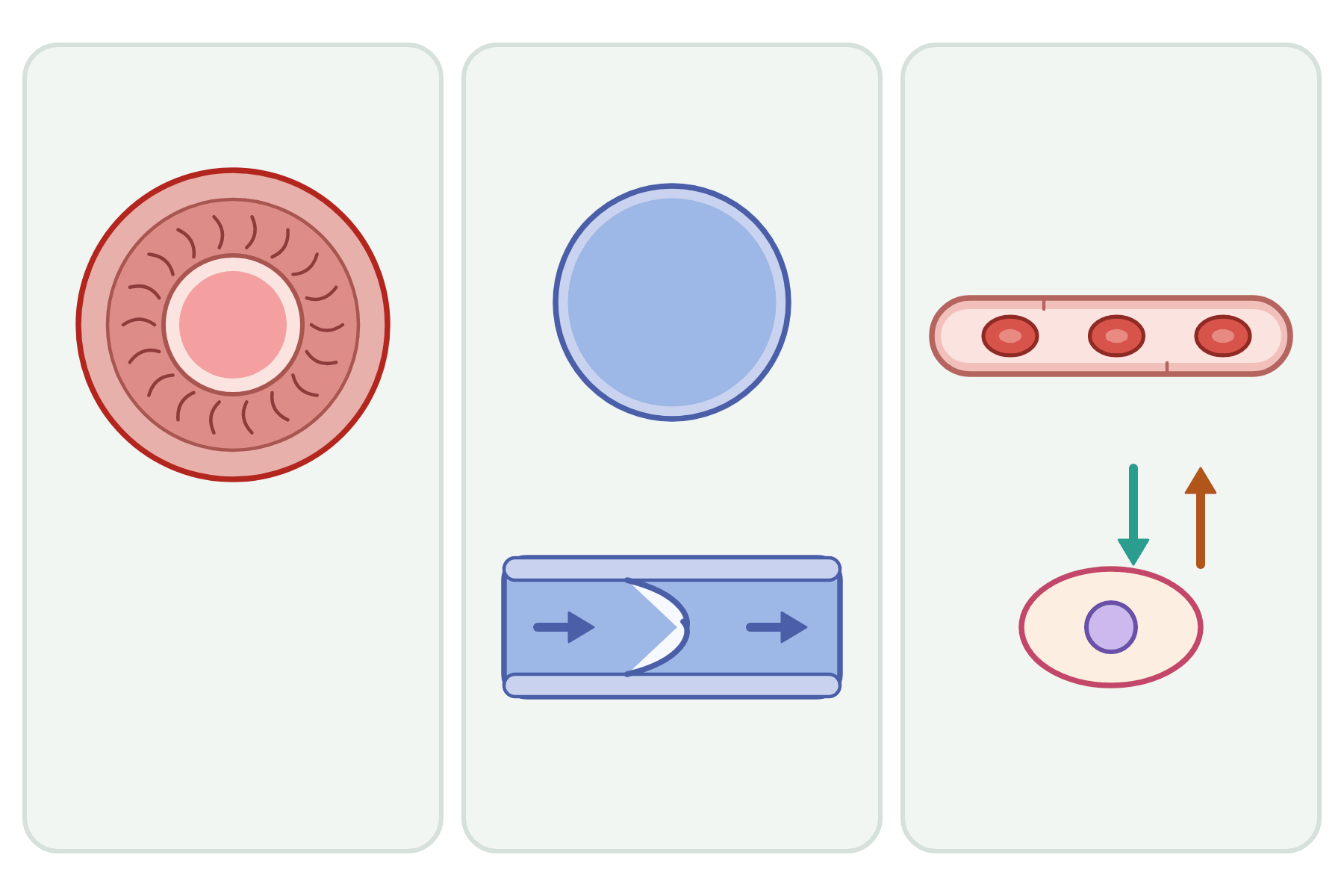 Label the three blood vessels and their features.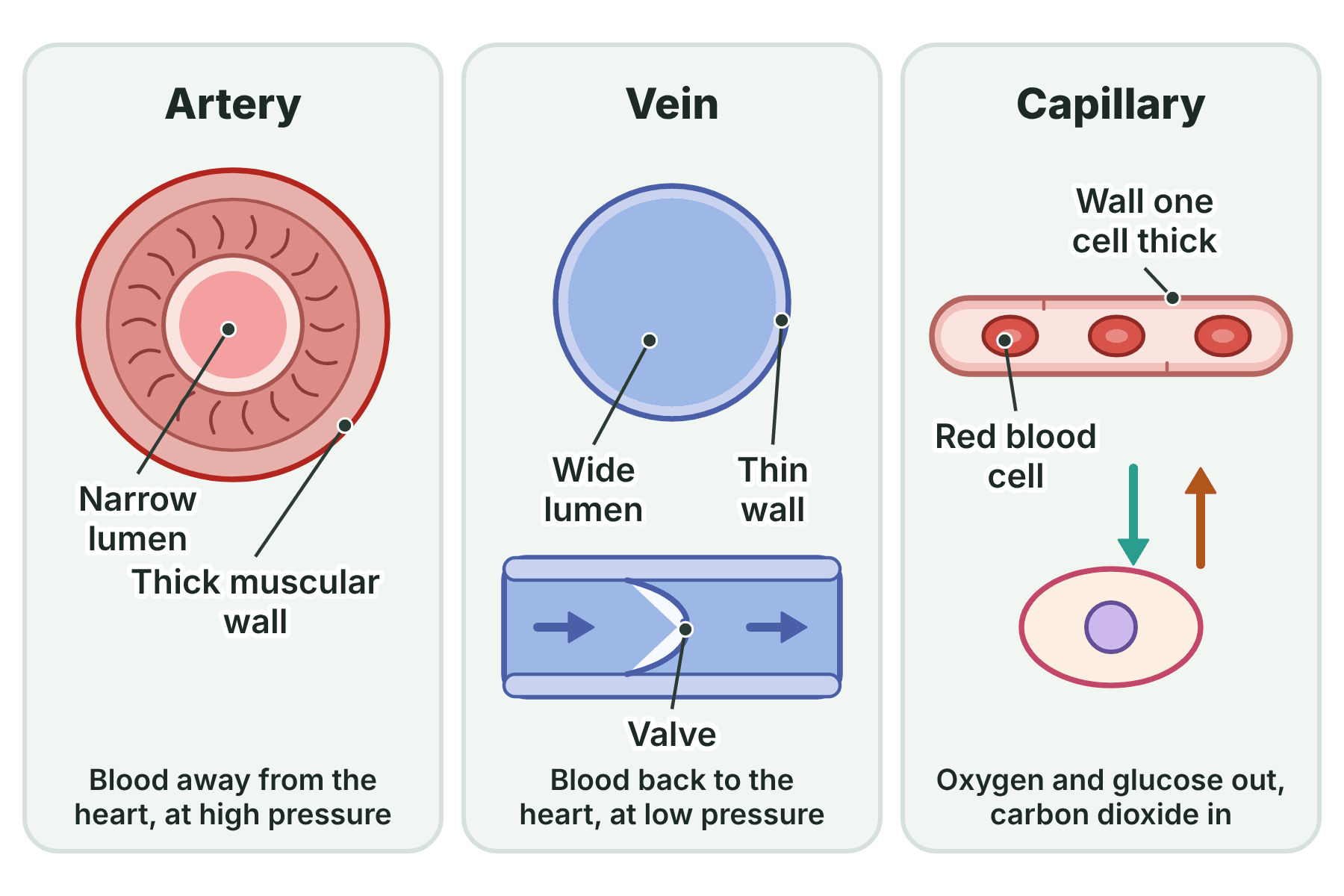
Artery: thick muscular wall, elastic fibres, narrow lumen. Vein: thin wall, wide lumen, valve. Capillary: wall one cell thick.
-
What is the windpipe called?
The trachea.
-
What does the trachea split into?
Two bronchi, one for each lung.
-
What do the bronchioles end in?
Alveoli.
-
What are alveoli?
Tiny air sacs where gas exchange takes place.
-
What surrounds each alveolus?
A network of capillaries.
-
Which gas moves from the alveoli into the blood?
Oxygen.
-
Which gas moves from the blood into the alveoli?
Carbon dioxide.
-
How do the gases move across the alveolus wall?
By diffusion, down their concentration gradients.
-
Why do the lungs have millions of alveoli?
To give a very large surface area for gas exchange.
-
Why are the alveolus walls only one cell thick?
To give a short diffusion path.
-
Why does a rich blood supply help gas exchange?
It carries oxygen away and brings carbon dioxide, so the concentration gradients stay steep.
-
How does breathing help gas exchange?
It ventilates the alveoli, which keeps the concentration gradients steep.
-
What happens to the alveoli in emphysema?
Their walls break down, so the surface area for gas exchange is reduced.
-
How do you work out the volume of air breathed per minute?
Volume per breath × number of breaths per minute.
-
Is air breathed out the same as air breathed in?
No. It has less oxygen and more carbon dioxide.
-
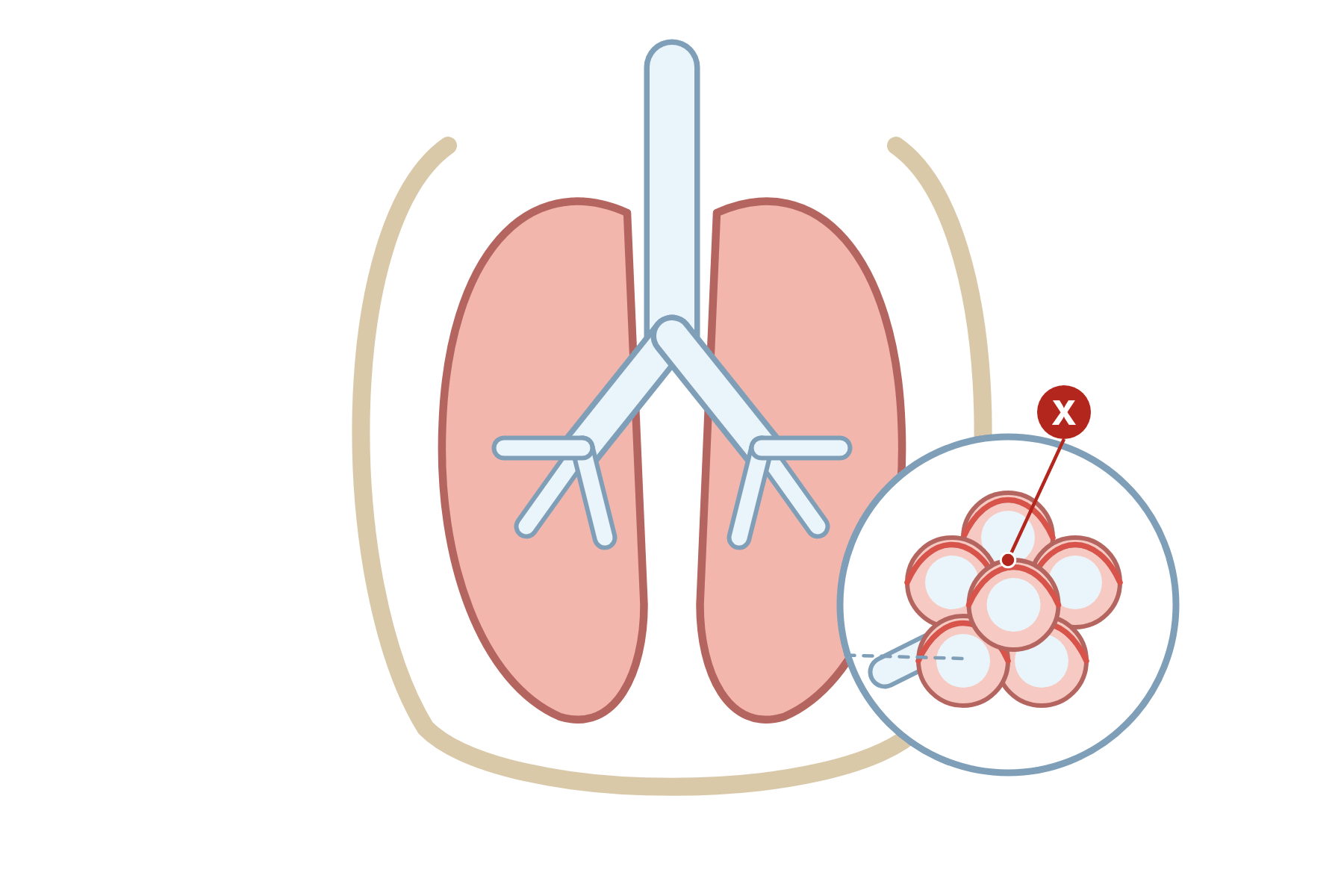 Name the part marked X and say what happens there.
 The alveoli. Oxygen diffuses into the blood and carbon dioxide diffuses out here.
-
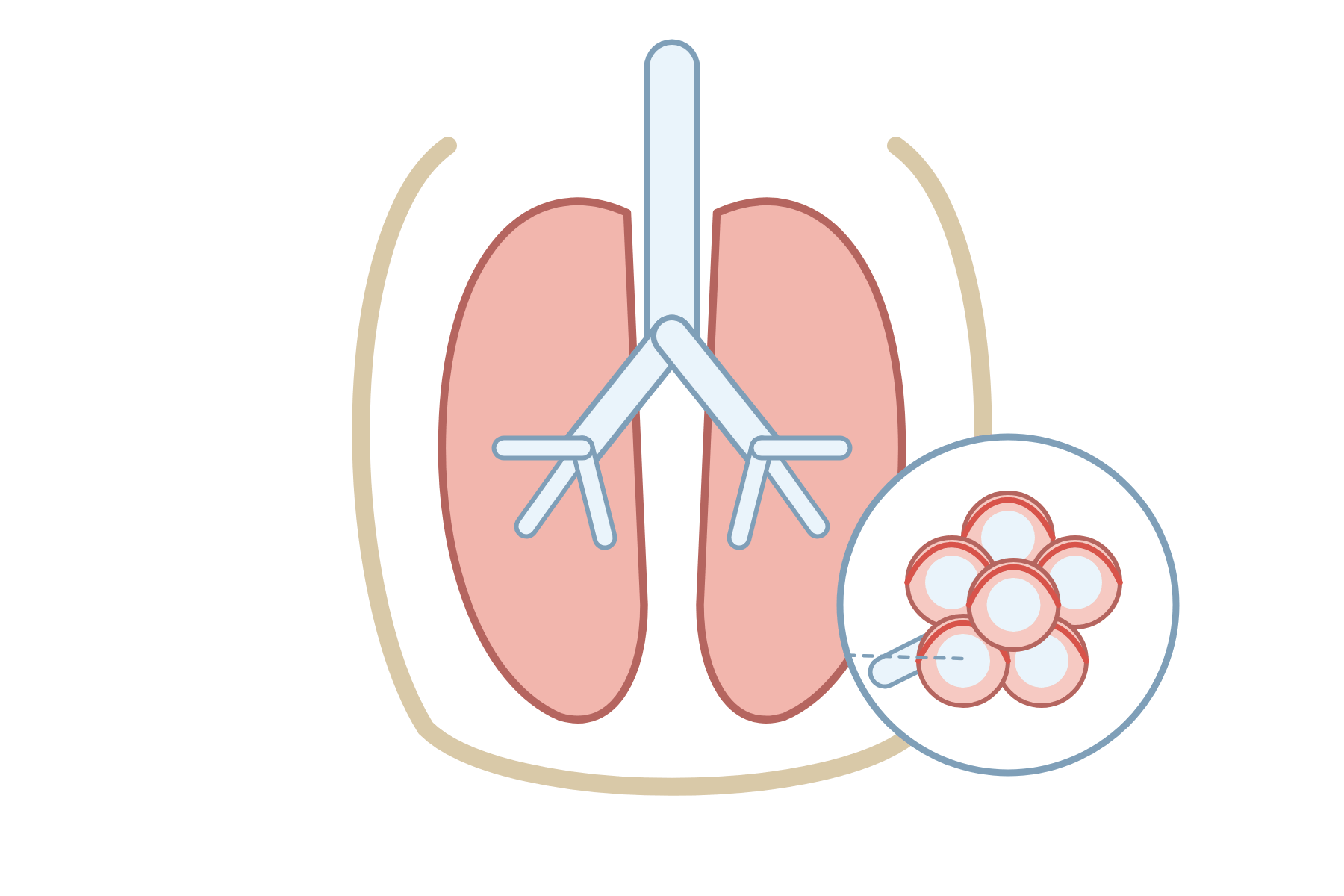 Label the airways and the structures of the lungs.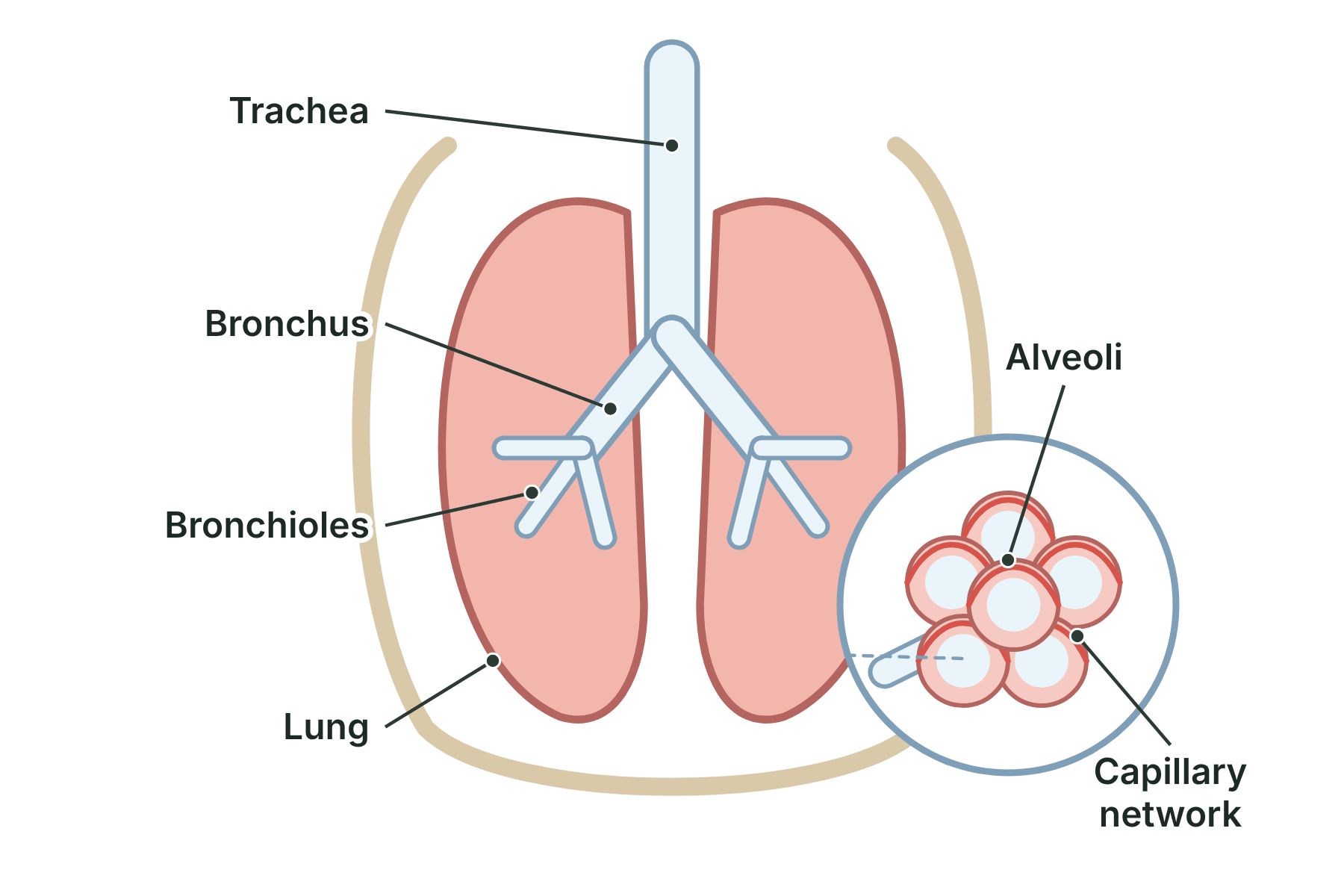
Trachea, bronchus, bronchioles, lung, alveoli and capillary network.
-
What are the four components of blood?
Plasma, red blood cells, white blood cells and platelets.
-
What is plasma?
The pale yellow liquid part of the blood that carries dissolved substances.
-
Name three substances transported in plasma.
Carbon dioxide, soluble food molecules such as glucose, and urea (also hormones and heat).
-
What do red blood cells do?
They carry oxygen from the lungs to the body cells.
-
What is haemoglobin?
The red pigment in red blood cells that binds to oxygen.
-
Why are red blood cells biconcave?
The shape gives a large surface area for oxygen to diffuse in and out quickly.
-
Why do red blood cells have no nucleus?
There is more room for haemoglobin, so they can carry more oxygen.
-
What do white blood cells do?
They help to defend the body against pathogens.
-
Do white blood cells have a nucleus?
Yes.
-
What are platelets?
Small fragments of cells that help the blood to clot.
-
What do platelets do at a wound?
They cause the blood to clot, forming a scab that stops bleeding and keeps microorganisms out.
-
How can you tell a white blood cell from a red blood cell in a photograph?
The white blood cell is larger and has a stained nucleus. The red blood cell has no nucleus.
-
What carries urea in the blood?
The plasma.
-
Give one risk of a blood transfusion.
Infection from the donor blood, a mismatched blood group or an allergic reaction.
-
Which part of the blood carries heat energy?
The plasma.
-
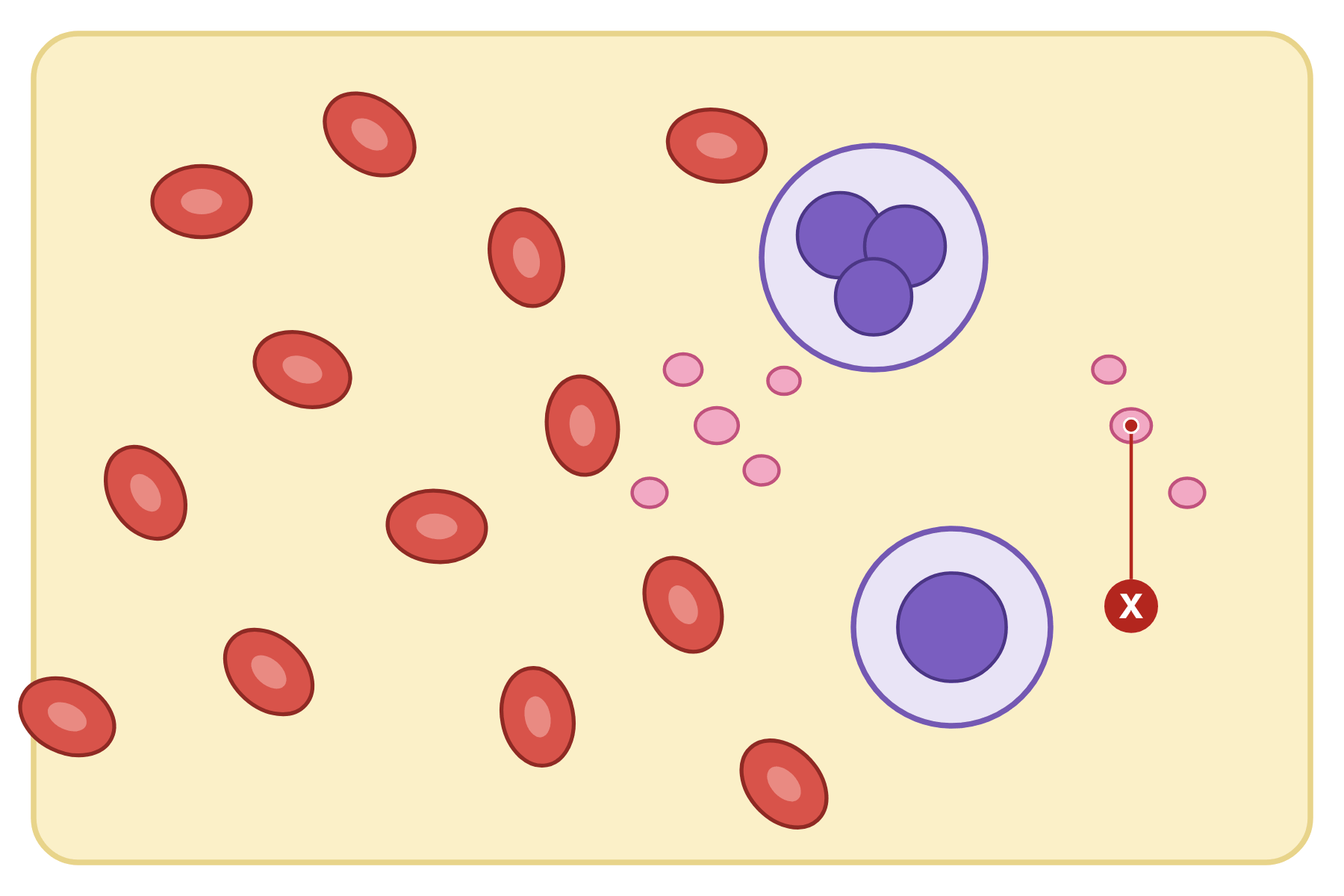 Name the blood component marked X and say what it does.
 A platelet. It is a small fragment of a cell that helps the blood to clot at a wound.
-
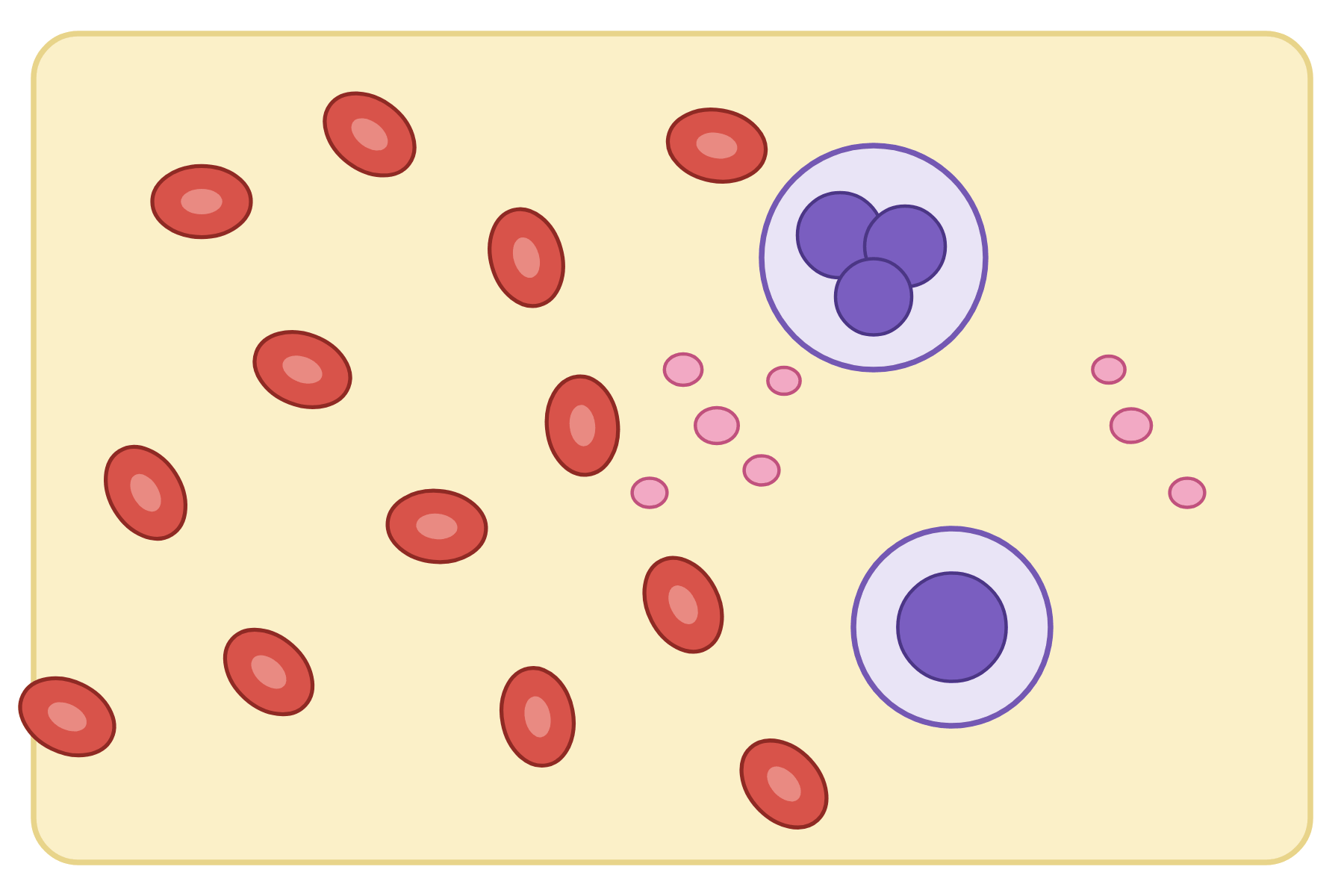 Label every component of the blood.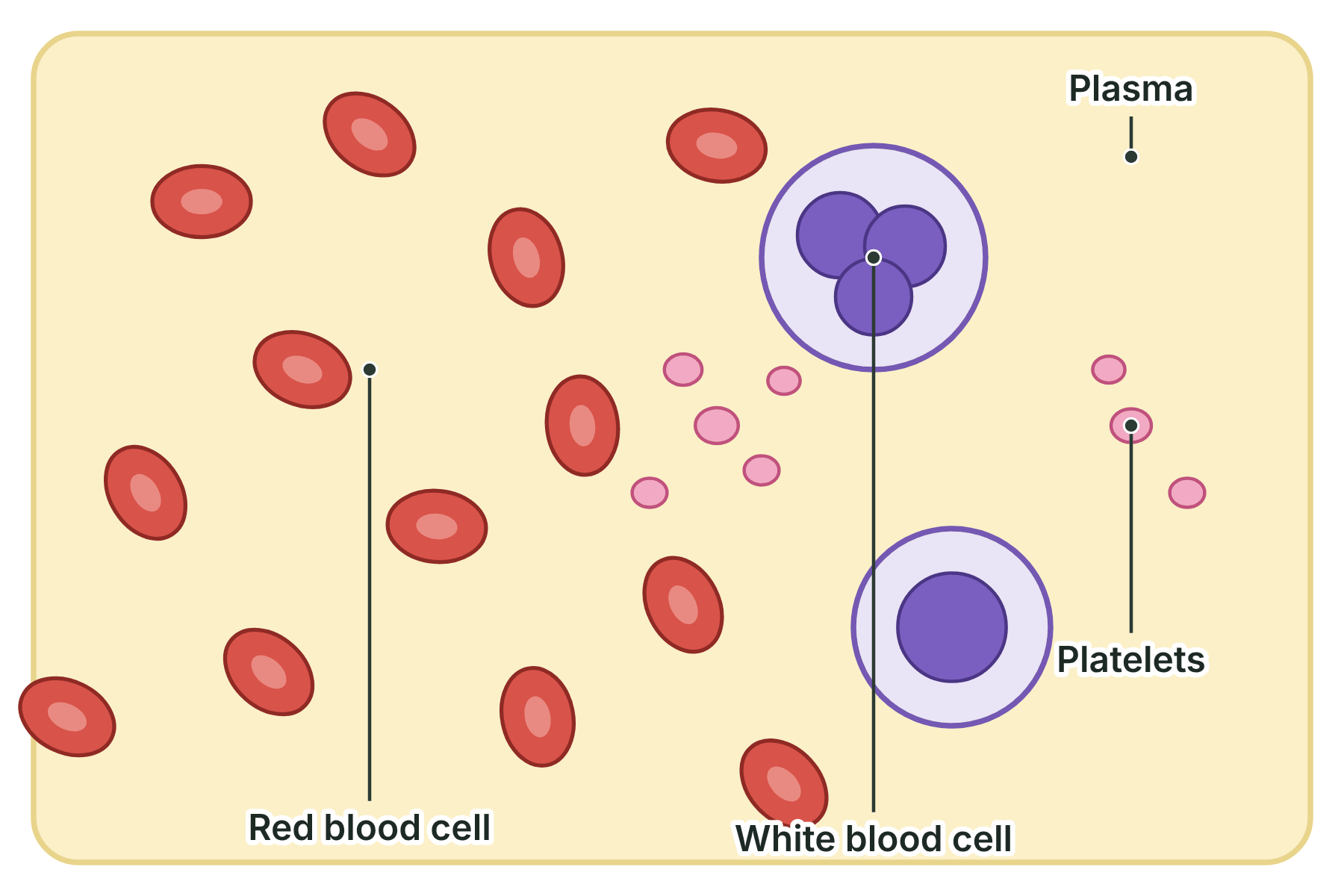
Plasma, red blood cell (biconcave, no nucleus), white blood cell (has a nucleus) and platelets.