Flashcards · Biology · Exchange and Transport in Animals
The Lungs and Gas Exchange
-
What is the windpipe called?
The trachea.
-
What does the trachea split into?
Two bronchi, one for each lung.
-
What do the bronchioles end in?
Alveoli.
-
What are alveoli?
Tiny air sacs where gas exchange takes place.
-
What surrounds each alveolus?
A network of capillaries.
-
Which gas moves from the alveoli into the blood?
Oxygen.
-
Which gas moves from the blood into the alveoli?
Carbon dioxide.
-
How do the gases move across the alveolus wall?
By diffusion, down their concentration gradients.
-
Why do the lungs have millions of alveoli?
To give a very large surface area for gas exchange.
-
Why are the alveolus walls only one cell thick?
To give a short diffusion path.
-
Why does a rich blood supply help gas exchange?
It carries oxygen away and brings carbon dioxide, so the concentration gradients stay steep.
-
How does breathing help gas exchange?
It ventilates the alveoli, which keeps the concentration gradients steep.
-
What happens to the alveoli in emphysema?
Their walls break down, so the surface area for gas exchange is reduced.
-
How do you work out the volume of air breathed per minute?
Volume per breath × number of breaths per minute.
-
Is air breathed out the same as air breathed in?
No. It has less oxygen and more carbon dioxide.
-
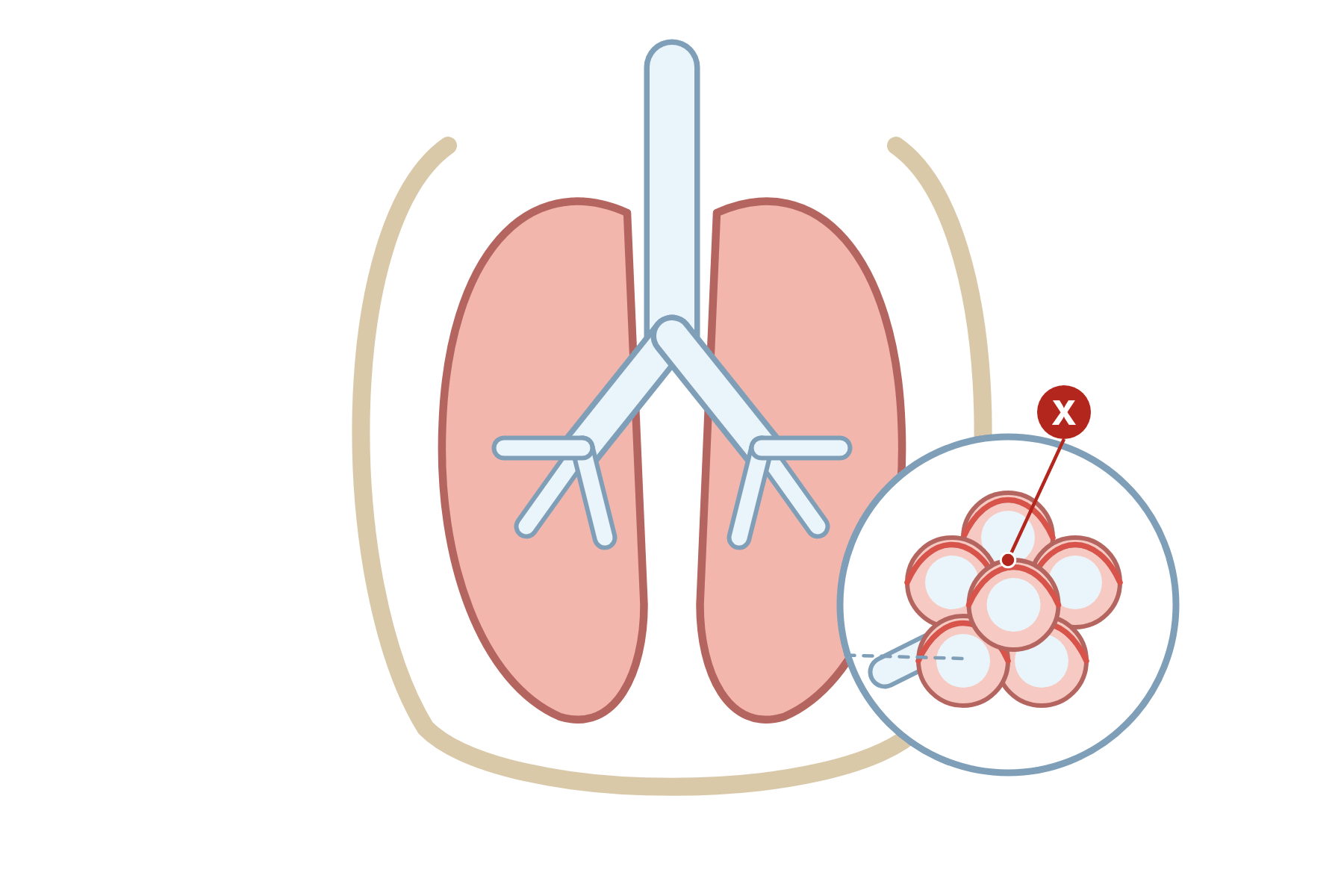 Name the part marked X and say what happens there.
 The alveoli. Oxygen diffuses into the blood and carbon dioxide diffuses out here.
-
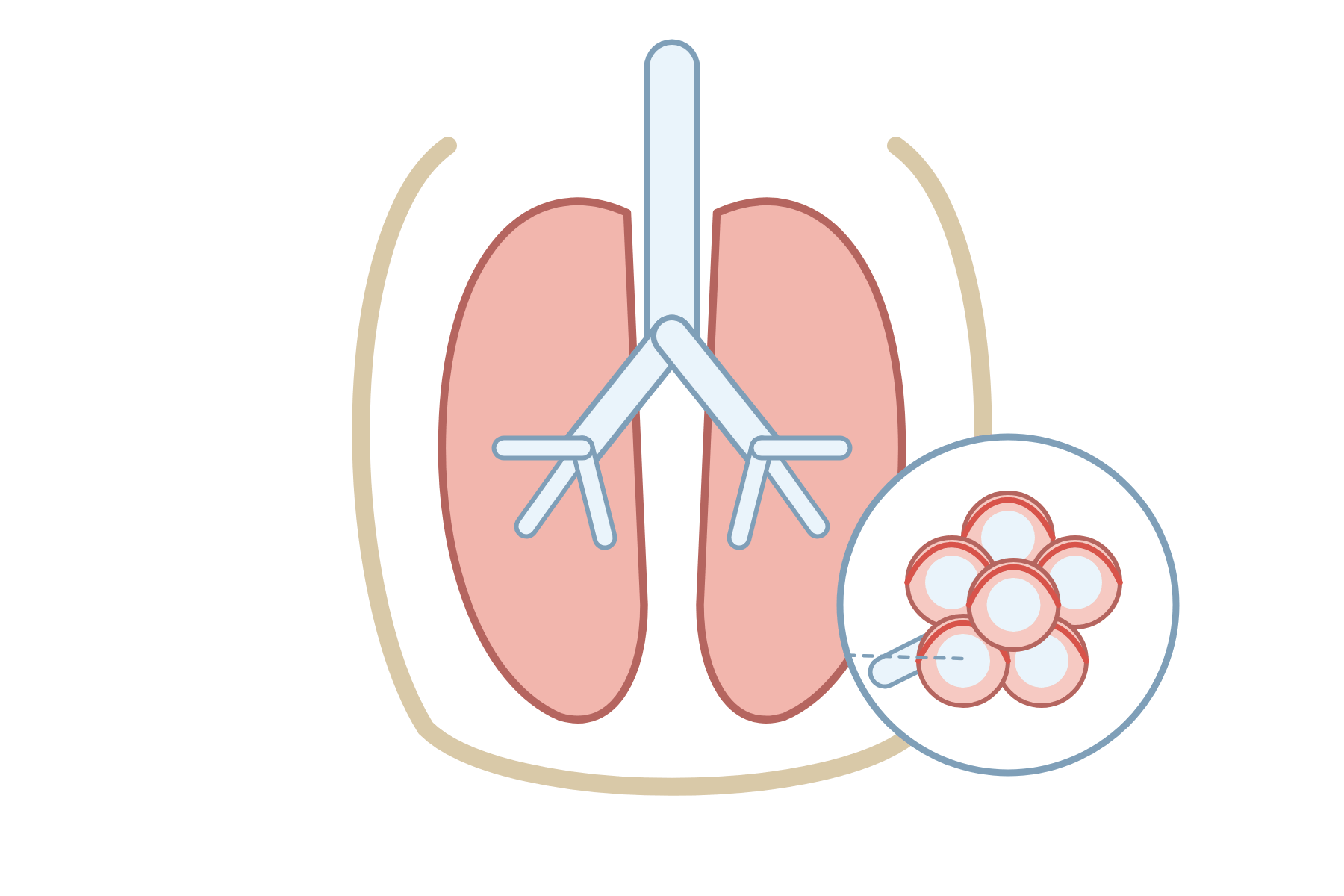 Label the airways and the structures of the lungs.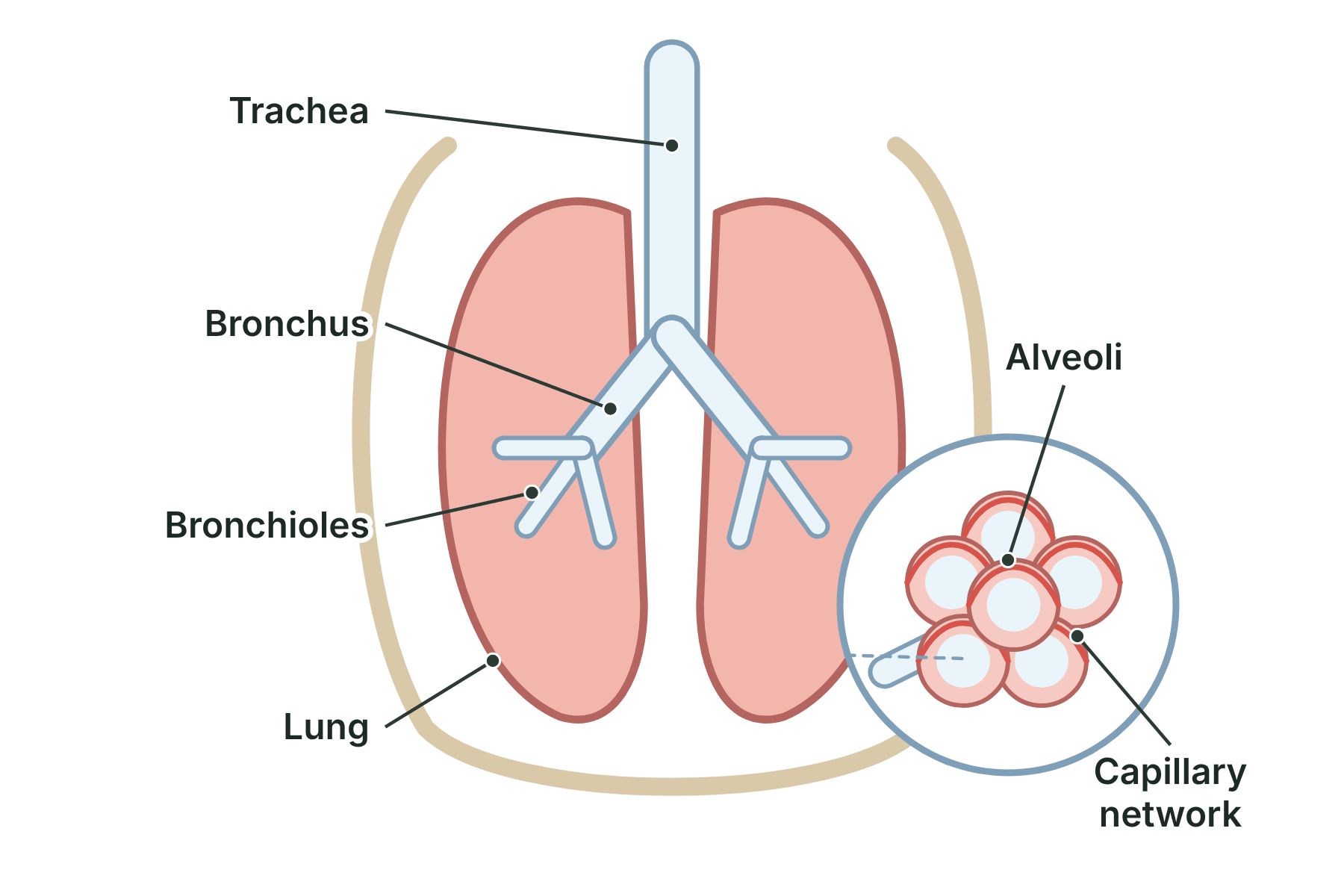
Trachea, bronchus, bronchioles, lung, alveoli and capillary network.