Flashcards · Biology
The Endocrine System
-
What is a hormone?
A chemical messenger carried in the blood.
-
What is an endocrine gland?
A gland that releases hormones into the blood.
-
How are hormones carried around the body?
In the blood.
-
What is a target organ?
An organ that has receptors for a particular hormone.
-
Which gland is the master gland?
The pituitary gland.
-
Which gland releases thyroxine?
The thyroid gland.
-
Which gland releases insulin and glucagon?
The pancreas.
-
Which glands release adrenaline?
The adrenal glands.
-
Which hormones do the ovaries release?
Oestrogen and progesterone.
-
Which hormone do the testes release?
Testosterone.
-
Is hormonal control faster or slower than nervous control?
Slower.
-
Do hormones last for a longer or a shorter time than nerve impulses?
Longer.
-
What does thyroxine control? (Higher tier)
The basal metabolic rate.
-
What is negative feedback? (Higher tier)
A change causes a response that reverses the change.
-
What does adrenaline do? (Higher tier)
Prepares the body for fight or flight: faster heart rate, more glucose and blood to the muscles.
-
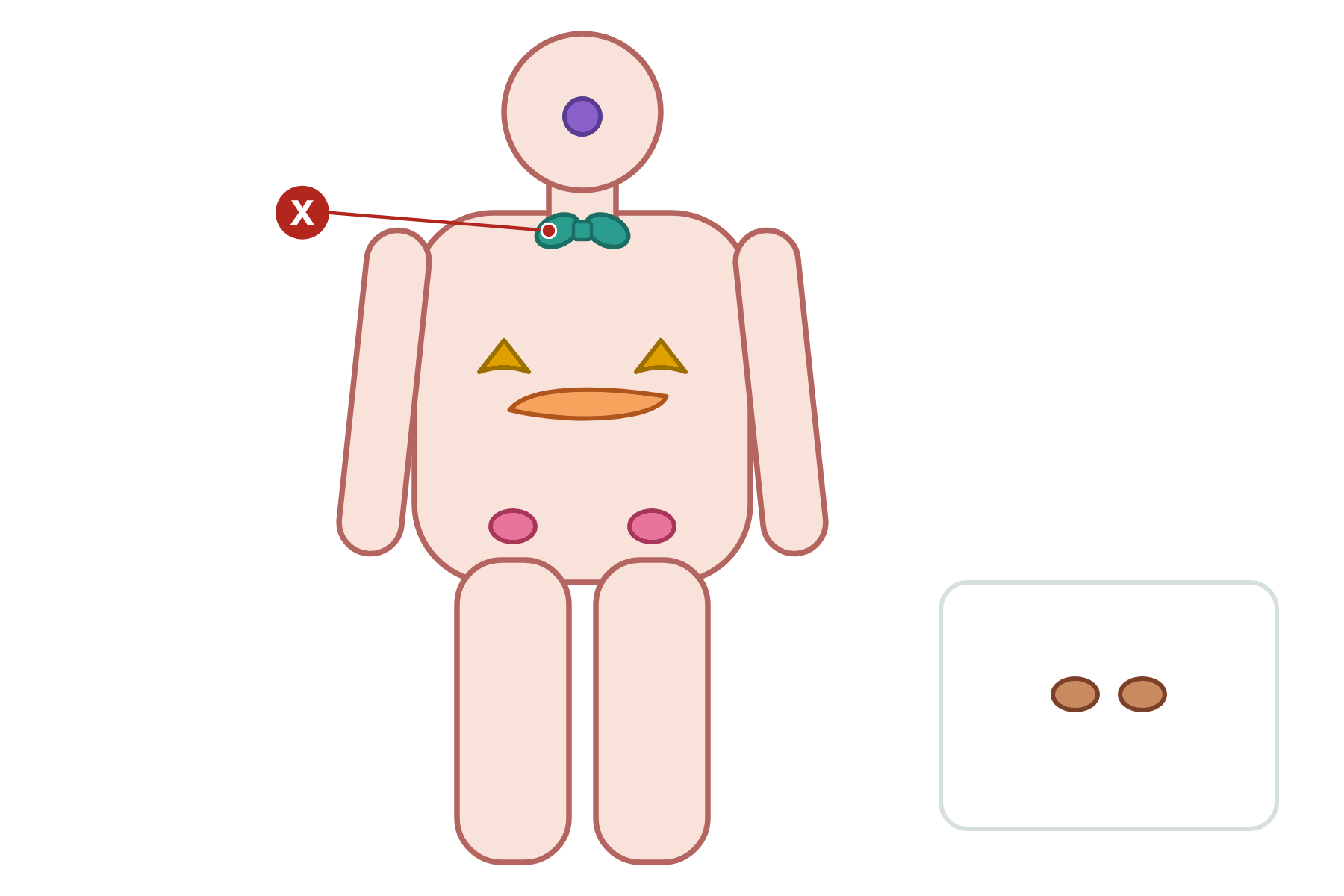 Name the gland marked X and the hormone it releases.
 The thyroid gland. It releases thyroxine, which controls the metabolic rate.
-
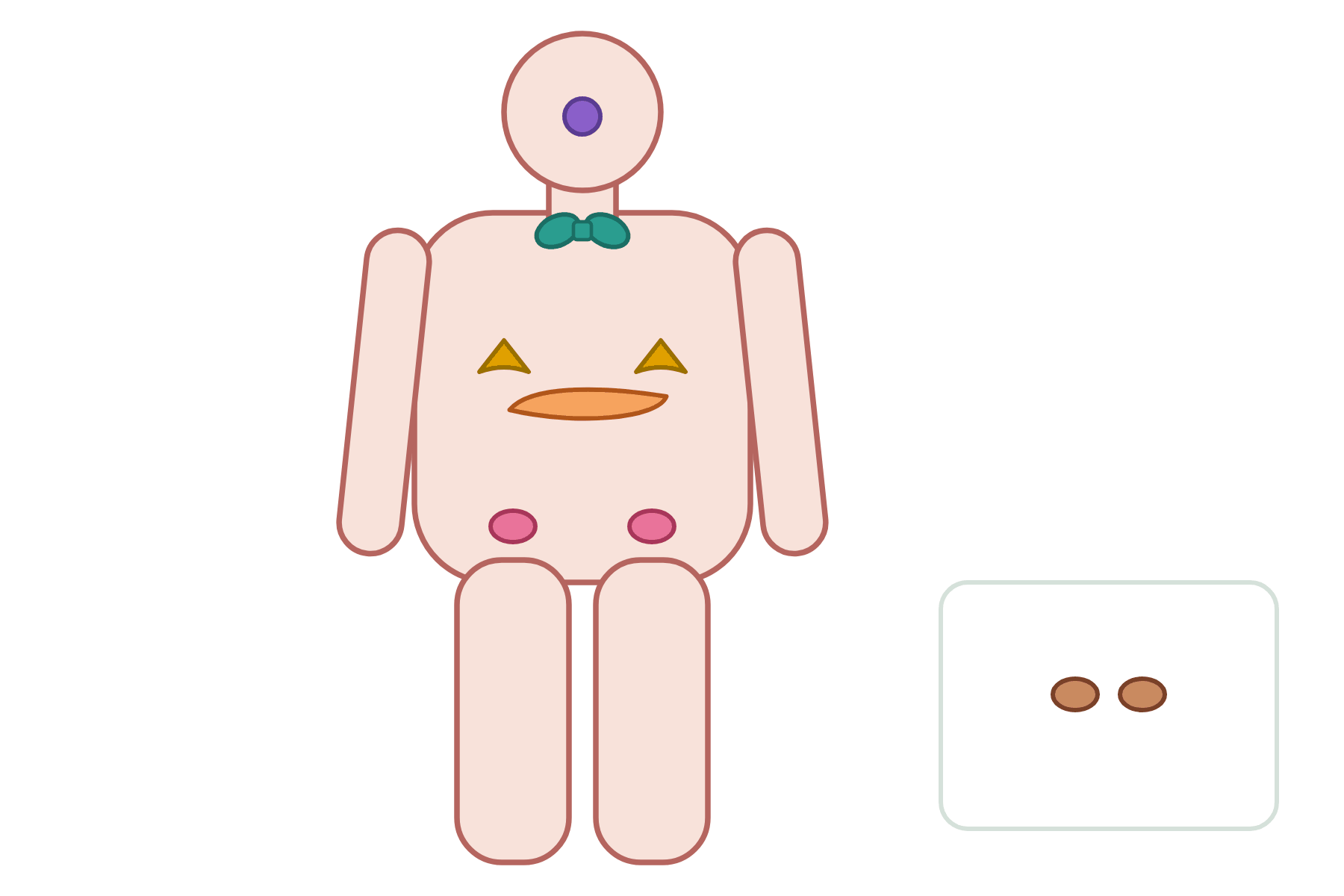 Name the endocrine glands.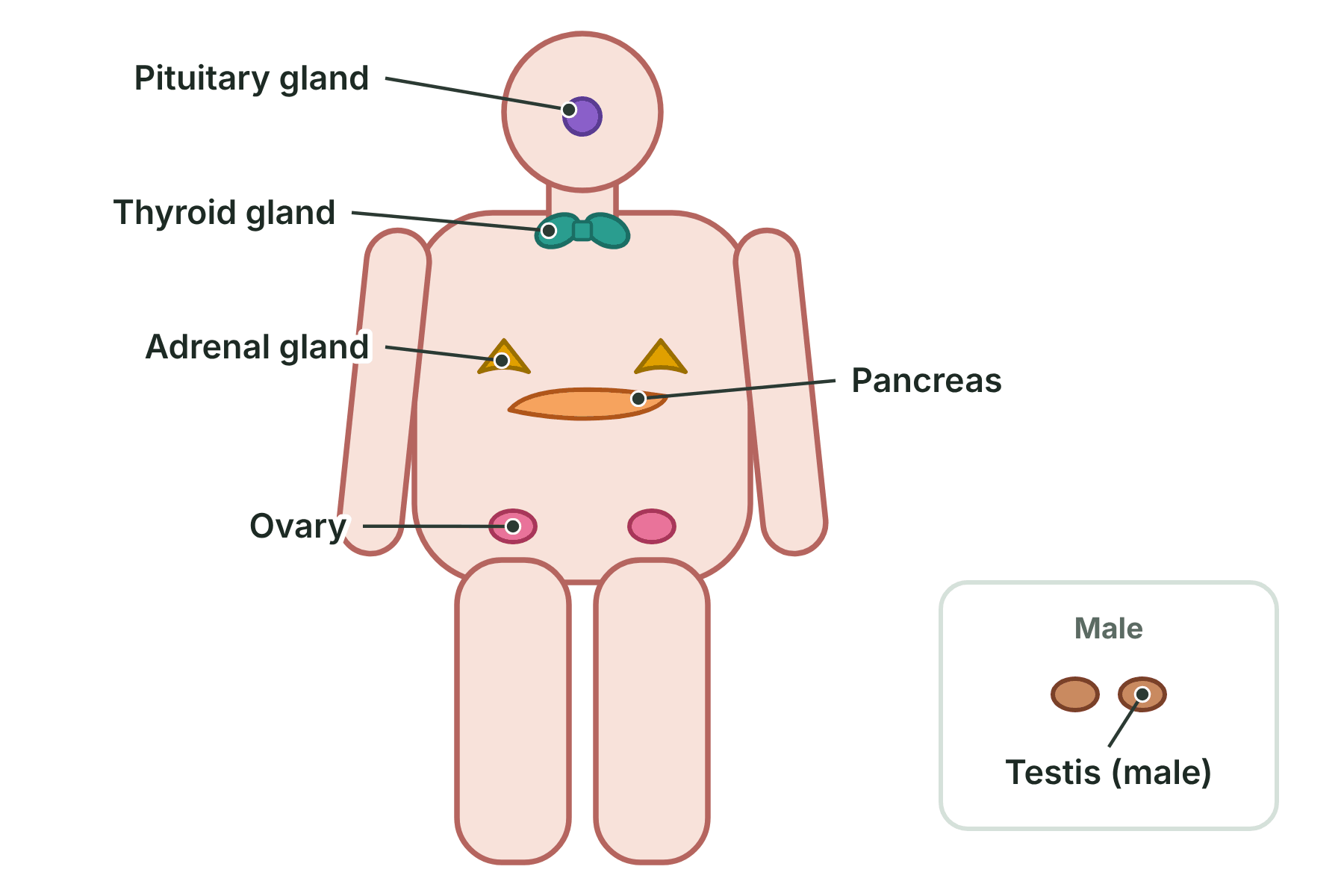
Pituitary gland, thyroid gland, pancreas, adrenal glands, ovaries (female) and testes (male).
-
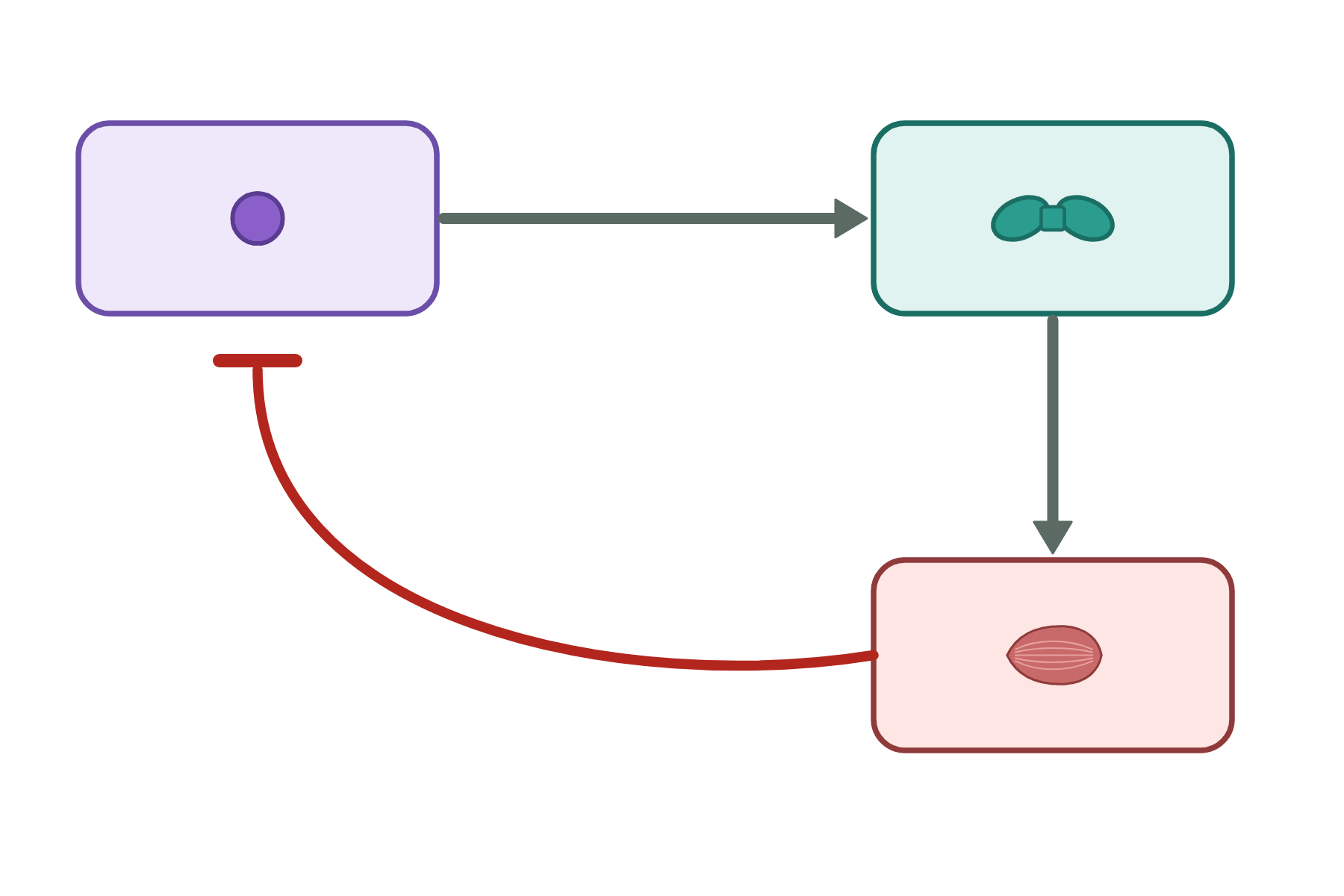 Describe how thyroxine is controlled.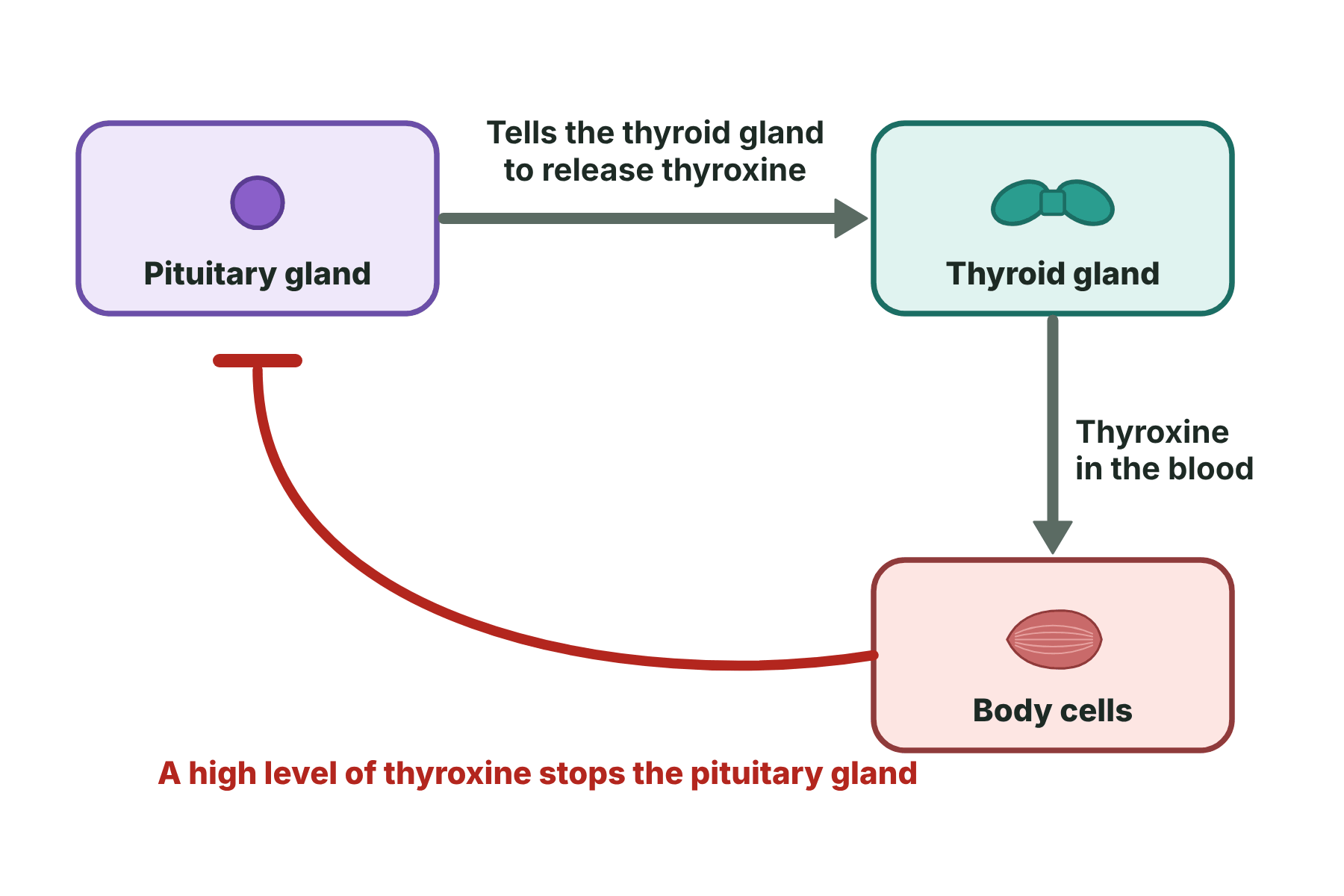
The pituitary tells the thyroid to release thyroxine. A high level of thyroxine stops the pituitary, so the level falls. This is negative feedback (Higher tier).
-
What does FSH do?
Makes an egg mature and stimulates the ovary to release oestrogen.
-
What does LH do?
A surge causes ovulation.
-
What does oestrogen do?
Repairs and thickens the lining of the uterus.
-
What does progesterone do?
Maintains the lining of the uterus.
-
What does testosterone do?
Controls male secondary sexual characteristics and sperm production.
-
Where are FSH and LH released from?
The pituitary gland.
-
Where are oestrogen and progesterone released from?
The ovaries.
-
How long is the menstrual cycle?
About 28 days.
-
What happens on days 1 to 5?
Menstruation: the lining of the uterus breaks down.
-
What happens on day 14?
Ovulation.
-
What is ovulation?
The release of a mature egg from an ovary.
-
What happens to the lining after ovulation?
It is maintained by progesterone.
-
What does oestrogen do to FSH? (Higher tier)
A rising level stops the pituitary releasing FSH.
-
What triggers the LH surge? (Higher tier)
A high level of oestrogen.
-
What makes the lining break down? (Higher tier)
The progesterone level falls.
-
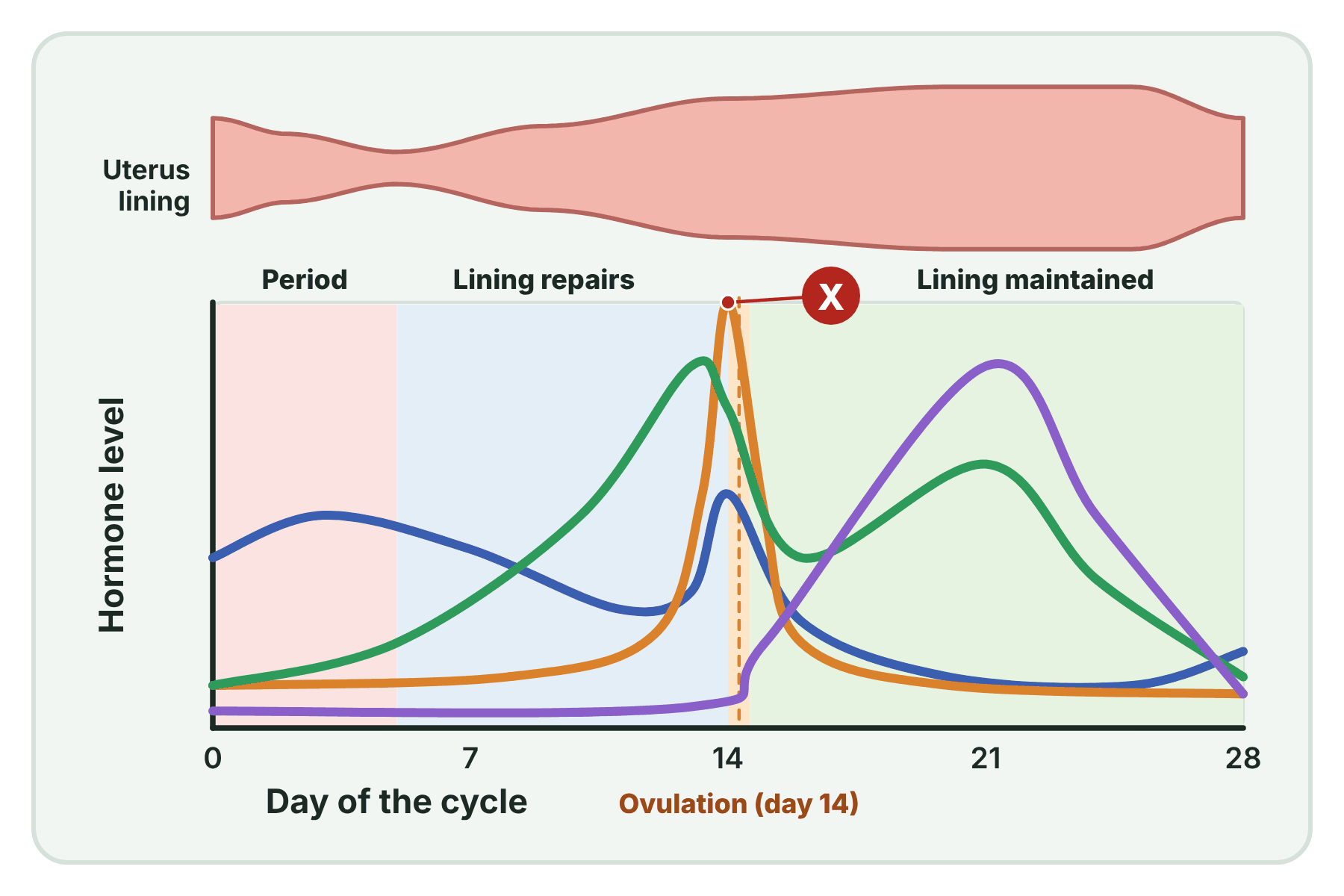 Name the hormone shown by the curve marked X.
 LH. The surge of LH at day 14 causes ovulation.
-
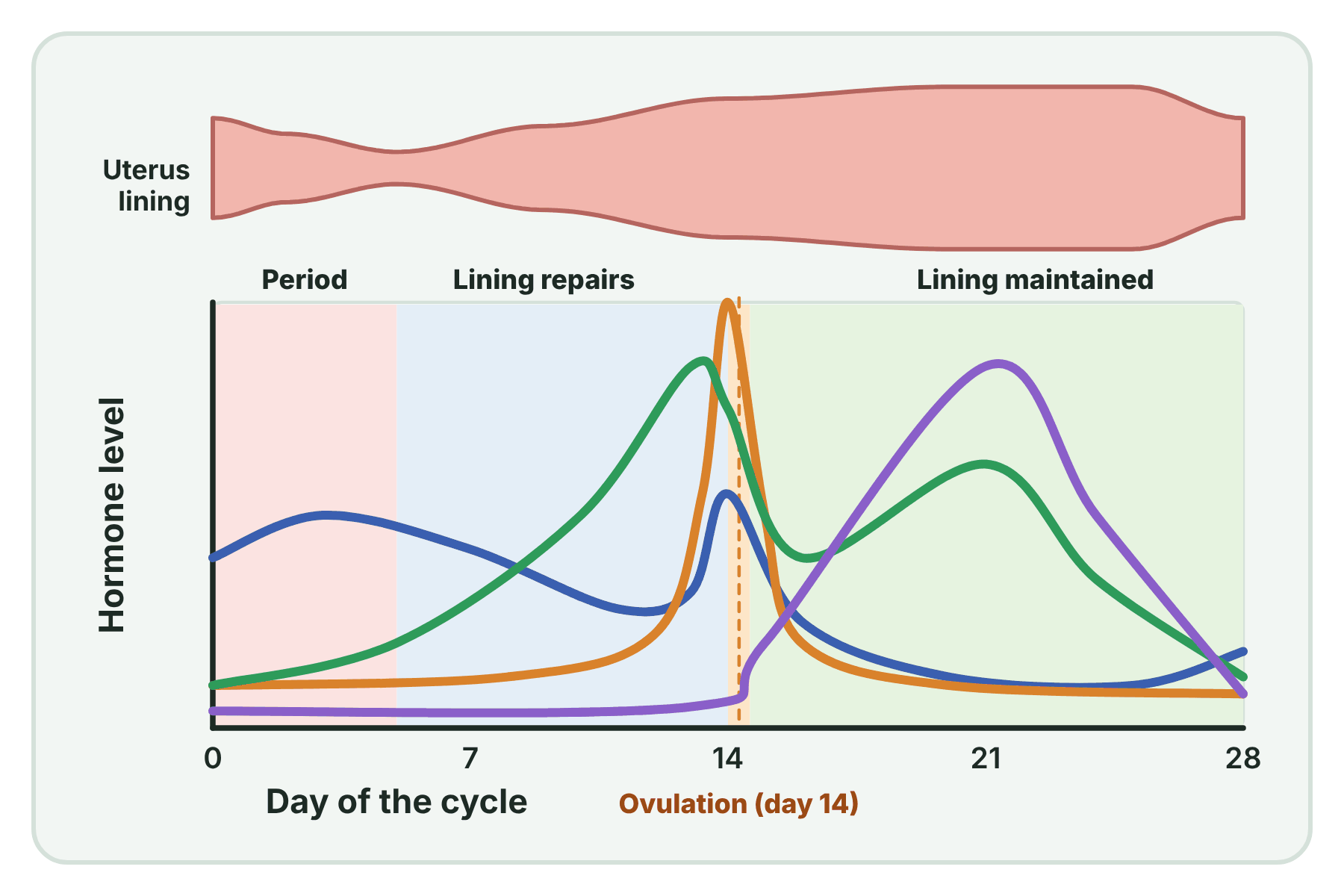 Match each curve to a hormone and say what each does.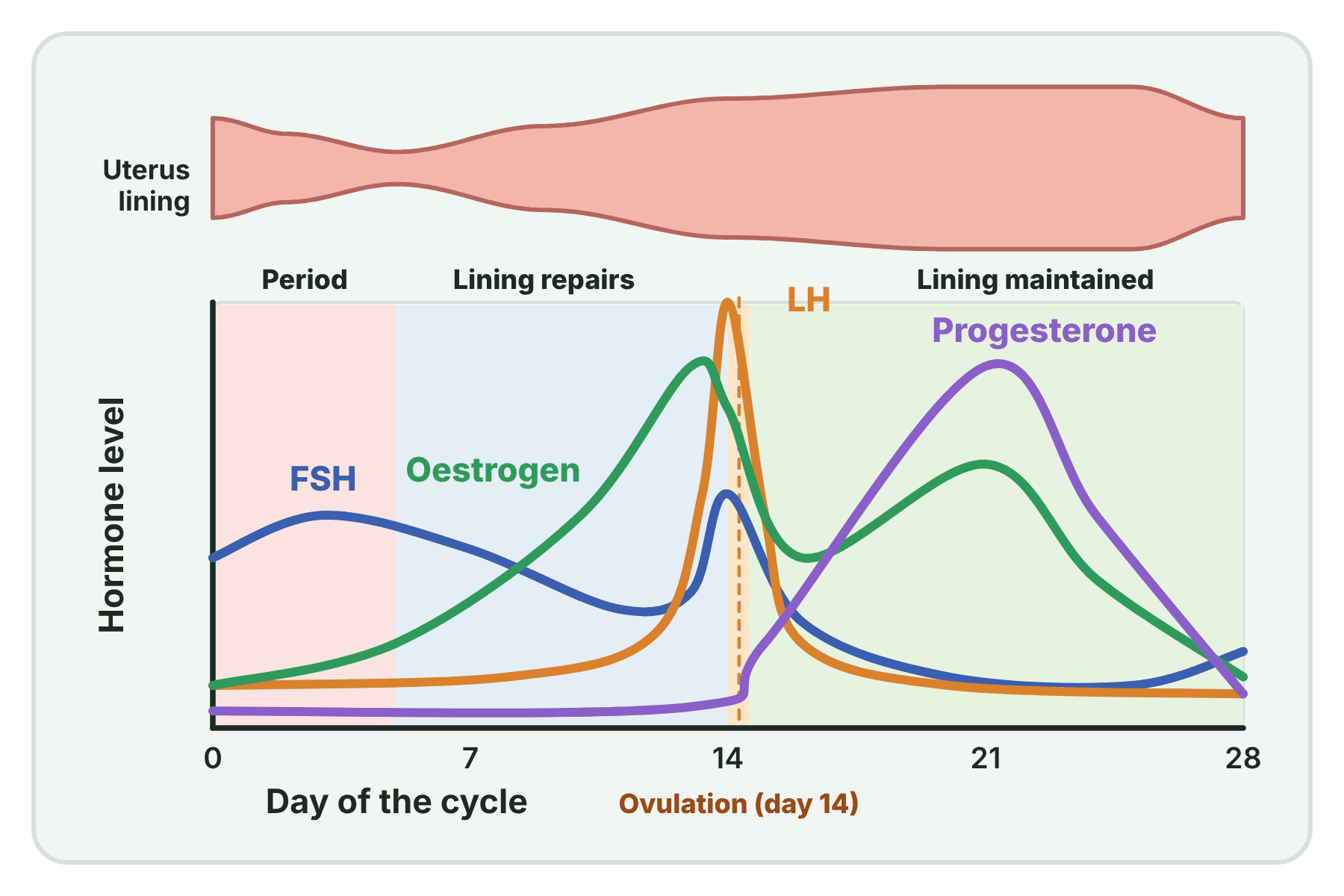
FSH matures an egg. LH has the peak at day 14 and causes ovulation. Oestrogen repairs the lining. Progesterone rises after ovulation and maintains the lining.
-
What does the combined pill contain?
Oestrogen and progesterone.
-
How does the combined pill prevent pregnancy?
It stops FSH release, so no egg matures.
-
How does a progesterone injection or implant work?
It thickens the cervical mucus and can stop egg release.
-
How does a condom prevent pregnancy?
It is a barrier that stops sperm entering the vagina.
-
What does a diaphragm do?
It covers the cervix, with spermicide to kill sperm.
-
What does a copper IUD do?
It kills sperm and stops an embryo implanting.
-
Which method protects against sexually transmitted infections?
The condom.
-
What is sterilisation?
A permanent operation to cut or tie the oviducts or the sperm ducts.
-
What does the data on contraception show?
The number of pregnancies per 100 women each year for each method.
-
Why is the implant more effective than the pill in real use?
Nothing has to be remembered each day.
-
What is infertility?
Difficulty in conceiving a child.
-
Which hormones can treat infertility? (Higher tier)
FSH and LH.
-
What does IVF stand for? (Higher tier)
In vitro fertilisation.
-
Describe the stages of IVF. (Higher tier)
Fertility drugs, eggs collected, fertilised in a dish, embryos grow, one or two put in the uterus.
-
Give one disadvantage of IVF. (Higher tier)
Low success rate, health risks, cost or ethical issues.
-
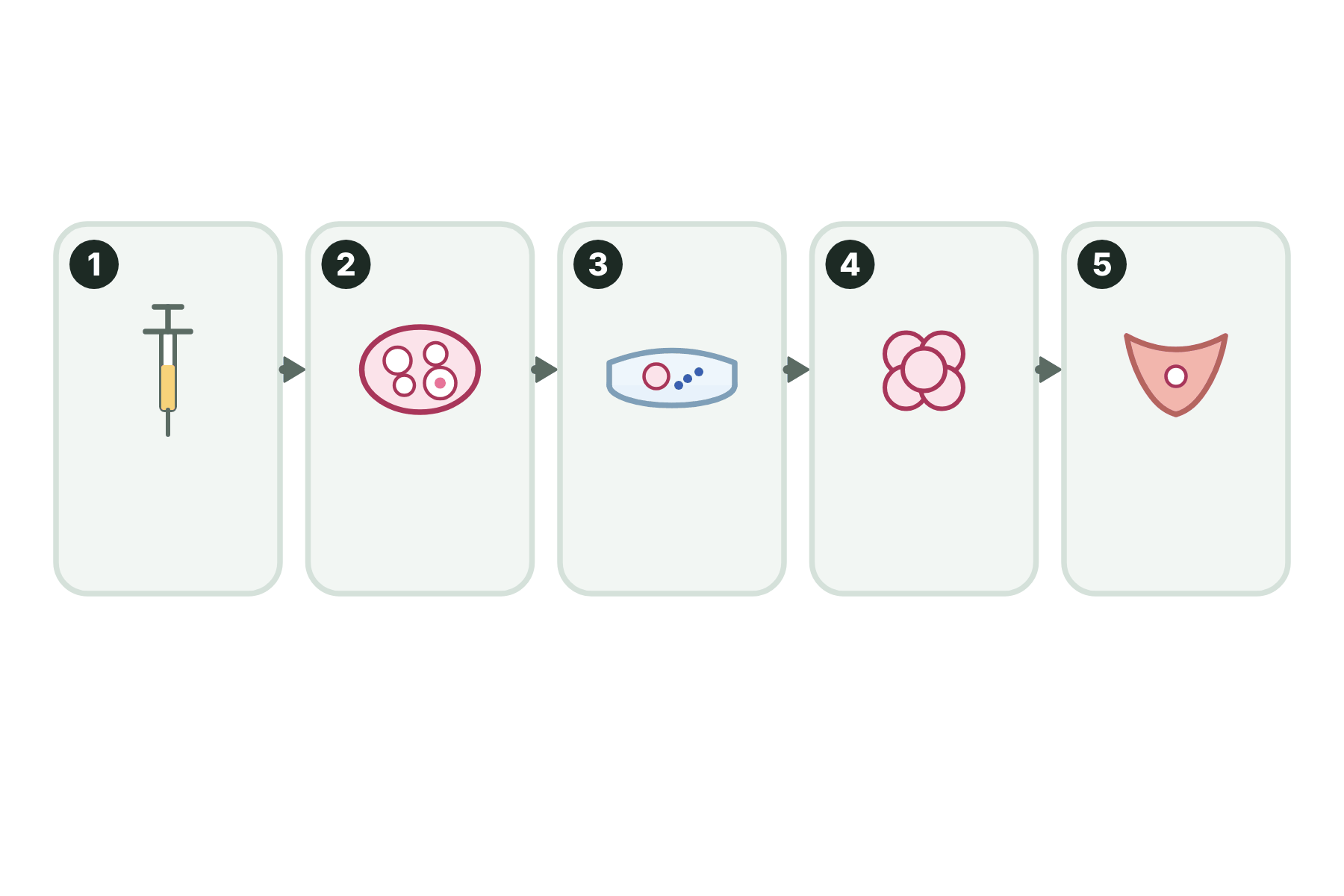 Describe what happens at each of the five stages of IVF.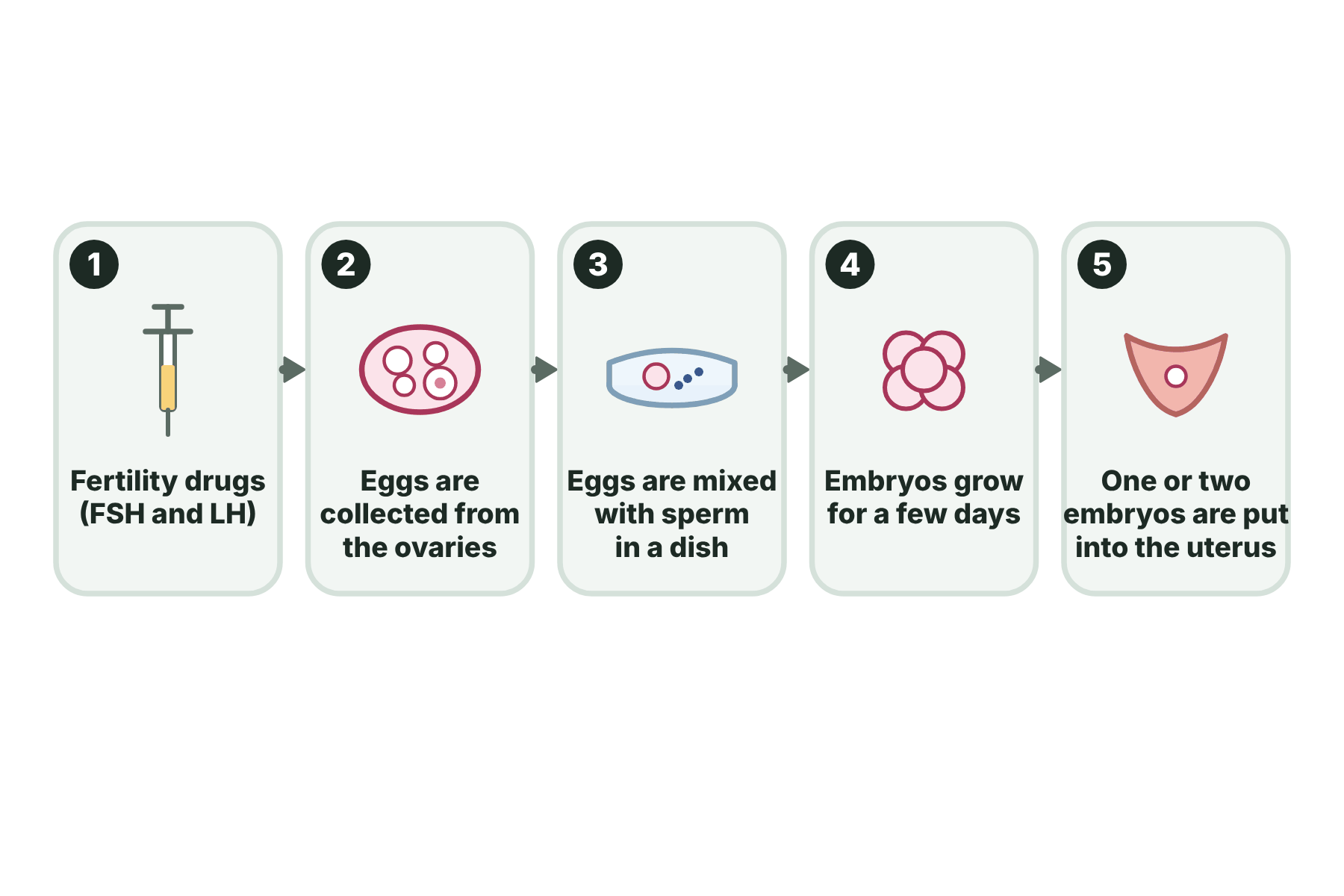
Fertility drugs make eggs mature, the eggs are collected, they are mixed with sperm in a dish, the embryos grow for a few days, and one or two embryos are put into the uterus (Higher tier).
-
What is a plant hormone?
A chemical that regulates plant growth and development.
-
Where is auxin made?
In the tips of shoots and roots.
-
What does auxin do in a shoot?
Makes the cells elongate.
-
What is phototropism?
Growth of a plant in response to light.
-
What is gravitropism?
Growth of a plant in response to gravity.
-
Where does auxin move to in a shoot with light from one side?
To the shaded side.
-
Why does a shoot bend towards the light?
Cells on the shaded side elongate more.
-
Why does a root bend downwards?
Auxin collects on the lower side and stops the cells elongating, so the upper side grows faster.
-
Which hormone breaks the dormancy of seeds?
Gibberellin.
-
Which plant hormone is a gas?
Ethene.
-
What does ethene do?
Makes fruit ripen.
-
What does a selective weedkiller contain?
A synthetic auxin.
-
Why is rooting powder used?
Auxin makes cuttings grow roots.
-
How can seedless fruit be made?
By spraying unpollinated flowers with auxin.
-
Why are bananas ripened with ethene?
They can be picked unripe for transport and then ripened when needed.
-
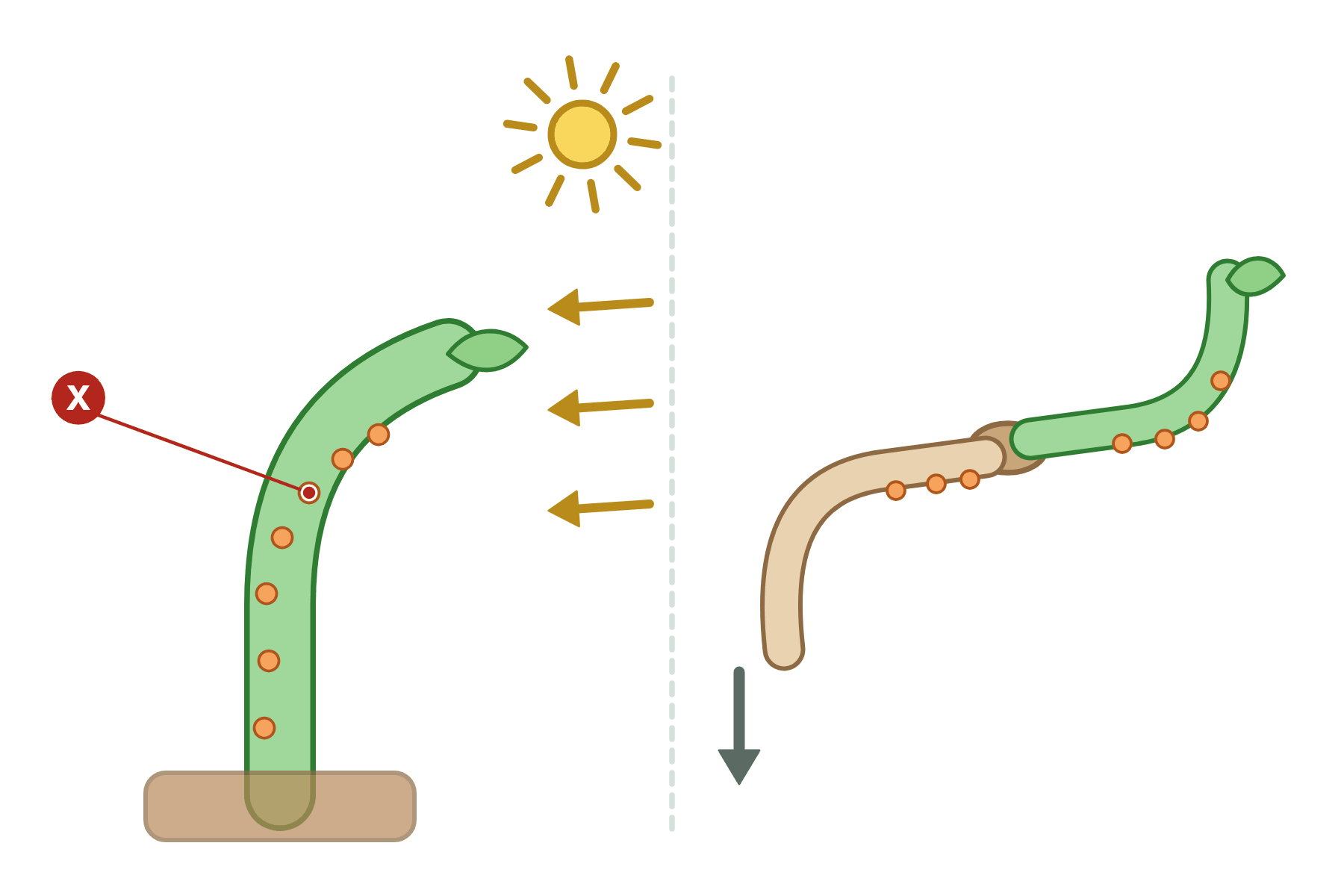 Name the substance shown by the orange dots at X and say what it does.
 Auxin. It moves to the shaded side of the shoot and makes the cells there elongate more, so the shoot bends towards the light.
-
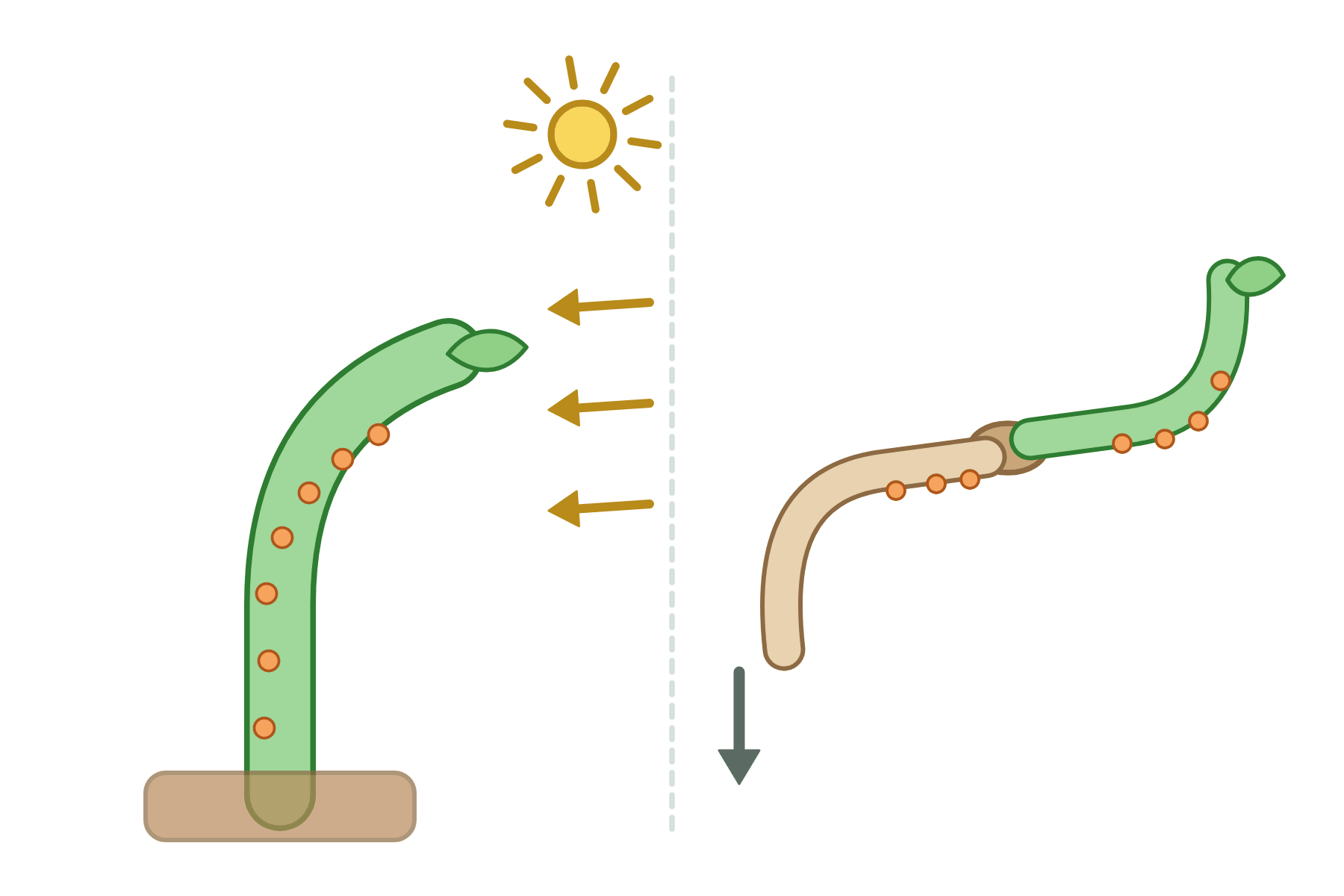 Explain how each plant bends.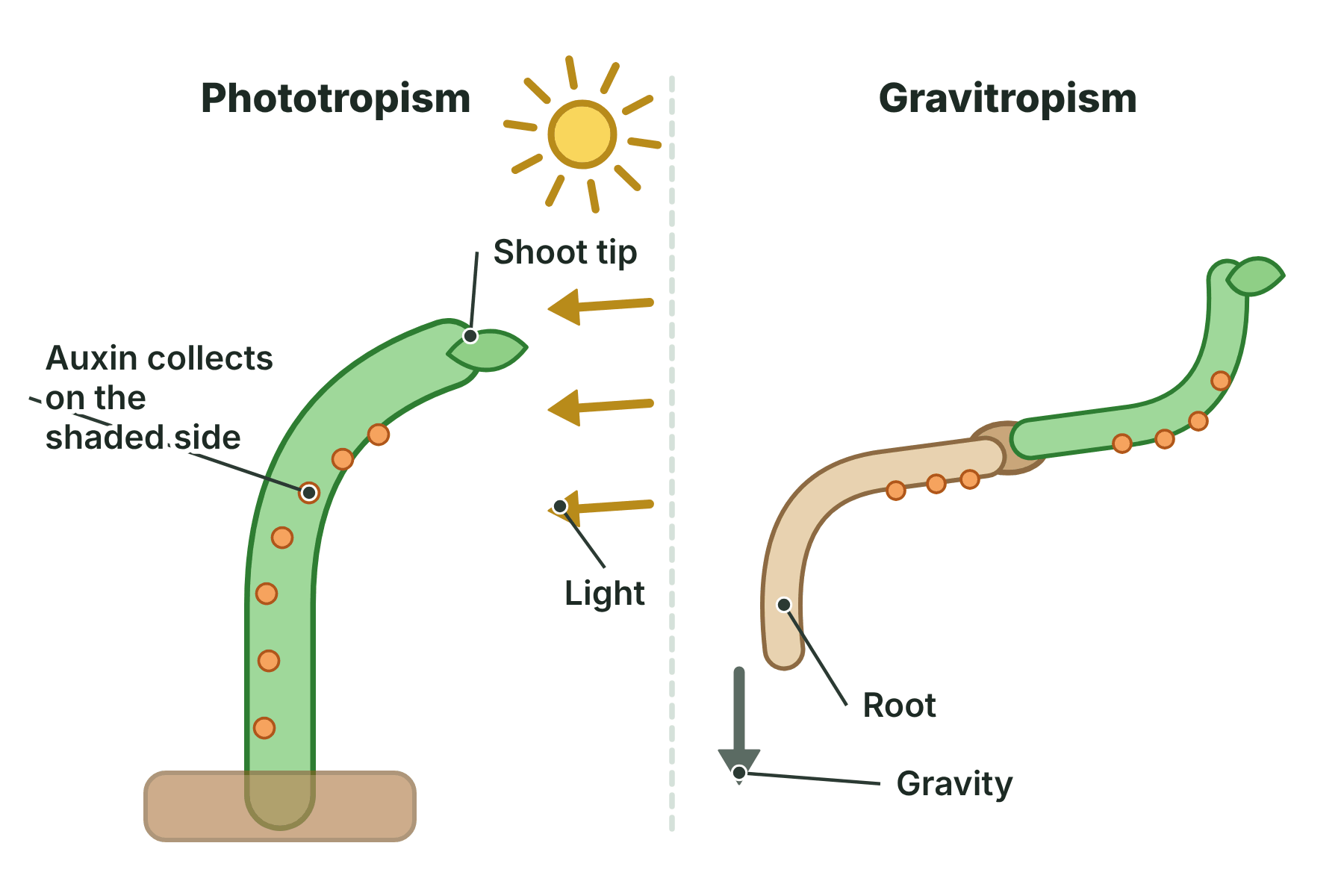
A shoot bends towards light because auxin collects on the shaded side and makes those cells elongate more. A root bends down because auxin collects on its lower side and stops elongation there. A shoot bends up because auxin on its lower side makes it grow more there.