Exam questions · Biology
The Endocrine System
- 28 exam questions
- 84 marks
- 32 quick checks
Hormones and the Endocrine System
Just this lesson-
1 State [2 marks]
State what is meant by an endocrine gland and a hormone.
Show answerHide answer
Model answer
An endocrine gland releases its hormone into the blood. A hormone is a chemical messenger carried in the blood.
Mark scheme
- Endocrine gland releases hormones into the blood — 1 mark
- Hormone: chemical messenger carried in the blood — 1 mark
-
2 Name [3 marks]
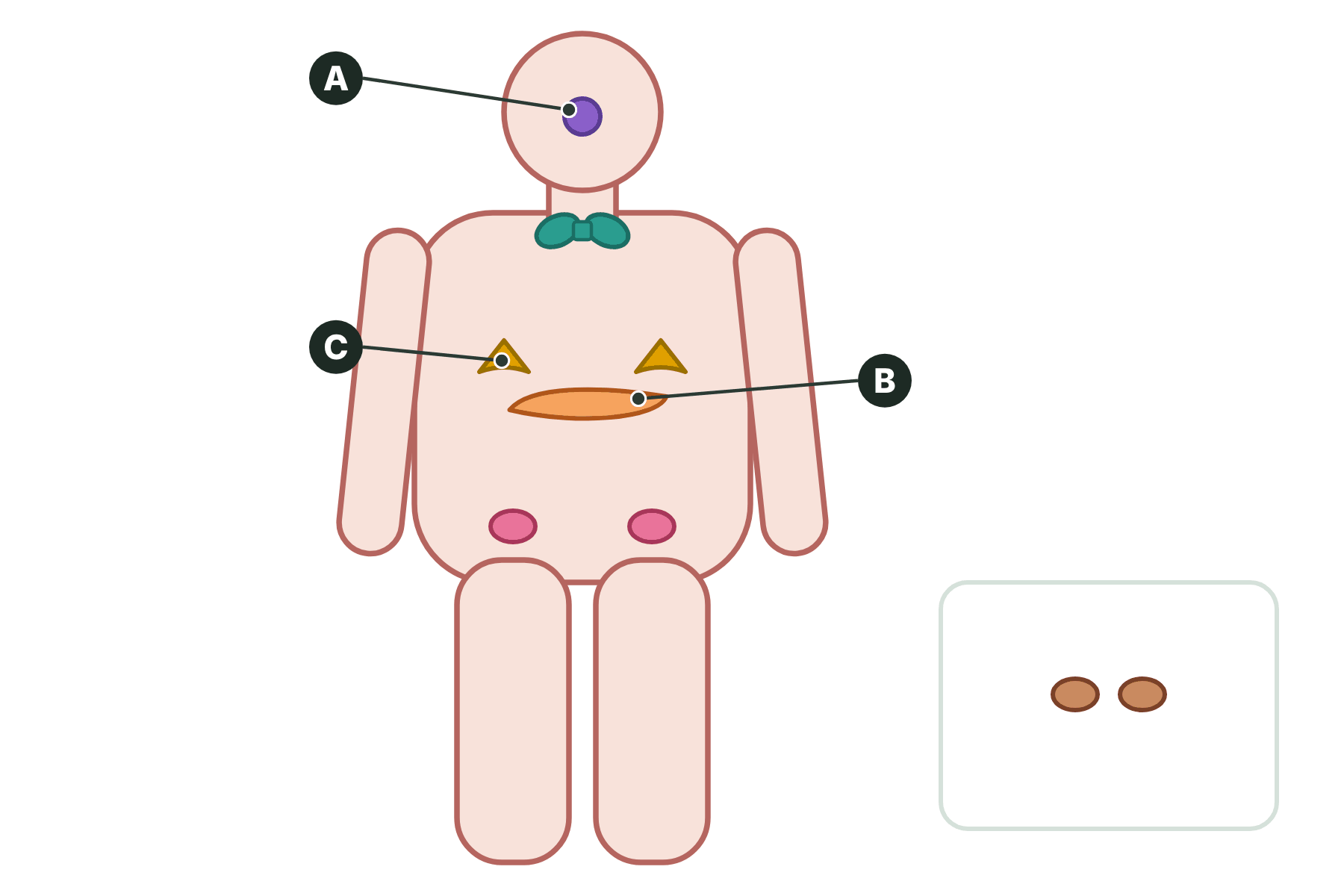
Figure 1 shows some endocrine glands. Name the glands shown at A, B and C.
Show answerHide answer
Model answer
A is the pituitary gland. B is the pancreas. C is an adrenal gland.
Mark scheme
- A: pituitary gland — 1 mark
- B: pancreas — 1 mark
- C: adrenal gland — 1 mark
-
3 Compare [4 marks]
Compare nervous control with hormonal control.
Show answerHide answer
Model answer
Nervous control uses electrical impulses but hormonal control uses chemicals in the blood. Nervous control is faster than hormonal control. The effect of nervous control is short-lived but hormones have a longer-lasting effect. Nerves act on a precise place whereas hormones act on target organs anywhere in the body.
Mark scheme
- Impulses against chemicals in the blood — 1 mark
- Nervous is faster — 1 mark
- Hormonal effect lasts longer — 1 mark
- Precise place against target organs — 1 mark
-
4 Explain [3 marks]
Explain why a hormone only affects some organs, even though it is carried to all parts of the body in the blood.
Show answerHide answer
Model answer
The hormone reaches every organ in the blood. Only its target organs have receptors that fit the hormone. Other organs do not have the receptors, so they do not respond.
Mark scheme
- Carried to all organs in the blood — 1 mark
- Only target organs have the receptors — 1 mark
- Other organs do not respond — 1 mark
-
5 Explain [3 marks]
Explain how negative feedback keeps the level of thyroxine in the blood roughly constant.
Show answerHide answer
Model answer
If the thyroxine level falls, the pituitary gland releases more hormone to stimulate the thyroid gland, so more thyroxine is made. If the level rises, the pituitary releases less, so the thyroid gland makes less thyroxine. The change is reversed each time.
Mark scheme
- Low level makes the pituitary stimulate the thyroid — 1 mark
- High level makes the pituitary release less — 1 mark
- Each change causes a response that reverses it — 1 mark
-
6 Explain [4 marks]
Explain how adrenaline helps a person to run away from danger.
Show answerHide answer
Model answer
The adrenal glands release adrenaline. It increases the heart rate and widens blood vessels to the muscles, so more blood reaches them. The liver releases glucose. The muscles get more oxygen and glucose, so they respire faster and release more energy for running.
Mark scheme
- Adrenal glands release adrenaline — 1 mark
- Heart rate increases and more blood to the muscles — 1 mark
- Liver releases glucose — 1 mark
- More oxygen and glucose, so more respiration for energy — 1 mark
-
7 State [2 marks]
State two effects of adrenaline on the body.
Show answerHide answer
Model answer
Any two of: increased heart rate, increased breathing rate, liver releases glucose, blood vessels to the muscles widen.
Mark scheme
- Effect 1 — 1 mark
- Effect 2 — 1 mark
Quick check
-
1
What carries hormones around the body?
Show answerHide answer
C: The blood
Hormones are released into the blood and carried to their target organs.
-
2
Which gland is called the master gland?
Show answerHide answer
A: The pituitary gland
The pituitary gland releases hormones that control other glands.
-
3
Which gland releases thyroxine?
Show answerHide answer
D: The thyroid gland
The thyroid gland, in the neck, releases thyroxine.
-
4
How does hormonal control compare with nervous control?
Show answerHide answer
B: Slower and longer-lasting
Hormonal control is slower, and the effects last longer.
-
5
What is a target organ?
Show answerHide answer
C: An organ with receptors for a hormone
A target organ has receptors that fit a particular hormone.
-
6
Which hormone is released by the testes?
Show answerHide answer
A: Testosterone
The testes release testosterone.
-
7
What does the thyroid hormone control?
Show answerHide answer
D: Metabolic rate
Thyroxine controls the basal metabolic rate.
-
8
What is negative feedback?
Show answerHide answer
B: A change causes a response that reverses it
In negative feedback a change causes a response that reverses the change.
The Menstrual Cycle
Just this lesson-
1 State [2 marks]
State the roles of oestrogen and progesterone in the menstrual cycle.
Show answerHide answer
Model answer
Oestrogen repairs and thickens the lining of the uterus. Progesterone maintains the lining of the uterus.
Mark scheme
- Oestrogen repairs the lining — 1 mark
- Progesterone maintains the lining — 1 mark
-
2 Name [3 marks]
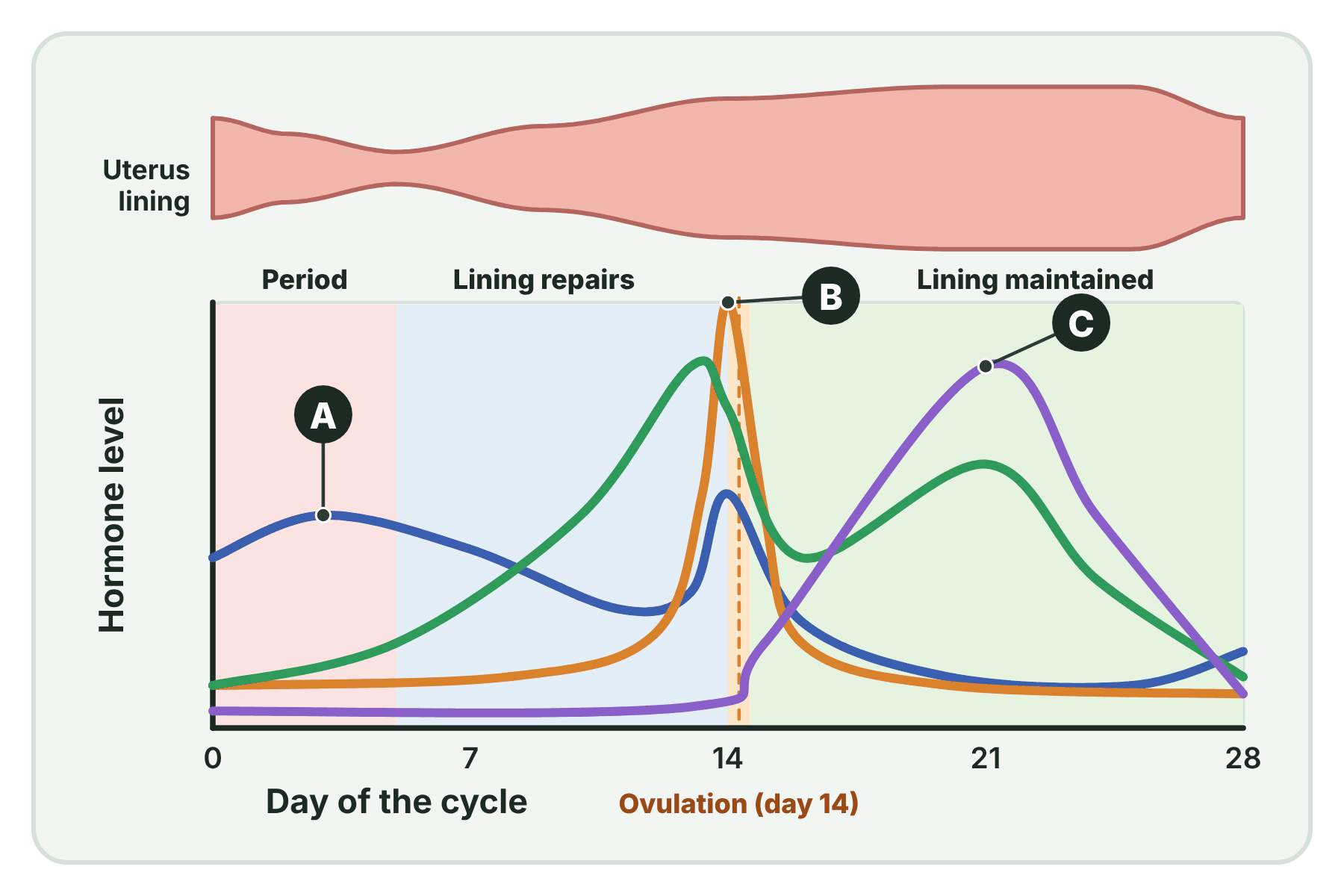
Figure 1 shows the levels of four hormones during the menstrual cycle. Name the hormones shown by the curves A, B and C.
Show answerHide answer
Model answer
A is FSH. B is LH. C is progesterone.
Mark scheme
- A: FSH — 1 mark
- B: LH — 1 mark
- C: progesterone — 1 mark
-
3 Describe [3 marks]
Describe what happens to the lining of the uterus during the menstrual cycle.
Show answerHide answer
Model answer
The lining breaks down on days 1 to 5, which is the period. It repairs and thickens between day 5 and day 14. It is maintained from day 14 to day 28 unless the woman becomes pregnant.
Mark scheme
- Breaks down in days 1 to 5 — 1 mark
- Repairs and thickens to day 14 — 1 mark
- Maintained until day 28 — 1 mark
-
4 Explain [2 marks]
The level of LH peaks on day 14. Explain what the peak causes.
Show answerHide answer
Model answer
The surge of LH causes ovulation, which is the release of a mature egg from the ovary.
Mark scheme
- Causes ovulation — 1 mark
- The release of a mature egg from the ovary — 1 mark
-
5 Explain [3 marks]
Explain why the lining of the uterus breaks down at the end of the cycle if the woman is not pregnant.
Show answerHide answer
Model answer
After ovulation progesterone maintains the lining. If there is no pregnancy, the progesterone level falls. The lining is no longer maintained, so it breaks down.
Mark scheme
- Progesterone maintains the lining — 1 mark
- If there is no pregnancy the progesterone level falls — 1 mark
- The lining breaks down — 1 mark
-
6 Explain [4 marks]
Explain how FSH, oestrogen and LH interact to cause ovulation.
Show answerHide answer
Model answer
FSH makes an egg mature and stimulates the ovary to release oestrogen. The oestrogen level rises and stops the release of more FSH, so only one egg matures. A high oestrogen level also stimulates the pituitary gland to release a surge of LH. The LH causes ovulation.
Mark scheme
- FSH matures the egg and stimulates oestrogen — 1 mark
- Oestrogen stops further FSH release — 1 mark
- High oestrogen stimulates the LH surge — 1 mark
- LH causes ovulation — 1 mark
-
7 Explain [3 marks]
Explain the part played by progesterone after ovulation.
Show answerHide answer
Model answer
Progesterone is released by the empty follicle after ovulation. It maintains the lining of the uterus, ready for an embryo. It also stops the pituitary releasing FSH and LH, so no other eggs mature.
Mark scheme
- Released after ovulation — 1 mark
- Maintains the lining — 1 mark
- Stops FSH and LH release so no new egg matures — 1 mark
Quick check
-
1
Which hormone causes ovulation?
Show answerHide answer
B: LH
A surge of LH causes ovulation.
-
2
Which hormone makes an egg mature in an ovary?
Show answerHide answer
A: FSH
FSH makes an egg mature in a follicle.
-
3
Which hormone maintains the lining of the uterus after ovulation?
Show answerHide answer
D: Progesterone
Progesterone maintains the lining.
-
4
On which day of a 28-day cycle does ovulation usually happen?
Show answerHide answer
C: Day 14
Ovulation usually happens on about day 14.
-
5
Which gland releases FSH and LH?
Show answerHide answer
B: The pituitary gland
The pituitary gland releases FSH and LH.
-
6
Which hormone is released by the testes?
Show answerHide answer
A: Testosterone
The testes release testosterone.
-
7
What does a rise in oestrogen do to FSH?
Show answerHide answer
C: It stops further FSH release
A rising oestrogen level stops the pituitary releasing more FSH.
-
8
What causes the lining of the uterus to break down at the end of a cycle?
Show answerHide answer
D: A fall in progesterone
The level of progesterone falls, so the lining is no longer maintained.
Contraception and Fertility Treatment
Just this lesson-
1 State [2 marks]
State two hormones that are in the combined contraceptive pill.
Show answerHide answer
Model answer
Oestrogen and progesterone.
Mark scheme
- Oestrogen — 1 mark
- Progesterone — 1 mark
-
2 Explain [3 marks]
Explain how the combined contraceptive pill prevents pregnancy.
Show answerHide answer
Model answer
The pill contains oestrogen and progesterone, which keep the level of these hormones high. This stops the pituitary gland releasing FSH. Without FSH no egg matures in the ovary, so there is no egg to be fertilised.
Mark scheme
- Contains oestrogen and progesterone — 1 mark
- Stops FSH release — 1 mark
- No egg matures — 1 mark
-
3 Evaluate [4 marks]
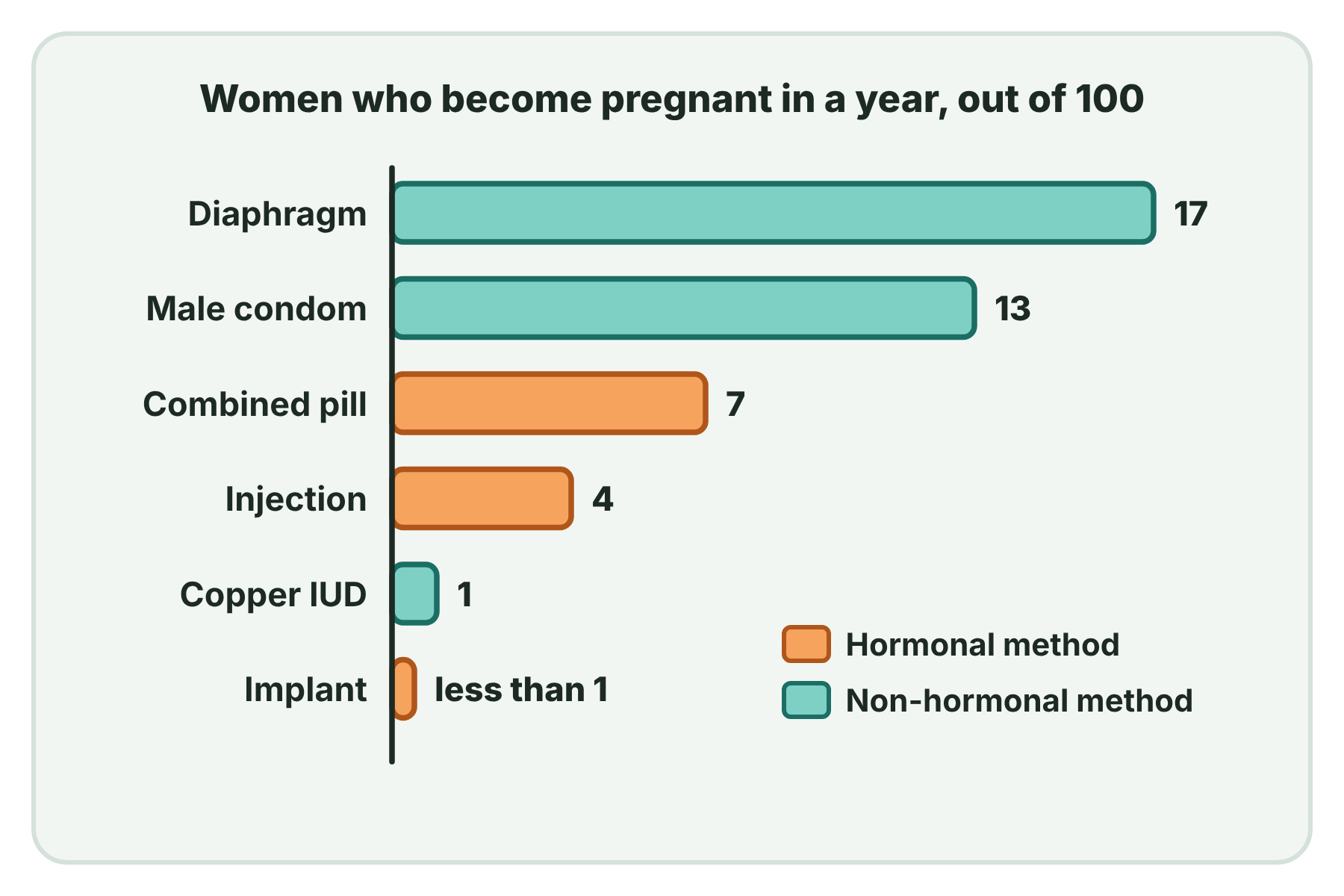
Figure 1 shows how many women out of 100 become pregnant in a year when using each method of contraception. Use the data in Figure 1 to evaluate the use of the male condom and the implant as methods of contraception.
Show answerHide answer
Model answer
The implant is much more effective, because fewer than 1 woman in 100 gets pregnant in a year, compared with 13 in 100 for the condom. The implant lasts for years and does not depend on remembering. However, the condom is the only one that protects against sexually transmitted infections, and the implant may have hormonal side effects.
Mark scheme
- Implant more effective, using the data — 1 mark
- Implant does not depend on remembering — 1 mark
- Condom protects against infection — 1 mark
- Implant may have side effects — 1 mark
-
4 Describe [3 marks]
Describe three non-hormonal methods of contraception.
Show answerHide answer
Model answer
Any three of: condoms, a diaphragm with spermicide, an IUD, abstaining at fertile times, sterilisation.
Mark scheme
- Any three methods — 3 marks
-
5 Explain [2 marks]
Explain why a progesterone injection can be more effective than the combined pill in real use.
Show answerHide answer
Model answer
The injection lasts for weeks, so it does not need to be remembered every day. The pill is often forgotten, which makes it less effective.
Mark scheme
- The injection is not taken daily — 1 mark
- The pill may be forgotten — 1 mark
-
6 Describe [4 marks]
Describe the main stages of in vitro fertilisation (IVF).
Show answerHide answer
Model answer
The woman is given FSH and LH so that several eggs mature. The eggs are collected from the ovaries. They are mixed with sperm in a dish, where they are fertilised. The embryos grow for a few days, and one or two are put into the uterus.
Mark scheme
- FSH and LH to mature eggs — 1 mark
- Eggs collected — 1 mark
- Fertilised with sperm in a dish — 1 mark
- Embryos put into the uterus — 1 mark
-
7 Evaluate [4 marks]
Evaluate the use of IVF to treat infertility.
Show answerHide answer
Model answer
IVF can give a baby to couples who cannot conceive in any other way. However, many cycles do not work, and the success rate falls with age. The hormones may have side effects, and more than one embryo can lead to multiple births, which carry more risk. It is stressful and expensive, and some people have ethical objections to unused embryos being destroyed.
Mark scheme
- Gives a baby to couples who cannot conceive — 1 mark
- Low success rate — 1 mark
- Health risks, such as multiple births — 1 mark
- Cost, stress or ethical issues — 1 mark
Quick check
-
1
Which two hormones are in the combined pill?
Show answerHide answer
C: Oestrogen and progesterone
The combined pill contains oestrogen and progesterone.
-
2
Which method of contraception also protects against sexually transmitted infections?
Show answerHide answer
B: The condom
Only the condom provides a barrier to infection.
-
3
How does the combined pill stop an egg maturing?
Show answerHide answer
A: It stops FSH release
It stops the pituitary releasing FSH.
-
4
Which of these is a permanent method of contraception?
Show answerHide answer
D: Sterilisation
Sterilisation is permanent.
-
5
In the chart, which method has the fewest pregnancies in a year?
Show answerHide answer
C: The implant
The implant has fewer than 1 pregnancy per 100 women in a year.
-
6
Why is the daily pill less effective in real use than the implant?
Show answerHide answer
B: It can be forgotten
The pill can be forgotten, but the implant needs no daily action.
-
7
Which hormones can be given to a woman who does not ovulate?
Show answerHide answer
A: FSH and LH
FSH and LH stimulate eggs to mature and be released.
-
8
Where does fertilisation happen in IVF?
Show answerHide answer
D: In a laboratory dish
In IVF the egg is fertilised by sperm in a laboratory dish.
Plant Hormones
Just this lesson-
1 State [2 marks]
State two effects of plant hormones on the growth of a plant.
Show answerHide answer
Model answer
Any two of: shoots grow towards light, roots grow down, seeds germinate, fruit ripens, stems grow, leaves are shed.
Mark scheme
- Effect 1 — 1 mark
- Effect 2 — 1 mark
-
2 Name [3 marks]
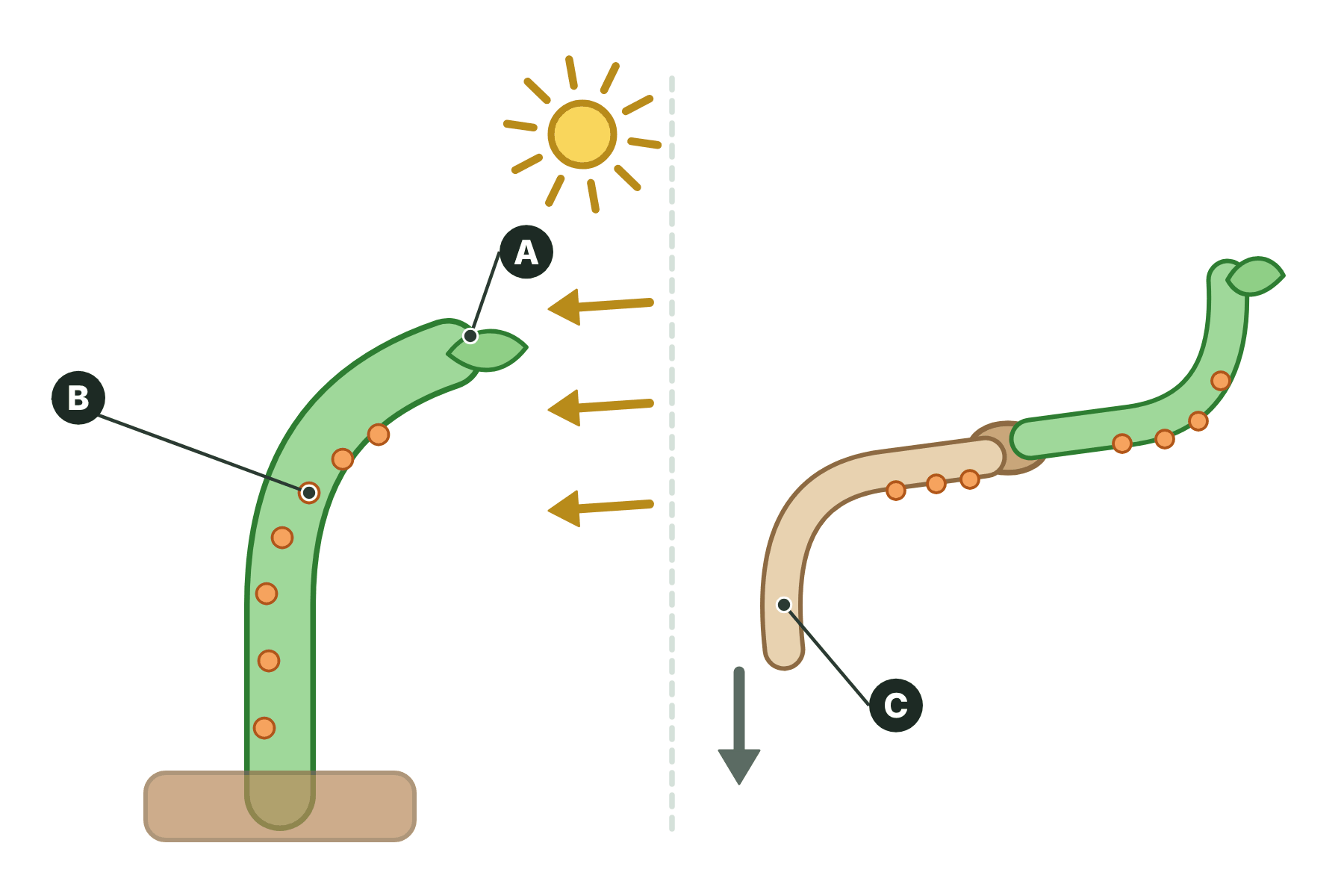
Figure 1 shows a shoot and a seedling. Name the parts shown at A, B and C.
Show answerHide answer
Model answer
A is the shoot tip. B is auxin. C is the root.
Mark scheme
- A: shoot tip — 1 mark
- B: auxin — 1 mark
- C: root — 1 mark
-
3 Explain [4 marks]
Explain how auxin causes a shoot to grow towards the light.
Show answerHide answer
Model answer
Light comes from one side of the shoot. Auxin moves to the shaded side of the shoot. The auxin makes the cells on the shaded side elongate more than the cells on the lit side. The shoot therefore bends towards the light.
Mark scheme
- Light from one side — 1 mark
- Auxin moves to the shaded side — 1 mark
- Cells on the shaded side elongate more — 1 mark
- Shoot bends towards the light — 1 mark
-
4 Explain [3 marks]
A seedling is laid on its side. Explain why its root bends downwards.
Show answerHide answer
Model answer
Auxin collects on the lower side of the root. In the root, a high concentration of auxin stops the cells elongating. The cells on the upper side elongate more, so the root bends downwards.
Mark scheme
- Auxin collects on the lower side — 1 mark
- Auxin stops elongation in roots — 1 mark
- Upper side grows faster so the root bends down — 1 mark
-
5 Describe [3 marks]
Describe three ways in which people use plant hormones.
Show answerHide answer
Model answer
Any three of: selective weedkillers using synthetic auxin, rooting powder for cuttings, spraying flowers to make seedless fruit, ripening fruit with ethene, ending seed dormancy with gibberellins.
Mark scheme
- Any three uses — 3 marks
-
6 Explain [3 marks]
Explain why fruit is often picked unripe and then treated with ethene.
Show answerHide answer
Model answer
Unripe fruit is firmer, so it is less easily damaged during transport. The fruit can then be ripened when it reaches the shops. Ethene is the plant hormone that makes fruit ripen.
Mark scheme
- Unripe fruit less easily damaged — 1 mark
- Ripened when needed — 1 mark
- Ethene makes fruit ripen — 1 mark
-
7 Explain [3 marks]
Explain how a selective weedkiller can kill weeds without killing the crop.
Show answerHide answer
Model answer
The weedkiller contains a synthetic auxin. Broad-leaved weeds take it in and grow too fast, so they die. The crop, such as wheat, has narrow leaves and is not affected in the same way.
Mark scheme
- Contains synthetic auxin — 1 mark
- Weeds grow too fast and die — 1 mark
- The crop is not affected — 1 mark
Quick check
-
1
Which hormone makes shoot cells elongate?
Show answerHide answer
B: Auxin
Auxin makes the cells of shoots elongate.
-
2
Which hormone is a gas that makes fruit ripen?
Show answerHide answer
D: Ethene
Ethene makes fruit ripen.
-
3
What is phototropism?
Show answerHide answer
A: A growth response to light
Phototropism is a growth response to light.
-
4
Where does auxin collect in a shoot with light from one side?
Show answerHide answer
C: On the shaded side
Auxin moves to the shaded side.
-
5
What do gibberellins do?
Show answerHide answer
B: End the dormancy of seeds
Gibberellins end seed dormancy so that seeds germinate.
-
6
Which of these is a use of auxin?
Show answerHide answer
D: Rooting powder for cuttings
Rooting powder contains auxin to make cuttings grow roots.
-
7
What is gravitropism?
Show answerHide answer
A: A growth response to gravity
Gravitropism is a growth response to gravity.
-
8
In which direction does a root grow in response to gravity?
Show answerHide answer
C: Downwards
Roots grow downwards, in the direction of gravity.