Flashcards · Biology · The Nervous System
The Eye
-
What does the cornea do?
It refracts light and does most of the focusing.
-
What does the iris do?
It controls the amount of light entering the eye.
-
What is the pupil?
The hole in the iris that lets light in.
-
What does the lens do?
It changes shape to focus light on the retina.
-
What does the retina contain?
Light receptor cells, rods and cones.
-
What does the optic nerve do?
It carries impulses from the retina to the brain.
-
What do the suspensory ligaments do?
They connect the lens to the ciliary body and hold it in place.
-
What happens to the pupil in bright light?
It becomes smaller.
-
What happens to the pupil in dim light?
It becomes larger.
-
How does the lens change to see a near object?
The ciliary muscles contract, the ligaments slacken and the lens becomes thicker.
-
How does the lens change to see a distant object?
The ciliary muscles relax, the ligaments are pulled tight and the lens becomes thinner.
-
What causes short-sightedness?
The lens is too strong or the eyeball too long, so light focuses in front of the retina.
-
How is short sight corrected?
With a concave lens.
-
How is long sight corrected?
With a convex lens.
-
What causes colour blindness?
Faulty cone cells.
-
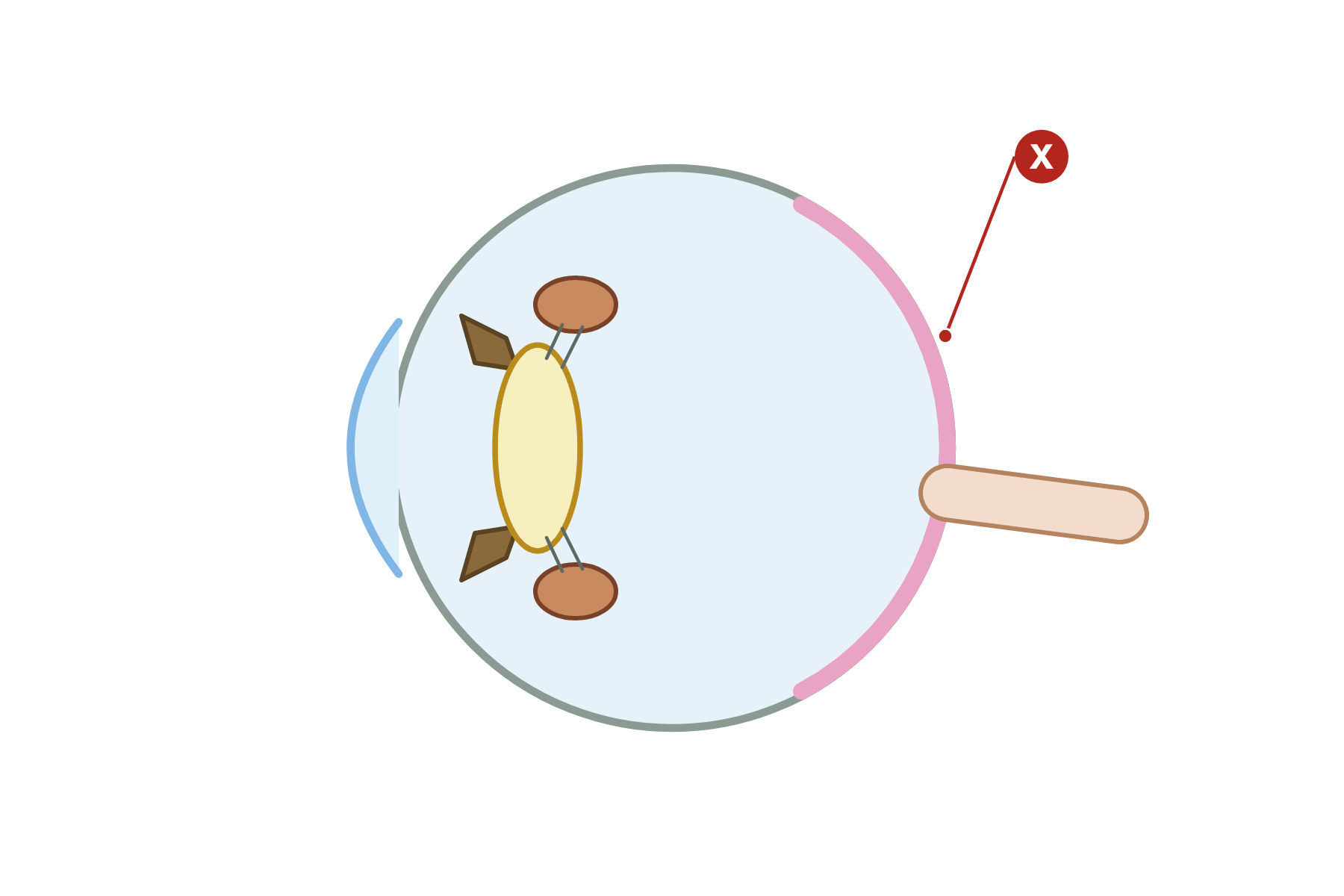 Name the part of the eye marked X and say what it does.
 The retina. It contains the light receptor cells, the rods and cones.
-
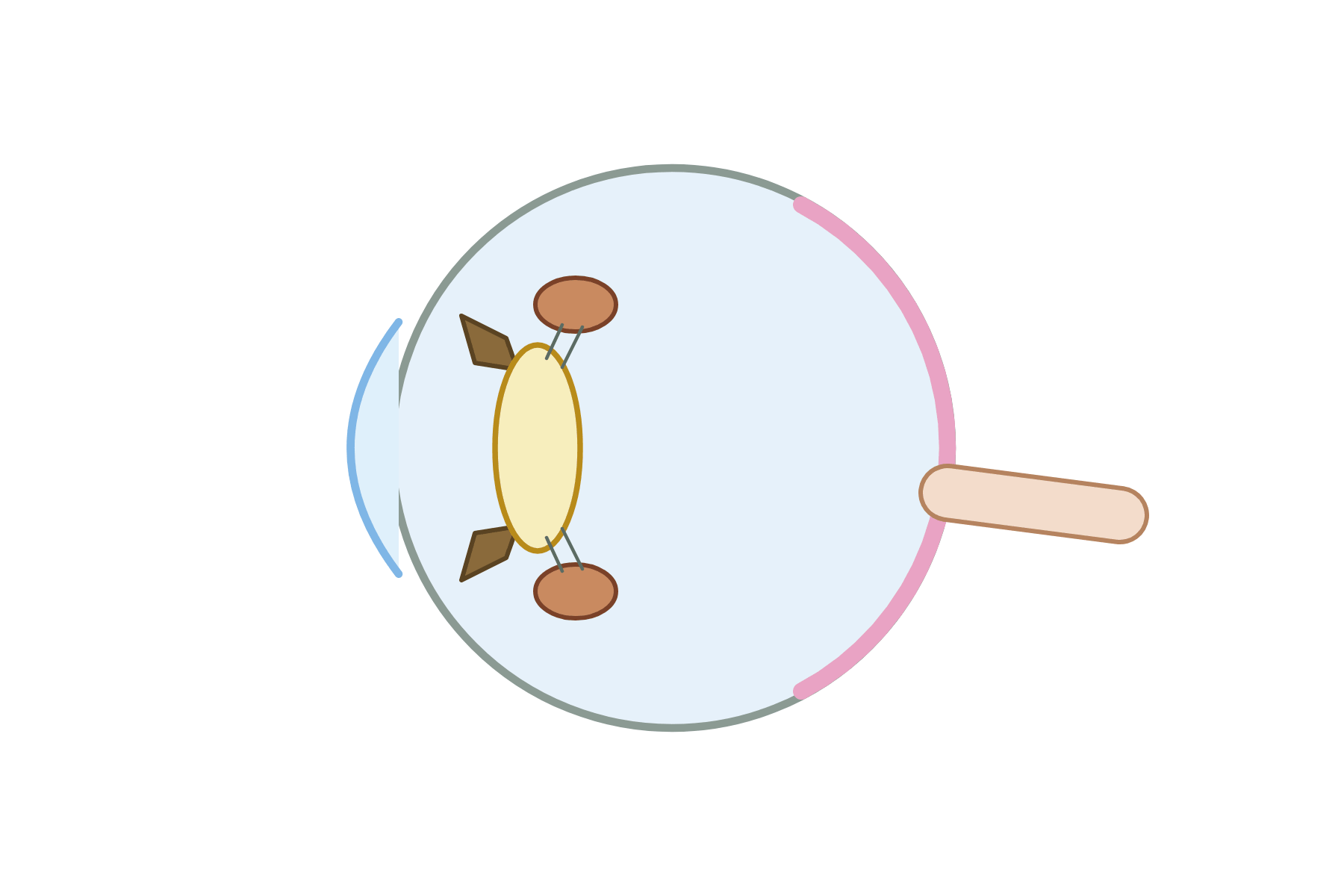 Label the eye.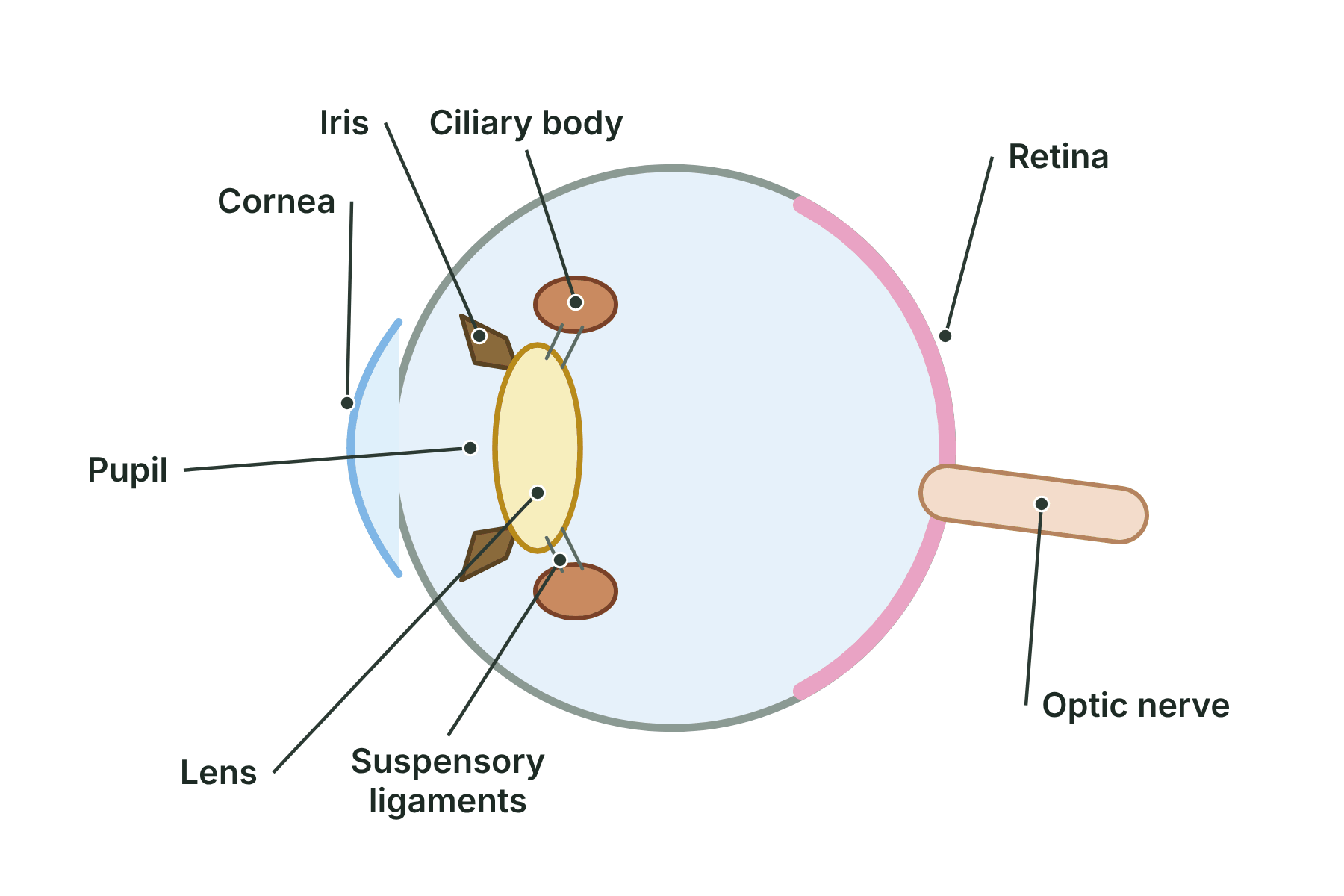
Cornea, iris, pupil, lens, ciliary body, suspensory ligaments, retina and optic nerve.
-
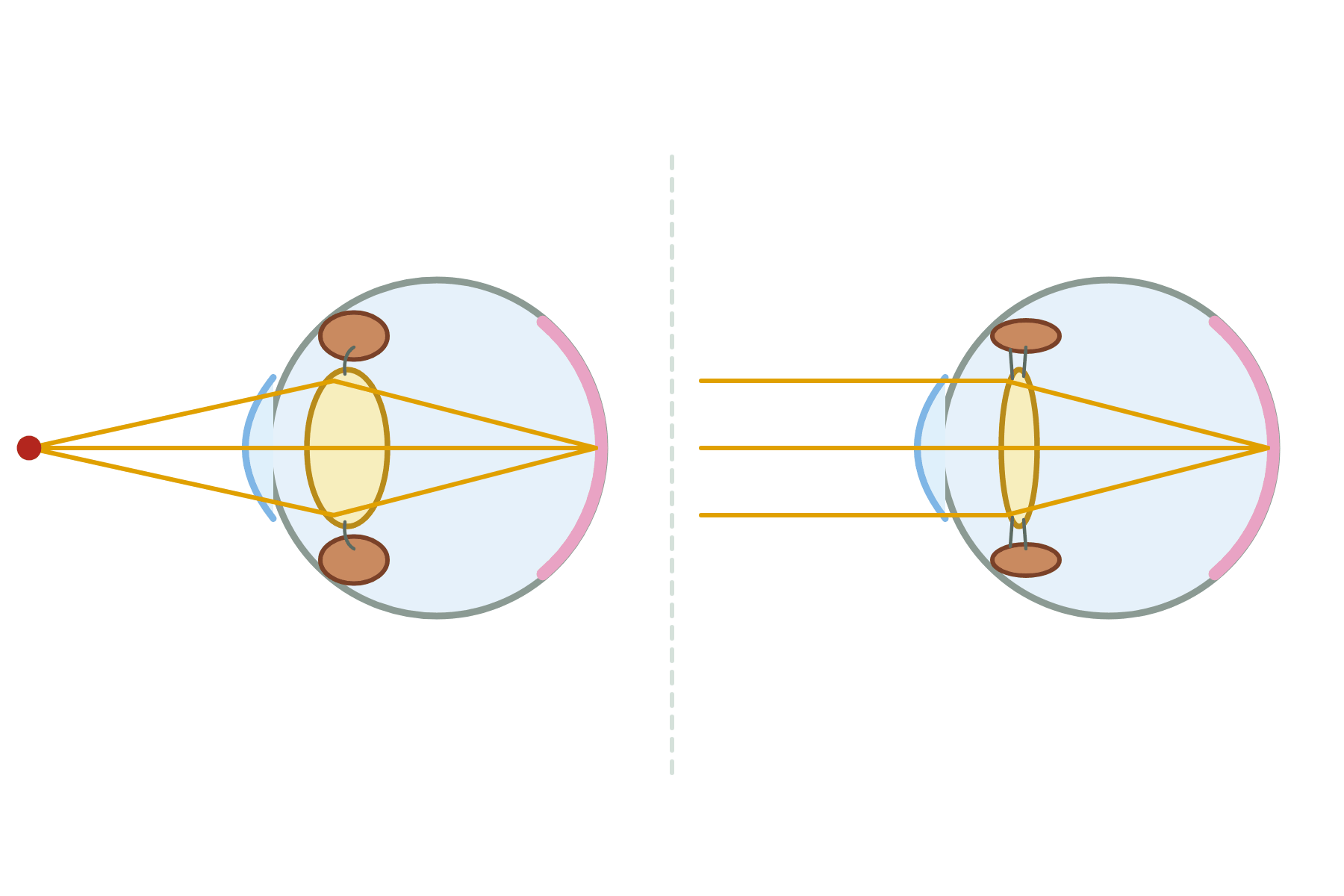 Describe what happens to the lens in each eye.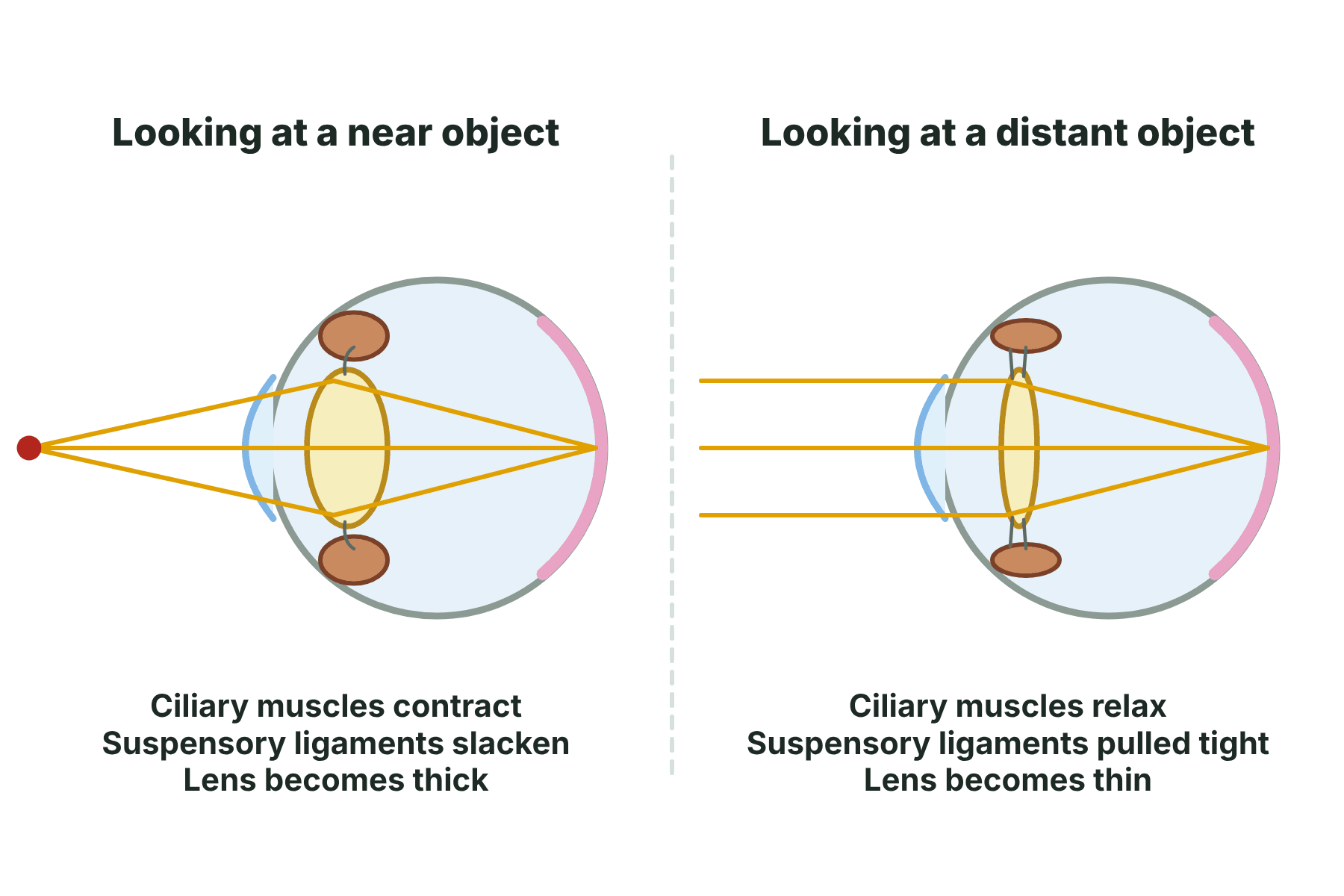
Near object: the ciliary muscles contract, the ligaments slacken and the lens is thick. Distant object: the ciliary muscles relax, the ligaments are taut and the lens is thin.