Flashcards · Biology · Transport in Plants
Measuring Transpiration
-
What does a potometer measure?
The rate of water uptake by a shoot, which estimates transpiration.
-
Why is the shoot cut under water?
To stop air getting into the xylem and blocking it.
-
What does the air bubble show?
How much water the shoot has taken up.
-
How do you work out the rate of uptake?
Distance moved by the bubble ÷ time.
-
What is the independent variable if you move a lamp?
The distance of the lamp (the light intensity).
-
What is the dependent variable in a potometer experiment?
The distance the bubble moves in a set time.
-
Name two control variables.
Any two of the same shoot, same time, same temperature, same light or wind.
-
Why repeat the experiment?
To check the results are reliable and to calculate a mean.
-
How can you increase the humidity around the shoot?
Cover it with a clear plastic bag.
-
Why is water uptake only an estimate of transpiration?
Some of the water is used in photosynthesis and growth.
-
How do you find the volume of water taken up?
π r² × the distance the bubble moves.
-
How do you make an impression of the stomata?
Paint clear nail varnish on the leaf, then peel it off with sticky tape.
-
How do you calculate the stomatal density?
The number of stomata ÷ the area of the field of view.
-
Why must the joints of the potometer be airtight?
So that no air enters, which would move the bubble.
-
What would a fan do to the rate?
Increase it, by removing water vapour from around the leaf.
-
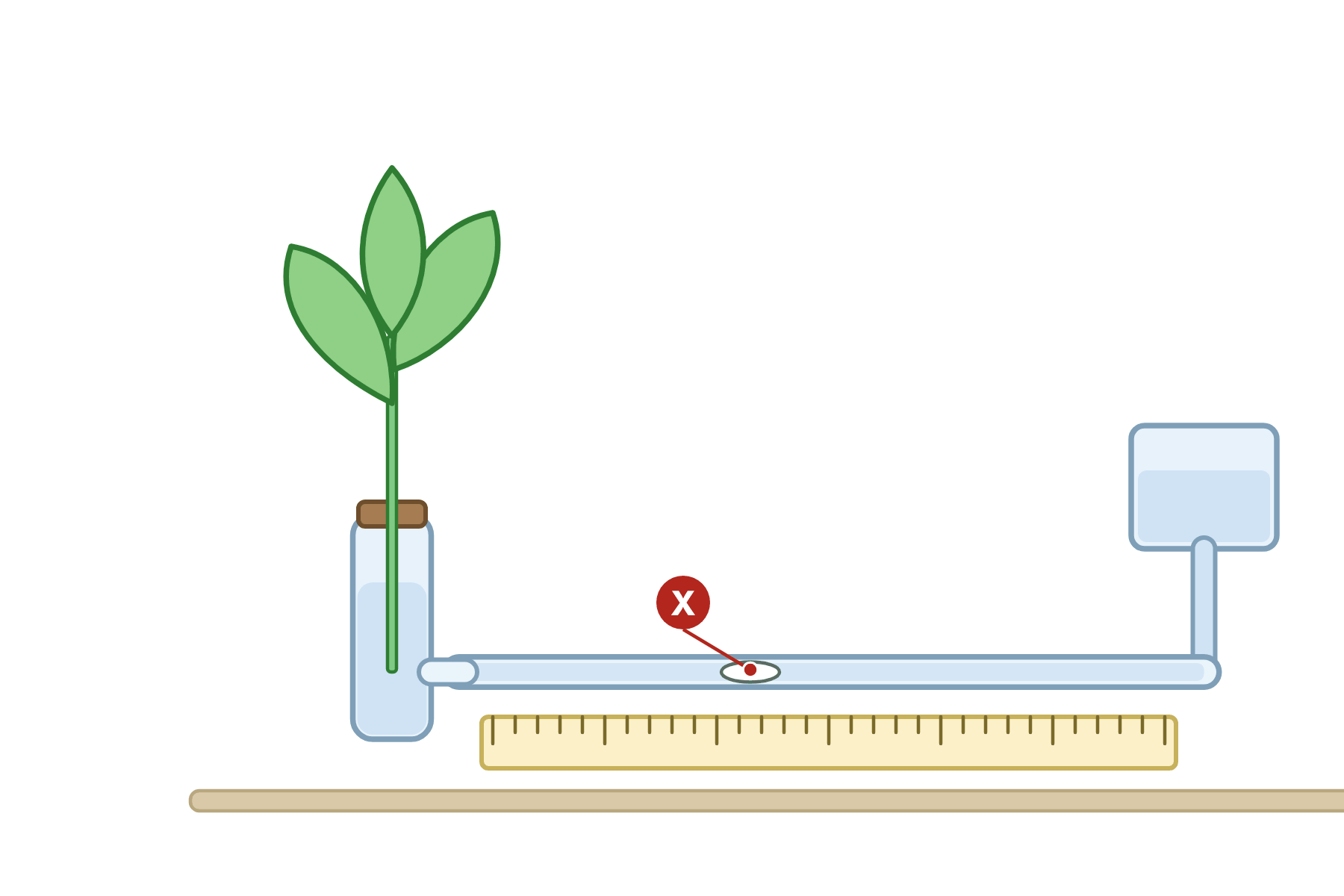 Name the part marked X and say what it shows.
 The air bubble. It moves along the capillary tube as the shoot takes up water, so its distance shows the water taken up.
-
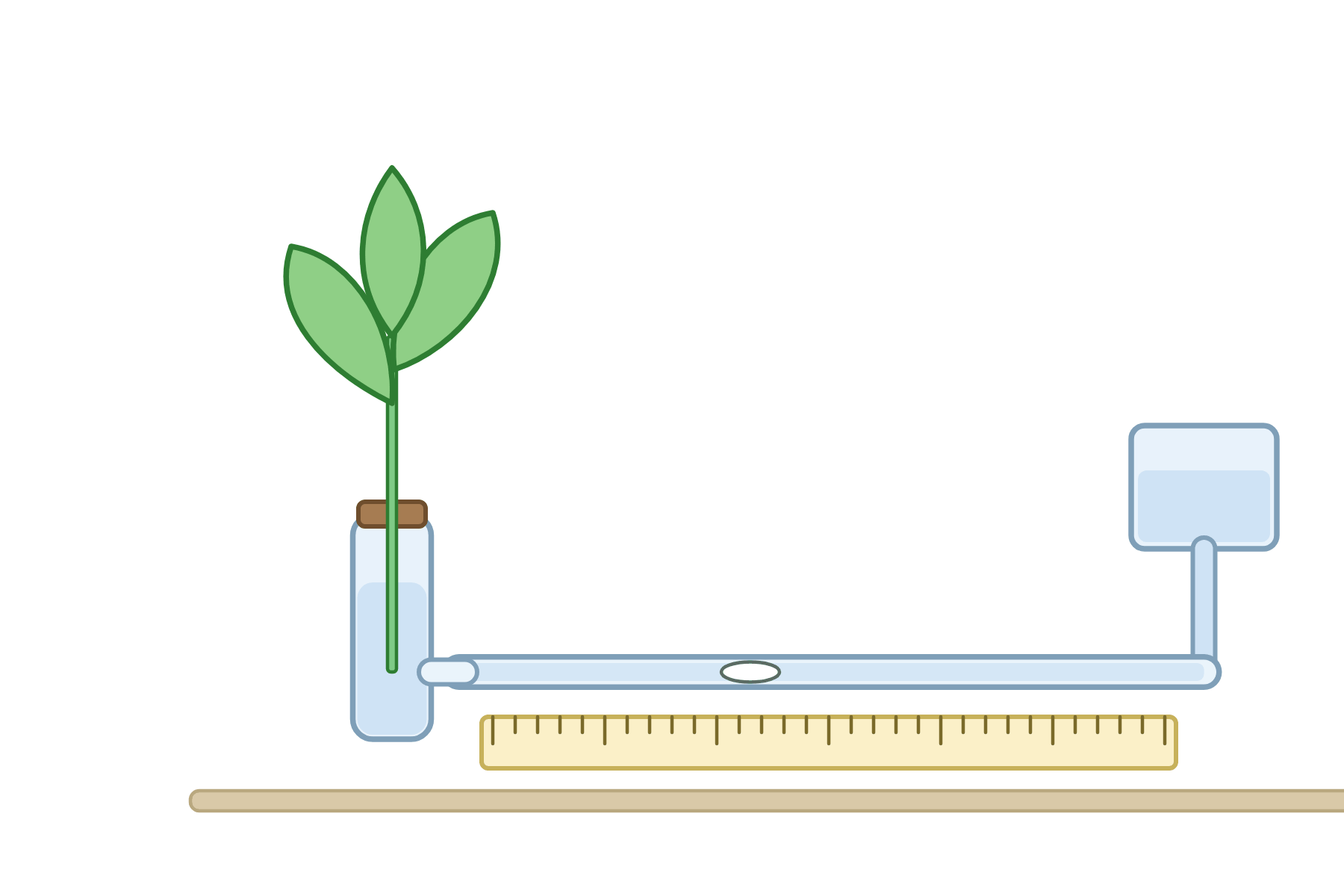 Label the parts of the potometer.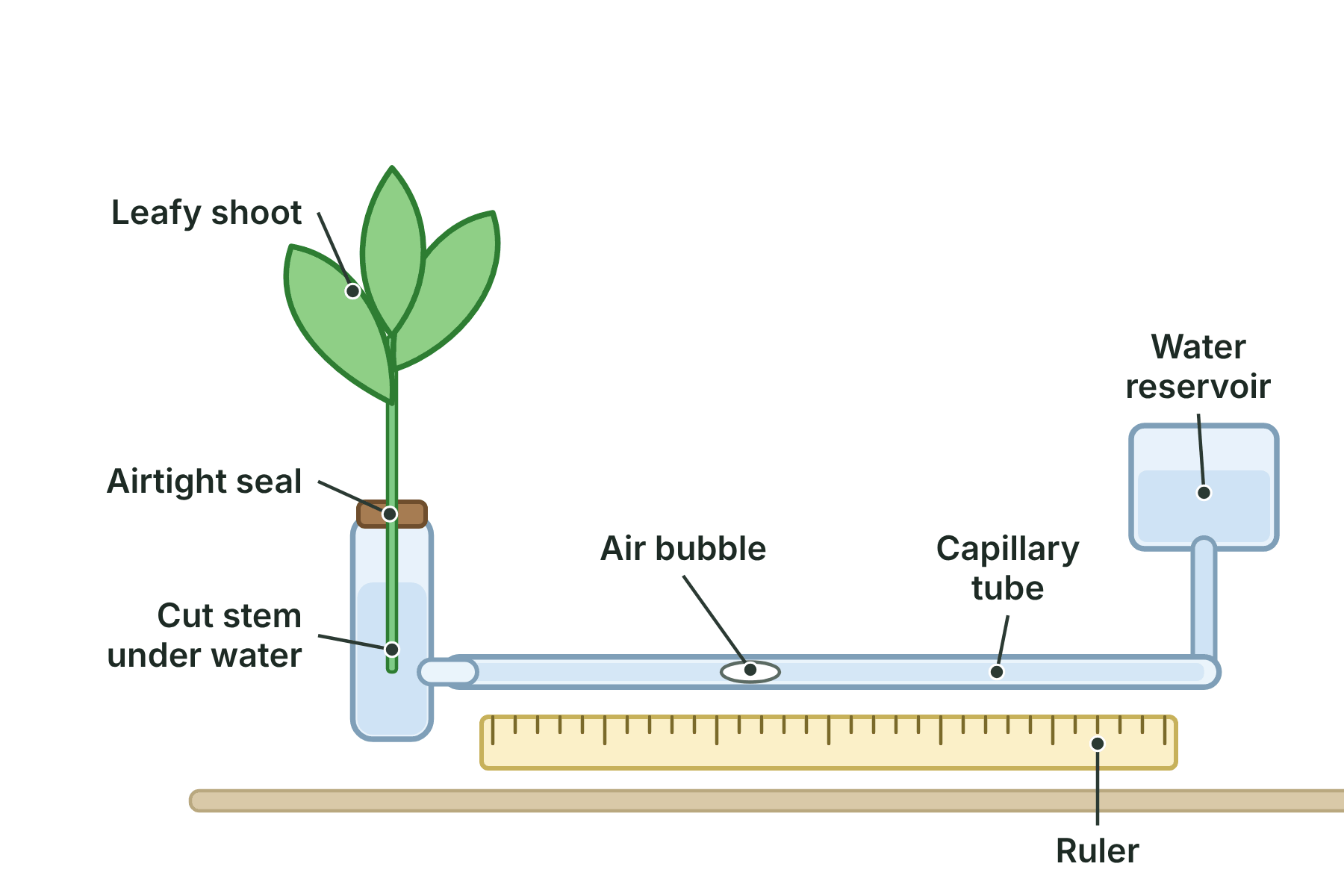
Leafy shoot, cut stem, airtight seal, air bubble, capillary tube, ruler and water reservoir.