Flashcards · Biology · Transport in Plants
Translocation and the Phloem
-
What is translocation?
The movement of dissolved sugars through the phloem.
-
What does phloem carry?
Dissolved sugars (food made by photosynthesis).
-
Where does phloem carry sugars from?
From the leaves, where they are made, to the rest of the plant.
-
Why do roots need sugars from the leaves?
They cannot photosynthesise, but need energy and materials to grow.
-
Name two ways the sugars are used.
For immediate use in respiration and growth, or stored.
-
Is phloem made of living or dead cells?
Living cells.
-
How does cell sap move from one phloem cell to the next?
Through pores in the end walls.
-
In which directions does phloem carry sugars?
Both up and down the plant.
-
What does xylem carry?
Water and mineral ions, from the roots to the leaves.
-
Which tissue is made of dead cells?
Xylem.
-
Which tissue has pores in the end walls?
Phloem.
-
Which tissue is strengthened with lignin?
Xylem.
-
Where can sugars be stored in a plant?
In roots, tubers and fruits.
-
What would happen if the phloem were cut all round a trunk?
Sugars could not reach the roots, so the roots and then the tree would die.
-
Do you need to know the detailed structure of phloem or how it works?
No. It is not required.
-
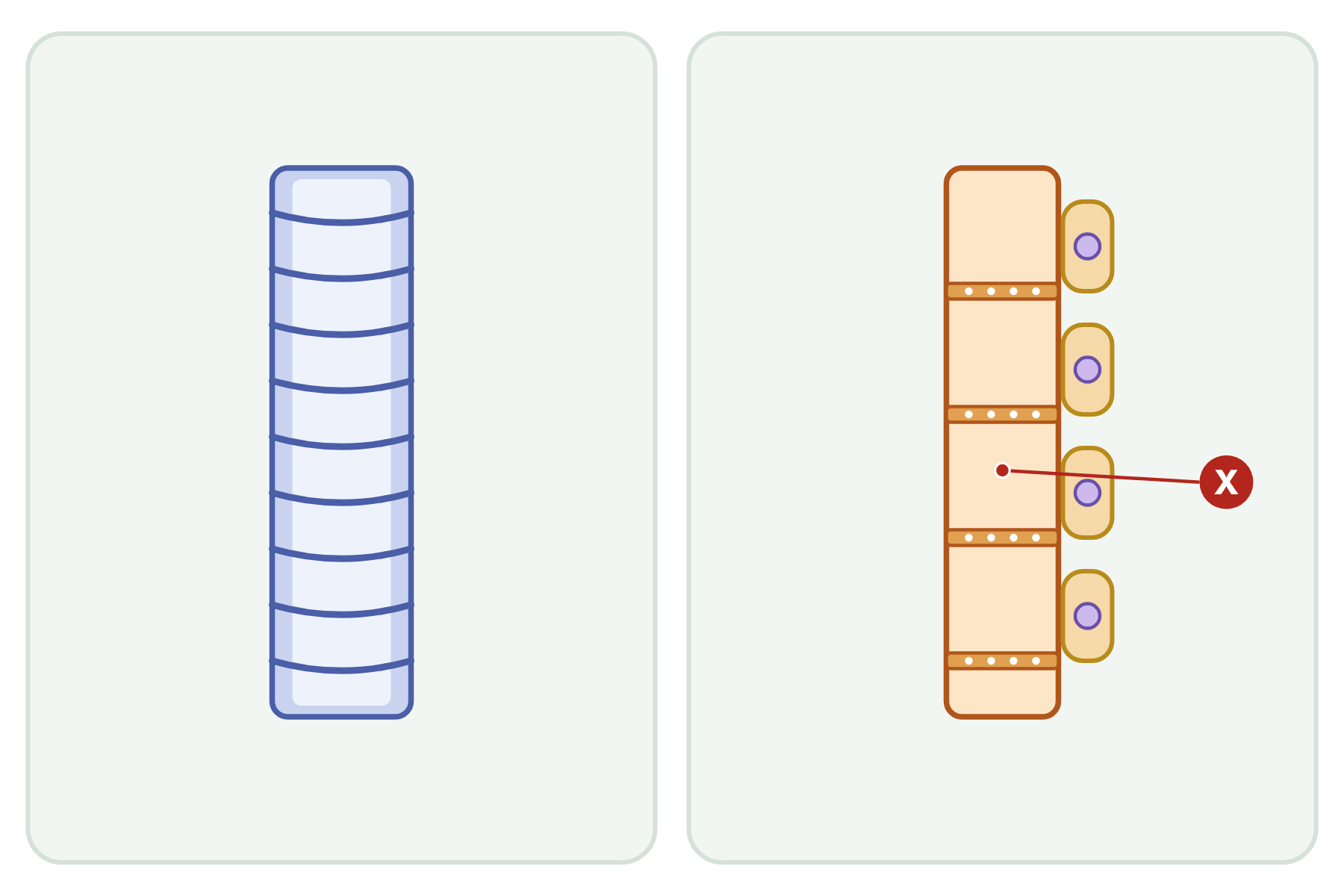 Name the tissue shown on the right, and say what it carries.
 Phloem. It carries dissolved sugars up and down the plant, in a process called translocation.
-
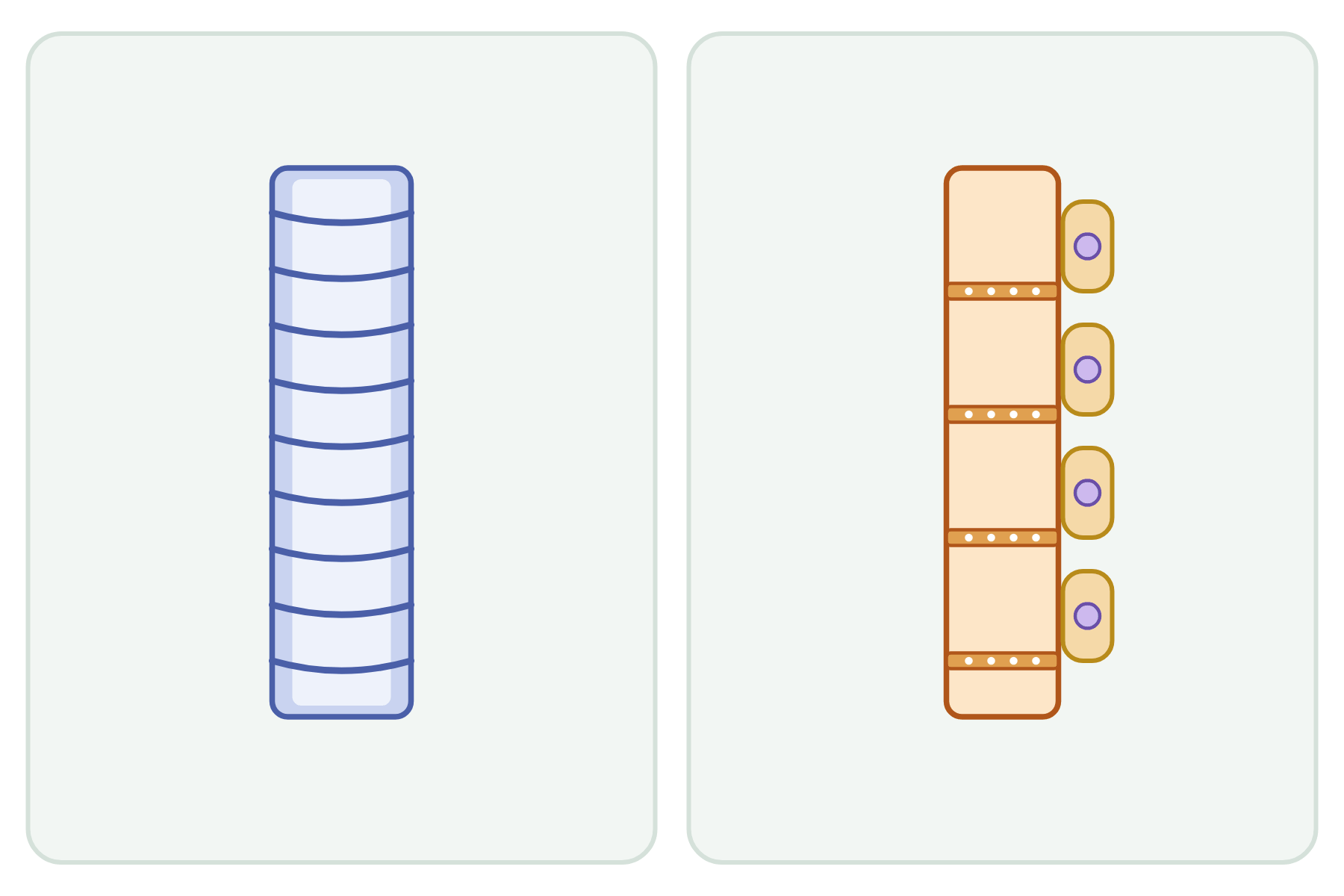 Label the xylem and the phloem.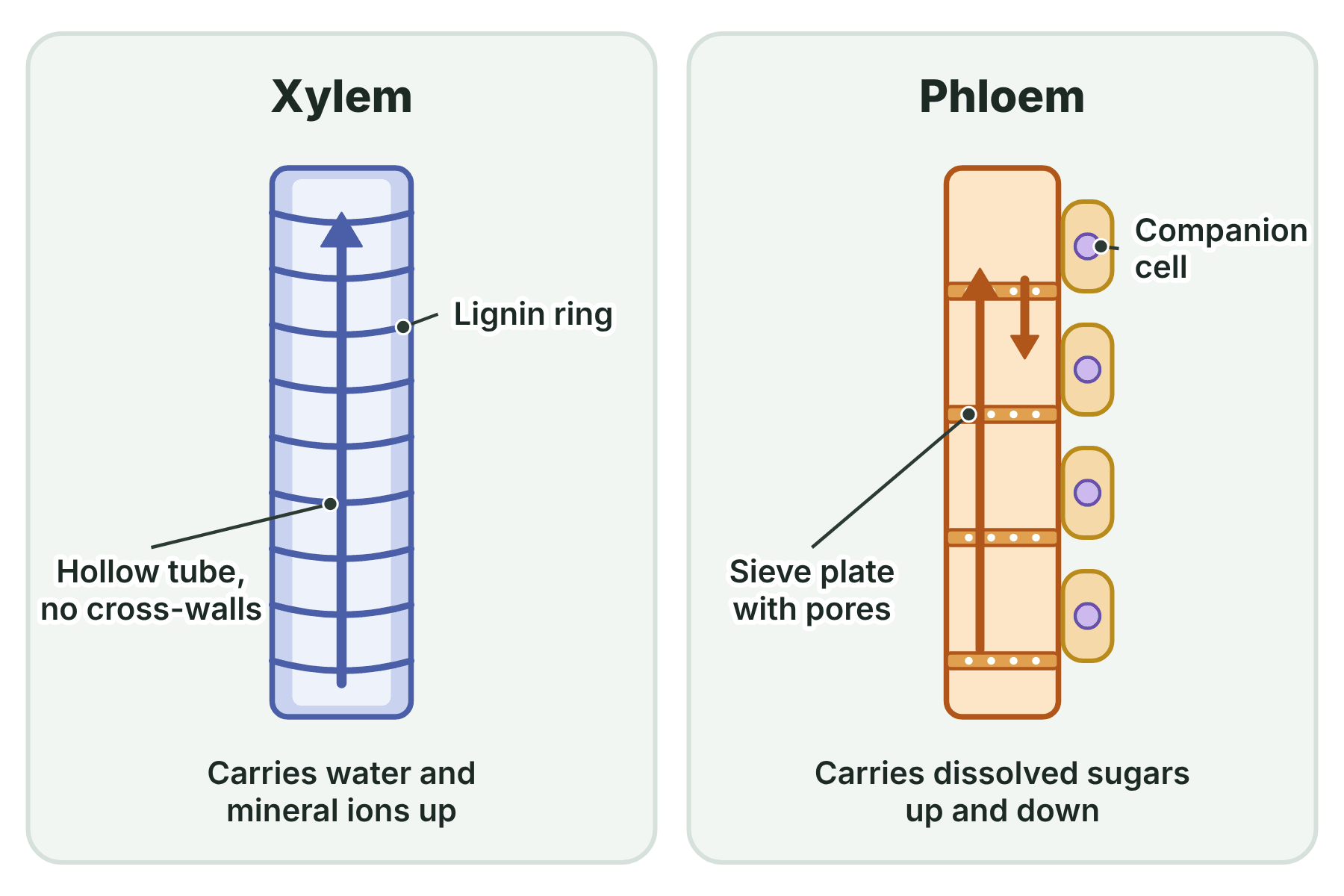
Xylem: hollow dead cells with lignin, carries water and ions up. Phloem: living cells with pores in the end walls and companion cells, carries sugars up and down.