Flashcards · Biology · Transport in Plants
Transpiration and the Xylem
-
How do root hair cells take up water?
By osmosis.
-
How do root hair cells take up mineral ions?
By active transport.
-
Why do root hair cells have many mitochondria?
To release energy from respiration for active transport.
-
How is a root hair cell adapted for absorbing water?
Its long thin extension gives a large surface area.
-
What does xylem carry?
Water and mineral ions from the roots to the stems and leaves.
-
Why are xylem cells hollow?
They have lost their contents and cross-walls, so water can flow through them as continuous tubes.
-
What is lignin for?
It strengthens the xylem walls so they do not collapse.
-
What is transpiration?
The loss of water vapour from the leaves, mainly through the stomata.
-
What is the transpiration stream?
The movement of water from the roots up the xylem to the leaves.
-
Why is transpiration useful?
It brings water for photosynthesis and minerals, cools the leaf and keeps cells firm.
-
What do stomata and guard cells control?
Gas exchange and water loss.
-
How does a higher temperature affect transpiration?
It increases the rate.
-
How does high humidity affect transpiration?
It decreases the rate.
-
How does more air movement affect transpiration?
It increases the rate, by removing water vapour.
-
How does brighter light affect transpiration?
It increases the rate, because the stomata open wider.
-
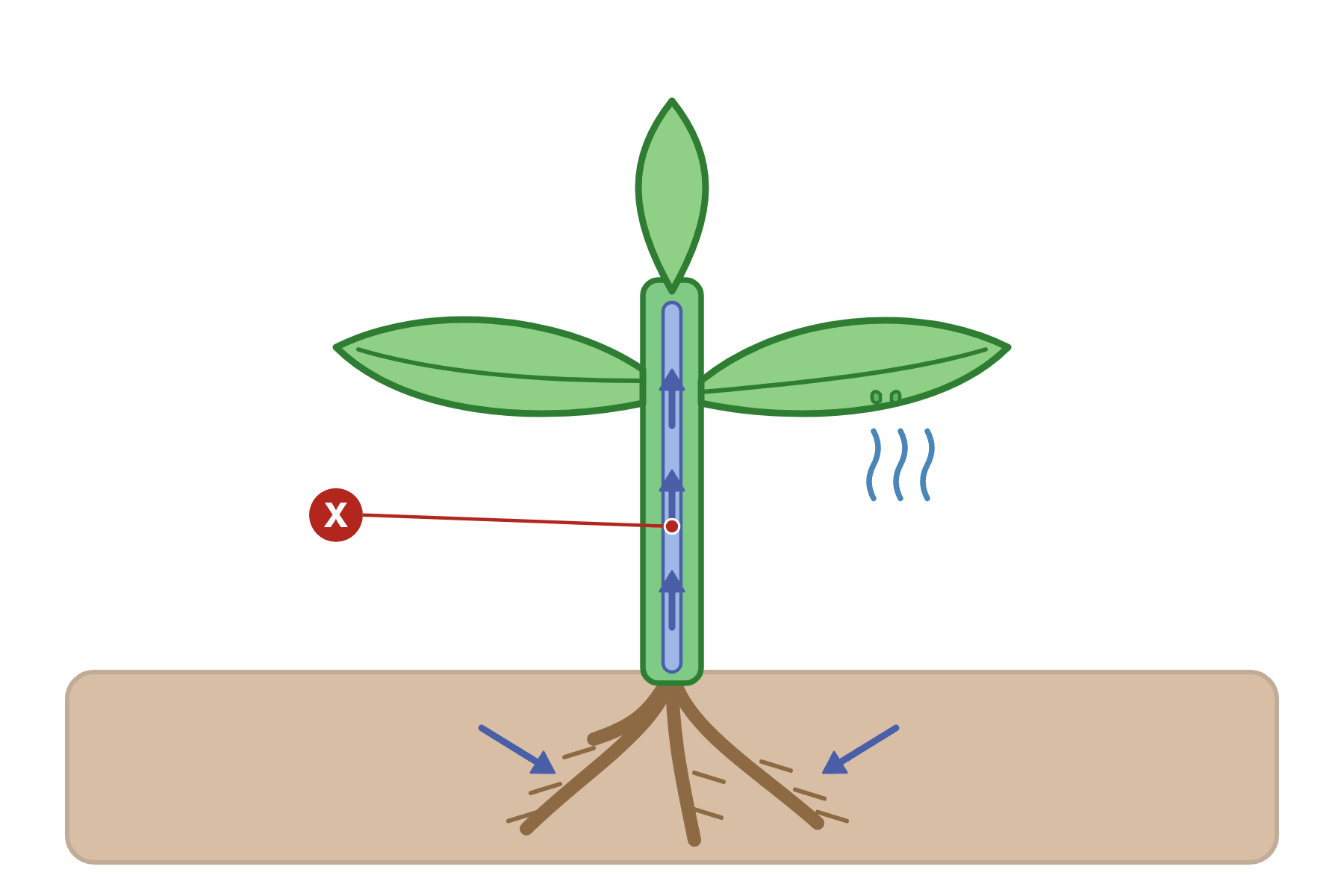 Name the part marked X and say what it carries.
 The xylem. It carries water and mineral ions from the roots to the leaves.
-
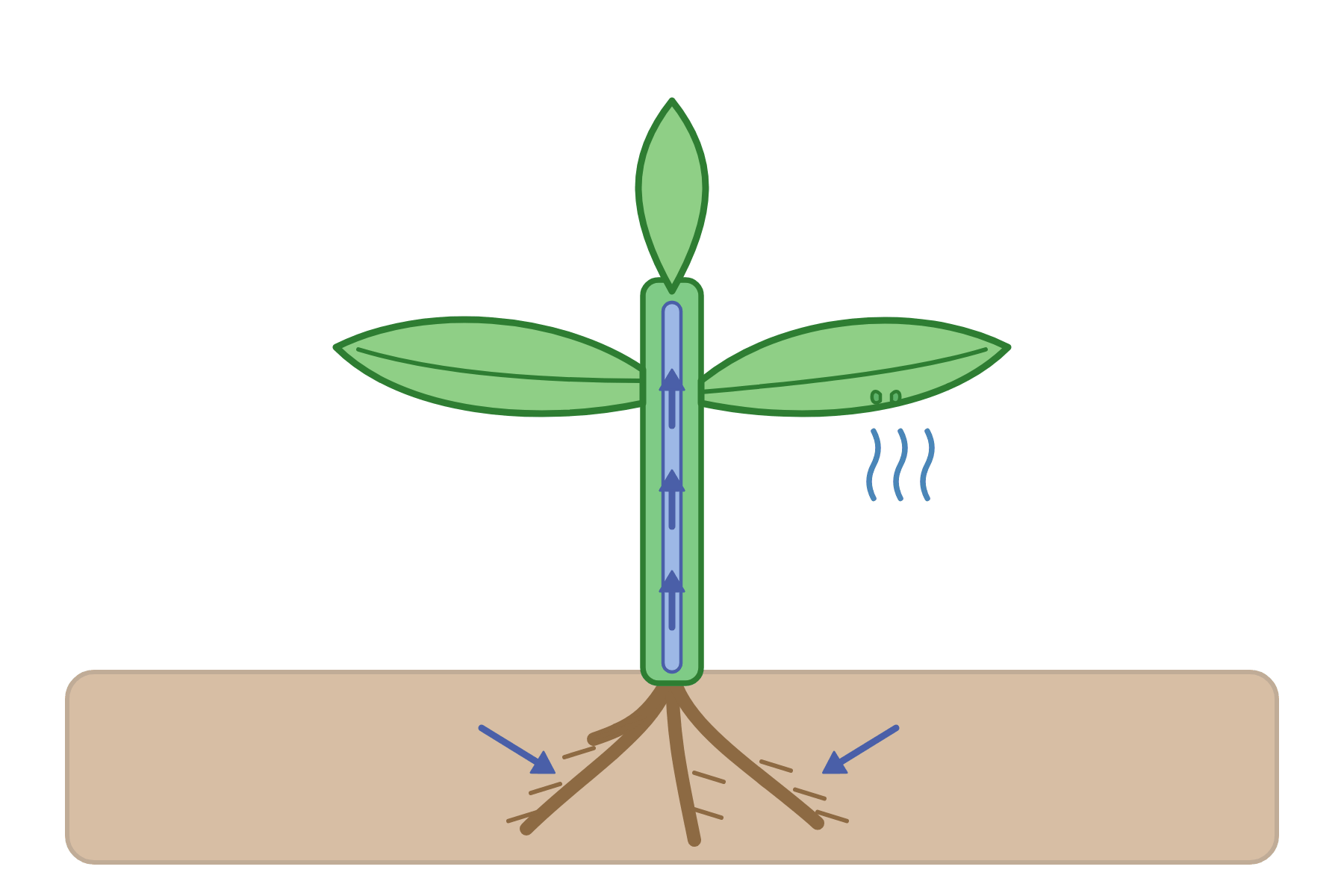 Label the parts of this plant and what moves where.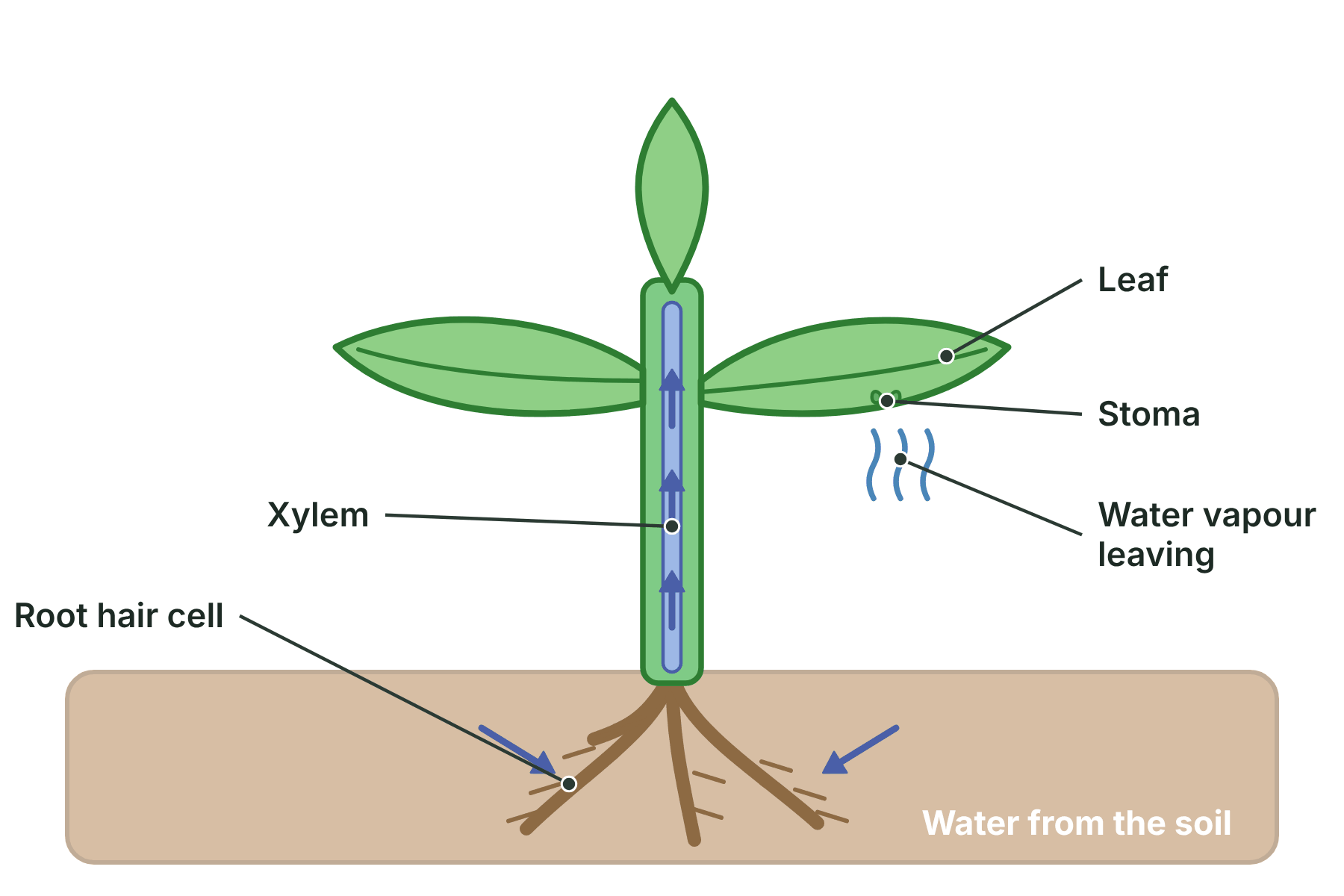
Water from the soil, root hair cell, xylem carrying water and mineral ions up, leaf, stoma, water vapour out.