Flashcards · Biology
Communities in Ecosystems
-
What is an organism?
A single living thing.
-
What is a species?
A group of similar organisms that can breed together to produce fertile offspring.
-
What is a population?
All the organisms of one species living in an area.
-
What is a community?
All the populations of different species living in an area.
-
What is an ecosystem?
A community and its non-living surroundings.
-
What is a habitat?
The place where an organism lives.
-
Which level includes the abiotic factors?
The ecosystem.
-
Which level of organisation is only made of one species?
A population.
-
Name the four levels in order, from smallest to largest.
Organism, population, community, ecosystem.
-
What is an example of a population in a pond?
All the sticklebacks.
-
What is an example of a community in a pond?
All the plants and animals living in it.
-
Give an example of an abiotic part of a pond ecosystem.
The water, light or temperature.
-
Can an ecosystem be small?
Yes, for example a puddle or a rotting log.
-
How many species are in a population?
One.
-
Why can many species share an ecosystem?
Each species has its own habitat and role.
-
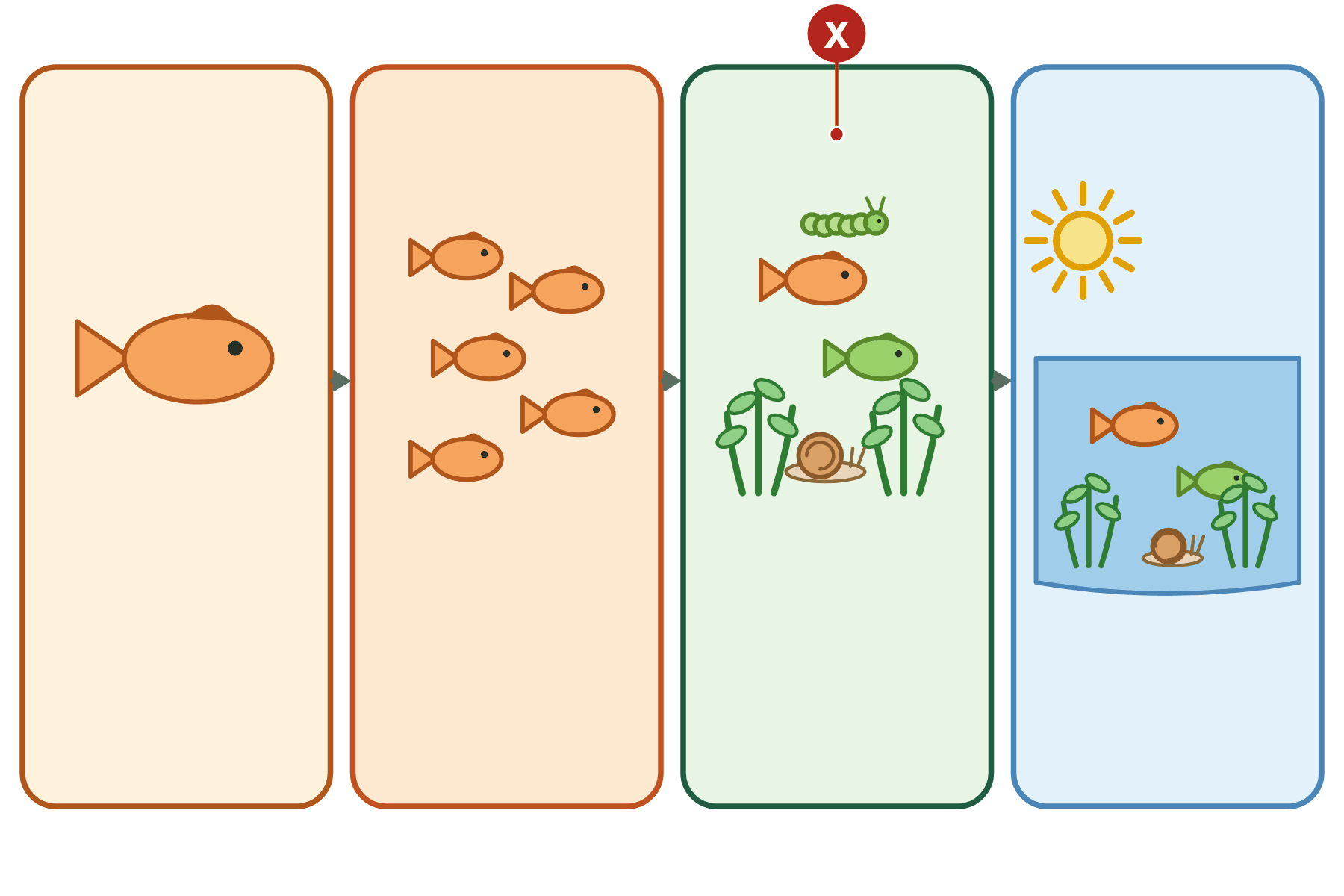 Name the level of organisation marked X.
 A community. It is all the populations of different species living in an area.
-
 Describe each level of organisation.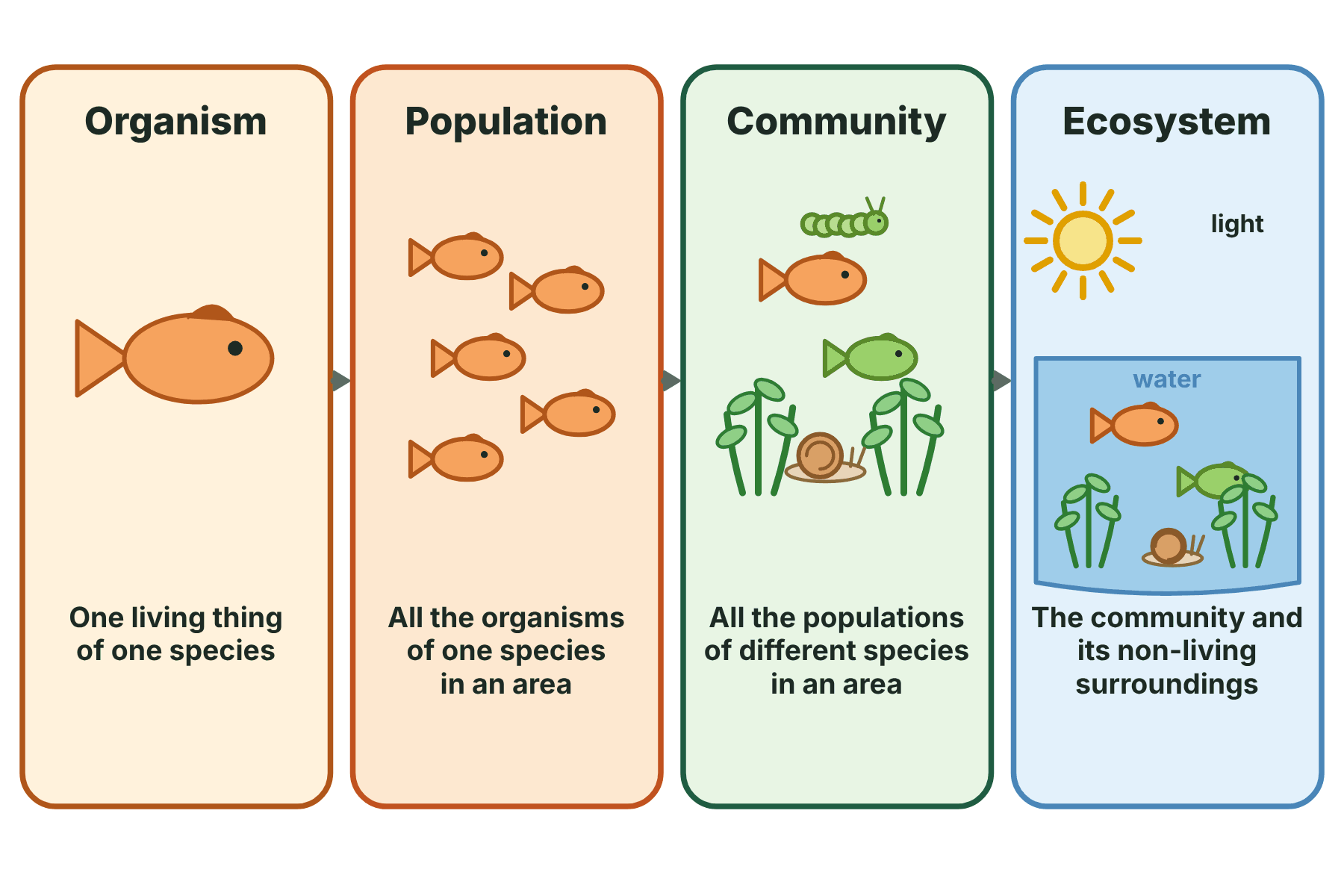
Organism: one living thing. Population: all the organisms of one species in an area. Community: all the populations of different species in an area. Ecosystem: the community and its non-living surroundings.
-
What are abiotic factors?
The non-living factors in an ecosystem.
-
What are biotic factors?
The living factors in an ecosystem.
-
Name four abiotic factors.
Temperature, light intensity, moisture level and soil pH.
-
Name three biotic factors.
Predators, food and disease.
-
Why does light intensity affect plants?
They need light for photosynthesis.
-
How does soil pH affect plants?
It changes how well the roots take up minerals, so it decides which plants grow.
-
What happens to prey if predators increase?
The population of the prey falls.
-
What happens to an animal population if its food runs out?
It falls.
-
What is a quadrat used for?
To sample the organisms in a small area.
-
What is a transect?
A line along which samples are taken to see how species change.
-
How can you measure light intensity?
With a light meter.
-
How can you measure soil pH?
With a pH probe or indicator.
-
Why take many samples?
To get a reliable mean that represents the whole area.
-
Does a pattern in data prove cause?
No, other factors could also be involved.
-
Why do bluebells flower in early spring?
Light reaches the woodland floor before the trees grow leaves.
-
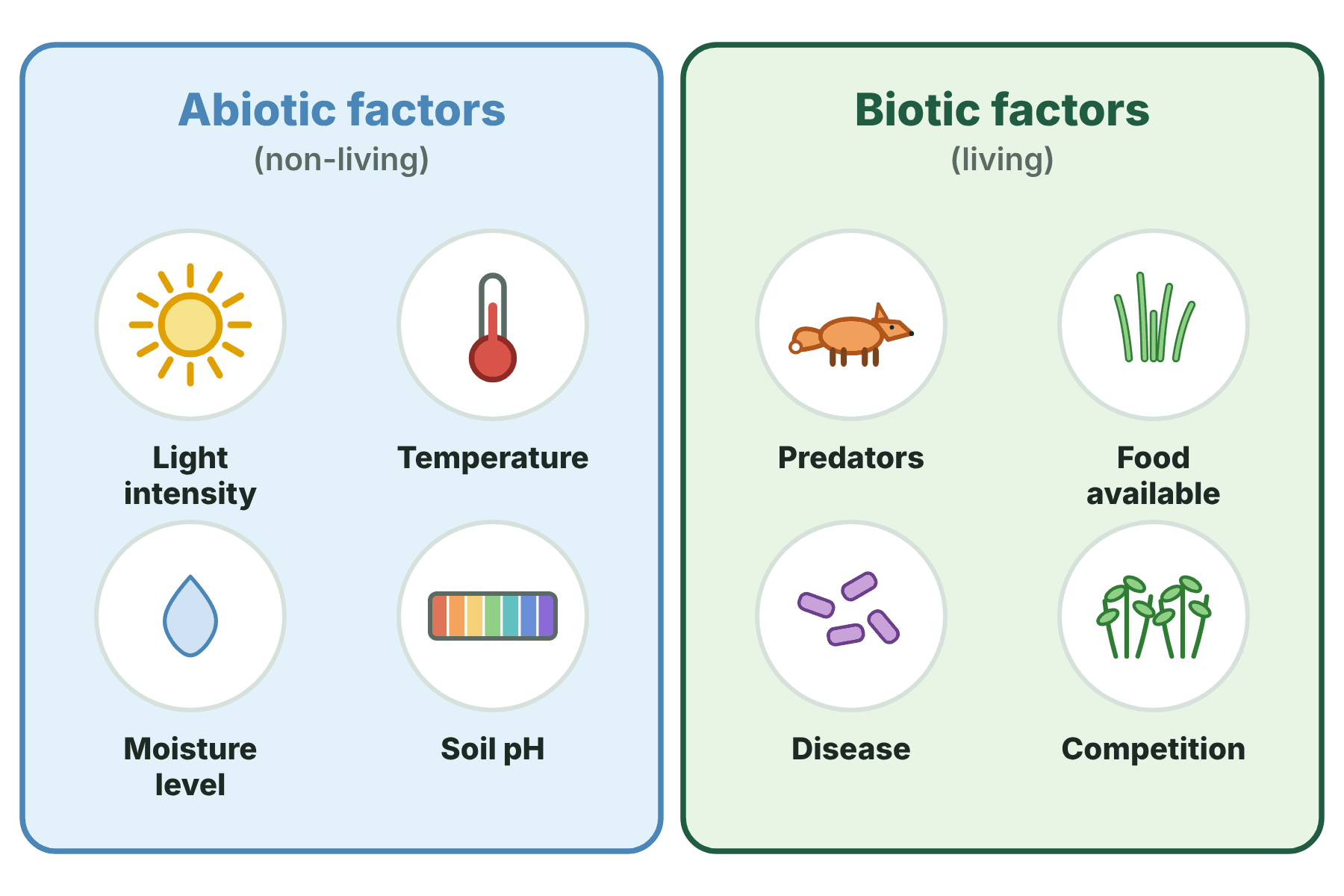 Sort these factors into abiotic and biotic.
 Abiotic (non-living): light intensity, temperature, moisture level, soil pH. Biotic (living): predators, food, disease, competition.
-
What is interdependence?
Species in a community depending on each other.
-
What is predation?
A predator hunting and eating its prey.
-
What is mutualism?
An interaction in which both organisms benefit.
-
Give an example of mutualism.
Nitrogen-fixing bacteria in the root nodules of clover.
-
What is parasitism?
A parasite living on or in a host and feeding on it, which harms the host.
-
Give an example of a parasite.
A tapeworm, a tick or a flea.
-
What do plants compete for?
Light, water, mineral ions and space.
-
What do animals compete for?
Food, water, mates, shelter and territory.
-
What happens to the prey when the predators increase?
The prey population falls.
-
Which peaks first on a predator-prey graph?
The prey.
-
Why does the predator peak come later?
The predators need the extra prey to reproduce and grow.
-
What is a stable community?
One where the populations stay fairly constant.
-
What happens if a species is removed from a community?
The species that depend on it are affected.
-
Who benefits in parasitism?
The parasite.
-
Do both organisms benefit in competition?
No, both are harmed, because they need the same resource.
-
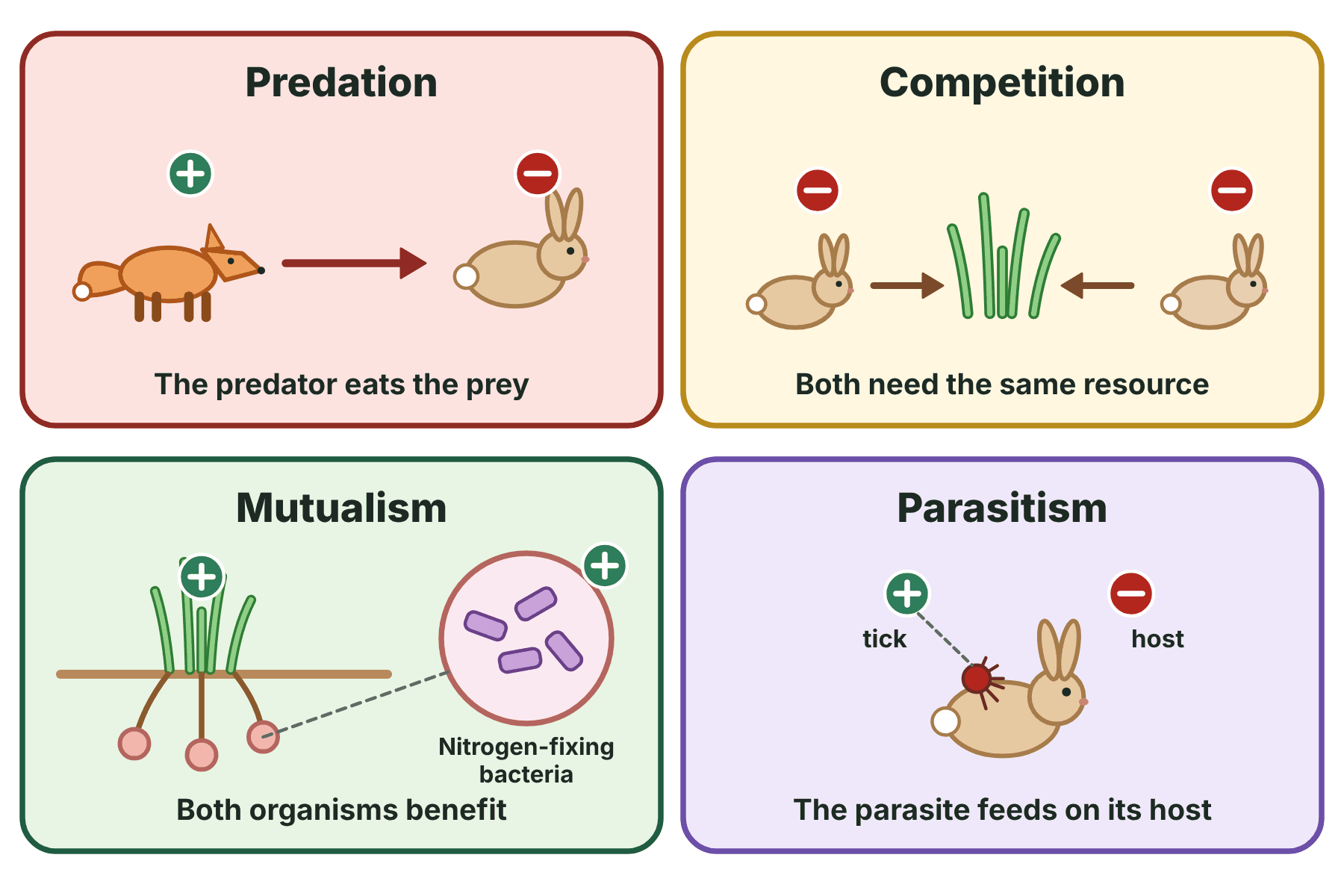 Name the type of interaction and say who benefits.
 Predation: the predator benefits and the prey is harmed. Competition: both are harmed. Mutualism: both benefit. Parasitism: the parasite benefits and the host is harmed.
-
What is a trophic level?
The position of an organism in a food chain.
-
Which organisms are at trophic level 1?
Producers.
-
What is a primary consumer?
An animal that eats producers.
-
What is a secondary consumer?
An animal that eats primary consumers.
-
What does an arrow in a food chain show?
The direction in which biomass is transferred.
-
What does a pyramid of biomass show?
The mass of living material at each trophic level.
-
Why are biomass pyramids used instead of numbers?
One large organism can have a huge biomass but count as one.
-
Name four ways that biomass is lost between trophic levels.
Parts not eaten, egestion, excretion and respiration.
-
What is egestion?
The loss of undigested food as faeces.
-
What is excretion?
The loss of waste substances such as urea.
-
Why does respiration reduce the biomass passed on?
The carbon is lost as carbon dioxide, and the energy is released.
-
What is the formula for efficiency?
Biomass transferred divided by biomass available, times 100.
-
What is the typical efficiency of a biomass transfer?
About 10 per cent.
-
Why are food chains short?
So much biomass is lost at each step that there is too little left at the top.
-
Why can plants feed more people than meat?
Fewer trophic levels, so less biomass is lost.
-
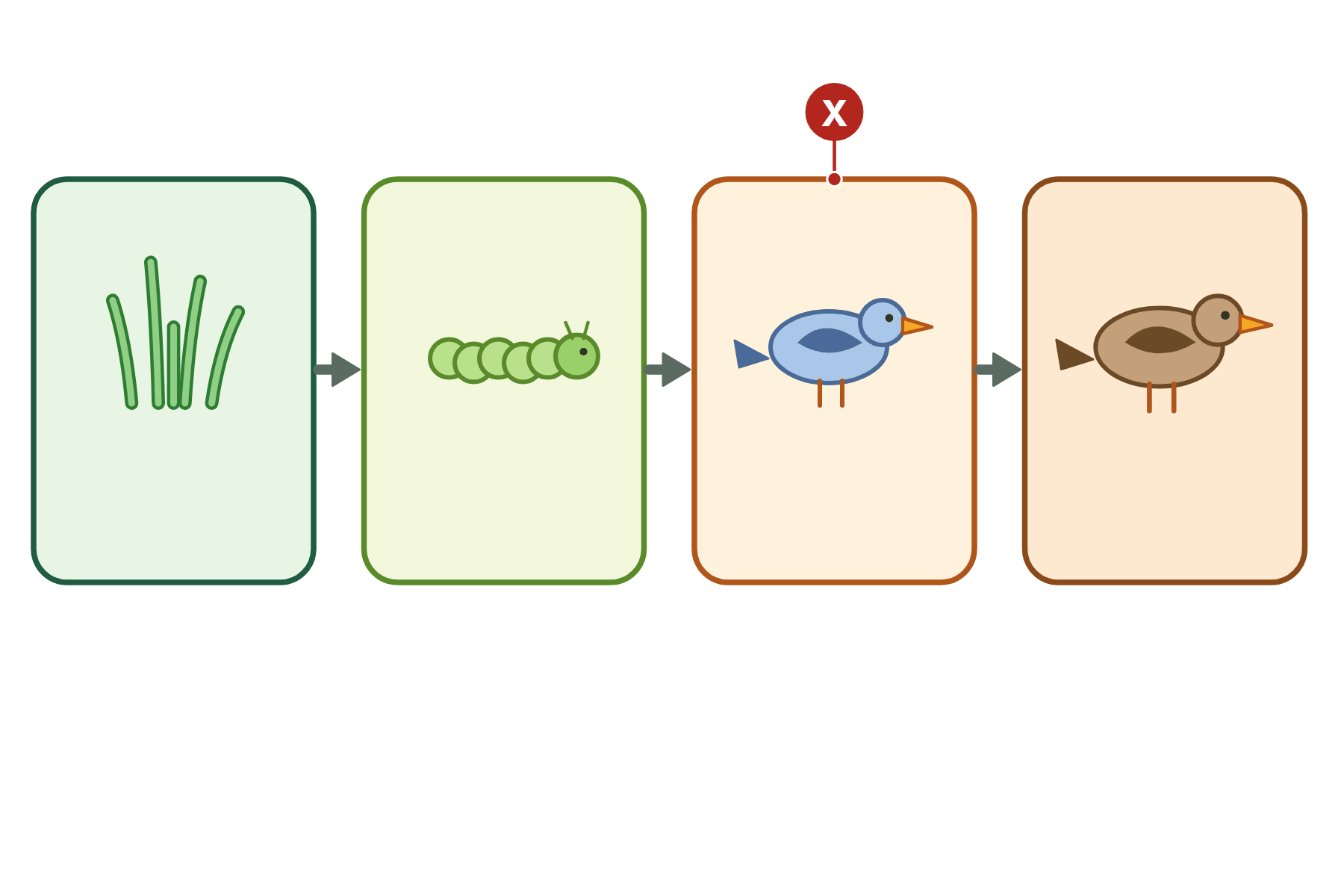 Name the trophic level marked X.
 The secondary consumer, trophic level 3. It eats the primary consumer, the caterpillar.
-
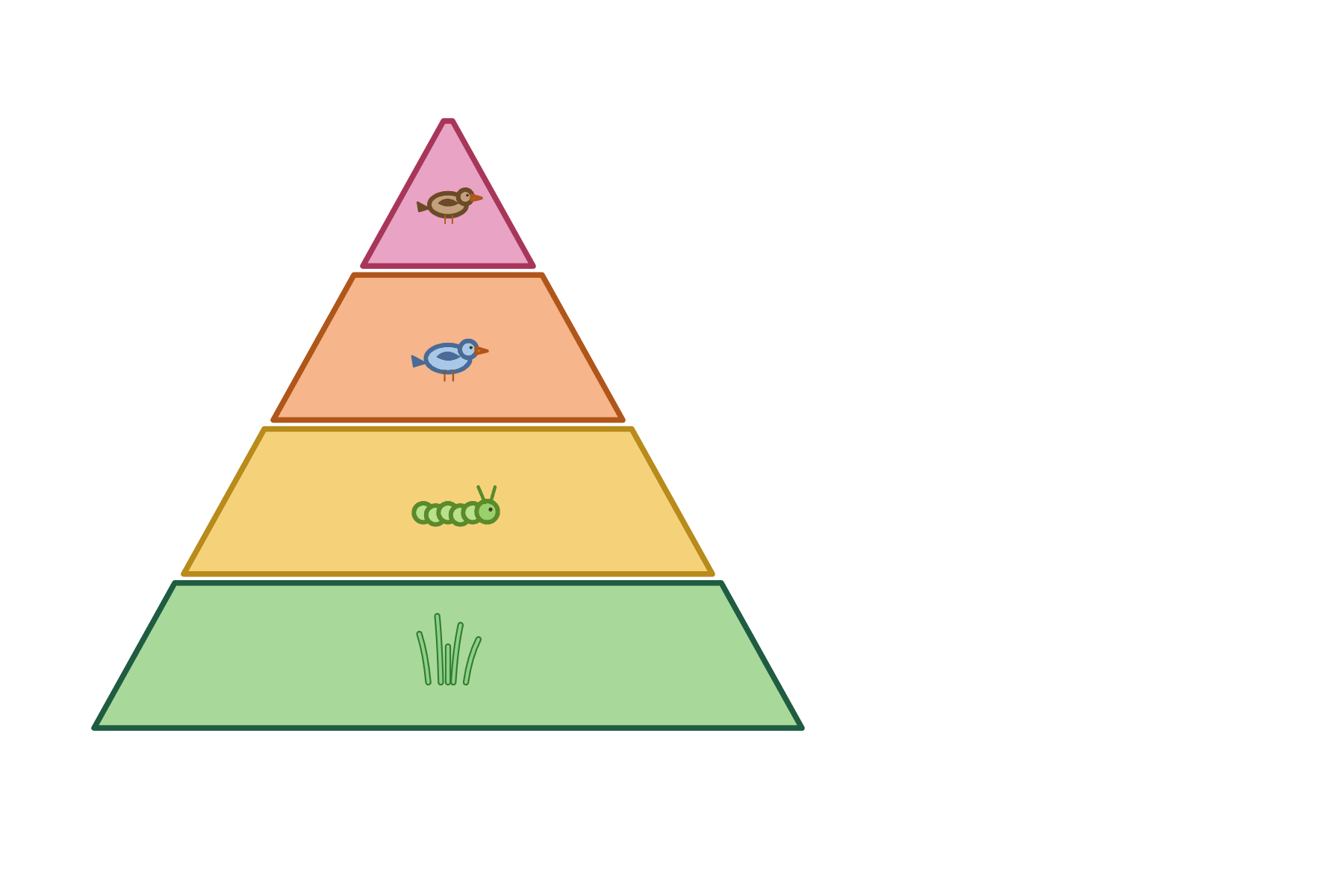 Label each level of this pyramid and say what it shows.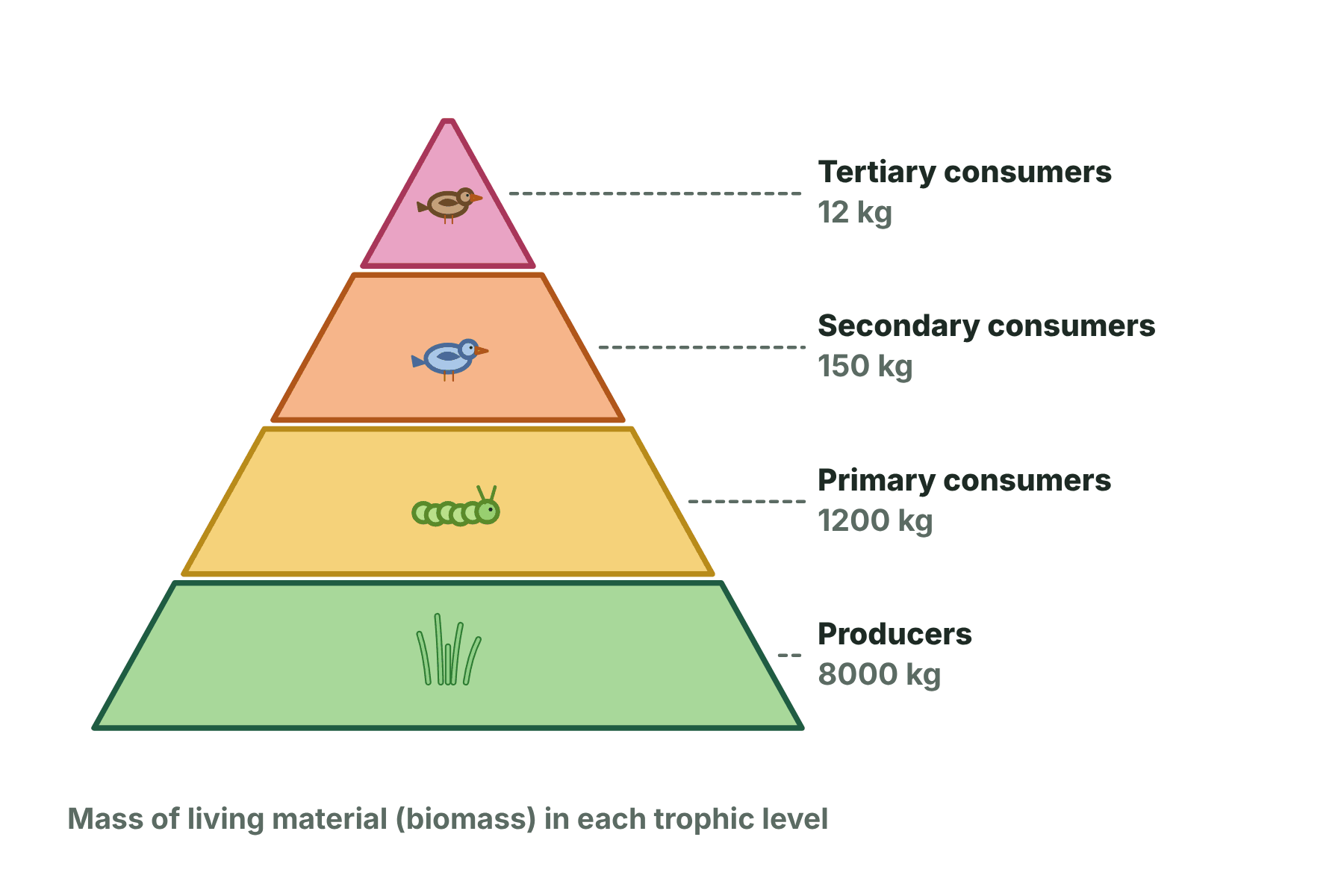
From the bottom: producers, primary consumers, secondary consumers, tertiary consumers. It shows the mass of living material, the biomass, at each trophic level, which gets smaller at each step.