Flashcards · Biology
Cycles in Ecosystems
-
Why do materials have to be cycled?
The supply of materials on Earth is limited.
-
Name two materials that are cycled.
Carbon and nitrogen.
-
What are the abiotic parts of an ecosystem?
The non-living parts such as air, water and soil.
-
What are the biotic parts of an ecosystem?
The living things.
-
What do producers take from the environment?
Carbon dioxide, water and mineral ions.
-
Which organisms are decomposers?
Bacteria and fungi.
-
What do decomposers feed on?
Dead plants and animals and waste.
-
How do decomposers break down dead material?
They release enzymes that digest it into soluble molecules, which they absorb.
-
What do decomposers release into the air?
Carbon dioxide, from their respiration.
-
What do decomposers return to the soil?
Mineral ions such as nitrates.
-
How do plants get nitrogen?
By taking up nitrates from the soil.
-
What do nitrogen-fixing bacteria do?
They turn nitrogen from the air into compounds that plants can use.
-
What do earthworms and woodlice do in decomposition?
They break dead material into smaller pieces.
-
Where do decomposers work in a pond?
In the mud, breaking down dead plants and animals.
-
What would happen if there were no decomposers?
Dead material would build up and the nutrients would stay locked up.
-
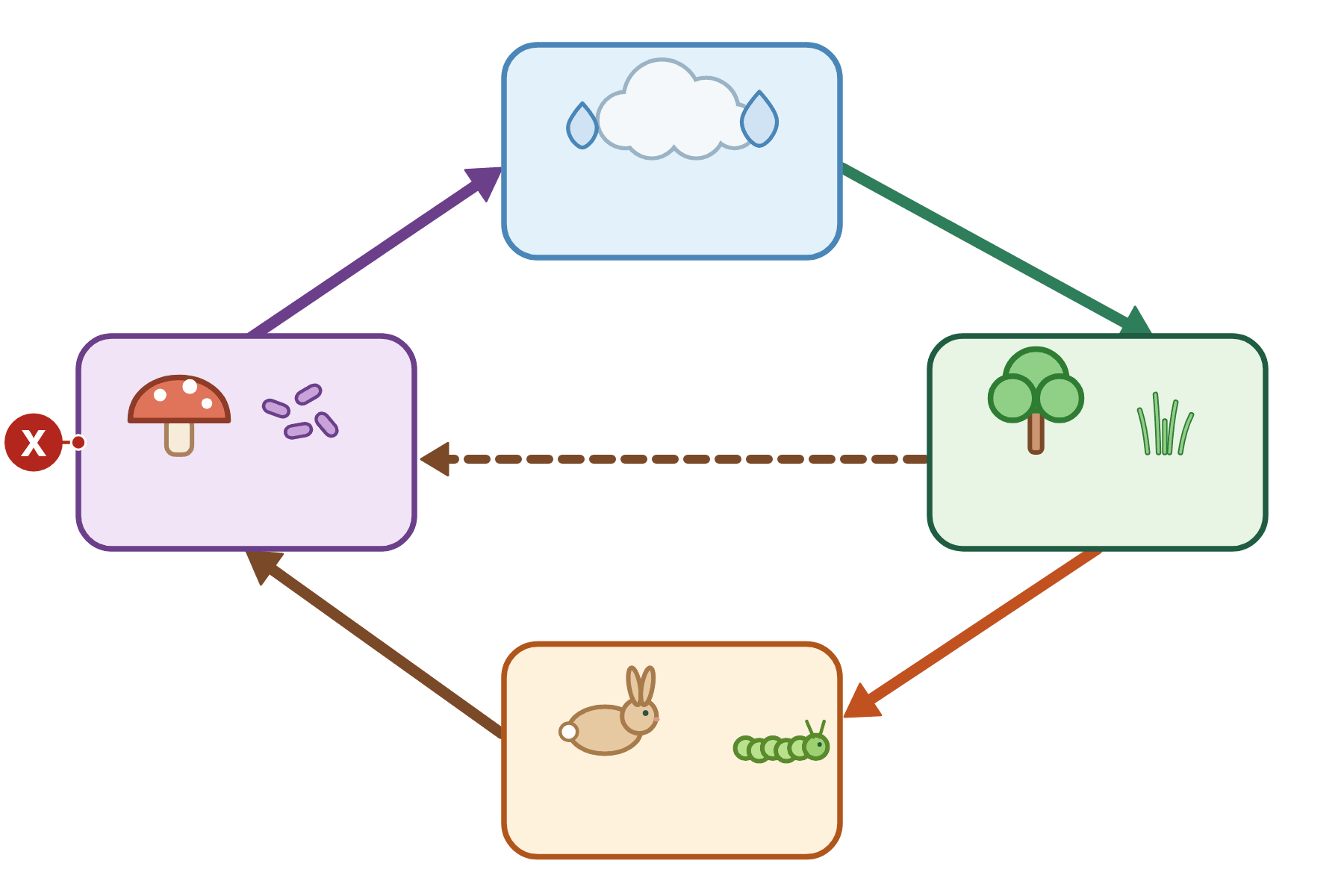 Name the group of organisms marked X and say what it does.
 The decomposers, bacteria and fungi. They break down dead plants, dead animals and waste, and return carbon dioxide and mineral ions to the environment.
-
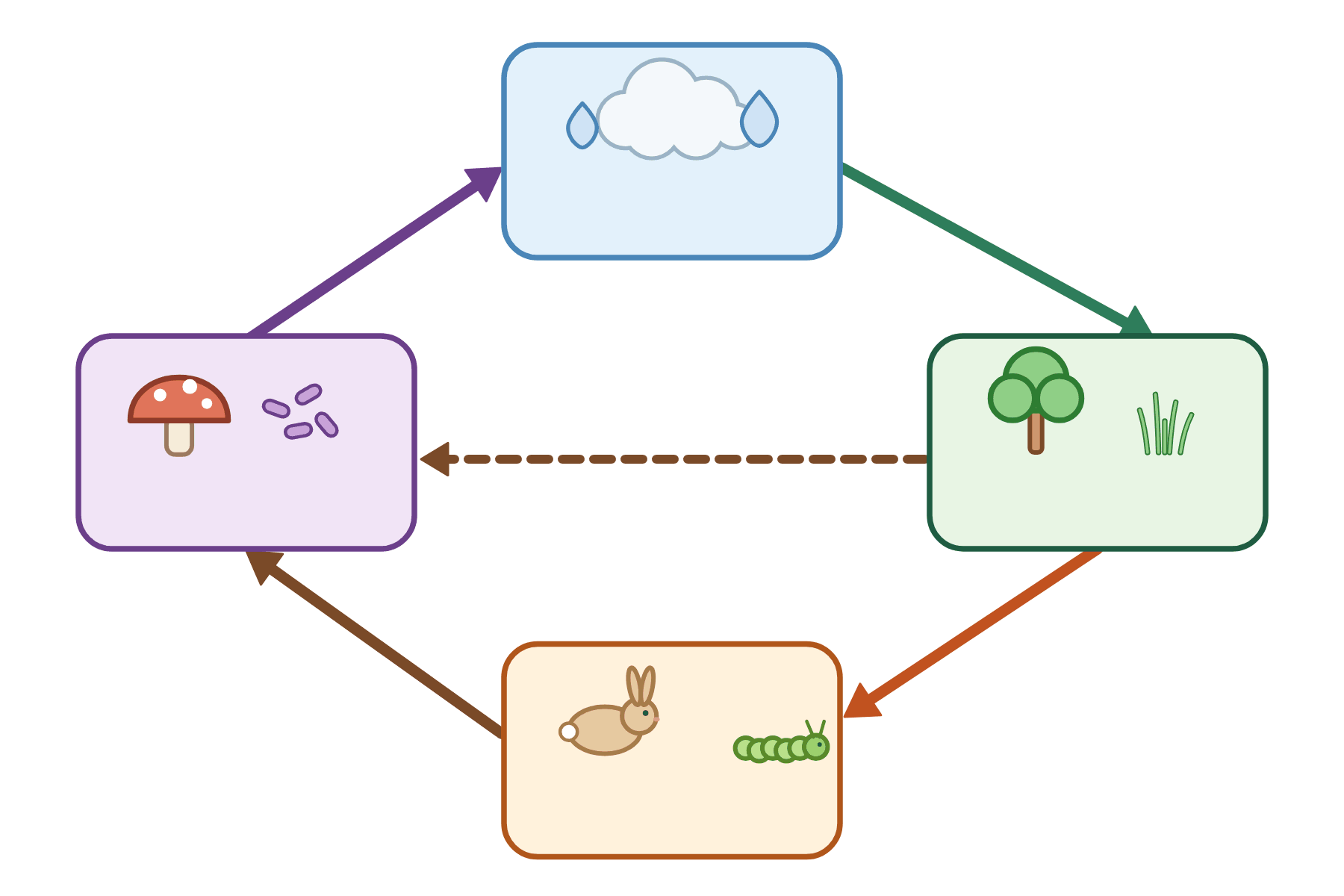 Describe how materials move through the ecosystem.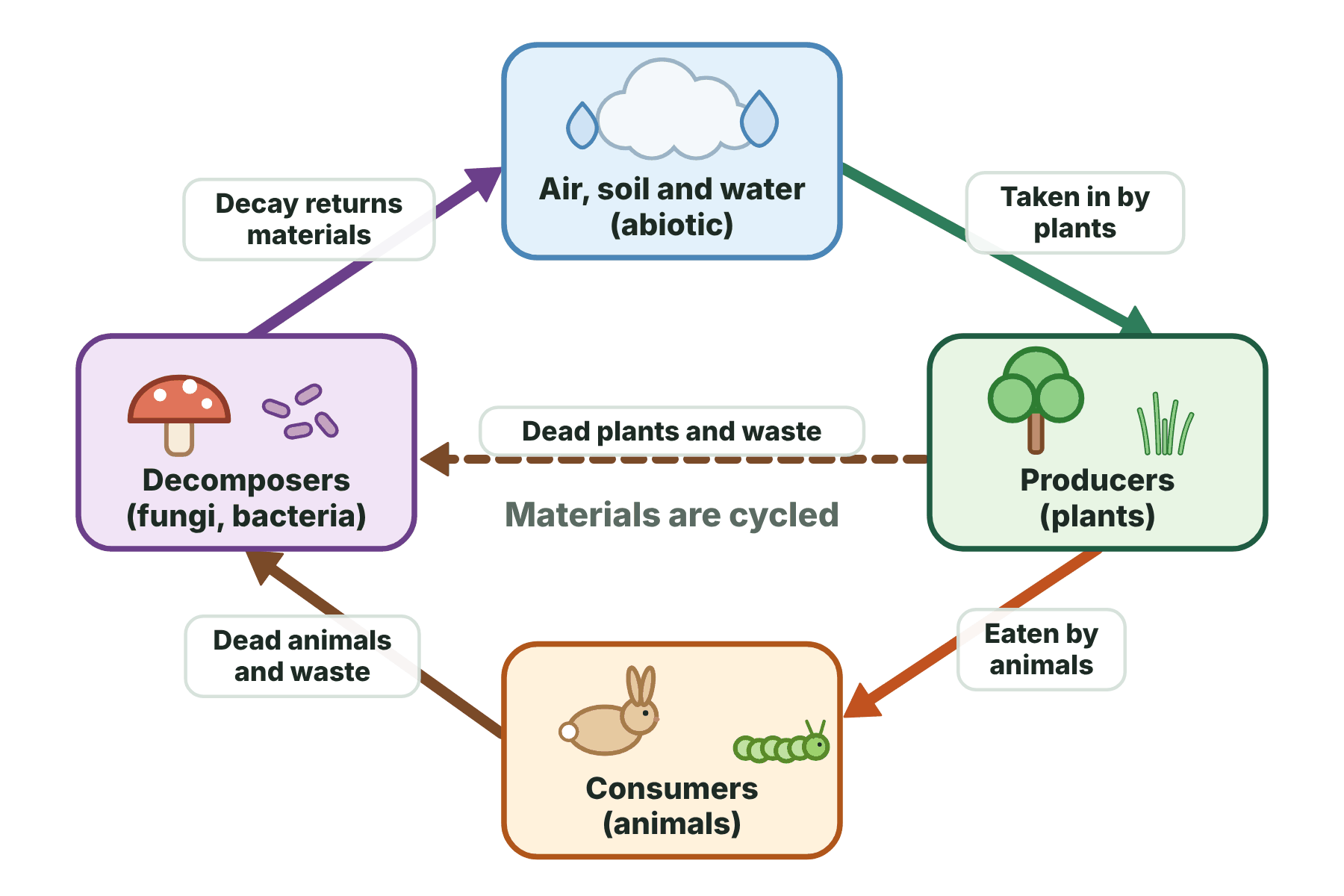
Plants take in materials from the air, soil and water. Animals eat plants. Dead plants, dead animals and waste are broken down by decomposers, which return the materials to the air, soil and water.
-
Which process takes carbon dioxide out of the air?
Photosynthesis.
-
How does carbon pass along a food chain?
By feeding, when one organism eats another.
-
Which processes return carbon dioxide to the air?
Respiration, decay and combustion.
-
Which living things respire?
Plants, animals and decomposers.
-
Why does decay release carbon dioxide?
The decomposers respire.
-
What is combustion?
Burning.
-
What gas is released when fossil fuels are burnt?
Carbon dioxide.
-
How are fossil fuels formed?
From the remains of dead plants and animals over millions of years.
-
What percentage of the air is carbon dioxide?
About 0.04 per cent.
-
Where is carbon stored for a long time in living things?
In the wood of trees.
-
Why is carbon important to living things?
It is part of carbohydrates, proteins and fats.
-
What makes the carbon dioxide level in the air stay roughly constant?
Photosynthesis removing it and respiration, decay and combustion adding it.
-
What happens to the level of carbon dioxide if fossil fuels are burnt faster than it is removed?
It rises.
-
In which form is carbon in the air?
Carbon dioxide.
-
Which organisms put carbon back into the air when an animal dies?
Decomposers.
-
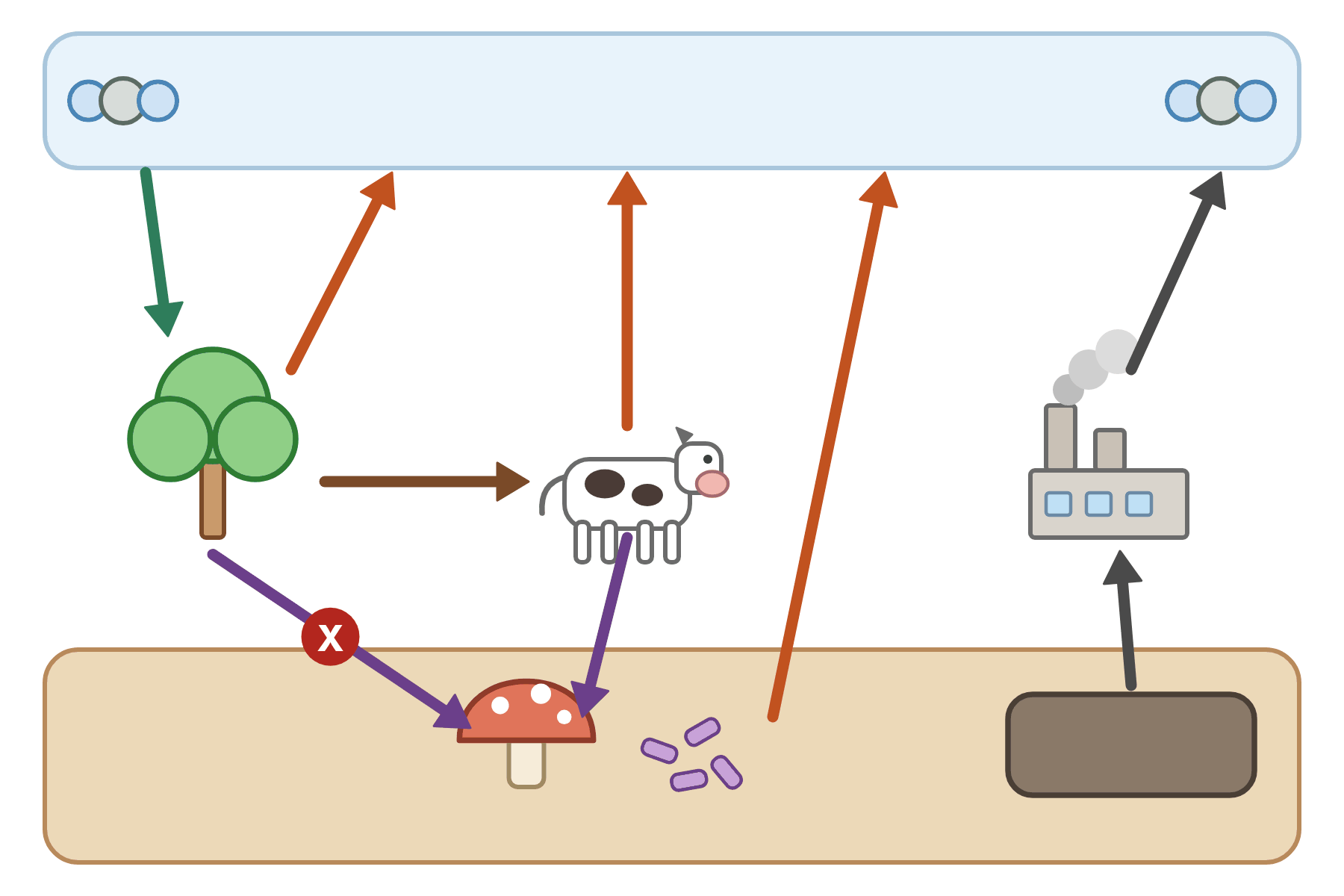 Name the process marked X and say what happens.
 Death and decay. Decomposers break down dead plants and waste, and they release carbon dioxide into the air by respiration.
-
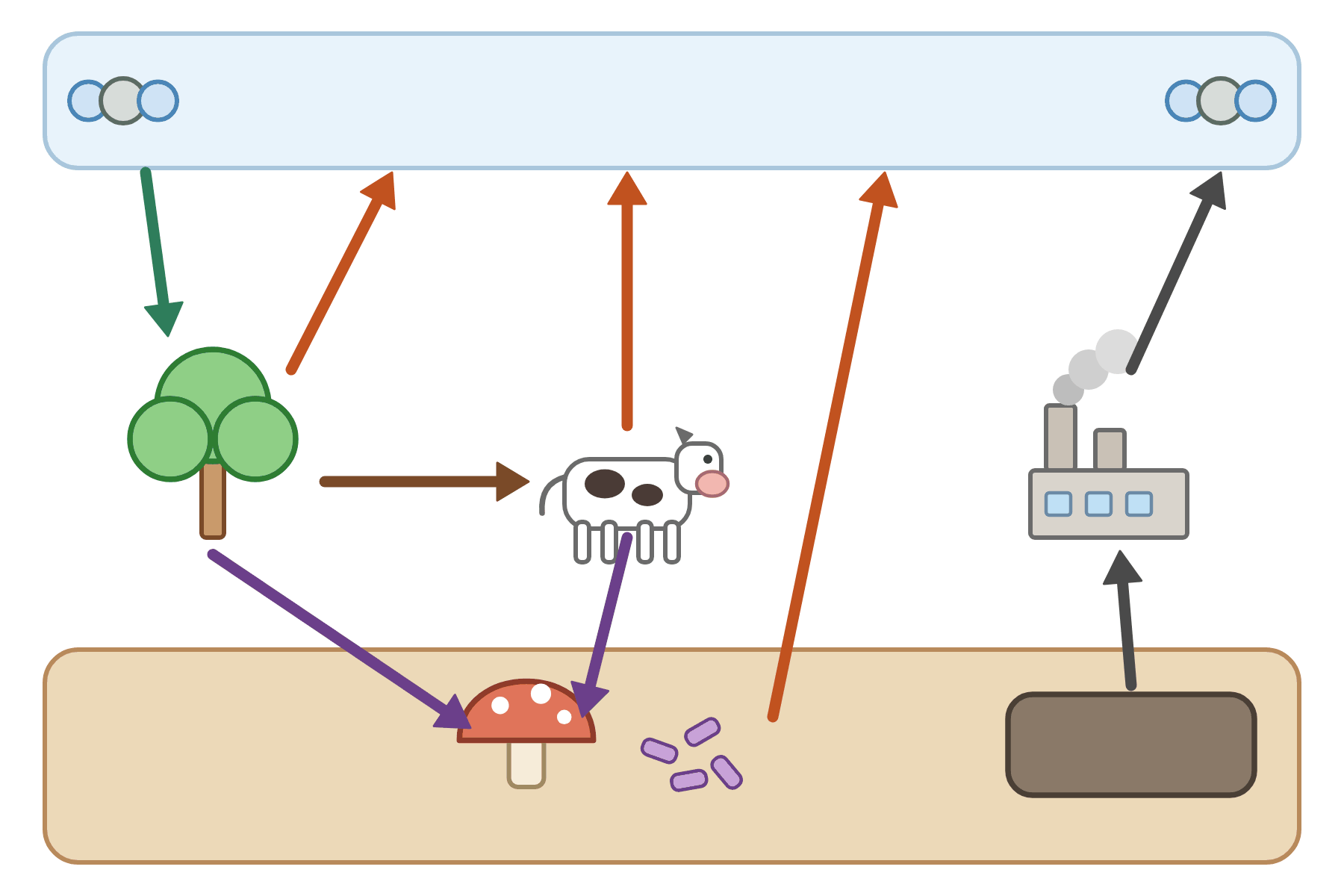 Describe the carbon cycle.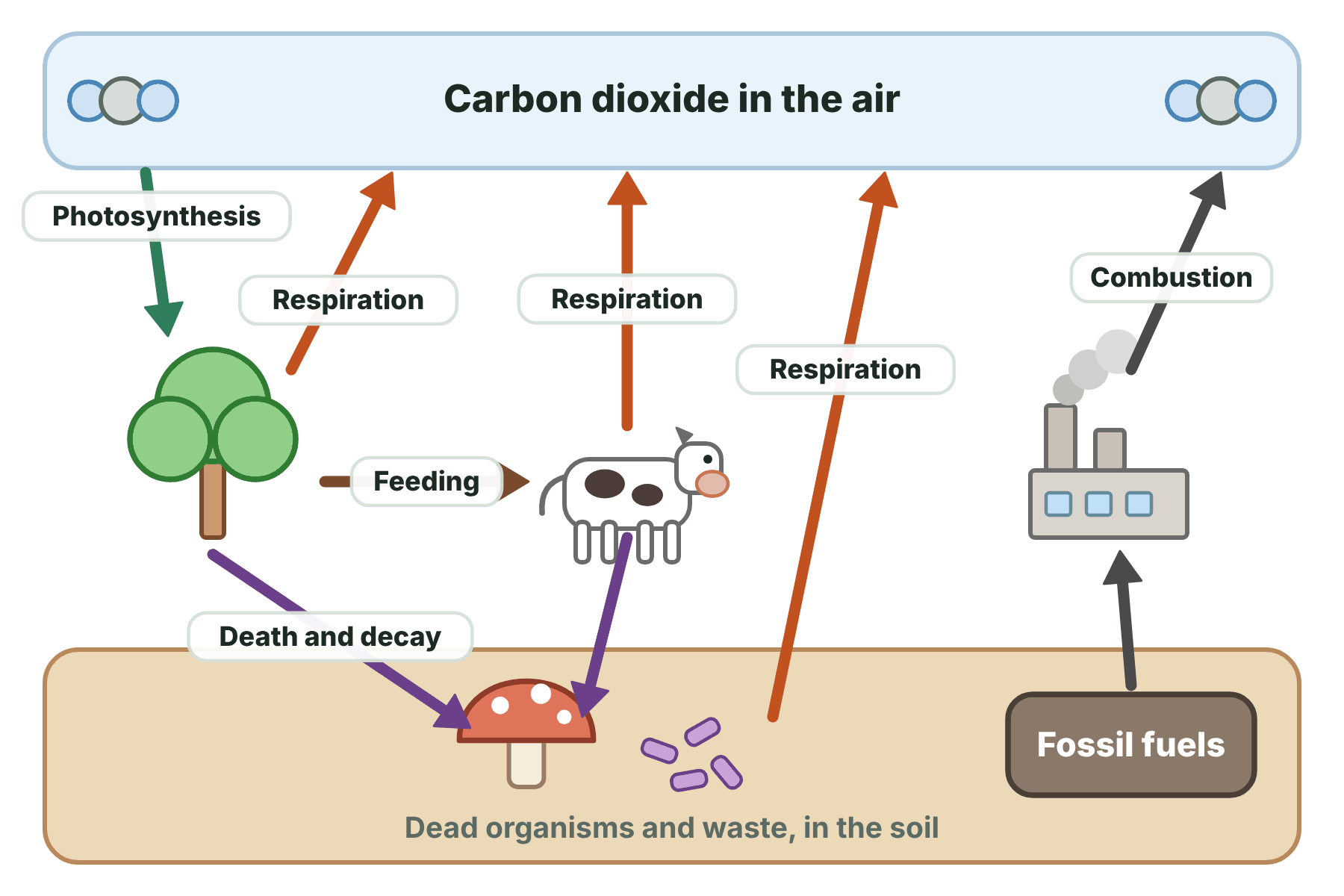
Photosynthesis takes carbon dioxide into plants. Feeding passes carbon to animals. Respiration by plants, animals and decomposers returns carbon dioxide to the air. Death and decay return carbon dioxide by the respiration of decomposers. Combustion of fossil fuels also releases carbon dioxide.
-
What drives the water cycle?
Energy from the Sun.
-
What is evaporation?
Liquid water turning into water vapour.
-
What is transpiration?
Water vapour lost from the leaves of plants.
-
What is condensation?
Water vapour cooling and turning into droplets of liquid water.
-
What forms when water vapour condenses in the air?
Clouds.
-
What is precipitation?
Rain, snow, sleet or hail.
-
What is run-off?
Water flowing over the land into rivers and the sea.
-
What is infiltration?
Water soaking into the soil.
-
Where do plants get water?
From the soil, through their roots.
-
Why is rain fresh water?
The salt is left behind when sea water evaporates.
-
How does the water cycle maintain habitats?
Rain refills rivers, lakes and ponds and keeps the soil moist.
-
How does water move nutrients?
It dissolves mineral ions and carries them through the soil and into rivers.
-
Why do plants need water?
For photosynthesis and to support their cells.
-
Why do decomposers need water?
They need moisture to work.
-
What happens to a lake in a long drought?
It shrinks, and the habitat is lost.
-
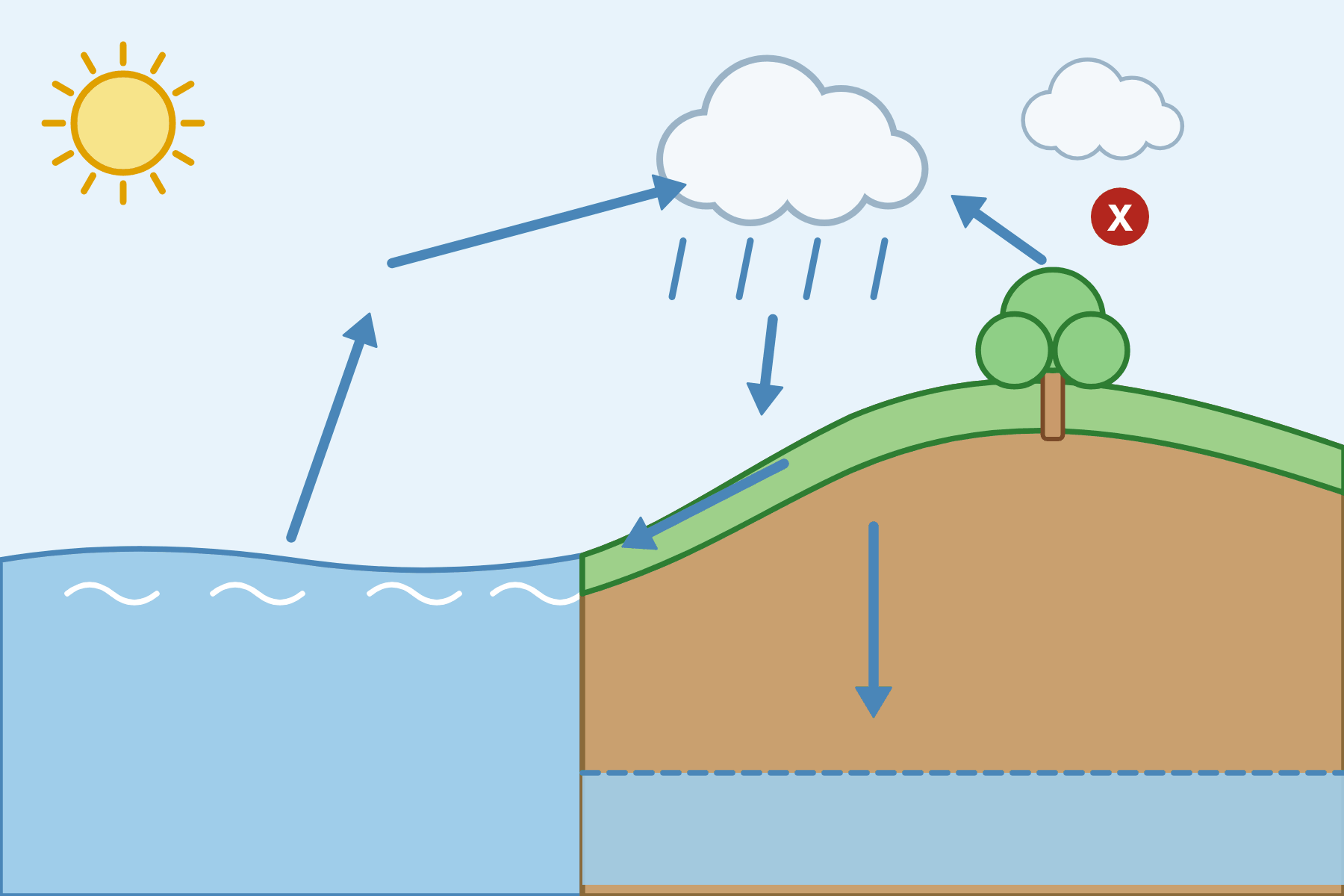 Name the process marked X and say what happens.
 Transpiration. Plants take up water through their roots and lose water vapour through the stomata in their leaves.
-
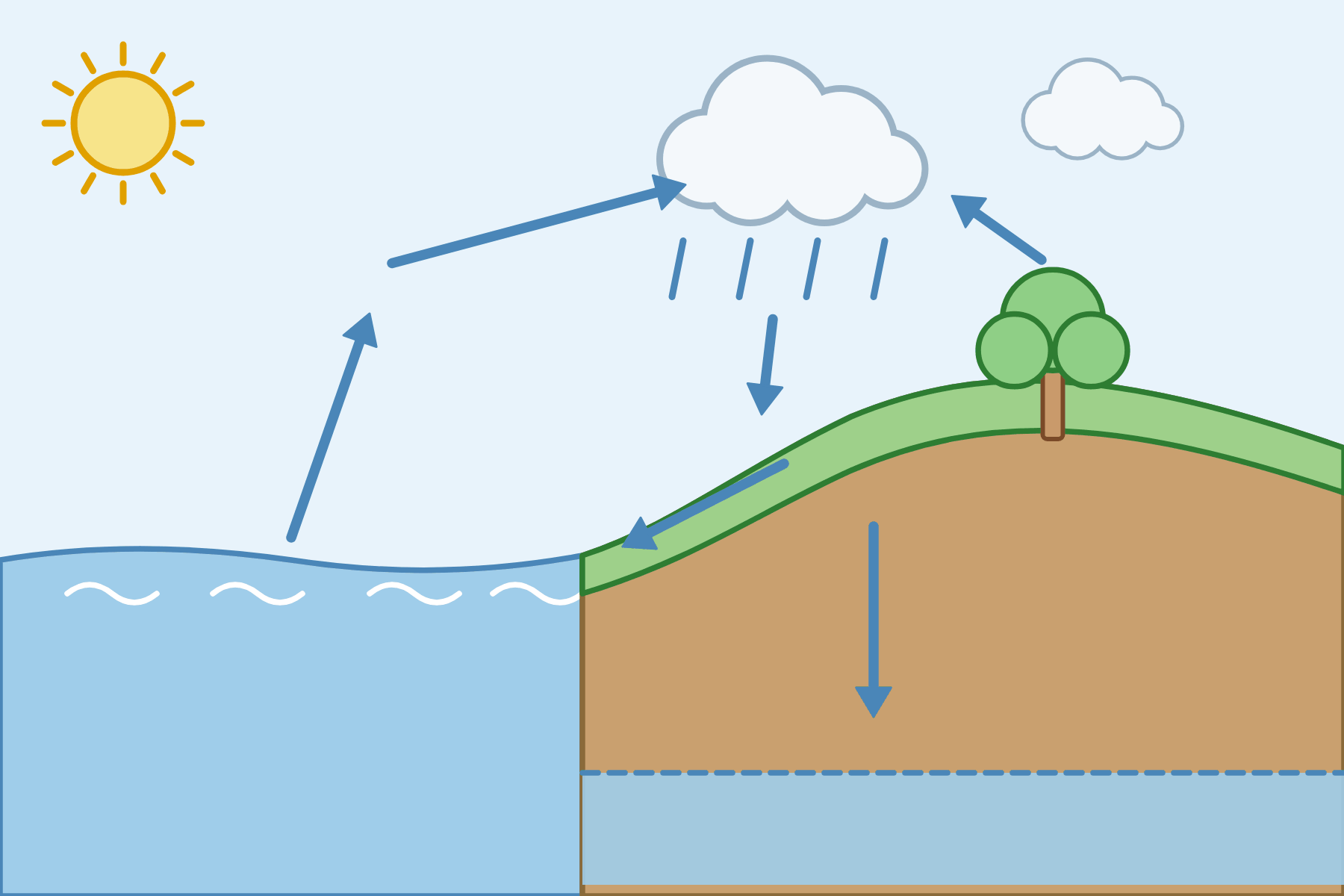 Describe the water cycle.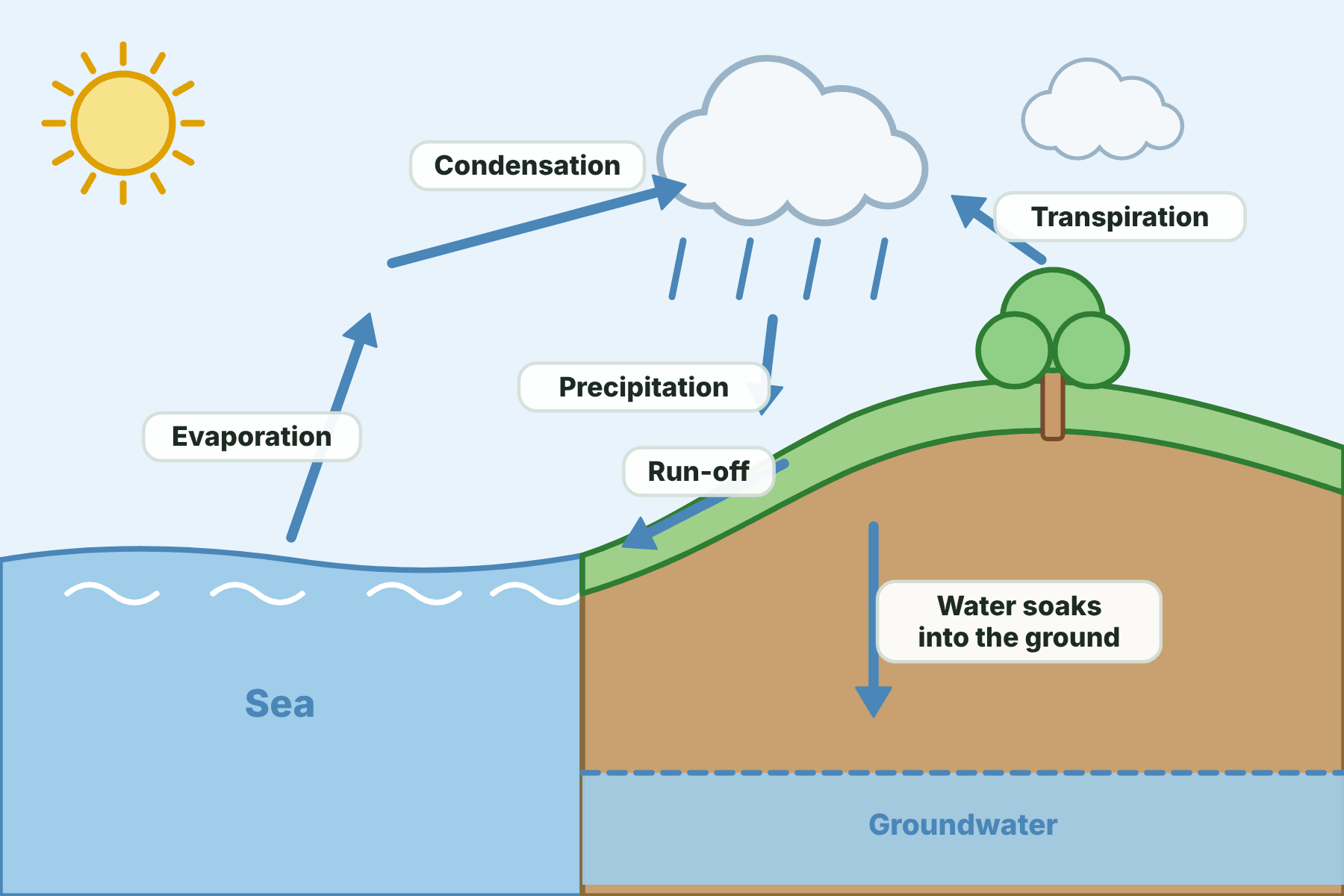
Evaporation from the sea and transpiration from plants put water vapour into the air. It condenses into clouds and falls as precipitation. The water runs off into rivers and the sea, or soaks into the ground.
-
What is the effect of low temperature on the rate of decay?
The decomposers work slowly, so decay is slow.
-
What happens to the rate of decay at very high temperatures?
It falls, because the enzymes denature and the microorganisms die.
-
What is the optimum temperature for decay in compost?
About 40 °C.
-
Why do decomposers need water?
The microorganisms need moisture to be active, and enzymes work in solution.
-
Why does waterlogging slow decay?
It pushes out the air, so there is no oxygen.
-
What does aerobic mean?
With oxygen.
-
What does anaerobic mean?
Without oxygen.
-
Which is faster, aerobic or anaerobic decay?
Aerobic decay.
-
Why is aerobic decay faster?
Aerobic respiration releases more energy, so the decomposers grow and work faster.
-
What gas can anaerobic decay produce?
Methane.
-
Why do gardeners turn compost?
To let air in, so the decay is aerobic.
-
Why does a freezer keep food fresh?
The low temperature slows the microorganisms that cause decay.
-
How can you measure the rate of decay of leaves?
The change in their mass over time.
-
What is biogas?
A fuel gas, mainly methane, made from waste by anaerobic microorganisms.
-
In an investigation, how many factors should you change at a time?
One.
-
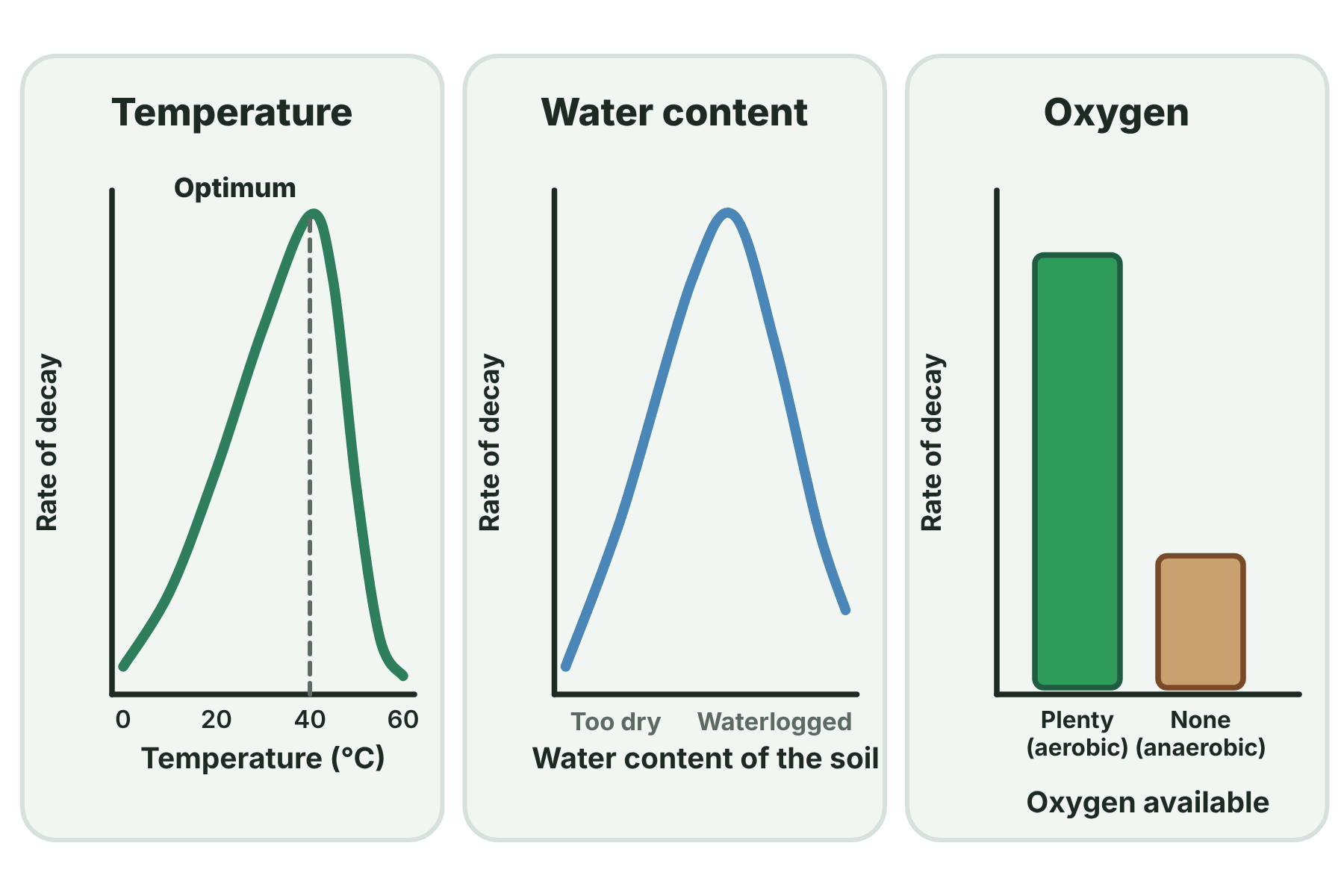 Describe how temperature affects the rate of decay.
 Decay is slow in the cold, increases as it gets warmer to an optimum of about 40 °C, and then falls because the enzymes denature.