Flashcards · Biology
Natural Selection and Evolution
-
What is a population?
A group of individuals of the same species living in the same place.
-
Is there usually little or extensive genetic variation within a population?
Extensive: individuals carry different alleles.
-
Where do new variants come from?
From mutations, which are random changes in the DNA.
-
Does a mutation happen because an organism needs it?
No. Mutations are random, and not aimed at a useful result.
-
What happens to most mutations?
They have no effect on the phenotype.
-
Can the same variant be an advantage in one place and a disadvantage in another?
Yes. The advantage depends on the environment, such as dark colour on sooty bark.
-
Name three selection pressures.
Predation, disease, competition for food or mates, and a change in climate.
-
What is natural selection?
The survival and breeding of the individuals with variants best suited to the environment, so their alleles become more common.
-
Which individuals are more likely to breed?
Those with phenotypes best suited to the environment.
-
What is passed on to the offspring in natural selection?
The alleles that gave the parent its advantage.
-
Do individual organisms change by natural selection?
No. The population changes, over many generations.
-
What was the selection pressure on peppered moths in sooty woods?
Predation by birds.
-
Why were pale peppered moths eaten more in polluted woods?
They were easily seen against the dark bark.
-
What happened to dark peppered moths after the clean air laws?
They became less common, as the bark became paler again.
-
What does camouflage do?
It makes an organism hard to see, so predators are less likely to find it.
-
Why can a population with no variation not evolve?
There are no better-suited variants for natural selection to favour.
-
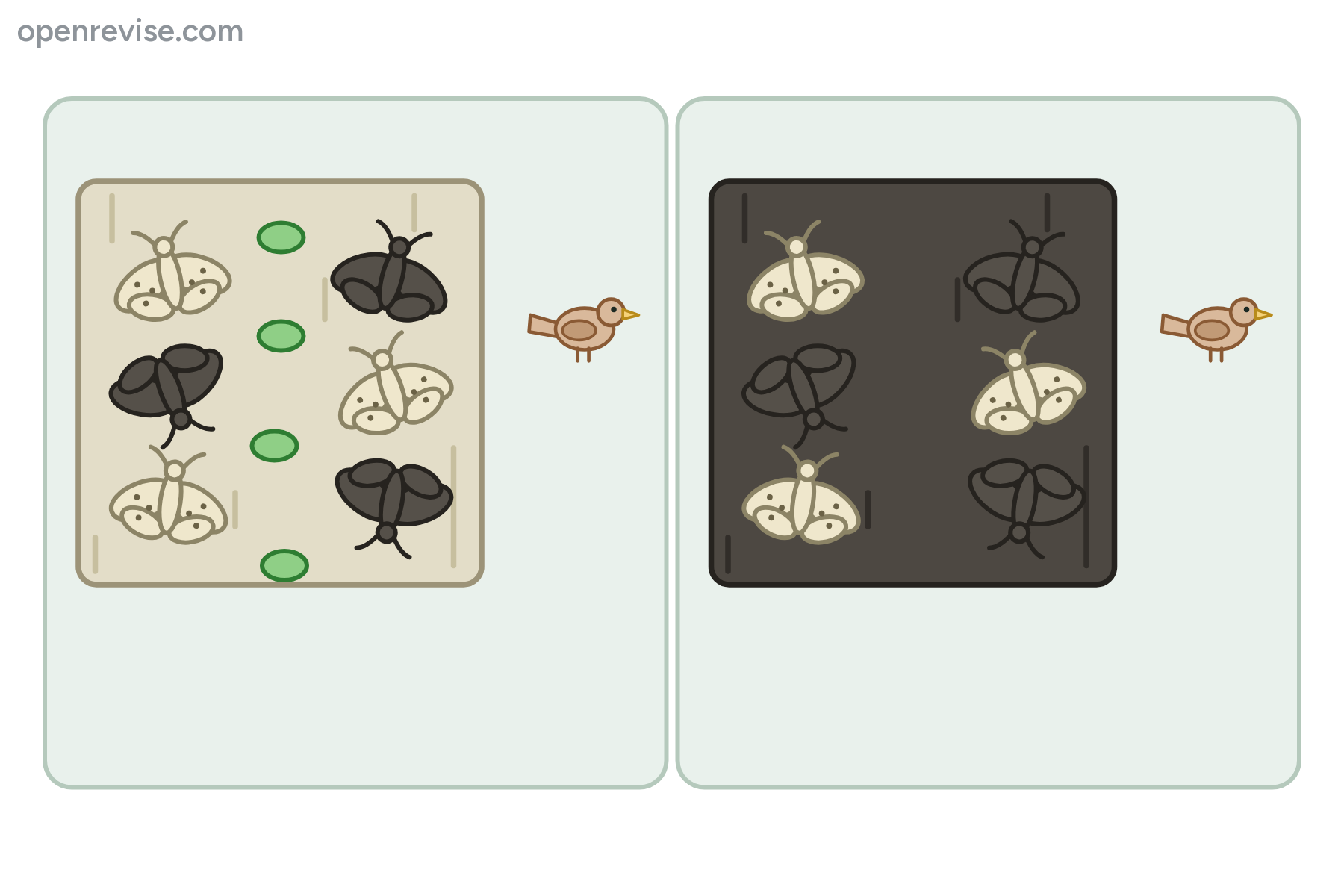 Explain which moths are more likely to survive in each wood, and why.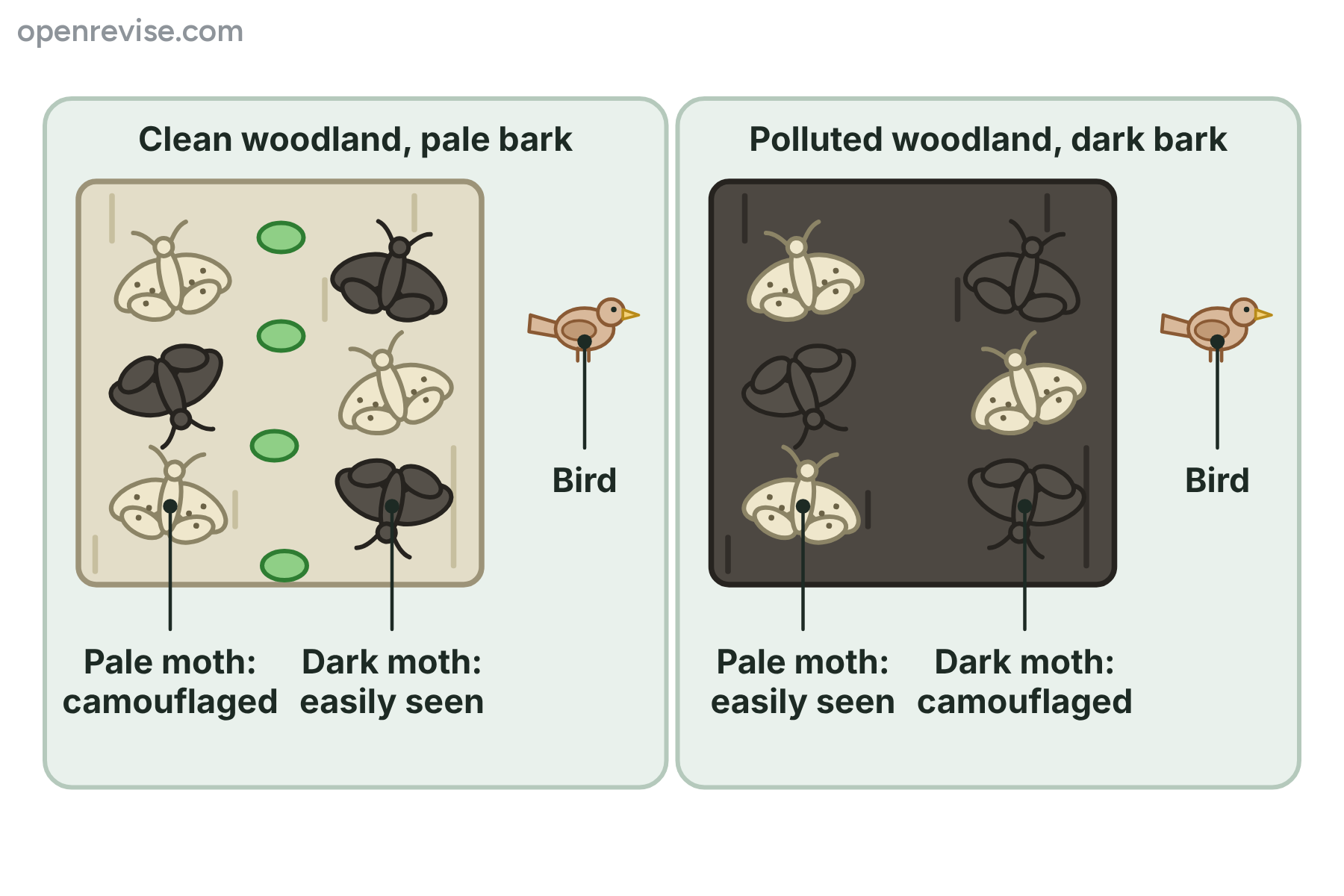
On pale bark the pale moths are camouflaged and the dark moths are eaten by birds. On dark bark the dark moths are camouflaged and the pale moths are eaten. The camouflaged moths survive, breed and pass on their alleles.
-
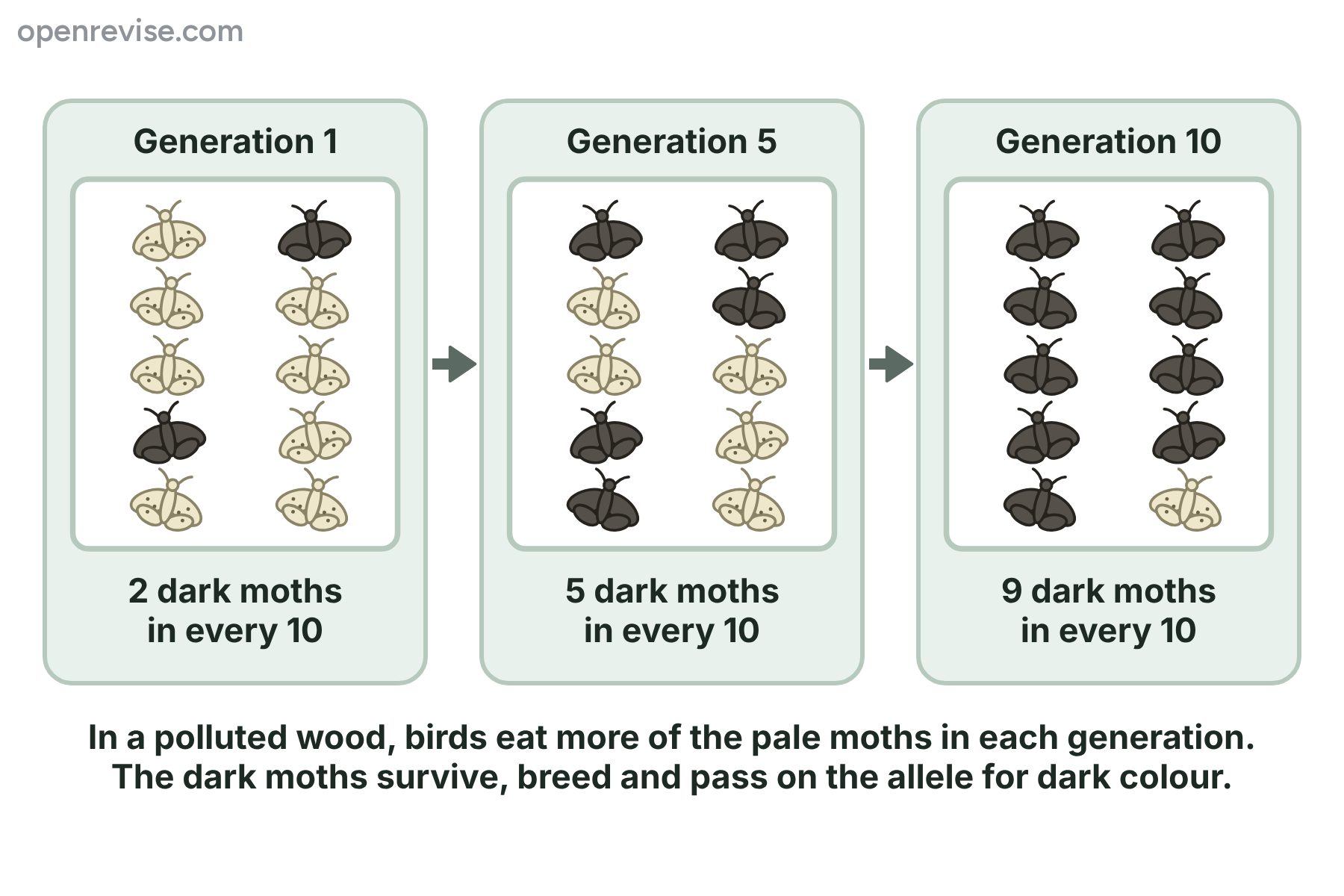 Describe what the diagram shows and explain why it happens.
 The proportion of dark moths rises from 2 in 10 to 9 in 10. Birds eat more of the pale moths, so more dark moths survive and breed, and the allele for dark colour becomes more common.
-
What is evolution?
A change in the inherited characteristics of a population over time, through natural selection.
-
Does an individual evolve, or a population?
A population.
-
Why does evolution take many generations?
Each generation changes only a little, as selection acts on small differences.
-
What is a species?
A group of organisms that can interbreed to produce fertile offspring.
-
What is a mule, and why is it important to the idea of a species?
The infertile offspring of a horse and a donkey, so horses and donkeys are different species.
-
Give one limit of the definition of a species.
It cannot be tested on asexual organisms or fossils.
-
What is isolation?
Two populations of one species being kept apart so they cannot interbreed.
-
Name two geographical barriers that can isolate populations.
A river, a mountain range, the sea (any two).
-
Why are the selection pressures different on two sides of a barrier?
The two environments differ, for example in climate, food and predators.
-
What happens to the alleles of two isolated populations?
They become more and more different, as different variants are selected and different mutations occur.
-
When do two isolated populations become two species?
When they can no longer interbreed to produce fertile offspring.
-
Why can new species form on islands?
The population on an island is cut off from the mainland, so it evolves on its own.
-
What does evolution do to biodiversity?
It increases it when new species form, and it explains why all living things are related.
-
What causes a reduction in biodiversity through evolution?
Extinction of species.
-
Do giraffes evolve longer necks because they stretch?
No. A stretched neck is not inherited. Variants arise by mutation and are selected.
-
How many chromosomes does a mule have, and why is that a problem?
63, an odd number, so the chromosomes cannot pair in meiosis and it cannot make gametes.
-
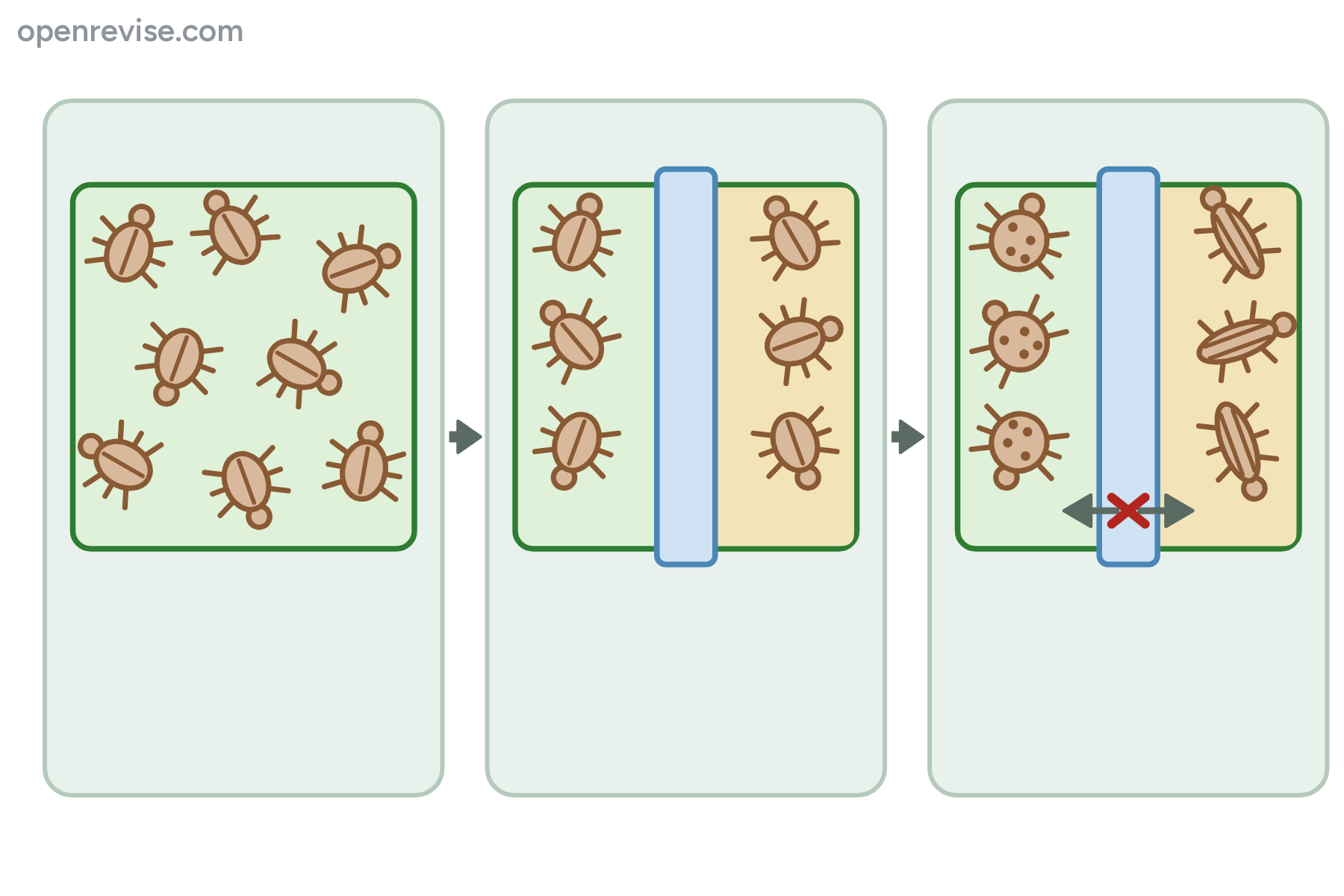 Describe the stages by which one species becomes two in this diagram.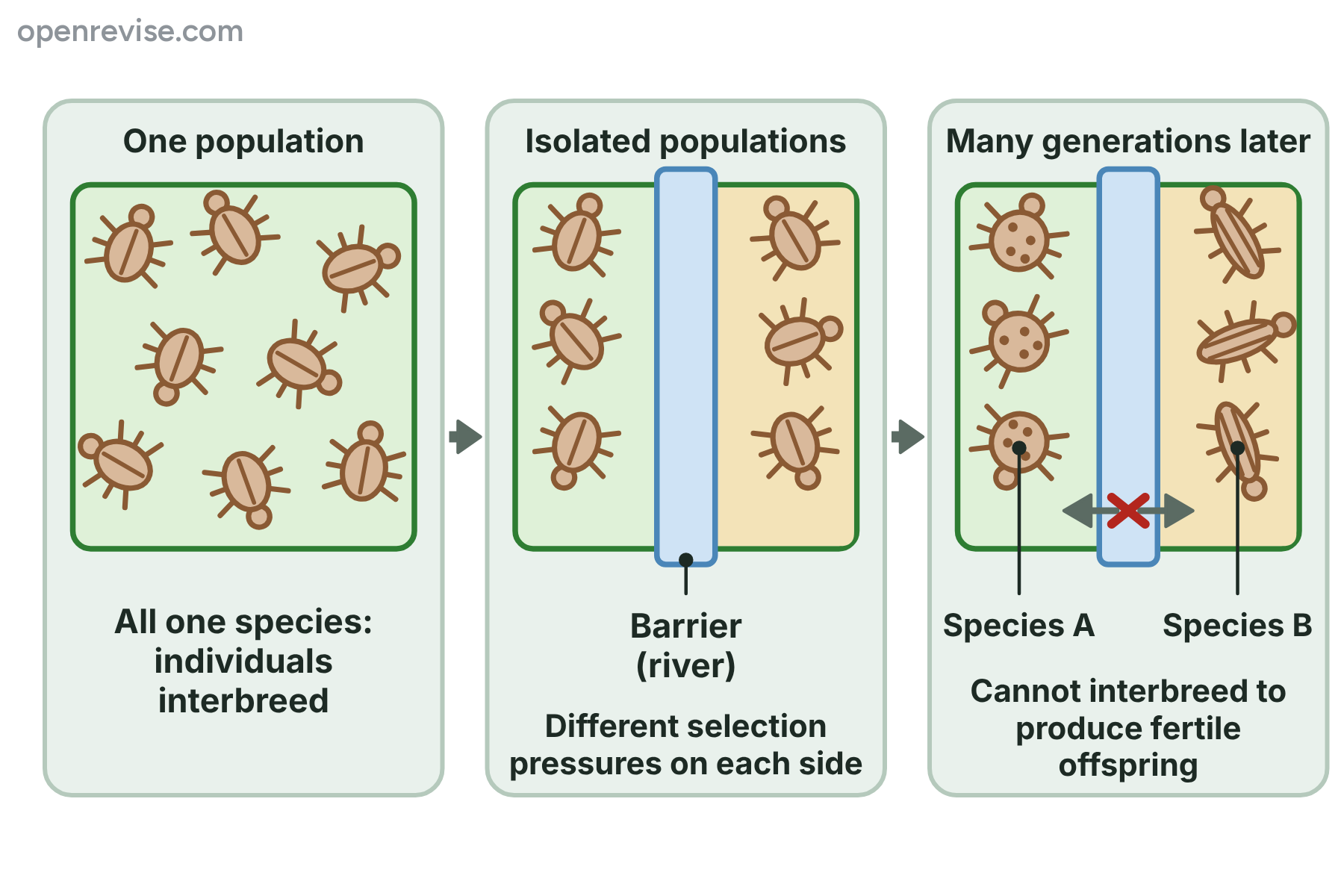
One population interbreeds. A river splits it, and each half faces different selection pressures. After many generations the beetles are so different that they cannot interbreed to produce fertile offspring, so they are two species.
-
What is a fossil?
The remains or traces of an organism from many years ago, found in rock.
-
Which parts of an animal most often form fossils?
Hard parts, such as shells, teeth and bones.
-
How can minerals form a fossil?
Minerals replace the hard part as it decays, making a stone copy of it.
-
Give an example of a fossil that formed because there was no decay.
An insect in amber, a mammoth in ice, or a body in a peat bog.
-
Name one kind of trace fossil.
A footprint, a burrow or a rootlet trace.
-
In undisturbed rock, where are the oldest fossils?
In the deepest layers.
-
How did the foot of the horse change over time?
From four toes in the oldest fossils to a single large hoof.
-
What did Archaeopteryx show?
Features of both reptiles and birds, so it suggests that birds evolved from reptiles.
-
Why are soft-bodied organisms rarely found as fossils?
They decay quickly and leave little behind.
-
Give two reasons why the fossil record is incomplete.
Fossilisation is rare, many fossils are destroyed by movements of the Earth, and many are not yet found.
-
What is extinction?
The permanent loss of a species, with no individuals left alive.
-
Name three causes of extinction.
Environmental change, new predators, new diseases, new competitors, hunting or habitat destruction (any three).
-
Why can a change in climate cause extinction?
Individuals cannot compete and reproduce in the new conditions.
-
Why are small populations more likely to become extinct?
They have little genetic variation, so there may be no variants that can cope with a change.
-
What happened to the dinosaurs 66 million years ago?
An asteroid impact changed the climate and food chains, and the non-flying dinosaurs became extinct.
-
What does the fossil record tell us about extinct species?
What they looked like, when they lived and how they were related to living species.
-
 Describe the four stages shown in the diagram.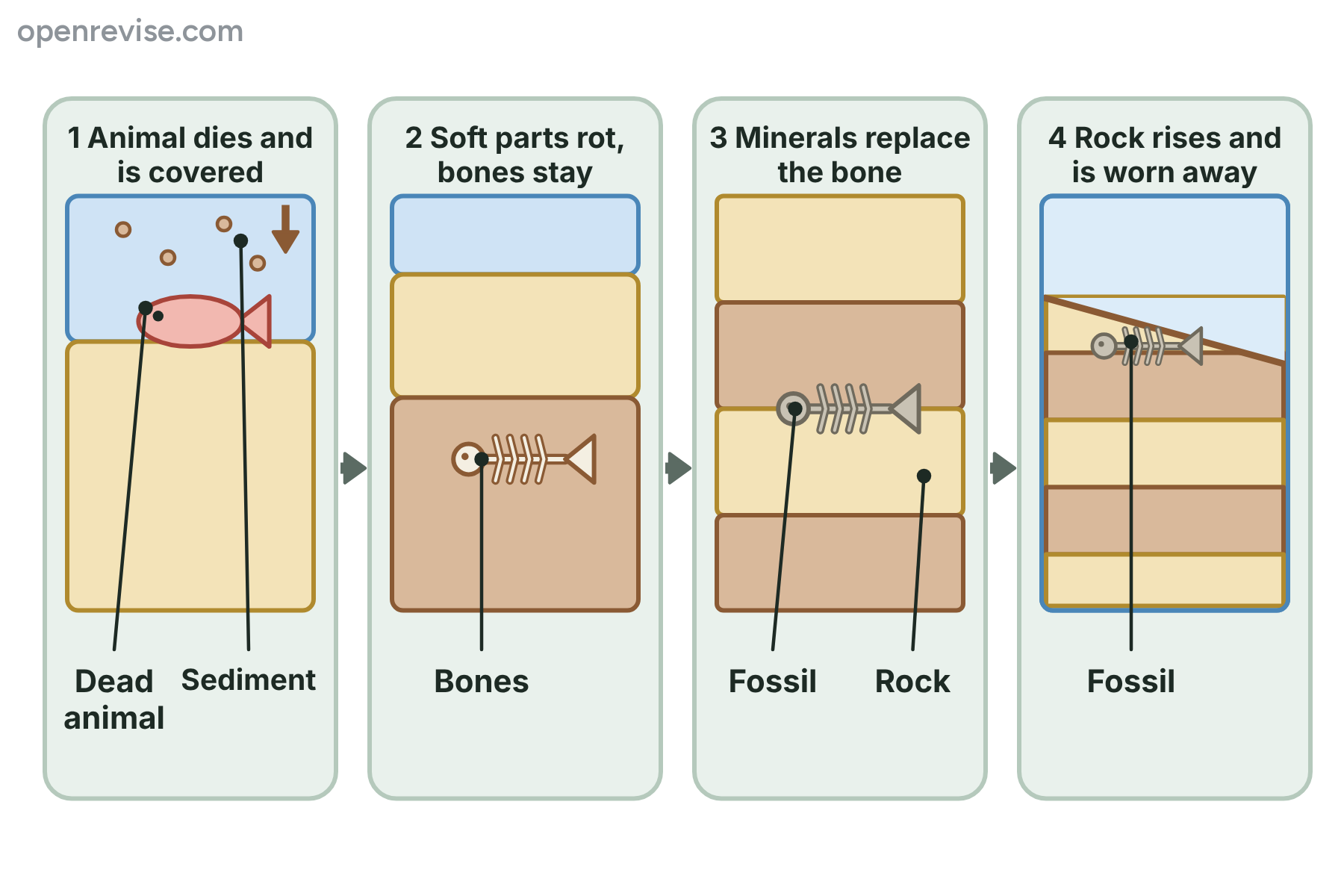
1 The animal dies and is covered by sediment. 2 The soft parts rot and the bones stay. 3 Minerals replace the bone, and the sediment turns to rock. 4 The rock is raised and worn away, which exposes the fossil.
-
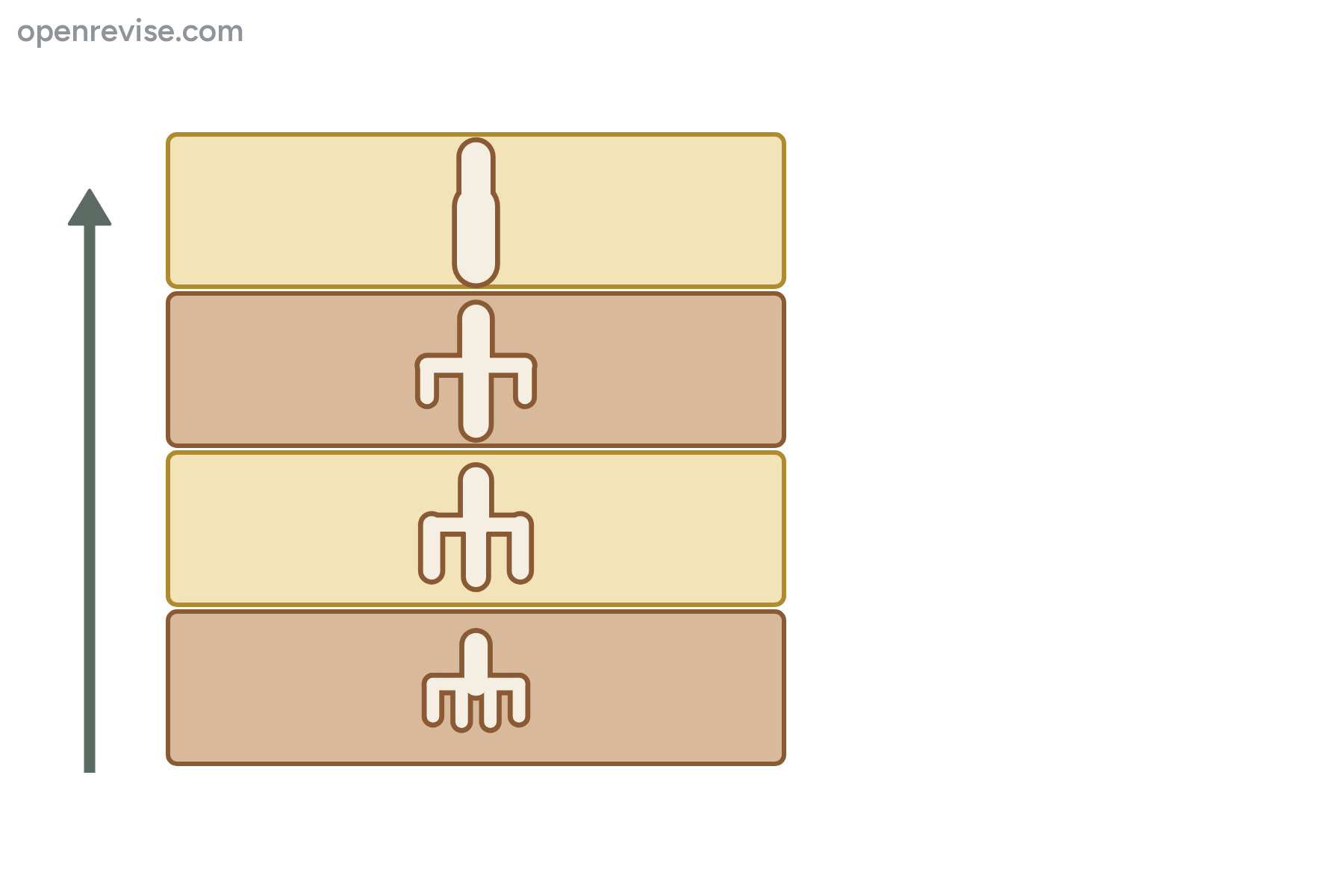 What does this series of fossils show about the evolution of the horse?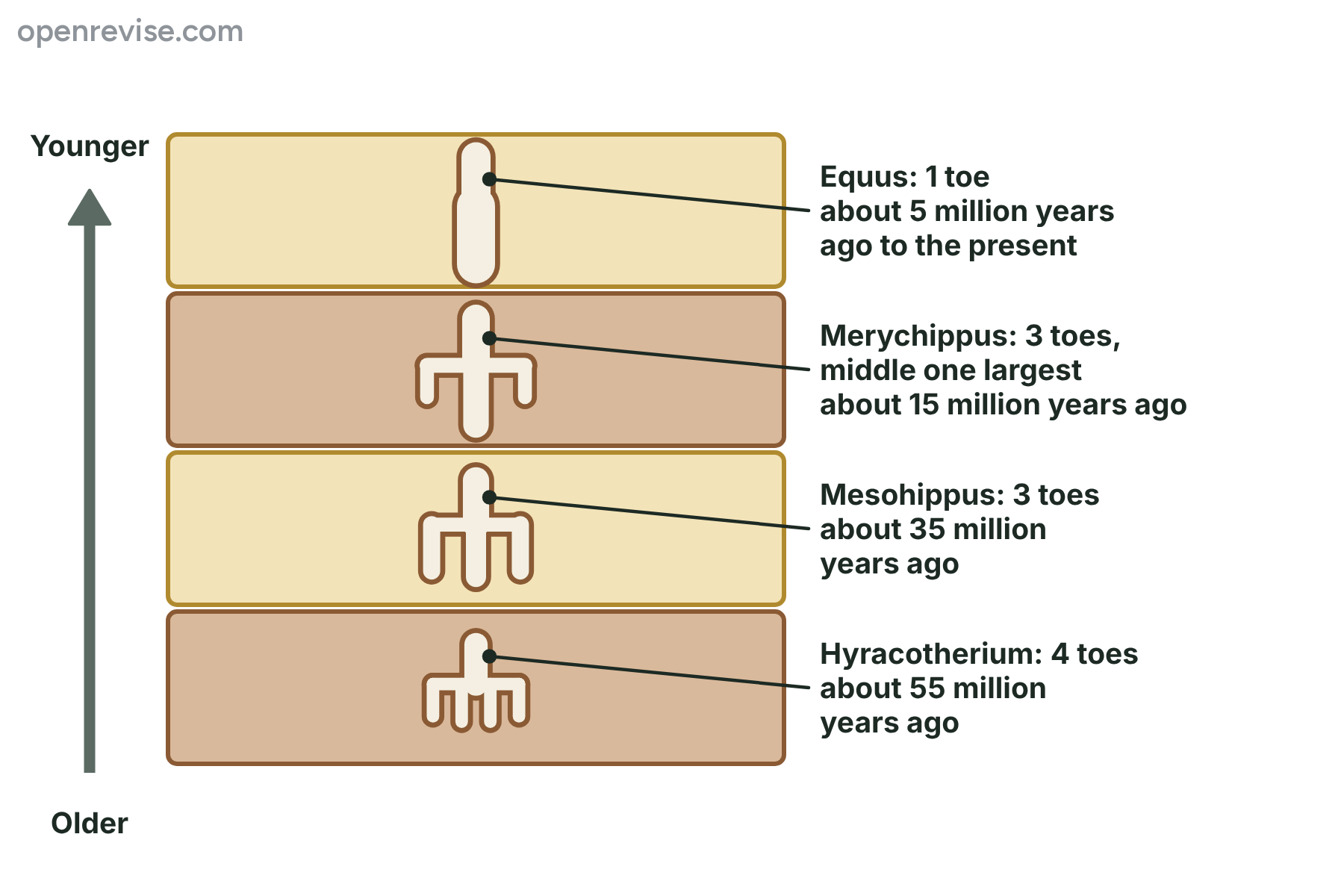
The number of toes fell from four in the oldest layer to one in the youngest, and the animal became larger, so the horse evolved gradually over about 55 million years.
-
What does an antibiotic do?
It kills bacteria or stops them growing, without harming the person's cells.
-
Do antibiotics work on viruses?
No. Viruses are not cells, so antibiotics cannot affect them.
-
What is antibiotic resistance?
A bacterium not being killed by an antibiotic, because of an allele that it carries.
-
How does a resistant bacterium first arise?
By a random mutation, before the antibiotic is used.
-
What is the selection pressure in antibiotic resistance?
The antibiotic, which kills non-resistant bacteria.
-
What happens to the non-resistant bacteria?
They are killed by the antibiotic.
-
What happens to the resistant bacteria?
They survive, reproduce and pass on the resistance allele.
-
Why do bacteria evolve resistance quickly?
They reproduce very quickly, they are present in huge numbers and they clone themselves.
-
How often can some bacteria divide?
About every 20 minutes in good conditions.
-
What does MRSA stand for?
Methicillin-resistant Staphylococcus aureus.
-
Why is MRSA a problem in hospitals?
It spreads to patients with wounds and weak defences, and few antibiotics will treat it.
-
Why should a patient finish the whole course of antibiotics?
So that all of the bacteria are killed and none survive to breed.
-
Why should antibiotics not be given for a cold?
A cold is caused by a virus, and the use would only select for resistant bacteria.
-
Why is the use of antibiotics in farming a concern?
It selects for resistant bacteria that may pass to humans.
-
Name two ways to stop MRSA spreading.
Washing hands and cleaning equipment, and isolating infected patients.
-
Why is antibiotic resistance evidence for evolution?
Natural selection can be seen happening in a short time, in a population of bacteria.
-
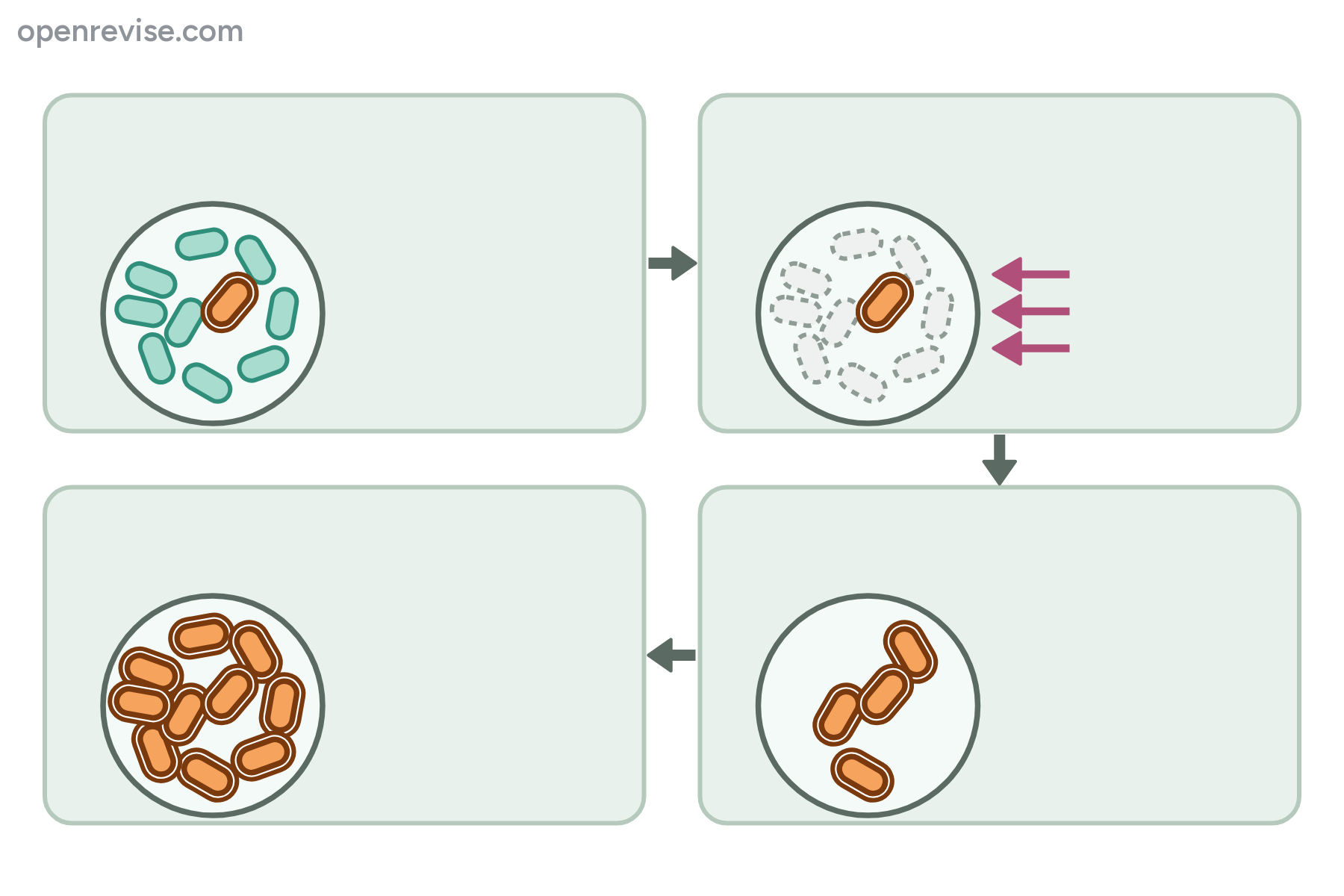 Describe what happens at each of stages 1 to 4 in the diagram.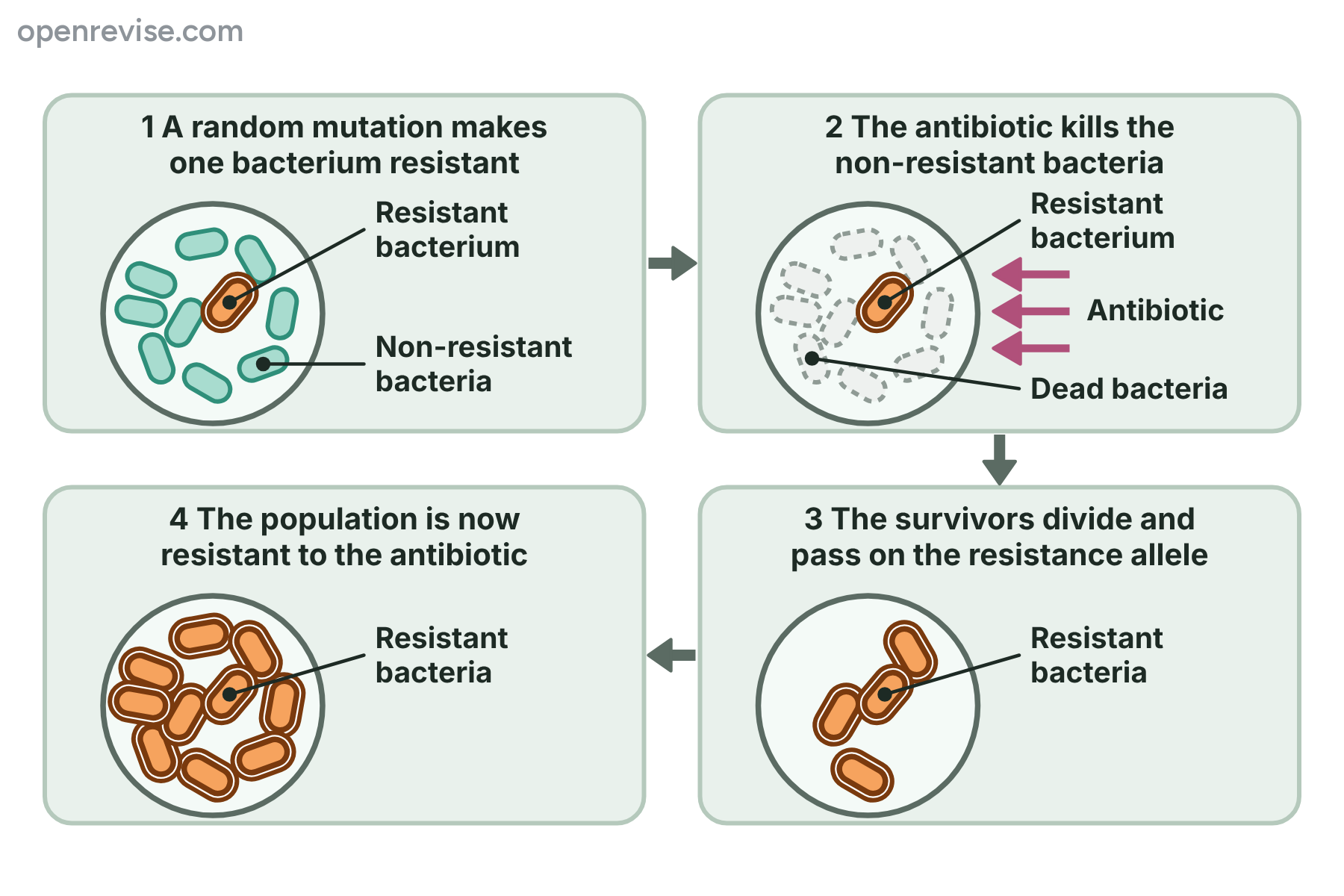
1 A mutation makes one bacterium resistant. 2 The antibiotic kills the non-resistant bacteria. 3 The resistant survivors reproduce and pass on the allele. 4 The population is now mostly resistant, so the antibiotic no longer works.
-
What is classification?
The sorting of living things into groups.
-
What is artificial classification?
Grouping by a few features that are easy to see, which may group unrelated organisms.
-
What is natural classification?
Grouping by many shared features, which shows evolutionary relationships.
-
Why is natural classification preferred?
It shows how organisms are related and lets us predict their features.
-
Who started the modern system of classification?
Carl Linnaeus.
-
Name the seven ranks from the largest to the smallest.
Kingdom, phylum, class, order, family, genus, species.
-
What happens to the number of organisms in a group as you go down the ranks?
It falls, and the members have more in common.
-
What is a binomial name?
A two-part name of a species: the genus and then the species.
-
How is a binomial written?
Genus with a capital letter, species with a small letter, in italics or underlined.
-
Why are binomial names useful?
They are the same all over the world, so every scientist knows which species is meant.
-
What are the three domains?
Bacteria, Archaea and Eukaryota.
-
Who proposed three domains, and what did he use?
Carl Woese, using the sequence of ribosomal RNA genes.
-
What is molecular phylogenetics?
Using differences in DNA to work out how species are related.
-
What do fewer differences in the DNA of two species show?
That they split from their common ancestor more recently, so they are more closely related.
-
What does a branching point on an evolutionary tree represent?
A common ancestor, where two lineages split.
-
Why can looks be a poor guide to relationships?
Unrelated organisms may look alike because they live in a similar way.
-
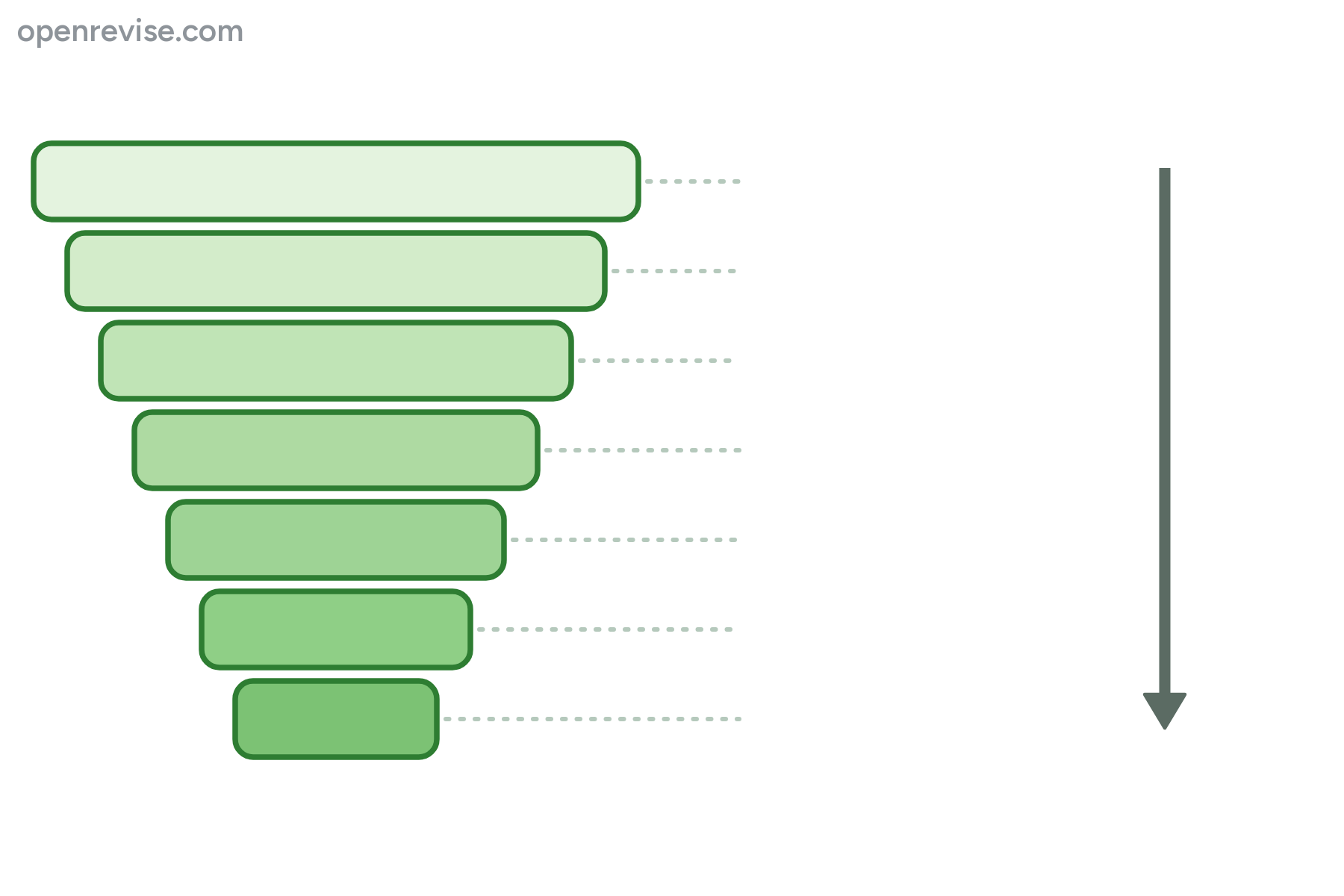 Name the seven ranks of the Linnaean system in order, starting with the largest.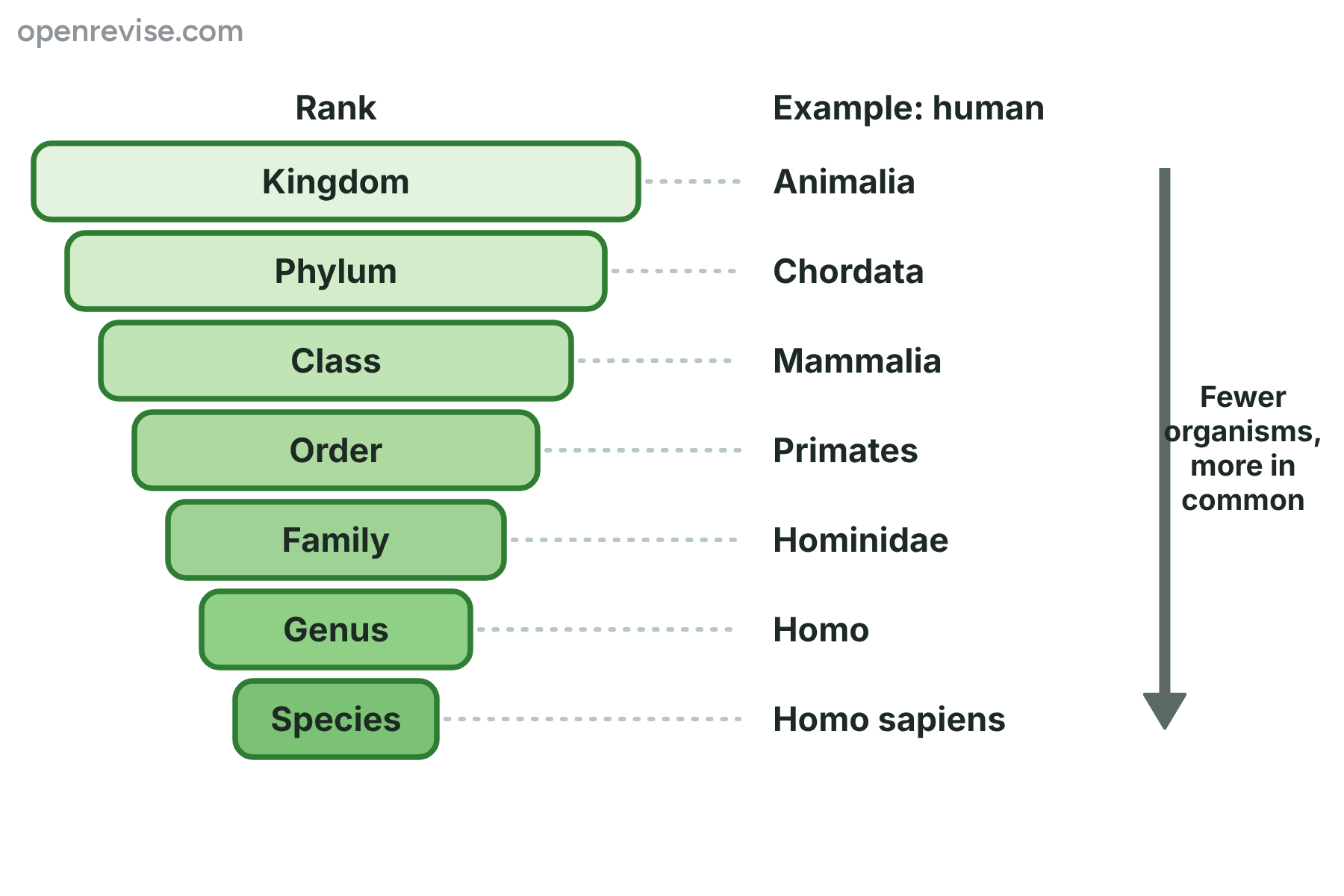
Kingdom, phylum, class, order, family, genus, species. For a human these are Animalia, Chordata, Mammalia, Primates, Hominidae, Homo, Homo sapiens.
-
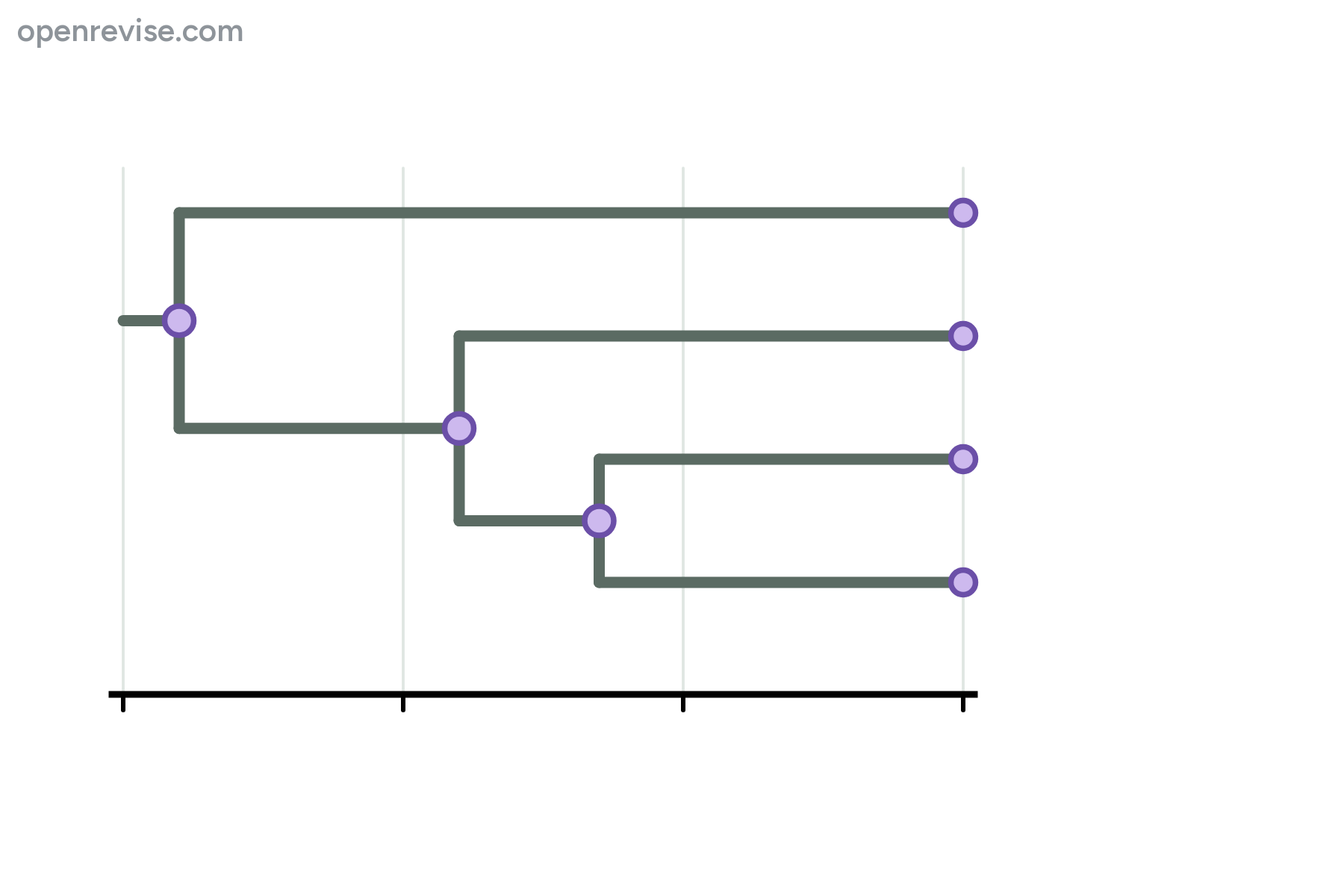 Which two species are the closest relatives in this tree, and how can you tell?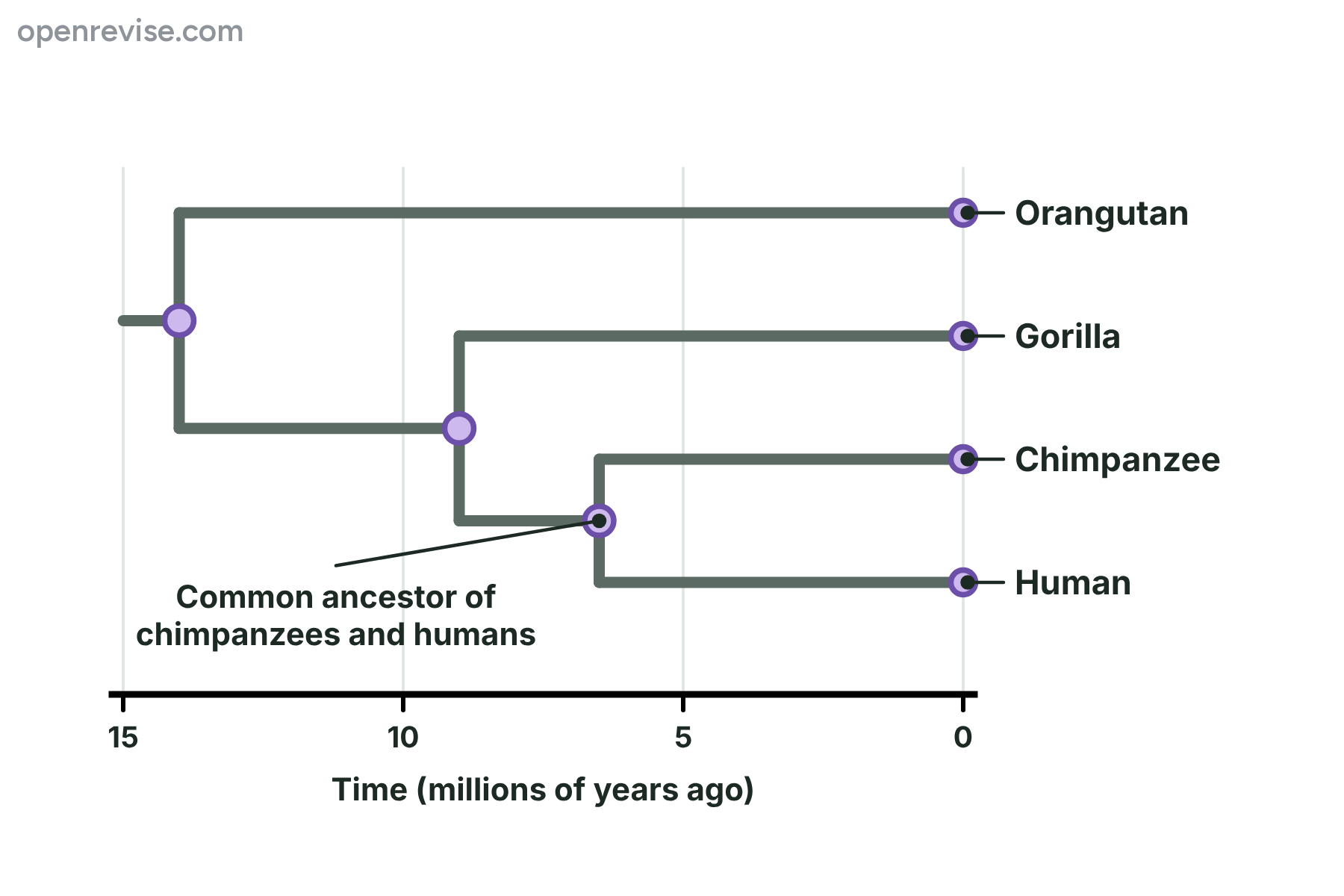
The chimpanzee and the human, because they share the most recent common ancestor, about 6.5 million years ago. The orangutan split off first, so it is the most distant relative.
-
Which ship did Darwin sail on, and in which years?
HMS Beagle, from 1831 to 1836.
-
Which islands gave Darwin important observations of birds and tortoises?
The Galapagos Islands.
-
What did Darwin notice about the finches?
The beaks differed from island to island and suited the food available.
-
What did Darwin learn from pigeon breeders?
That selecting which individuals to breed can change a variety within a few generations.
-
State Darwin's inference from his observations.
The individuals best suited to the environment survive and breed more, so their features become more common.
-
Who was Alfred Russel Wallace?
A naturalist who developed the idea of natural selection independently of Darwin.
-
What did Wallace do in 1858?
He sent Darwin an essay setting out natural selection.
-
When was the joint announcement made, and where?
On 1 July 1858, at the Linnean Society of London.
-
When was On the Origin of Species published?
1859.
-
Give two reasons why the theory was resisted.
Religious belief, and no known mechanism of inheritance (or too slow to observe).
-
Why could Darwin not explain inheritance?
Genes and mutations were not known.
-
How did Mendel's work help to support the theory?
It showed how features are inherited in units, which are genes.
-
Name two types of evidence that led to acceptance of the theory.
Fossils such as Archaeopteryx, genetics and DNA, and observed natural selection (any two).
-
Name one impact of evolutionary theory on medicine.
It explains antibiotic resistance, and why new flu vaccines are needed.
-
What is a seedbank?
A store of seeds, dried and kept cold, to preserve plant biodiversity.
-
Why are seedbanks needed?
They keep genetic variation as insurance against loss of species and crop varieties.
-
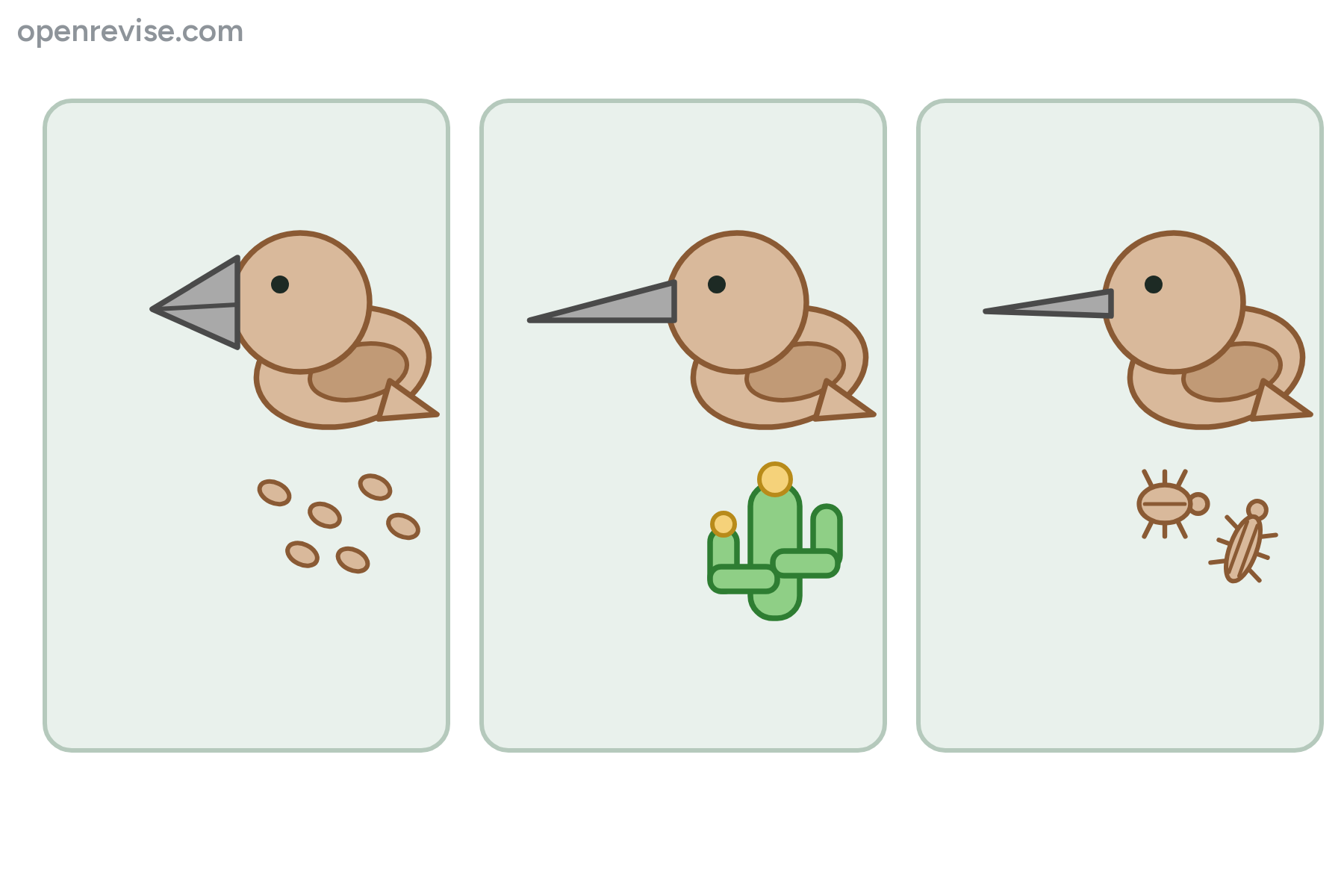 Explain how these finches show natural selection, and what Darwin inferred from them.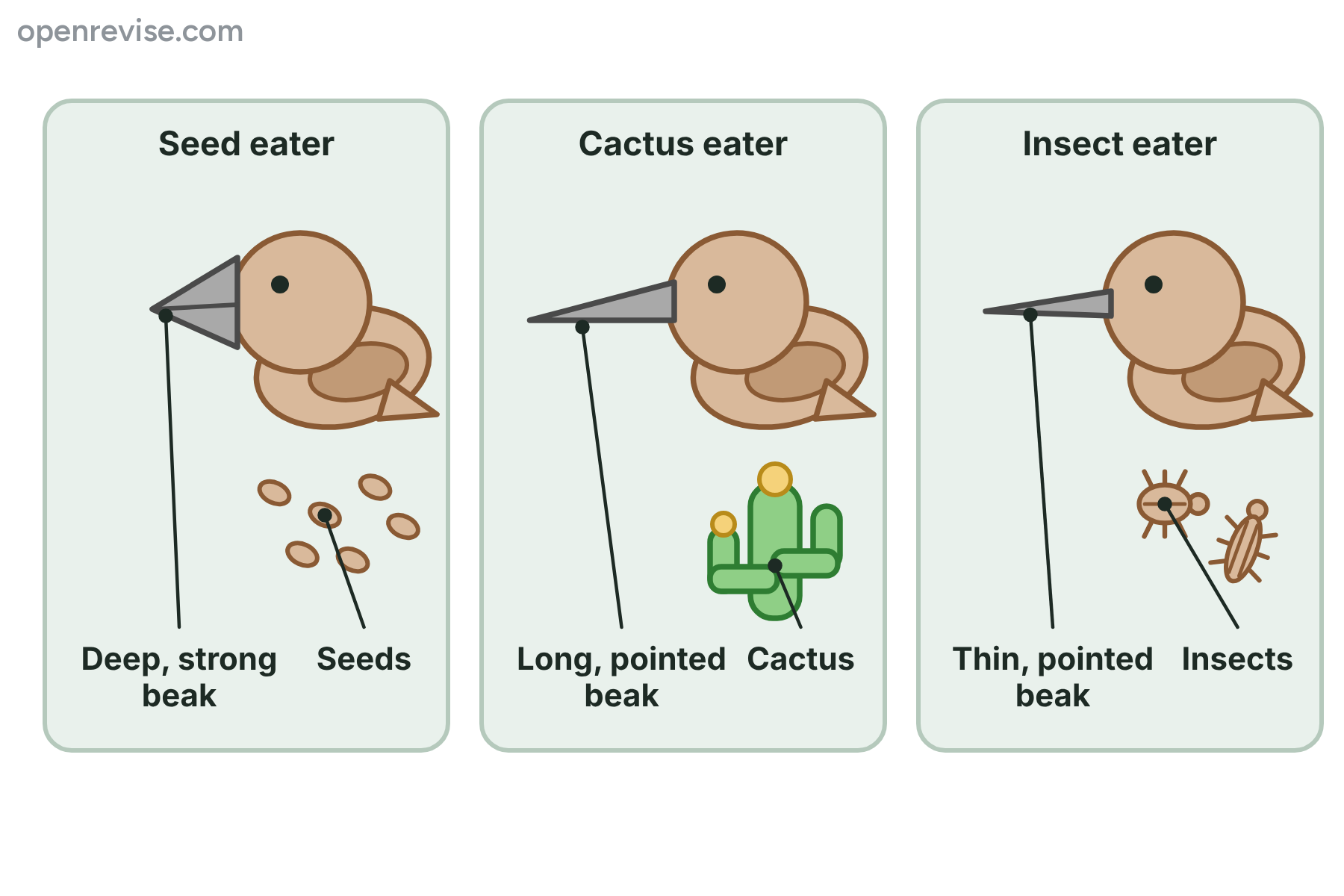
Each beak suits a different food. Finches with beaks best suited to the food on an island survive and breed more, so over generations the populations differ. Darwin inferred that the finches share an ancestor and changed by natural selection.