Flashcards · Biology
Digestion and Enzymes
-
What is a tissue?
A group of similar cells that work together to do a particular job.
-
What is an organ?
A group of different tissues that work together to do a particular job.
-
What is an organ system?
A group of organs that work together to do a particular job.
-
List the levels of organisation in order, from smallest to largest.
Cell, tissue, organ, organ system, organism.
-
Give an example of an organ.
The stomach.
-
Give an example of an organ system.
The digestive system.
-
Which three tissues are found in the stomach?
Muscular tissue, glandular tissue and epithelial tissue.
-
What does muscular tissue do in the stomach?
It contracts to churn the food and mix it with digestive juices.
-
What does glandular tissue do in the stomach?
It makes digestive juices, including hydrochloric acid and enzymes.
-
What does epithelial tissue do in the stomach?
It covers the inside and outside surfaces of the organ.
-
What is the job of the digestive system?
To break food down into small molecules and absorb them into the blood.
-
What is the job of the salivary glands?
They release saliva, which contains amylase.
-
What does the oesophagus do?
It squeezes food down to the stomach.
-
What does the stomach do?
It churns the food and mixes it with acid and protease.
-
What does the liver make?
Bile.
-
What does the gall bladder do?
It stores bile until it is needed.
-
What does the pancreas do?
It makes digestive enzymes and releases them into the small intestine.
-
Where is digested food absorbed into the blood?
The small intestine.
-
What does the large intestine do?
It absorbs water from the undigested food.
-
Why must food be digested?
Large molecules are too big to pass through the gut wall, so they have to be broken into small soluble ones.
-
Name the small molecules that food is broken down into.
Sugars, amino acids, and fatty acids and glycerol.
-
How many micrometres are there in 1 millimetre?
1000.
-
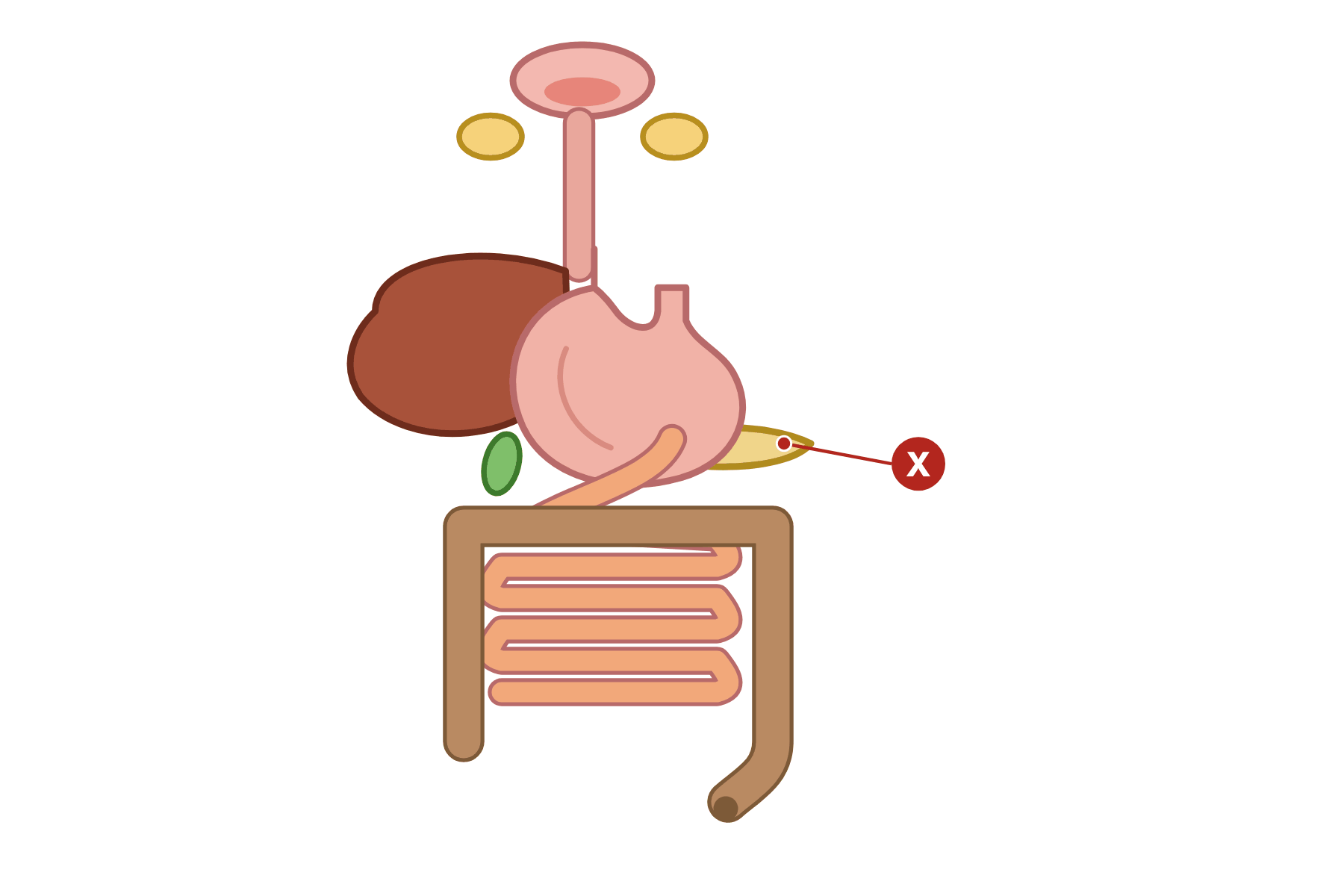 What is the organ marked X, and what does it make?
 The pancreas. It makes digestive enzymes (amylase, protease and lipase) and releases them into the small intestine.
-
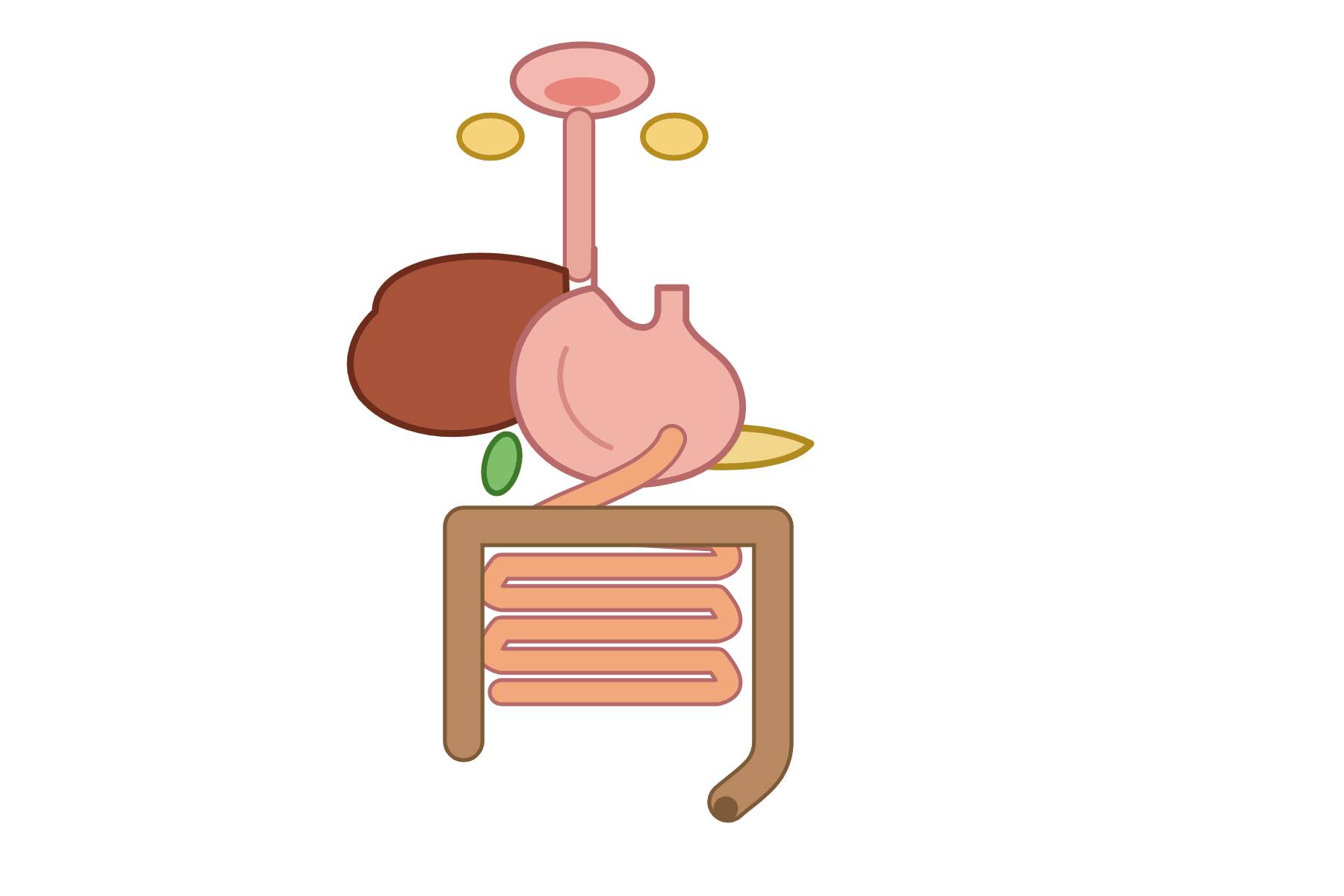 Label the organs of the digestive system.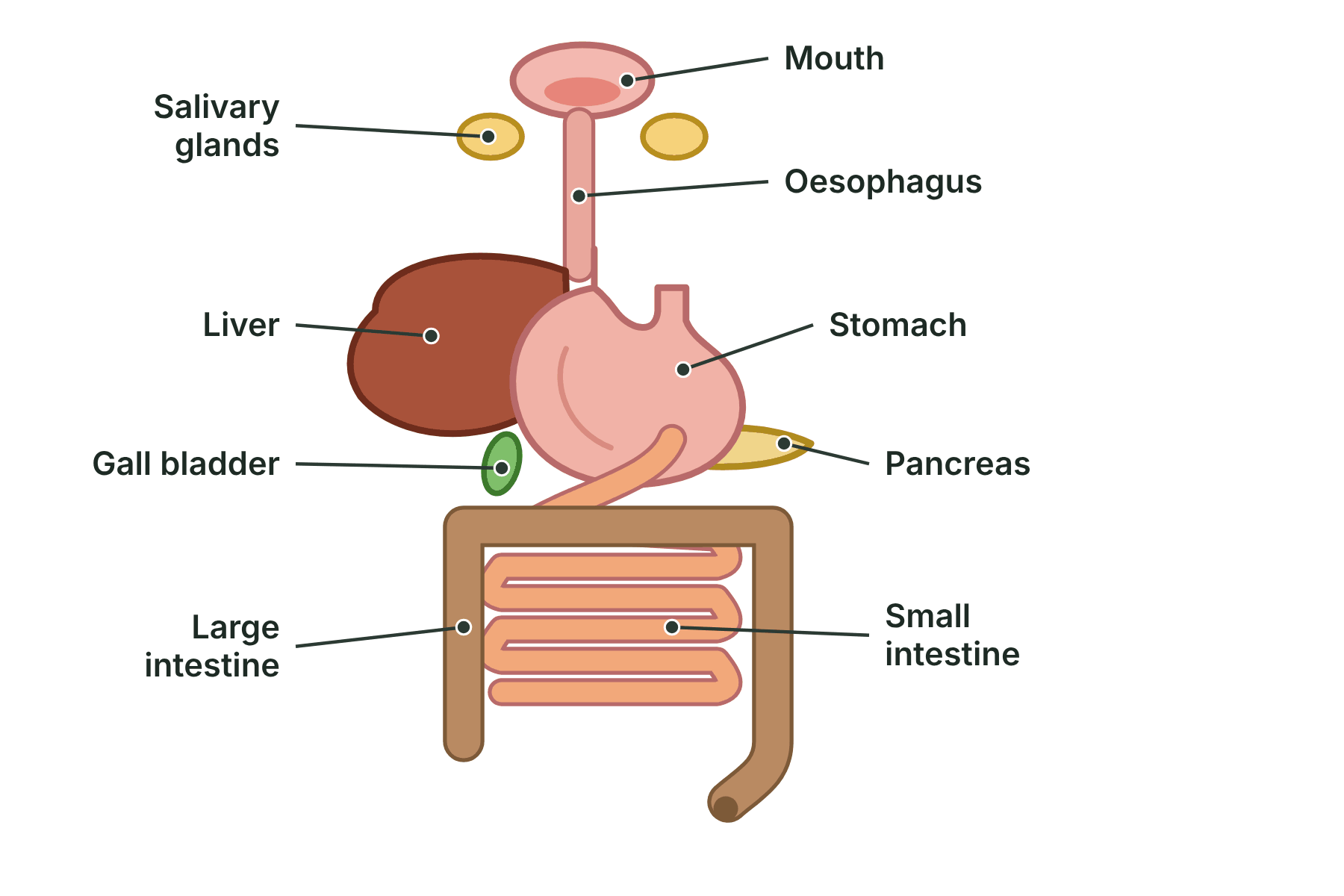
-
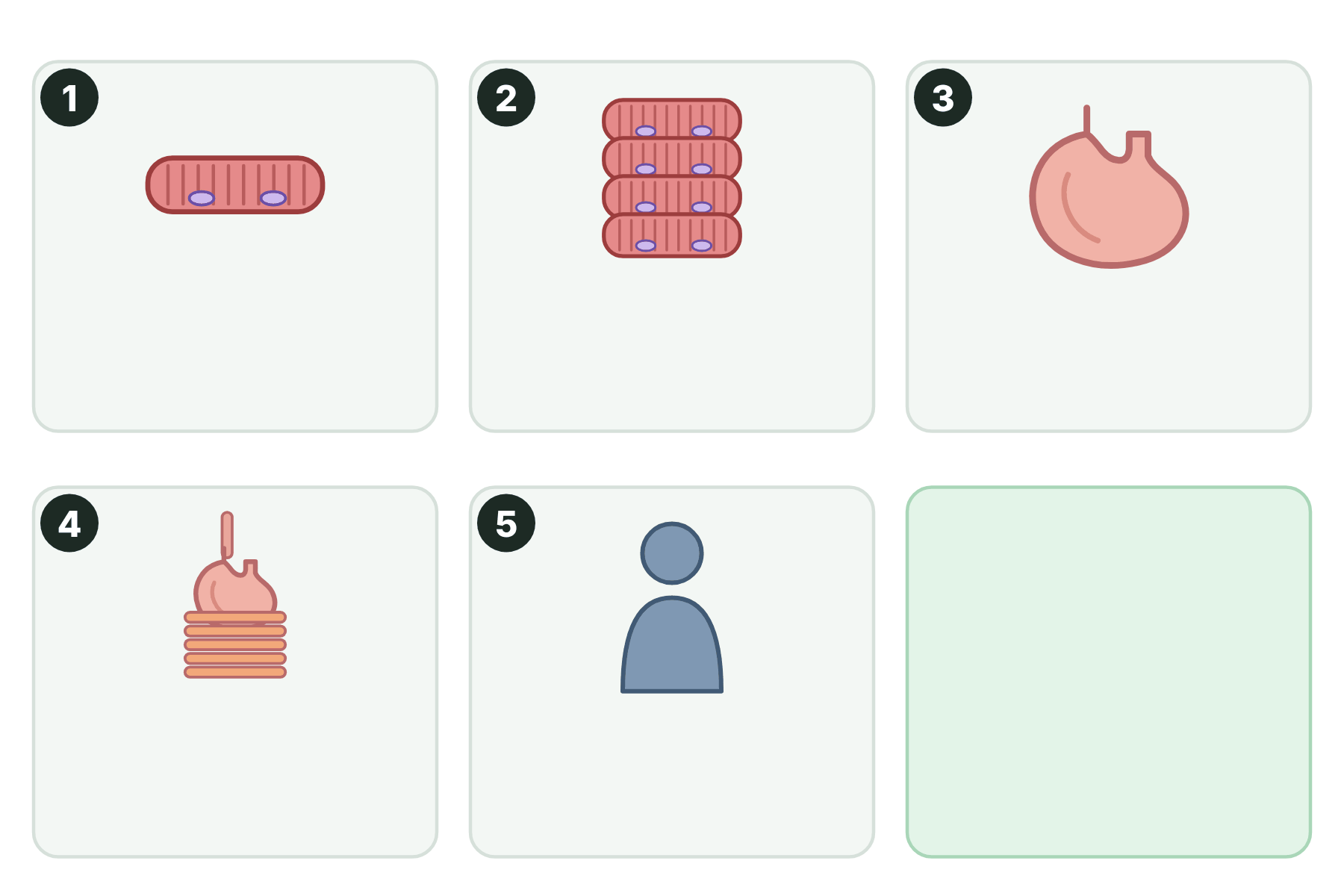 Name the five levels of organisation, 1 to 5.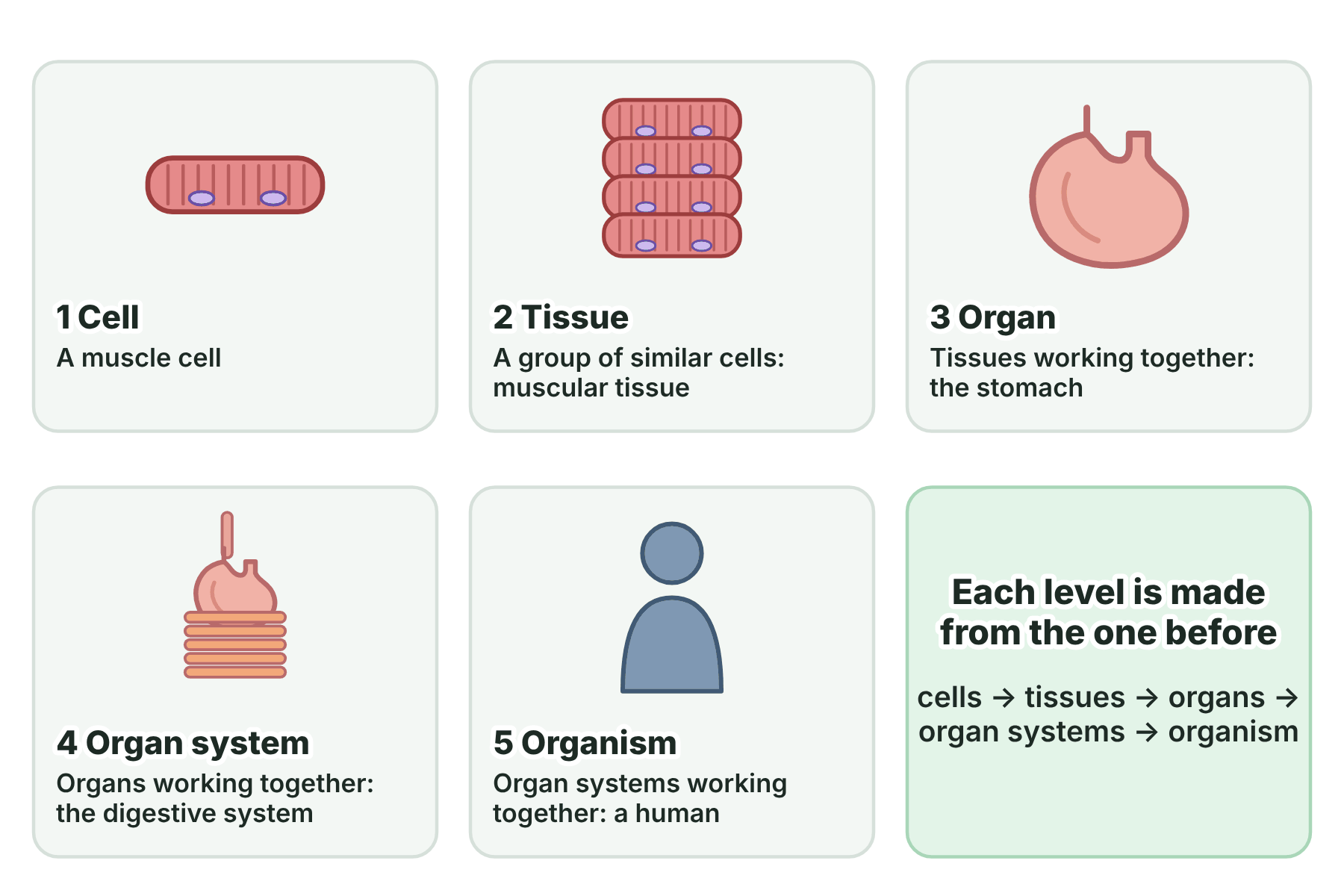
-
Name the three tissues in the wall of the stomach and give the job of each.
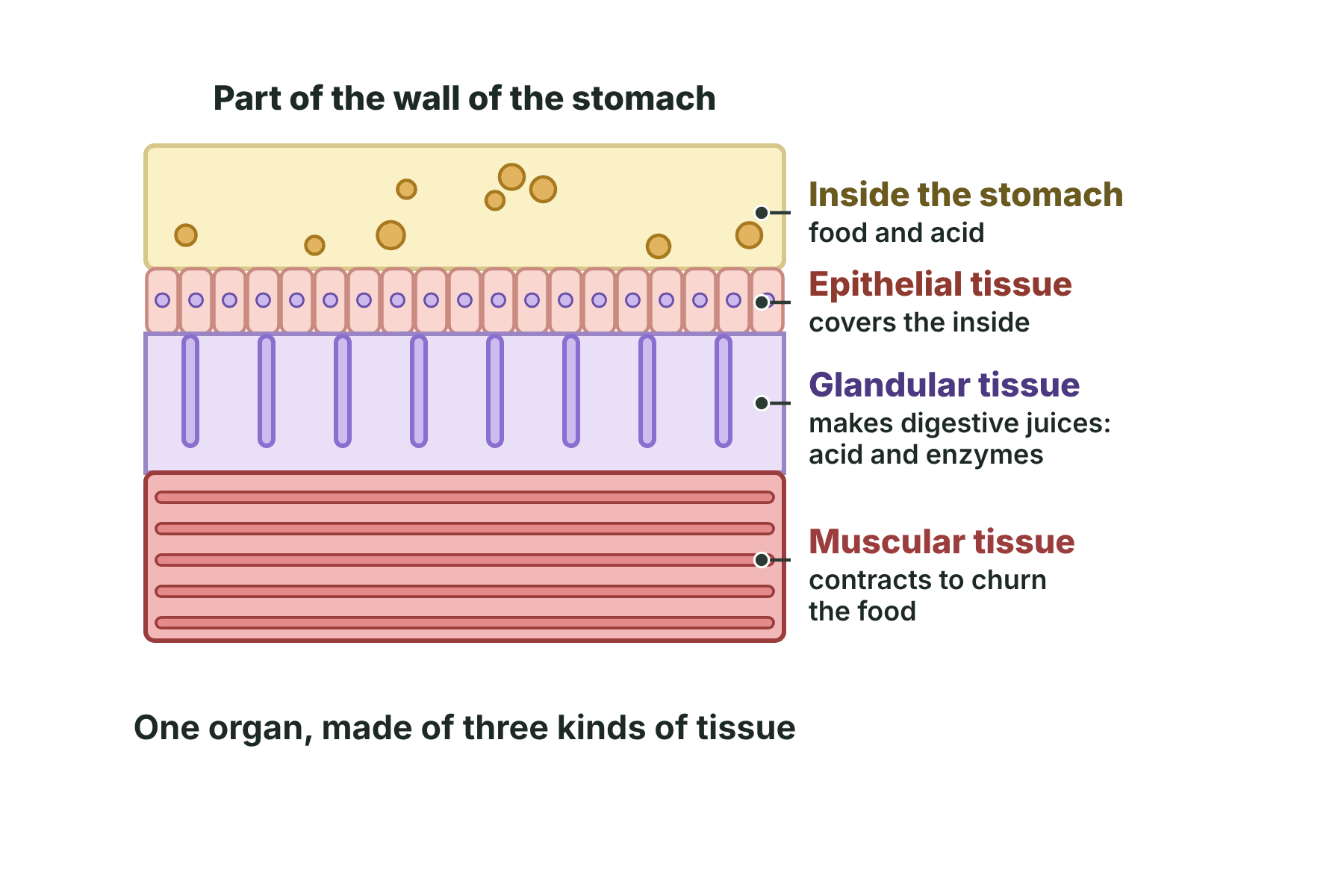
Muscular tissue contracts to churn the food. Glandular tissue makes digestive juices, including acid and enzymes. Epithelial tissue covers the inside and outside surfaces.
-
What is an enzyme?
A biological catalyst that speeds up a reaction in a living thing.
-
What is a catalyst?
A substance that speeds up a chemical reaction without being used up.
-
What are enzymes made of?
Protein.
-
Is an enzyme used up in a reaction?
No. It is unchanged at the end and can be used again.
-
What is the substrate?
The substance that an enzyme acts on.
-
What are the products?
The substances that are made in the reaction.
-
What is the active site?
The region of the enzyme into which the substrate fits.
-
What is an enzyme-substrate complex?
The enzyme and its substrate joined together while the reaction happens.
-
Why is an enzyme specific?
The shape of its active site fits only one substrate.
-
What is the lock and key model?
A model in which the substrate (key) fits the active site (lock) exactly.
-
Why is the lock and key model called simplified?
Real enzymes can change shape slightly, but the model treats the active site as rigid.
-
Why does a reaction speed up when it gets warmer?
The particles have more energy and collide more often.
-
What is the optimum temperature?
The temperature at which an enzyme works fastest.
-
What is the optimum temperature for many human enzymes?
About 37 to 40 °C.
-
What does denatured mean?
The enzyme has lost its shape, so the active site no longer fits the substrate.
-
What causes an enzyme to be denatured?
A temperature that is too high, or a pH that is too acidic or too alkaline.
-
Can a denatured enzyme be restored by cooling it?
No. The change in shape is permanent.
-
Does cold denature an enzyme?
No. The enzyme just works slowly, and speeds up again when warmed.
-
What is the optimum pH of pepsin?
About pH 2.
-
What is the optimum pH of amylase?
About pH 7.
-
How do you work out rate from the amount of product?
Rate = amount of product formed ÷ time taken.
-
How do you work out rate from the time taken?
Rate = 1 ÷ time. Using 1000 ÷ time gives easier numbers.
-
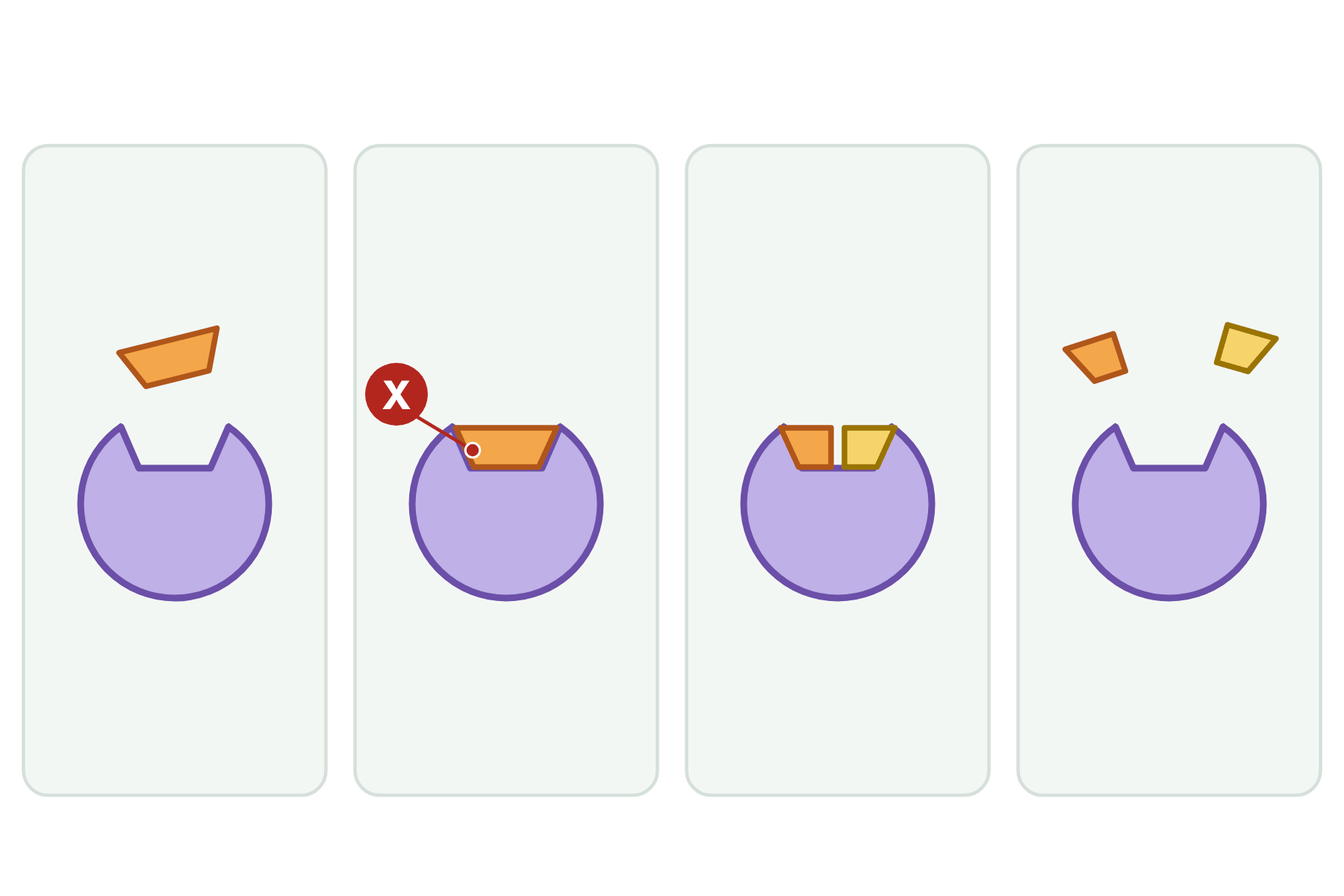 What is the region of the enzyme marked X, and why is it important?
 The active site. Its shape fits the substrate exactly, so only that substrate can bind and be changed.
-
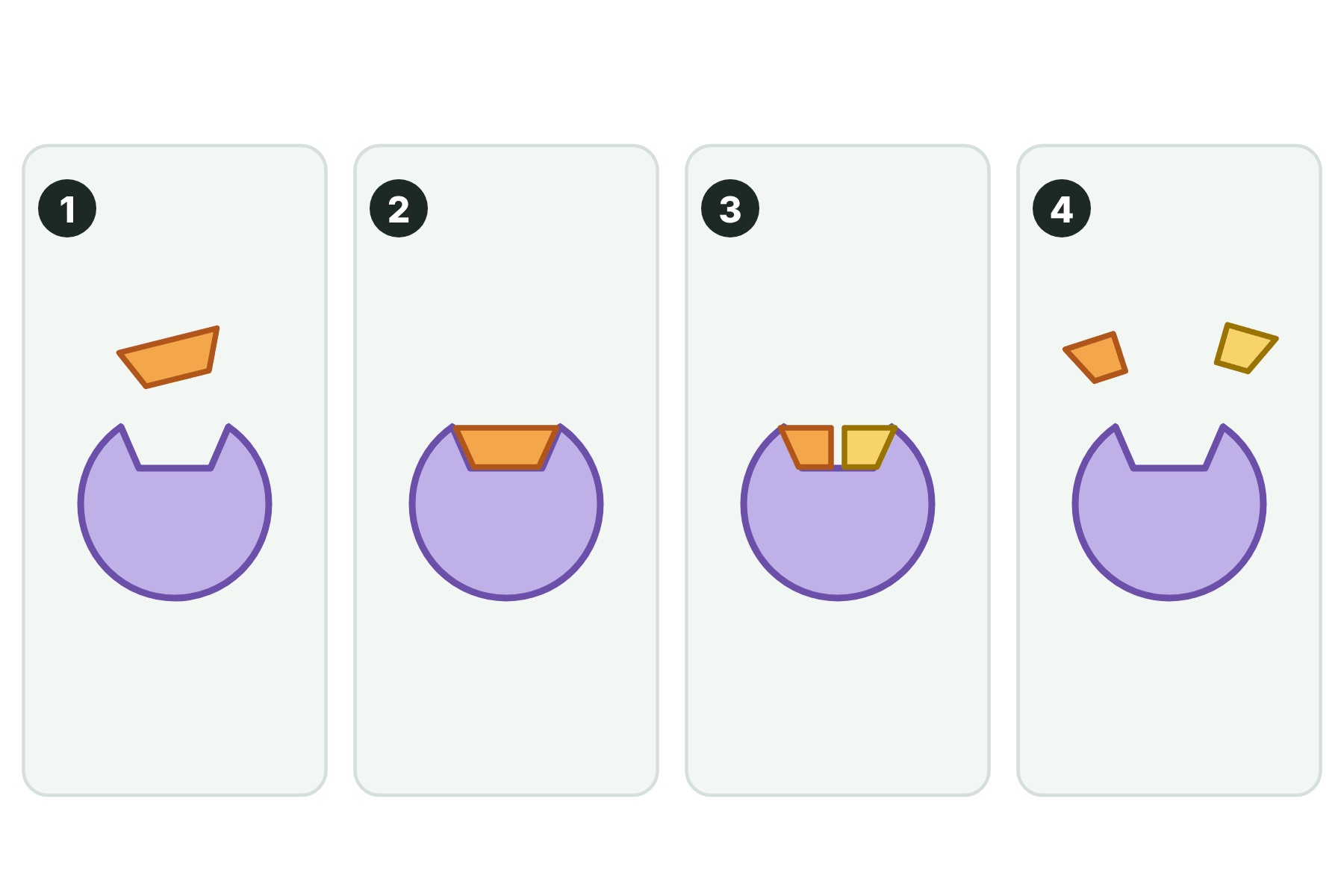 Describe what happens at each of the four stages.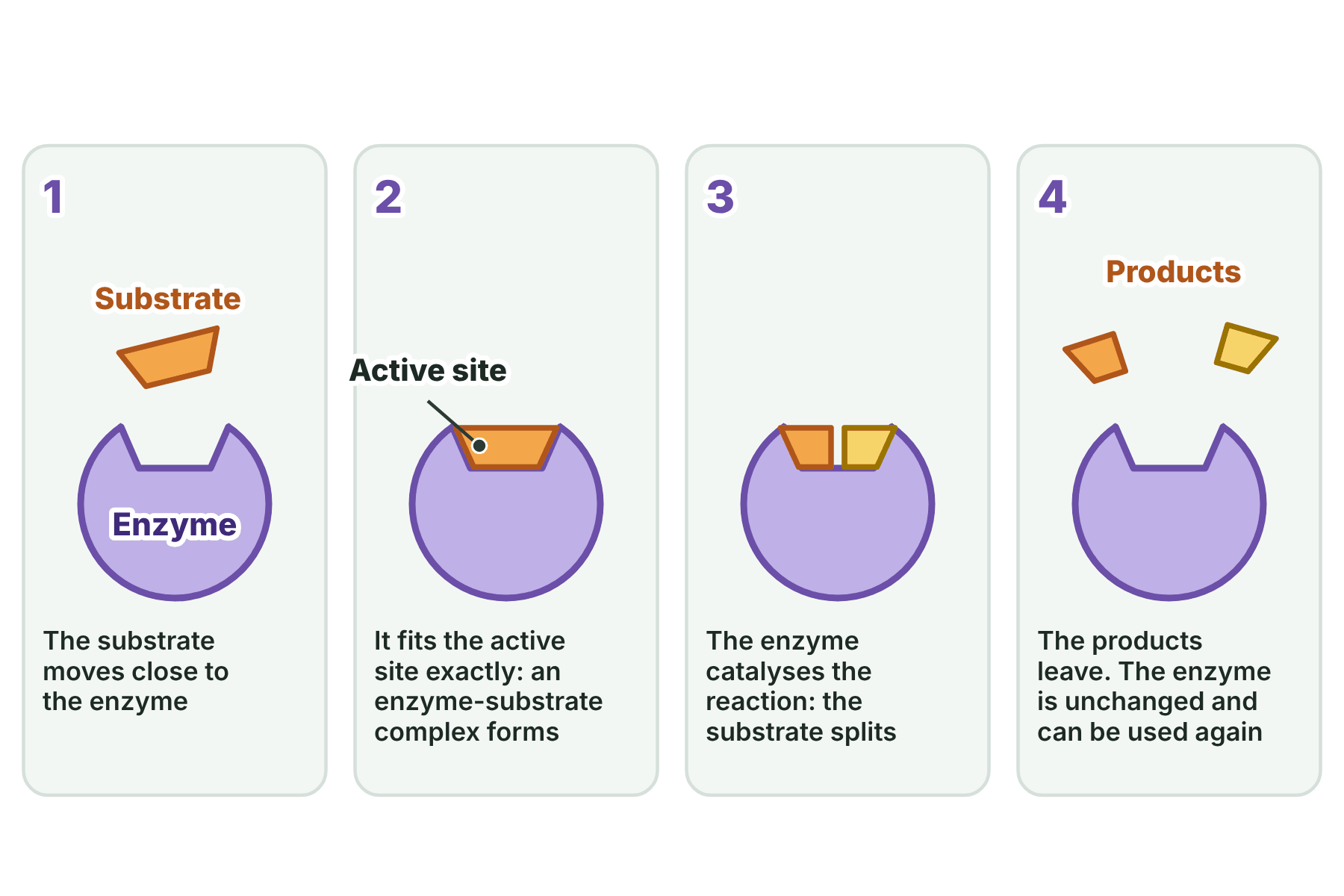
-
What happens to an enzyme when the temperature gets too high, and why does the reaction stop?
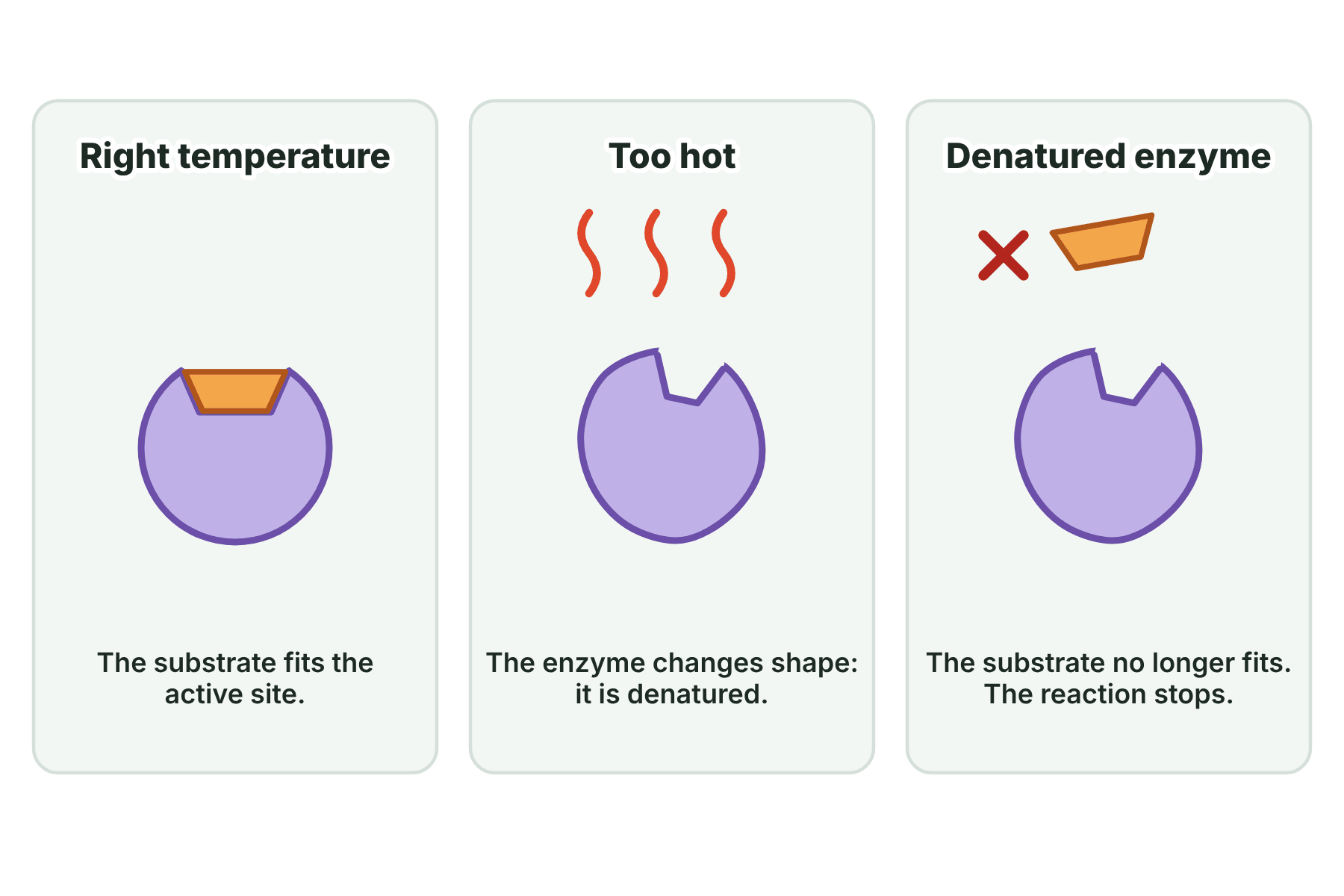
The enzyme is denatured: its bonds break and its shape changes, including the active site. The substrate no longer fits, so the reaction stops.
-
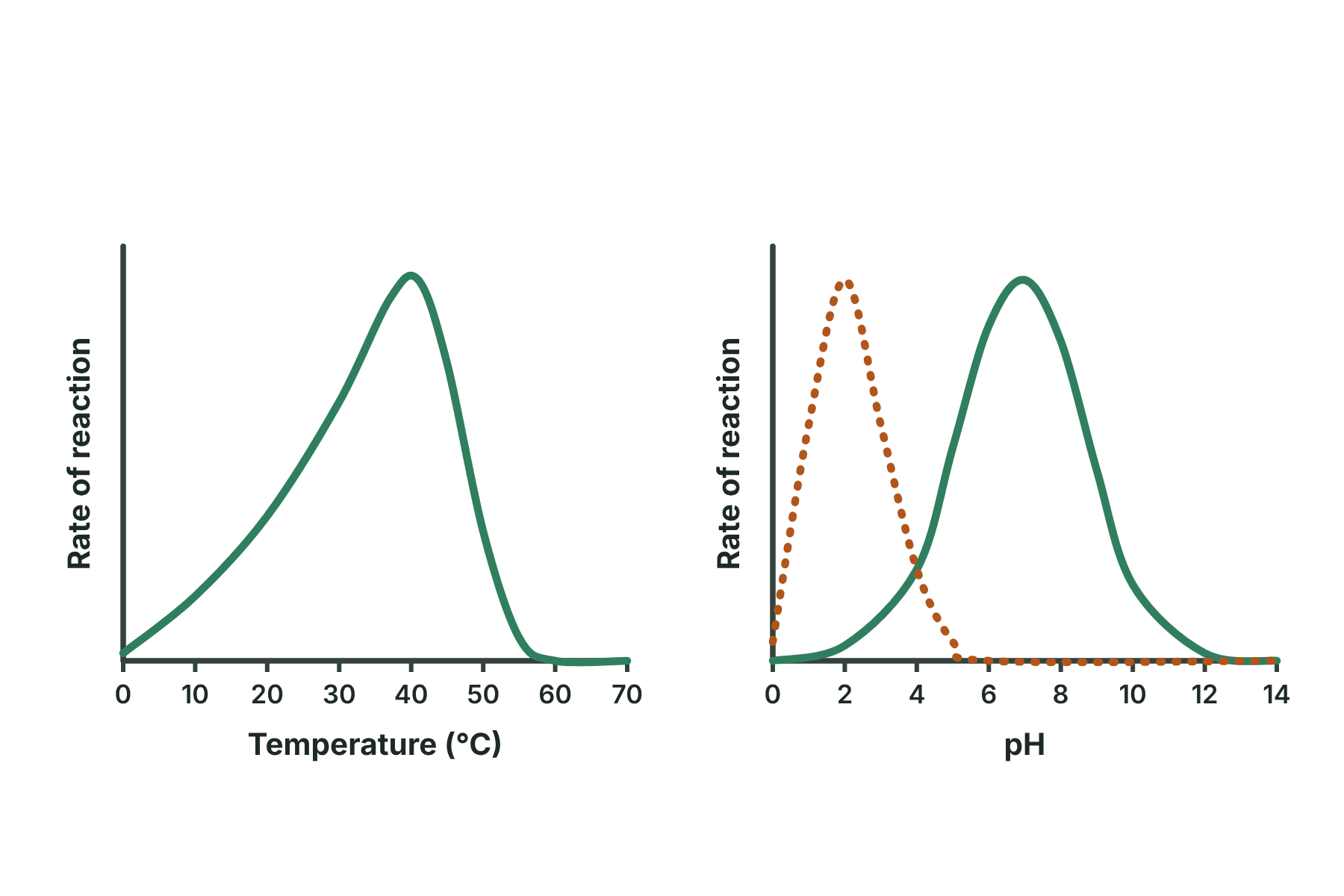 Sketch the shape of the temperature graph and the pH graph for an enzyme. Where is each optimum?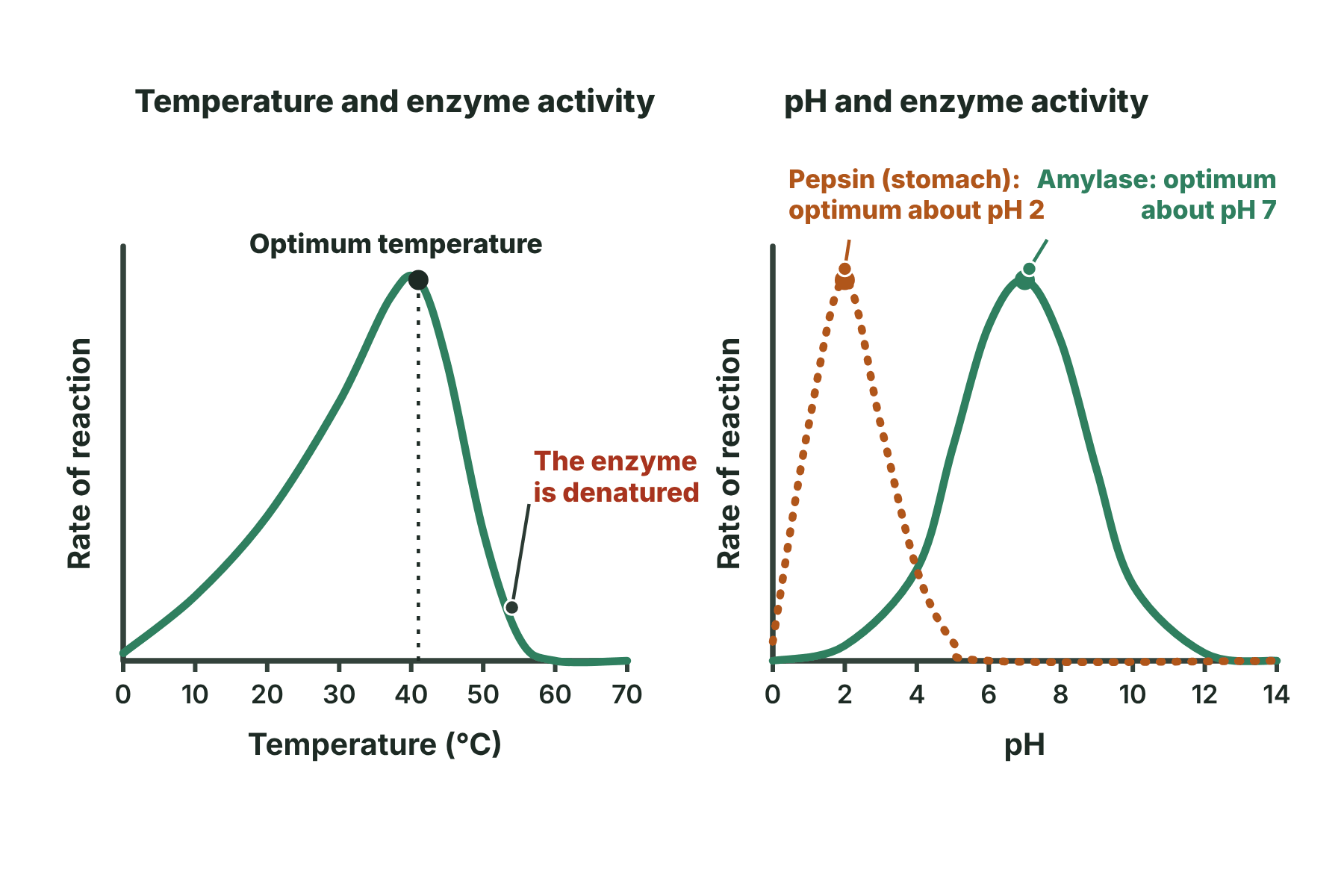
-
What does a carbohydrase break down?
Carbohydrates, into simple sugars.
-
What is amylase?
A carbohydrase that breaks down starch into simple sugars.
-
What does a protease break down?
Proteins, into amino acids.
-
What does a lipase break down?
Lipids (fats and oils), into glycerol and fatty acids.
-
What is starch digested into?
Simple sugars, such as glucose.
-
What are proteins digested into?
Amino acids.
-
What are lipids digested into?
Glycerol and fatty acids.
-
Where is amylase made?
The salivary glands, the pancreas and the small intestine.
-
Where is protease made?
The stomach, the pancreas and the small intestine.
-
Where is lipase made?
The pancreas and the small intestine.
-
Which organ makes all three digestive enzymes and releases them into the small intestine?
The pancreas.
-
Why are different enzymes needed for different foods?
Each enzyme is specific, because its active site fits only one type of molecule.
-
Why must the large molecules be broken down?
They are too big to be absorbed. The small soluble products can pass into the blood.
-
Where is bile made?
The liver.
-
Where is bile stored?
The gall bladder.
-
Where is bile released to?
The small intestine.
-
Is bile an enzyme?
No. It does not break down molecules.
-
Why is bile alkaline?
To neutralise the hydrochloric acid that comes from the stomach, so that the enzymes in the small intestine work well.
-
What does emulsifying fat mean?
Breaking large drops of fat into many tiny droplets.
-
Why does emulsifying fat speed up digestion?
The droplets have a larger surface area, so lipase can work on more of the fat at once.
-
What are the products of digestion used for?
To build new carbohydrates, lipids and proteins, and some glucose is used in respiration.
-
What happens to the products after digestion?
They are absorbed into the blood and carried to the cells.
-
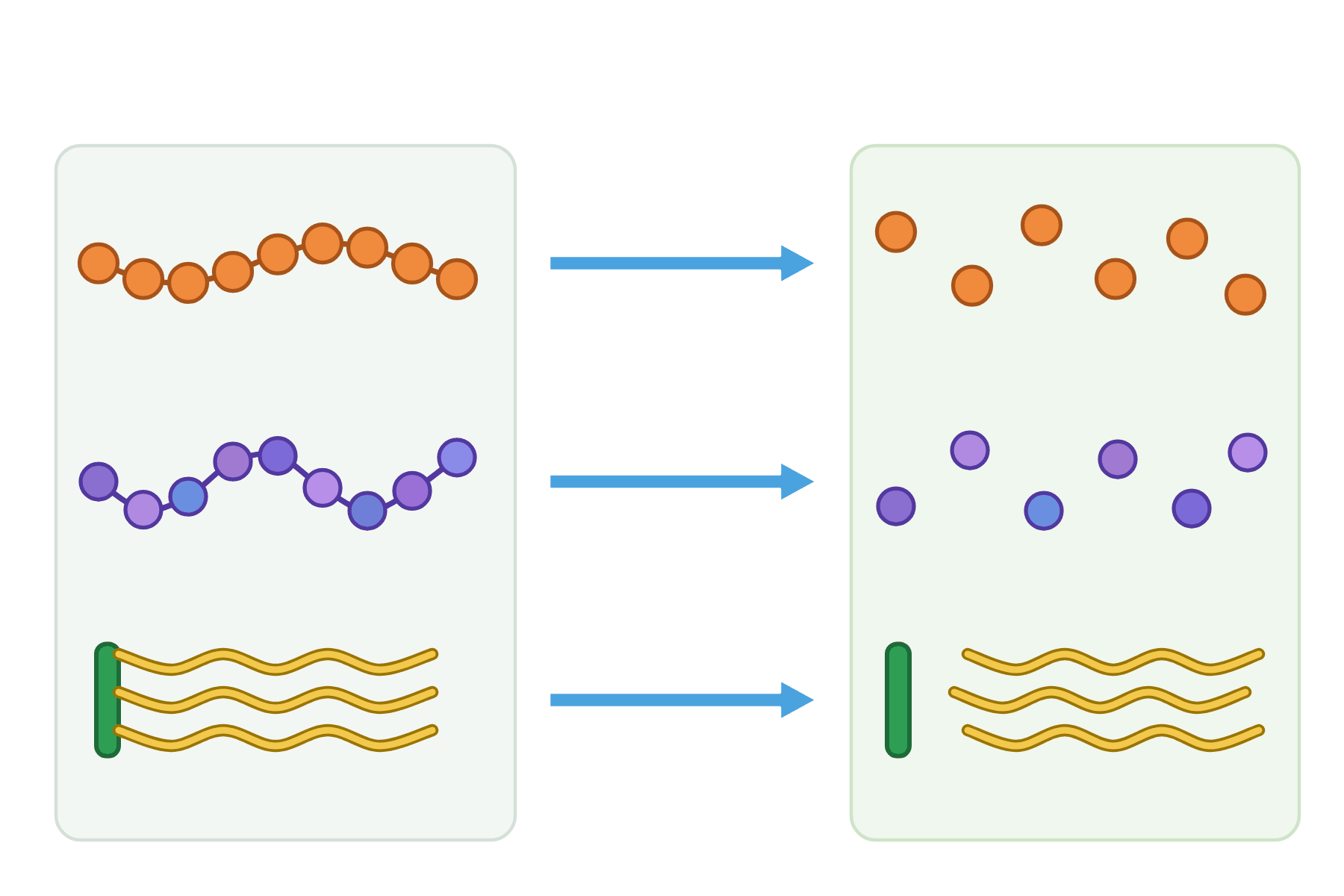 Name the enzyme that digests each large molecule, and the small molecules it makes.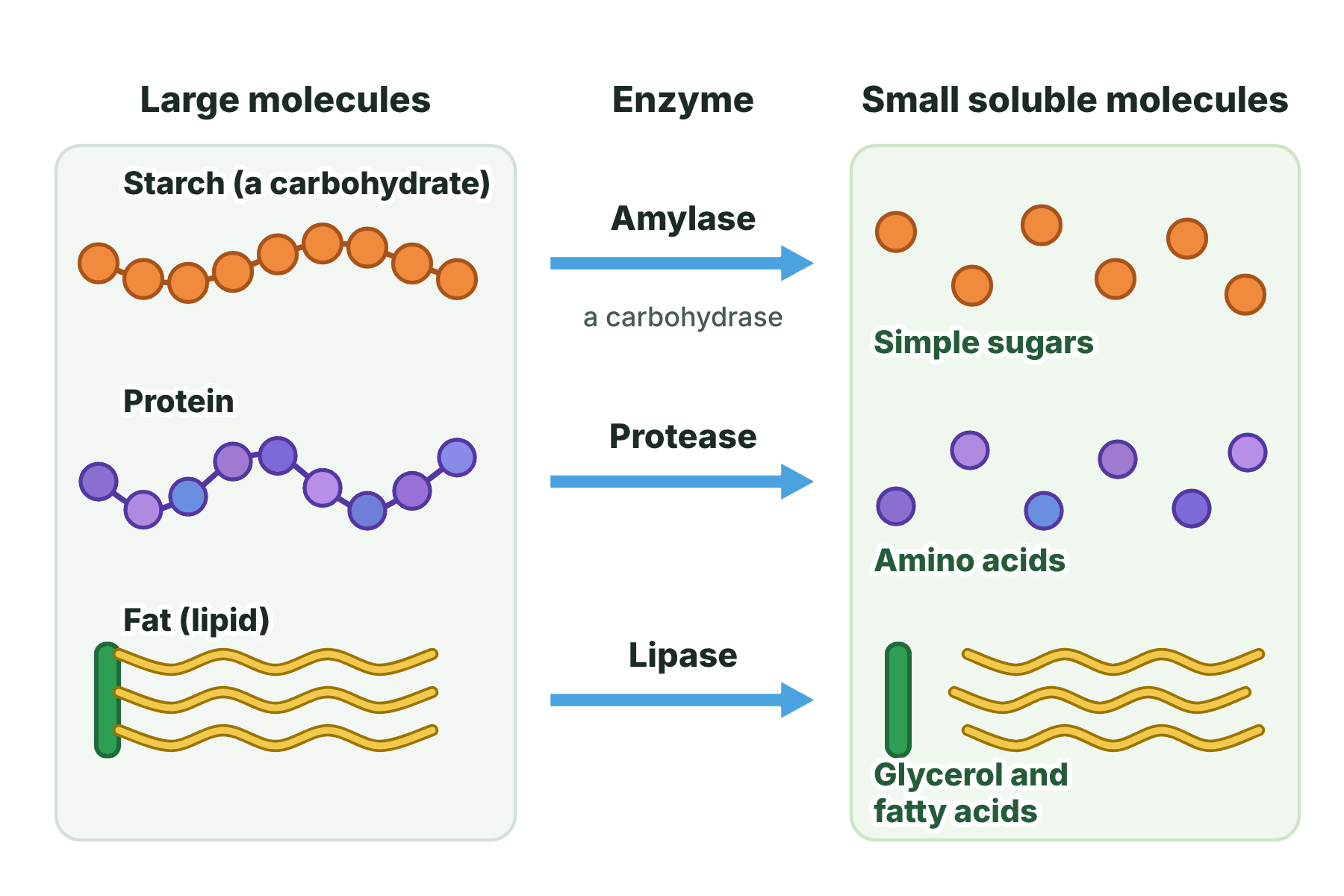
-
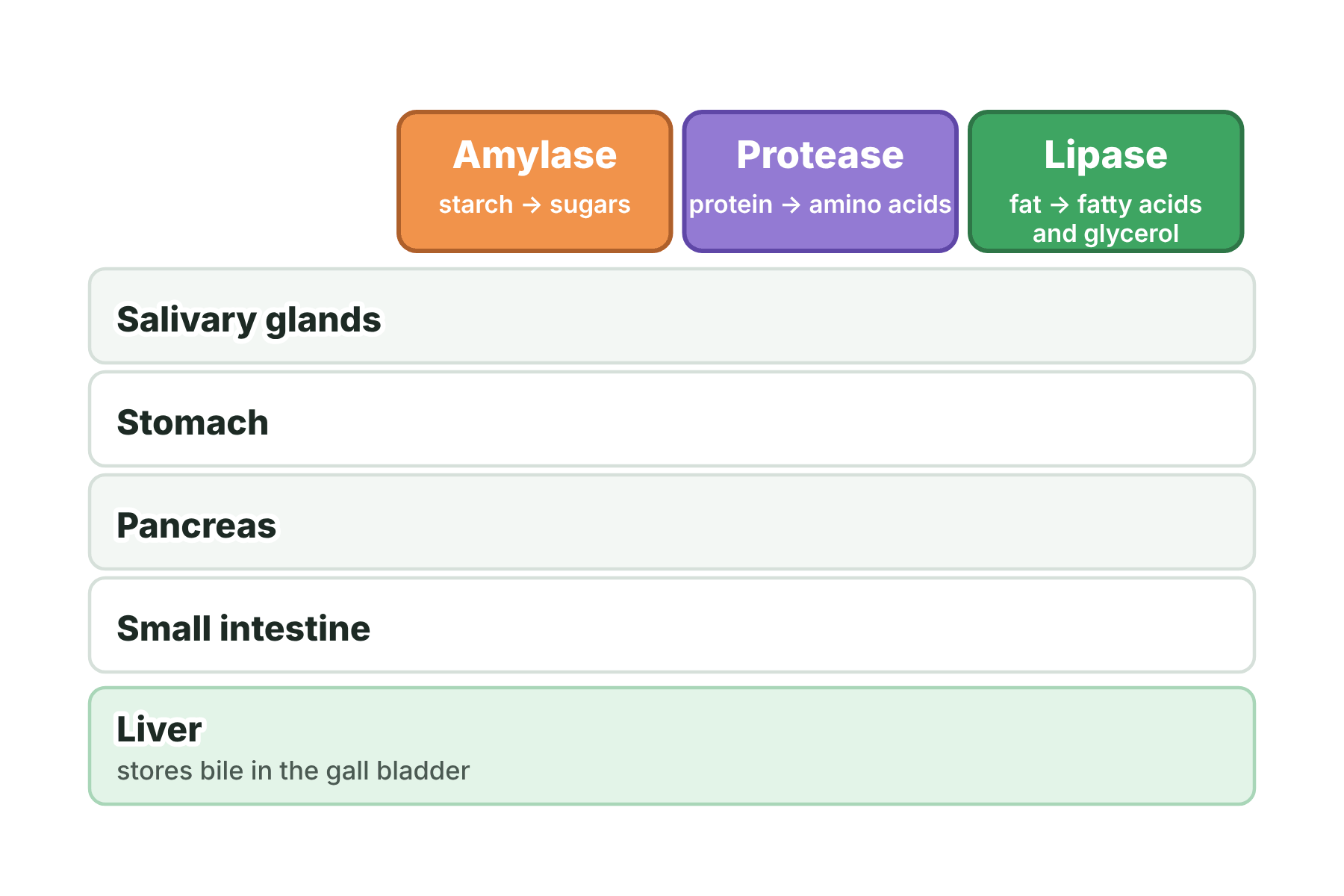 Which organs make amylase, protease and lipase?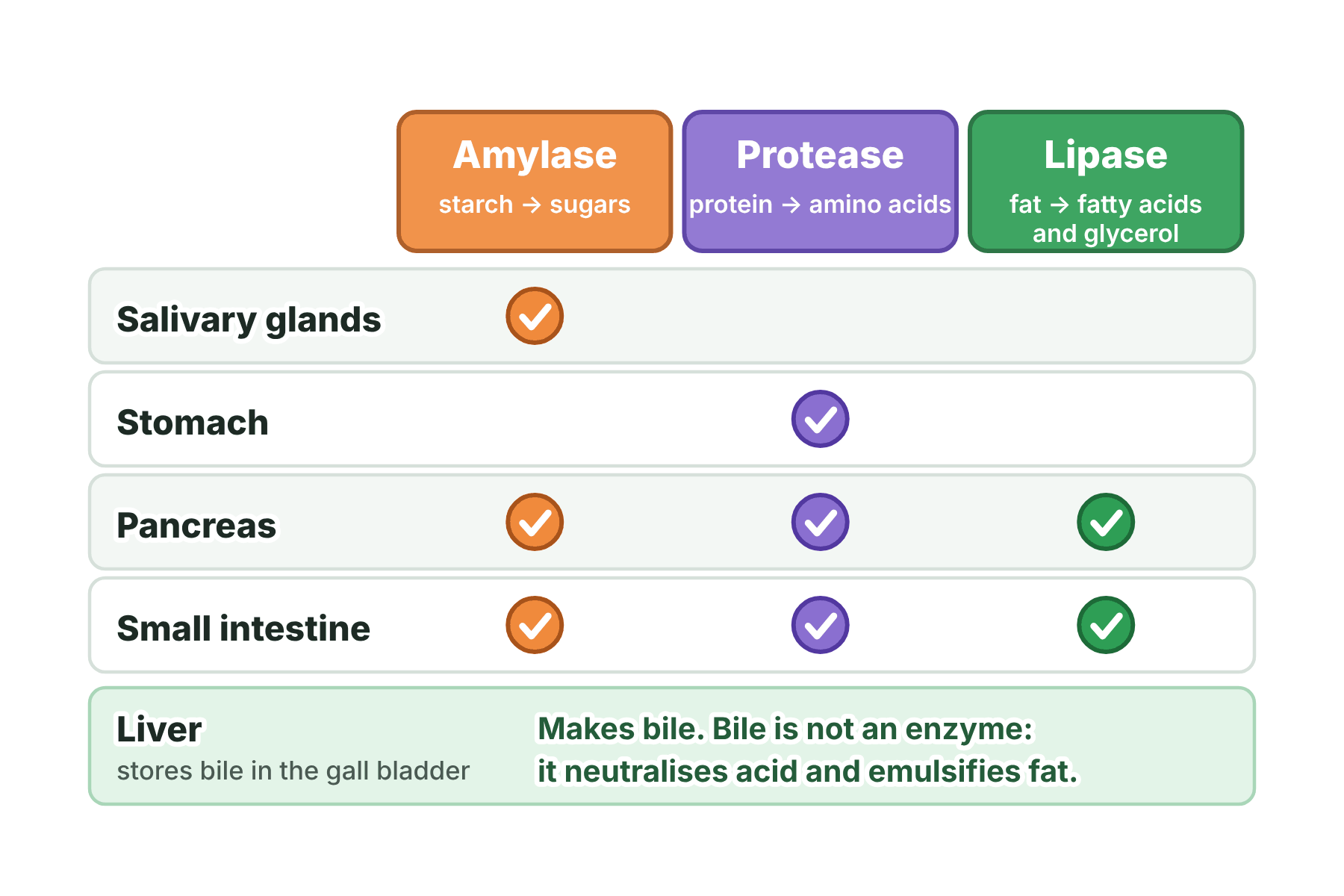
-
Explain how bile helps to digest fat.
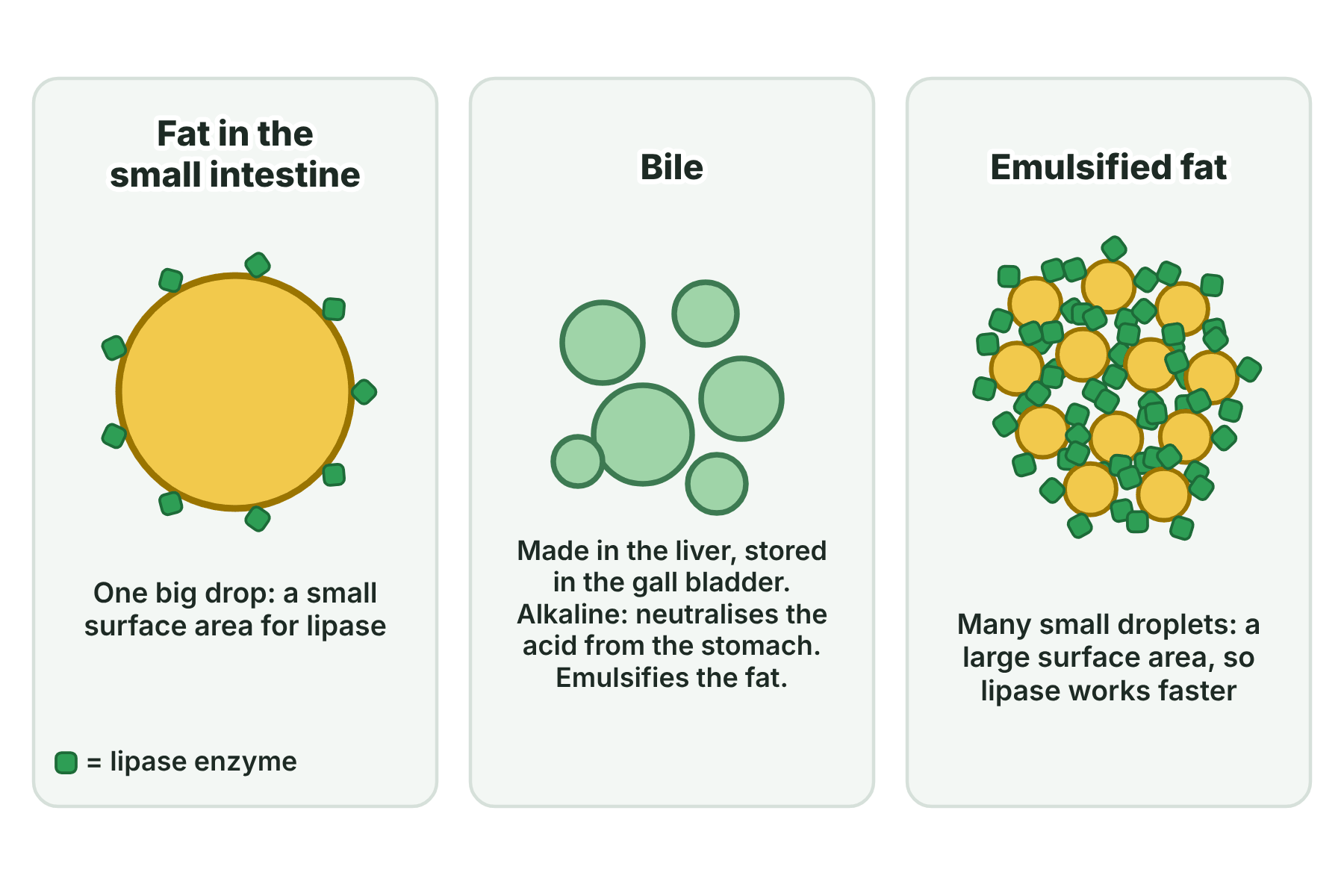
Bile is alkaline, so it neutralises the acid from the stomach and gives the right pH for the enzymes. It emulsifies fat into small droplets. This gives a larger surface area, so lipase works faster.
-
What is a food test?
A test that uses a reagent which changes colour when a particular type of molecule is present.
-
What does qualitative mean?
The test shows whether something is present, not how much.
-
Which reagent tests for starch?
Iodine solution.
-
What is a positive result for starch?
Orange-brown changes to blue-black.
-
Which reagent tests for sugar?
Benedict's reagent.
-
What is the colour of Benedict's reagent at the start?
Blue.
-
What is a positive result for sugar?
The blue changes to green, yellow, orange or brick red.
-
What must you do for Benedict's test?
Heat it in a water bath at about 75 °C.
-
What does a brick-red result mean in Benedict's test?
A large amount of sugar is present.
-
Which reagent tests for protein?
Biuret reagent.
-
What is a positive result for protein?
Blue changes to purple.
-
Does the Biuret test need heating?
No.
-
Which test is used for lipids?
The emulsion test: shake with ethanol, then pour into water.
-
What is a positive result for lipids?
A cloudy white emulsion.
-
What is a negative result for the iodine test?
The solution stays orange-brown.
-
What is a negative result for Benedict's test?
The mixture stays blue.
-
How do you prepare a solid food for testing?
Grind it with distilled water, stir to dissolve some of it, and filter it.
-
Why is ethanol used for the lipid test?
Lipids dissolve in ethanol.
-
Why use a water bath instead of a flame?
So the liquid cannot boil over, and the temperature is steady.
-
Why should you wear eye protection?
Some reagents are corrosive or harmful, such as Biuret reagent and Benedict's reagent.
-
Why is ethanol kept away from flames?
It is flammable.
-
Why test distilled water as a control?
To show what a negative result looks like.
-
 Name the test, the reagent and the positive result for starch, sugar, protein and lipids.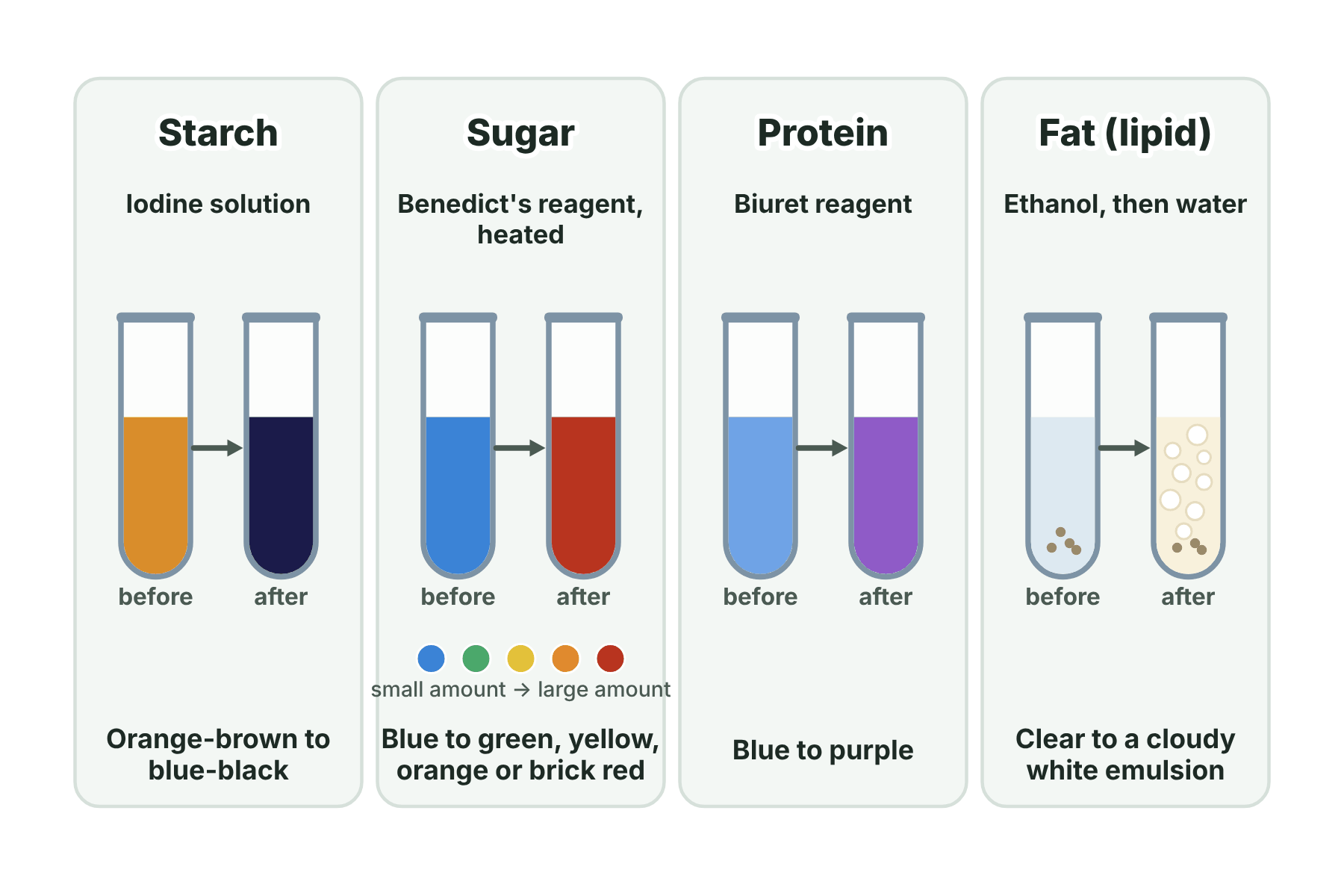
-
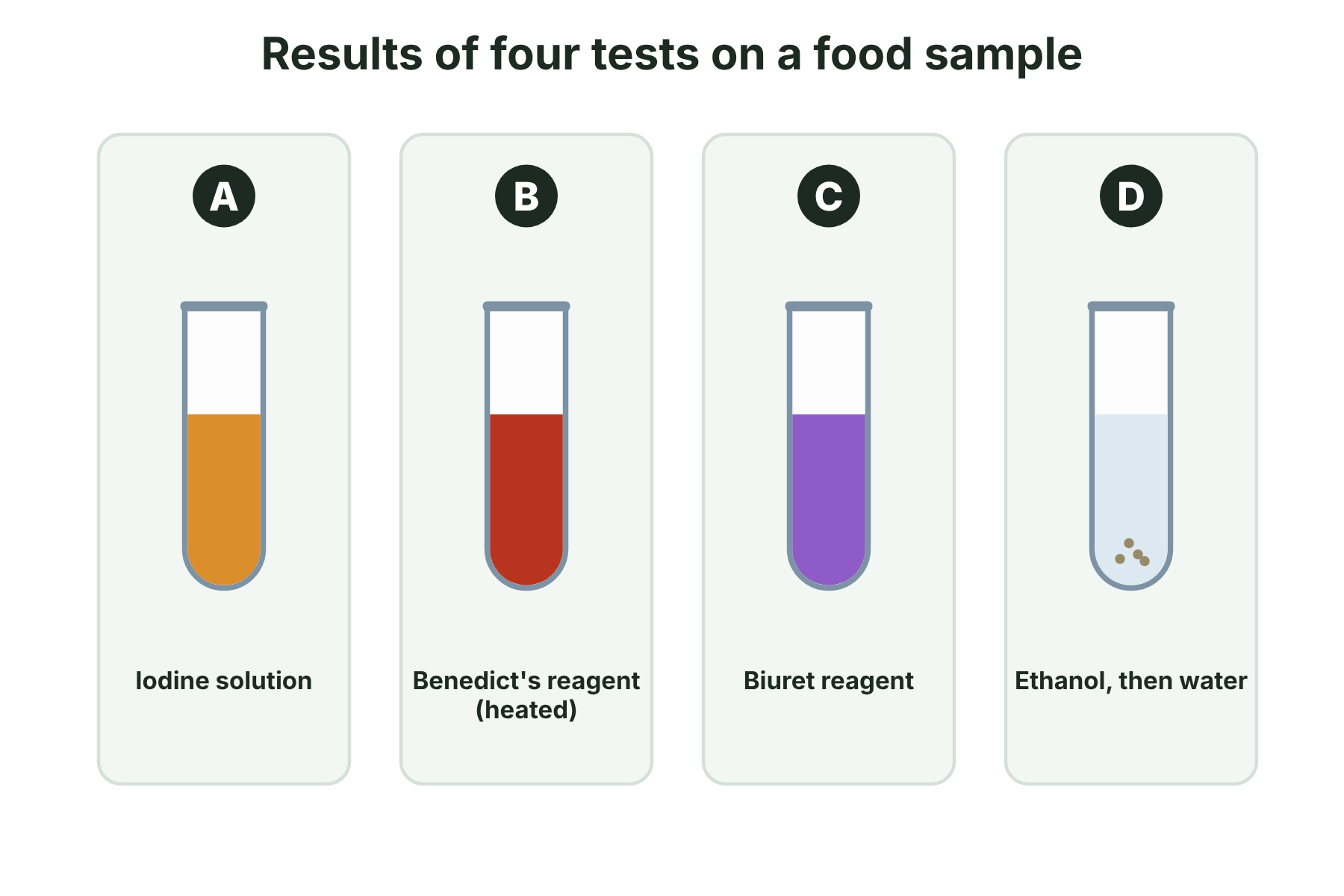 Four tests were done on a food sample, as shown. Say which food groups are present in the sample.
 Sugar is present (B, brick red) and protein is present (C, purple). Starch is not present (A stayed orange-brown) and lipid is not present (D stayed clear).
-
What does each colour in the Benedict's test tell you?
Blue means no sugar. Green means a very small amount, yellow a small amount, orange a moderate amount, and brick red a large amount.
-
What is the aim of the amylase and pH investigation?
To find out how pH affects the rate at which amylase digests starch.
-
What is the independent variable?
The pH of the buffer.
-
What is the dependent variable?
The time taken for all the starch to be digested.
-
Name two control variables.
Any two of: temperature, volume of amylase, volume of starch, concentration of amylase, concentration of starch, volume of buffer.
-
Why is a buffer used?
It keeps the pH constant at the value being tested.
-
Why is a water bath used?
To keep the temperature the same in every test.
-
What temperature was the water bath in the method?
35 °C.
-
Why is iodine solution used?
It shows whether starch is still present: blue-black if it is, orange-brown if it is not.
-
What does a blue-black colour on the tile show?
Starch is still present.
-
What does an orange-brown colour show?
All the starch has been digested.
-
What is continuous sampling?
Taking a small sample at regular intervals while the reaction is happening.
-
How often is a sample taken in this method?
Every 30 seconds.
-
What is the spotting tile used for?
To hold drops of iodine, so that each sample can be tested.
-
Why are the starch and the amylase warmed in the water bath before mixing?
So they reach the same temperature before the reaction starts.
-
How do you work out the rate from the time taken?
Rate = 1000 ÷ time.
-
Does a shorter time mean a faster or a slower rate?
A faster rate.
-
At what pH is amylase fastest?
About pH 7.
-
Why does the rate fall at a high or low pH?
The active site changes shape and the enzyme is denatured, so the substrate no longer fits.
-
Why is each pH repeated at least three times?
To calculate a mean, spot anomalies and make the results more reliable.
-
Why is judging the colour by eye a weakness?
It is subjective. A colorimeter would be more reliable.
-
How could you find the optimum pH more precisely?
Test more values close to the optimum, such as 6.5, 7 and 7.5.
-
Why is amylase denatured in the stomach?
The stomach is very acidic, at about pH 2.
-
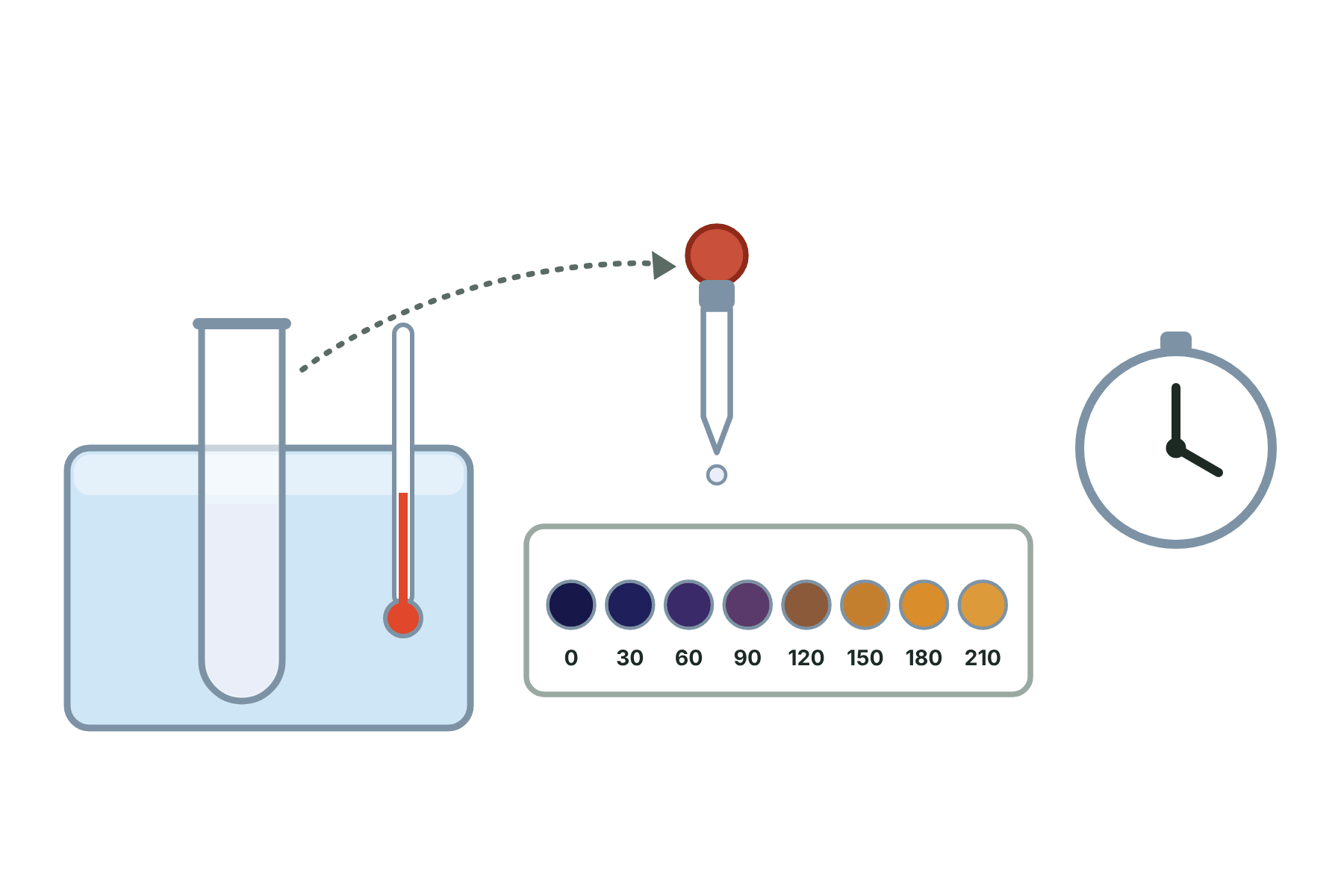 Name each piece of apparatus and say what it is used for.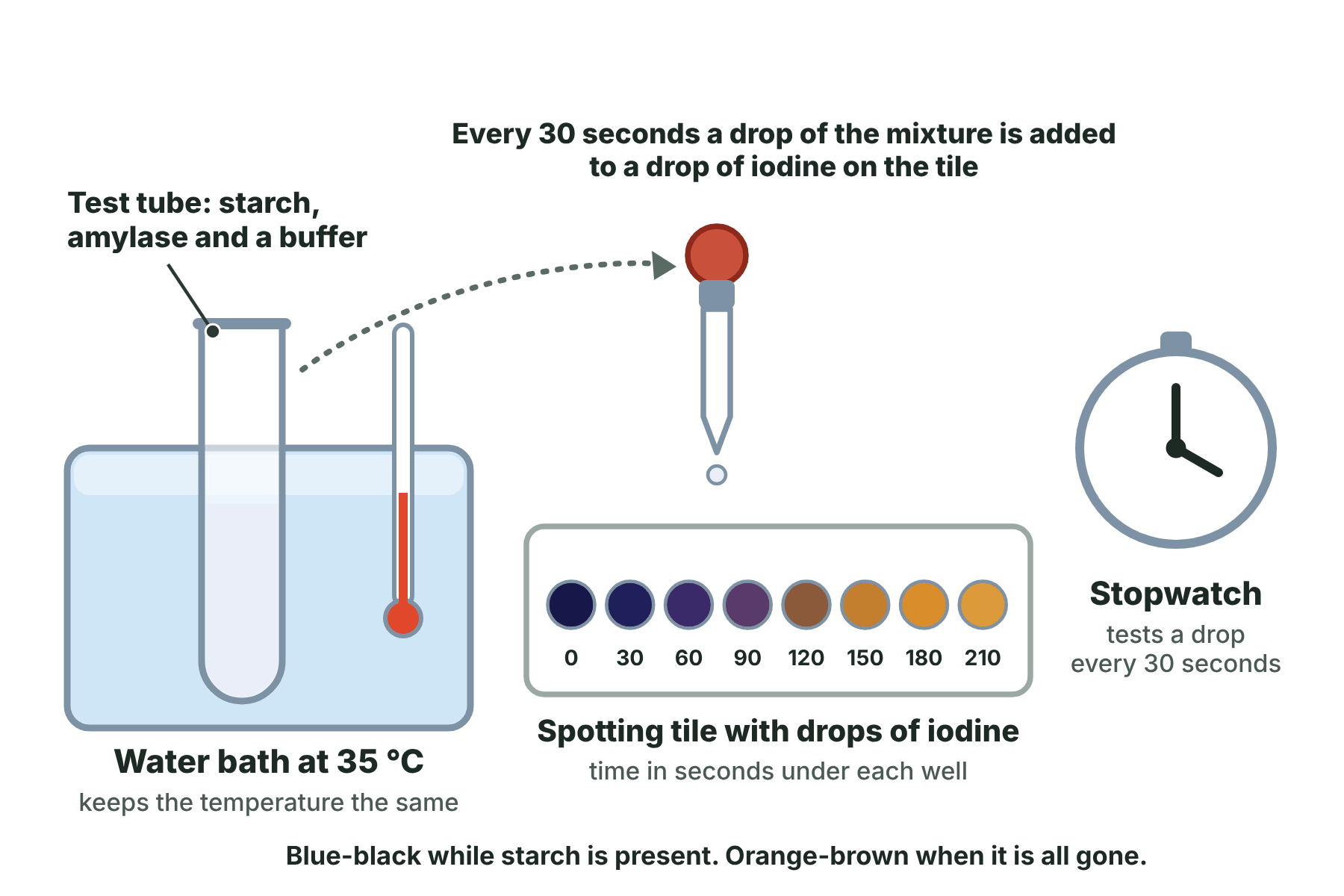
-
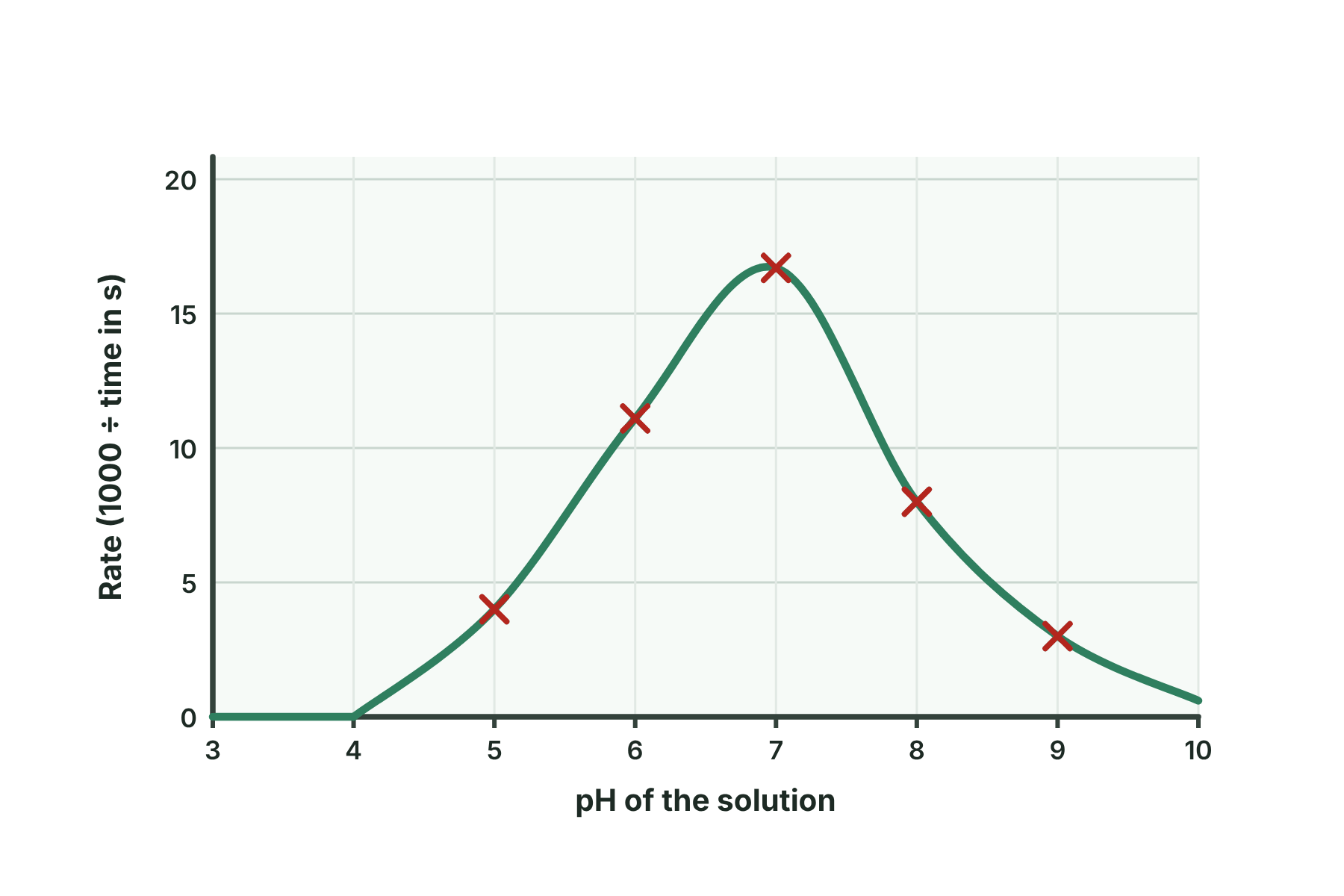 Describe the pattern shown in the graph, and give the optimum pH.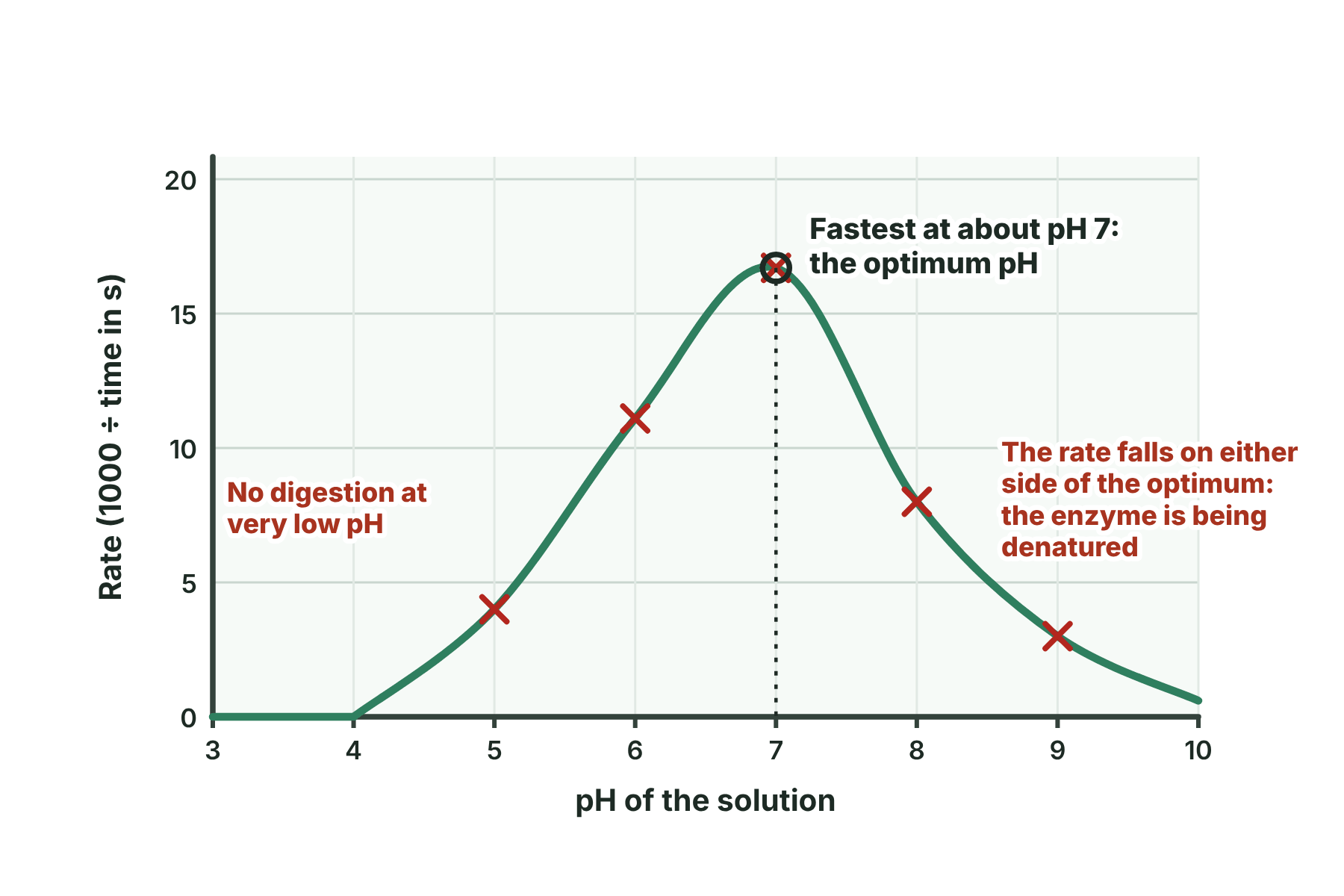
The rate increases as the pH rises from 5 to 7, is highest at about pH 7, and then falls at pH 8 and 9. The optimum pH is about 7.
-
At pH 8 the rate is 8.0. How long did the starch take to be digested?
Time = 1000 ÷ rate = 1000 ÷ 8.0 = 125 seconds.
-
Why is a drop of the mixture added to iodine every 30 seconds, and what do the colours tell you?
Each drop shows whether starch is still present. Blue-black means starch is still there. Orange-brown means all the starch has been digested, and the time is recorded.