Exam questions · Biology
Digestion and Enzymes
- 49 exam questions
- 142 marks
- 50 quick checks
Levels of Organisation and the Digestive System
Just this lesson-
1 State [2 marks]
State what is meant by a tissue.
Show answerHide answer
Model answer
A group of similar cells that work together to do a particular job.
Mark scheme
- A group of similar cells — 1 mark
- That work together to do a (particular) job — 1 mark
-
2 Name [1 mark]
Name the type of tissue that contracts to churn food in the stomach.
Show answerHide answer
Model answer
Muscular tissue.
Mark scheme
- Muscular tissue — 1 mark
-
3 Name [4 marks]
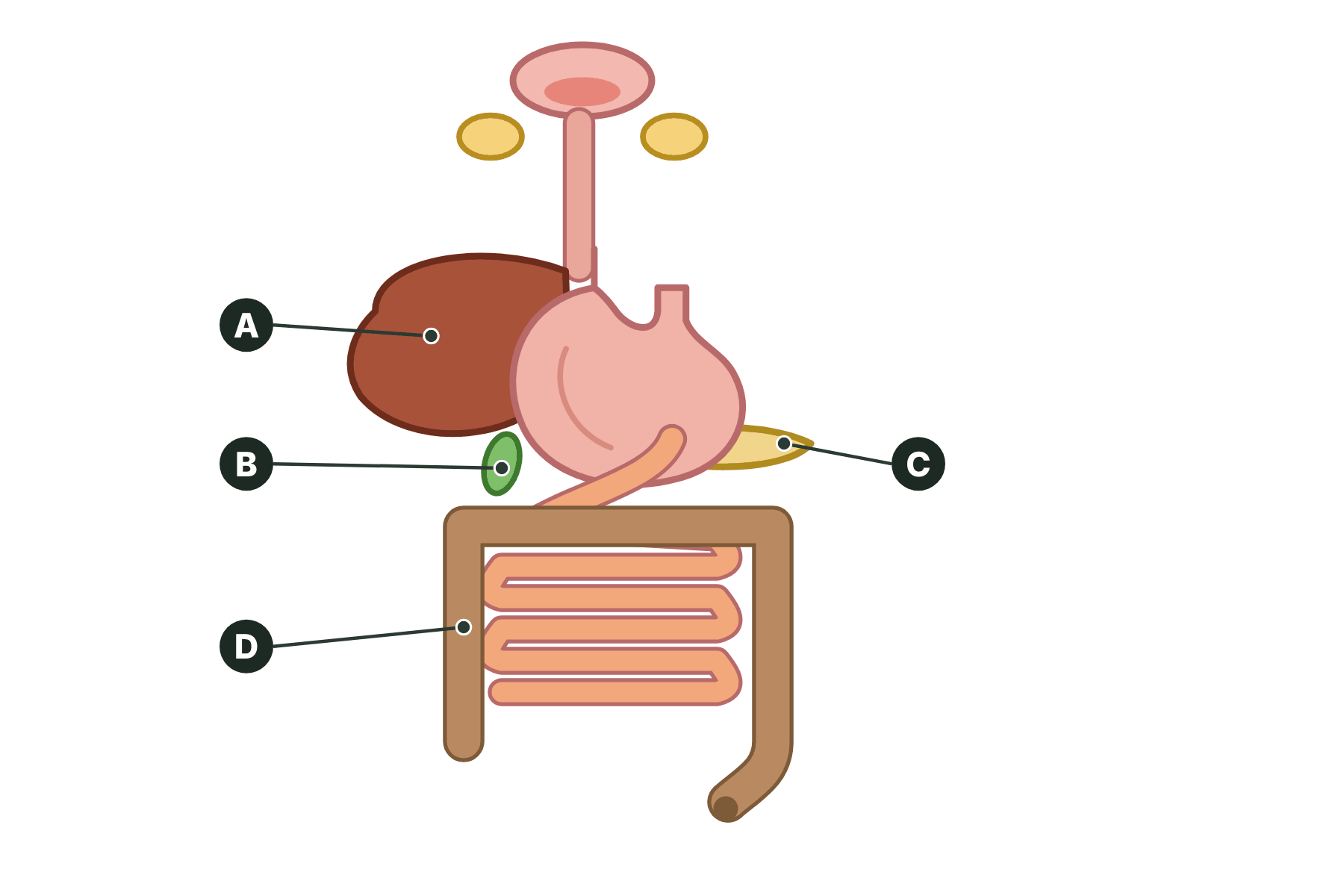
Figure 1 shows the human digestive system. Name the organs labelled A, B, C and D.
Show answerHide answer
Model answer
A is the liver. B is the gall bladder. C is the pancreas. D is the large intestine.
Mark scheme
- A: liver — 1 mark
- B: gall bladder — 1 mark
- C: pancreas — 1 mark
- D: large intestine — 1 mark
-
4 Describe [2 marks]
Describe the function of organ B in Figure 1.
Show answerHide answer
Model answer
It stores bile until it is needed, and releases it into the small intestine.
Mark scheme
- Stores bile — 1 mark
- Releases it into the small intestine / to digest fat — 1 mark
-
5 Explain [3 marks]
Explain why the stomach is an organ and not a tissue.
Show answerHide answer
Model answer
A tissue is made of just one type of cell. The stomach is made of several different tissues, such as muscular, glandular and epithelial tissue, which work together to digest food.
Mark scheme
- Made of more than one tissue — 1 mark
- Names two tissues, e.g. muscular and glandular — 1 mark
- The tissues work together to do a job / digest food — 1 mark
-
6 Describe [3 marks]
Describe the path taken by a mouthful of food through the digestive system, from the mouth to the point where it leaves the body.
Show answerHide answer
Model answer
The food goes down the oesophagus to the stomach, then into the small intestine, then into the large intestine, and the undigested remains leave through the anus.
Mark scheme
- Oesophagus then stomach — 1 mark
- Small intestine then large intestine — 1 mark
- Leaves through the anus — 1 mark
-
7 Explain [3 marks]
Explain why large food molecules, such as starch, have to be digested before they can be absorbed into the blood.
Show answerHide answer
Model answer
Starch molecules are too big to pass through the wall of the gut. Digestion breaks them down into small soluble molecules, such as sugars, which can pass through the wall of the small intestine into the blood.
Mark scheme
- Large molecules cannot pass through the gut wall — 1 mark
- Digestion breaks them into small soluble molecules — 1 mark
- Which can be absorbed into the blood — 1 mark
-
8 Calculate [2 marks]
A cell is 50 µm long. Calculate how many of these cells would fit end to end along a strip of tissue 2 mm long. (1 mm = 1000 µm)
Show answerHide answer
Model answer
2 mm = 2000 µm. 2000 ÷ 50 = 40 cells.
Mark scheme
- 2 mm converted to 2000 µm — 1 mark
- 2000 ÷ 50 = 40 — 1 mark
-
9 Describe [4 marks]
Describe the roles of the pancreas and of the small intestine in digestion.
Show answerHide answer
Model answer
The pancreas is a gland that makes digestive enzymes and releases them into the small intestine. The small intestine also makes digestive enzymes, so digestion is completed there. The small intestine then absorbs the soluble products of digestion into the blood.
Mark scheme
- Pancreas makes digestive enzymes — 1 mark
- Releases them into the small intestine — 1 mark
- Small intestine finishes digestion / makes enzymes — 1 mark
- Absorbs the digested food into the blood — 1 mark
-
10 Explain [6 marks]
Explain how cells, tissues, organs and organ systems are related. Use the stomach and the digestive system as examples.
Show answerHide answer
Model answer
Specialised cells that are similar form a tissue, for example muscle cells make muscular tissue. Different tissues work together to form an organ. The stomach is an organ made of muscular tissue, glandular tissue and epithelial tissue. Different organs work together to form an organ system. The digestive system is an organ system that includes the stomach, liver, pancreas and intestines, and it digests and absorbs food.
Mark scheme
- Similar cells form a tissue — 1 mark
- An example of a tissue, e.g. muscular tissue — 1 mark
- Different tissues work together to form an organ — 1 mark
- The stomach contains muscular, glandular and epithelial tissue — 1 mark
- Organs work together to form an organ system — 1 mark
- The digestive system includes several organs and digests food — 1 mark
Quick check
-
1
What is a group of similar cells that work together called?
Show answerHide answer
B: A tissue
A tissue is a group of similar cells that do a particular job together.
-
2
Which list shows the levels of organisation in the correct order, smallest first?
Show answerHide answer
D: Cell, tissue, organ, organ system
Cells form tissues, tissues form organs, organs form organ systems, and organ systems form an organism.
-
3
Which tissue makes digestive juices in the stomach?
Show answerHide answer
C: Glandular tissue
Glandular tissue makes the digestive juices, including hydrochloric acid and enzymes.
-
4
Which organ makes bile?
Show answerHide answer
A: The liver
Bile is made in the liver and stored in the gall bladder.
-
5
Which organ stores bile until it is needed?
Show answerHide answer
D: The gall bladder
The gall bladder stores bile. The liver makes it.
-
6
What is the job of the large intestine?
Show answerHide answer
B: To absorb water
The large intestine absorbs water from the undigested food that is left.
-
7
Why must starch be digested before it can be absorbed?
Show answerHide answer
C: Its molecules are too large to pass through the gut wall
Starch molecules are too large to pass through the gut wall. Digestion breaks them into small soluble molecules.
-
8
Which organs make digestive enzymes that are released into the small intestine?
Show answerHide answer
A: The pancreas and the small intestine
The pancreas makes enzymes and releases them into the small intestine, and the small intestine makes enzymes too.
-
9
A cell is 20 µm long. How many fit end to end along 1 mm? (1 mm = 1000 µm)
Show answerHide answer
D: 50
1000 ÷ 20 = 50 cells.
-
10
A student says that the stomach is a tissue. What is the best correction?
Show answerHide answer
B: It is an organ made of several tissues
The stomach is made of several tissues working together, so it is an organ.
Enzymes
Just this lesson-
1 State [2 marks]
State what is meant by a catalyst.
Show answerHide answer
Model answer
A substance that speeds up a reaction and is not used up in the reaction.
Mark scheme
- Speeds up a (chemical) reaction — 1 mark
- Is not used up / is unchanged at the end — 1 mark
-
2 Name [1 mark]
Name the part of an enzyme into which the substrate fits.
Show answerHide answer
Model answer
The active site.
Mark scheme
- Active site — 1 mark
-
3 Name [2 marks]
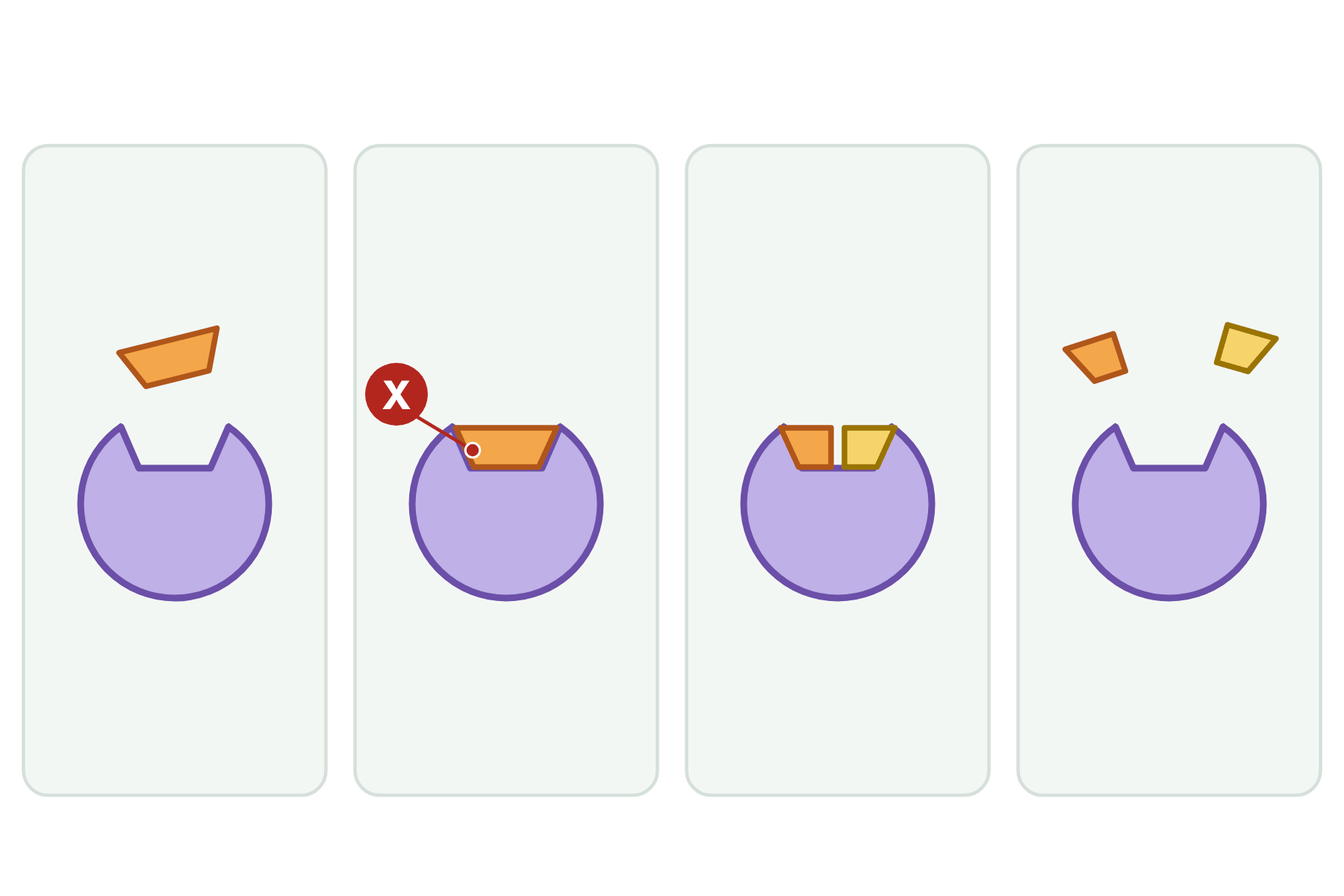
Figure 1 shows an enzyme and its substrate. (a) Name the region of the enzyme marked X. (b) Name the model of enzyme action shown in Figure 1.
Show answerHide answer
Model answer
(a) The active site. (b) The lock and key model.
Mark scheme
- (a) Active site — 1 mark
- (b) Lock and key (model) — 1 mark
-
4 Describe [3 marks]
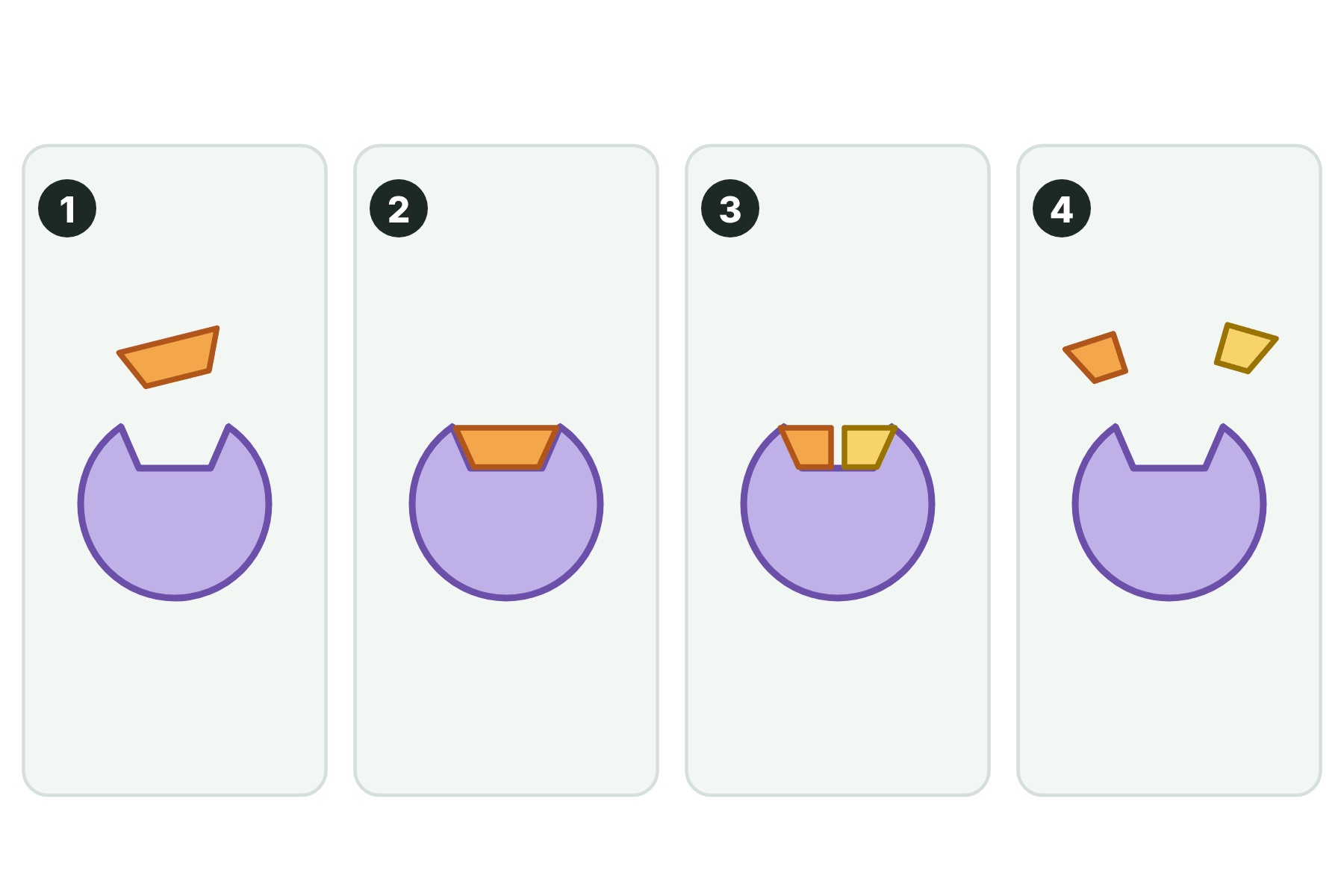
Figure 2 shows the stages of an enzyme-controlled reaction. Describe what happens at stages 2, 3 and 4.
Show answerHide answer
Model answer
At stage 2 the substrate fits into the active site and forms an enzyme-substrate complex. At stage 3 the enzyme catalyses the reaction and the substrate splits. At stage 4 the products leave and the enzyme is unchanged.
Mark scheme
- 2: substrate fits the active site / complex forms — 1 mark
- 3: the reaction takes place / substrate splits into products — 1 mark
- 4: products released and the enzyme is unchanged — 1 mark
-
5 Explain [2 marks]
An enzyme that breaks down starch does not break down protein. Explain why.
Show answerHide answer
Model answer
The active site of the enzyme has a shape that fits starch only. Protein molecules have a different shape, so they do not fit.
Mark scheme
- Active site has a specific shape / fits starch — 1 mark
- Protein has a different shape and does not fit — 1 mark
-
6 Explain [3 marks]
A student boils a solution of an enzyme and then adds it to its substrate. The reaction does not happen. Explain why.
Show answerHide answer
Model answer
The high temperature denatured the enzyme. Its shape, including the active site, changed. The substrate no longer fits the active site, so the enzyme cannot catalyse the reaction.
Mark scheme
- Enzyme was denatured by the high temperature — 1 mark
- Active site changed shape — 1 mark
- Substrate no longer fits — 1 mark
-
7 Describe [3 marks]
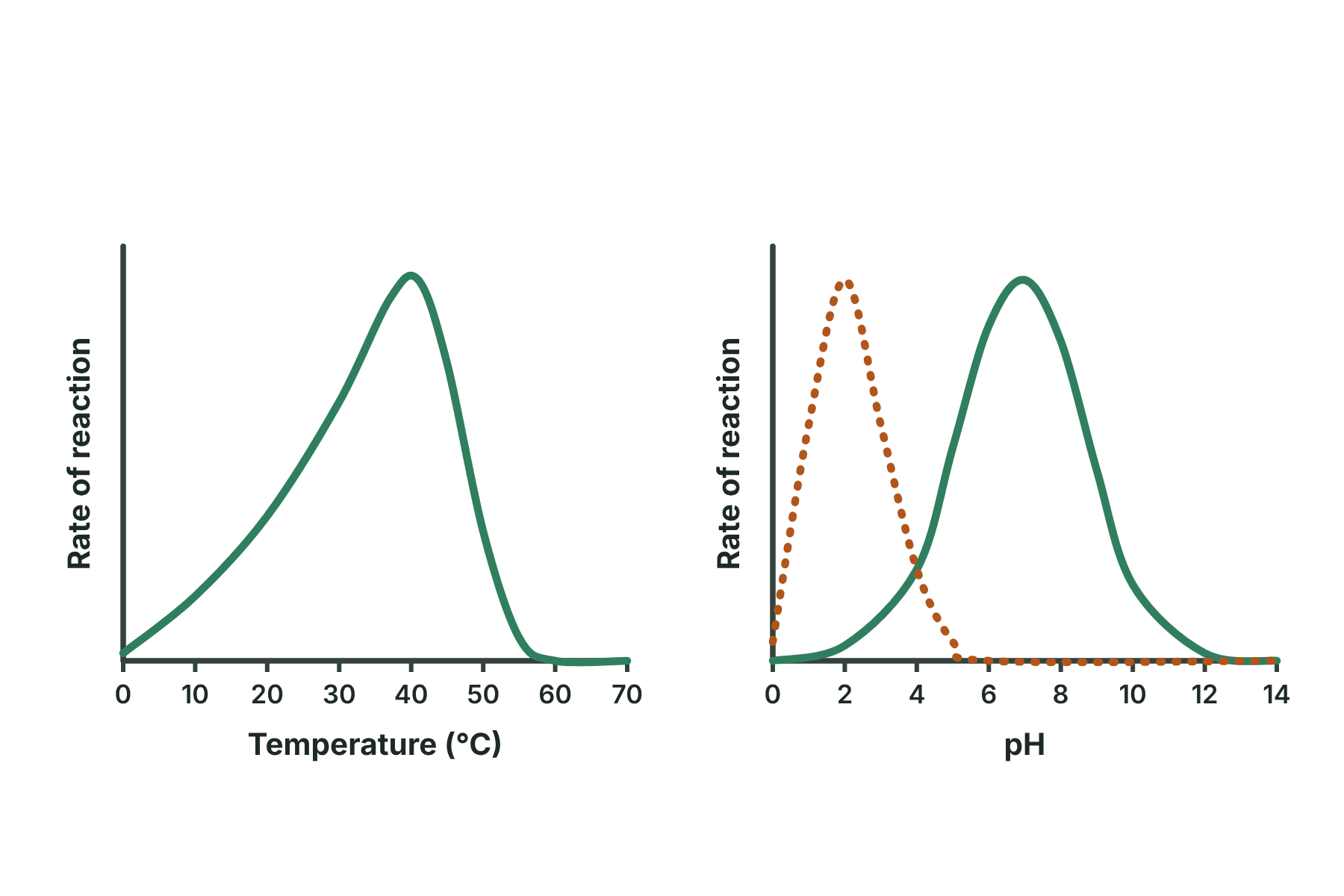
Figure 3 shows the effect of temperature on the rate of an enzyme-controlled reaction. Describe the effect of increasing the temperature from 0 °C to 70 °C.
Show answerHide answer
Model answer
The rate increases as the temperature rises to a maximum at about 40 °C. Above this temperature the rate falls quickly, and it reaches zero at about 60 °C.
Mark scheme
- Rate increases up to about 40 °C — 1 mark
- Rate falls above the maximum / optimum — 1 mark
- Reaches zero at about 55 to 60 °C — 1 mark
-
8 Calculate [3 marks]
In an investigation, an enzyme reaction took 50 seconds to finish at 25 °C and 20 seconds to finish at 35 °C. Use the equation rate = 1000 ÷ time to calculate the rate at each temperature, and calculate how many times faster the reaction was at 35 °C.
Show answerHide answer
Model answer
At 25 °C: 1000 ÷ 50 = 20. At 35 °C: 1000 ÷ 20 = 50. 50 ÷ 20 = 2.5 times faster.
Mark scheme
- 1000 ÷ 50 = 20 — 1 mark
- 1000 ÷ 20 = 50 — 1 mark
- 2.5 times faster — 1 mark
-
9 Explain [3 marks]
Pepsin is an enzyme in the stomach with an optimum pH of about 2. Explain what would happen to the rate of reaction if pepsin were put into a solution at pH 7.
Show answerHide answer
Model answer
The rate would fall, because pH 7 is not the optimum for pepsin. The bonds holding the enzyme in shape would be affected, so the active site would change shape and the substrate would no longer fit. The enzyme would be denatured.
Mark scheme
- Rate would fall / the reaction would slow or stop — 1 mark
- Active site changes shape / the enzyme is denatured — 1 mark
- Substrate no longer fits — 1 mark
-
10 Explain [6 marks]
Explain why the rate of an enzyme-controlled reaction increases as the temperature rises to about 40 °C, but decreases at higher temperatures.
Show answerHide answer
Model answer
As the temperature rises, the particles have more energy and move faster. The enzyme and substrate collide more often, and with more energy, so the rate increases. At about 40 °C the enzyme works fastest, which is the optimum temperature. Above this temperature the bonds holding the enzyme in shape break. The active site changes shape and the enzyme is denatured, so the substrate no longer fits and the rate falls.
Mark scheme
- Particles have more energy / move faster — 1 mark
- More frequent collisions between enzyme and substrate — 1 mark
- So the rate increases up to the optimum — 1 mark
- Above the optimum, bonds in the enzyme break — 1 mark
- Active site changes shape / enzyme is denatured — 1 mark
- Substrate no longer fits, so the rate falls — 1 mark
Quick check
-
1
What is an enzyme?
Show answerHide answer
C: A biological catalyst
An enzyme is a biological catalyst, made of protein, which speeds up reactions in living things.
-
2
What is the substrate?
Show answerHide answer
A: The substance an enzyme acts on
The substrate is the substance that the enzyme acts on, and it fits into the active site.
-
3
Why is each enzyme specific to one substrate?
Show answerHide answer
D: Its active site has a shape that fits only that substrate
Only a substrate with a shape that matches the active site can fit into it.
-
4
What happens to an enzyme that is denatured?
Show answerHide answer
B: It changes shape and cannot bind its substrate
Its shape changes, including the active site, so the substrate no longer fits.
-
5
What is the effect on an enzyme of cooling it in a fridge?
Show answerHide answer
A: It slows down but is not denatured
Cold slows the reaction because the particles move more slowly, but it does not denature the enzyme.
-
6
Between 0 °C and the optimum temperature, what happens to the rate of an enzyme reaction as the temperature rises?
Show answerHide answer
C: It rises
The particles have more energy and collide more often, so the rate increases.
-
7
Which enzyme has an optimum pH of about 2?
Show answerHide answer
B: Pepsin in the stomach
Pepsin works in the acid conditions of the stomach, and it works best at about pH 2.
-
8
An enzyme reaction takes 25 s. What is the rate, using rate = 1000 ÷ time?
Show answerHide answer
D: 40
1000 ÷ 25 = 40.
-
9
A reaction makes 60 cm³ of product in 5 minutes. What is the mean rate?
Show answerHide answer
A: 12 cm³ per minute
Rate = amount of product ÷ time = 60 ÷ 5 = 12 cm³ per minute.
-
10
A student says that heating an enzyme above its optimum temperature kills it. What is the best correction?
Show answerHide answer
C: Enzymes are not alive; they are denatured when their shape changes
An enzyme is a molecule, not a living thing, so it cannot be killed. It is denatured: its shape, including the active site, changes.
Digestive Enzymes and Bile
Just this lesson-
1 Name [1 mark]
Name the enzyme that breaks down starch into simple sugars.
Show answerHide answer
Model answer
Amylase.
Mark scheme
- Amylase — 1 mark
-
2 Name [3 marks]
Name the small molecules produced by the digestion of (a) protein, (b) fat and (c) starch.
Show answerHide answer
Model answer
(a) Amino acids. (b) Fatty acids and glycerol. (c) Simple sugars, such as glucose.
Mark scheme
- (a) Amino acids — 1 mark
- (b) Fatty acids and glycerol — 1 mark
- (c) Simple sugars / glucose — 1 mark
-
3 State [3 marks]
Amylase is made in three places in the body. Name the three places.
Show answerHide answer
Model answer
The salivary glands, the pancreas and the small intestine.
Mark scheme
- Salivary glands — 1 mark
- Pancreas — 1 mark
- Small intestine — 1 mark
-
4 Explain [3 marks]
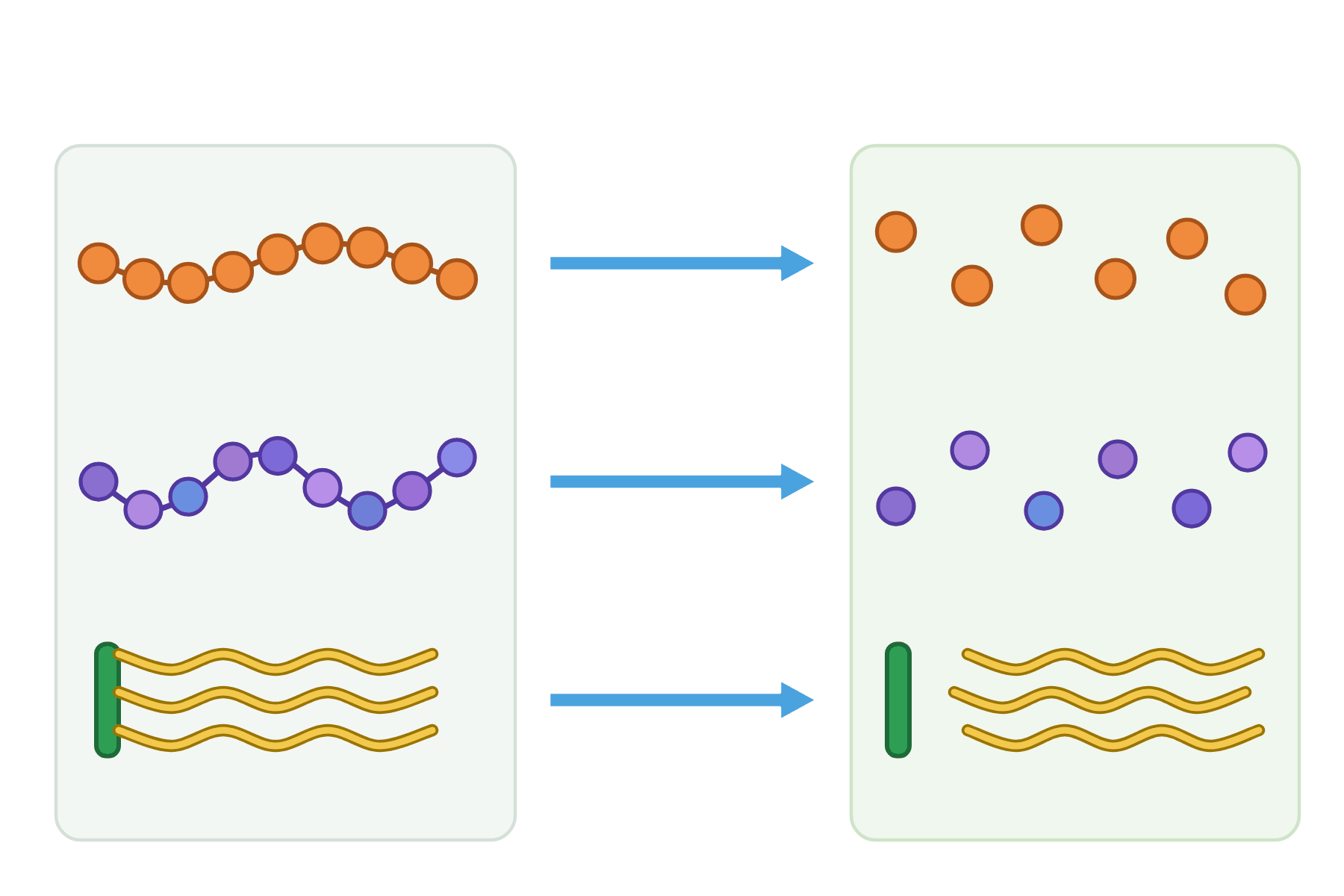
Figure 1 shows three large food molecules being broken into smaller molecules by enzymes. (a) State what the enzymes do to the large molecules. (b) Explain why the small molecules can be absorbed but the large molecules cannot.
Show answerHide answer
Model answer
(a) They break the large molecules down into small molecules. (b) The small molecules are soluble and small enough to pass through the wall of the small intestine into the blood. The large molecules are too big to pass through.
Mark scheme
- (a) Break down large molecules into small ones — 1 mark
- (b) Small molecules are soluble and can pass through the gut wall — 1 mark
- Large molecules are too big to pass through — 1 mark
-
5 Explain [2 marks]
Explain why the body needs different enzymes to digest starch, protein and fat.
Show answerHide answer
Model answer
Each enzyme is specific. The active site of an enzyme has a shape that fits only one type of molecule, and starch, protein and fat have different shapes.
Mark scheme
- Enzymes are specific / the active site fits one type of substrate — 1 mark
- Starch, protein and fat have different shapes — 1 mark
-
6 Describe [2 marks]
Describe where bile is made and where it is stored.
Show answerHide answer
Model answer
It is made in the liver and stored in the gall bladder.
Mark scheme
- Made in the liver — 1 mark
- Stored in the gall bladder — 1 mark
-
7 Explain [4 marks]
Explain the role of bile in the digestion of fat.
Show answerHide answer
Model answer
Bile is alkaline, so it neutralises the acid from the stomach. This gives the right pH for the enzymes in the small intestine to work. Bile also emulsifies the fat into small droplets. This increases the surface area, so lipase can digest the fat faster.
Mark scheme
- Bile is alkaline / neutralises stomach acid — 1 mark
- Gives the right pH for the enzymes — 1 mark
- Emulsifies fat into small droplets — 1 mark
- Larger surface area, so lipase works faster — 1 mark
-
8 Calculate [3 marks]
A cube of fat has sides of 3 cm. It is emulsified into 27 cubes with sides of 1 cm. Calculate the total surface area of the fat before and after emulsification, and say how many times bigger it became.
Show answerHide answer
Model answer
Before: 6 × 3 × 3 = 54 cm². After: each small cube has 6 × 1 × 1 = 6 cm², so 27 × 6 = 162 cm². 162 ÷ 54 = 3, so the surface area became 3 times bigger.
Mark scheme
- 54 cm² before — 1 mark
- 162 cm² after — 1 mark
- 3 times bigger — 1 mark
-
9 Describe [6 marks]
A student eats a cheese sandwich, which contains starch, protein and fat. Describe how each of these is digested. Name the enzyme and the products in each case.
Show answerHide answer
Model answer
The starch is digested by amylase, which breaks it down into simple sugars such as glucose. The protein is digested by protease, which breaks it down into amino acids. The fat is digested by lipase, which breaks it down into glycerol and fatty acids.
Mark scheme
- Starch digested by amylase — 1 mark
- To simple sugars / glucose — 1 mark
- Protein digested by protease — 1 mark
- To amino acids — 1 mark
- Fat digested by lipase — 1 mark
- To glycerol and fatty acids — 1 mark
Quick check
-
1
Which enzyme breaks down fat?
Show answerHide answer
B: Lipase
Lipase breaks down lipids (fats and oils) into glycerol and fatty acids.
-
2
Which enzyme breaks down protein into amino acids?
Show answerHide answer
D: Protease
Proteases break down proteins into amino acids.
-
3
Starch is digested into which product?
Show answerHide answer
A: Simple sugars
Starch is a carbohydrate and is broken down into simple sugars by amylase.
-
4
Which organs make lipase?
Show answerHide answer
C: The pancreas and the small intestine
Lipase is made in the pancreas and the small intestine.
-
5
Where is protease made?
Show answerHide answer
B: The stomach
Protease is made in the stomach, the pancreas and the small intestine.
-
6
What is bile?
Show answerHide answer
D: An alkaline fluid that helps to digest fat
Bile is an alkaline fluid made in the liver. It is not an enzyme.
-
7
Why must bile be alkaline?
Show answerHide answer
A: To neutralise the acid that comes from the stomach
The food from the stomach is acidic. Bile neutralises the acid, so the enzymes in the small intestine work properly.
-
8
How does emulsification make fat digestion faster?
Show answerHide answer
C: It increases the surface area of the fat
Breaking the fat into small droplets increases its surface area, so lipase has more surface to work on.
-
9
A cube of fat is cut into eight smaller cubes. What happens to the total surface area?
Show answerHide answer
B: It increases
Cutting a cube into smaller cubes increases the total surface area, and the volume stays the same.
-
10
A student says that bile digests fat because it is an enzyme. What is wrong with this?
Show answerHide answer
D: Bile is not an enzyme: it emulsifies the fat so lipase can digest it faster
Bile is not an enzyme. It emulsifies fat to give a larger surface area, and the digesting is done by lipase.
Food Tests
Just this lesson-
1 Name [1 mark]
Name the reagent used to test for starch.
Show answerHide answer
Model answer
Iodine solution.
Mark scheme
- Iodine (solution) — 1 mark
-
2 State [2 marks]
State the colour change that shows that starch is present in a food sample.
Show answerHide answer
Model answer
Orange-brown to blue-black.
Mark scheme
- Starts orange-brown / yellow-brown — 1 mark
- Changes to blue-black — 1 mark
-
3 Interpret [4 marks]
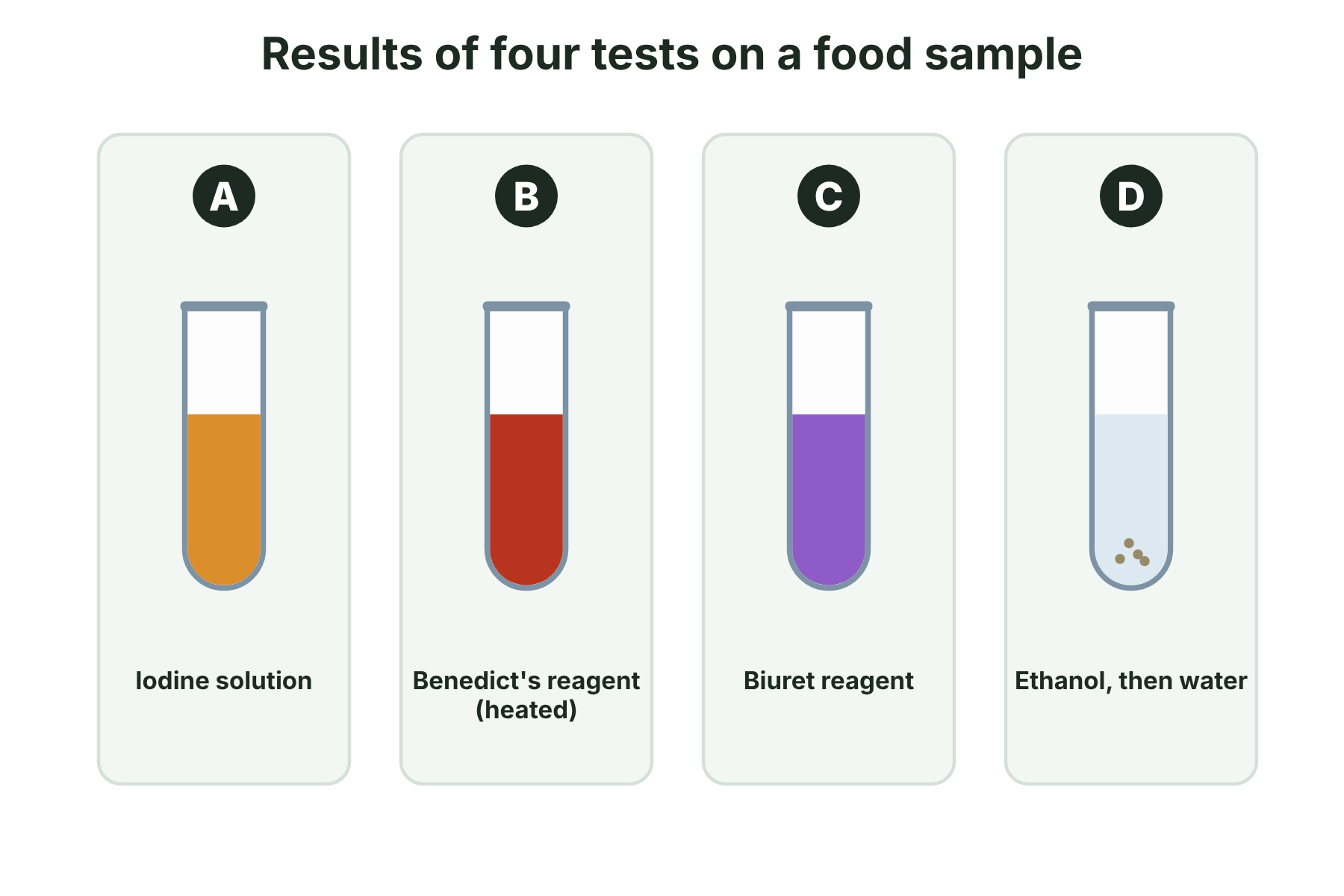
Figure 1 shows four tests on a sample of food. Tube A contains iodine solution, tube B contains Benedict's reagent after heating, tube C contains Biuret reagent, and in tube D the food was shaken with ethanol and poured into water. Use Figure 1 to say whether the sample contains starch, sugar, protein and lipid.
Show answerHide answer
Model answer
Starch is not present, because the iodine stayed orange-brown. Sugar is present, because Benedict's turned brick red. Protein is present, because Biuret turned purple. Lipid is not present, because the liquid stayed clear.
Mark scheme
- Starch absent: iodine stayed orange-brown — 1 mark
- Sugar present: Benedict's brick red — 1 mark
- Protein present: Biuret purple — 1 mark
- Lipid absent: no cloudy emulsion — 1 mark
-
4 Describe [3 marks]
Describe how you would test a food sample for sugar.
Show answerHide answer
Model answer
Add Benedict's reagent to the sample and heat it in a water bath. If sugar is present, the blue colour changes to green, yellow, orange or brick red.
Mark scheme
- Add Benedict's reagent — 1 mark
- Heat in a (hot) water bath — 1 mark
- Blue changes to green / yellow / orange / brick red if sugar is present — 1 mark
-
5 Suggest [2 marks]
A student heats a test tube containing Benedict's reagent in a hot water bath, and not in a Bunsen burner flame. Suggest two reasons for this.
Show answerHide answer
Model answer
The liquid cannot boil over or spit out of the tube, so there is less risk of burns. The temperature is more even and easier to control.
Mark scheme
- Less risk of the liquid boiling over / spitting / burns — 1 mark
- More even / controlled temperature — 1 mark
-
6 Describe [3 marks]
Describe how you would test a food for lipids, and what you would see if the result is positive.
Show answerHide answer
Model answer
Shake the food with ethanol and pour the liquid into a test tube of water. If lipid is present, a cloudy white emulsion forms.
Mark scheme
- Shake the food with ethanol — 1 mark
- Pour into water — 1 mark
- A cloudy white emulsion forms if lipid is present — 1 mark
-
7 Explain [2 marks]
A student also tests some distilled water with iodine solution. Explain why.
Show answerHide answer
Model answer
Distilled water contains no starch, so it acts as a control. It shows what a negative result looks like, so the student can tell that a colour change in the food sample is a real result.
Mark scheme
- It is a control / shows a negative result — 1 mark
- To compare with the food sample / so a colour change can be recognised — 1 mark
-
8 Interpret [3 marks]
Food X gave these results: the iodine solution turned blue-black, Benedict's reagent stayed blue after heating, Biuret reagent stayed blue, and the emulsion test stayed clear. Say what food X contains and does not contain.
Show answerHide answer
Model answer
Food X contains starch. It does not contain sugar, protein or lipid.
Mark scheme
- Contains starch — 1 mark
- No sugar (Benedict's stayed blue) — 1 mark
- No protein (Biuret stayed blue) and no lipid (stayed clear) — 1 mark
-
9 Describe [2 marks]
Describe two safety precautions that should be taken when doing the food tests.
Show answerHide answer
Model answer
Wear eye protection (goggles). Use a hot water bath instead of a flame, and keep the ethanol away from flames.
Mark scheme
- Wear goggles / eye protection — 1 mark
- Use a water bath / keep ethanol away from flames / hold hot tubes with a holder — 1 mark
-
10 Describe [6 marks]
A student has three foods, P, Q and R. Describe how the student could use Benedict's reagent to find out which food contains the most sugar.
Show answerHide answer
Model answer
Prepare a solution of each food in the same way. Put the same volume of each sample in a test tube and add the same volume of Benedict's reagent. Heat all the tubes in the same hot water bath for the same length of time. Compare the colours. The food that goes closest to brick red contains the most sugar. Test distilled water as a control and repeat to check the results.
Mark scheme
- Prepare a solution of each food in the same way — 1 mark
- Same volume of each sample and of Benedict's reagent — 1 mark
- Heat in a water bath for the same time and temperature — 1 mark
- Compare the colours — 1 mark
- Closest to brick red = most sugar — 1 mark
- Control with distilled water / repeat the test — 1 mark
Quick check
-
1
Which reagent turns purple when protein is present?
Show answerHide answer
C: Biuret reagent
Biuret reagent changes from blue to purple when protein is present.
-
2
A food is tested with iodine solution and the solution turns blue-black. What does the food contain?
Show answerHide answer
A: Starch
Iodine turns blue-black when starch is present.
-
3
What must be done after adding Benedict's reagent to a sample?
Show answerHide answer
D: Heat it in a water bath
The mixture must be heated in a water bath. Without heating, the colour change will not happen.
-
4
In Benedict's test, a sample turns brick red. What does this show?
Show answerHide answer
B: There is a large amount of sugar
Brick red is the last colour in the series from blue, and it shows a large amount of sugar.
-
5
What is the positive result for the emulsion test for lipids?
Show answerHide answer
C: A cloudy white emulsion
If lipid is present, the ethanol mixture forms a cloudy white emulsion when it is poured into water.
-
6
Why is the lipid test done with ethanol?
Show answerHide answer
A: Lipids dissolve in ethanol
Lipids dissolve in ethanol, but not in water, so the ethanol carries them into solution.
-
7
Why should a student use a water bath instead of a flame to heat Benedict's reagent?
Show answerHide answer
D: The liquid is less likely to boil over
The liquid is less likely to boil over, and the temperature is more even and safer.
-
8
A food gives no colour change with any of the four tests. What can you conclude?
Show answerHide answer
B: It contains none of the four groups tested for
All four tests were negative, so the food contains none of starch, sugar, protein or lipid.
-
9
Why is it useful to test a food that you know contains starch with iodine solution?
Show answerHide answer
A: It shows what a positive result looks like
It is a positive control, which shows what a positive result looks like for comparison.
-
10
These tests are qualitative. What does this mean?
Show answerHide answer
C: They show whether a substance is present, not exactly how much
Qualitative tests show whether a substance is present, but they do not measure exactly how much there is.
Investigating the Effect of pH on Amylase
Just this lesson-
1 Name [1 mark]
Name the solution used to show when all of the starch has been digested.
Show answerHide answer
Model answer
Iodine solution.
Mark scheme
- Iodine (solution) — 1 mark
-
2 Explain [2 marks]
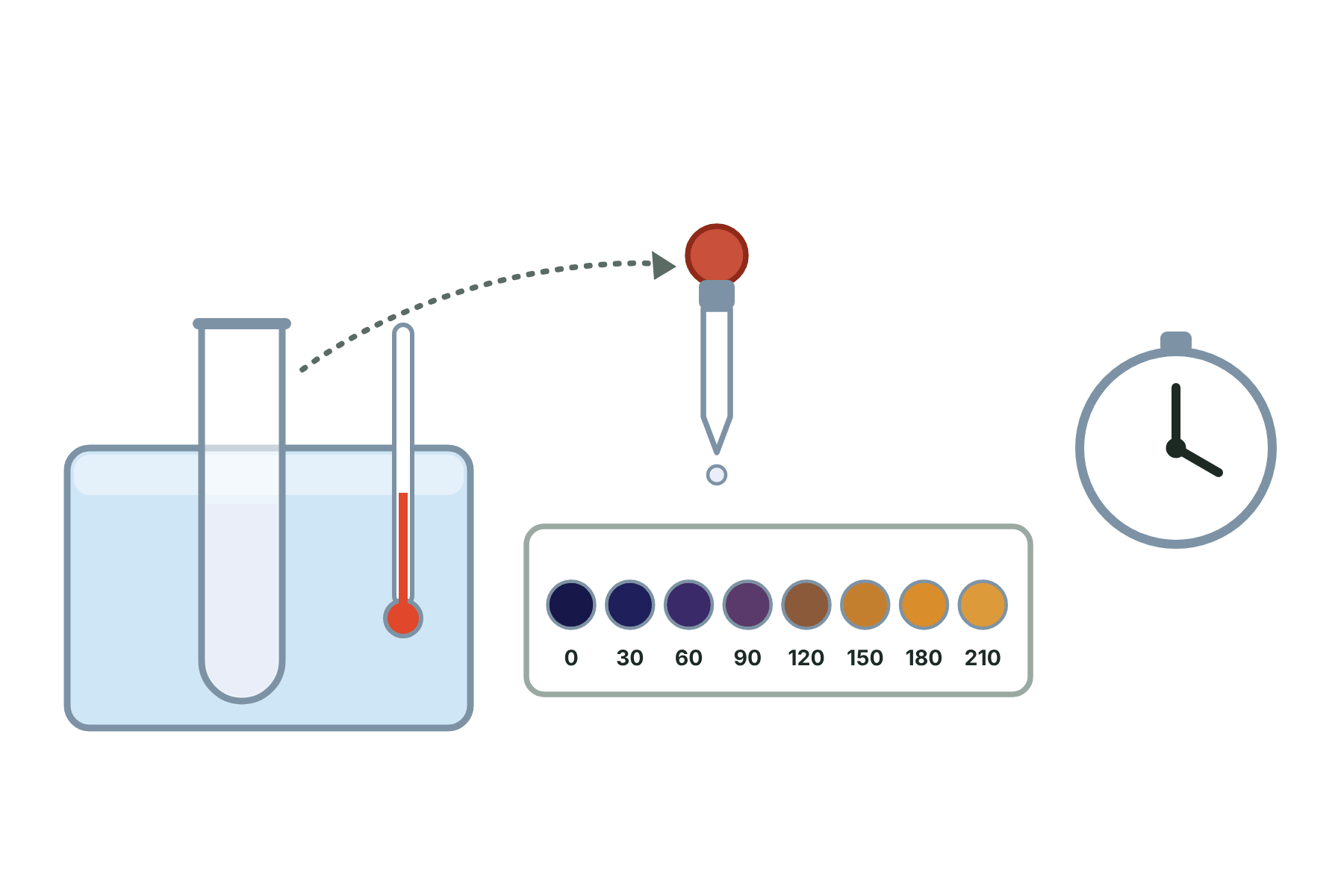
Figure 1 shows the apparatus used to investigate amylase. Explain the purpose of the water bath and of the spotting tile.
Show answerHide answer
Model answer
The water bath keeps the temperature constant, so that temperature does not affect the rate. The spotting tile holds drops of iodine, so that samples of the mixture can be tested.
Mark scheme
- Water bath keeps the temperature constant — 1 mark
- Spotting tile holds drops of iodine for testing samples — 1 mark
-
3 Explain [2 marks]
A buffer solution is added to the mixture of starch and amylase. Explain why.
Show answerHide answer
Model answer
The buffer keeps the pH constant. This means that the pH stays at the value being tested, so only the pH changes.
Mark scheme
- Keeps the pH constant — 1 mark
- At the value being tested / so pH is the only variable — 1 mark
-
4 State [3 marks]
In an investigation into the effect of pH on the rate of reaction of amylase, state the independent variable, the dependent variable and one control variable.
Show answerHide answer
Model answer
The independent variable is the pH. The dependent variable is the time taken for the starch to be digested. A control variable is the temperature (or the volume or concentration of the amylase or starch).
Mark scheme
- Independent variable: pH — 1 mark
- Dependent variable: time for the starch to be digested / rate — 1 mark
- Control variable: e.g. temperature, volume or concentration — 1 mark
-
5 Calculate [2 marks]
At pH 7 the mean time taken for the starch to be digested was 60 seconds. Use rate = 1000 ÷ time to calculate the rate. Give your answer to one decimal place.
Show answerHide answer
Model answer
1000 ÷ 60 = 16.7.
Mark scheme
- 1000 ÷ 60 — 1 mark
- 16.7 — 1 mark
-
6 Calculate [3 marks]
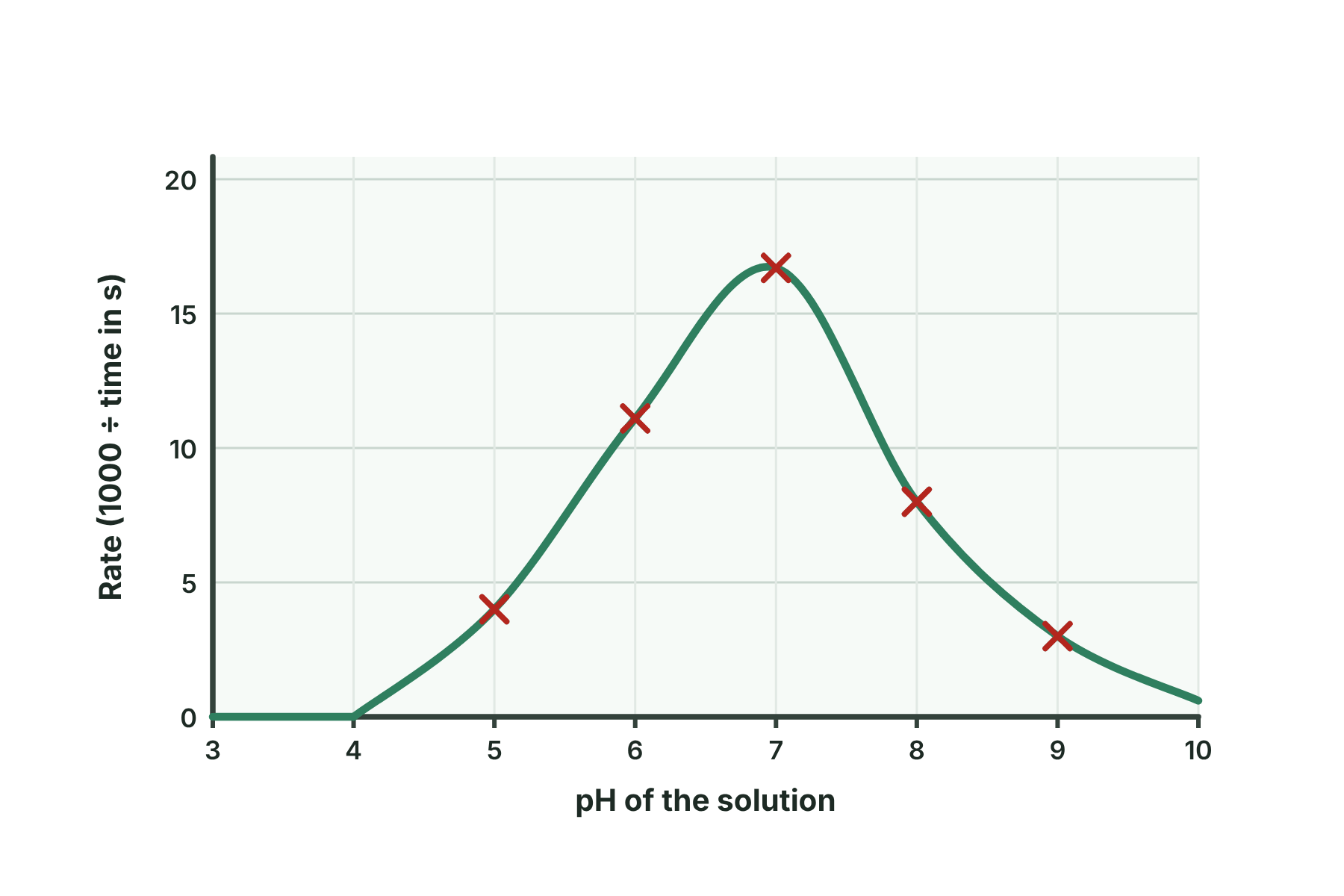
Figure 2 shows the results of the investigation. (a) Use Figure 2 to give the optimum pH. (b) The rate at pH 8 was 8.0. Use rate = 1000 ÷ time to calculate the time taken at pH 8.
Show answerHide answer
Model answer
(a) pH 7. (b) Time = 1000 ÷ 8.0 = 125 seconds.
Mark scheme
- (a) pH 7 — 1 mark
- (b) 1000 ÷ 8.0 — 1 mark
- 125 seconds — 1 mark
-
7 Describe [3 marks]
Describe the effect of pH on the rate of reaction shown in Figure 2.
Show answerHide answer
Model answer
The rate increases as the pH rises from 5 to 7. The rate is highest at pH 7, at about 16.7. Above pH 7 the rate decreases.
Mark scheme
- Rate increases from pH 5 to 7 — 1 mark
- Highest at pH 7 (about 16.7) — 1 mark
- Decreases above pH 7 — 1 mark
-
8 Explain [3 marks]
Explain why the rate of reaction is lower at pH 9 than at pH 7.
Show answerHide answer
Model answer
pH 9 is not the optimum pH for amylase. The shape of the active site changes and the enzyme is denatured. The starch no longer fits the active site, so fewer enzyme-substrate complexes form.
Mark scheme
- pH 9 is away from the optimum — 1 mark
- The active site changes shape / the enzyme is denatured — 1 mark
- The starch no longer fits / fewer complexes form — 1 mark
-
9 Suggest [4 marks]
The investigation only used whole pH values from 5 to 9, and judged the colour of the iodine by eye. Suggest two improvements to the method, and explain why each would help.
Show answerHide answer
Model answer
Test more pH values near the optimum, such as 6.5, 7 and 7.5, to find the optimum pH more precisely. Use a colorimeter to measure the colour of the iodine, so that the end point is not decided by eye.
Mark scheme
- Test pH values in smaller steps near pH 7 — 1 mark
- To find the optimum more precisely — 1 mark
- Use a colorimeter / colour standards — 1 mark
- So that the end point is not subjective — 1 mark
-
10 Describe [6 marks]
Describe how you would investigate the effect of pH on the rate of reaction of amylase.
Show answerHide answer
Model answer
Put starch, amylase and a buffer of a certain pH into a test tube in a water bath at a set temperature. Start a stopwatch. Every 30 seconds, take a drop of the mixture and add it to a drop of iodine on a spotting tile. When the iodine stays orange-brown, all the starch has been digested, so record the time. Repeat with buffers of different pH, keeping the temperature, volumes and concentrations the same. Calculate the rate as 1000 ÷ time and repeat each pH to find a mean.
Mark scheme
- Mix starch, amylase and a buffer — 1 mark
- In a water bath at a constant temperature — 1 mark
- Take drops every 30 seconds and add them to iodine — 1 mark
- Time taken for the iodine to stay orange-brown — 1 mark
- Repeat with different pH buffers, keeping other variables the same — 1 mark
- Calculate the rate / repeat to find a mean — 1 mark
Quick check
-
1
What does the colour of iodine solution tell you in this investigation?
Show answerHide answer
B: Whether starch is still present
Iodine is blue-black when starch is present and orange-brown when the starch has all been digested.
-
2
What is the independent variable?
Show answerHide answer
D: The pH of the buffer
The pH is the variable that you change deliberately.
-
3
What is the dependent variable?
Show answerHide answer
A: The time taken for the starch to be digested
The time taken for the starch to be digested is what you measure.
-
4
Why is a water bath used in this investigation?
Show answerHide answer
C: To keep the temperature constant
It keeps the temperature the same in every test, so that only the pH changes.
-
5
What is the purpose of a buffer?
Show answerHide answer
B: To keep the pH constant
A buffer keeps the pH constant at the value being tested.
-
6
The time taken at one pH is 50 s. What is the rate, using rate = 1000 ÷ time?
Show answerHide answer
D: 20
1000 ÷ 50 = 20.
-
7
At which pH was amylase fastest in the example investigation?
Show answerHide answer
A: pH 7
The rate was highest at pH 7, at about 16.7.
-
8
Why does the rate fall at a pH far from the optimum?
Show answerHide answer
C: The enzyme is denatured
The active site changes shape and the enzyme is denatured, so fewer substrate molecules fit.
-
9
Which change would make the results more precise?
Show answerHide answer
B: Sampling every 10 seconds
Sampling every 10 seconds, instead of every 30 seconds, gives a more precise value for the time.
-
10
A student says the rate at pH 9 is lower than at pH 7 because the enzyme is used up. What is the best response?
Show answerHide answer
A: Enzymes are not used up; the enzyme is denatured, so the starch does not fit
Enzymes are not used up. At pH 9 the enzyme is being denatured, so the active site no longer fits the starch.