Viewing as
Teaching this? The teacher view adds 2 files, the mark schemes and the model answers.
History · Crime, punishment and law enforcement in recent times
Changing Views: Attitudes and the Law
How changing attitudes in society made some actions legal and others criminal - and how Britain treated conscientious objectors in two world wars.
What Do You Already Think?
Answer before the lesson, then check your ideas at the end.
-
Can something be a crime one year and legal the next?
Yes - when society's attitudes change, Parliament changes the law.
-
Name something that was legal in 1950 but is a crime today.
Drink driving, racial discrimination, marital rape, using a hand-held phone while driving.
-
Name something that was a crime in 1950 but is legal today.
Homosexual acts between men, and abortion in most circumstances.
Learning Objectives
- 1Explain how changing attitudes led to some actions being decriminalised.
- 2Explain how changing attitudes led to new crimes being created.
- 3Compare the treatment of conscientious objectors in the First and Second World Wars.
Setting the Scene
In the twentieth century British society changed faster than ever before. Attitudes to sexuality, race, gender, drugs and driving shifted, and the law followed. Some actions were decriminalised; others became crimes for the first time. What counts as a crime depends on what society and Parliament think is harmful.
- 1916 Conscription is introduced; conscientious objectors must face tribunals.
- 1965 The first Race Relations Act makes racial discrimination in public places illegal.
- 1967 Homosexual acts between men over 21 in private are decriminalised; the Abortion Act passes; the breathalyser is introduced.
- 1971 The Misuse of Drugs Act sorts drugs into classes A, B and C.
- 1991 Rape within marriage is recognised as a crime.
- 1998 The Crime and Disorder Act creates racially aggravated offences.
Decriminalised and Criminalised
No longer crimes
- Homosexual acts between men in private (from 1967).
- Abortion in many circumstances (Abortion Act 1967).
- Attempting suicide (Suicide Act 1961).
New crimes
- Racial discrimination and race hate crime (from 1965 and 1998).
- Drink driving (breathalyser from 1967).
- Rape within marriage (from 1991).
- Using a hand-held phone while driving (from 2003).
Why Attitudes Changed
The law changed because society changed.
-
Tolerance
After the 1960s many people became more tolerant of private behaviour that harmed no one else.
-
Equality
Campaigns for the rights of women and ethnic minorities led to laws against discrimination and hate crime.
-
Safety
New technology, especially cars, created new dangers that the law had to address, such as drink driving.
-
Campaigners
Pressure groups and individual MPs pushed for changes to laws they saw as unjust.
Conscientious Objectors in the First World War
Refusing to fight became a legal issue when conscription began.
-
Conscription
The Military Service Act of 1916 made single men aged 18-41 liable to fight.
-
COs
Around 16,000 men refused to fight on grounds of conscience; they were called conscientious objectors.
-
Tribunals
Objectors had to prove their case at tribunals, which were often hostile and rejected most applications.
-
Treatment
Some accepted non-combat roles; "absolutists" who refused everything were imprisoned, and some faced harsh treatment, including being sent to France where they could be shot for disobeying orders.
Conscientious Objectors at Dartmoor
From 1917 some conscientious objectors were sent to do hard labour at work centres such as the old prison at Dartmoor, rather than to military prisons.
How they were seen
- "Conchies" Many people saw them as cowards and traitors.
- White feathers Men not in uniform were sometimes handed white feathers as a sign of cowardice.
- Loss of rights After the war, many objectors lost the right to vote for five years.
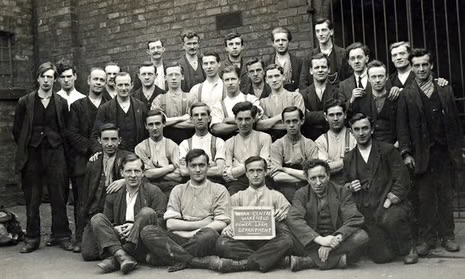
Conscientious objectors at the Princetown Work Centre, Dartmoor, 1917.
Conscientious Objectors: WW1 and WW2
The treatment of objectors changed a great deal between the wars.
-
Number of COs
Second World War: Around 16,000. Around 60,000
-
Tribunals
Second World War: Often hostile; most applications rejected. More understanding; many exemptions granted
-
Alternatives
Second World War: Non-combat roles or work centres. Civilian work such as farming, firefighting or bomb disposal
-
Prison
Second World War: Many absolutists imprisoned, some harshly. Far fewer imprisoned
-
Public attitude
Second World War: Widely seen as cowards. Still some hostility, but more tolerance
Summary & Exam Focus
- Changing attitudes led Parliament to decriminalise some actions and criminalise others.
- Homosexuality and abortion were decriminalised in 1967.
- Race hate, drink driving and marital rape became crimes.
- Conscientious objectors were treated far more tolerantly in WW2 than in WW1.
Exam focus
Explain one way in which the treatment of conscientious objectors in the First World War was different from their treatment in the Second World War. (4 marks) (4 marks)
Name one clear difference, then support it with specific detail from both wars.
Key terms
The vocabulary this lesson expects you to use. Each one is linked from the first place it appears above.
- Decriminalise
- To make something no longer a crime.
- Conscription
- Making people join the armed forces by law.
- Conscientious objector
- Someone who refuses to fight for reasons of conscience.
- Tribunal
- A special court that decided whether an objector's case was genuine.
- Absolutist
- A conscientious objector who refused to do anything to help the war effort.
- Hate crime
- A crime motivated by prejudice, for example against someone's race or religion.
Downloads
Free to keep, print and annotate.
- Changing Views Attitudes and the Law.pptx Built from the lesson script on 23 September 2026. View
- Changing Views Attitudes and the Law - Completed Notes.docx The full notes for the lesson, every gap filled in - to check against, or to revise from. Built from the lesson script on 23 September 2026. View
- Changing Views Attitudes and the Law - Exam Questions.docx Built from the lesson script on 23 September 2026. View
Something here looks wrong?
Tell us what and we will go and look. It goes to whoever writes these pages, nobody else, and we do not ask who you are — so there is nothing to sign and nothing comes back to you.