Viewing as
Teaching this? The teacher view adds 2 files, the mark schemes and the model answers.
History · Crime, punishment and law enforcement in recent times
Prisons and Reforms
How punishment in the twentieth century turned towards reform - probation, borstals, open prisons, community sentences and restorative justice.
Learning Objectives
- 1Describe how prisons and punishment changed after 1900.
- 2Explain the changes in how young offenders were treated.
- 3Evaluate alternatives to prison, such as community sentences and restorative justice.
Setting the Scene
By 1900 prison was the main punishment for serious crime. Over the twentieth century the aim of punishment shifted further towards rehabilitation - helping offenders change so they would not reoffend - and towards keeping young people and first-time offenders out of prison altogether.
- 1907 The Probation of Offenders Act lets offenders serve their sentence in the community.
- 1908 The Children Act sets up juvenile courts; the first borstals open for young offenders.
- 1936 New Hall, the first open prison, opens.
- 1948 The Criminal Justice Act abolishes hard labour, penal servitude and flogging.
- 1972 Community service orders are introduced.
- 1982 Borstals are replaced by youth custody centres.
Changes in Prison
Prisons became less harsh, and focused more on changing offenders.
-
Harsh methods end
The Criminal Justice Act of 1948 abolished hard labour, penal servitude and flogging.
-
Education and work
Prisoners were given the chance to learn skills and gain qualifications.
-
Open prisons
From 1936 low-risk prisoners could serve time in open prisons with few locks, preparing them for release.
-
Numbers
Despite reforms, the prison population has grown, to over 80,000 in recent years.
Young Offenders
Young people came to be treated differently from adults.
-
Juvenile courts
The Children Act of 1908 created separate courts for under-16s.
-
Borstals
From 1908, borstals held young offenders aged 16-21, with strict discipline, education and training.
-
Replacement
Borstals were replaced by youth custody centres in 1982, and later by young offender institutions.
-
Aim
To stop young people becoming hardened criminals by keeping them apart from adult prisoners.
A Borstal Institution
The first borstal institution opened at Borstal in Kent, and the Prevention of Crime Act of 1908 set up a national system. The aim was to train young offenders so they could lead honest lives.
Borstal life
- Discipline Strict routines and physical exercise.
- Training Trades such as carpentry and farming.
- Education Lessons to improve reading and writing.
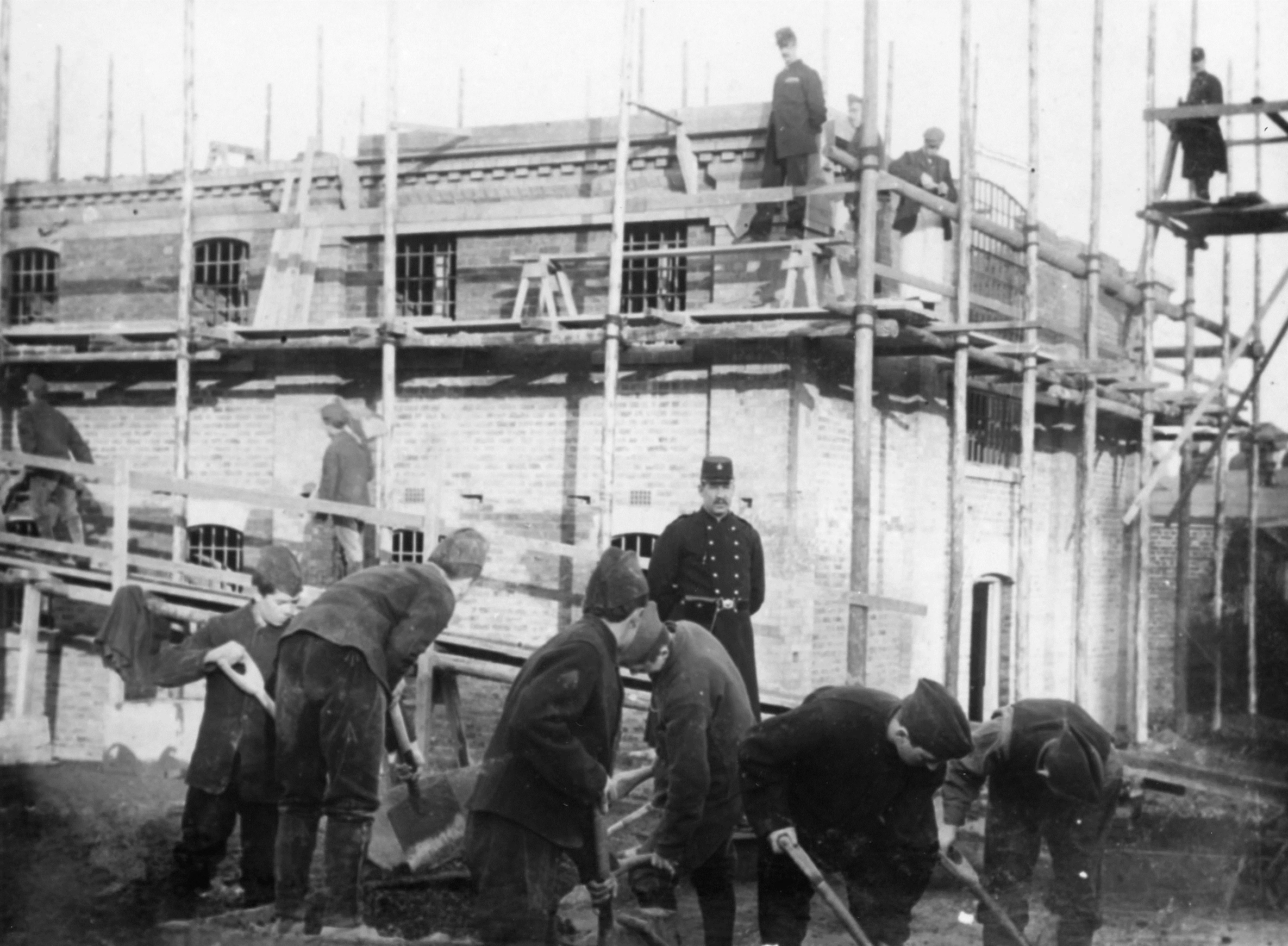
Young offenders at a borstal, early twentieth century.
Alternatives to Prison
Punishments that keep offenders in the community.
-
Probation
From 1907 offenders could be supervised by a probation officer instead of going to prison.
-
Community service
From 1972 offenders could be ordered to do unpaid work in the community.
-
Electronic tagging
Offenders wear a tag that tracks where they are, allowing a curfew at home.
-
Restorative justice
Offenders meet their victims, hear the harm they caused and try to make amends.
Does Prison Work?
Arguments for prison
- Protects the public from dangerous criminals.
- Punishes offenders - retribution.
- Deters others from committing crime.
Arguments against prison
- High rates of reoffending after release.
- Expensive to run.
- Can make offenders more criminal.
- Community sentences can be cheaper and more effective.
Summary & Exam Focus
- Punishment moved towards rehabilitation after 1900.
- Young offenders were treated separately, in juvenile courts and borstals.
- Hard labour and flogging were abolished in 1948.
- Alternatives such as probation, community service and restorative justice keep offenders out of prison.
Exam focus
Explain why there were changes in the treatment of young offenders in the period c1900-present. (12 marks) (12 marks)
Explain the reasons for change - the idea of rehabilitation, protecting young people from hardened criminals - and support each with specific examples.
Key terms
The vocabulary this lesson expects you to use. Each one is linked from the first place it appears above.
- Rehabilitation
- Helping an offender change so they do not reoffend.
- Probation
- Supervision of an offender in the community instead of prison.
- Borstal
- An institution for young offenders, 1908-1982.
- Open prison
- A prison with few locks for low-risk prisoners.
- Community service
- Unpaid work in the community as a punishment.
- Restorative justice
- Offenders meet victims to understand the harm and make amends.
- Electronic tagging
- A device worn by offenders to track their location.
Downloads
Free to keep, print and annotate.
- Prisons and Reforms.pptx Built from the lesson script on 23 September 2026. View
- Prisons and Reforms - Completed Notes.docx The full notes for the lesson, every gap filled in - to check against, or to revise from. Built from the lesson script on 23 September 2026. View
- Prisons and Reforms - Exam Questions.docx Built from the lesson script on 23 September 2026. View
Something here looks wrong?
Tell us what and we will go and look. It goes to whoever writes these pages, nobody else, and we do not ask who you are — so there is nothing to sign and nothing comes back to you.