Biology · Communicable Diseases
Knowledge organiser
The whole chapter on two pages. Print it on A4 — they are already landscape — or cover a box and see how much of it you can say from memory.
Biology · AQA Paper 1
Communicable Diseases
Pathogens and the Spread of Disease
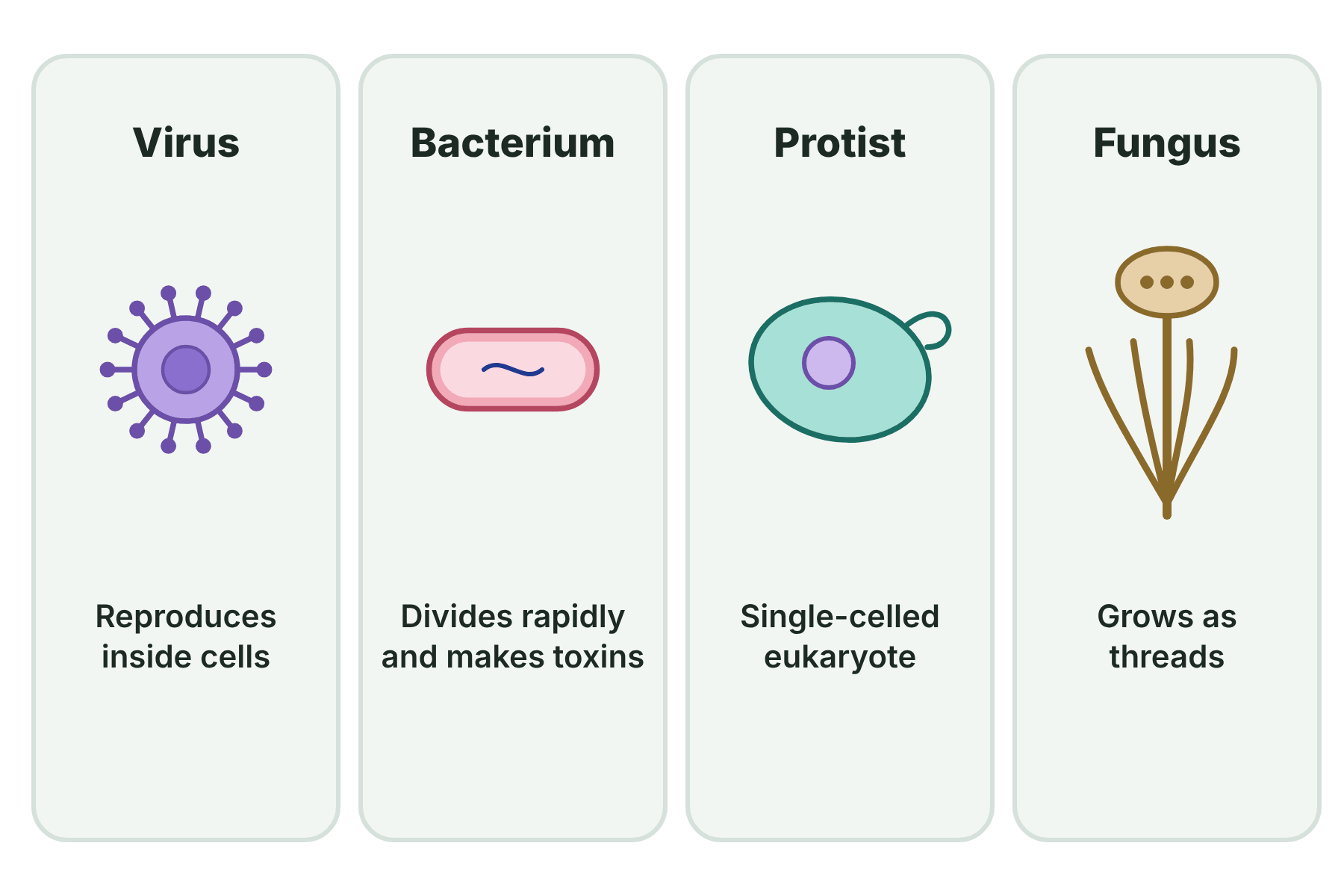
Pathogens can be viruses, bacteria, protists or fungi, and they spread by direct contact, by water and by air.
- Pathogen A microorganism that causes disease.
- Communicable disease A disease caused by a pathogen that can be spread from one organism to another.
- Virus A tiny pathogen that can only reproduce inside the cells of its host.
Viral Diseases
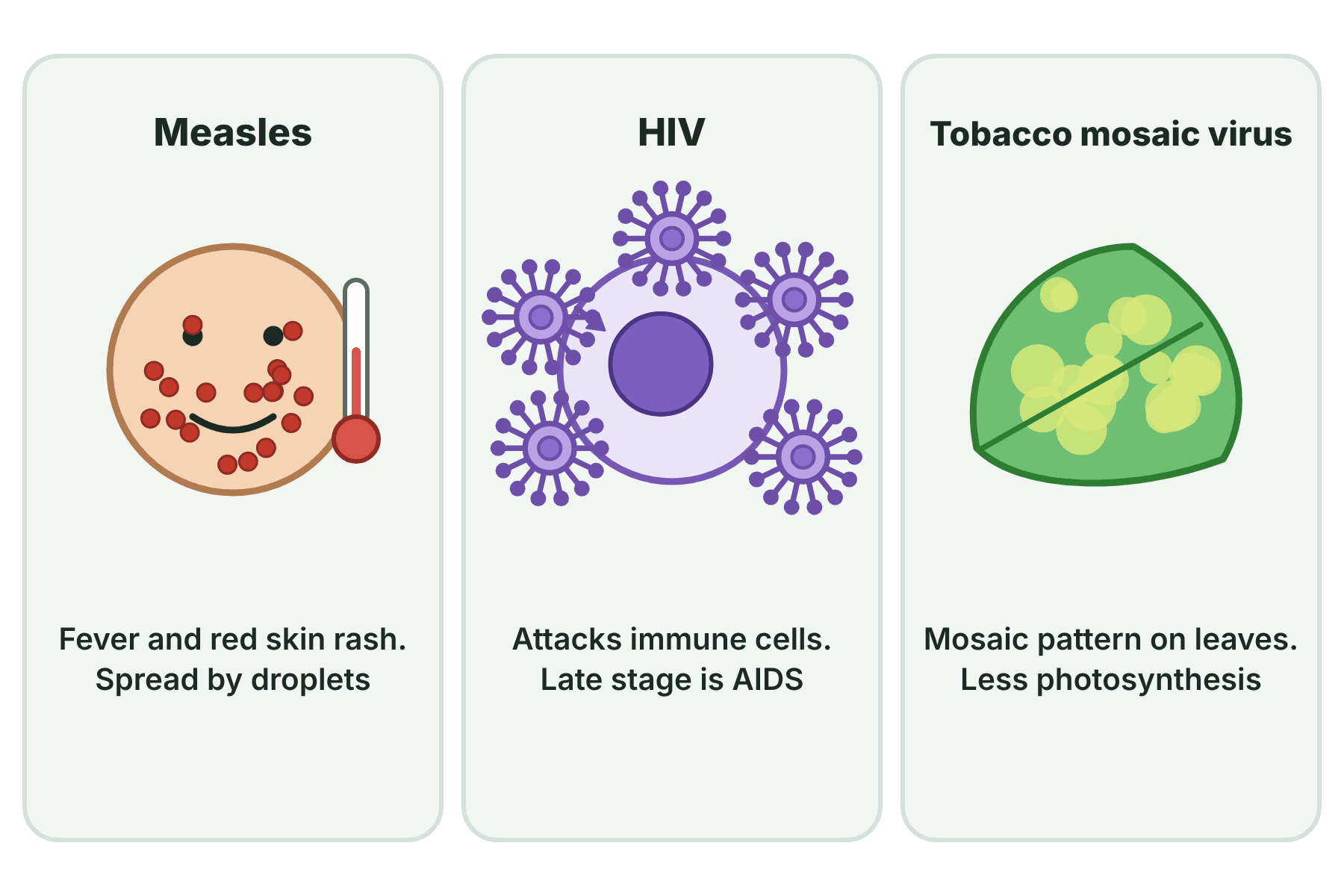
Measles and HIV affect people. Tobacco mosaic virus affects plants. All three viruses damage the cells that they infect.
- Measles A viral disease with a fever and a red skin rash, spread by droplets.
- HIV A virus that attacks the immune cells and can lead to AIDS.
- AIDS The late stage of HIV infection, when the immune system is so damaged that it cannot deal with other infections or cancers.
Measles and HIV compared
- Measles Fever and a red skin rash; Spread by droplets from coughs and sneezes; Prevented by vaccination
- HIV A flu-like illness at first, then attacks immune cells; Spread by sexual contact or exchange of blood and body fluids; Controlled with antiretroviral drugs
Bacterial Diseases
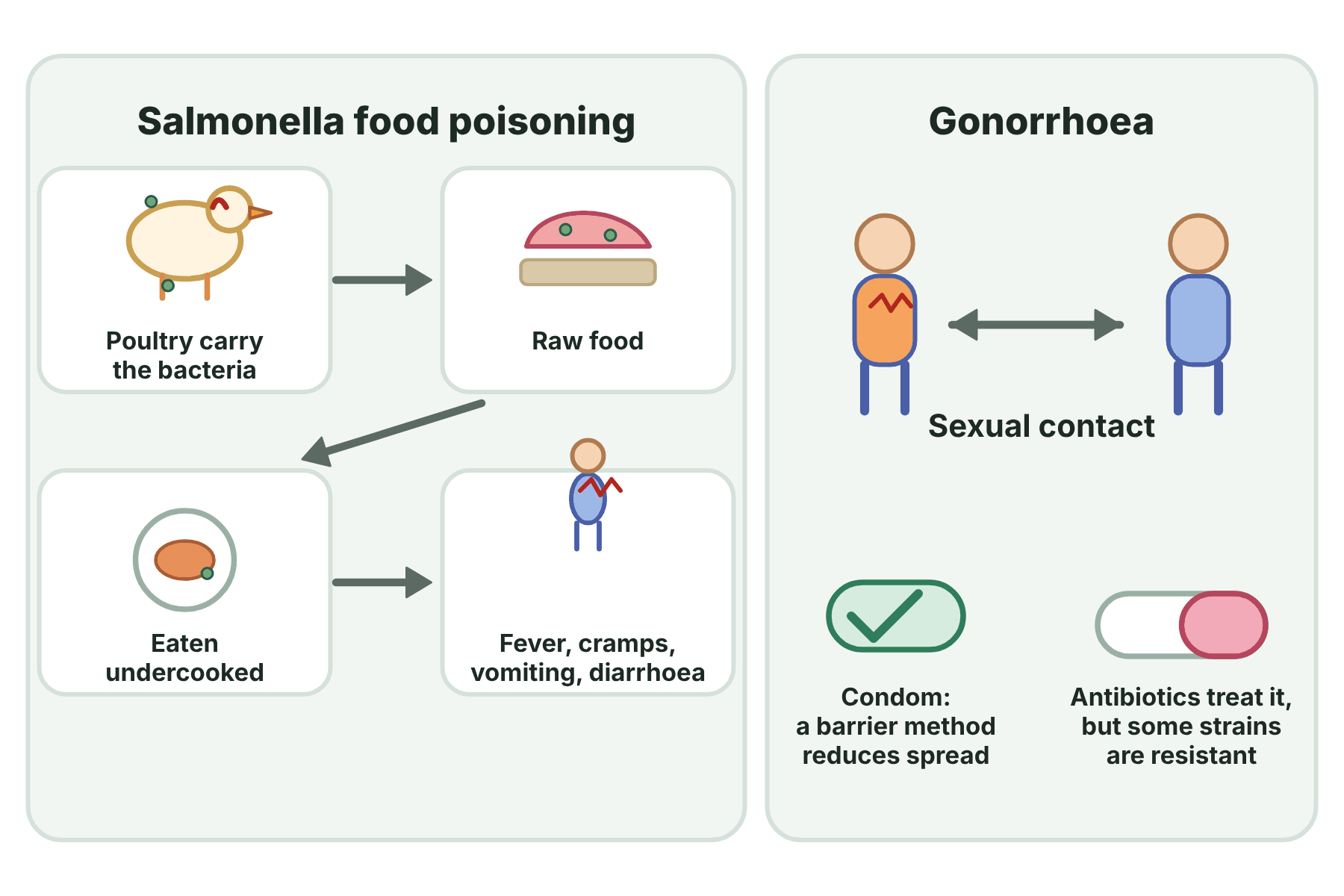
Salmonella is spread by food. Gonorrhoea is spread by sexual contact.
- Salmonella A bacterium that causes food poisoning.
- Food poisoning An illness caused by eating food that contains pathogens or their toxins.
- Gonorrhoea A sexually transmitted disease caused by a bacterium.
Biology · AQA Paper 1
Communicable Diseases continued
Salmonella and gonorrhoea compared
- Salmonella food poisoning Spread in food or unhygienic kitchens; Fever, cramps, vomiting and diarrhoea; Poultry vaccinated in the UK
- Gonorrhoea Spread by sexual contact; Thick discharge and pain when urinating; Once treated with penicillin, now many resistant strains
How antibiotic resistance spreads
- Variation In a large population of bacteria, a few have a gene that makes…
- Antibiotic use The antibiotic kills the non-resistant bacteria but not the resistant ones.
- Survival The resistant bacteria survive and reproduce, and pass on the gene.
- A resistant strain Over time, most of the bacteria in the population are resistant…
Fungal and Protist Diseases
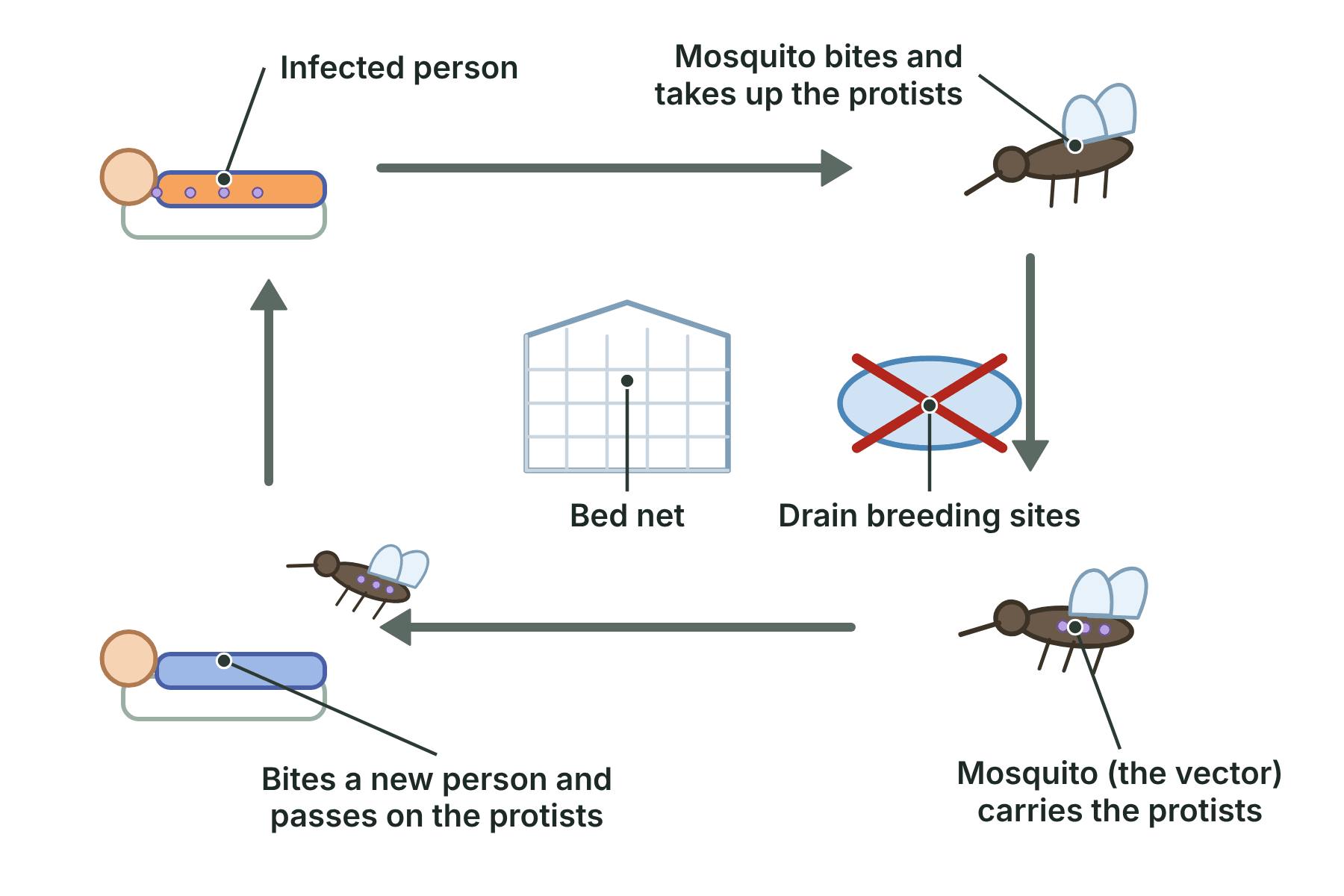
Rose black spot is spread by water and wind. Malaria is spread by a mosquito, which is a vector.
- Rose black spot A fungal disease of roses that causes purple or black spots on the leaves.
- Fungicide A chemical that kills fungi.
- Malaria A disease caused by a protist, which causes recurrent fever and can be fatal.
Rose black spot and malaria compared
- Rose black spot (fungus) Affects plants (roses); Purple or black spots on leaves; Spread by water and wind
- Malaria (protist) Affects humans; Recurrent fever, and can be fatal; Spread by the mosquito vector
The malaria cycle
- Infected person The blood of an infected person contains the protists.
- Mosquito bites A mosquito feeds on the infected person's blood and takes up the protists.
- Carried by the vector The protists live in the mosquito, which does not become ill.
- A new person The mosquito bites a healthy person and passes the protists on.