Biology · Monoclonal Antibodies
Knowledge organiser
The whole chapter on one page. Print it on A4 — it is already landscape — or cover a box and see how much of it you can say from memory.
Biology · AQA Paper 1
Monoclonal Antibodies
Producing Monoclonal Antibodies (Separate only)
A monoclonal antibody comes from one clone of cells, so every antibody is identical and targets the same chemical.
- Monoclonal antibody An antibody made by a single clone of cells, which is specific to one binding site on one antigen.
- Hybridoma cell A cell formed by combining a lymphocyte with a tumour cell, which can both divide and make an antibody.
- Lymphocyte A white blood cell that makes antibodies.
Lymphocytes, tumour cells and hybridoma cells compared
- Lymphocyte and tumour cell A lymphocyte makes the antibody but cannot divide for long; A tumour cell divides over and over but makes no useful antibody; Neither is any use for making large amounts on its own
- Hybridoma cell Made by combining the two; Makes the specific antibody; Divides again and again
Making monoclonal antibodies
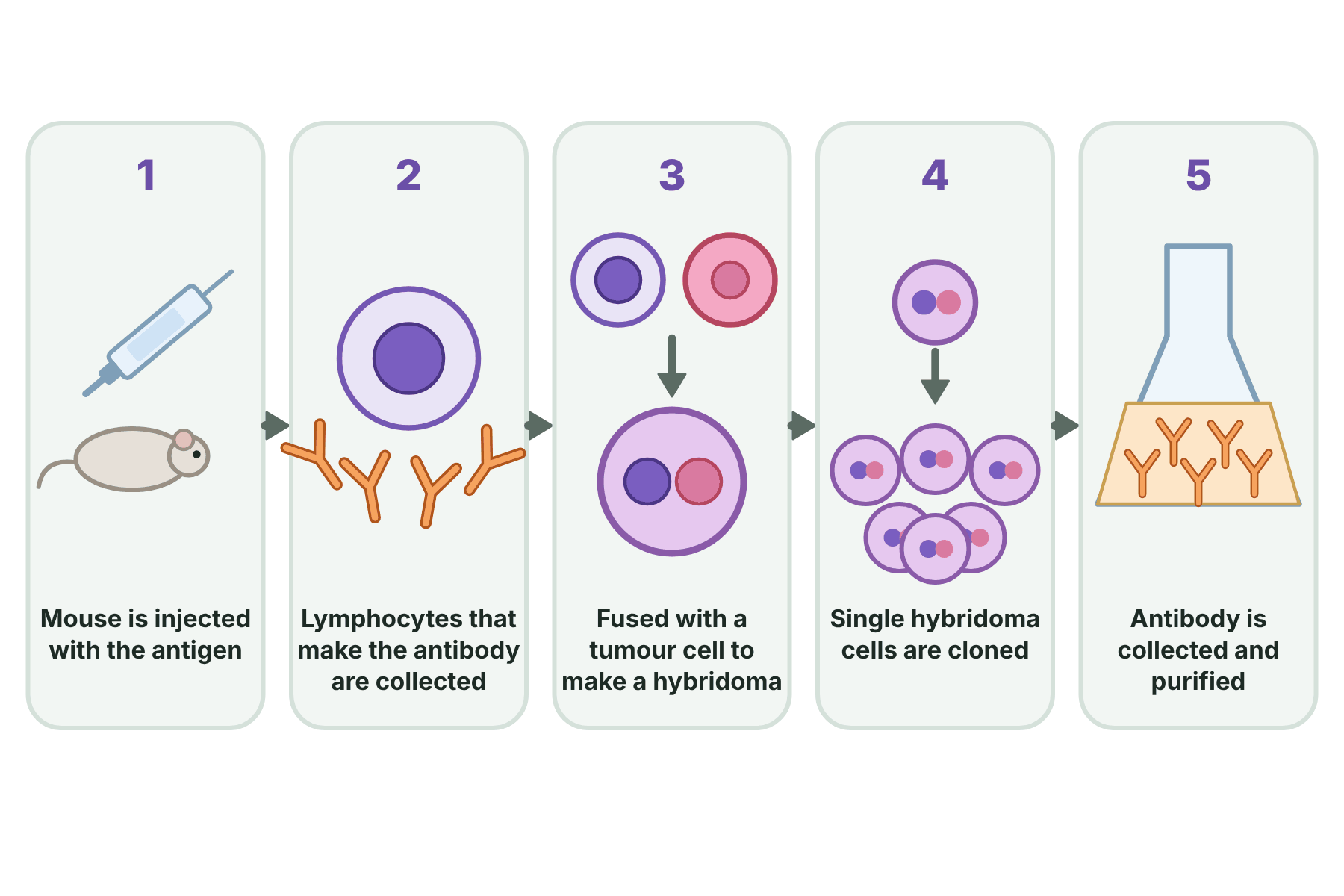
- Stimulate the lymphocytes A mouse is injected with the antigen.
- Collect the lymphocytes Lymphocytes that make the antibody are taken from the mouse.
- Make hybridoma cells The lymphocytes are combined with a particular kind of tumour…
- Select and clone Single hybridoma cells that make the right antibody are picked out and cloned.
Uses of Monoclonal Antibodies (Separate only)
A monoclonal antibody finds one target, and whatever it carries goes only to that target.
- Pregnancy test A test that uses monoclonal antibodies to detect the hormone hCG in urine.
- hCG The hormone that is present in the urine of a pregnant woman.
- Fluorescent dye A dye that glows under certain light, used to show where an antibody has bound.
Advantages and disadvantages
- Advantages Very specific, so they target only one chemical; Can deliver drugs straight to cancer cells without harming other cells; Can be used in quick, simple tests such as pregnancy tests
- Disadvantages They create more side effects than expected; They are expensive to make; Some patients react badly, and mice are used to make them
How a pregnancy test works
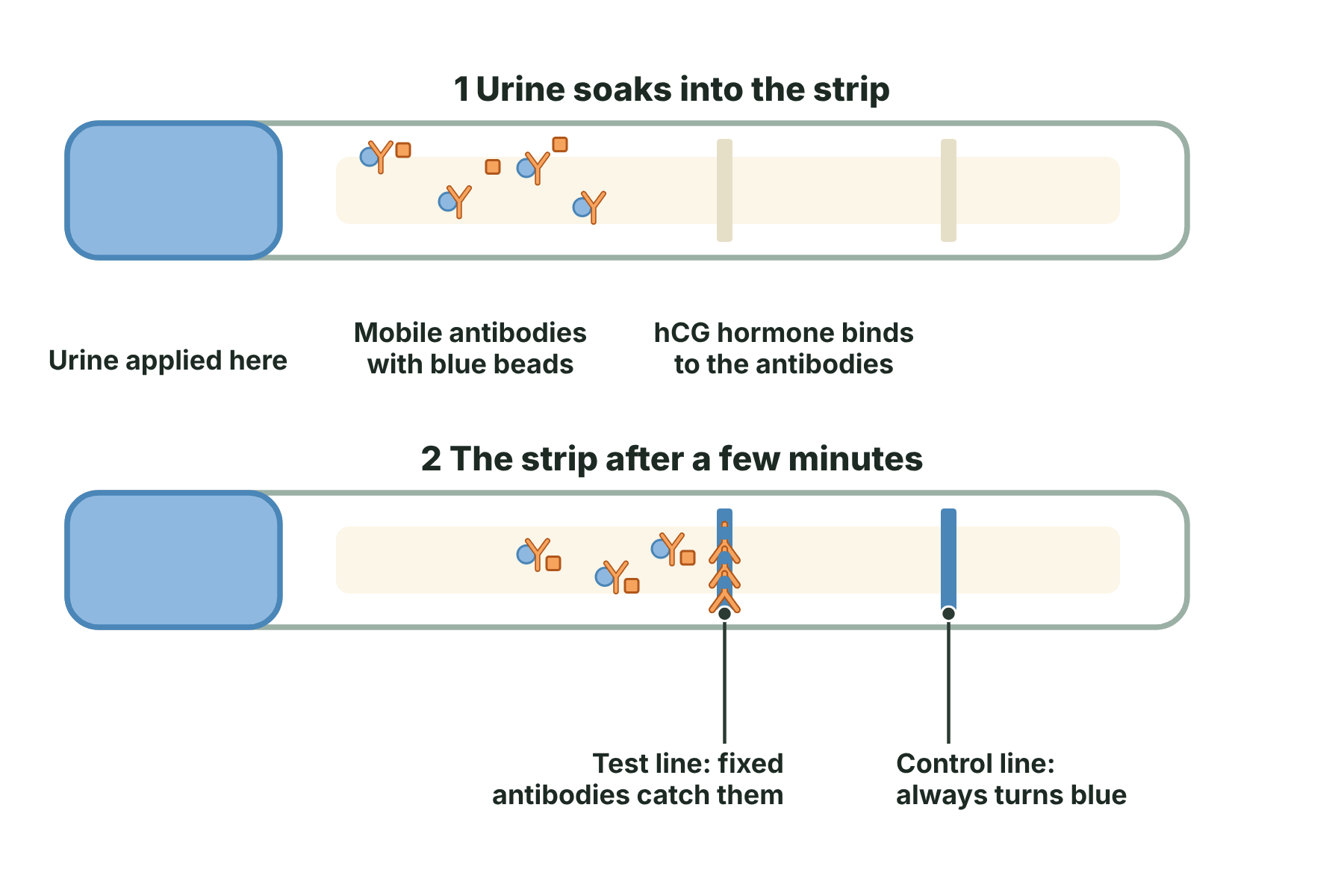
- Urine applied The urine soaks into the strip and picks up antibodies that…
- Hormone binds If hCG is present, it binds to the mobile antibodies.
- Capture at the test line Further along the strip, fixed antibodies on the test line bind…
- The control line Antibodies on the control line bind the mobile antibodies…