Biology · Hormonal Coordination in Humans
Knowledge organiser
The whole chapter on two pages. Print it on A4 — they are already landscape — or cover a box and see how much of it you can say from memory.
Biology · AQA Paper 2
Hormonal Coordination in Humans
Hormones and the Endocrine System
The endocrine system uses hormones released by glands into the blood, which act on target organs more slowly than nerves but for longer.
- Hormone A chemical messenger carried in the blood.
- Endocrine gland A gland that releases hormones into the blood.
- Target organ An organ with receptors that respond to a particular hormone.
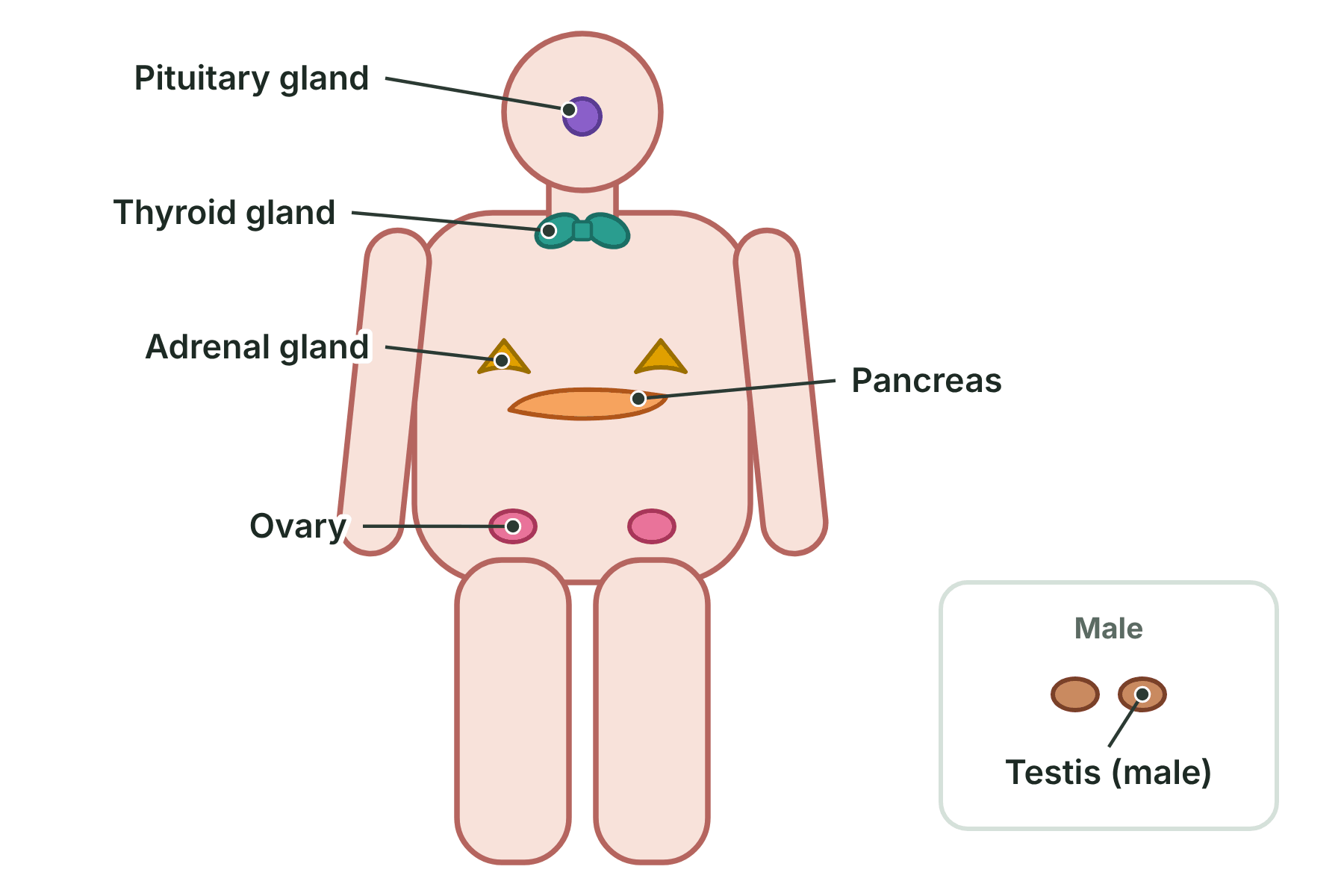
Nervous control and hormonal control
- Nervous system Electrical impulses along neurones; Very fast response; Short-lived effect
- Endocrine system Chemical hormones in the blood; Slower response; Longer-lasting effect
Blood Glucose and Diabetes
Insulin lowers the blood glucose concentration by making the liver store glucose as glycogen, and for Higher tier glucagon raises it by making the liver release glucose.
- Blood glucose concentration The amount of glucose in the blood.
- Insulin The hormone that lowers the blood glucose concentration.
- Glucagon The hormone that raises the blood glucose concentration (Higher tier).
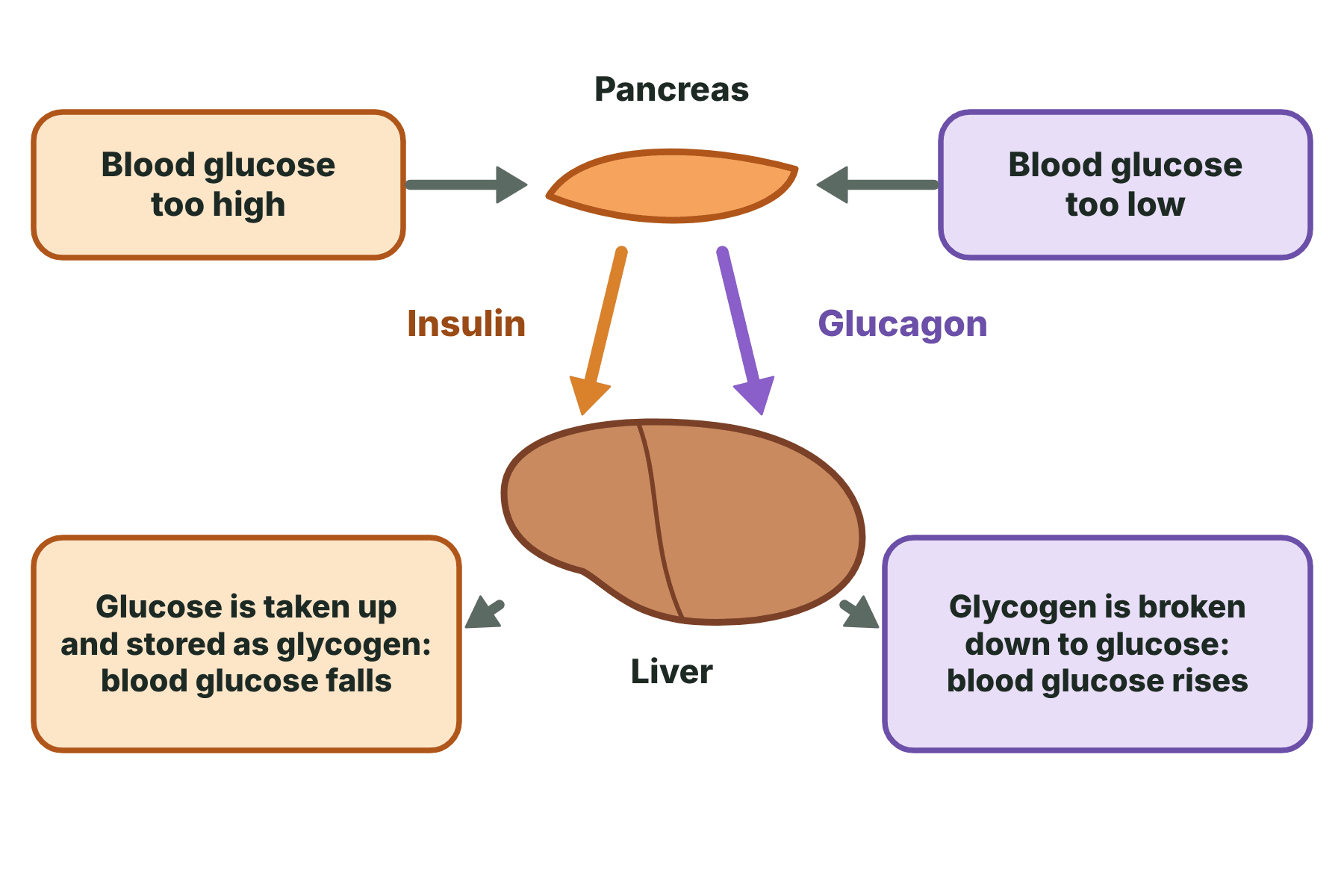
Insulin and glucagon
- Insulin Released when blood glucose is too high; Released by the pancreas; Liver converts glucose to glycogen
- Glucagon (Higher tier) Released when blood glucose is too low; Released by the pancreas; Liver converts glycogen to glucose
Water and Nitrogen Balance (Separate only)
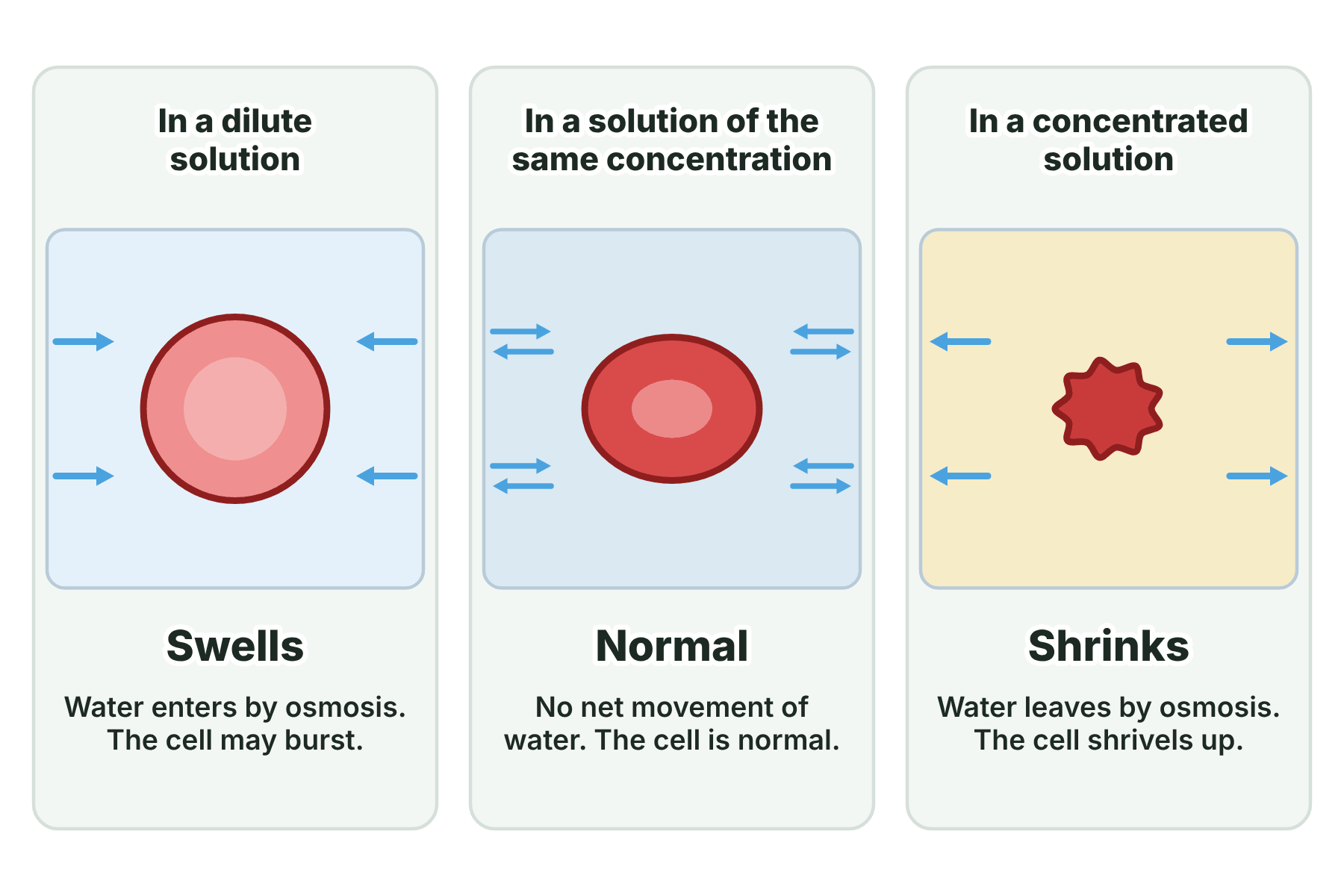
The kidneys keep the water and ion balance by filtering the blood and reabsorbing what is needed.
- Osmosis The movement of water across a partially permeable membrane from a dilute to a concentrated solution.
- Urea A waste substance made in the liver from excess amino acids, removed in the urine.
- Urine The liquid made by the kidneys that contains urea, excess water and excess ions.
Where the losses happen
- Lungs and skin Water leaves in the breath; Water, ions and urea leave in sweat; No control over the loss
- Kidneys Excess water, ions and urea leave in the urine; The loss is controlled; Keeps the water and ion balance
Biology · AQA Paper 2
Hormonal Coordination in Humans continued
Kidney Failure, Dialysis and Transplants (Separate only)
In dialysis, urea and excess ions diffuse out of the blood through a partially permeable membrane.
- Kidney failure The kidneys can no longer remove urea or control the water and ion balance.
- Dialysis A treatment that uses a machine to remove urea and excess ions from the blood.
- Dialysis fluid The fluid on the other side of the membrane, with the same glucose and useful ions as normal blood.
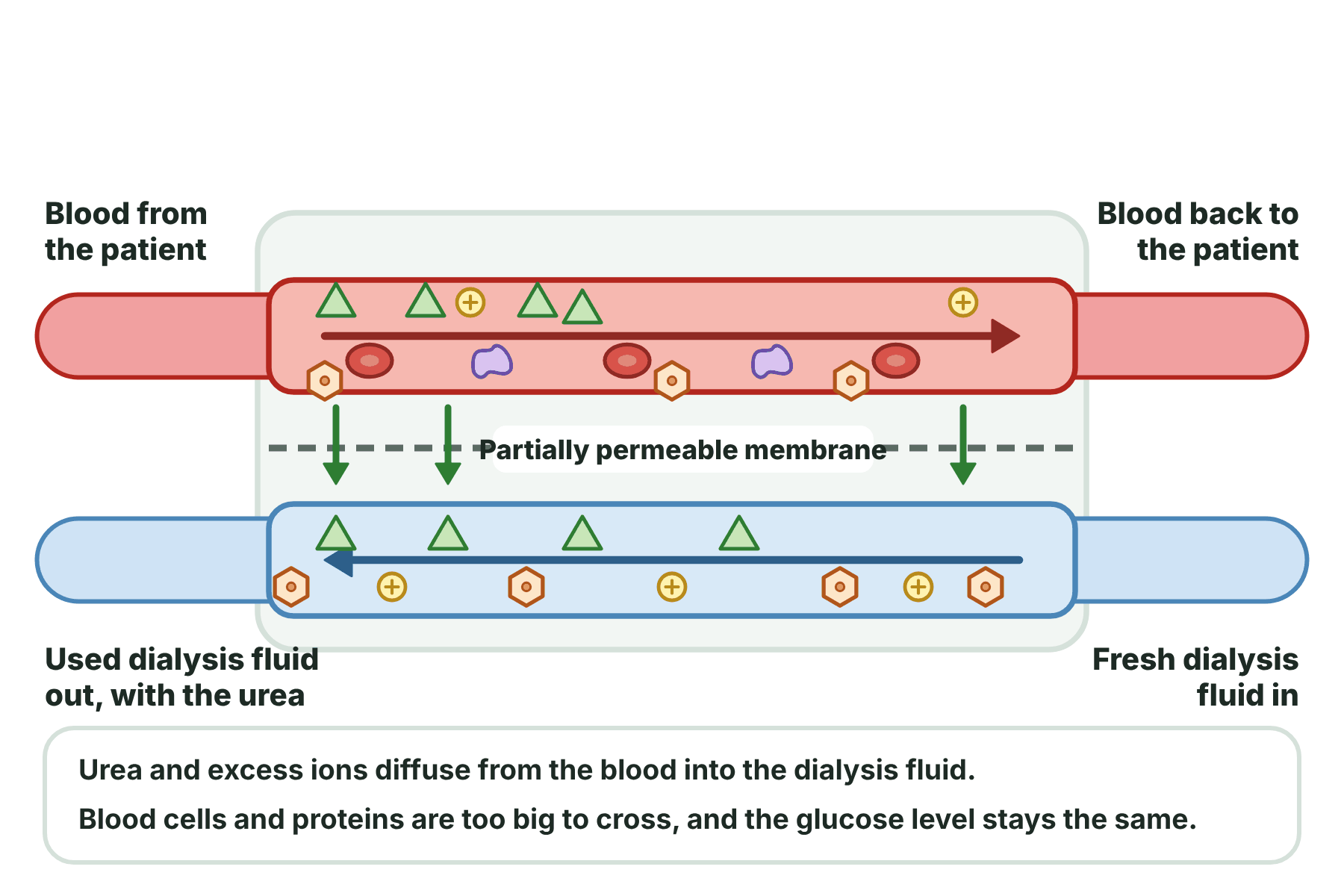
Dialysis and a transplant
- Dialysis Available straight away; No need to wait for a donor; Takes hours, several times a week
- Kidney transplant A donor kidney is needed, and there is a long wait; A major operation; Risk of rejection
A dialysis session
- Connect The patient is connected to the machine, and blood flows out of the body.
- Clean The blood passes along the membrane.
- Return The cleaned blood is returned to the patient.
- Repeat The treatment has to be repeated regularly.
Hormones in Human Reproduction
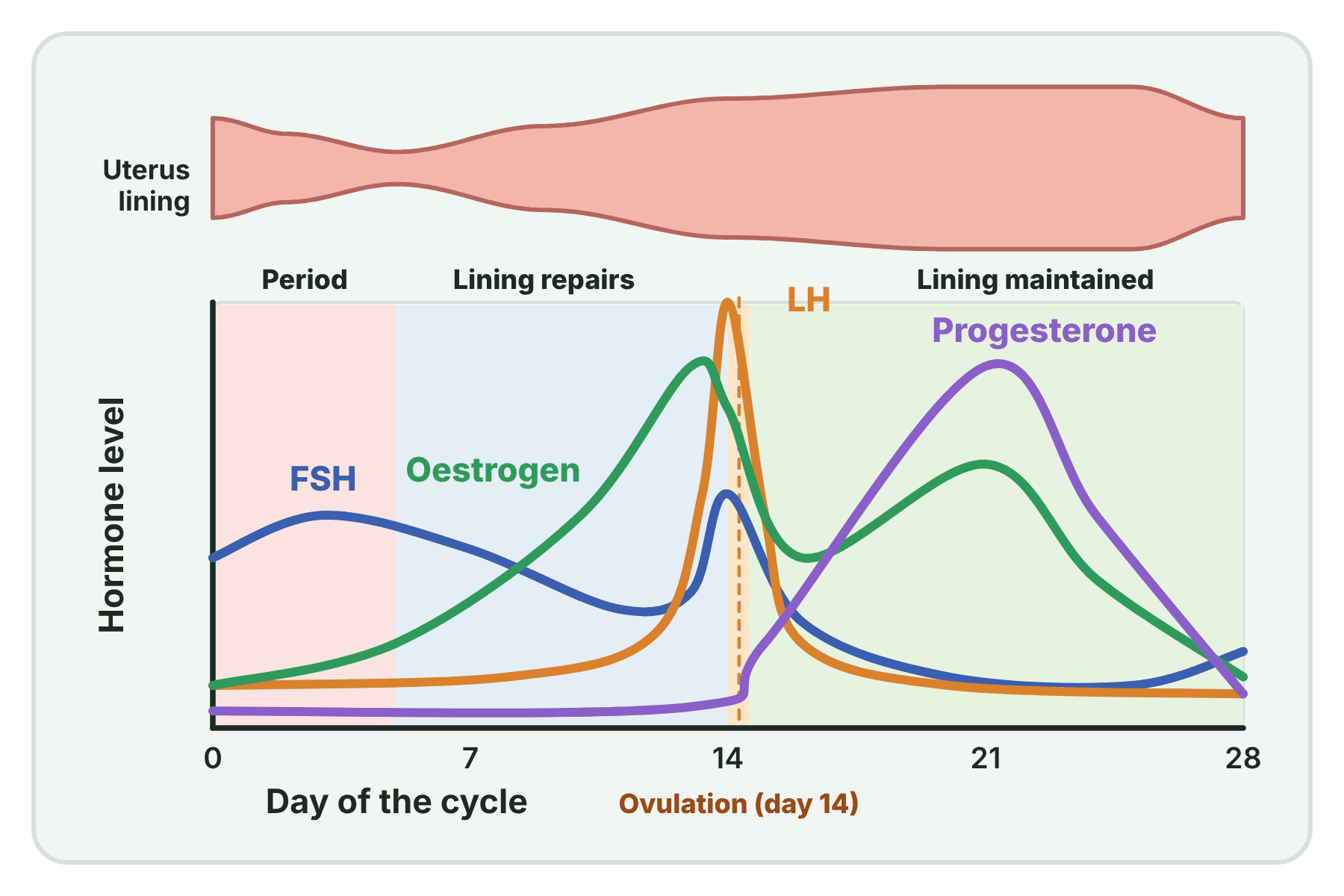
FSH matures an egg, LH triggers its release, and oestrogen and progesterone are involved in maintaining the lining of the uterus.
- FSH Follicle stimulating hormone, which makes an egg mature in an ovary.
- LH Luteinising hormone, which stimulates ovulation.
- Oestrogen The main female reproductive hormone, made in the ovaries.
FSH and LH
- FSH Released by the pituitary gland; Makes an egg mature in a follicle; Stimulates the ovary to release oestrogen
- LH Released by the pituitary gland; A surge causes ovulation; Peaks around day 14
Contraception and Fertility Treatment
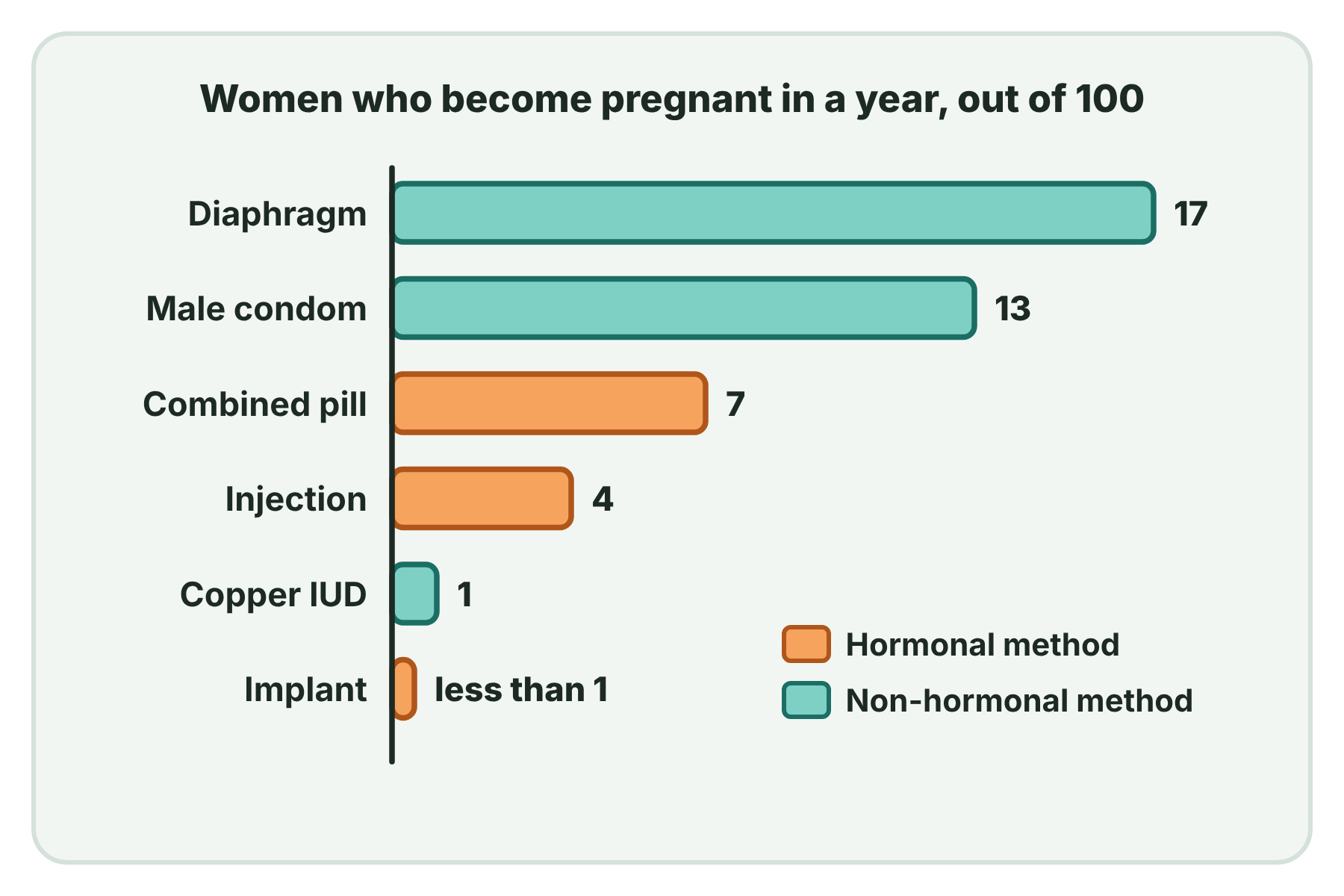
Hormonal contraception stops egg release, other methods block sperm or implantation, and for Higher tier hormones such as FSH and LH are also used to treat infertility.
- Contraception A method of preventing pregnancy.
- Combined pill A contraceptive pill containing oestrogen and progesterone.
- Implant A small rod put under the skin that releases progesterone slowly.
Hormonal and non-hormonal contraception
- Hormonal methods Very effective when used correctly; Pill: taken daily, so easy to forget; Implant and injection last for weeks or years
- Non-hormonal methods Condoms protect against infections; No effect on the hormones; Barrier methods are less effective if used wrongly