Viewing as
Teacher view: planning notes, the answers to every question, and the teacher copies of the files.
Business · Spotting a business opportunity
Customer needs
Customers buy what meets their needs: the right price, the right quality, enough choice and convenience. A business that understands those needs makes sales and survives; one that does not, fails.
Teacher resources
The teacher copies: slides with the questions built in, the answers, and anything else attached to this lesson for whoever is teaching it.
- Customer needs - Teacher Slides.pptx Teacher The lesson slides with the teacher's notes on each slide, and every question and mark scheme built in. Built from the lesson script on 24 September 2026. View
- Customer needs - Teacher Notes.docx Teacher The complete notes with the teacher's notes and every model answer in full. Built from the lesson script on 24 September 2026. View
Student handouts
The same files the students see, to print or hand out.
- Customer needs.pptx Built from the lesson script on 24 September 2026. View
- Customer needs - Completed Notes.docx The full notes for the lesson, to revise from. Built from the lesson script on 24 September 2026. View
- Customer needs - Exam Questions.docx Built from the lesson script on 24 September 2026. View
Last Chapter
Answer from memory before the answers appear.
-
Give the three reasons why new business ideas come about.
Changes in technology, changes in consumer wants, and products or services becoming obsolete.
-
Name the three rewards of starting a business.
Business success, profit and independence.
-
What is added value?
Selling price minus the cost of bought-in materials.
-
Name two ways a business can add value.
Any two of: convenience, branding, quality, design, a unique selling point.
Learning Objectives
- 1Explain what is meant by customer needs.
- 2Explain the four main customer needs: price, quality, choice and convenience.
- 3Explain why identifying and understanding customer needs generates sales.
- 4Explain why meeting customer needs is vital for a business's survival.
THE BIG IDEA
No customers, no business.
Every successful business starts by working out what its customers need - and then giving it to them better than anyone else.
What Are Customer Needs?
A customer need is what a customer requires from a product or service.
-
Customers
The people or businesses that buy a product. They are not always the same as consumers, who use it - a parent buying a child's toy is the customer; the child is the consumer.
-
Needs
What customers require before they will buy: a price they can pay, a quality they expect, a choice they like and a way of buying that suits them.
-
Different customers, different needs
A student, a family and a retired couple buying the same product may want very different things from it.
-
The business's job
Find out what customers need, then provide a product that meets those needs better than competitors do.
Every Shopper Wants Something Different
Walk down any high street and every shopper is looking for something slightly different. Some want the cheapest option, some want the best quality, some want lots to choose from and some just want whatever is quickest. A business has to know which of these customers it is serving - and what they need.

Every one of these shoppers has different needs.
What Customers Need
-
Price
The amount customers are willing and able to pay. It must feel like good value for money.
-
Quality
How well the product is made and how well it works - it must meet or beat what the customer expects.
-
Choice
A range of products, sizes, colours or options, so customers can find exactly what suits them.
-
Convenience
How easy it is to buy and use the product: location, opening hours, delivery and ordering online.
Price
Customers want a price that they think is fair for what they get.
-
Value for money
Customers compare the price with the benefits they get. A higher price is acceptable if the quality or convenience is higher too.
-
What they can afford
Customers on low incomes may choose the cheapest option; others will pay more for quality or a brand.
-
Competition
Customers can easily compare prices, especially online, so a business charging more than rivals must give a reason to pay it.
-
Example
Discount supermarkets such as Aldi and Lidl have grown quickly by meeting customers' need for low prices.
Quality
Customers want a product that does what it should and lasts.
-
What it means
A product is good quality if it meets customers' expectations - not necessarily the most luxurious version.
-
Reliability
Customers want products that work and do not break, and services that are delivered properly every time.
-
Reputation
A reputation for quality brings customers back and encourages them to recommend the business.
-
Example
Customers expect a £5 umbrella to keep them dry; they expect a £50 umbrella to last for years.
Choice
Customers like to be able to choose.
-
Range
Different sizes, flavours, colours or versions of the product.
-
Personal taste
Choice lets each customer find something that suits them exactly.
-
Too much choice
Too many options can confuse customers and increase a business's costs of holding stock.
-
Example
A coffee shop offers different sizes, milks, syrups and decaffeinated options to suit every customer.
Convenience
Customers want buying and using a product to be quick and easy.
-
Location
Shops close to home, work or school, or on the way to them.
-
Opening hours
Being open when customers want to shop - early, late or at weekends.
-
Online and delivery
Ordering on a website or app, next-day delivery and click-and-collect.
-
Example
Convenience stores charge higher prices than large supermarkets, but customers pay because the shop is nearby and open late.
Weighing Up the Choice
What the shopper is thinking
- Price Which one is better value?
- Quality Which one will taste or work better?
- Choice Is there something else on the shelf that suits me more?
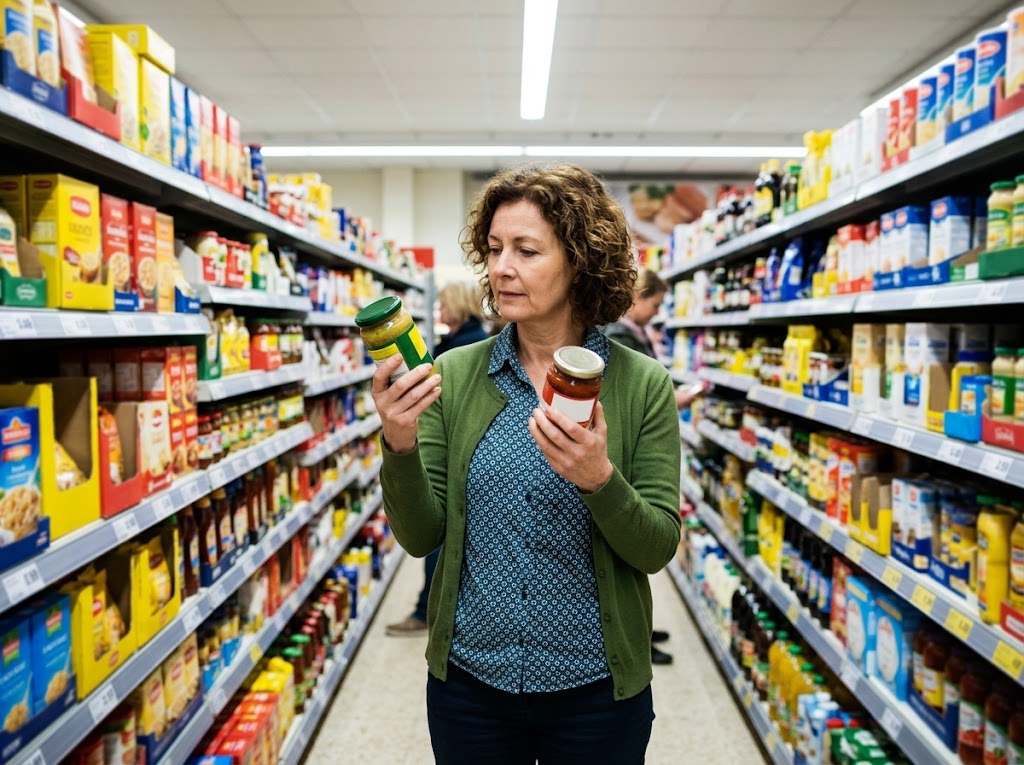
Price, quality and choice, weighed up in a few seconds.
From Understanding to Survival
Each step depends on the one before it.
-
1
Identify customer needs
Find out what customers want, usually through market research.
-
2
Provide a product that meets them
Get the price, quality, choice and convenience right.
-
3
Generate sales
Customers buy the product, and come back to buy again.
-
4
Business survival
Enough sales mean enough revenue to cover costs and make a profit, so the business survives.
Meeting Needs, or Missing Them
A business that meets customer needs
- Customers buy the product, so sales rise.
- Customers come back and become loyal.
- Happy customers recommend it to others.
- It can often charge a higher price.
- It is more likely to survive and grow.
A business that misses them
- Customers buy from competitors instead.
- Sales fall and stock is left unsold.
- Unhappy customers post bad reviews.
- It may have to cut prices to sell anything.
- It is more likely to fail.
Case study
Greggs: Meeting Customer Needs
Greggs, the bakery chain, meets several customer needs at once. Its prices are low compared with coffee shops and sandwich chains, its shops are on high streets, at stations and in retail parks for convenience, and it offers choice from breakfast rolls to sausage rolls to salads. In January 2019 it responded to a change in what its customers wanted by launching a vegan sausage roll, which became one of its best-selling products. By listening to its customers, Greggs has grown to more than 2,000 shops across the UK.
Needs Detective
Pick three businesses you have bought from this month - for example a supermarket, a takeaway and an online shop. For each one, decide which customer need it meets best (price, quality, choice or convenience) and explain how.
1. Name the business.
2. Name the customer need it meets best.
3. Give one piece of evidence to back it up.
A good answer shows: Three businesses, each linked to one customer need with a specific piece of evidence, such as opening hours, a price or the size of the range.
Can I...?
- 1Explain what customer needs are.
- 2Explain how price, quality, choice and convenience are customer needs.
- 3Explain why meeting customer needs generates sales.
- 4Explain why meeting customer needs helps a business survive.
- 5Use a real business as an example.
Summary & Exam Focus
- Customers need the right price, quality, choice and convenience.
- Different customers have different needs.
- Meeting customer needs generates sales and customer loyalty.
- A business that does not meet customer needs is unlikely to survive.
Exam focus
Explain one reason why it is important for a business to identify customer needs. (3 marks) (3 marks)
Explain questions are worth 3 marks: 1 for the reason, then 2 for linked steps of explanation. Take the chain all the way to sales, revenue or survival.
Key terms
The vocabulary this lesson expects you to use. Each one is linked from the first place it appears above.
- Customer
- A person or business that buys a product.
- Consumer
- The person who uses a product. They may not be the customer who bought it.
- Customer needs
- What customers require from a product: the right price, quality, choice and convenience.
- Value for money
- When customers feel the benefits of a product are worth the price they pay.
- Convenience
- How quick and easy it is for customers to buy and use a product.
- Customer loyalty
- When customers keep buying from the same business rather than switching to competitors.
Questions and answers
9 questions set on this lesson, with the mark schemes and model answers open.
State one customer need.
Mark scheme — 1 mark available
- Any one of: price; quality; choice; convenience — 1 mark
Model answer
Convenience.
Define the term 'customer needs'.
Mark scheme — 1 mark available
- What customers want or require from a product / service — 1 mark
Model answer
The things customers require from a product or service, such as the right price, quality, choice and convenience.
Outline one way a business could meet customers' need for convenience.
Mark scheme — 2 marks available
- A way identified, e.g. location / opening hours / online ordering / delivery — 1 mark
- Developed: how this makes buying easier for customers — 1 mark
Model answer
The business could offer online ordering with home delivery (1), so customers can buy the product without having to travel to a shop (1).
Explain one reason why it is important for a business to identify customer needs.
Mark scheme — 3 marks available
- A reason identified, e.g. generate sales / survival / customer loyalty / beat competitors — 1 mark
- First linked point of explanation — 1 mark
- Second linked point of explanation — 1 mark
Model answer
To generate sales (1). If the business knows what customers need, it can provide a product at the right price, quality and convenience (1). This means customers are more likely to buy from it rather than from competitors, increasing revenue and helping the business survive (1).
Source: Maya runs a small sandwich shop near a busy train station. Most of her customers are commuters buying breakfast and lunch on their way to work. A new supermarket has opened next door selling meal deals at a lower price than Maya's sandwiches. Analyse the importance to Maya of meeting her customers' need for convenience.
Mark scheme — 6 marks available
- AO2 (Application, 3 marks): uses the context - commuters, the station, the supermarket's lower prices — Level 1-3
- AO3a (Analysis, 3 marks): chains of reasoning showing why convenience matters to Maya's sales and survival — Level 1-3
Model answer
Maya's customers are commuters who are often in a hurry, so convenience is one of their most important needs. If she opens early and serves quickly, commuters can buy breakfast without missing their train, which means they are more likely to choose her shop every day. This builds loyal customers and regular sales. Convenience is also how Maya can compete with the new supermarket. She cannot match its lower prices, but if she offers faster service, pre-ordering on an app or a loyalty card, commuters may pay a little more to save time. This means she can protect her sales and revenue even though she is more expensive.
Which one of the following is a customer need?
Why: The four customer needs are price, quality, choice and convenience.
A shop opens until midnight so customers can buy food on their way home from work. Which customer need is it meeting?
Why: Opening late makes it easier for customers to buy when it suits them - convenience.
A parent buys a toy for their child. Who is the consumer?
Why: The consumer uses the product. The parent is the customer because they bought it.
Why is meeting customer needs important for business survival?
Why: Meeting needs generates sales and revenue; without enough revenue to cover costs, a business fails.