Exam questions · Biology · Hormonal Coordination in Humans
Blood Glucose and Diabetes
- 8 exam questions
- 26 marks
- 8 quick checks
-
1 State [2 marks]
State the organ that releases insulin and the organ that stores glycogen.
Show answerHide answer
Model answer
The pancreas releases insulin. The liver stores glycogen.
Mark scheme
- Pancreas — 1 mark
- Liver — 1 mark
-
2 Name [3 marks]
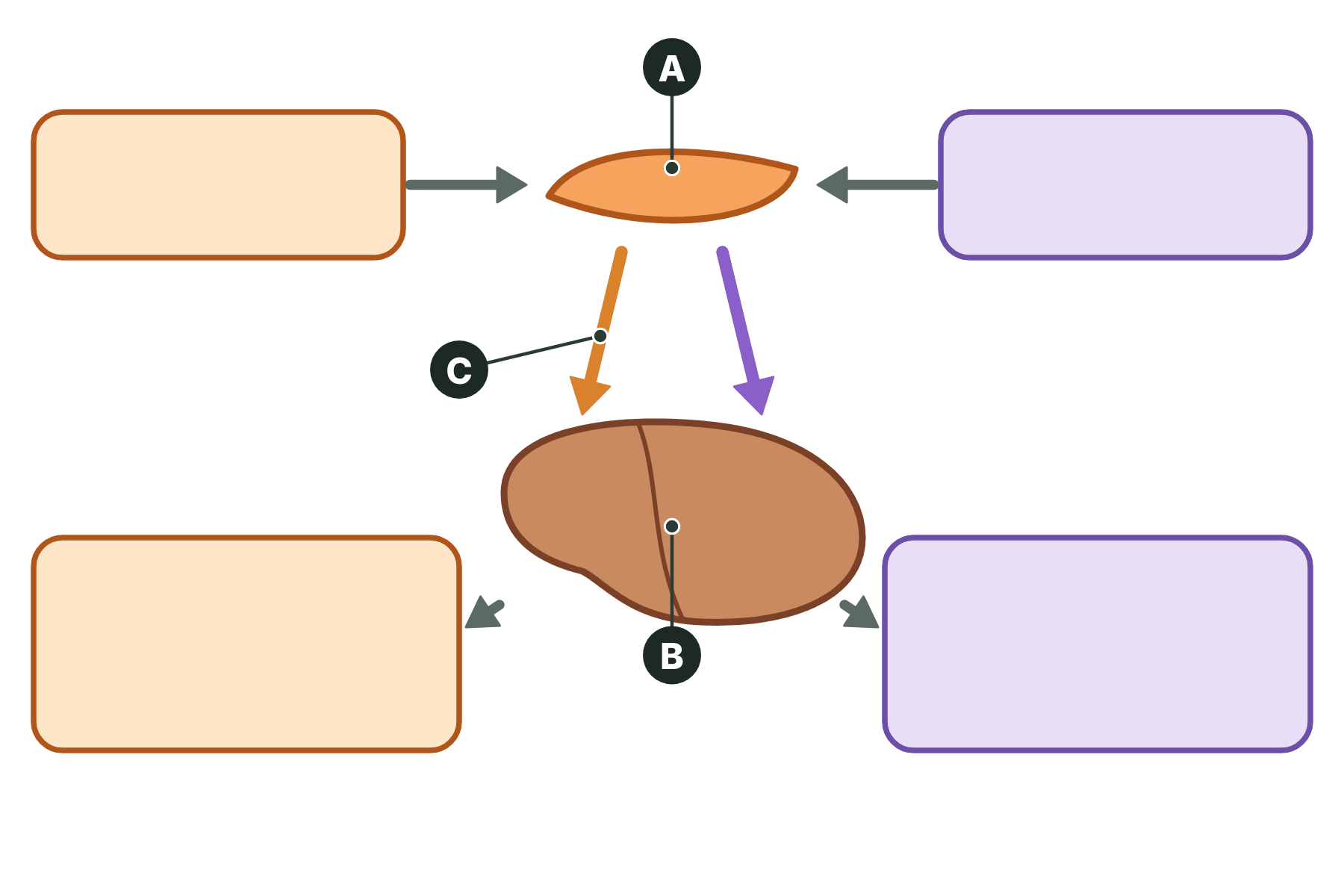
Figure 1 shows how the blood glucose concentration is controlled. Name the parts shown at A, B and C.
Show answerHide answer
Model answer
A is the pancreas. B is the liver. C is a hormone, insulin (or glucagon).
Mark scheme
- A: pancreas — 1 mark
- B: liver — 1 mark
- C: insulin — 1 mark
-
3 Explain [4 marks]
Explain how the body responds when the blood glucose concentration rises after a meal.
Show answerHide answer
Model answer
The pancreas detects the rise in blood glucose. The pancreas releases insulin into the blood. The insulin makes the liver take up glucose and convert it to glycogen. The blood glucose concentration falls back to normal.
Mark scheme
- Pancreas detects the rise — 1 mark
- Insulin released — 1 mark
- Liver takes up glucose and stores it as glycogen — 1 mark
- Blood glucose falls — 1 mark
-
4 Compare [3 marks]
Compare type 1 diabetes with type 2 diabetes.
Show answerHide answer
Model answer
In type 1 diabetes the pancreas does not make enough insulin, but in type 2 diabetes the cells stop responding to insulin. Type 1 is treated with insulin injections, but type 2 is treated with diet and exercise. Type 2 is linked to obesity.
Mark scheme
- Type 1: not enough insulin; type 2: cells do not respond — 1 mark
- Type 1: insulin injections; type 2: diet and exercise — 1 mark
- Type 2 linked to obesity — 1 mark
-
5 Describe [3 marks]
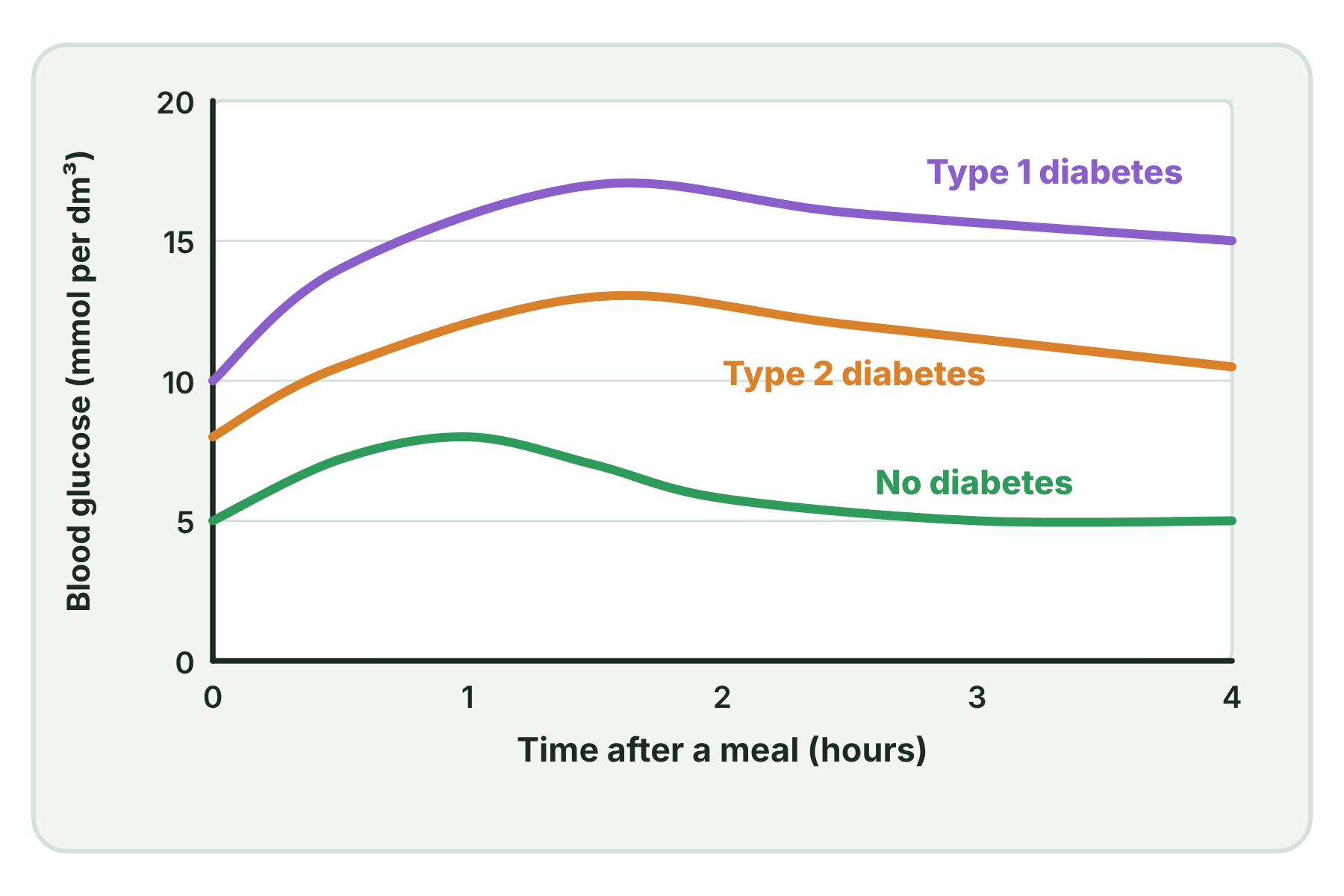
Figure 2 shows the blood glucose concentration of a person without diabetes and of two people with diabetes after a meal. Describe the differences between the person without diabetes and the person with type 1 diabetes.
Show answerHide answer
Model answer
The person without diabetes starts at about 5 and rises to about 8, then returns to about 5 within 3 hours. The person with type 1 starts higher, at about 10, rises to about 17 and stays above 14. The concentration does not return to normal.
Mark scheme
- Without diabetes: peak about 8 — 1 mark
- Without diabetes returns to about 5 — 1 mark
- Type 1 starts higher, peaks higher and stays high — 1 mark
-
6 Explain [3 marks]
Explain why a person with type 1 diabetes needs to inject insulin but a person with type 2 diabetes may not.
Show answerHide answer
Model answer
In type 1 diabetes the pancreas does not make enough insulin, so it must be injected. In type 2 diabetes the pancreas makes insulin but the cells do not respond to it. Diet and exercise can make cells respond better, so injections may not be needed.
Mark scheme
- Type 1: pancreas does not make enough insulin — 1 mark
- Type 2: cells do not respond to insulin — 1 mark
- Diet and exercise can help in type 2 — 1 mark
-
7 Explain [4 marks]
Explain how insulin and glucagon work together to keep the blood glucose concentration constant.
Show answerHide answer
Model answer
When the blood glucose is too high the pancreas releases insulin, which makes the liver store glucose as glycogen, so the concentration falls. When the blood glucose is too low the pancreas releases glucagon, which makes the liver convert glycogen to glucose, so the concentration rises. They have opposite effects, so this is negative feedback.
Mark scheme
- High glucose: insulin, liver stores glycogen, concentration falls — 1 mark
- Low glucose: glucagon, liver releases glucose, concentration rises — 1 mark
- Opposite effects — 1 mark
- Negative feedback keeps the concentration constant — 1 mark
-
8 Evaluate [4 marks]
A study finds that type 2 diabetes is more common in countries where more people are obese. A newspaper says that the study proves that obesity causes type 2 diabetes. Evaluate this claim, and suggest one recommendation for people at risk.
Show answerHide answer
Model answer
The study shows a link between obesity and type 2 diabetes, but a link does not prove that one causes the other, because other factors such as diet or exercise could cause both. However, the link is supported by other evidence on how cells respond to insulin. People at risk should eat a healthy diet, take more exercise and keep a healthy body mass.
Mark scheme
- A link or correlation is shown — 1 mark
- A link does not prove cause, as other factors could be involved — 1 mark
- Evidence from other studies supports the link — 1 mark
- A sensible recommendation, such as diet, exercise or a healthy body mass — 1 mark
Quick check
-
1
Which hormone lowers the blood glucose concentration?
Show answerHide answer
B: Insulin
Insulin lowers the blood glucose concentration.
-
2
In which form does the liver store glucose?
Show answerHide answer
D: Glycogen
The liver stores glucose as glycogen.
-
3
Which organ makes insulin?
Show answerHide answer
A: The pancreas
The pancreas makes insulin.
-
4
What is the cause of type 1 diabetes?
Show answerHide answer
C: The pancreas does not make enough insulin
In type 1 diabetes the pancreas does not make enough insulin.
-
5
Which type of diabetes is linked to obesity?
Show answerHide answer
B: Type 2
Type 2 diabetes is linked to obesity and lack of exercise.
-
6
How is type 1 diabetes usually treated?
Show answerHide answer
D: With insulin injections
Type 1 diabetes is treated with insulin injections.
-
7
What does glucagon make the liver do?
Show answerHide answer
A: Release glucose
Glucagon makes the liver convert glycogen to glucose.
-
8
When is glucagon released?
Show answerHide answer
C: When blood glucose is too low
Glucagon is released when the blood glucose concentration is too low.