Flashcards · Biology · Hormonal Coordination in Humans
Blood Glucose and Diabetes
-
What does insulin do?
Lowers the blood glucose concentration.
-
Where is insulin made?
In the pancreas.
-
What does insulin make the liver do?
Take up glucose and convert it to glycogen.
-
What is glycogen?
The carbohydrate in which the liver stores glucose.
-
What does glucagon do? (Higher tier)
Raises the blood glucose concentration.
-
What does glucagon make the liver do? (Higher tier)
Convert glycogen to glucose and release it.
-
What is diabetes?
A disease in which the blood glucose concentration is not controlled properly.
-
What causes type 1 diabetes?
The pancreas does not make enough insulin.
-
What causes type 2 diabetes?
The body cells stop responding to insulin.
-
How is type 1 diabetes treated?
With insulin injections and a controlled diet.
-
How is type 2 diabetes treated?
With diet, exercise, weight loss and sometimes medicine.
-
Which type of diabetes is linked to obesity?
Type 2.
-
Which type of diabetes usually starts in childhood?
Type 1.
-
Why is blood glucose controlled by negative feedback?
A rise causes insulin release, which makes it fall.
-
Why do people with type 1 diabetes inject insulin?
Their pancreas does not make enough.
-
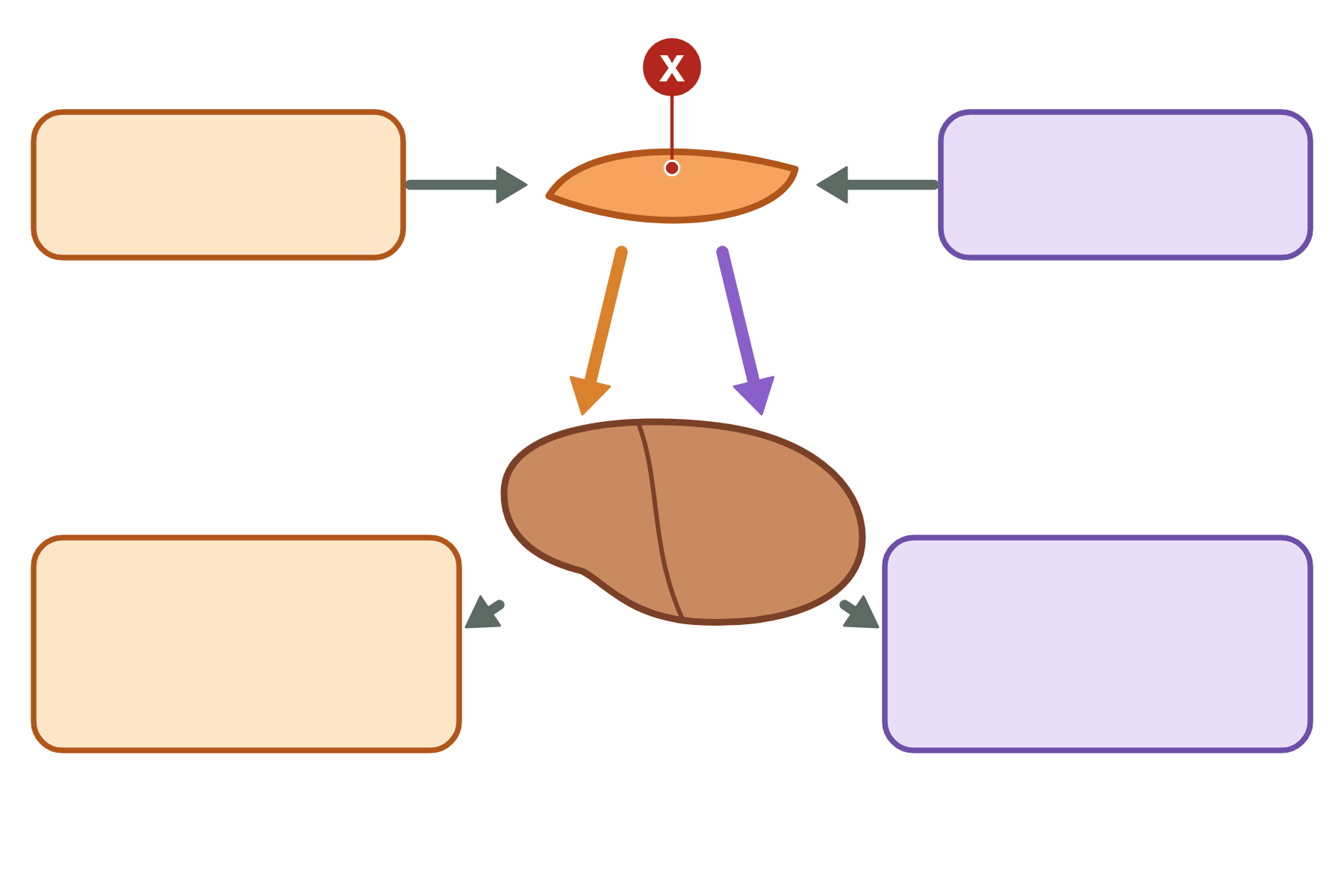 Name the organ marked X and say what it releases.
 The pancreas. It releases insulin, and glucagon (Higher tier).
-
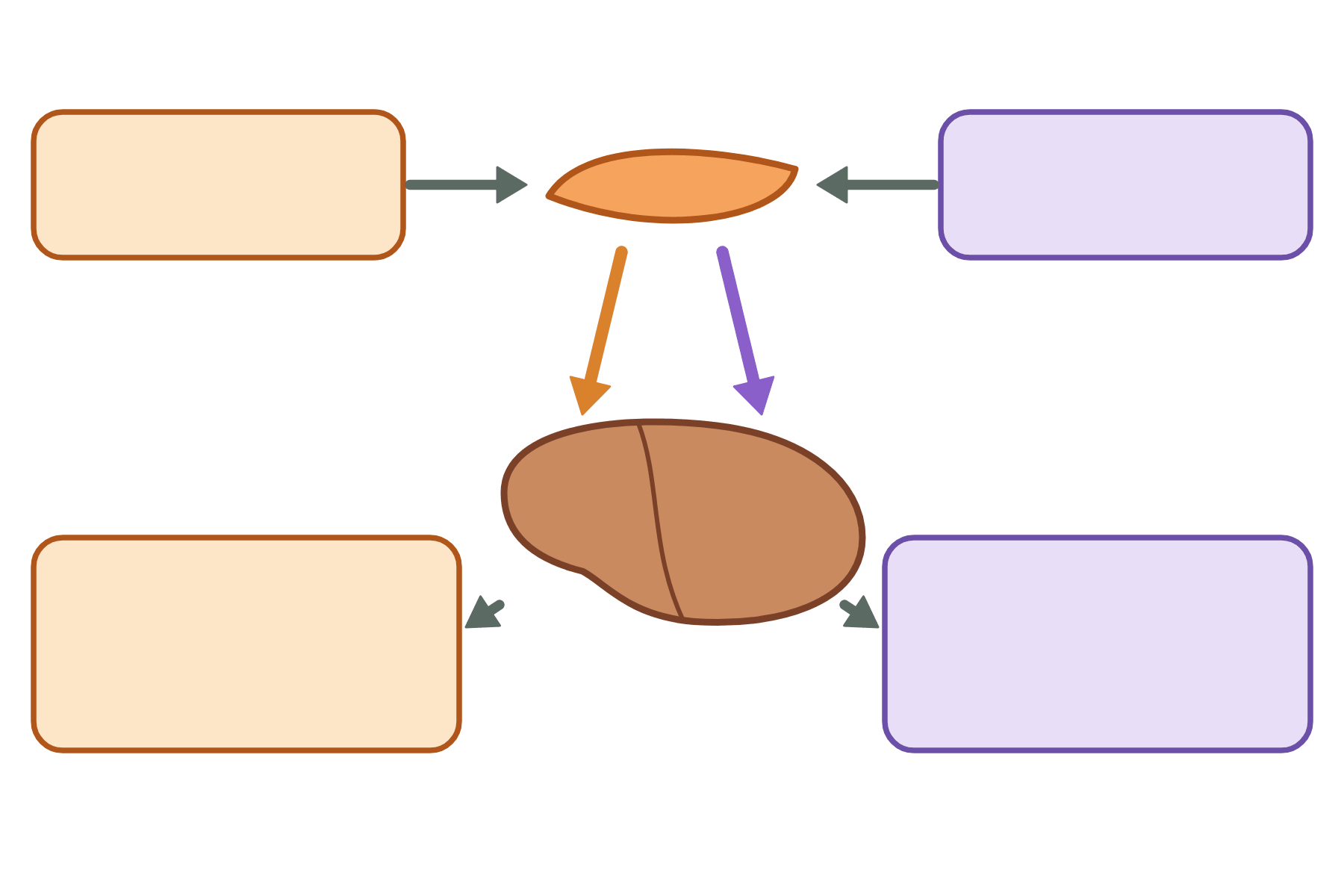 Explain what happens when the blood glucose is too high and too low.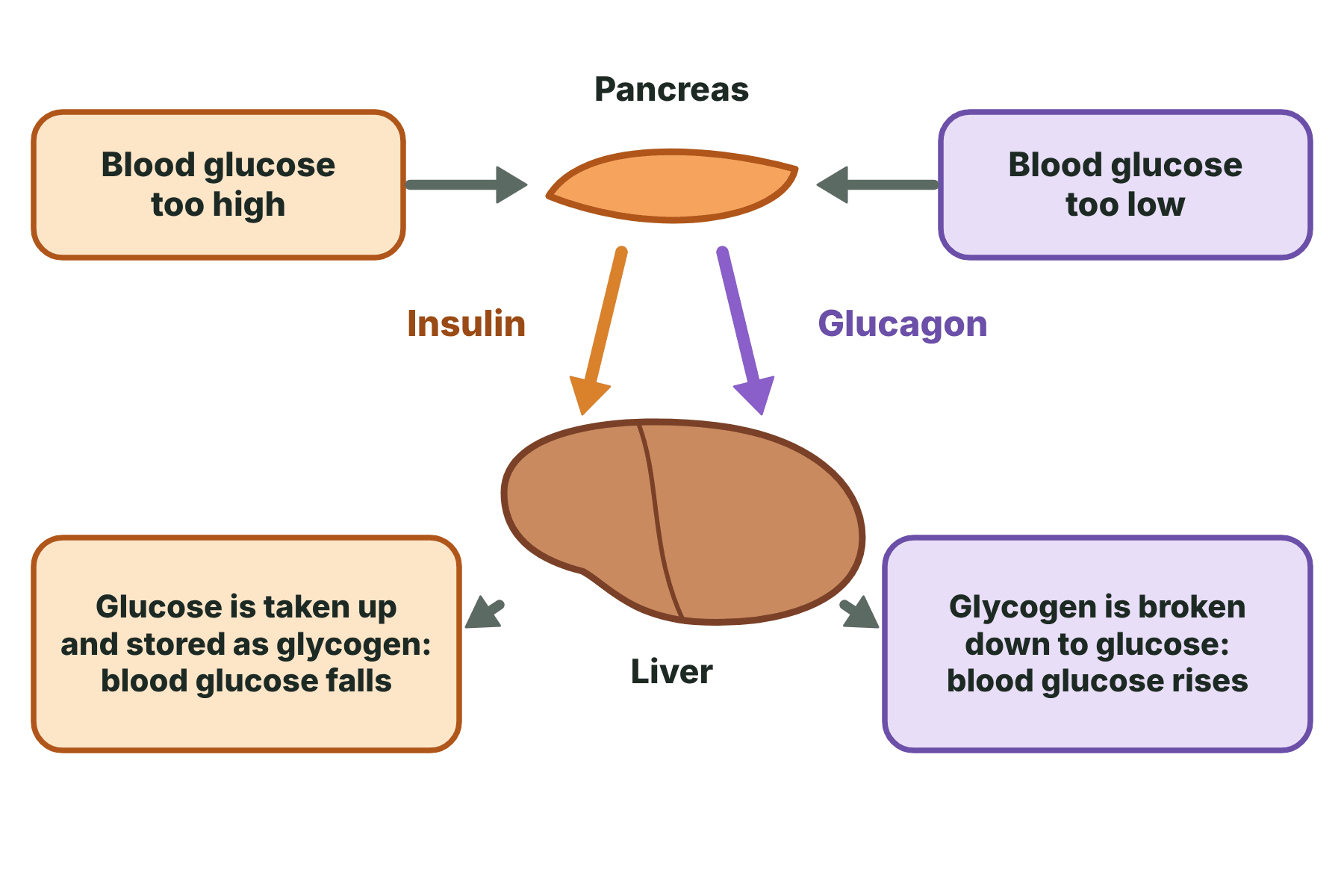
Too high: the pancreas releases insulin, the liver stores glucose as glycogen, and the glucose falls. Too low (Higher tier): the pancreas releases glucagon, the liver releases glucose, and the glucose rises.