Exam questions · Biology
What Happens in Cells
- 35 exam questions
- 99 marks
- 36 quick checks
The Structure of DNA
Just this lesson-
1 State [2 marks]
State the shape of a DNA molecule and the number of strands it has.
Show answerHide answer
Model answer
A double helix, with two strands.
Mark scheme
- Double helix — 1 mark
- Two strands — 1 mark
-
2 Name [3 marks]
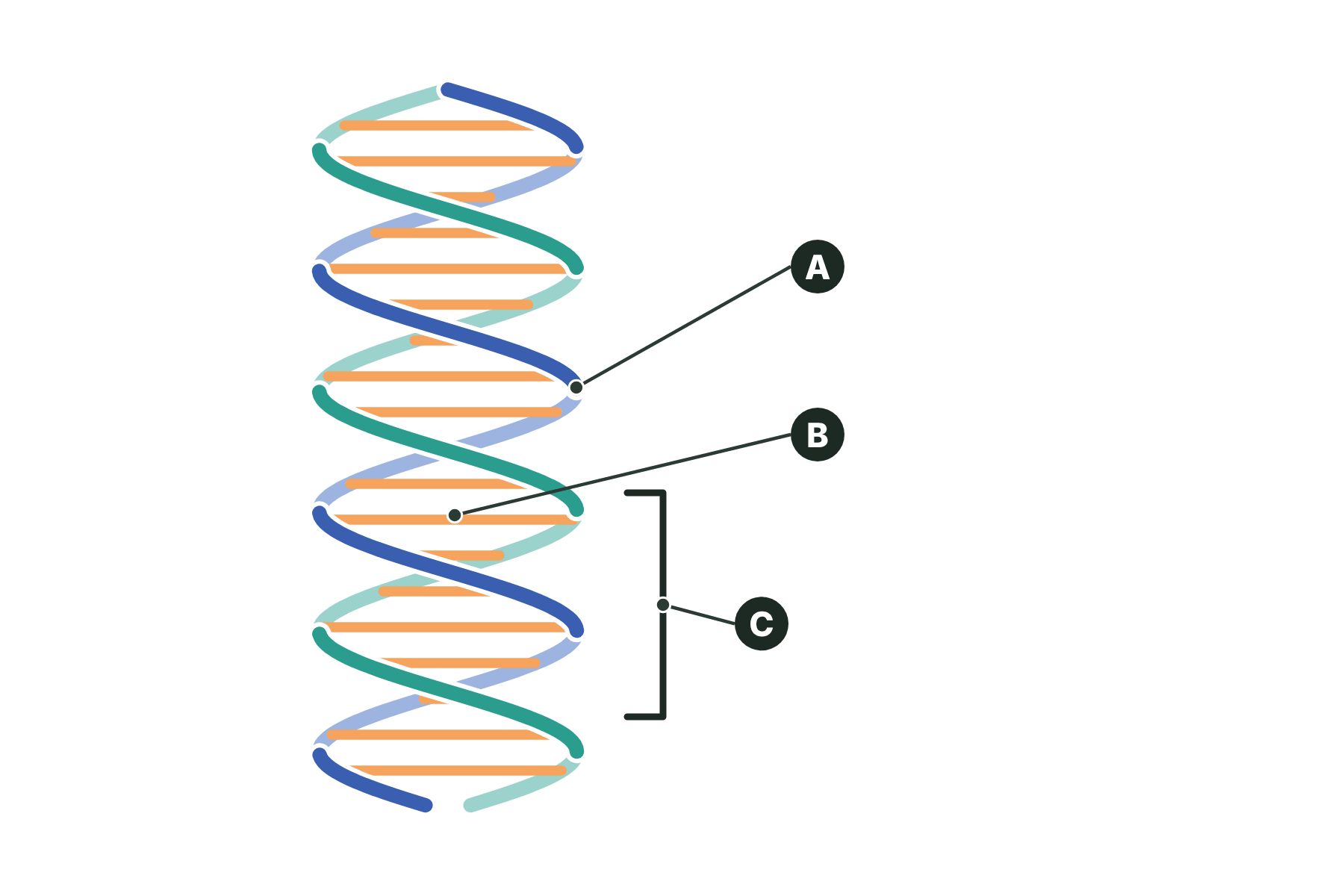
Figure 1 shows a DNA molecule. Name the parts shown at A, B and C.
Show answerHide answer
Model answer
A is a strand (of DNA). B is a pair of bases. C is a gene.
Mark scheme
- A: strand — 1 mark
- B: pair of bases — 1 mark
- C: gene — 1 mark
-
3 Describe [3 marks]
Describe the structure of a DNA molecule.
Show answerHide answer
Model answer
DNA is a polymer. It is made of two strands. The strands are twisted together into a double helix and are joined by pairs of bases.
Mark scheme
- DNA is a polymer — 1 mark
- Two strands — 1 mark
- Twisted into a double helix, joined by base pairs — 1 mark
-
4 Describe [2 marks]
Describe the difference between a gene and a chromosome.
Show answerHide answer
Model answer
A gene is a section of DNA that codes for a protein. A chromosome is a long DNA molecule that carries many genes.
Mark scheme
- Gene: a section of DNA that codes for a protein — 1 mark
- Chromosome: a long DNA molecule carrying many genes — 1 mark
-
5 Compare [3 marks]
Compare the position of the DNA in a bacterial cell with the position of the DNA in an animal cell.
Show answerHide answer
Model answer
In an animal cell the DNA is in chromosomes inside the nucleus. In a bacterial cell there is no nucleus, and the DNA is a loop in the cytoplasm. A bacterial cell may also have plasmids.
Mark scheme
- Animal: chromosomes in the nucleus — 1 mark
- Bacterial: no nucleus, loop of DNA in the cytoplasm — 1 mark
- Bacteria may also have plasmids — 1 mark
-
6 Describe [4 marks]
Describe how DNA can be extracted from strawberries.
Show answerHide answer
Model answer
Mash the strawberries to break up the tissue. Add detergent and salt to break open the cells. Filter the mixture. Add ice-cold ethanol carefully, and the DNA appears as a white stringy solid that can be lifted out.
Mark scheme
- Mash the fruit — 1 mark
- Add detergent and salt to break open the cells — 1 mark
- Filter — 1 mark
- Add cold ethanol so the DNA appears as a white solid — 1 mark
-
7 Explain [3 marks]
Explain why the DNA in a human cell is able to fit inside the nucleus even though it is very long.
Show answerHide answer
Model answer
The DNA is a very long thin molecule. It is twisted into a double helix, and the molecules are coiled tightly into chromosomes, so they take up very little space.
Mark scheme
- The DNA molecule is very thin — 1 mark
- It is twisted into a double helix — 1 mark
- It is coiled up tightly into chromosomes — 1 mark
Quick check
-
1
What is the shape of a DNA molecule?
Show answerHide answer
B: A double helix
DNA is a double helix, which is a twisted ladder.
-
2
How many strands are in a DNA molecule?
Show answerHide answer
A: Two
DNA has two strands wound round each other.
-
3
What is a gene?
Show answerHide answer
C: A section of DNA that codes for a protein
A gene is a section of DNA that codes for a protein.
-
4
Where is DNA found in a bacterial cell?
Show answerHide answer
D: In the cytoplasm as a loop, and in plasmids
A bacterial cell has a loop of DNA in the cytoplasm, and may also have plasmids.
-
5
What is a polymer?
Show answerHide answer
B: A large molecule made of many smaller units
A polymer is a large molecule made of many smaller units joined together.
-
6
What do genes code for?
Show answerHide answer
A: Proteins
Genes are sections of DNA that code for proteins.
-
7
What is the genome?
Show answerHide answer
D: All of the genetic material of an organism
The genome is all of the genetic material of an organism.
-
8
Why is cold ethanol used in the DNA extraction?
Show answerHide answer
C: DNA is not soluble in it
DNA does not dissolve in ethanol, so it appears as a white solid.
Nucleotides and Protein Synthesis
Just this lesson-
1 State [1 mark]
State which base pairs with adenine in DNA.
Show answerHide answer
Model answer
Thymine.
Mark scheme
- Thymine — 1 mark
-
2 Name [3 marks]
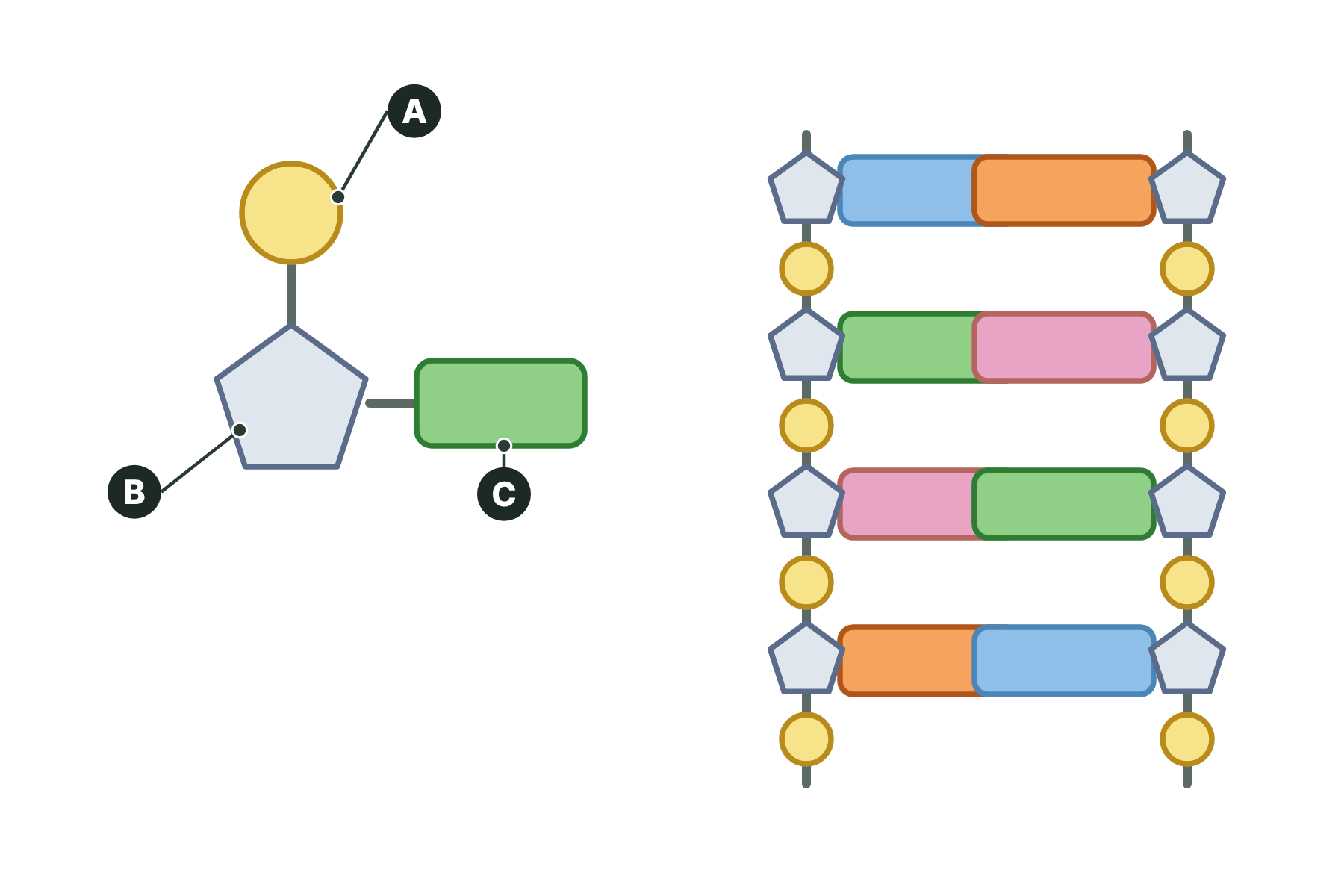
Figure 1 shows a nucleotide. Name the parts shown at A, B and C.
Show answerHide answer
Model answer
A is the phosphate group. B is the sugar. C is the base.
Mark scheme
- A: phosphate group — 1 mark
- B: sugar — 1 mark
- C: base — 1 mark
-
3 Describe [3 marks]
Describe the structure of a nucleotide in DNA.
Show answerHide answer
Model answer
A nucleotide has a phosphate group, a sugar and a base. The phosphate and sugar are the same in every nucleotide. The base is one of four, A, T, G or C.
Mark scheme
- Phosphate group and sugar — 1 mark
- A base — 1 mark
- Four different bases, so four different nucleotides — 1 mark
-
4 Write [2 marks]
One strand of a DNA molecule has the base sequence G A T T C. Write the base sequence of the complementary strand.
Show answerHide answer
Model answer
C T A A G
Mark scheme
- Pairs G with C, A with T and T with A — 1 mark
- C T A A G — 1 mark
-
5 Explain [3 marks]
Explain why the two strands of DNA can be copied accurately.
Show answerHide answer
Model answer
The strands are held together by weak bonds between bases, so they can separate. Each base only pairs with one other base, A with T and G with C. So each strand determines the bases on its complementary strand.
Mark scheme
- Strands can separate because of weak bonds — 1 mark
- A pairs only with T and G only with C — 1 mark
- One strand decides the order of bases on the other — 1 mark
-
6 Describe [4 marks]
Describe how the information in a gene is used to make a protein.
Show answerHide answer
Model answer
The gene is copied as mRNA in the nucleus. The mRNA leaves the nucleus and goes to a ribosome. At the ribosome, tRNA brings amino acids. The amino acids are joined in the order specified by the order of bases on the mRNA.
Mark scheme
- mRNA is copied from the gene in the nucleus — 1 mark
- mRNA moves to a ribosome — 1 mark
- tRNA carries amino acids to the ribosome — 1 mark
- Amino acids are joined in the order given by the bases — 1 mark
-
7 Name [3 marks]
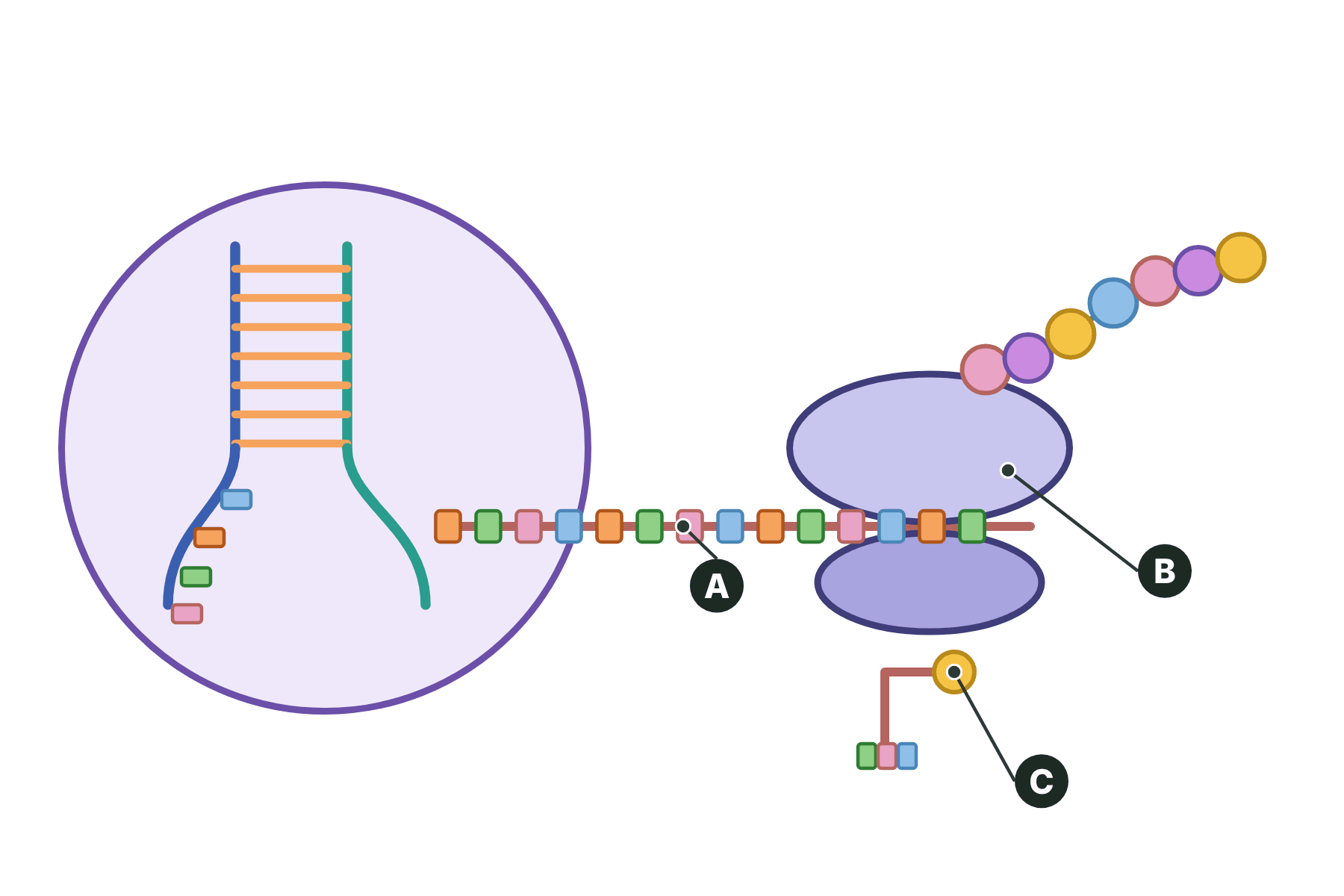
Figure 2 shows how a protein is made. Name the parts shown at A, B and C.
Show answerHide answer
Model answer
A is mRNA. B is a ribosome. C is tRNA.
Mark scheme
- A: mRNA — 1 mark
- B: ribosome — 1 mark
- C: tRNA — 1 mark
-
8 Explain [3 marks]
Explain how a change in the order of bases in a gene could change the protein that is made.
Show answerHide answer
Model answer
Each triplet of bases codes for one amino acid. If a base changes, a different amino acid may be added. This changes the order of the amino acids, so the protein folds into a different shape and may not work.
Mark scheme
- Triplet codes for an amino acid — 1 mark
- A different amino acid may be added — 1 mark
- The protein has a different shape and may not work — 1 mark
Quick check
-
1
Which of these is not part of a nucleotide?
Show answerHide answer
C: An amino acid
A nucleotide has a phosphate group, a sugar and a base. It does not contain an amino acid.
-
2
Which base pairs with guanine?
Show answerHide answer
B: Cytosine
G always pairs with C.
-
3
How many different bases are there in DNA?
Show answerHide answer
D: Four
There are four bases: A, T, G and C.
-
4
What forms the backbone of a DNA strand?
Show answerHide answer
A: Sugars and phosphate groups
The sugars and phosphate groups alternate to form the backbone.
-
5
One strand of DNA reads T T A G. What does the complementary strand read?
Show answerHide answer
B: A A T C
T pairs with A, and A pairs with T, and G pairs with C, so the strand reads A A T C.
-
6
Where is mRNA made?
Show answerHide answer
C: In the nucleus
The gene is copied as mRNA in the nucleus.
-
7
How many amino acids does a gene of 60 bases code for, if one triplet codes for one amino acid?
Show answerHide answer
A: 20
60 ÷ 3 = 20 amino acids.
-
8
What does tRNA do?
Show answerHide answer
D: It carries amino acids to the ribosome
tRNA carries amino acids to the ribosome.
Enzymes
Just this lesson-
1 State [2 marks]
State what is meant by a catalyst.
Show answerHide answer
Model answer
A substance that speeds up a reaction and is not used up in the reaction.
Mark scheme
- Speeds up a (chemical) reaction — 1 mark
- Is not used up / is unchanged at the end — 1 mark
-
2 Name [1 mark]
Name the part of an enzyme into which the substrate fits.
Show answerHide answer
Model answer
The active site.
Mark scheme
- Active site — 1 mark
-
3 Name [2 marks]
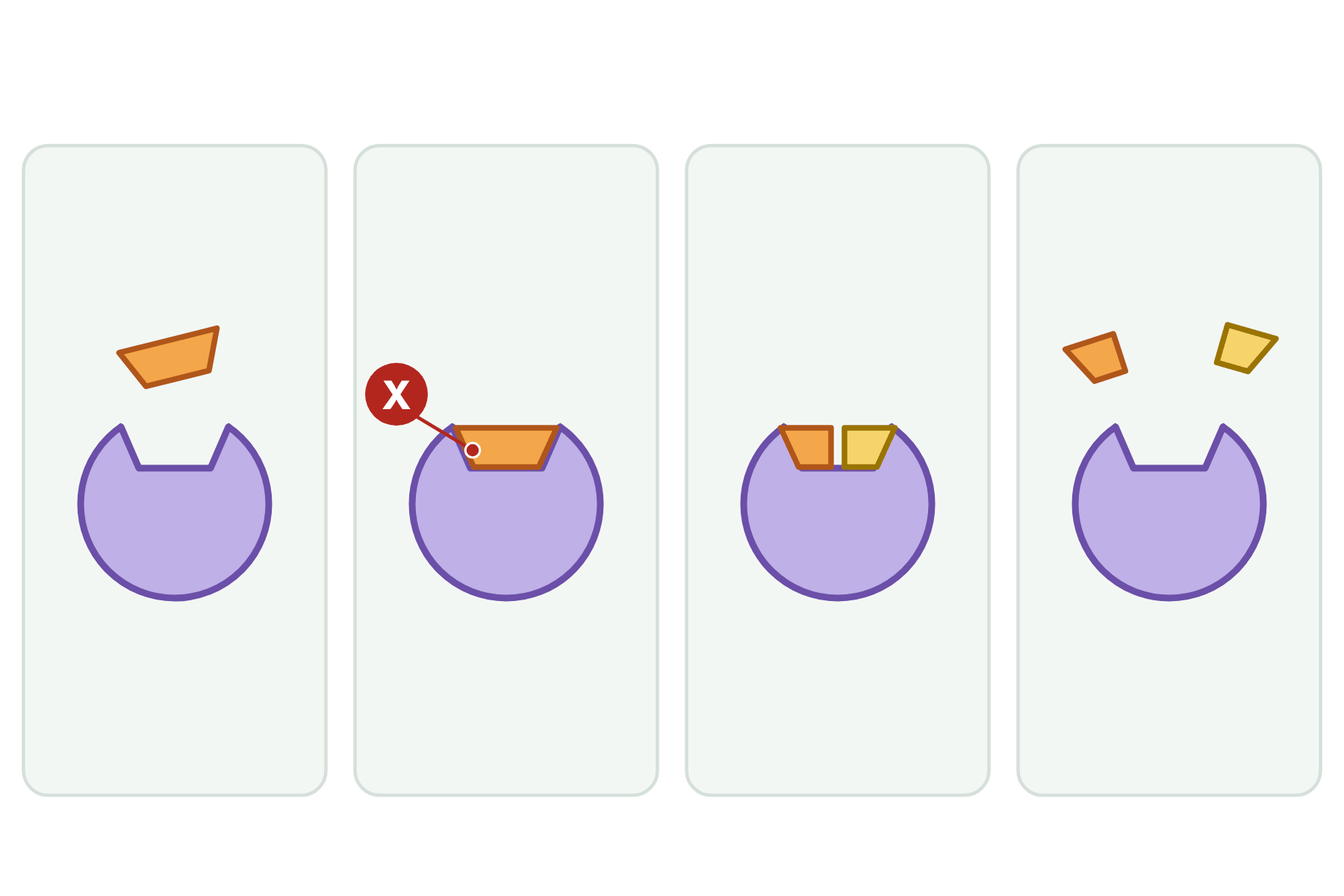
Figure 1 shows an enzyme and its substrate. (a) Name the region of the enzyme marked X. (b) Name the model of enzyme action shown in Figure 1.
Show answerHide answer
Model answer
(a) The active site. (b) The lock and key model.
Mark scheme
- (a) Active site — 1 mark
- (b) Lock and key (model) — 1 mark
-
4 Describe [3 marks]
Figure 2 shows the stages of an enzyme-controlled reaction. Describe what happens at stages 2, 3 and 4.
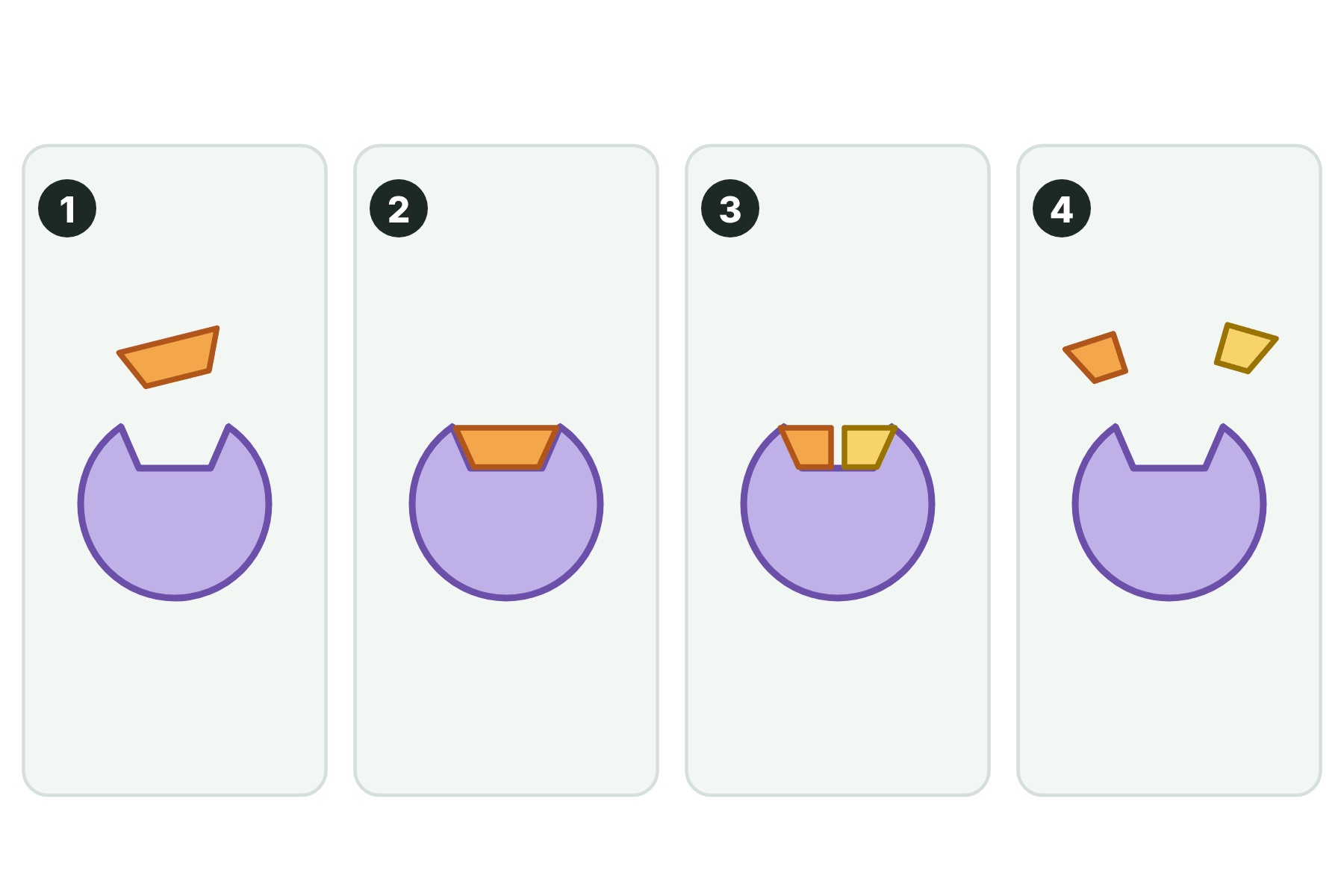
Show answerHide answer
Model answer
At stage 2 the substrate fits into the active site and forms an enzyme-substrate complex. At stage 3 the enzyme catalyses the reaction and the substrate splits. At stage 4 the products leave and the enzyme is unchanged.
Mark scheme
- 2: substrate fits the active site / complex forms — 1 mark
- 3: the reaction takes place / substrate splits into products — 1 mark
- 4: products released and the enzyme is unchanged — 1 mark
-
5 Explain [2 marks]
An enzyme that breaks down starch does not break down protein. Explain why.
Show answerHide answer
Model answer
The active site of the enzyme has a shape that fits starch only. Protein molecules have a different shape, so they do not fit.
Mark scheme
- Active site has a specific shape / fits starch — 1 mark
- Protein has a different shape and does not fit — 1 mark
-
6 Explain [3 marks]
A student boils a solution of an enzyme and then adds it to its substrate. The reaction does not happen. Explain why.
Show answerHide answer
Model answer
The high temperature denatured the enzyme. Its shape, including the active site, changed. The substrate no longer fits the active site, so the enzyme cannot catalyse the reaction.
Mark scheme
- Enzyme was denatured by the high temperature — 1 mark
- Active site changed shape — 1 mark
- Substrate no longer fits — 1 mark
-
7 Describe [3 marks]
Figure 3 shows the effect of temperature on the rate of an enzyme-controlled reaction. Describe the effect of increasing the temperature from 0 °C to 70 °C.
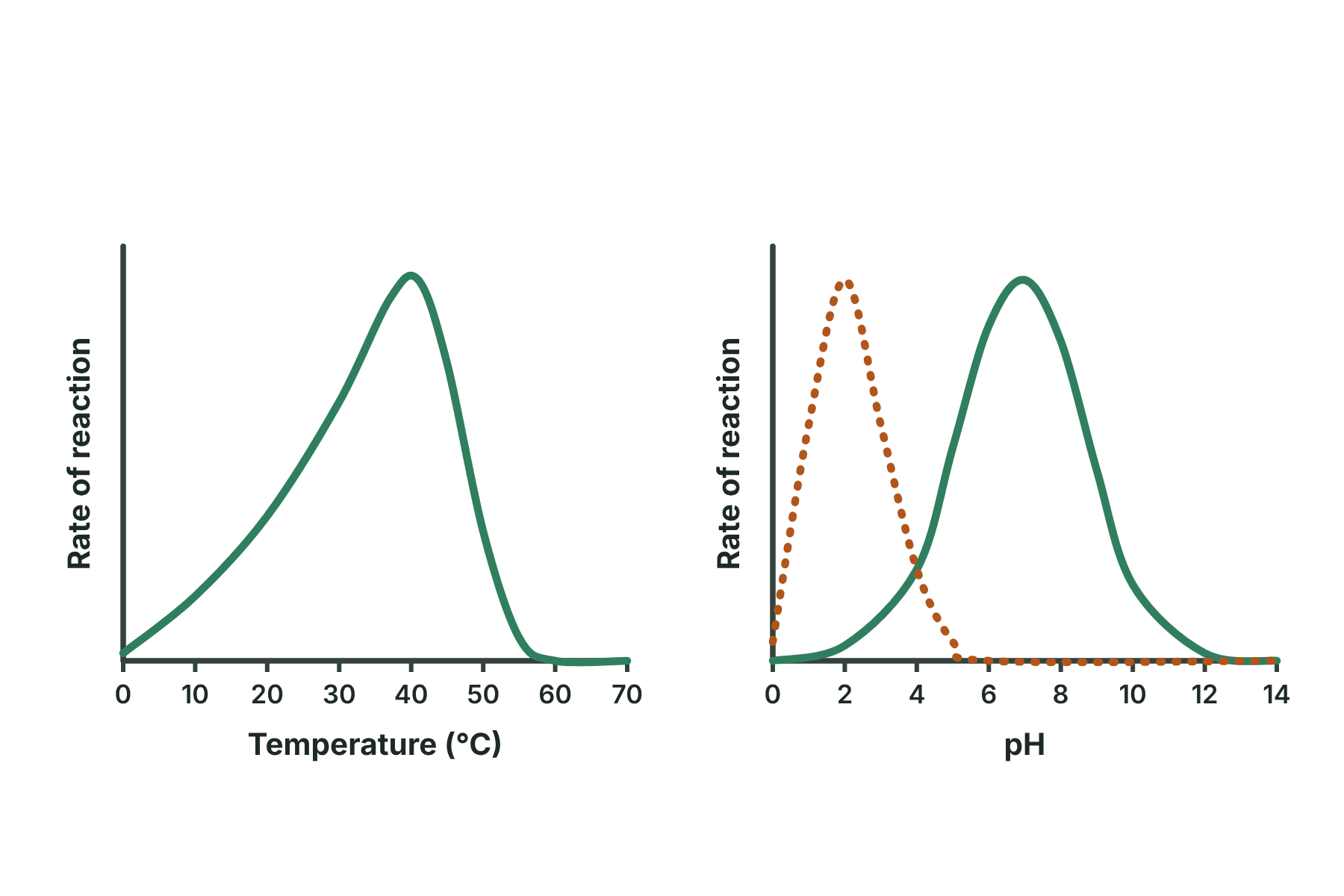
Show answerHide answer
Model answer
The rate increases as the temperature rises to a maximum at about 40 °C. Above this temperature the rate falls quickly, and it reaches zero at about 60 °C.
Mark scheme
- Rate increases up to about 40 °C — 1 mark
- Rate falls above the maximum / optimum — 1 mark
- Reaches zero at about 55 to 60 °C — 1 mark
-
8 Calculate [3 marks]
In an investigation, an enzyme reaction took 50 seconds to finish at 25 °C and 20 seconds to finish at 35 °C. Use the equation rate = 1000 ÷ time to calculate the rate at each temperature, and calculate how many times faster the reaction was at 35 °C.
Show answerHide answer
Model answer
At 25 °C: 1000 ÷ 50 = 20. At 35 °C: 1000 ÷ 20 = 50. 50 ÷ 20 = 2.5 times faster.
Mark scheme
- 1000 ÷ 50 = 20 — 1 mark
- 1000 ÷ 20 = 50 — 1 mark
- 2.5 times faster — 1 mark
-
9 Explain [3 marks]
Pepsin is an enzyme in the stomach with an optimum pH of about 2. Explain what would happen to the rate of reaction if pepsin were put into a solution at pH 7.
Show answerHide answer
Model answer
The rate would fall, because pH 7 is not the optimum for pepsin. The bonds holding the enzyme in shape would be affected, so the active site would change shape and the substrate would no longer fit. The enzyme would be denatured.
Mark scheme
- Rate would fall / the reaction would slow or stop — 1 mark
- Active site changes shape / the enzyme is denatured — 1 mark
- Substrate no longer fits — 1 mark
-
10 Explain [6 marks]
Explain why the rate of an enzyme-controlled reaction increases as the temperature rises to about 40 °C, but decreases at higher temperatures.
Show answerHide answer
Model answer
As the temperature rises, the particles have more energy and move faster. The enzyme and substrate collide more often, and with more energy, so the rate increases. At about 40 °C the enzyme works fastest, which is the optimum temperature. Above this temperature the bonds holding the enzyme in shape break. The active site changes shape and the enzyme is denatured, so the substrate no longer fits and the rate falls.
Mark scheme
- Particles have more energy / move faster — 1 mark
- More frequent collisions between enzyme and substrate — 1 mark
- So the rate increases up to the optimum — 1 mark
- Above the optimum, bonds in the enzyme break — 1 mark
- Active site changes shape / enzyme is denatured — 1 mark
- Substrate no longer fits, so the rate falls — 1 mark
Quick check
-
1
What is an enzyme?
Show answerHide answer
C: A biological catalyst
An enzyme is a biological catalyst, made of protein, which speeds up reactions in living things.
-
2
What is the substrate?
Show answerHide answer
A: The substance an enzyme acts on
The substrate is the substance that the enzyme acts on, and it fits into the active site.
-
3
Why is each enzyme specific to one substrate?
Show answerHide answer
D: Its active site has a shape that fits only that substrate
Only a substrate with a shape that matches the active site can fit into it.
-
4
What happens to an enzyme that is denatured?
Show answerHide answer
B: It changes shape and cannot bind its substrate
Its shape changes, including the active site, so the substrate no longer fits.
-
5
What is the effect on an enzyme of cooling it in a fridge?
Show answerHide answer
A: It slows down but is not denatured
Cold slows the reaction because the particles move more slowly, but it does not denature the enzyme.
-
6
Between 0 °C and the optimum temperature, what happens to the rate of an enzyme reaction as the temperature rises?
Show answerHide answer
C: It rises
The particles have more energy and collide more often, so the rate increases.
-
7
Which enzyme has an optimum pH of about 2?
Show answerHide answer
B: Pepsin in the stomach
Pepsin works in the acid conditions of the stomach, and it works best at about pH 2.
-
8
An enzyme reaction takes 25 s. What is the rate, using rate = 1000 ÷ time?
Show answerHide answer
D: 40
1000 ÷ 25 = 40.
-
9
A reaction makes 60 cm³ of product in 5 minutes. What is the mean rate?
Show answerHide answer
A: 12 cm³ per minute
Rate = amount of product ÷ time = 60 ÷ 5 = 12 cm³ per minute.
-
10
A student says that heating an enzyme above its optimum temperature kills it. What is the best correction?
Show answerHide answer
C: Enzymes are not alive; they are denatured when their shape changes
An enzyme is a molecule, not a living thing, so it cannot be killed. It is denatured: its shape, including the active site, changes.
Investigating the Effect of pH on Amylase
Just this lesson-
1 Name [1 mark]
Name the solution used to show when all of the starch has been digested.
Show answerHide answer
Model answer
Iodine solution.
Mark scheme
- Iodine (solution) — 1 mark
-
2 Explain [2 marks]
Figure 1 shows the apparatus used to investigate amylase. Explain the purpose of the water bath and of the spotting tile.
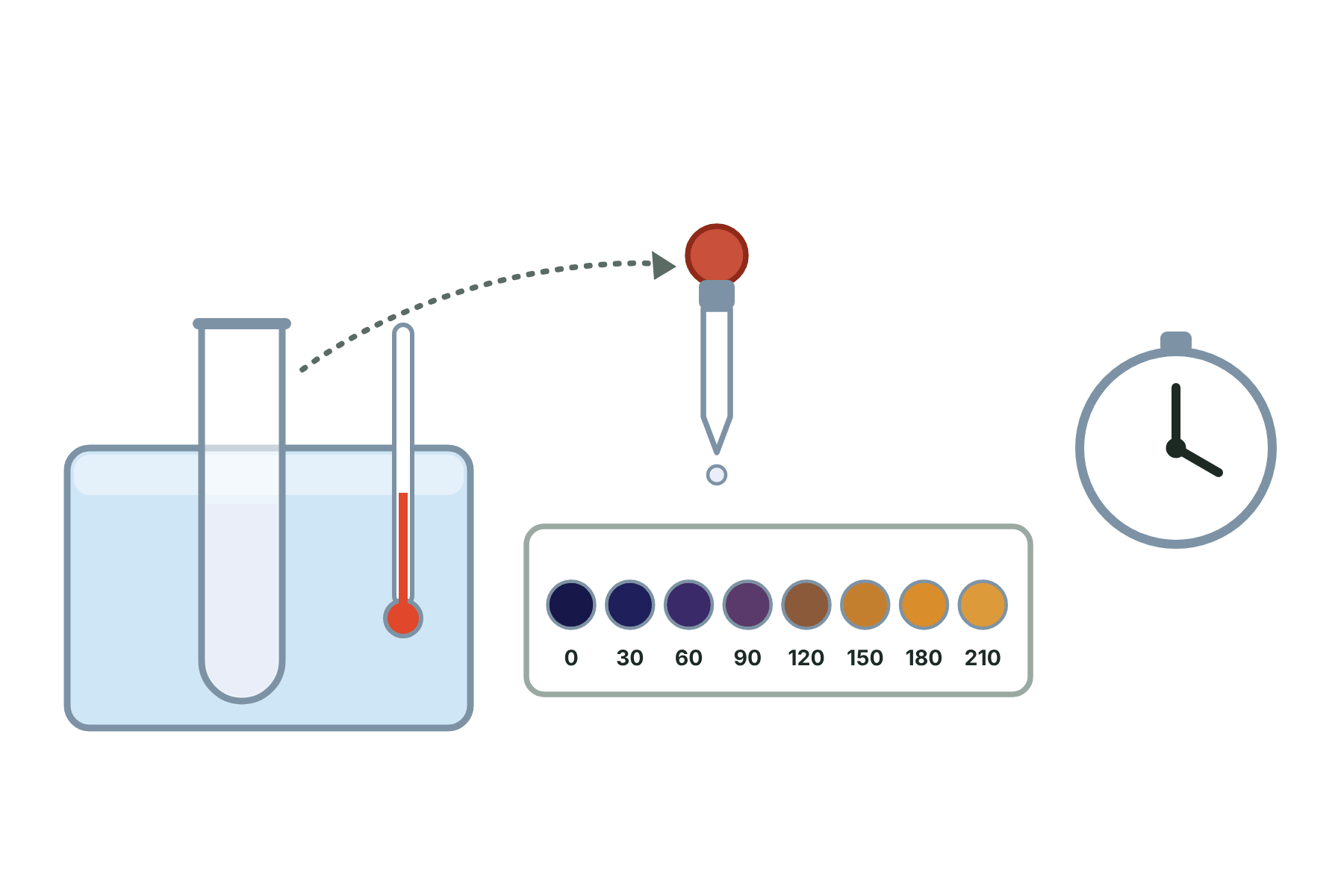
Show answerHide answer
Model answer
The water bath keeps the temperature constant, so that temperature does not affect the rate. The spotting tile holds drops of iodine, so that samples of the mixture can be tested.
Mark scheme
- Water bath keeps the temperature constant — 1 mark
- Spotting tile holds drops of iodine for testing samples — 1 mark
-
3 Explain [2 marks]
A buffer solution is added to the mixture of starch and amylase. Explain why.
Show answerHide answer
Model answer
The buffer keeps the pH constant. This means that the pH stays at the value being tested, so only the pH changes.
Mark scheme
- Keeps the pH constant — 1 mark
- At the value being tested / so pH is the only variable — 1 mark
-
4 State [3 marks]
In an investigation into the effect of pH on the rate of reaction of amylase, state the independent variable, the dependent variable and one control variable.
Show answerHide answer
Model answer
The independent variable is the pH. The dependent variable is the time taken for the starch to be digested. A control variable is the temperature (or the volume or concentration of the amylase or starch).
Mark scheme
- Independent variable: pH — 1 mark
- Dependent variable: time for the starch to be digested / rate — 1 mark
- Control variable: e.g. temperature, volume or concentration — 1 mark
-
5 Calculate [2 marks]
At pH 7 the mean time taken for the starch to be digested was 60 seconds. Use rate = 1000 ÷ time to calculate the rate. Give your answer to one decimal place.
Show answerHide answer
Model answer
1000 ÷ 60 = 16.7.
Mark scheme
- 1000 ÷ 60 — 1 mark
- 16.7 — 1 mark
-
6 Calculate [3 marks]
Figure 2 shows the results of the investigation. (a) Use Figure 2 to give the optimum pH. (b) The rate at pH 8 was 8.0. Use rate = 1000 ÷ time to calculate the time taken at pH 8.
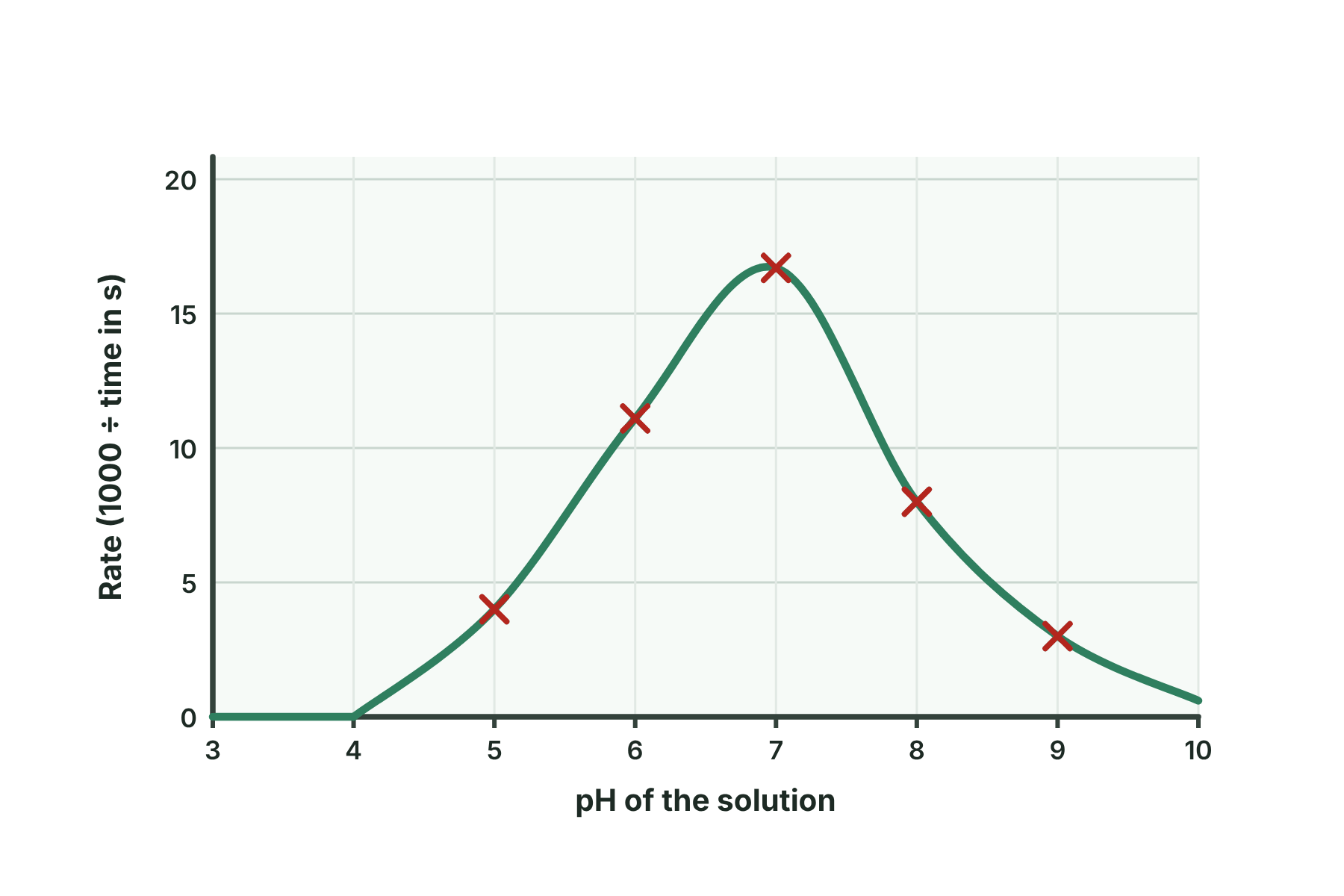
Show answerHide answer
Model answer
(a) pH 7. (b) Time = 1000 ÷ 8.0 = 125 seconds.
Mark scheme
- (a) pH 7 — 1 mark
- (b) 1000 ÷ 8.0 — 1 mark
- 125 seconds — 1 mark
-
7 Describe [3 marks]
Describe the effect of pH on the rate of reaction shown in Figure 2.
Show answerHide answer
Model answer
The rate increases as the pH rises from 5 to 7. The rate is highest at pH 7, at about 16.7. Above pH 7 the rate decreases.
Mark scheme
- Rate increases from pH 5 to 7 — 1 mark
- Highest at pH 7 (about 16.7) — 1 mark
- Decreases above pH 7 — 1 mark
-
8 Explain [3 marks]
Explain why the rate of reaction is lower at pH 9 than at pH 7.
Show answerHide answer
Model answer
pH 9 is not the optimum pH for amylase. The shape of the active site changes and the enzyme is denatured. The starch no longer fits the active site, so fewer enzyme-substrate complexes form.
Mark scheme
- pH 9 is away from the optimum — 1 mark
- The active site changes shape / the enzyme is denatured — 1 mark
- The starch no longer fits / fewer complexes form — 1 mark
-
9 Suggest [4 marks]
The investigation only used whole pH values from 5 to 9, and judged the colour of the iodine by eye. Suggest two improvements to the method, and explain why each would help.
Show answerHide answer
Model answer
Test more pH values near the optimum, such as 6.5, 7 and 7.5, to find the optimum pH more precisely. Use a colorimeter to measure the colour of the iodine, so that the end point is not decided by eye.
Mark scheme
- Test pH values in smaller steps near pH 7 — 1 mark
- To find the optimum more precisely — 1 mark
- Use a colorimeter / colour standards — 1 mark
- So that the end point is not subjective — 1 mark
-
10 Describe [6 marks]
Describe how you would investigate the effect of pH on the rate of reaction of amylase.
Show answerHide answer
Model answer
Put starch, amylase and a buffer of a certain pH into a test tube in a water bath at a set temperature. Start a stopwatch. Every 30 seconds, take a drop of the mixture and add it to a drop of iodine on a spotting tile. When the iodine stays orange-brown, all the starch has been digested, so record the time. Repeat with buffers of different pH, keeping the temperature, volumes and concentrations the same. Calculate the rate as 1000 ÷ time and repeat each pH to find a mean.
Mark scheme
- Mix starch, amylase and a buffer — 1 mark
- In a water bath at a constant temperature — 1 mark
- Take drops every 30 seconds and add them to iodine — 1 mark
- Time taken for the iodine to stay orange-brown — 1 mark
- Repeat with different pH buffers, keeping other variables the same — 1 mark
- Calculate the rate / repeat to find a mean — 1 mark
Quick check
-
1
What does the colour of iodine solution tell you in this investigation?
Show answerHide answer
B: Whether starch is still present
Iodine is blue-black when starch is present and orange-brown when the starch has all been digested.
-
2
What is the independent variable?
Show answerHide answer
D: The pH of the buffer
The pH is the variable that you change deliberately.
-
3
What is the dependent variable?
Show answerHide answer
A: The time taken for the starch to be digested
The time taken for the starch to be digested is what you measure.
-
4
Why is a water bath used in this investigation?
Show answerHide answer
C: To keep the temperature constant
It keeps the temperature the same in every test, so that only the pH changes.
-
5
What is the purpose of a buffer?
Show answerHide answer
B: To keep the pH constant
A buffer keeps the pH constant at the value being tested.
-
6
The time taken at one pH is 50 s. What is the rate, using rate = 1000 ÷ time?
Show answerHide answer
D: 20
1000 ÷ 50 = 20.
-
7
At which pH was amylase fastest in the example investigation?
Show answerHide answer
A: pH 7
The rate was highest at pH 7, at about 16.7.
-
8
Why does the rate fall at a pH far from the optimum?
Show answerHide answer
C: The enzyme is denatured
The active site changes shape and the enzyme is denatured, so fewer substrate molecules fit.
-
9
Which change would make the results more precise?
Show answerHide answer
B: Sampling every 10 seconds
Sampling every 10 seconds, instead of every 30 seconds, gives a more precise value for the time.
-
10
A student says the rate at pH 9 is lower than at pH 7 because the enzyme is used up. What is the best response?
Show answerHide answer
A: Enzymes are not used up; the enzyme is denatured, so the starch does not fit
Enzymes are not used up. At pH 9 the enzyme is being denatured, so the active site no longer fits the starch.