Flashcards · Biology
Communicable Diseases
-
What is a pathogen?
A microorganism that causes infectious disease.
-
Name the four types of pathogen.
Viruses, bacteria, protists and fungi.
-
Where do viruses reproduce?
Inside the cells of a living host.
-
What do bacteria produce that damages tissues?
Toxins (poisons).
-
How do viruses damage the body?
They live and reproduce inside cells, which causes cell damage.
-
Can pathogens infect plants as well as animals?
Yes.
-
Name three ways pathogens spread.
Direct contact, by water and by air.
-
How does a cough spread disease?
It sends out droplets containing pathogens, which other people breathe in.
-
What is a vector?
An organism that carries a pathogen from one host to another.
-
Name one example of a vector.
The mosquito that carries malaria.
-
Name one way to stop a disease spreading by hands.
Wash hands with soap and water.
-
Why is isolating a patient useful?
It stops them passing the pathogen to other people.
-
How can destroying vectors reduce disease?
It breaks the link between infected and healthy hosts.
-
How does vaccination reduce the spread of disease?
It makes people immune, so they cannot catch or pass on the disease.
-
Why do bacteria cause illness so quickly?
They reproduce rapidly inside the body, so their numbers rise fast.
-
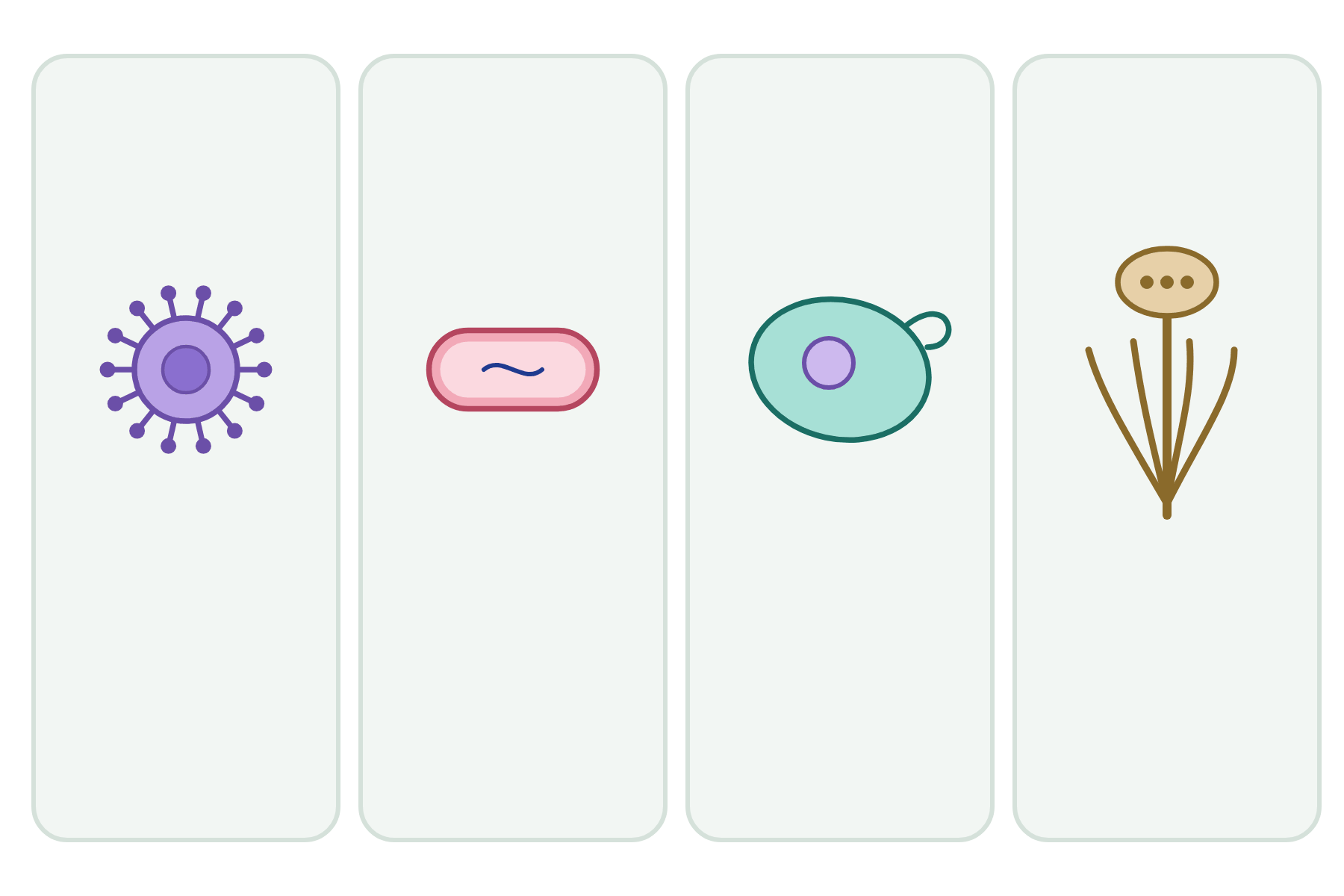 Name the three types of pathogen shown, and a fourth that is missing.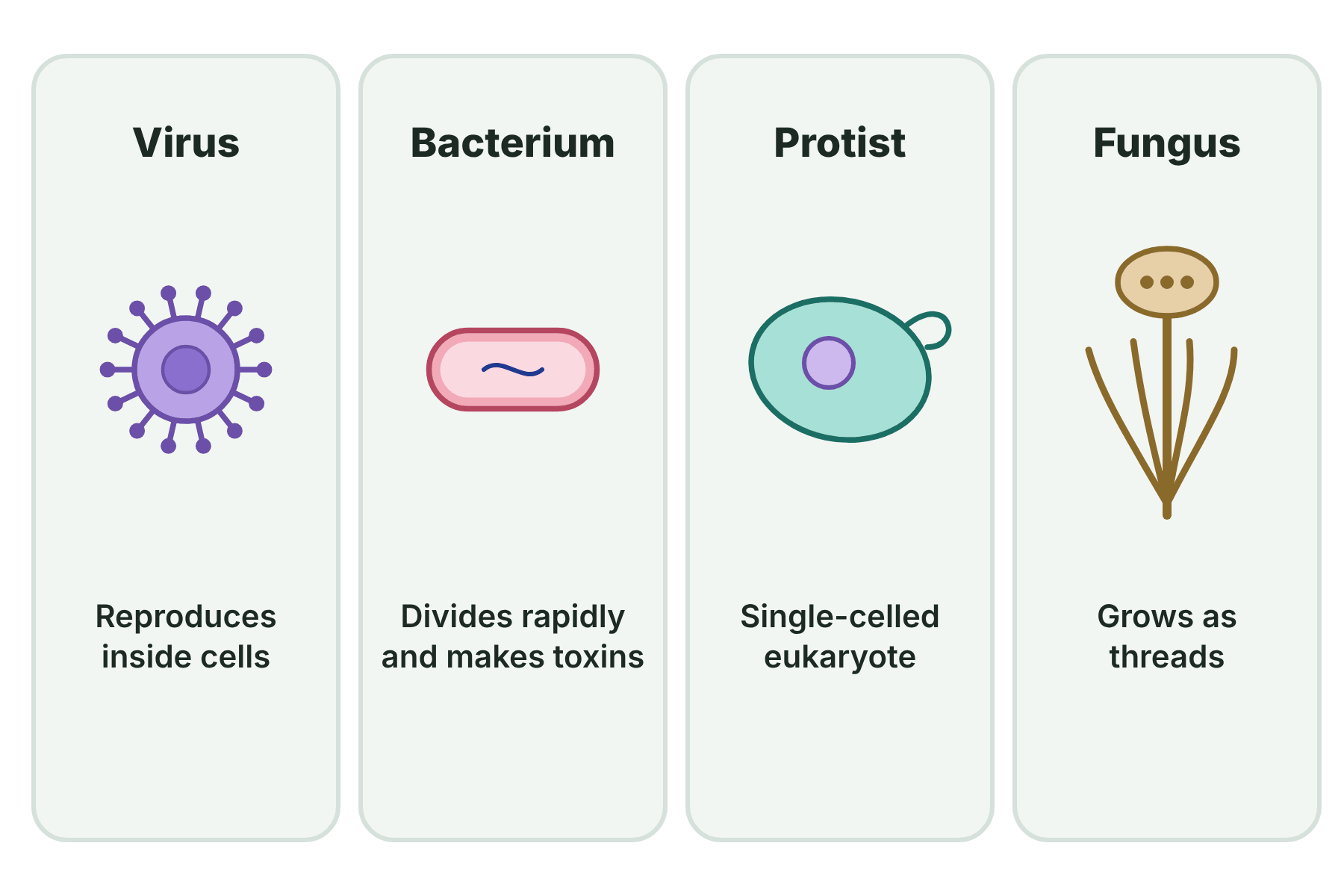
Virus (reproduces inside cells), bacterium (divides rapidly and makes toxins), protist (single-celled eukaryote) and fungus (grows as threads).
-
What are the symptoms of measles?
A fever and a red skin rash.
-
How is measles spread?
By inhaling droplets from the sneezes and coughs of an infected person.
-
Why are young children vaccinated against measles?
It can be a serious illness and can be fatal if complications arise.
-
What does HIV stand for?
Human immunodeficiency virus.
-
What are the first symptoms of HIV infection?
A flu-like illness.
-
What does HIV attack?
The body's immune cells.
-
What is AIDS?
Late-stage HIV infection, when the immune system is too damaged to deal with other infections or cancers.
-
How is HIV spread?
By sexual contact and by the exchange of body fluids, such as blood when drug users share needles.
-
What controls HIV?
Antiretroviral drugs.
-
What is tobacco mosaic virus?
A widespread virus that affects many plants, including tomatoes.
-
What does TMV do to a leaf?
It gives it a mosaic pattern of discolouration.
-
Why does TMV affect the growth of a plant?
Less photosynthesis takes place, because parts of the leaf have lost chlorophyll.
-
Which of the three viruses affects plants?
Tobacco mosaic virus.
-
How can HIV spread be reduced?
Use condoms, avoid sharing needles and treat infected people with antiretroviral drugs.
-
Why is a flu-like illness not enough to diagnose HIV?
Many illnesses cause similar symptoms, so a blood test is needed.
-
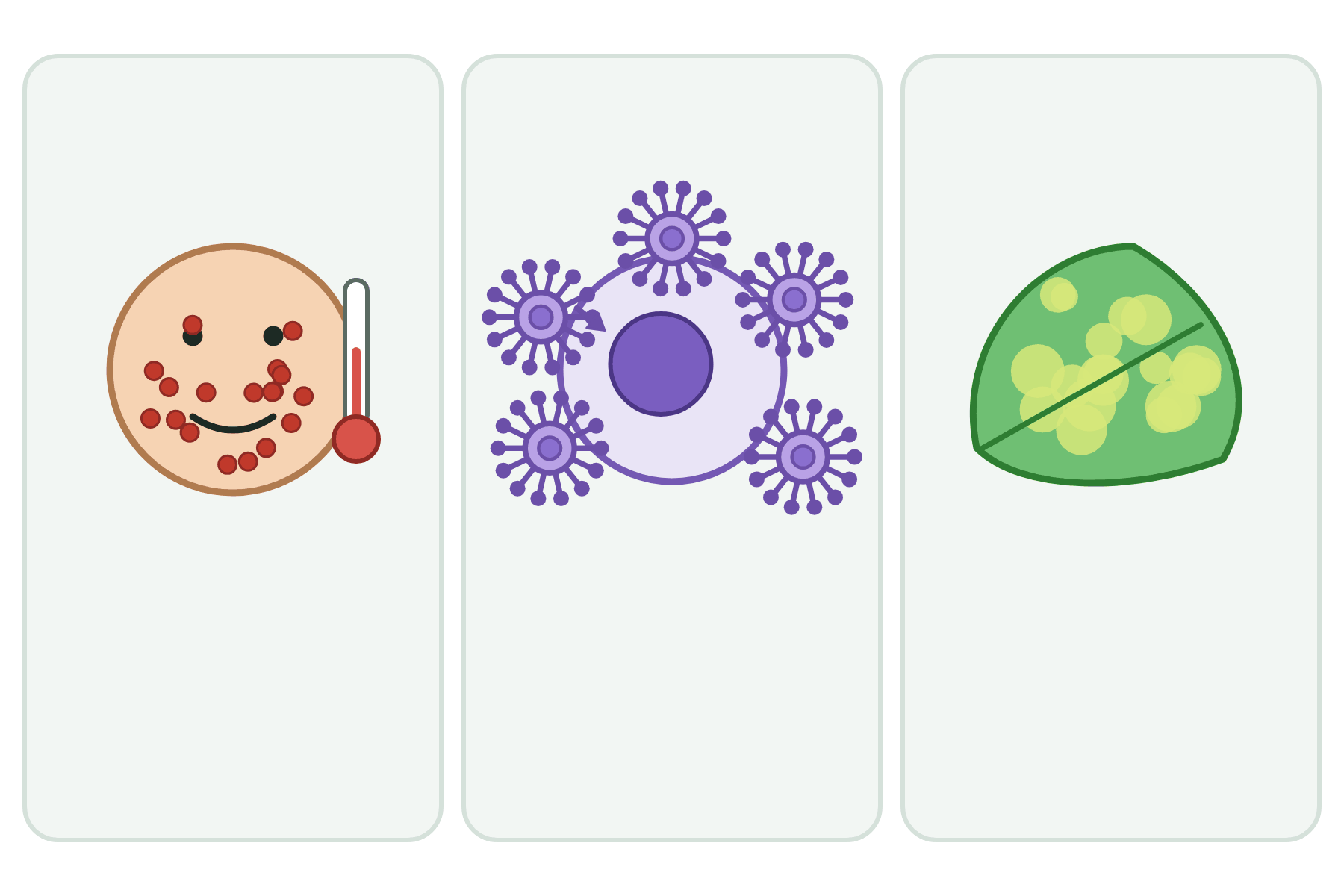 Label each virus and say what it does.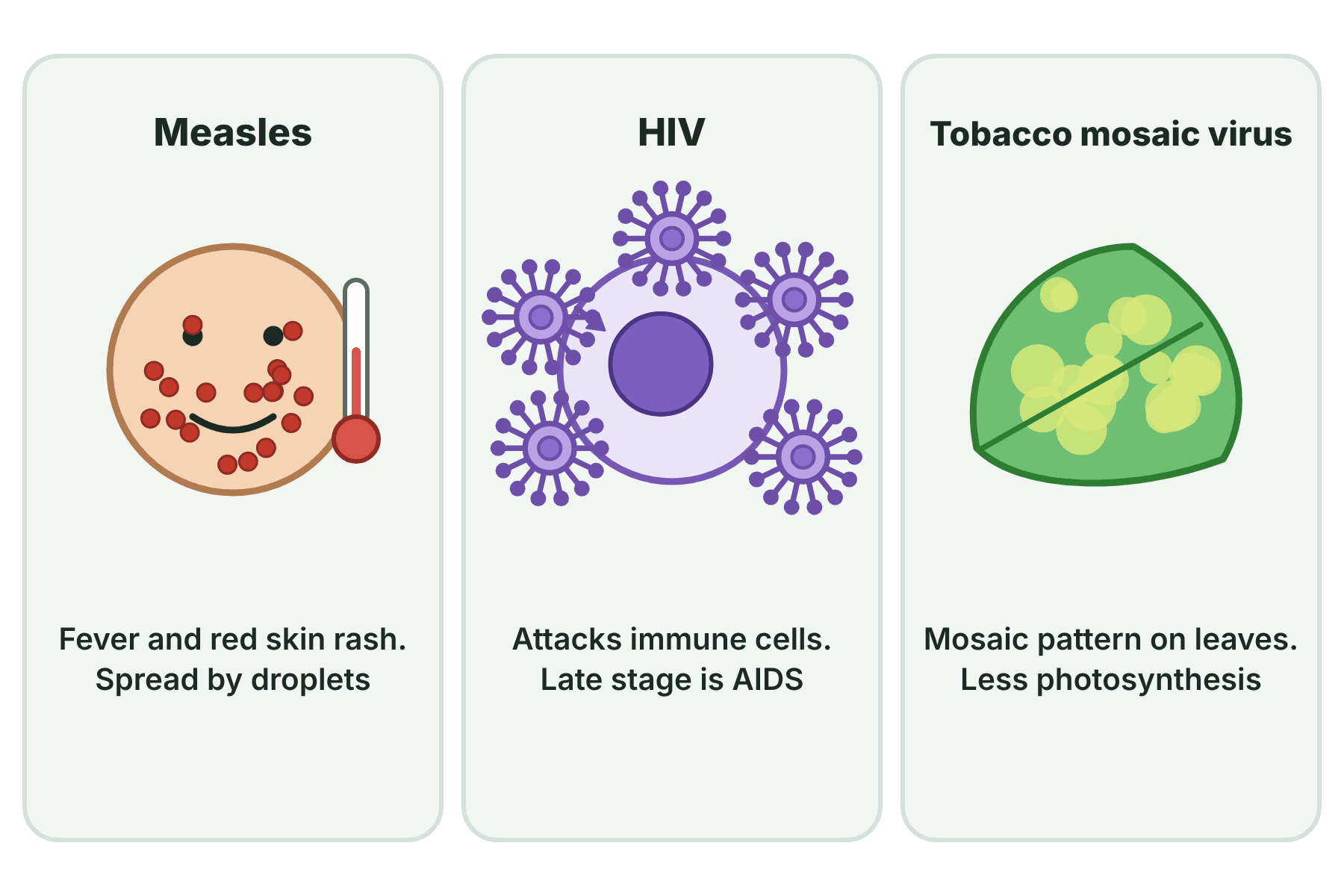
Measles: fever and red rash. HIV: attacks immune cells, late stage AIDS. Tobacco mosaic virus: mosaic pattern on leaves, less photosynthesis.
-
How is salmonella food poisoning spread?
In food, or on food prepared in unhygienic conditions.
-
What are the symptoms of salmonella food poisoning?
Fever, abdominal cramps, vomiting and diarrhoea.
-
What causes the symptoms of salmonella poisoning?
The bacteria and the toxins they secrete.
-
How is salmonella controlled in the UK poultry industry?
Poultry are vaccinated against it.
-
Name one way to prevent salmonella at home.
Cook food thoroughly, wash hands, or keep raw and cooked food apart.
-
What is gonorrhoea?
A sexually transmitted disease caused by a bacterium.
-
What are the symptoms of gonorrhoea?
A thick yellow or green discharge and pain when urinating.
-
How is gonorrhoea spread?
By sexual contact.
-
How can the spread of gonorrhoea be controlled?
By treating with antibiotics and using a barrier method of contraception, such as a condom.
-
Which antibiotic used to treat gonorrhoea easily?
Penicillin.
-
Why is penicillin no longer enough for many cases of gonorrhoea?
Many resistant strains have appeared.
-
What is an STD?
A sexually transmitted disease.
-
What is cross-contamination?
Passing bacteria from raw food or dirty surfaces to other food.
-
Why should chicken be cooked thoroughly?
To kill any salmonella bacteria.
-
Which of the two diseases is spread by food?
Salmonella food poisoning.
-
 Describe how each disease is spread and controlled.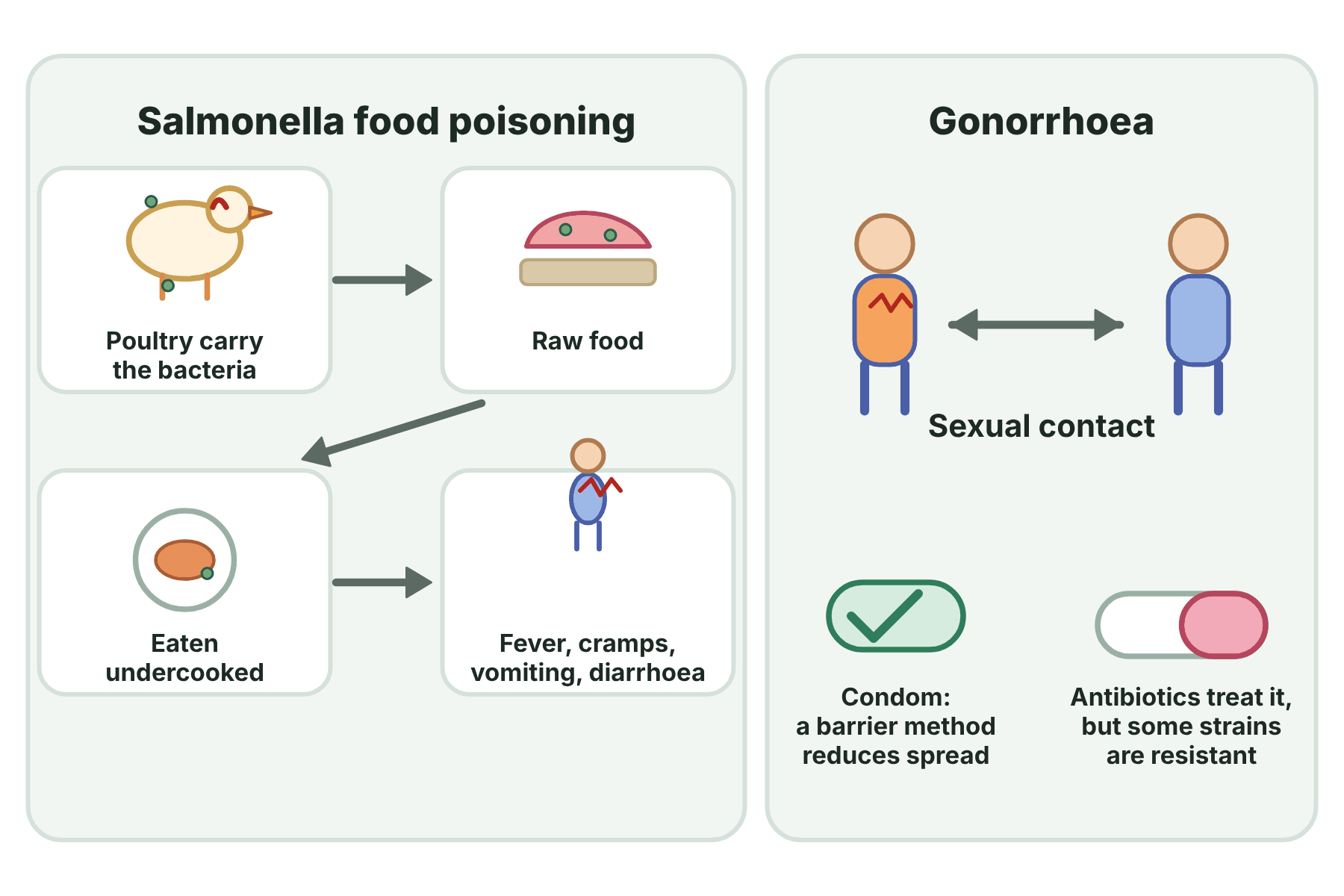
Salmonella is spread by poultry, raw food and undercooked meals, and is controlled by vaccinating poultry and hygiene. Gonorrhoea is spread by sexual contact and is controlled by condoms and antibiotics, although some strains are resistant.
-
What causes rose black spot?
A fungus.
-
What are the symptoms of rose black spot?
Purple or black spots on the leaves, which often turn yellow and drop early.
-
Why does rose black spot affect growth?
The damaged leaves photosynthesise less.
-
How is rose black spot spread?
By water and by wind.
-
How can rose black spot be treated?
With fungicides, and by removing and destroying the affected leaves.
-
What type of pathogen causes malaria?
A protist.
-
What are the symptoms of malaria?
Recurrent episodes of fever. It can be fatal.
-
What is the vector for malaria?
The mosquito.
-
How does a mosquito pass on malaria?
It takes up protists when it bites an infected person and passes them on when it bites someone else.
-
How can the spread of malaria be controlled?
Prevent mosquitoes breeding, and use mosquito nets.
-
Where do mosquitoes breed?
In standing water.
-
Why are nets useful?
They stop people being bitten.
-
Does the mosquito get malaria?
No. It only carries the protist.
-
Which of these affects plants, rose black spot or malaria?
Rose black spot.
-
What is a fungicide?
A chemical that kills fungi.
-
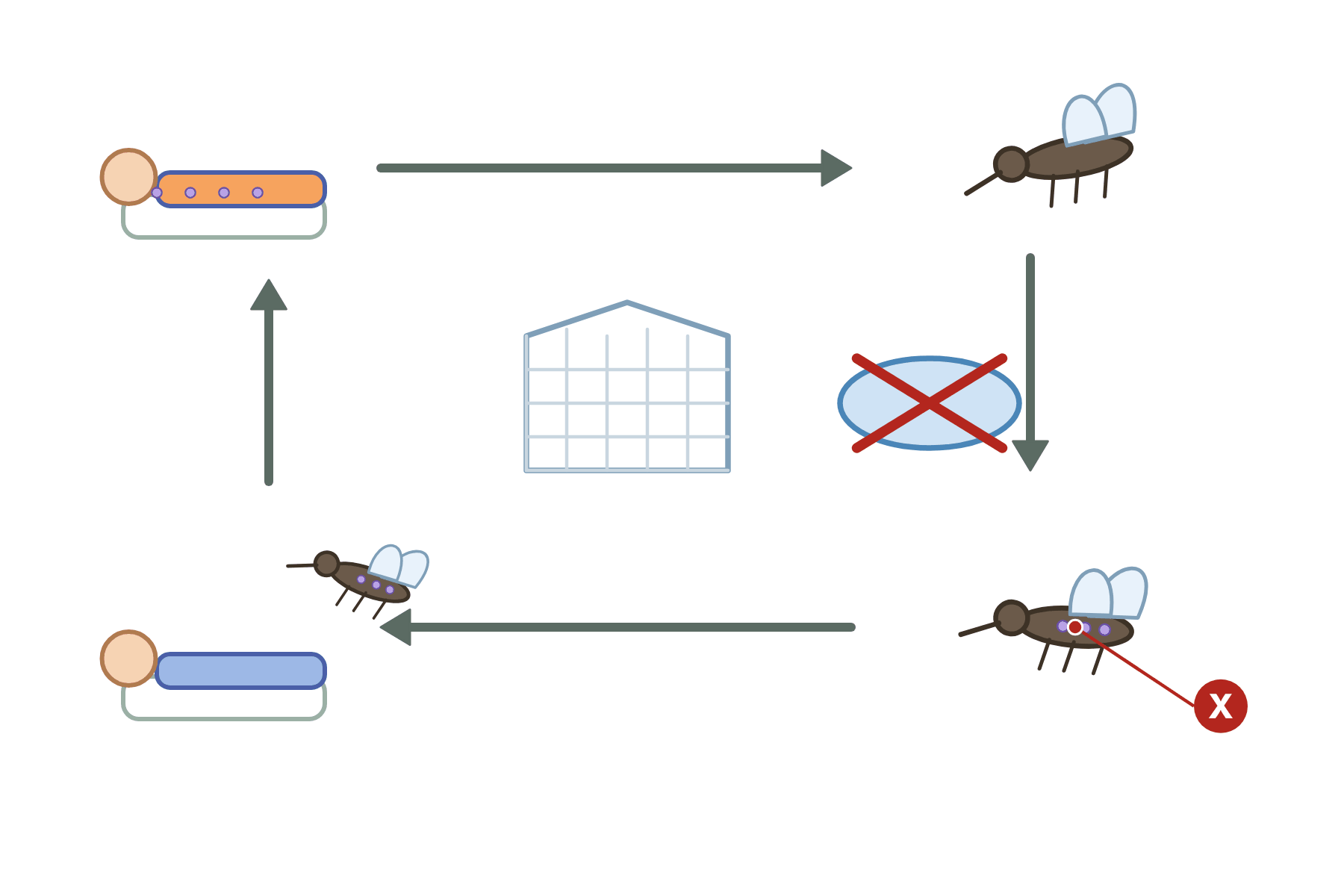 Name the part marked X and say what it does in spreading malaria.
 The mosquito. It is the vector that carries the protist from an infected person to a healthy person.
-
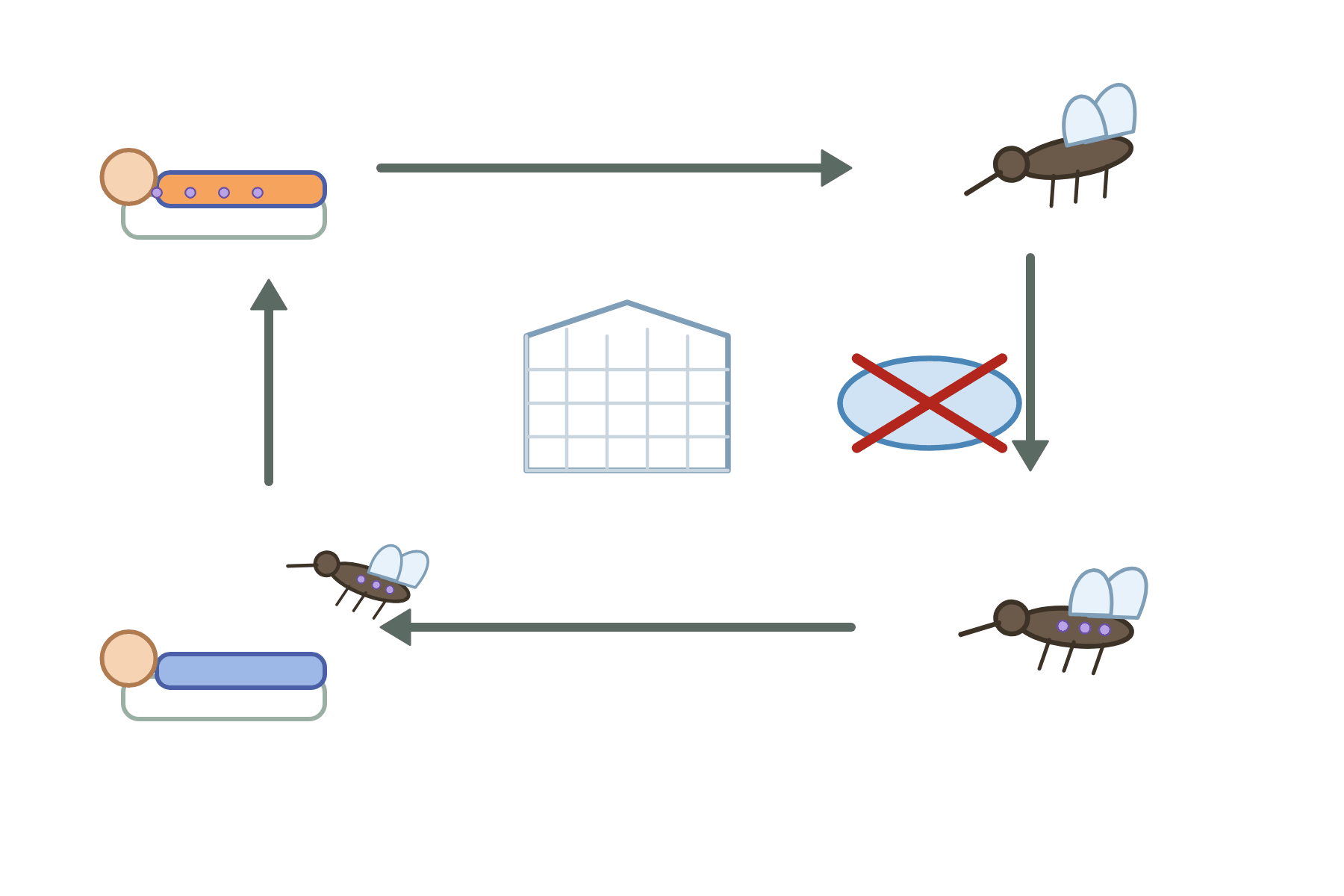 Describe each step in the spread of malaria.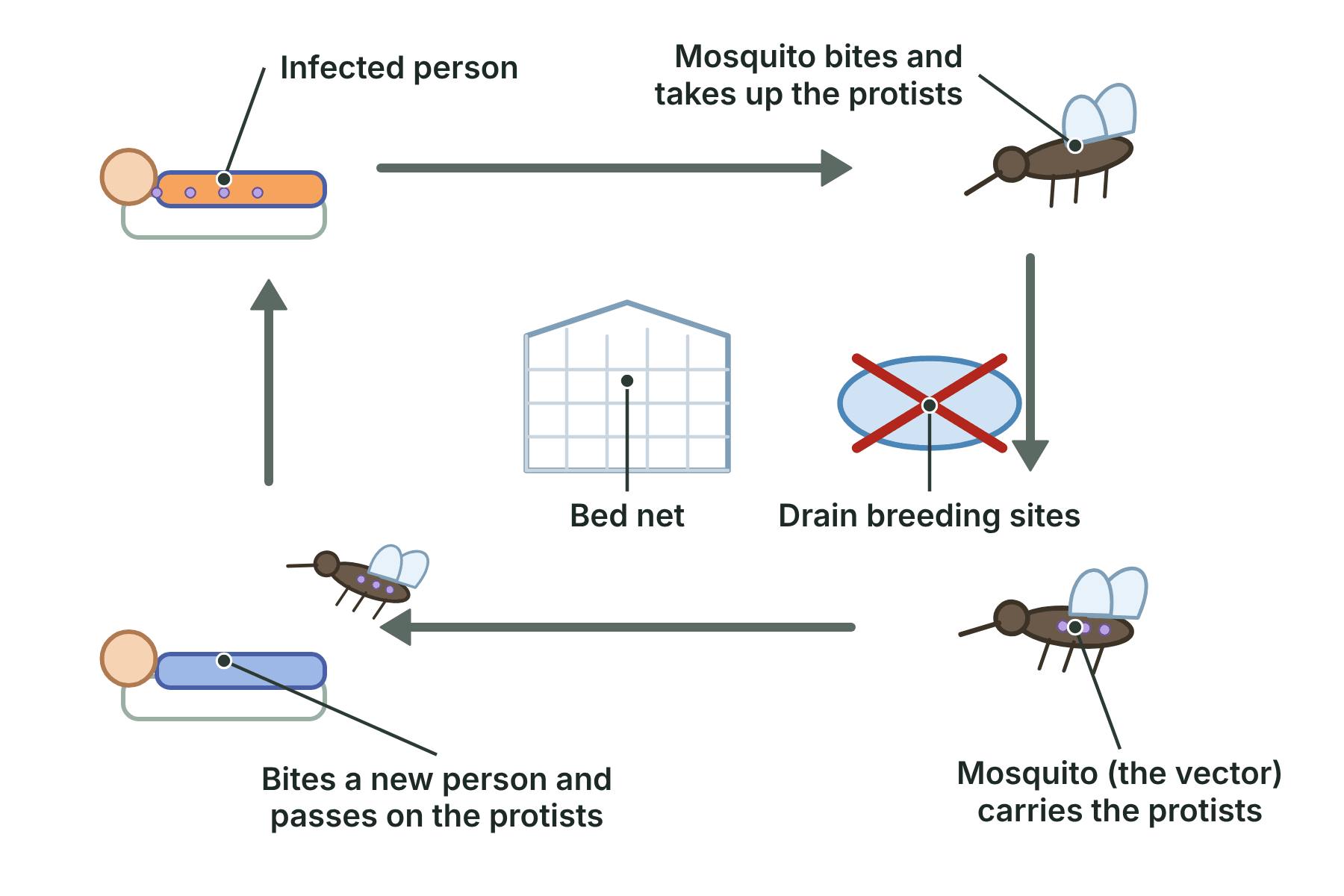
An infected person. A mosquito bites and takes up the protists. The mosquito, the vector, carries them. It bites a new person and passes them on. Nets and draining breeding sites control it.