Flashcards · Biology · Communicable Diseases
Pathogens and the Spread of Disease
-
What is a pathogen?
A microorganism that causes infectious disease.
-
Name the four types of pathogen.
Viruses, bacteria, protists and fungi.
-
Where do viruses reproduce?
Inside the cells of a living host.
-
What do bacteria produce that damages tissues?
Toxins (poisons).
-
How do viruses damage the body?
They live and reproduce inside cells, which causes cell damage.
-
Can pathogens infect plants as well as animals?
Yes.
-
Name three ways pathogens spread.
Direct contact, by water and by air.
-
How does a cough spread disease?
It sends out droplets containing pathogens, which other people breathe in.
-
What is a vector?
An organism that carries a pathogen from one host to another.
-
Name one example of a vector.
The mosquito that carries malaria.
-
Name one way to stop a disease spreading by hands.
Wash hands with soap and water.
-
Why is isolating a patient useful?
It stops them passing the pathogen to other people.
-
How can destroying vectors reduce disease?
It breaks the link between infected and healthy hosts.
-
How does vaccination reduce the spread of disease?
It makes people immune, so they cannot catch or pass on the disease.
-
Why do bacteria cause illness so quickly?
They reproduce rapidly inside the body, so their numbers rise fast.
-
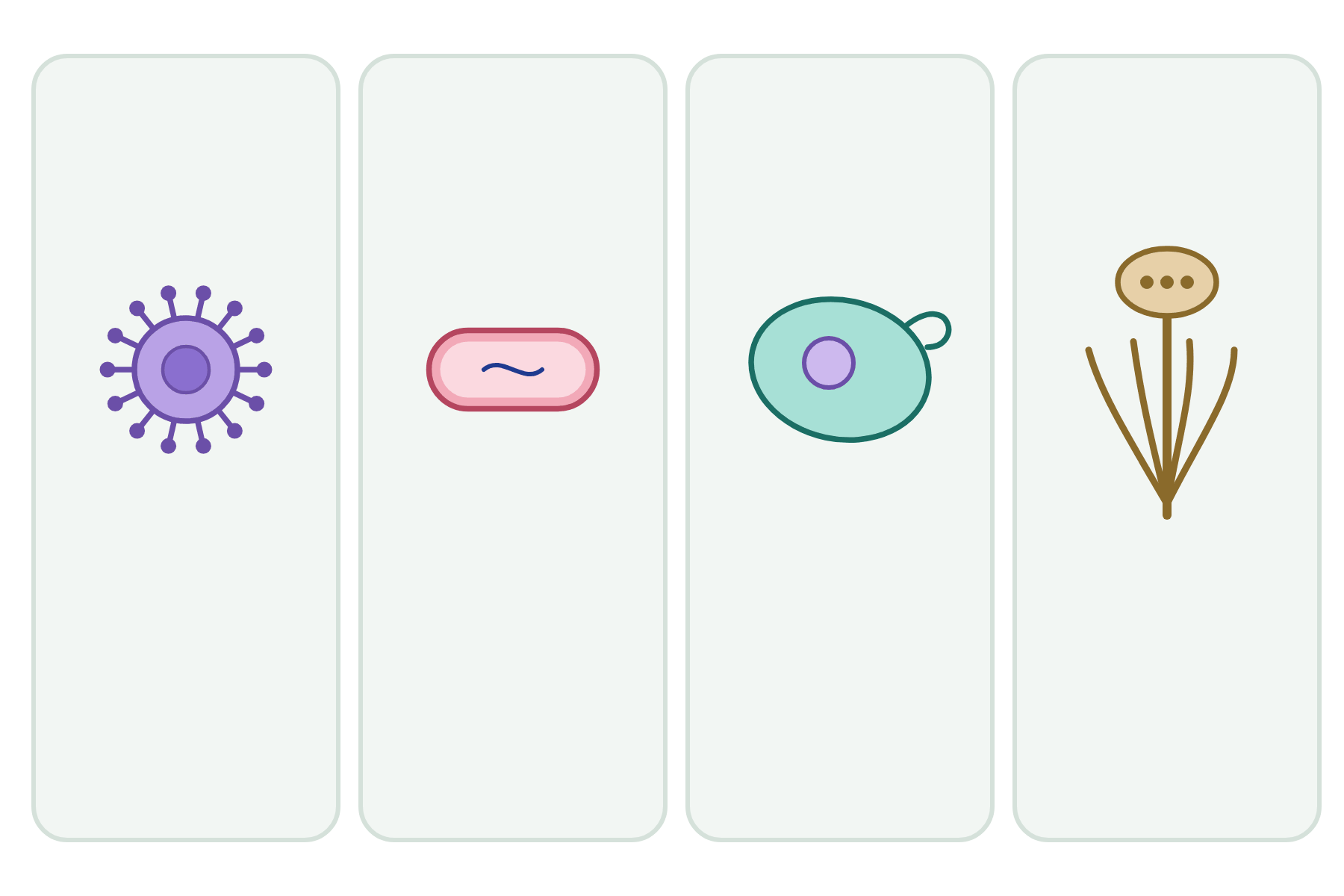 Name the three types of pathogen shown, and a fourth that is missing.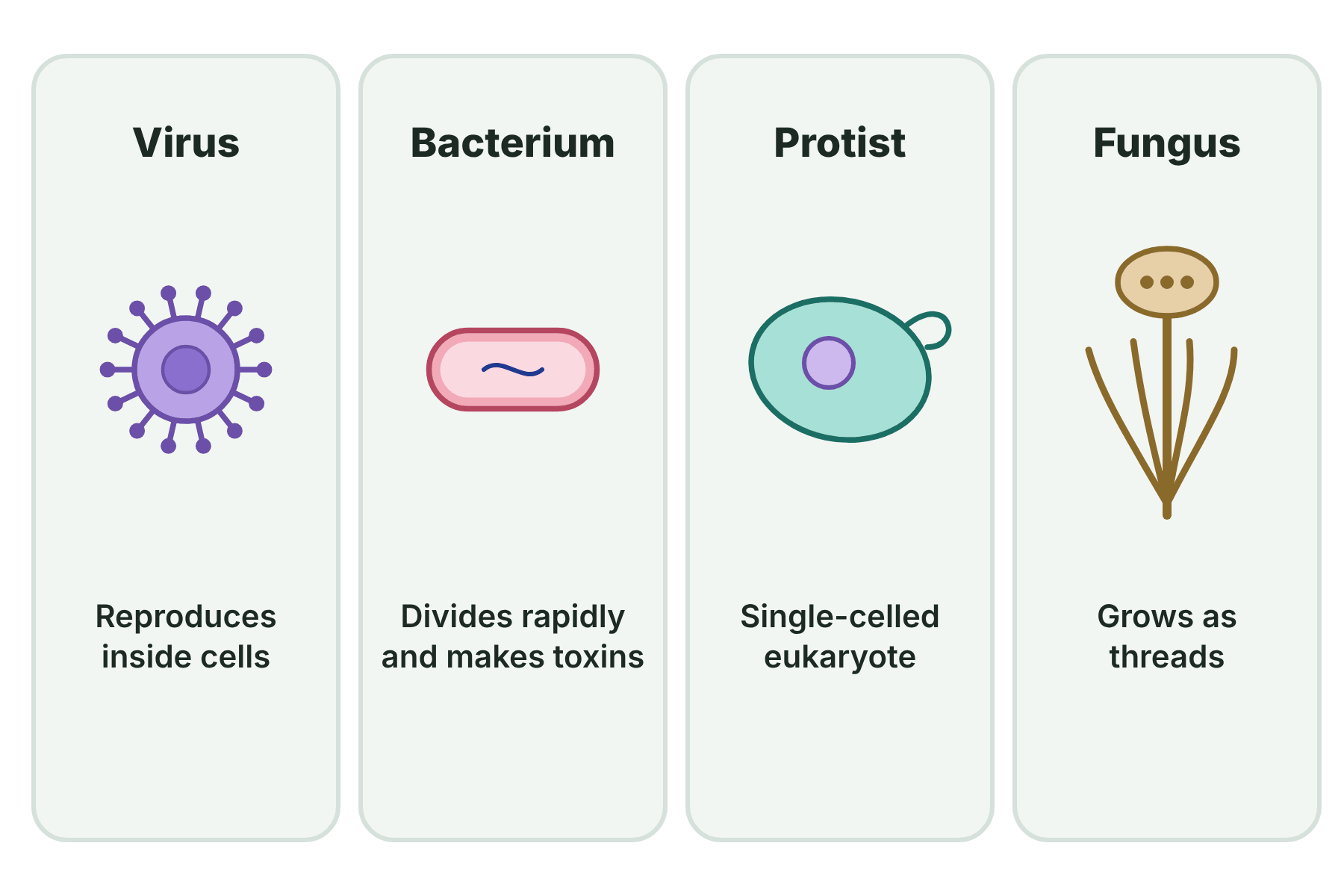
Virus (reproduces inside cells), bacterium (divides rapidly and makes toxins), protist (single-celled eukaryote) and fungus (grows as threads).