Flashcards · Biology · Communicable Diseases
Viral Diseases
-
What are the symptoms of measles?
A fever and a red skin rash.
-
How is measles spread?
By inhaling droplets from the sneezes and coughs of an infected person.
-
Why are young children vaccinated against measles?
It can be a serious illness and can be fatal if complications arise.
-
What does HIV stand for?
Human immunodeficiency virus.
-
What are the first symptoms of HIV infection?
A flu-like illness.
-
What does HIV attack?
The body's immune cells.
-
What is AIDS?
Late-stage HIV infection, when the immune system is too damaged to deal with other infections or cancers.
-
How is HIV spread?
By sexual contact and by the exchange of body fluids, such as blood when drug users share needles.
-
What controls HIV?
Antiretroviral drugs.
-
What is tobacco mosaic virus?
A widespread virus that affects many plants, including tomatoes.
-
What does TMV do to a leaf?
It gives it a mosaic pattern of discolouration.
-
Why does TMV affect the growth of a plant?
Less photosynthesis takes place, because parts of the leaf have lost chlorophyll.
-
Which of the three viruses affects plants?
Tobacco mosaic virus.
-
How can HIV spread be reduced?
Use condoms, avoid sharing needles and treat infected people with antiretroviral drugs.
-
Why is a flu-like illness not enough to diagnose HIV?
Many illnesses cause similar symptoms, so a blood test is needed.
-
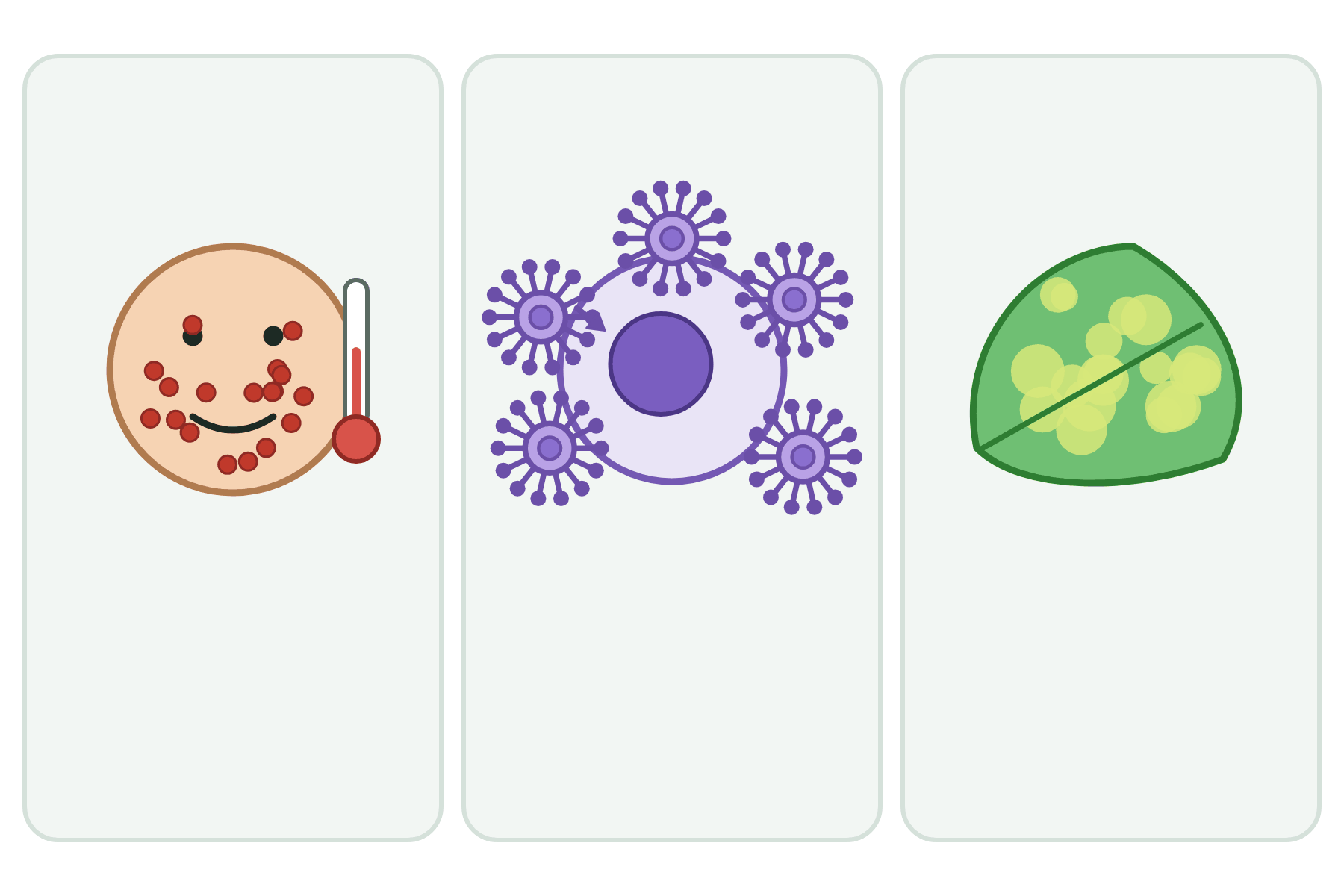 Label each virus and say what it does.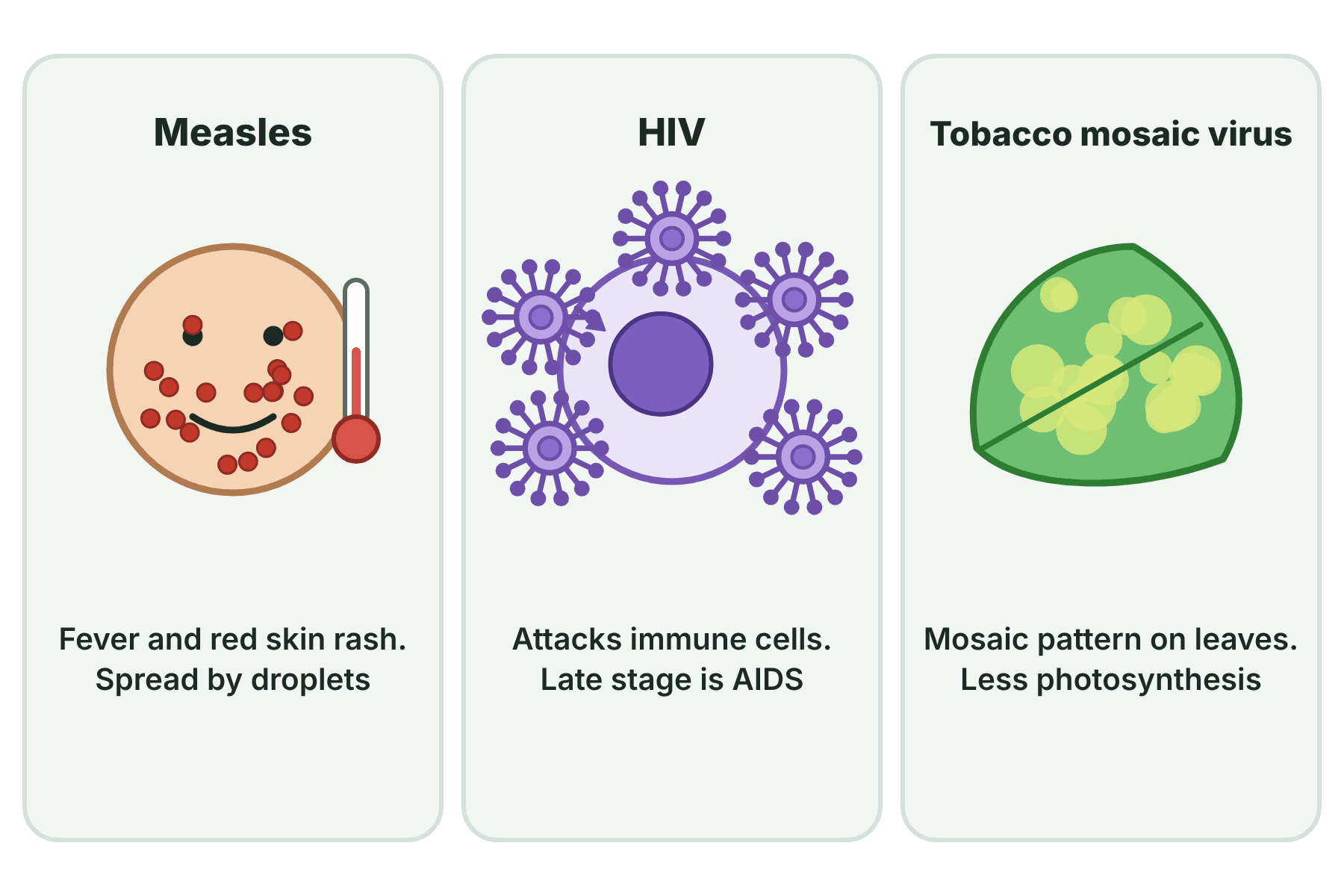
Measles: fever and red rash. HIV: attacks immune cells, late stage AIDS. Tobacco mosaic virus: mosaic pattern on leaves, less photosynthesis.