Flashcards · Biology · Defence Against Disease
Antibiotics and Painkillers
-
What do antibiotics do?
They kill bacteria inside the body, curing bacterial disease.
-
Give an example of an antibiotic.
Penicillin.
-
Why must the right antibiotic be used for a bacterial disease?
Antibiotics are specific. Each works on certain bacteria only.
-
Do antibiotics kill viruses?
No.
-
Why do antibiotics not kill viruses?
Viruses live and reproduce inside cells, and do not have the structures that antibiotics attack.
-
Why is it difficult to make drugs that kill viruses?
They would also damage the body's own cells.
-
What do painkillers do?
They reduce the pain and other symptoms of a disease.
-
Do painkillers kill pathogens?
No.
-
What is antibiotic resistance?
When bacteria are no longer killed by an antibiotic.
-
How does a resistant strain arise?
A mutation makes a bacterium resistant, it survives the antibiotic, and it reproduces.
-
Why is antibiotic resistance a concern?
Infections become harder to treat, and people may die from infections that were once easily cured.
-
How can resistance be reduced?
Do not overuse antibiotics, and finish the course.
-
What is MRSA?
A strain of bacteria that is resistant to many antibiotics.
-
Why shouldn't you take antibiotics for a cold?
A cold is caused by a virus, so antibiotics do not work.
-
What has happened to deaths from bacterial diseases since antibiotics?
They have greatly decreased.
-
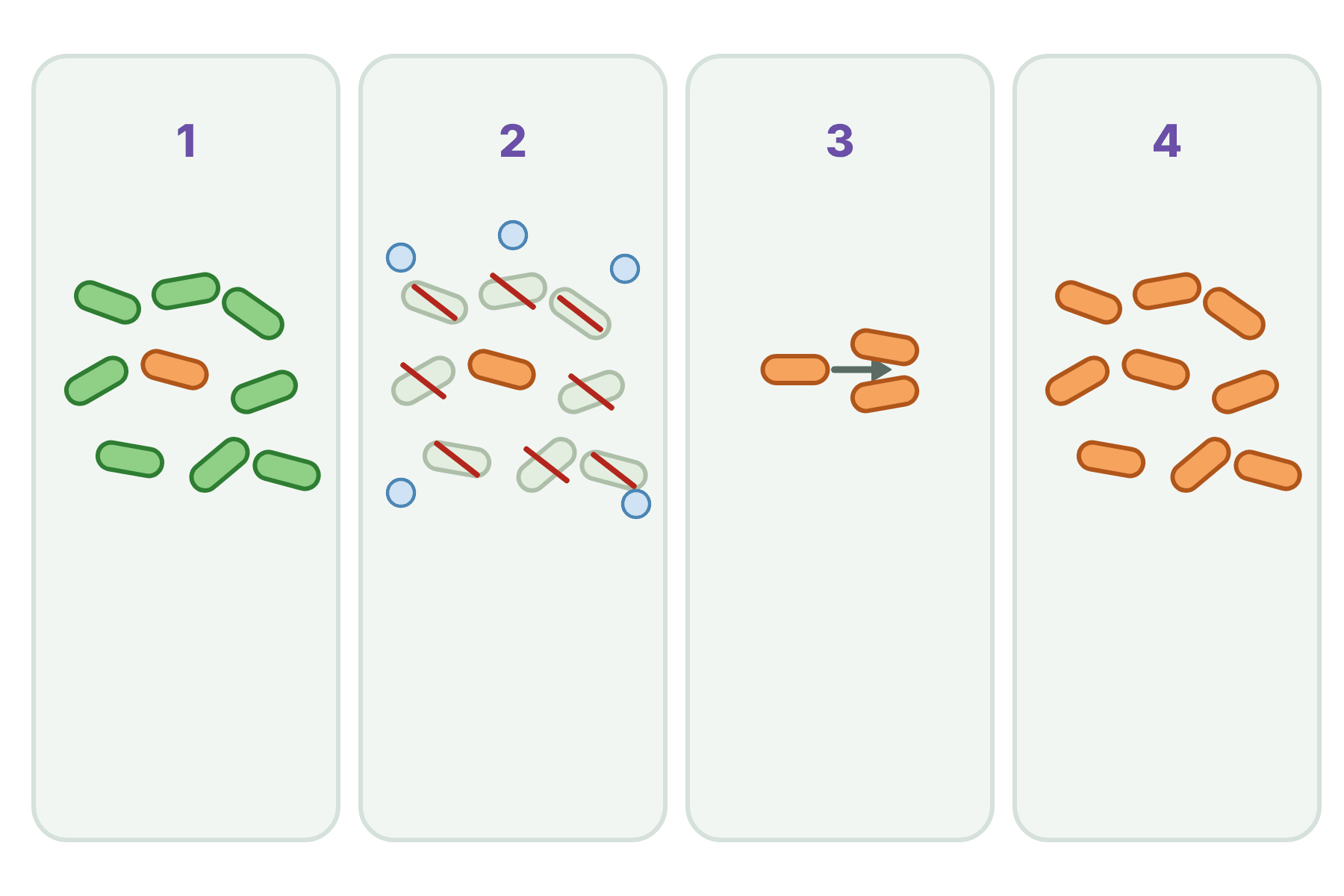 Describe what is happening at each step.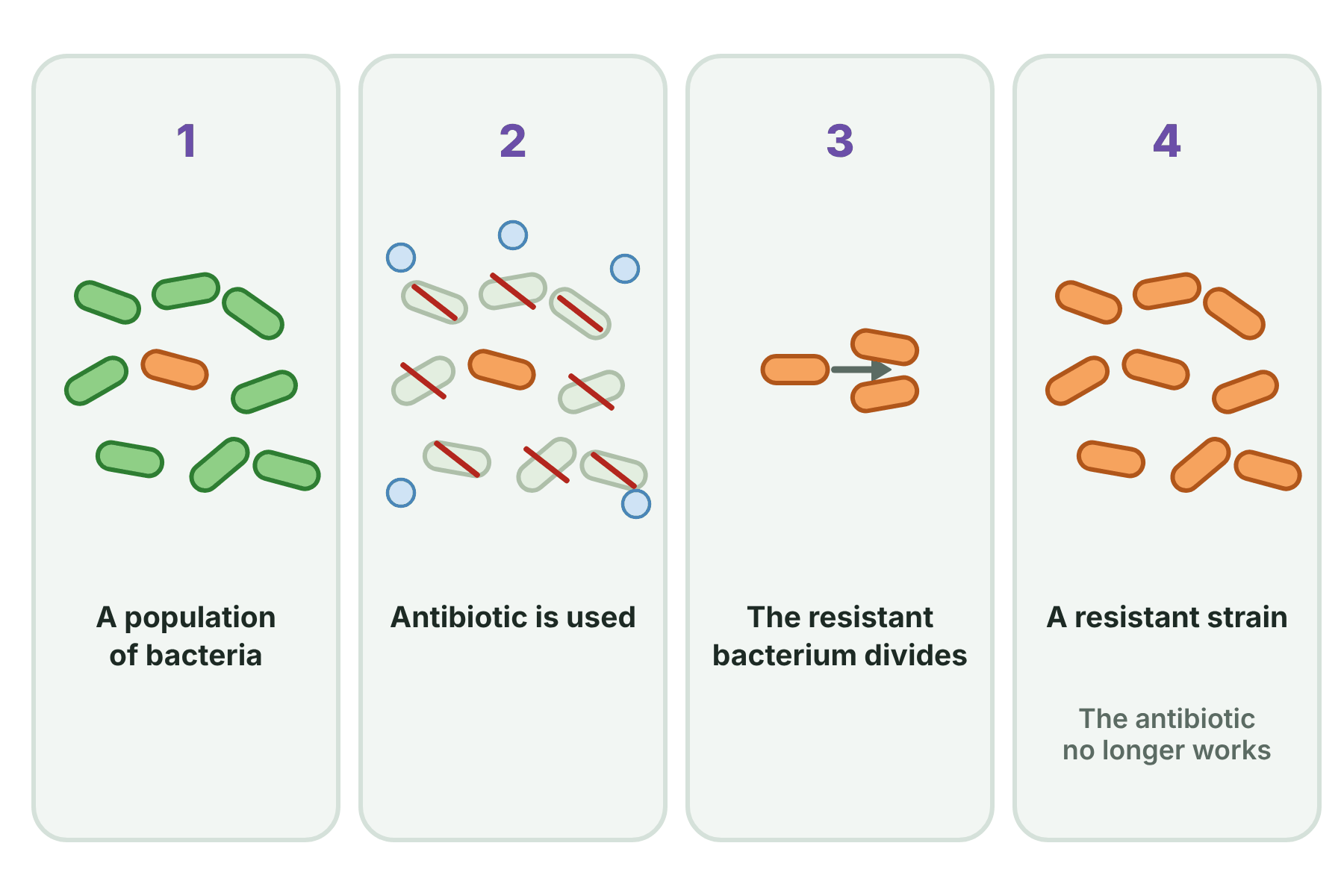
1 A population with one resistant bacterium. 2 The antibiotic kills the non-resistant bacteria. 3 The resistant bacterium survives and divides. 4 A resistant strain: the antibiotic no longer works.