Flashcards · Biology · Defence Against Disease
Discovery and Development of Drugs
-
Name a drug that comes from foxgloves.
Digitalis, a heart drug.
-
Which painkiller originates from willow?
Aspirin.
-
Who discovered penicillin?
Alexander Fleming.
-
Which mould makes penicillin?
Penicillium.
-
How are most new drugs made today?
They are synthesised by chemists in the pharmaceutical industry.
-
What three things are new drugs tested for?
Toxicity, efficacy and dose.
-
What is toxicity?
How harmful the drug is.
-
What is efficacy?
Whether the drug works.
-
What is preclinical testing?
Testing in the laboratory using cells, tissues and live animals.
-
Who is in the first stage of a clinical trial?
Healthy volunteers, at a very low dose.
-
Why do later trials use patients?
To find the best dose and to check that the drug works.
-
What is a placebo?
A dummy treatment with no drug in it.
-
What is a double-blind trial?
A trial where neither the patients nor the doctors know who has the real drug.
-
Why use a double-blind trial?
To stop patients' or doctors' expectations affecting the results.
-
What is peer review?
Other scientists checking the results before they are published.
-
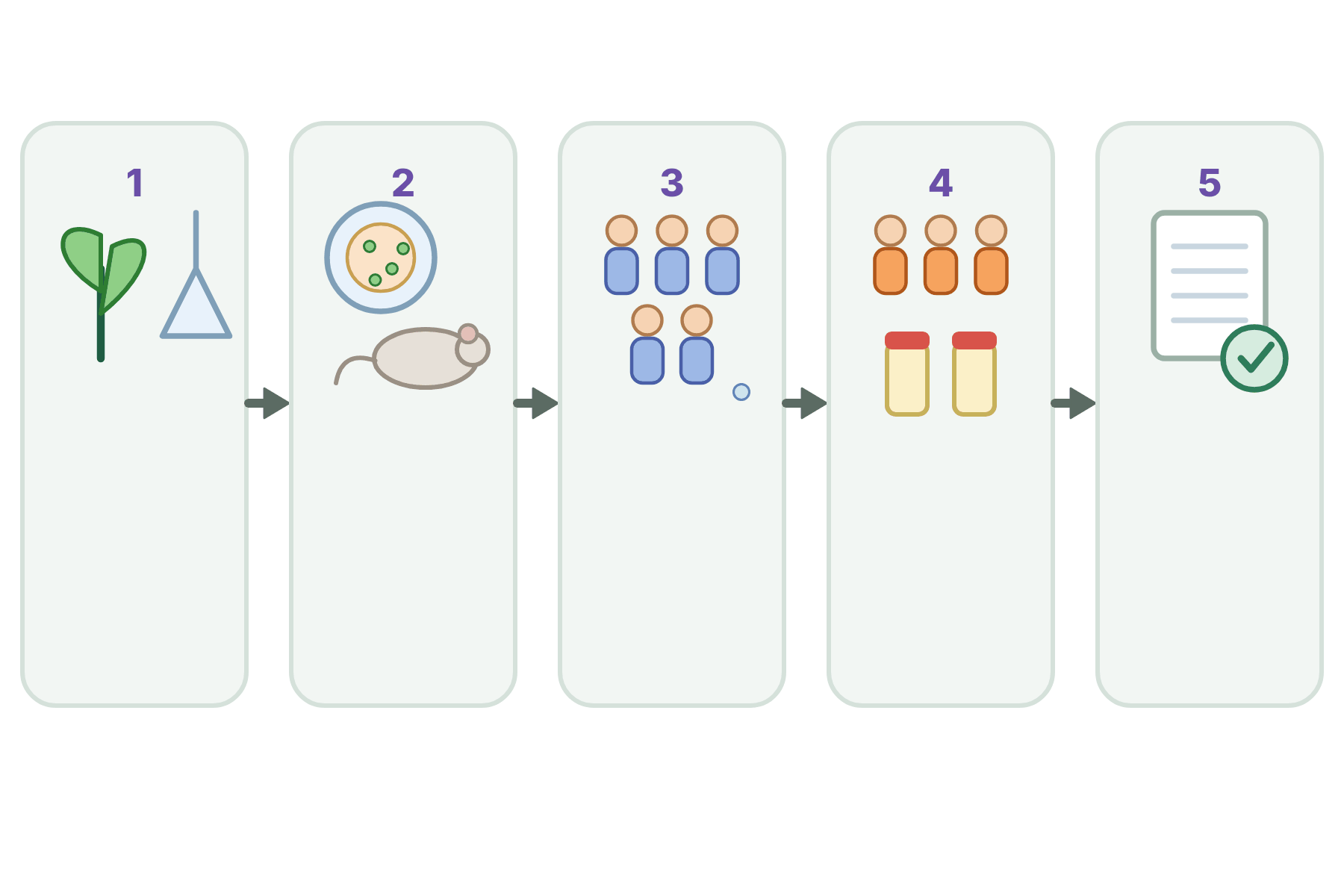 Describe each stage in developing a new drug.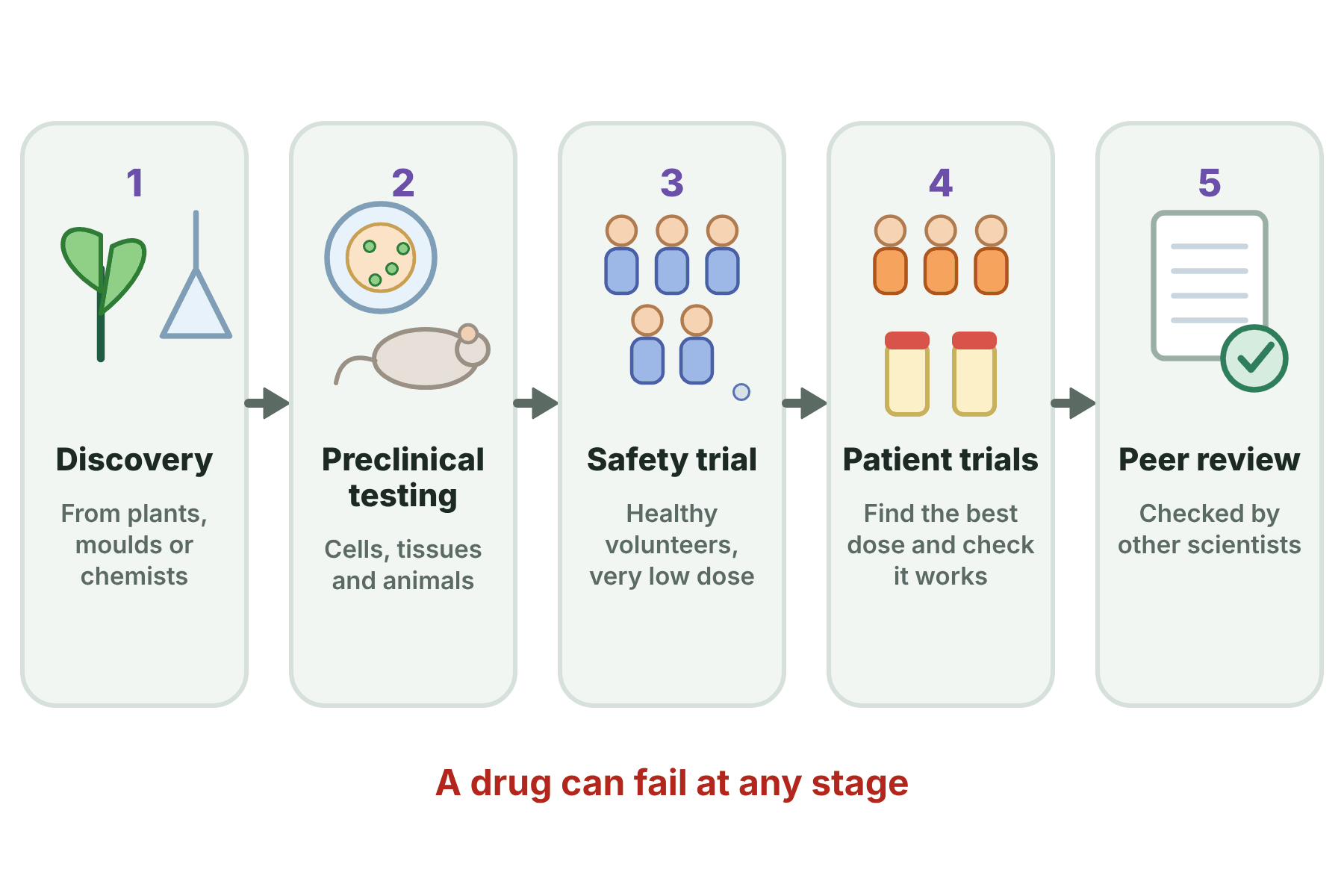
1 Discovery. 2 Preclinical testing on cells, tissues and animals. 3 Safety trial with healthy volunteers at a very low dose. 4 Patient trials to find the best dose and check it works. 5 Peer review and use.