Flashcards · Biology · Defence Against Disease
Vaccination
-
What is vaccination?
Introducing small quantities of dead or inactive forms of a pathogen into the body.
-
What does a vaccine stimulate?
The white blood cells to produce antibodies.
-
Why does a vaccine not make you ill?
The pathogens in it are dead or inactive.
-
What happens if the real pathogen later enters a vaccinated person?
The white blood cells respond quickly and make the correct antibodies.
-
Why is the second response faster?
Memory cells remember the antigen.
-
What is herd immunity?
When most people are immune, so the disease cannot spread easily and protects the unvaccinated.
-
Who benefits from herd immunity?
People who cannot be vaccinated, such as babies or the very ill.
-
Name a disease that has been eradicated by vaccination.
Smallpox.
-
What happens if fewer people are vaccinated?
The disease can spread again.
-
Why do some pathogens need new vaccines regularly?
Their antigens change, as in flu viruses.
-
What is a vaccination schedule?
A plan of when each vaccine is given. You do not need to know it.
-
Give one benefit of vaccination to a country.
It saves lives and money spent on treatment.
-
Give one concern about vaccination.
A small number of people react badly, which can put others off.
-
Does vaccination work on bacteria and viruses?
Yes, there are vaccines against both.
-
What are memory cells?
White blood cells that remain after an infection or vaccination.
-
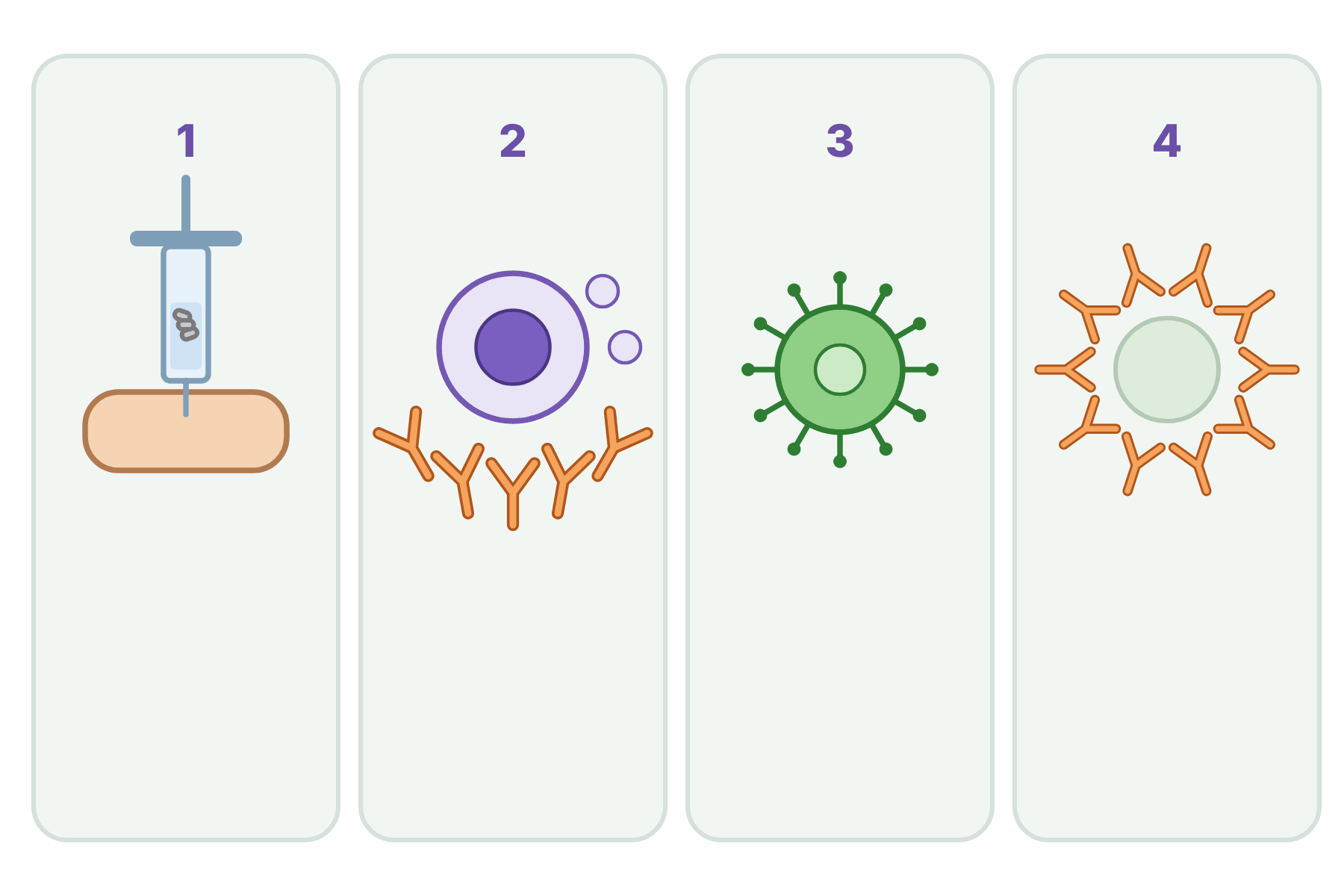 Describe what is happening at each step.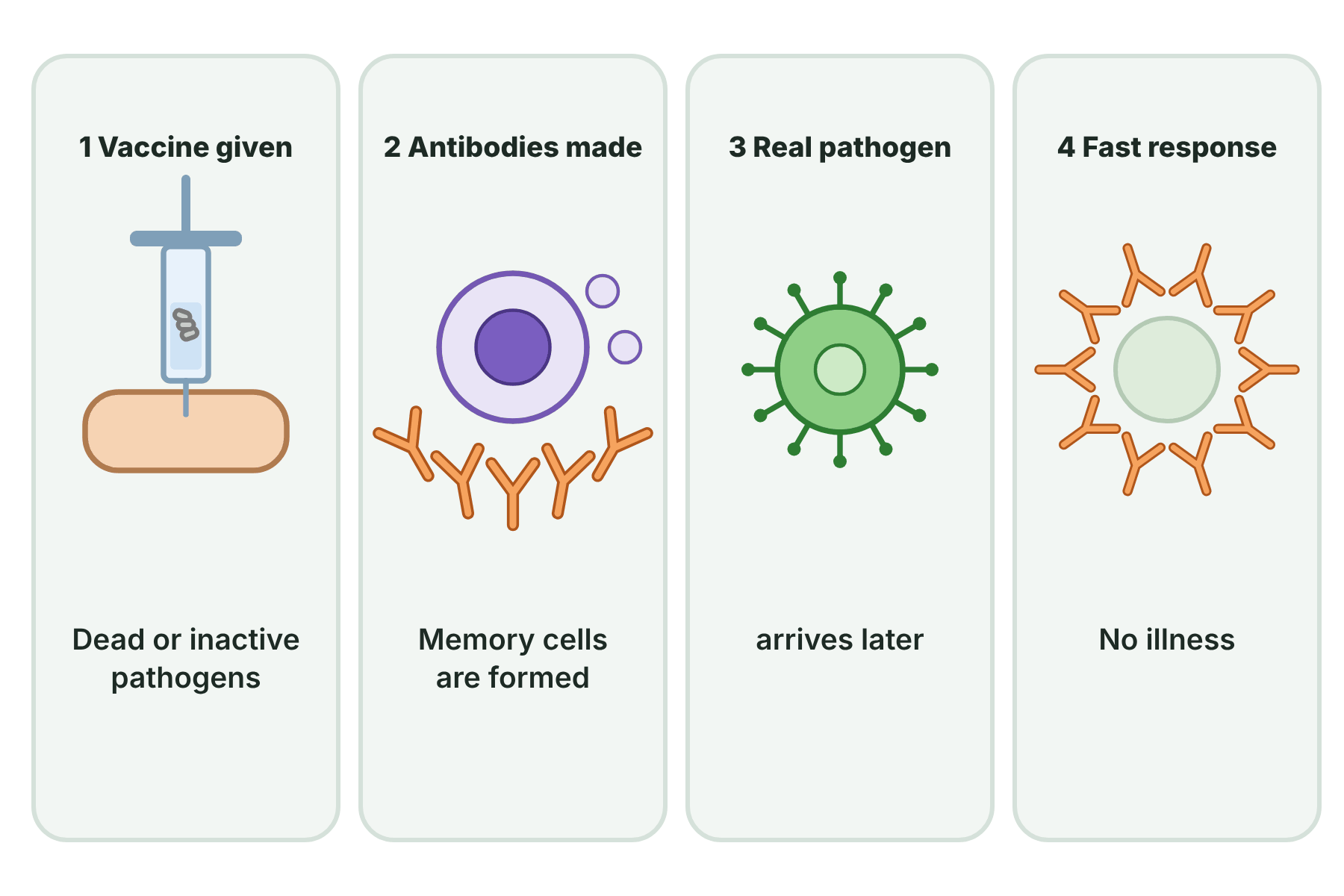
1 Vaccine given: dead or inactive pathogens. 2 Antibodies and memory cells are made. 3 The real pathogen arrives later. 4 A fast response destroys it, so there is no illness.