Flashcards · Biology
Health, Disease and Cancer
-
How is health defined?
The state of physical and mental well-being.
-
What is a communicable disease?
A disease caused by a pathogen that can be spread from one organism to another.
-
What is a non-communicable disease?
A disease that is not caused by a pathogen and cannot be passed on.
-
Give two examples of non-communicable diseases.
Coronary heart disease and cancer (also type 2 diabetes).
-
Name factors other than disease that affect health.
Diet, stress and life situations.
-
How can a weak immune system affect health?
The person is more likely to suffer infectious diseases.
-
Give an example of a virus that can trigger cancer.
Human papillomavirus (HPV), which can lead to cervical cancer.
-
How can a pathogen trigger an allergy?
An immune reaction first caused by the pathogen can set off skin rashes or asthma.
-
How can physical ill health affect mental health?
Severe physical illness can lead to depression and other mental illness.
-
What is a scatter diagram used for?
To see whether there is a correlation between two variables.
-
What does a negative correlation look like?
As one variable increases, the other decreases.
-
Does a correlation prove cause?
No. It only shows a link.
-
What is epidemiology?
The study of how often diseases occur and what causes them.
-
Why should a sample be large?
A larger sample is more likely to represent the whole population, so the results are more reliable.
-
When do you use a histogram rather than a bar chart?
For continuous data, such as ages in ranges.
-
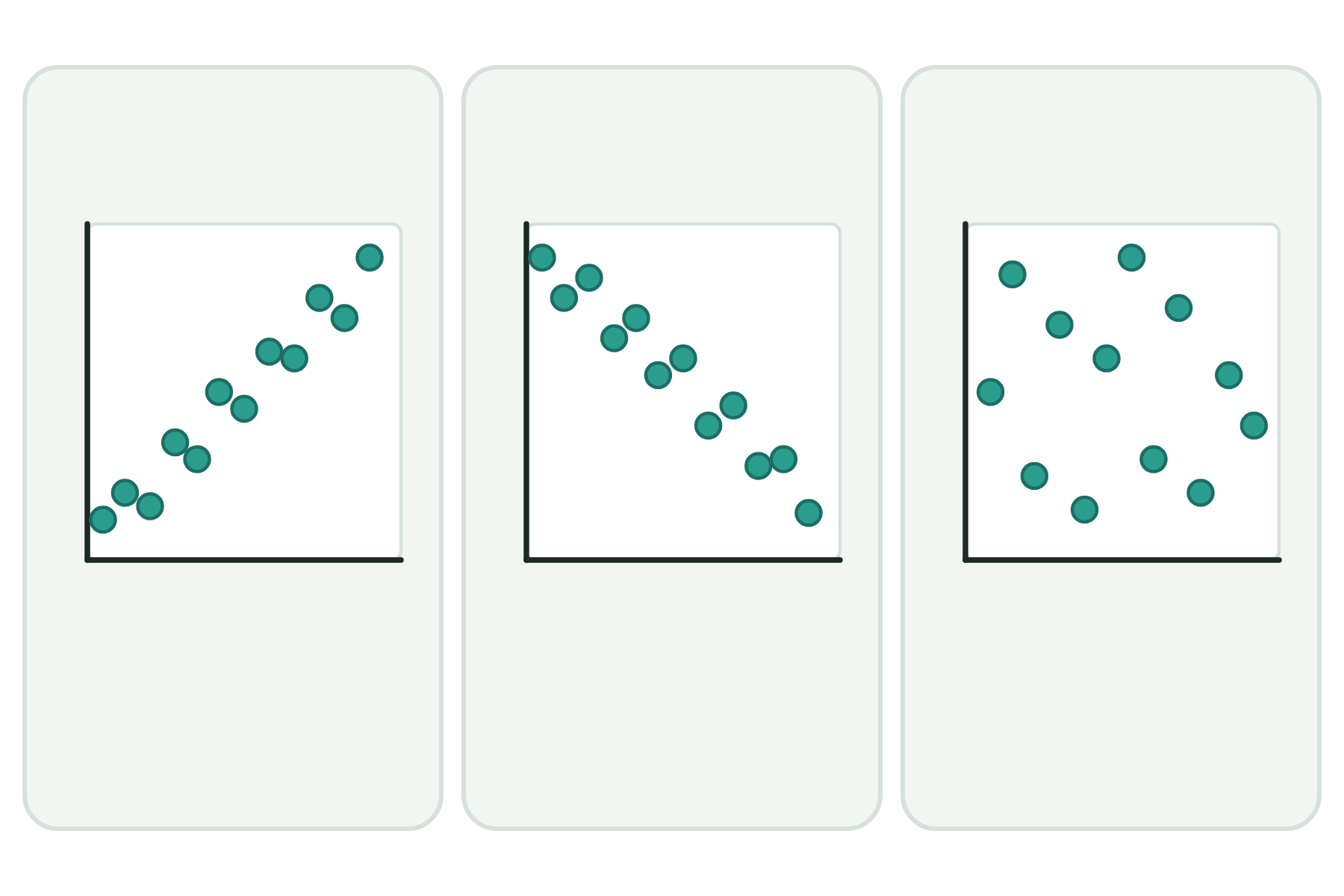 Label the type of correlation shown in each scatter diagram.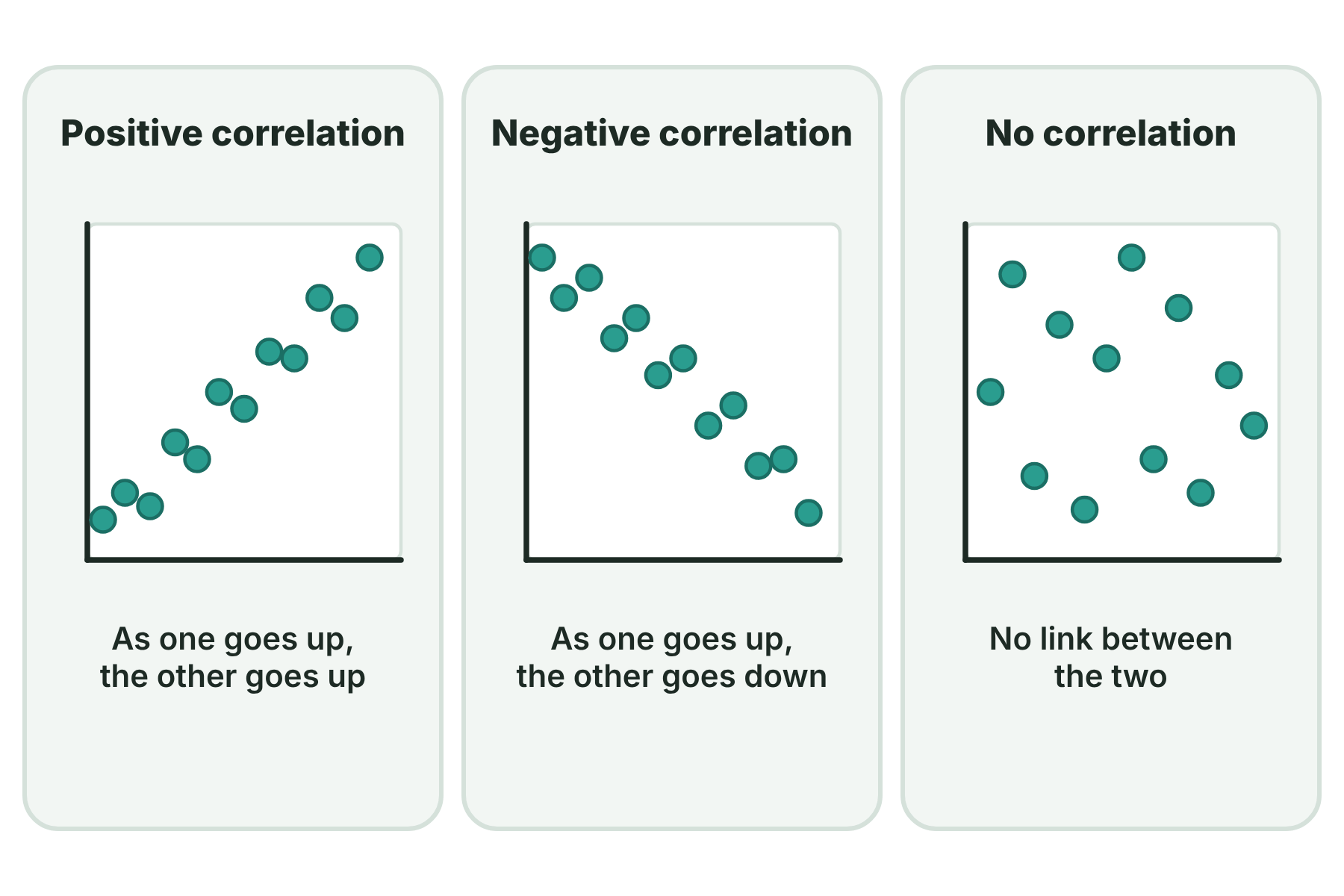
Positive correlation (rising), negative correlation (falling) and no correlation (random scatter).
-
What is a risk factor?
Something linked to an increased rate of a disease.
-
Can a risk factor be a substance?
Yes. It can be a substance in the body or the environment, as well as an aspect of lifestyle.
-
Name three lifestyle factors that increase the risk of cardiovascular disease.
Diet high in fat, smoking and lack of exercise.
-
Which risk factor is linked to type 2 diabetes?
Obesity.
-
What can too much alcohol damage?
The liver, and brain function.
-
Which diseases does smoking increase the risk of?
Lung disease, lung cancer and cardiovascular disease.
-
How can smoking harm an unborn baby?
It can lead to a low birth mass or an early birth.
-
How can alcohol harm an unborn baby?
It can damage the baby's developing brain.
-
Name a carcinogen.
Ionising radiation, such as X-rays or gamma rays (also chemicals in tobacco smoke).
-
Does a correlation prove a risk factor causes a disease?
No. A causal mechanism has been proved for some risk factors but not for others.
-
Why do many diseases have several causes?
They are caused by the interaction of a number of factors.
-
What is a cost of non-communicable disease to an individual?
Pain, lower quality of life and loss of earnings.
-
What is a cost to a nation?
Treatment costs for the health service and lost productivity.
-
Why do researchers need large samples for risk factor studies?
A large, representative sample makes the link more reliable.
-
How do you turn 120 cases in 1000 people into a percentage?
120 ÷ 1000 × 100 = 12%.
-
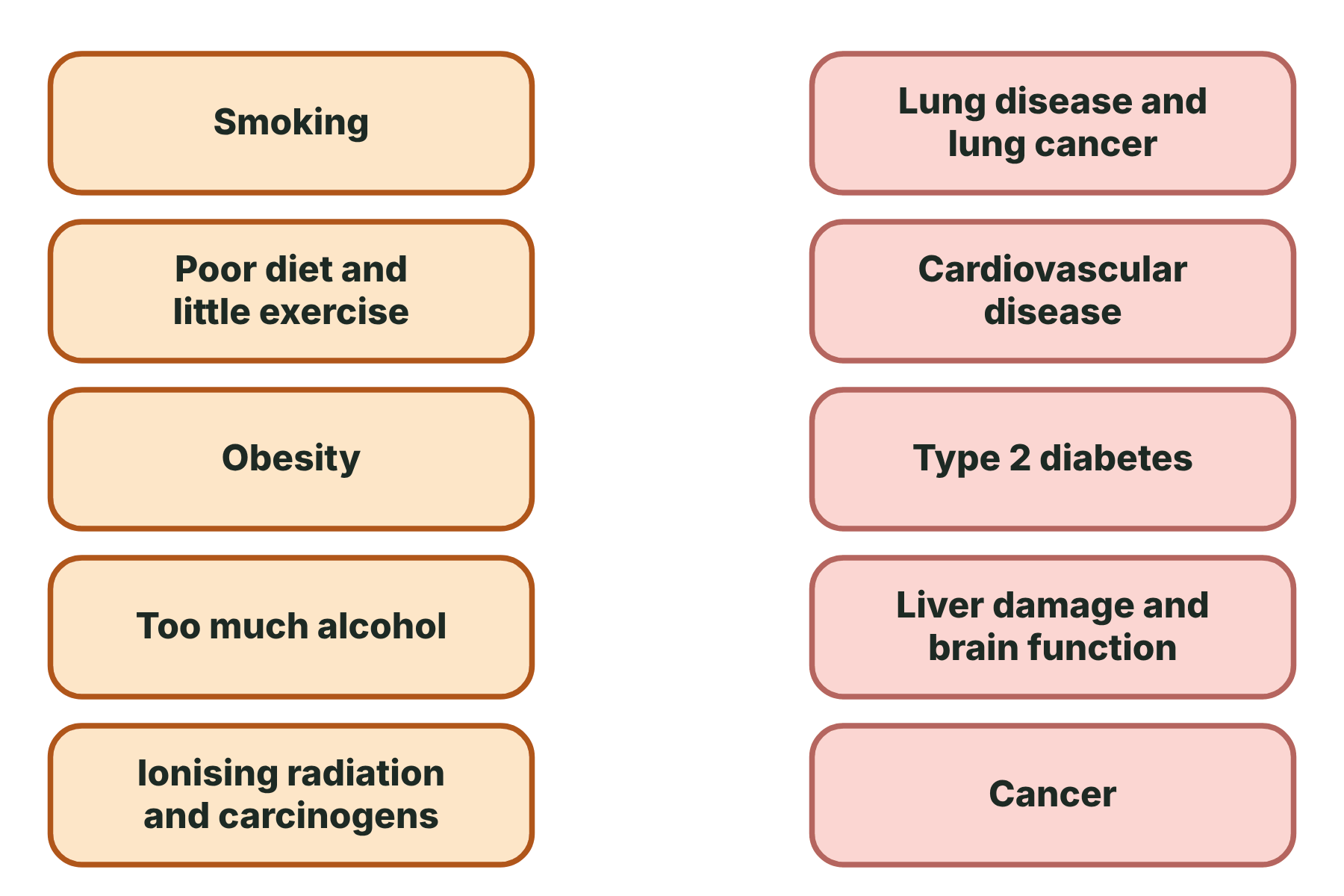 Which risk factors raise the chance of each disease?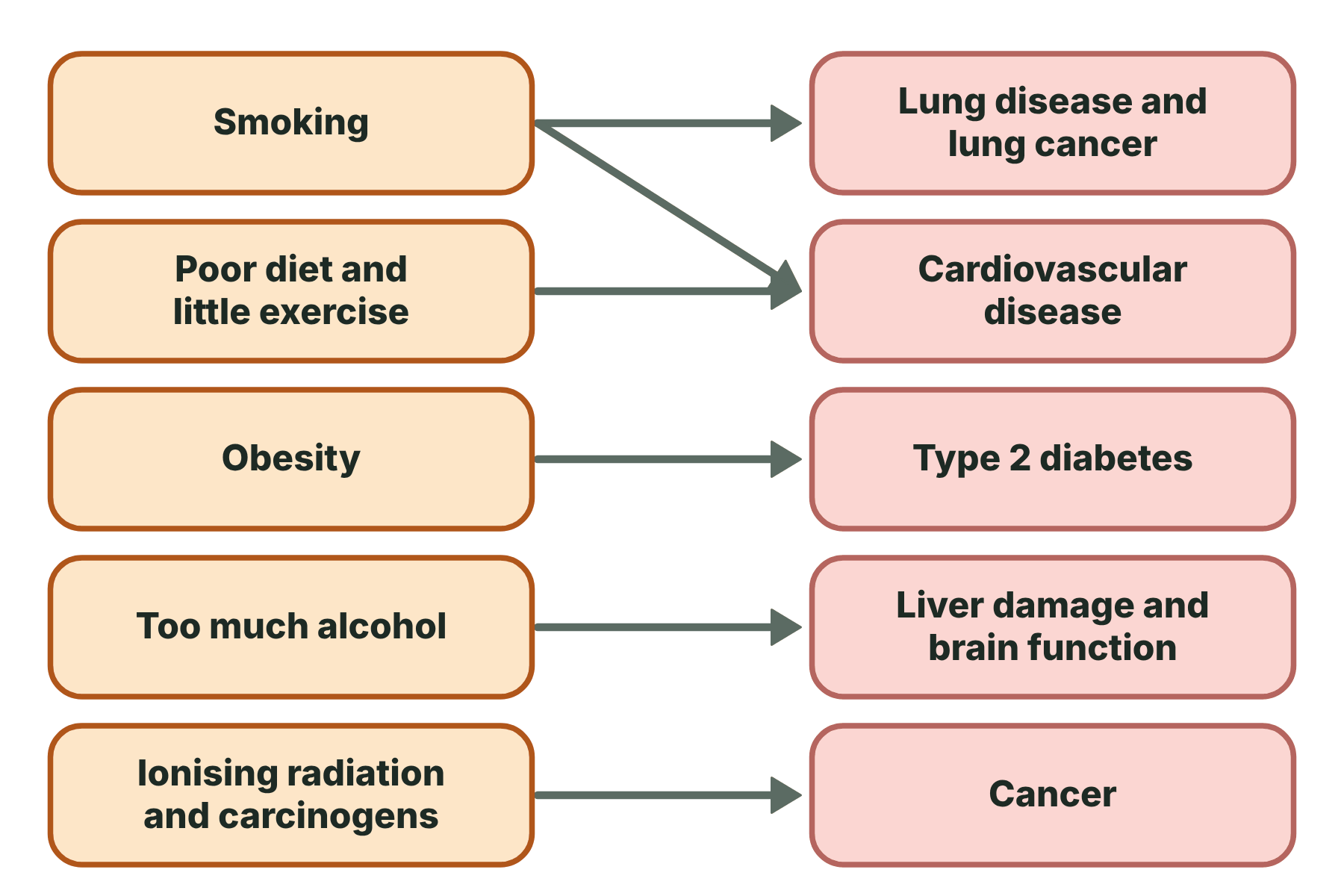
Smoking raises the risk of lung disease, lung cancer and cardiovascular disease. Poor diet and little exercise raise the risk of cardiovascular disease. Obesity raises the risk of type 2 diabetes. Alcohol damages the liver and brain function. Carcinogens raise the risk of cancer.
-
What is cancer?
A disease caused by changes in cells that lead to uncontrolled growth and division.
-
What is a tumour?
A lump of abnormal cells.
-
What is a benign tumour?
A growth of abnormal cells contained in one area, usually inside a membrane, that does not invade other parts of the body.
-
What is a malignant tumour?
A tumour whose cells invade neighbouring tissues and spread to other parts of the body in the blood.
-
Which type of tumour is cancer?
A malignant tumour.
-
What is a secondary tumour?
A new tumour formed in another part of the body by cancer cells that have spread.
-
How do cancer cells travel round the body?
In the blood.
-
Is cancer a communicable disease?
No. It is not caused by a pathogen and cannot be passed from person to person.
-
Name a lifestyle risk factor for cancer.
Smoking (also obesity, diet and lack of exercise).
-
Name a carcinogen.
Ionising radiation, or chemicals in tobacco smoke.
-
Can viruses cause cancer?
Some viruses that live in cells can trigger cancers, such as HPV and cervical cancer.
-
What is a genetic risk factor?
An inherited change in a gene that makes a person more likely to get a particular cancer.
-
Does a benign tumour spread?
No.
-
Why is a malignant tumour more dangerous than a benign one?
It spreads and forms secondary tumours in other organs.
-
Which process makes new cells in a tumour?
Mitosis, out of control.
-
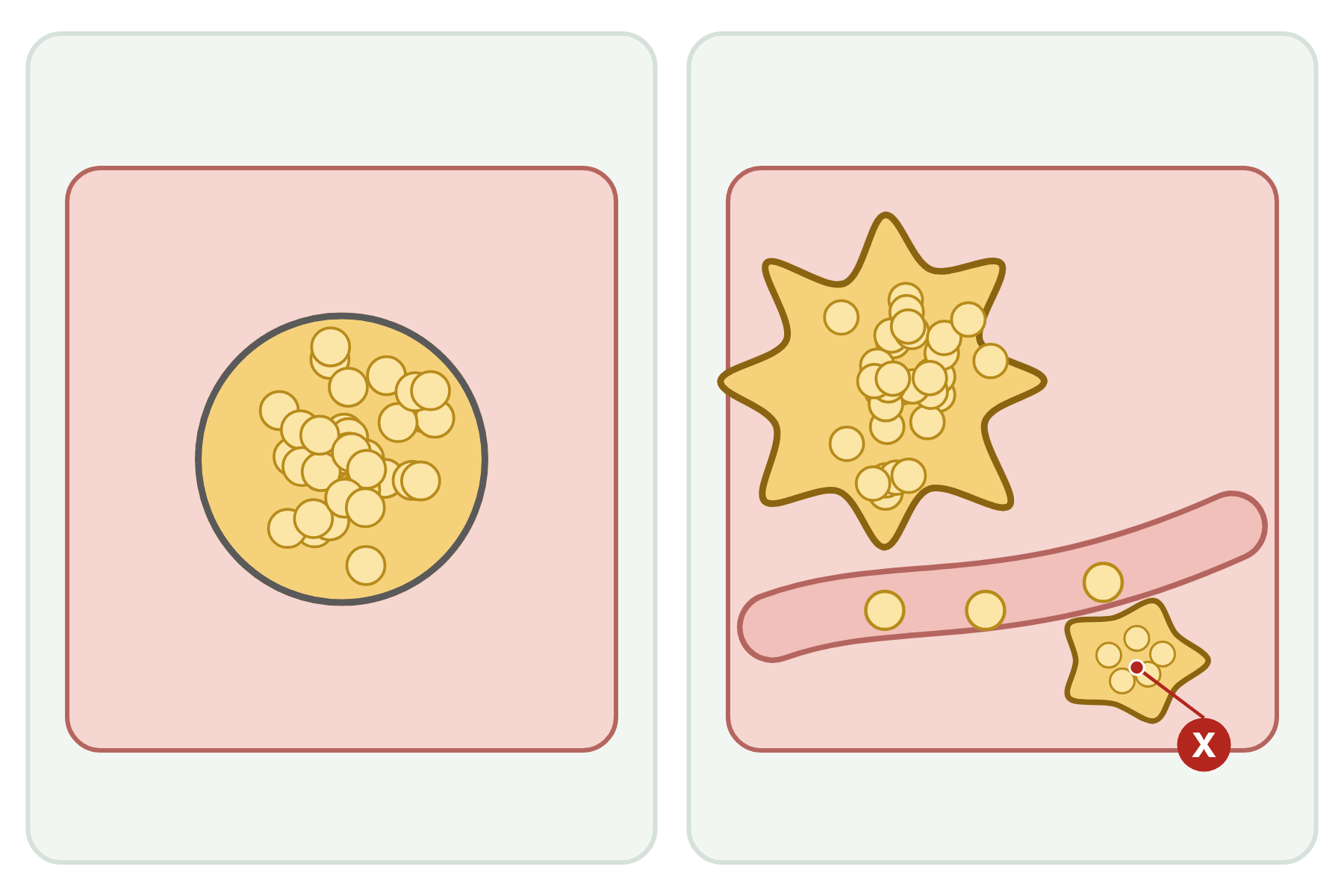 Name the part marked X and say why it is dangerous.
 A secondary tumour. It has grown from cancer cells that spread in the blood from the first malignant tumour.
-
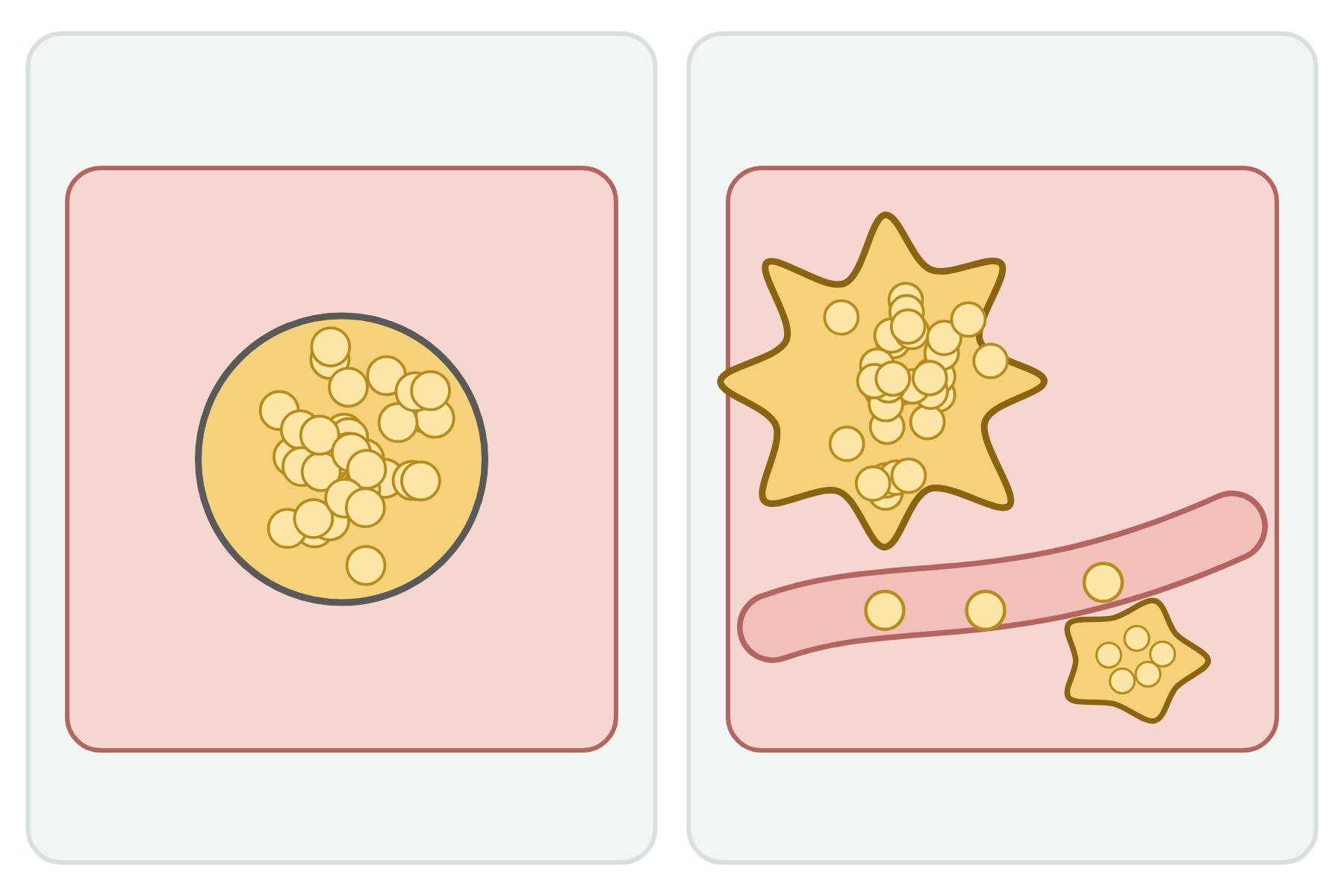 Label both tumours and the way cancer spreads.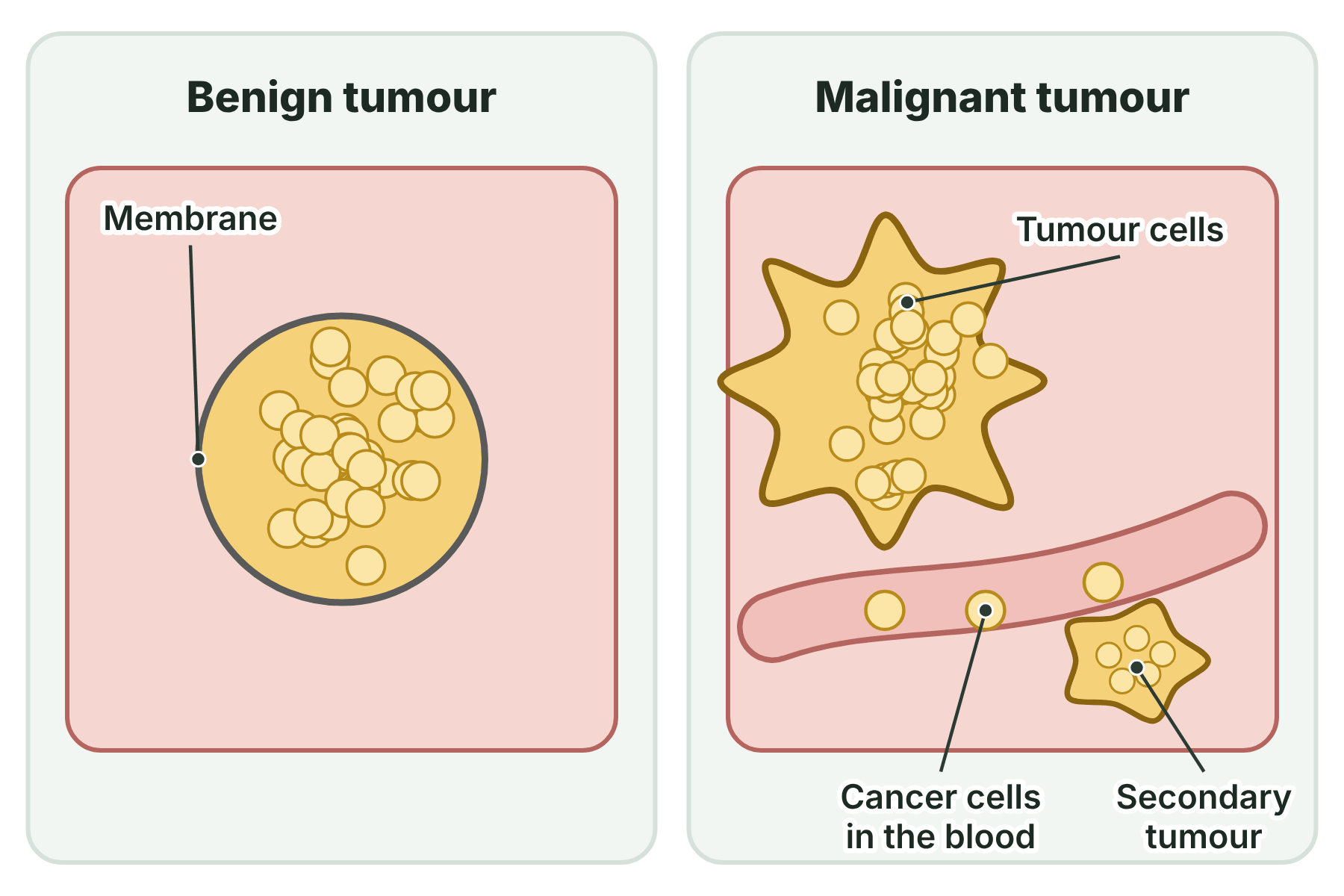
Benign tumour in a membrane, stays in one place. Malignant tumour invading the tissue. Cancer cells in the blood. Secondary tumour.