Flashcards · Biology · Health, Disease and Cancer
Health and Disease
-
How is health defined?
The state of physical and mental well-being.
-
What is a communicable disease?
A disease caused by a pathogen that can be spread from one organism to another.
-
What is a non-communicable disease?
A disease that is not caused by a pathogen and cannot be passed on.
-
Give two examples of non-communicable diseases.
Coronary heart disease and cancer (also type 2 diabetes).
-
Name factors other than disease that affect health.
Diet, stress and life situations.
-
How can a weak immune system affect health?
The person is more likely to suffer infectious diseases.
-
Give an example of a virus that can trigger cancer.
Human papillomavirus (HPV), which can lead to cervical cancer.
-
How can a pathogen trigger an allergy?
An immune reaction first caused by the pathogen can set off skin rashes or asthma.
-
How can physical ill health affect mental health?
Severe physical illness can lead to depression and other mental illness.
-
What is a scatter diagram used for?
To see whether there is a correlation between two variables.
-
What does a negative correlation look like?
As one variable increases, the other decreases.
-
Does a correlation prove cause?
No. It only shows a link.
-
What is epidemiology?
The study of how often diseases occur and what causes them.
-
Why should a sample be large?
A larger sample is more likely to represent the whole population, so the results are more reliable.
-
When do you use a histogram rather than a bar chart?
For continuous data, such as ages in ranges.
-
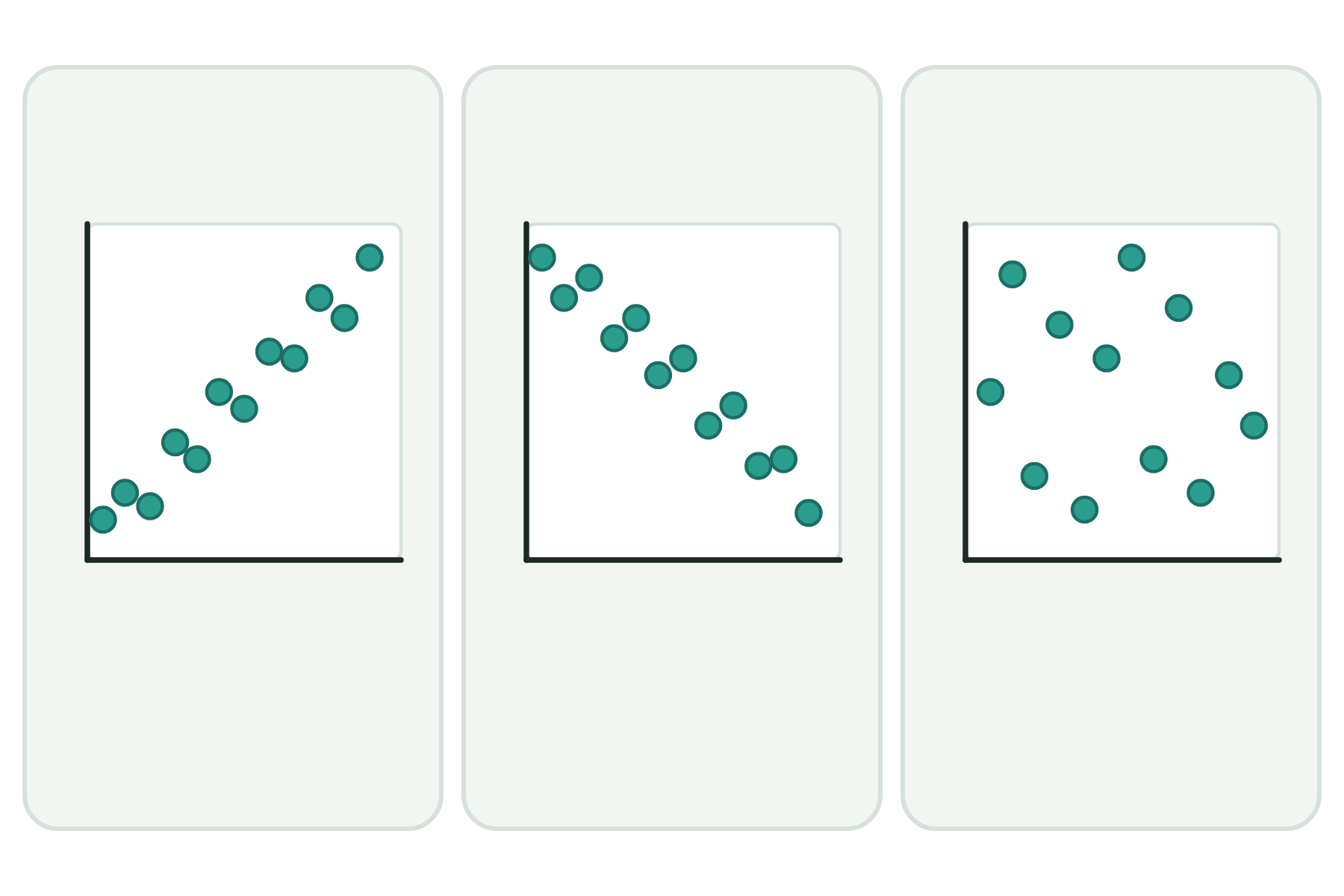 Label the type of correlation shown in each scatter diagram.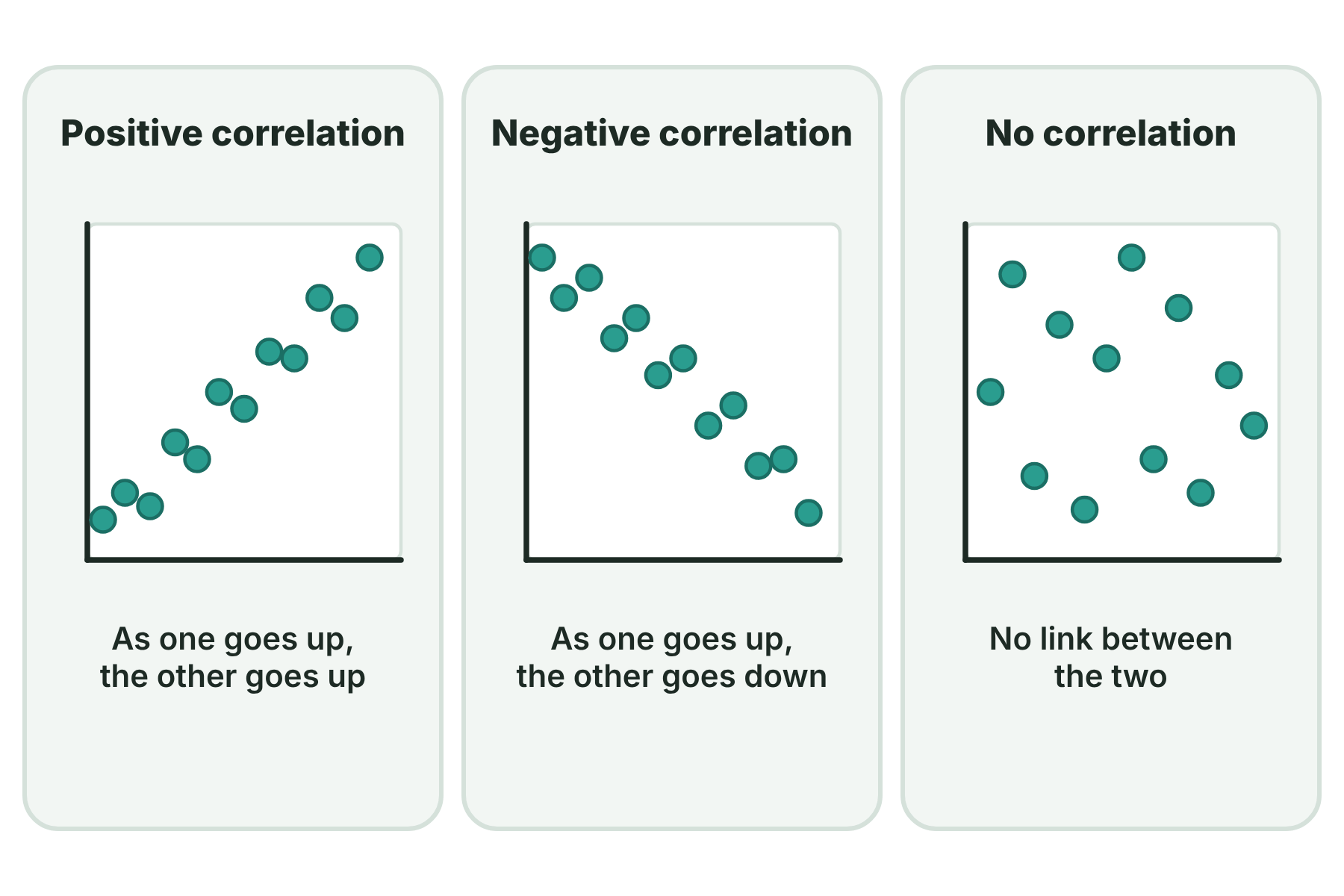
Positive correlation (rising), negative correlation (falling) and no correlation (random scatter).