Flashcards · Biology · Health, Disease and Cancer
Risk Factors and Lifestyle
-
What is a risk factor?
Something linked to an increased rate of a disease.
-
Can a risk factor be a substance?
Yes. It can be a substance in the body or the environment, as well as an aspect of lifestyle.
-
Name three lifestyle factors that increase the risk of cardiovascular disease.
Diet high in fat, smoking and lack of exercise.
-
Which risk factor is linked to type 2 diabetes?
Obesity.
-
What can too much alcohol damage?
The liver, and brain function.
-
Which diseases does smoking increase the risk of?
Lung disease, lung cancer and cardiovascular disease.
-
How can smoking harm an unborn baby?
It can lead to a low birth mass or an early birth.
-
How can alcohol harm an unborn baby?
It can damage the baby's developing brain.
-
Name a carcinogen.
Ionising radiation, such as X-rays or gamma rays (also chemicals in tobacco smoke).
-
Does a correlation prove a risk factor causes a disease?
No. A causal mechanism has been proved for some risk factors but not for others.
-
Why do many diseases have several causes?
They are caused by the interaction of a number of factors.
-
What is a cost of non-communicable disease to an individual?
Pain, lower quality of life and loss of earnings.
-
What is a cost to a nation?
Treatment costs for the health service and lost productivity.
-
Why do researchers need large samples for risk factor studies?
A large, representative sample makes the link more reliable.
-
How do you turn 120 cases in 1000 people into a percentage?
120 ÷ 1000 × 100 = 12%.
-
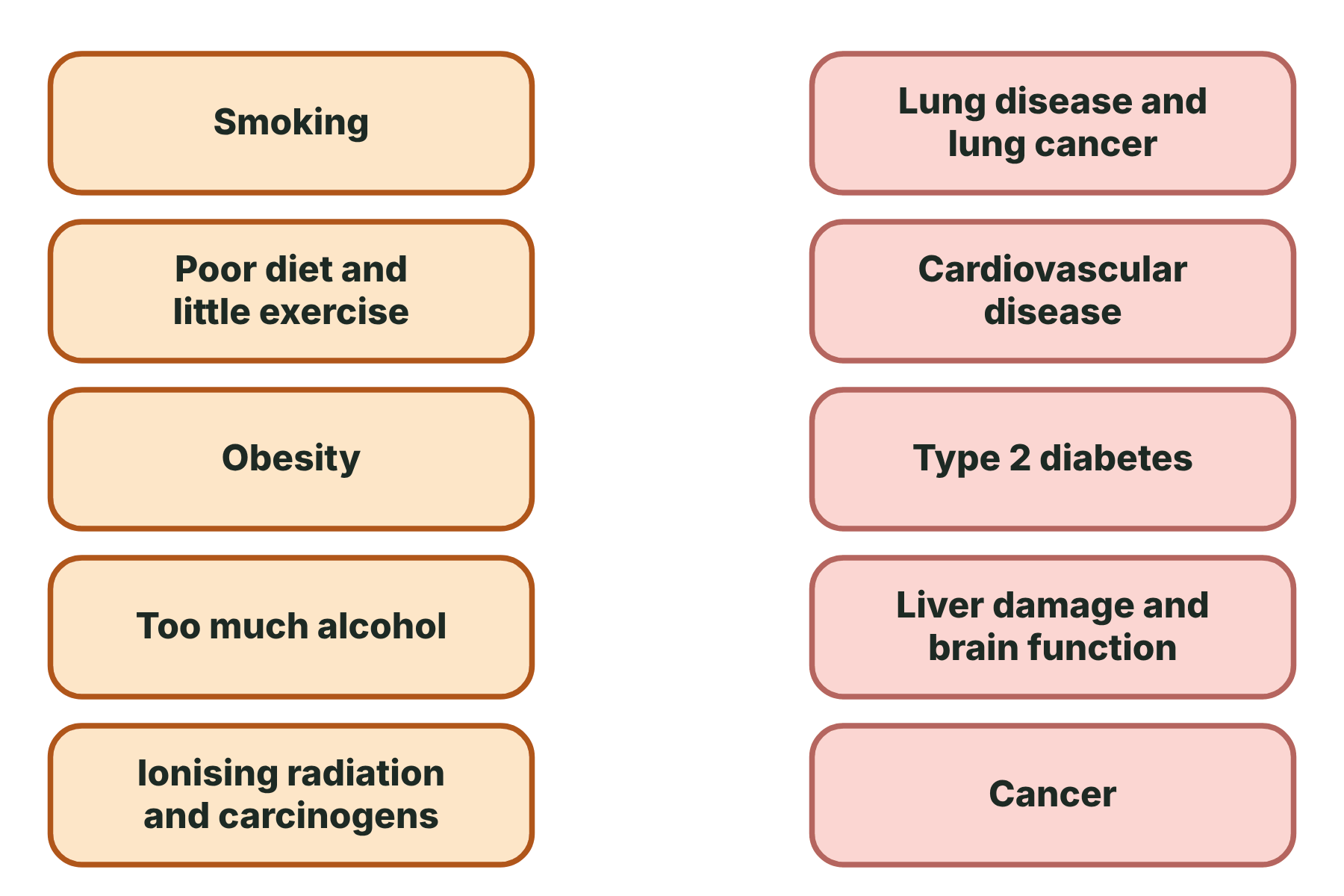 Which risk factors raise the chance of each disease?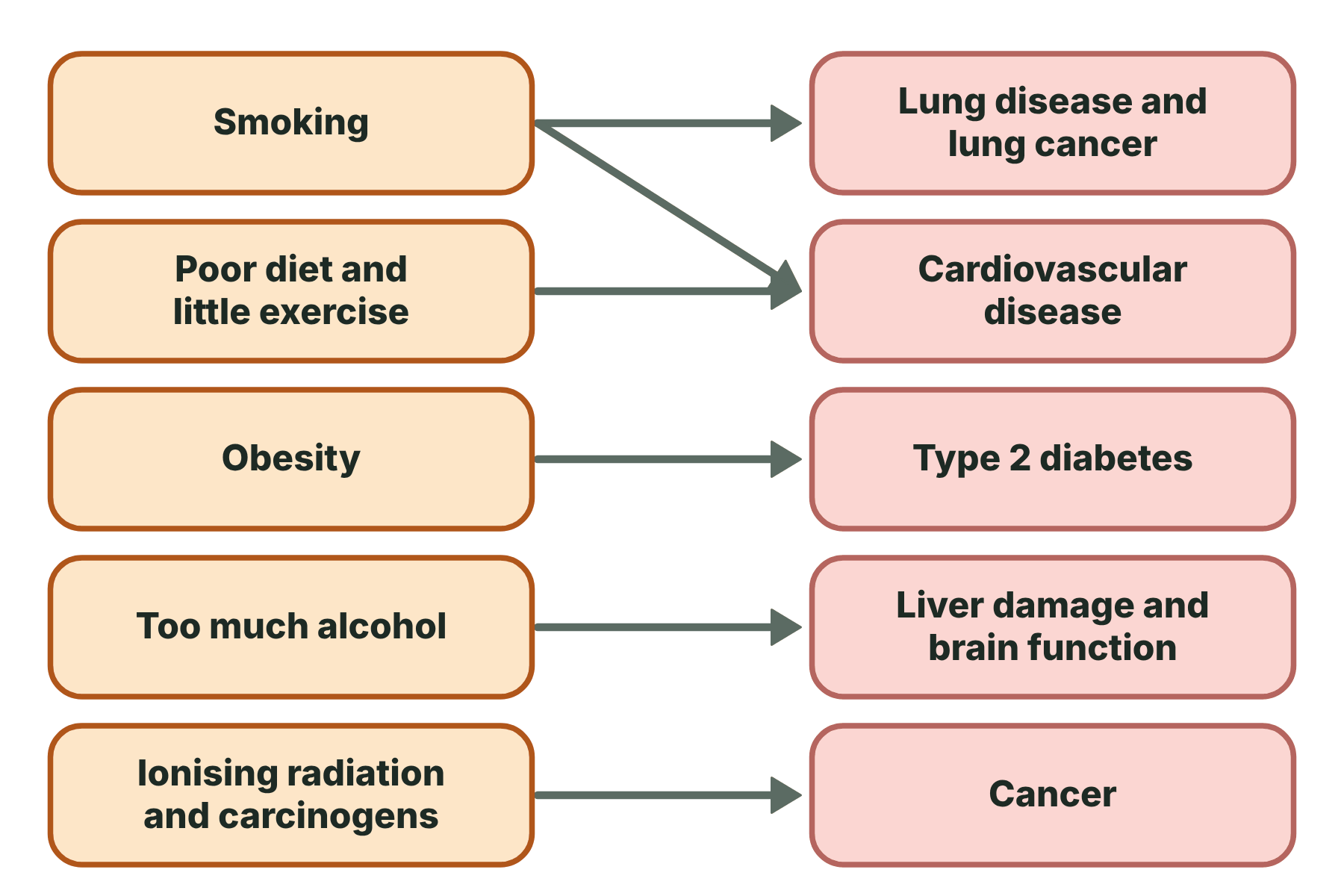
Smoking raises the risk of lung disease, lung cancer and cardiovascular disease. Poor diet and little exercise raise the risk of cardiovascular disease. Obesity raises the risk of type 2 diabetes. Alcohol damages the liver and brain function. Carcinogens raise the risk of cancer.