Flashcards · Biology
Monoclonal Antibodies
-
What is a monoclonal antibody?
An antibody made by a single clone of cells that is specific to one binding site on one antigen.
-
Why are the antibodies identical?
They all come from a single clone of genetically identical cells.
-
Which animal's lymphocytes are used?
Mice.
-
How are the mouse lymphocytes stimulated?
By injecting the mouse with the antigen.
-
What are lymphocytes combined with?
A particular kind of tumour cell.
-
What is the new cell called?
A hybridoma cell.
-
What can a hybridoma cell do?
Both divide and make the antibody.
-
Why can't lymphocytes alone be used?
They cannot divide for long, so they cannot make much antibody.
-
Why are tumour cells used?
They divide rapidly and keep dividing.
-
What happens to single hybridoma cells?
They are cloned to produce many identical cells.
-
What is done with the antibody at the end?
It is collected and purified.
-
What is a clone?
A group of genetically identical cells.
-
What does specific mean for an antibody?
It binds to only one binding site on one antigen.
-
Give one drawback of using mouse cells.
Mouse antibodies can be seen as foreign by the human immune system.
-
Does a lymphocyte make many types of antibody?
No. Each lymphocyte makes one type.
-
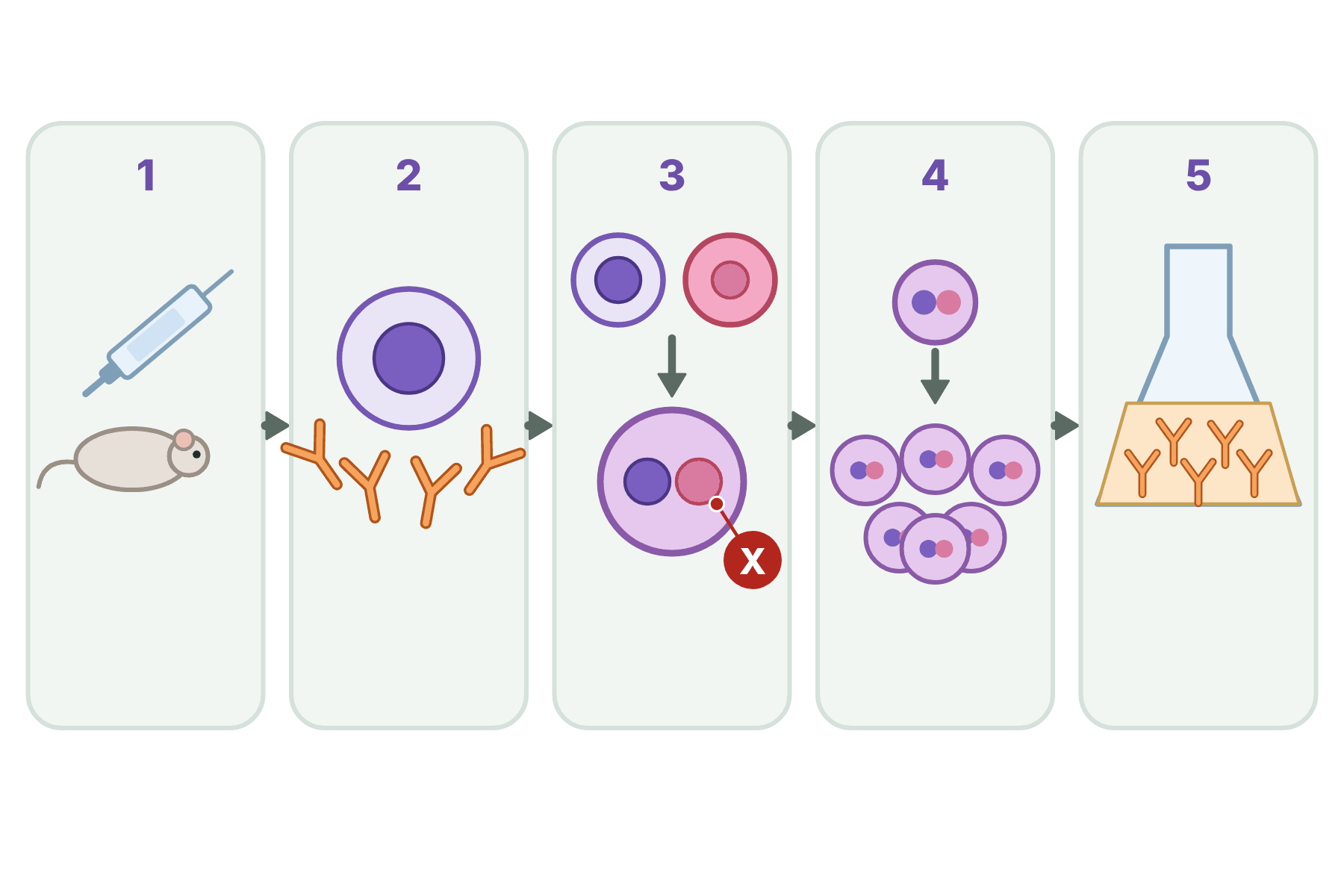 Name the cell marked X and say why it is useful.
 A hybridoma cell. It can both divide, like a tumour cell, and make the antibody, like a lymphocyte.
-
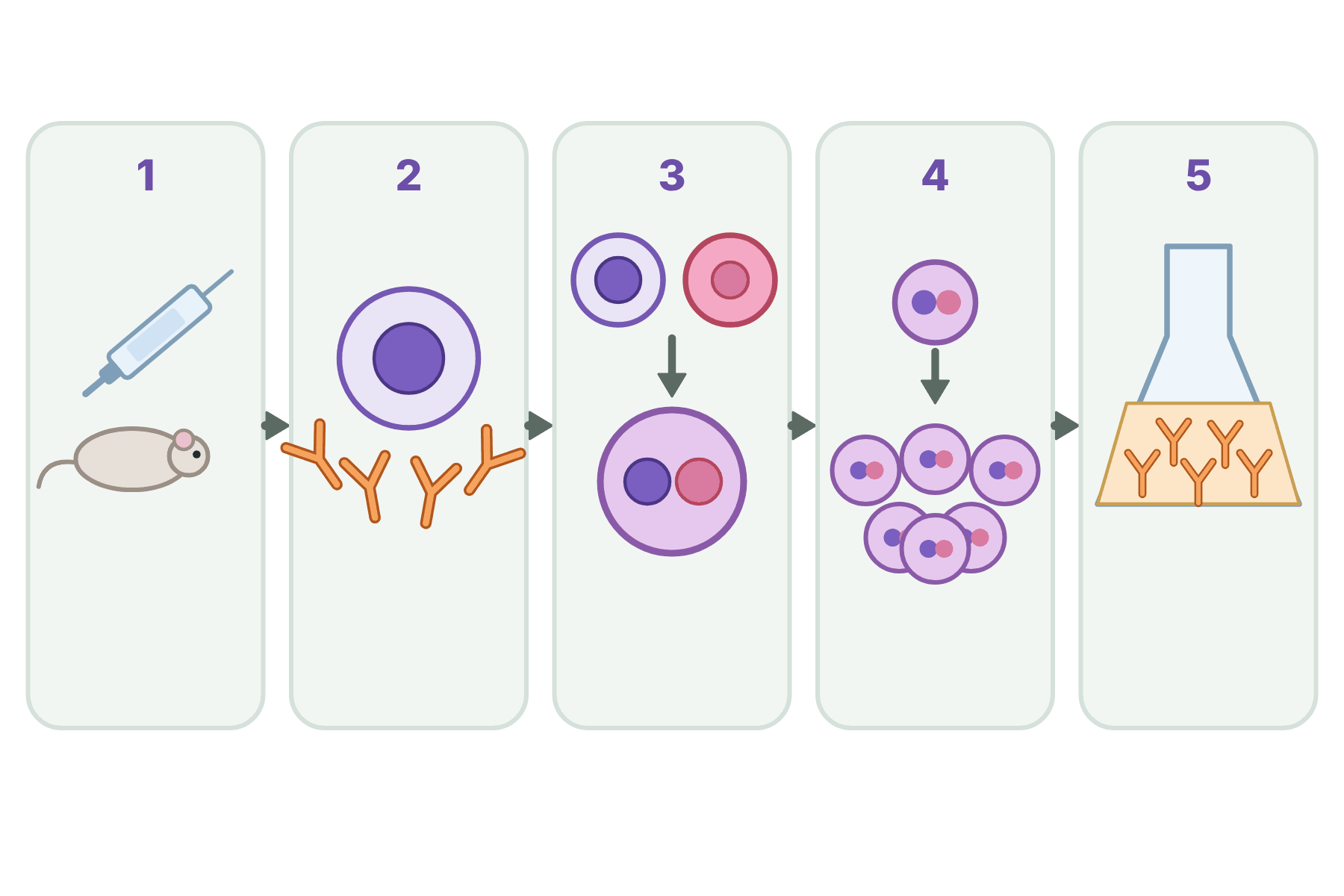 Describe each of the five steps.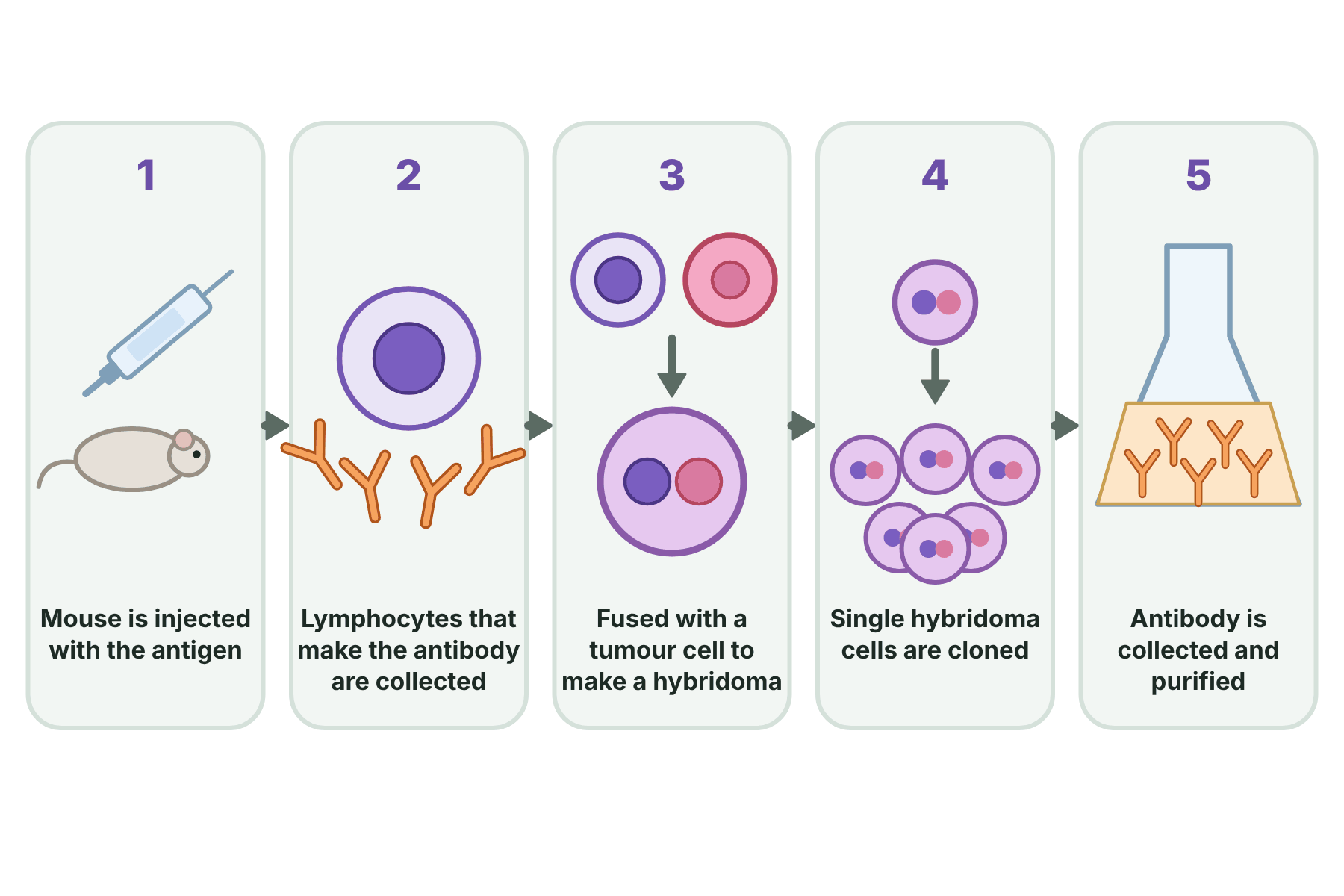
1 Inject the mouse with the antigen. 2 Collect the lymphocytes. 3 Fuse them with tumour cells to make hybridoma cells. 4 Clone single hybridoma cells. 5 Collect and purify the antibody.
-
Name four uses of monoclonal antibodies.
Diagnosis, measuring chemicals or detecting pathogens in laboratories, research, and treating disease.
-
What does a pregnancy test detect?
The hormone hCG in urine.
-
What makes the test line turn blue?
Antibodies with blue beads, linked to hCG, are trapped by fixed antibodies on the line.
-
Why is there a control line?
It always turns blue, to show that the test has worked.
-
How are monoclonal antibodies used in research?
They are attached to a fluorescent dye to show where specific molecules are in cells or tissues.
-
How can monoclonal antibodies measure hormones in blood?
They bind to the hormone in a laboratory test, allowing the level to be measured.
-
How are they used to treat cancer?
They carry a radioactive substance, a toxic drug or a chemical that stops cell division to the cancer cells.
-
Why do the antibodies only bind to cancer cells?
They are specific to antigens on the surface of the cancer cells.
-
Why is delivering a drug this way useful?
It does not harm other cells in the body.
-
What was disappointing about monoclonal antibodies?
They create more side effects than expected and are not yet as widely used as was hoped.
-
Name one advantage of monoclonal antibodies.
They are specific, so they target only one chemical.
-
Name one disadvantage.
More side effects than expected, or expensive to produce.
-
Do you need to recall specific tests or treatments?
No. You should be able to explain them from given information.
-
What does a fluorescent dye do in this research?
It glows, so it shows where the antibody has bound.
-
Why do cancer cells have antigens normal cells lack?
Changes in the cells alter the proteins on their surface.
-
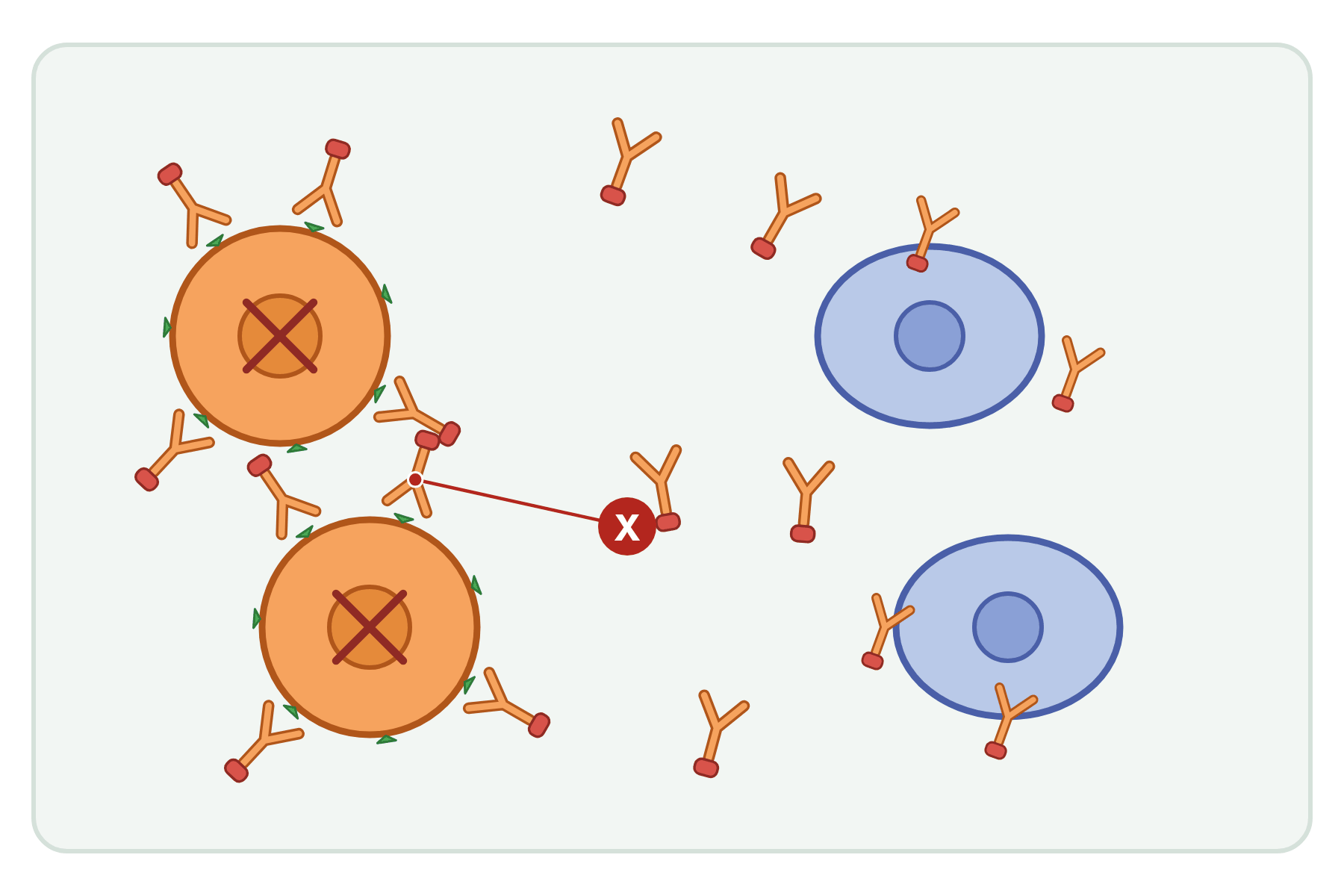 Name the part marked X and say what it carries.
 A monoclonal antibody. It carries a drug to the cancer cell and binds to a specific antigen on its surface.
-
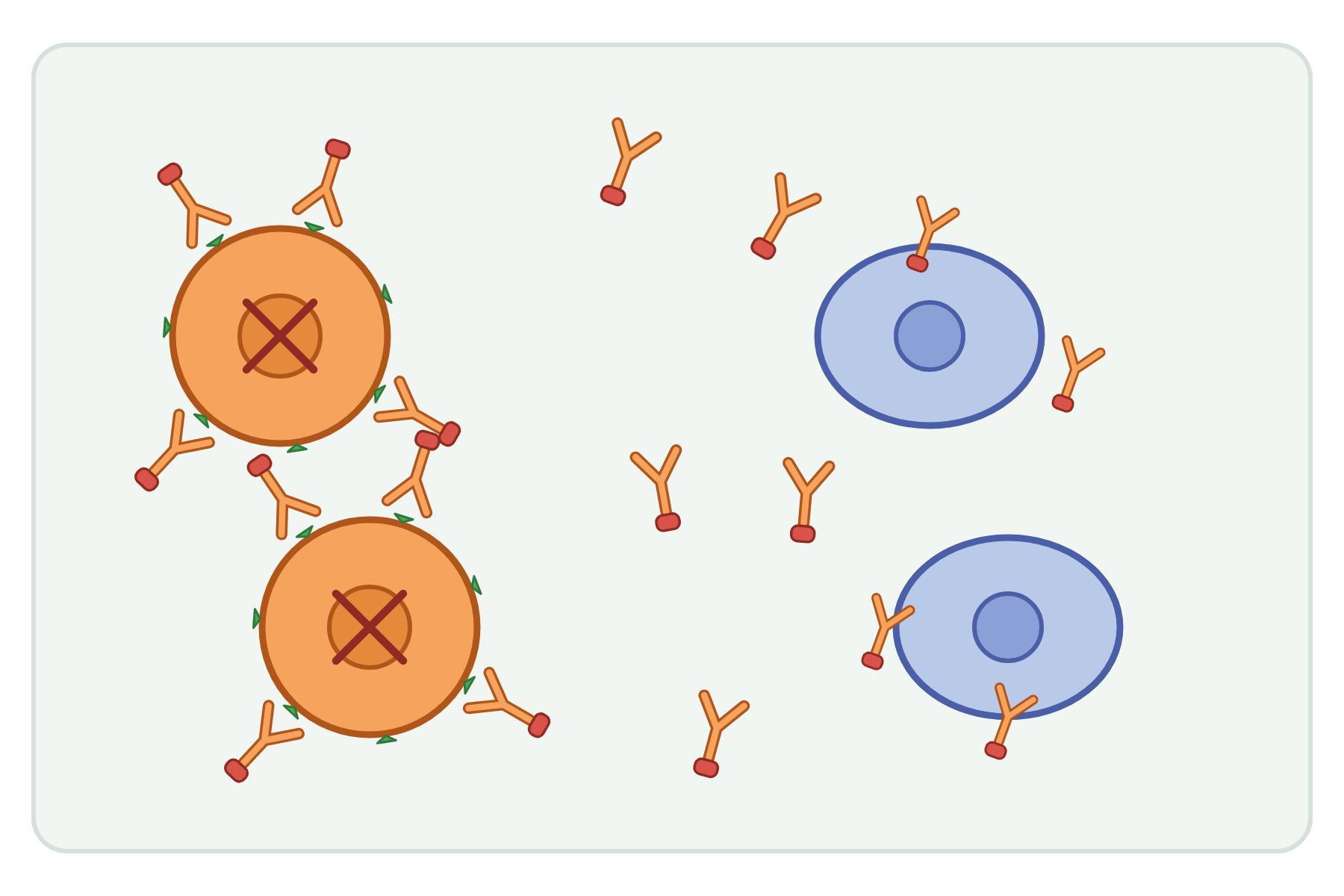 Label every part of this treatment.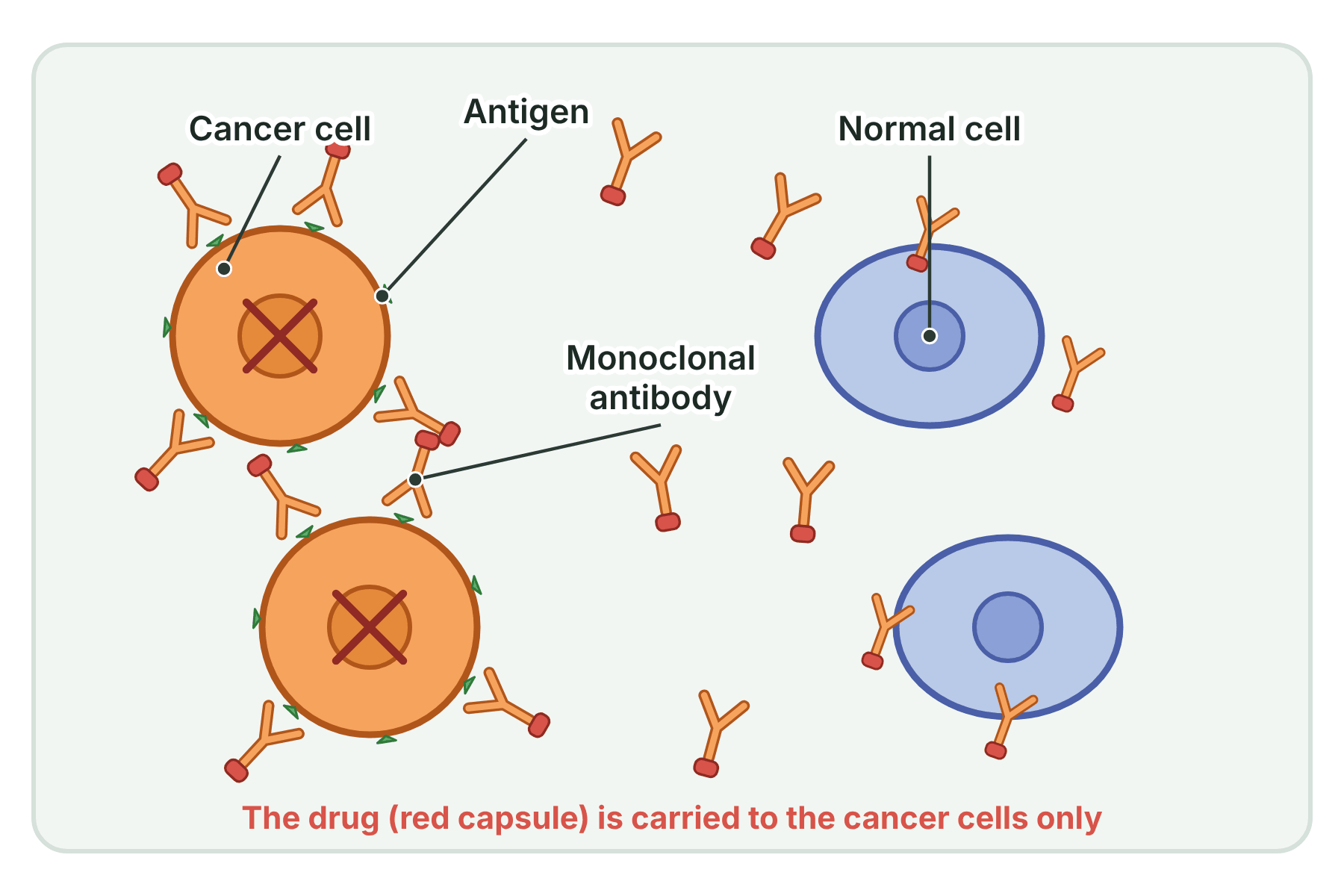
Cancer cell, antigen, monoclonal antibody, drug, normal cell. The drug reaches only the cancer cells.