Flashcards · Biology · Plant Disease
Detecting and Identifying Plant Diseases
-
Which pathogen should you know for a viral plant disease?
Tobacco mosaic virus.
-
Which is the fungal plant disease you should know?
Rose black spot.
-
Which insect pest should you know?
Aphids.
-
Name three signs of plant disease.
Any three of stunted growth, spots on leaves, rot, growths, malformed parts, discolouration, pests.
-
How can plant diseases be identified?
Gardening manual or website, laboratory tests, or testing kits with monoclonal antibodies.
-
How does a monoclonal antibody testing kit work?
The antibody binds to a particular pathogen and shows a colour change.
-
What are nitrate ions needed for?
To make amino acids, and then proteins, for growth.
-
What does a lack of nitrate cause?
Stunted growth.
-
What are magnesium ions needed for?
To make chlorophyll.
-
What does a lack of magnesium cause?
Chlorosis (yellow leaves).
-
What is chlorosis?
Leaves turning yellow because there is too little chlorophyll.
-
Why does a plant with chlorosis photosynthesise less?
It has less chlorophyll to absorb light.
-
How can a deficiency be treated?
By adding a fertiliser with the missing ion.
-
Why are pests a sign of disease?
Their presence can harm the plant and spread pathogens.
-
Which detection and identification methods are Higher tier?
The list of signs and the methods of identification.
-
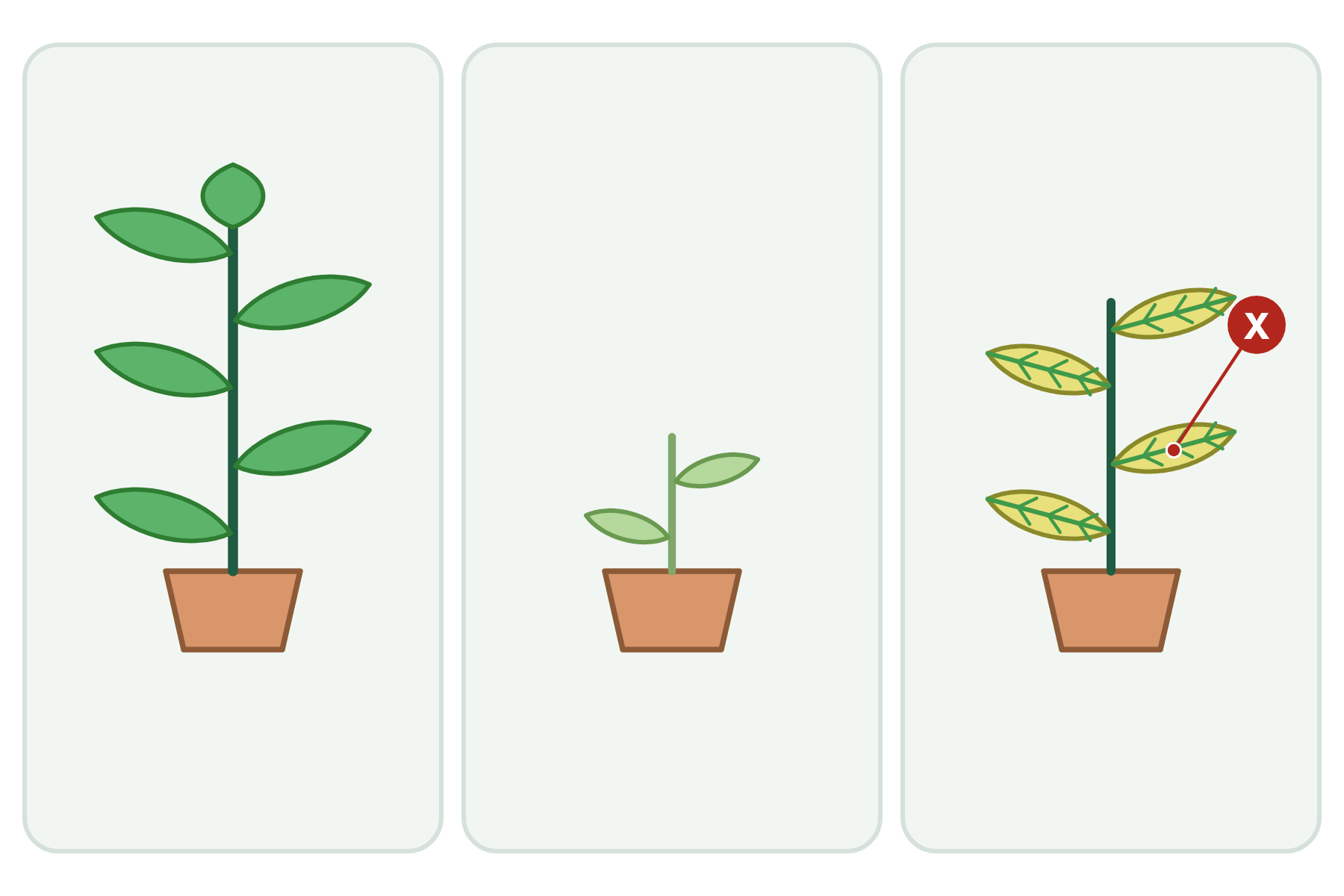 Name the problem shown by the plant marked X and state its cause.
 Chlorosis, which is yellow leaves. It is caused by a lack of magnesium ions, which are needed to make chlorophyll.
-
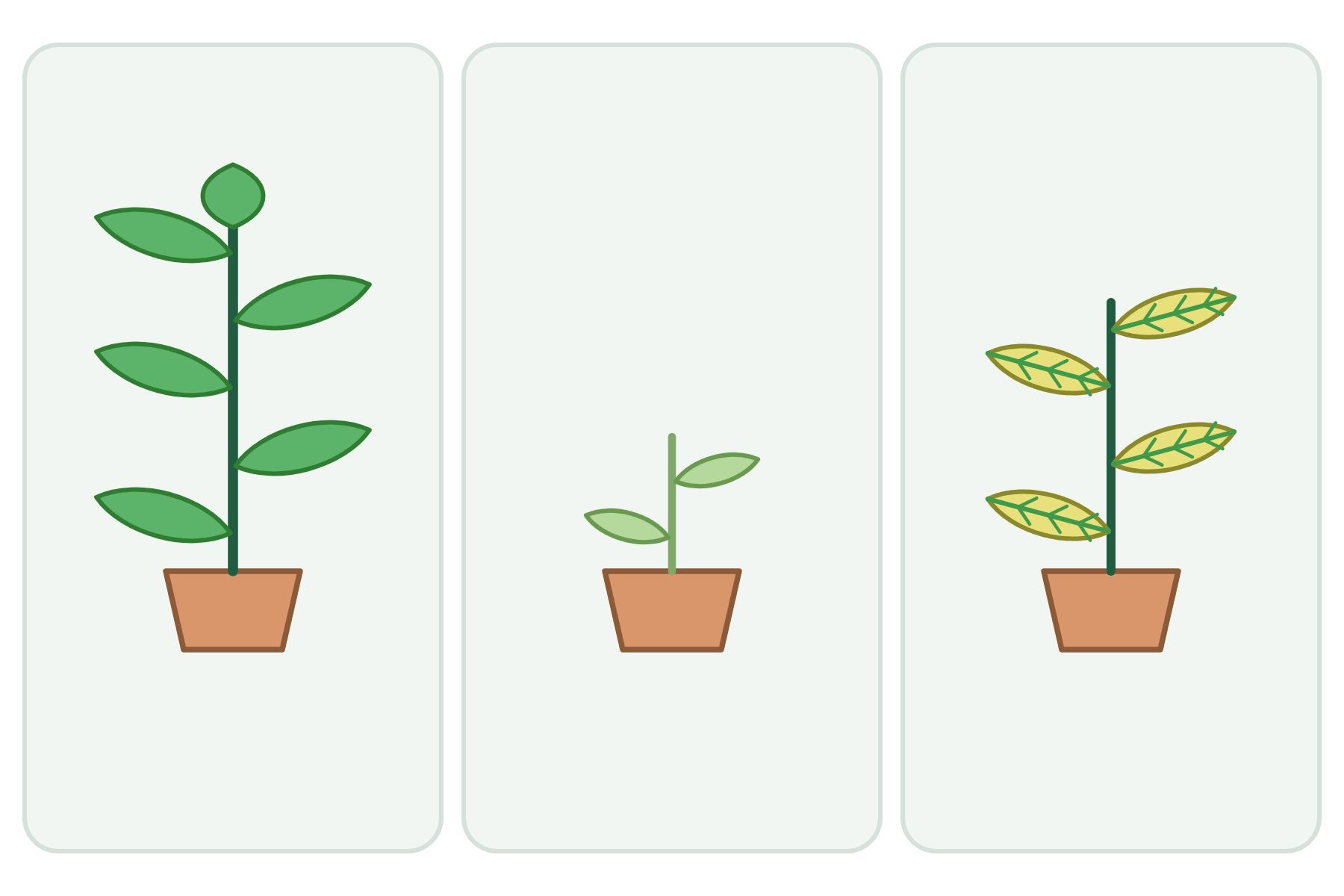 Describe the symptoms and causes shown.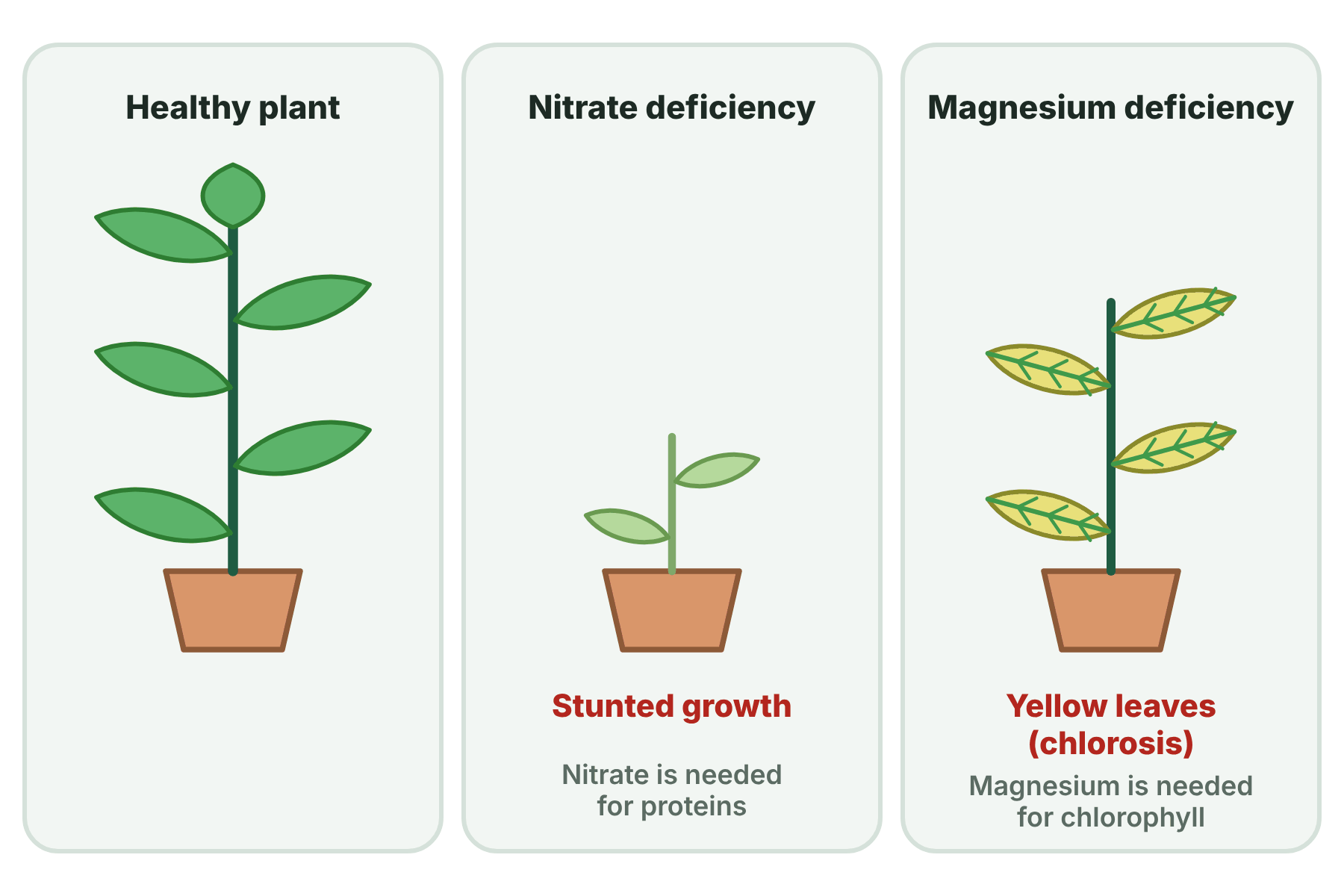
Healthy plant. Nitrate deficiency: stunted growth, because nitrate is needed for proteins. Magnesium deficiency: yellow leaves (chlorosis), because magnesium is needed for chlorophyll.