Flashcards · Biology · The Circulatory System
Blood
-
What are the four components of blood?
Plasma, red blood cells, white blood cells and platelets.
-
What is plasma?
The pale yellow liquid part of the blood that carries dissolved substances.
-
Name three substances transported in plasma.
Carbon dioxide, soluble food molecules such as glucose, and urea (also hormones and heat).
-
What do red blood cells do?
They carry oxygen from the lungs to the body cells.
-
What is haemoglobin?
The red pigment in red blood cells that binds to oxygen.
-
Why are red blood cells biconcave?
The shape gives a large surface area for oxygen to diffuse in and out quickly.
-
Why do red blood cells have no nucleus?
There is more room for haemoglobin, so they can carry more oxygen.
-
What do white blood cells do?
They help to defend the body against pathogens.
-
Do white blood cells have a nucleus?
Yes.
-
What are platelets?
Small fragments of cells that help the blood to clot.
-
What do platelets do at a wound?
They cause the blood to clot, forming a scab that stops bleeding and keeps microorganisms out.
-
How can you tell a white blood cell from a red blood cell in a photograph?
The white blood cell is larger and has a stained nucleus. The red blood cell has no nucleus.
-
What carries urea in the blood?
The plasma.
-
Give one risk of a blood transfusion.
Infection from the donor blood, a mismatched blood group or an allergic reaction.
-
Which part of the blood carries heat energy?
The plasma.
-
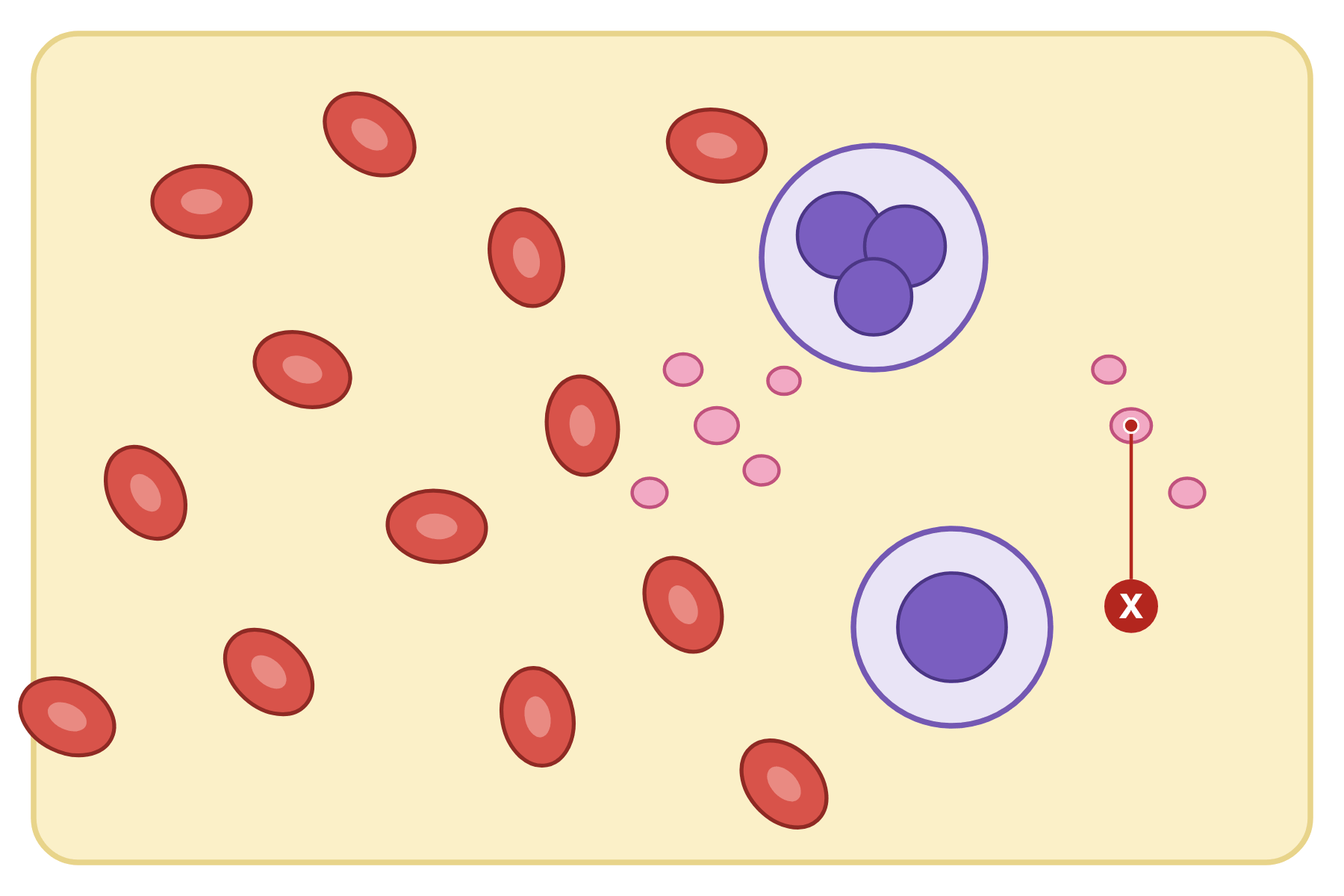 Name the blood component marked X and say what it does.
 A platelet. It is a small fragment of a cell that helps the blood to clot at a wound.
-
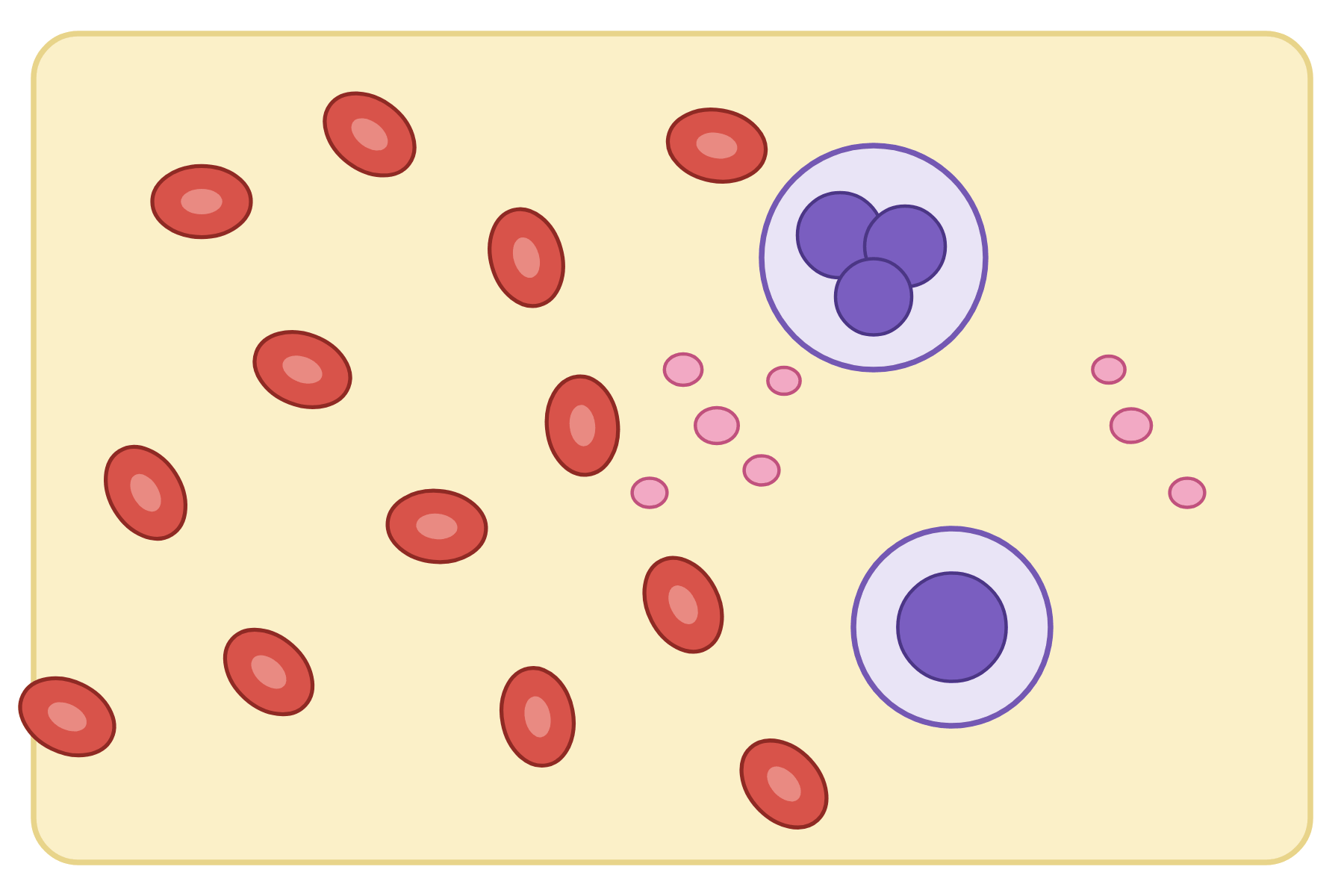 Label every component of the blood.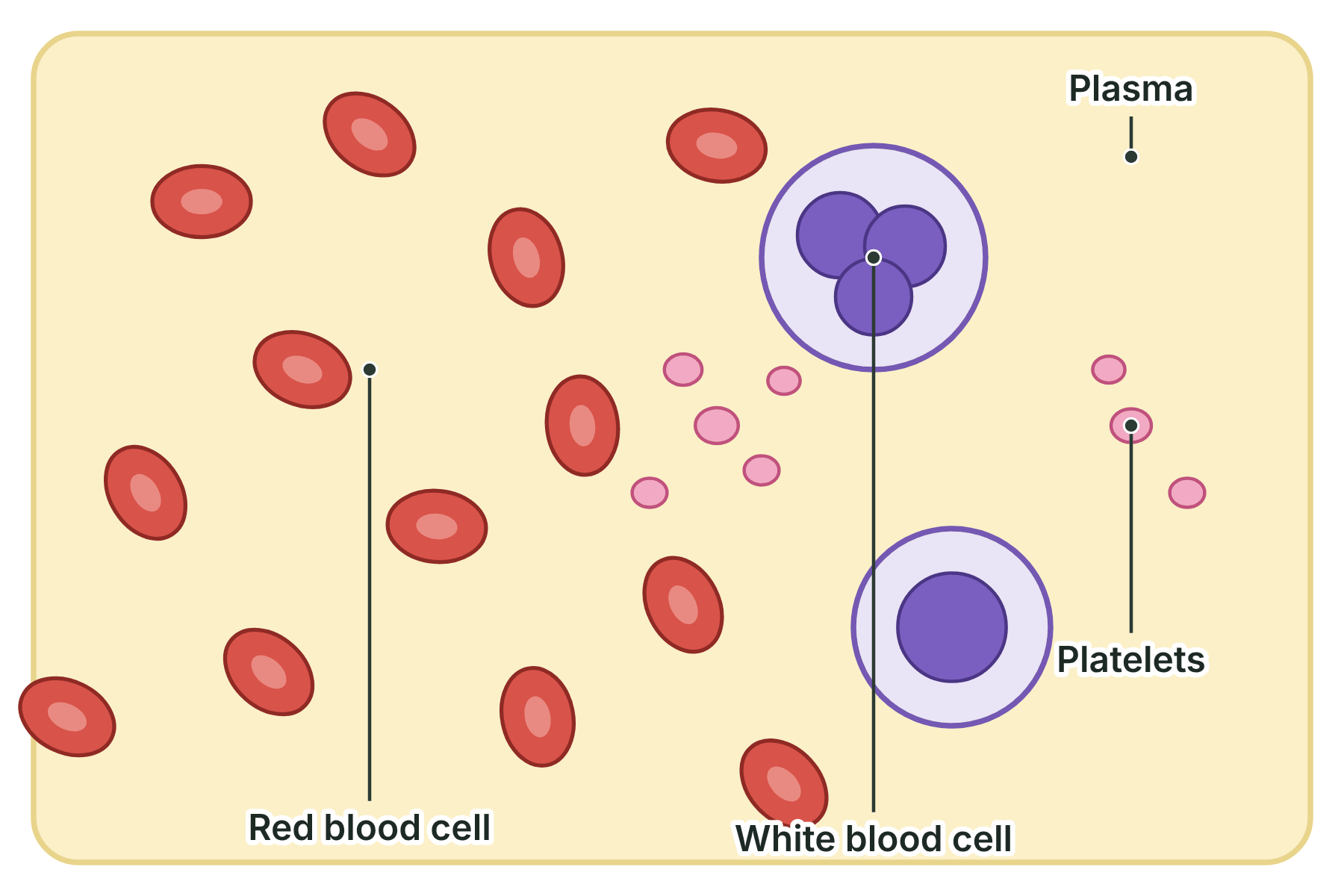
Plasma, red blood cell (biconcave, no nucleus), white blood cell (has a nucleus) and platelets.