Flashcards · Biology · DNA and the Genome
DNA, Genes and the Genome
-
Where is DNA found in an animal cell?
In the nucleus, contained in chromosomes.
-
What shape is a DNA molecule?
A double helix: two strands coiled around each other.
-
Is DNA a polymer?
Yes. It is a long molecule made of repeating units.
-
How many chromosomes are in a human body cell?
46, in 23 pairs.
-
What is a chromosome?
A structure in the nucleus made from one very long molecule of DNA.
-
What is a gene?
A small section of DNA on a chromosome.
-
What does a gene code for?
A particular sequence of amino acids, to make a specific protein.
-
What are proteins made from?
Amino acids joined in a chain.
-
What is the genome of an organism?
All of its genetic material.
-
Has the whole human genome been studied?
Yes, it has now been studied.
-
Name three reasons why the human genome is important.
Finding genes linked to disease, understanding and treating inherited disorders, and tracing human migration.
-
What was the Human Genome Project?
An international project, 1990 to 2003, that worked out the whole human genome.
-
Which is bigger, a gene or a chromosome?
A chromosome. It carries many genes.
-
Which is bigger, a gene or the genome?
The genome, which contains all of an organism's genes.
-
What do identical twins share that other siblings do not?
The same genome.
-
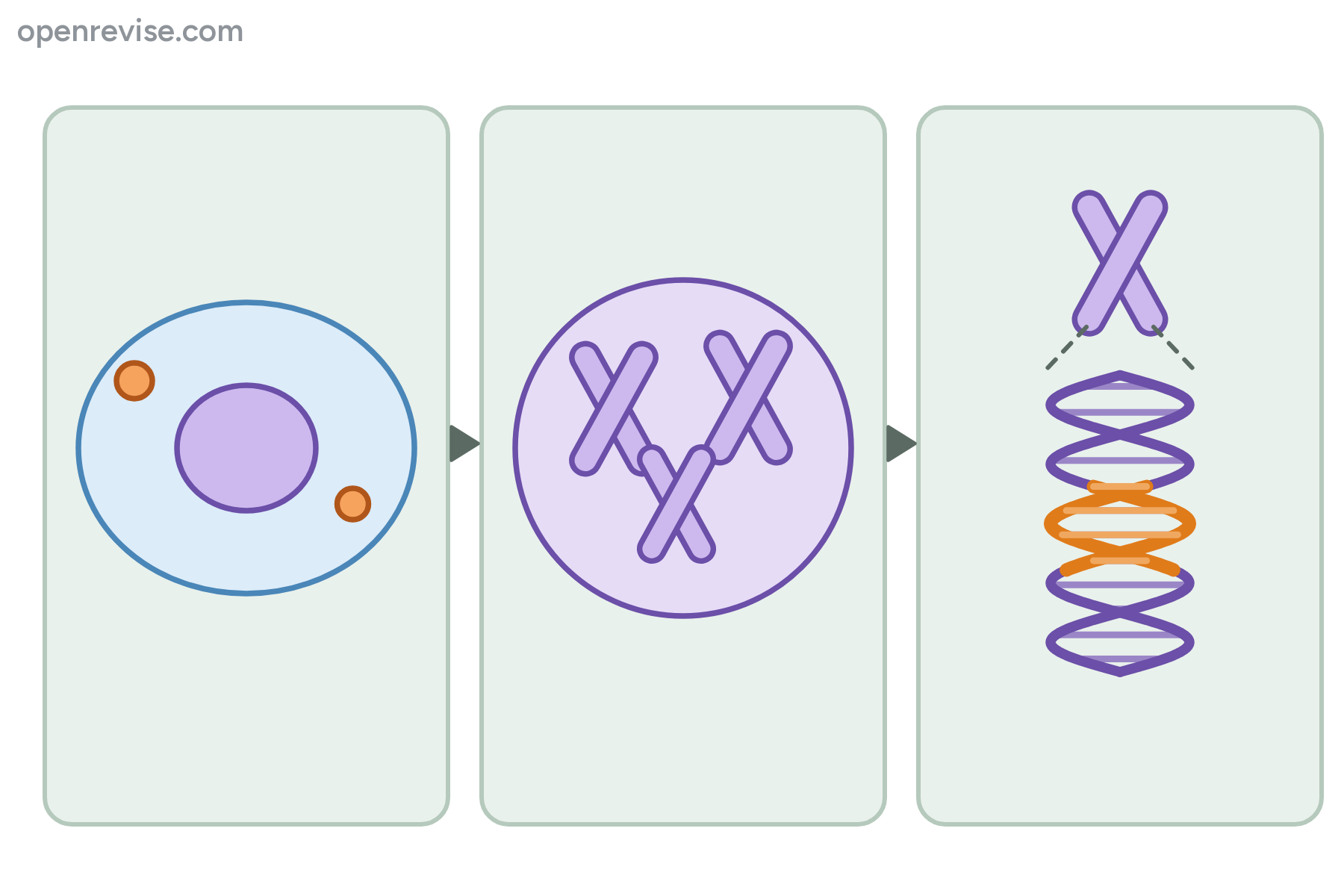 Name each level of the diagram, from the cell down to the gene.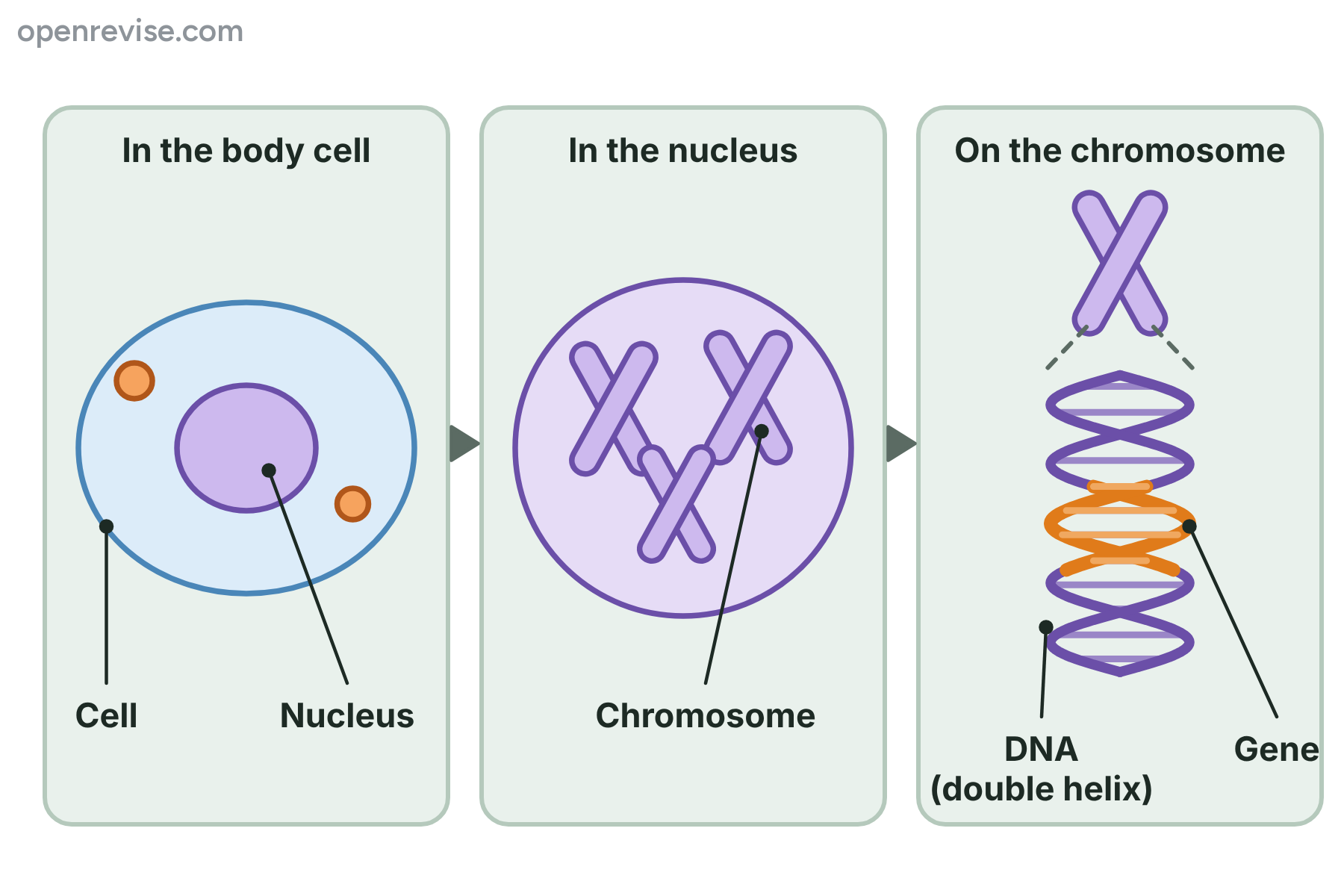
The cell contains a nucleus. The nucleus contains chromosomes. A chromosome is made of DNA, a double helix. A gene is a small section of the DNA.