Flashcards · Biology · Homeostasis and the Nervous System
Neurones and the Nervous System
-
What is a stimulus?
A change in the surroundings that can be detected.
-
What does a receptor do?
It detects a stimulus and changes it into an electrical impulse.
-
What is an effector?
A muscle or a gland that carries out a response.
-
What is the central nervous system?
The brain and the spinal cord.
-
What does a sensory neurone do?
Carries impulses from a receptor to the central nervous system.
-
What does a relay neurone do?
Carries impulses inside the central nervous system.
-
What does a motor neurone do?
Carries impulses from the central nervous system to an effector.
-
What is the axon?
The long fibre that carries the impulse away from the cell body.
-
What does the myelin sheath do?
Insulates the axon and makes the impulse travel faster.
-
What are dendrites?
Short branches that receive impulses.
-
What is a synapse?
A small gap between two neurones.
-
How does the signal cross a synapse?
Neurotransmitters diffuse across the gap and start a new impulse.
-
Why can impulses only pass one way across a synapse?
The neurotransmitter is released from one side only.
-
Name the two types of effector.
Muscles and glands.
-
Why is the response of the nervous system coordinated?
Nerves reach every part of the body, with many links and many types of receptor.
-
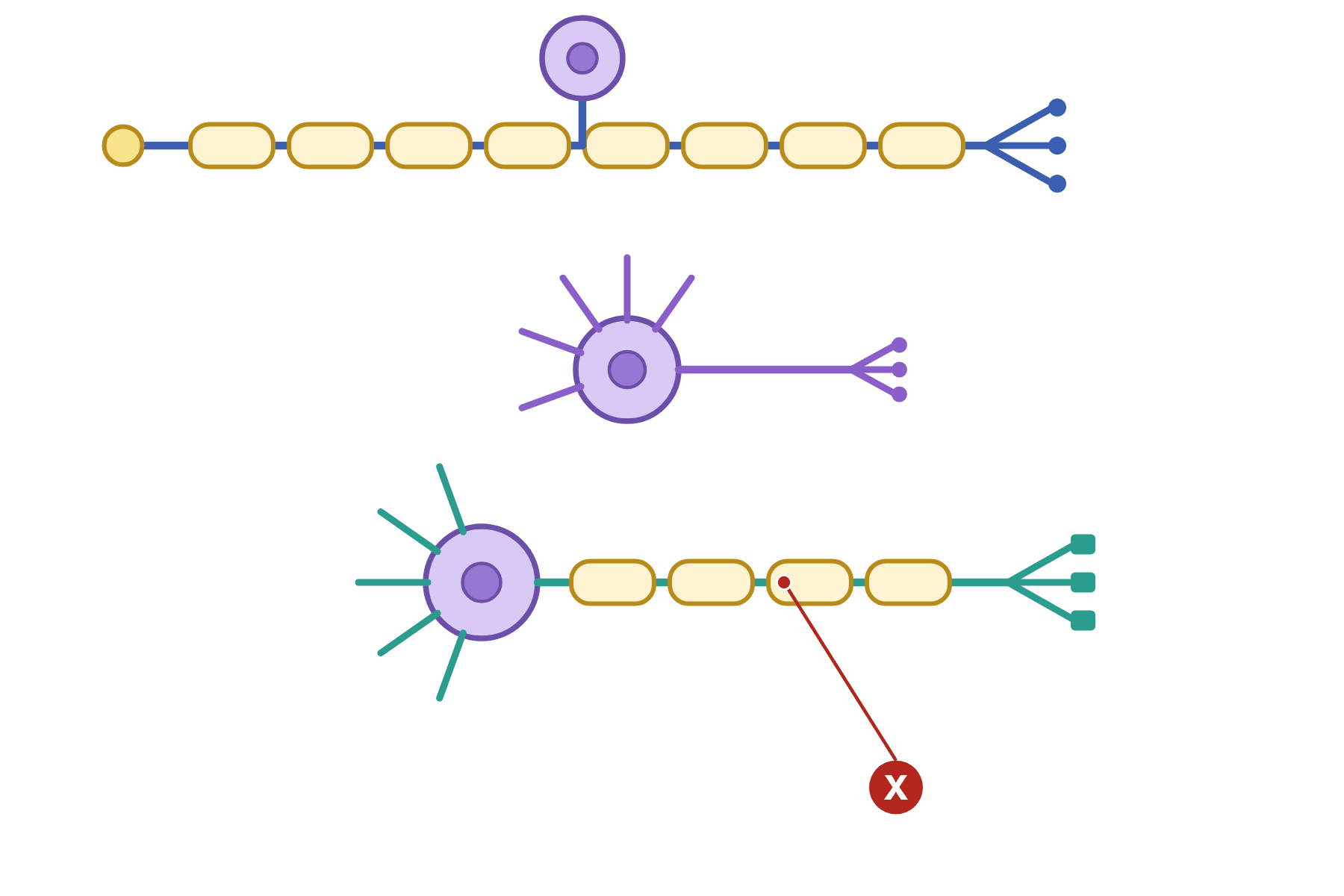 Name the part of the neurone marked X.
 The myelin sheath. It insulates the axon and speeds up the impulse.
-
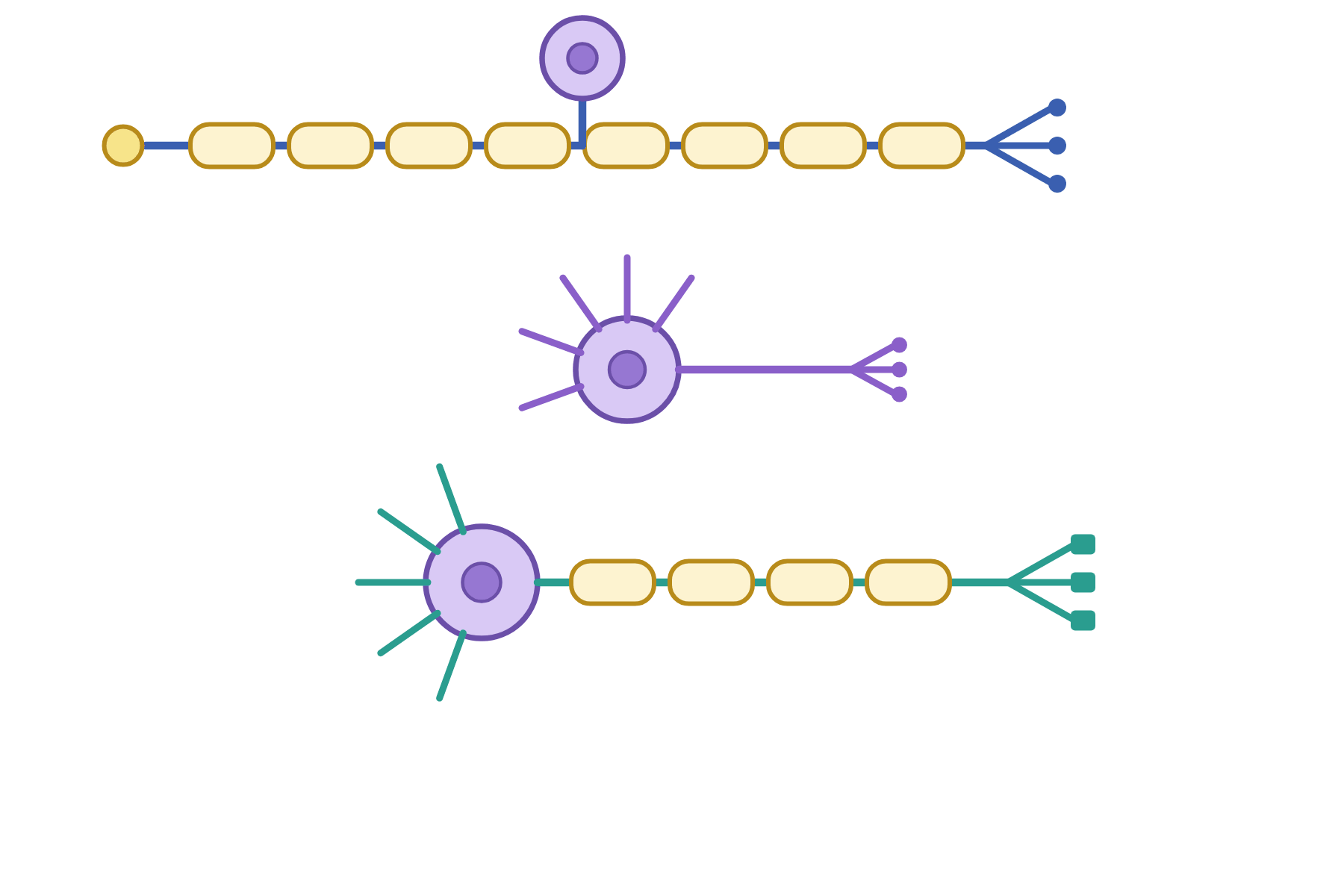 Name the three types of neurone and label the parts of one.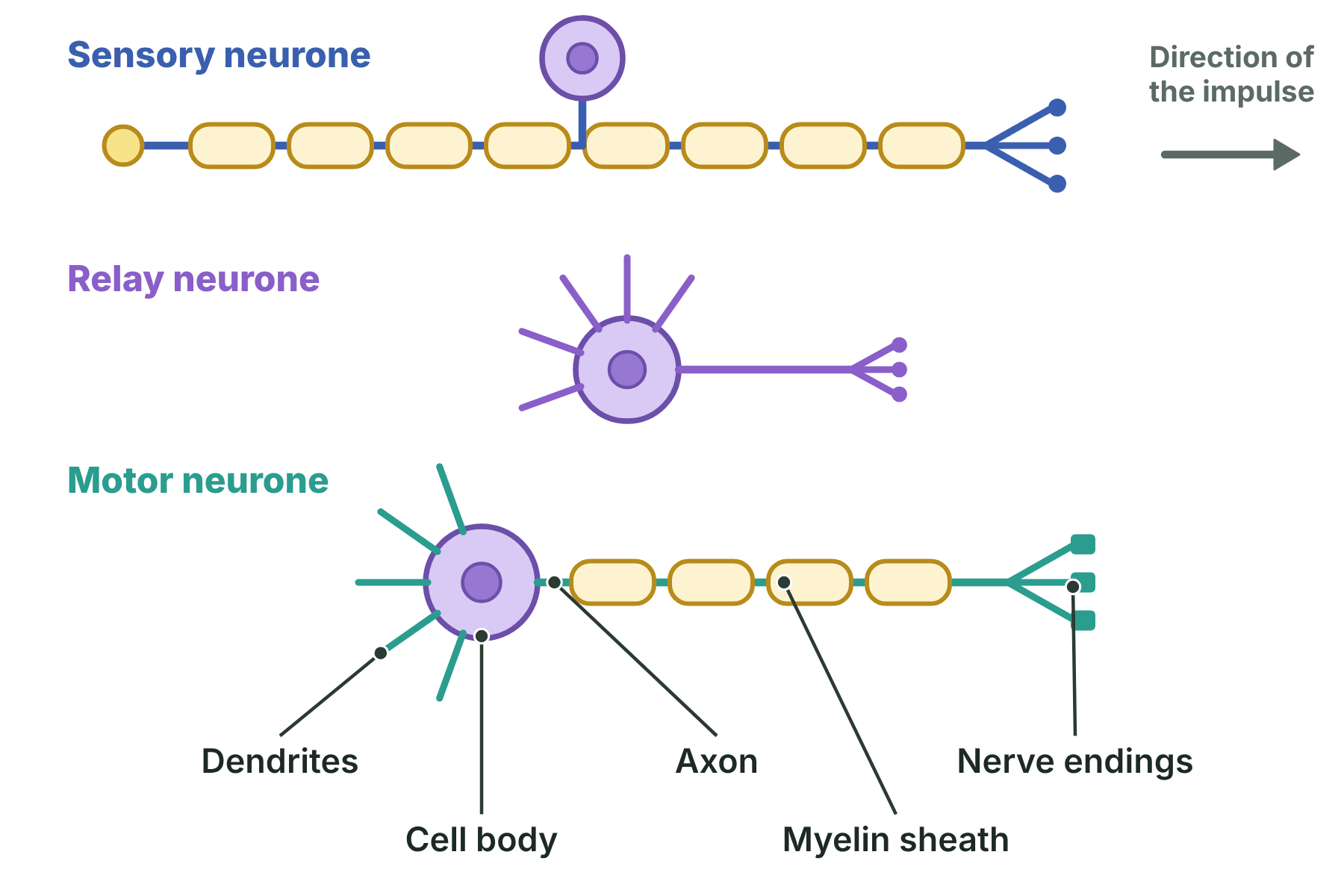
Sensory, relay and motor neurones. The parts are the cell body, dendrites, axon, myelin sheath and nerve endings.
-
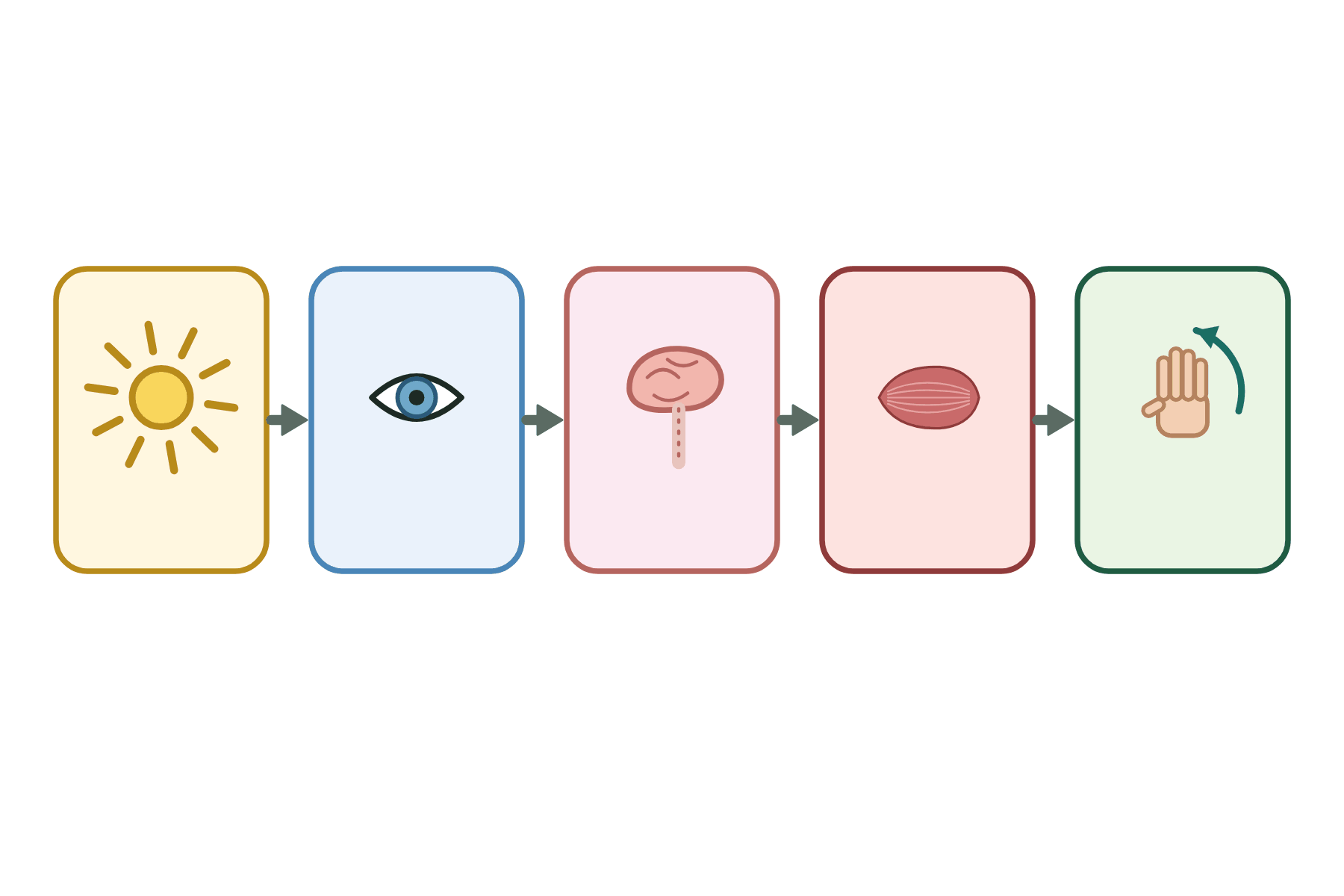 Name each stage from stimulus to response.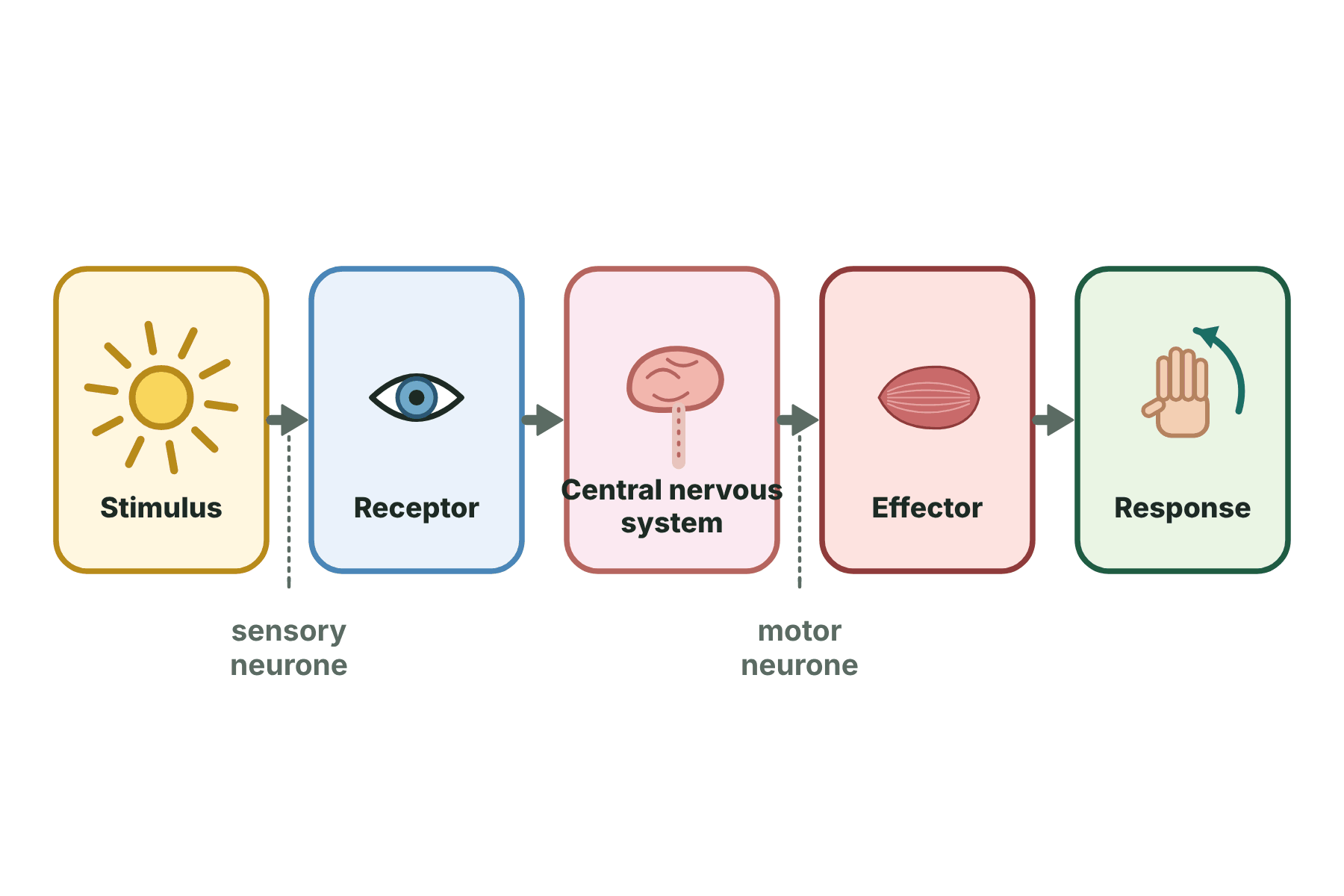
Stimulus, receptor, central nervous system, effector, response. A sensory neurone joins the receptor to the central nervous system, and a motor neurone joins it to the effector.