Flashcards · Biology · Material Cycles
The Carbon Cycle
-
What are abiotic and biotic components?
Abiotic are the non-living parts of an ecosystem; biotic are the living parts.
-
Why do materials have to be recycled in an ecosystem?
The Earth has a limited supply of matter, so living things must use the same materials again and again.
-
What percentage of the air is carbon dioxide?
About 0.04 percent.
-
Which process takes carbon dioxide out of the air?
Photosynthesis.
-
How does carbon pass from a plant to an animal?
By feeding, in carbon compounds such as carbohydrates and proteins.
-
Name three processes that return carbon dioxide to the air.
Respiration, decay (decomposers' respiration) and combustion.
-
Do plants respire?
Yes, so they put carbon dioxide into the air as well as taking it in.
-
What is a decomposer?
A microorganism, bacteria or fungus, that breaks down dead material and waste.
-
How do decomposers break down dead material?
They release enzymes that break it into small soluble molecules, which they absorb.
-
Why are decomposers important for plants?
They return carbon dioxide and mineral ions to the environment.
-
What would happen without decomposers?
Dead material would pile up and nutrients would stay locked in it.
-
How are fossil fuels formed?
From dead remains that did not fully decay, buried without oxygen, over millions of years.
-
What does combustion do to the carbon cycle?
It releases the carbon in wood or fossil fuels as carbon dioxide.
-
Why is the carbon dioxide level in the air rising?
Burning fossil fuels and deforestation add carbon dioxide faster than it is removed.
-
Why is carbon dioxide a problem in the atmosphere?
It is a greenhouse gas that contributes to global warming.
-
How do you calculate a percentage increase?
Increase divided by the starting value, times 100.
-
Why is the carbon cycle important?
It gives a continuous supply of carbon and keeps the carbon dioxide level balanced.
-
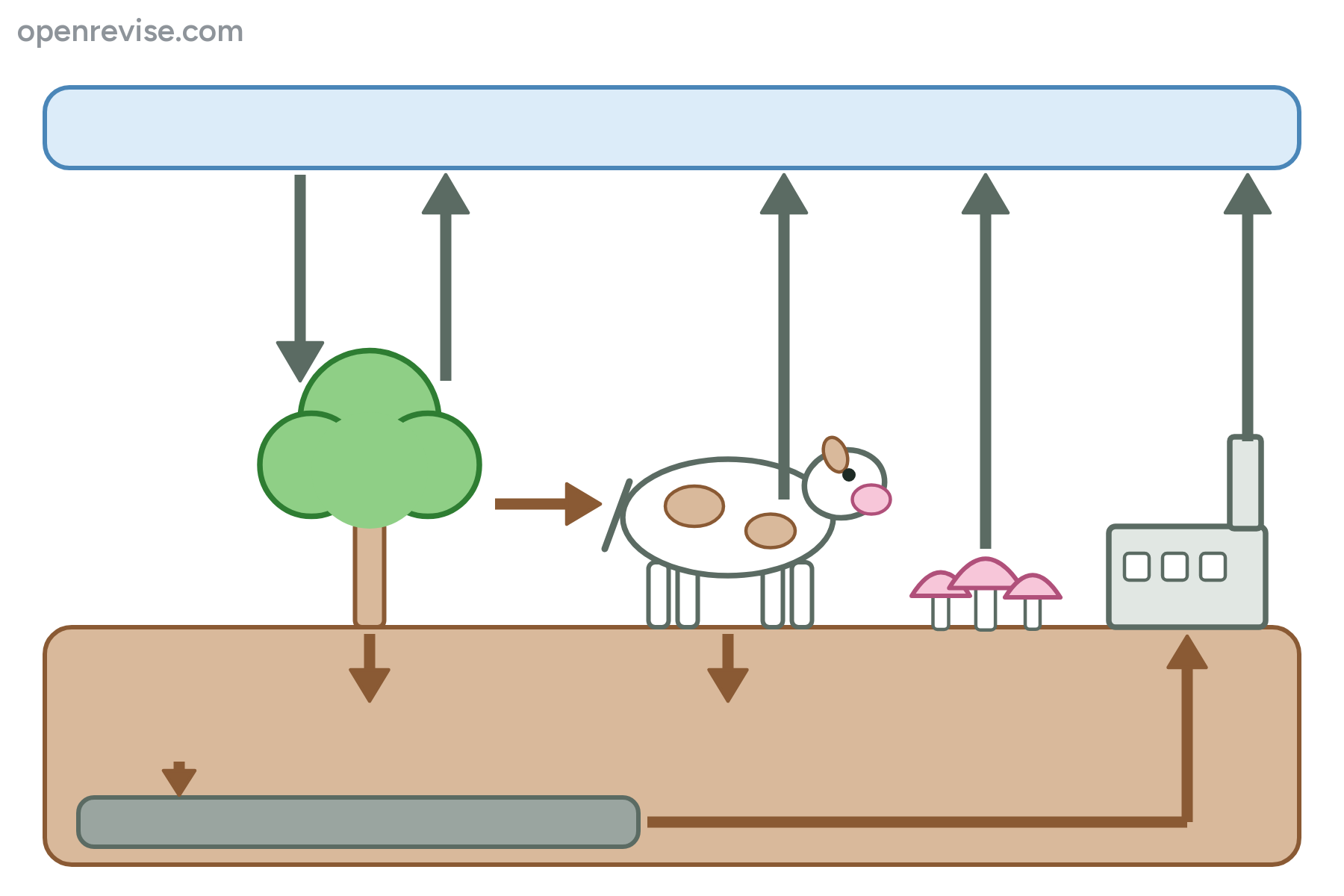 Name each process shown by an arrow in the carbon cycle.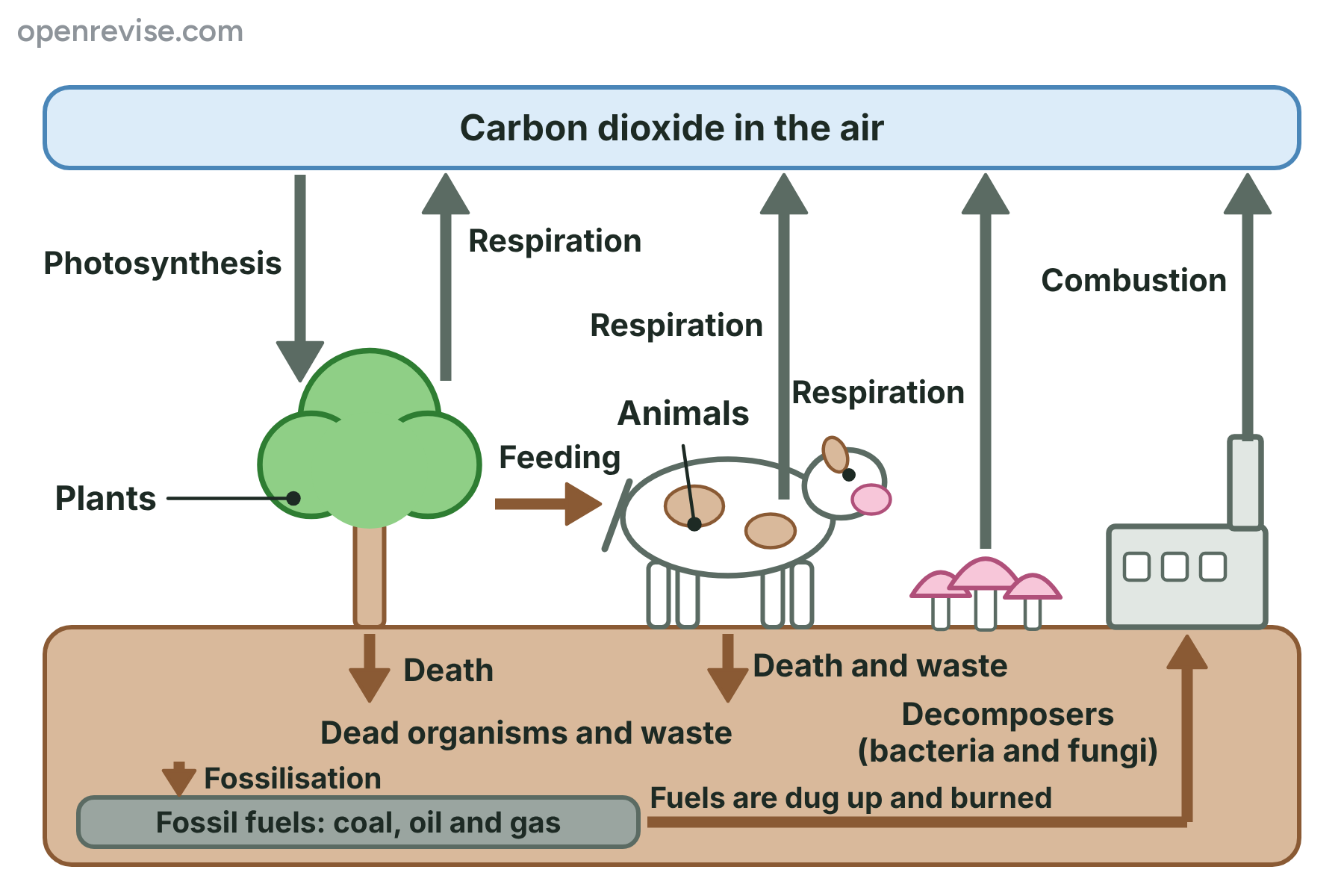
Photosynthesis takes carbon dioxide into plants. Feeding passes carbon to animals. Respiration by plants, animals and decomposers, and combustion, release carbon dioxide. Death and decay return carbon from dead organisms, and fossilisation makes fossil fuels.
-
Which processes add carbon dioxide to the air and which one removes it?
Respiration, decay and combustion add carbon dioxide. Photosynthesis removes it.