Flashcards · Biology · Material Cycles
The Water Cycle and Potable Water
-
What powers the water cycle?
Energy from the Sun.
-
What is evaporation?
Liquid water turning into water vapour.
-
What is transpiration?
The loss of water vapour from plant leaves through the stomata.
-
What is condensation?
Water vapour cooling and turning into liquid droplets, forming clouds.
-
What is precipitation?
Rain, snow, sleet or hail falling from clouds.
-
What is run-off?
Water flowing over the land and in rivers back to the sea.
-
Why is rain fresh water, although it comes from the sea?
Evaporation leaves the salts behind.
-
Give two reasons why living things need the water cycle.
It supplies fresh water, and water is needed for cell reactions and photosynthesis.
-
What does potable mean?
Safe to drink.
-
Is potable water the same as pure water?
No. Potable water can contain low levels of dissolved substances; pure water has only water molecules.
-
Name two ways to kill microorganisms in drinking water.
Chlorine, ozone or ultraviolet light (any two).
-
What is the filter bed in water treatment for?
To remove solid particles, using sand and gravel.
-
What is desalination?
Removing the salt from sea water to make potable water.
-
How does distillation make potable water?
Sea water is boiled, and the steam is condensed, leaving the salt behind.
-
How does reverse osmosis make potable water?
Sea water is forced through a partially permeable membrane at high pressure, which keeps the salt out.
-
Give one disadvantage of desalination.
It needs a lot of energy, so it is expensive and may release carbon dioxide.
-
What is left over after desalination?
Very salty brine, which has to be disposed of.
-
Name two other ways of getting water in a drought.
Storing rainwater, recycling waste water, pumping groundwater or piping water in.
-
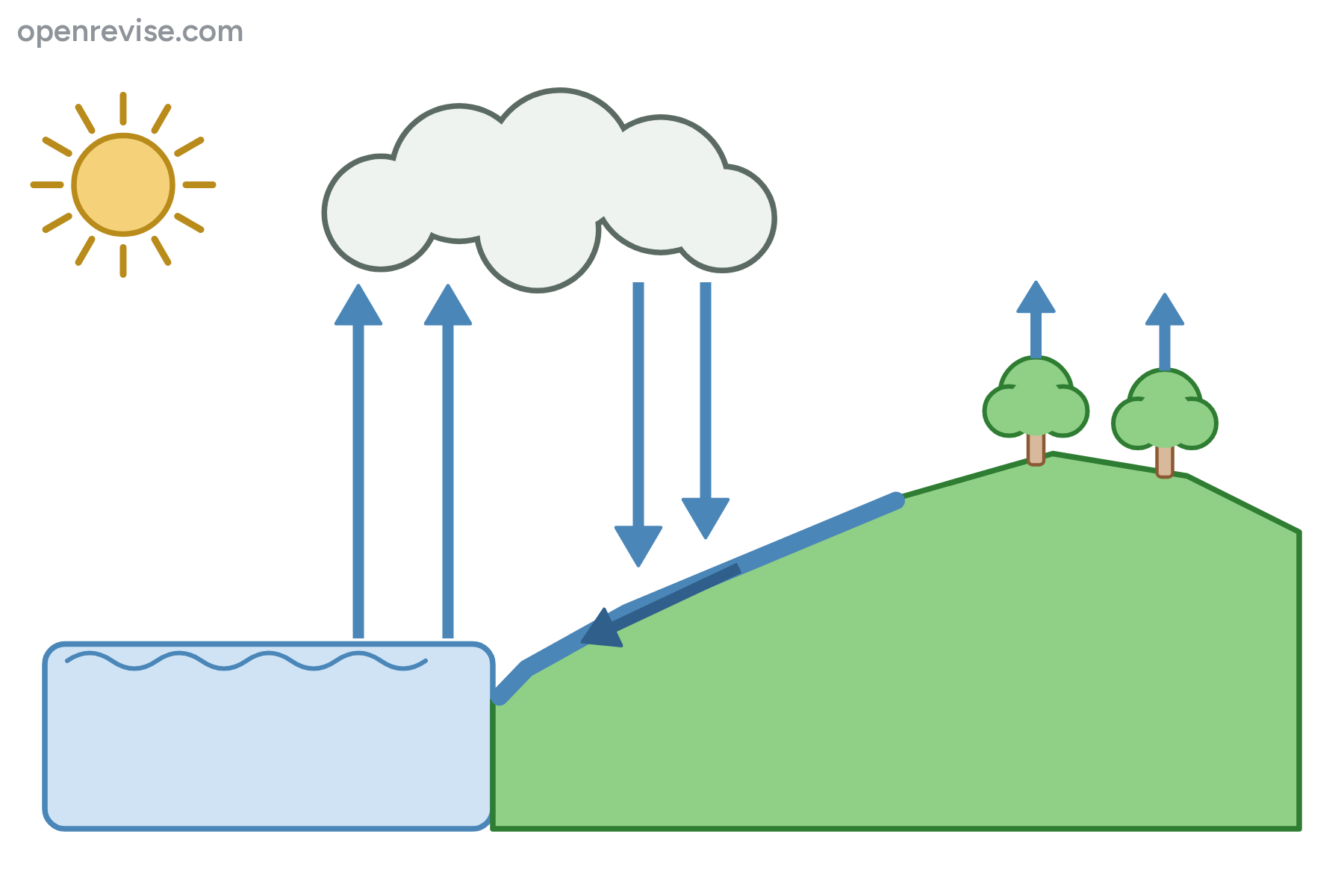 Name each process in the water cycle shown by an arrow.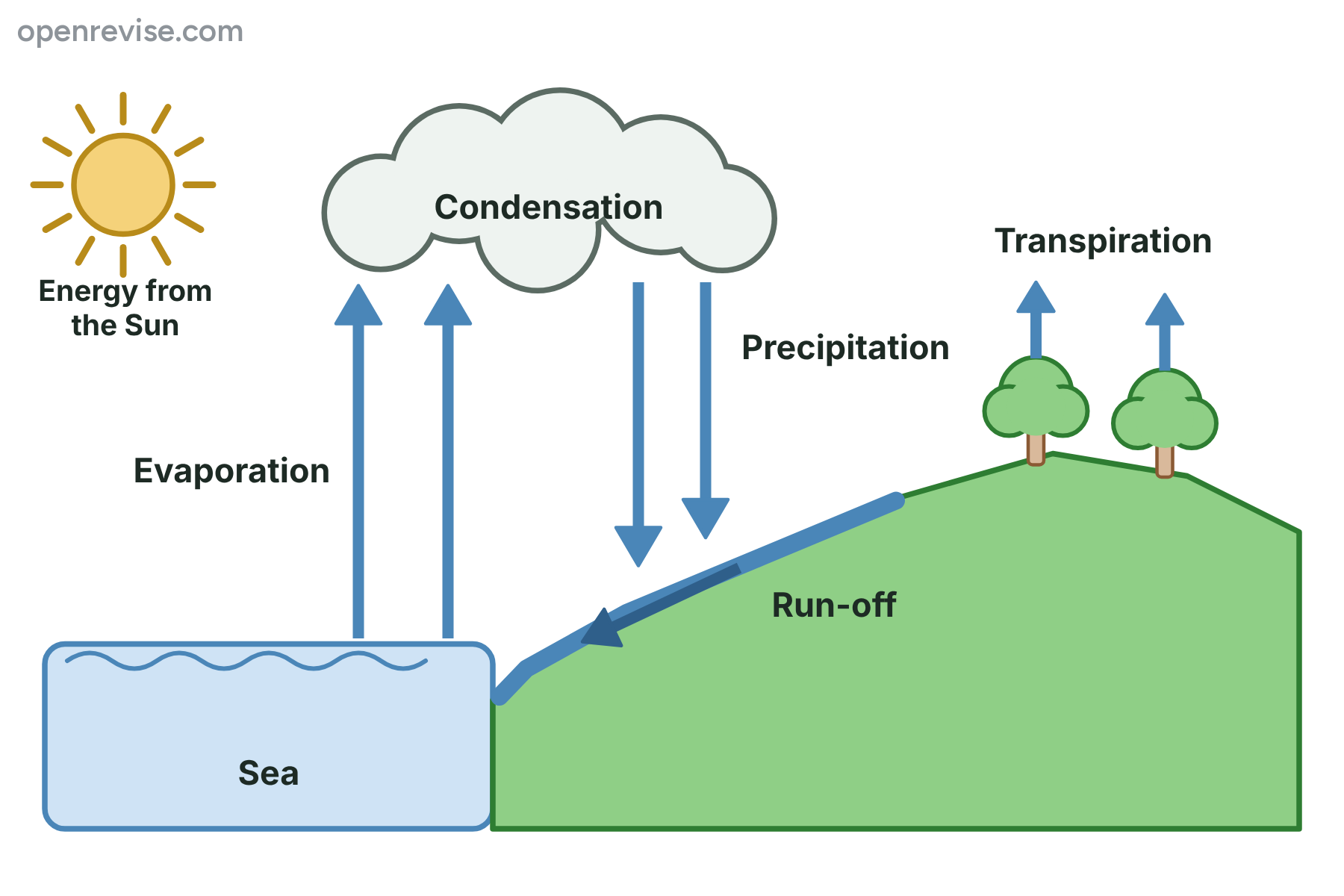
Evaporation from the sea, condensation in the cloud, precipitation from the cloud, run-off down the hill to the sea and transpiration from the trees. The Sun provides the energy.
-
Describe how distillation and reverse osmosis each make potable water from sea water.
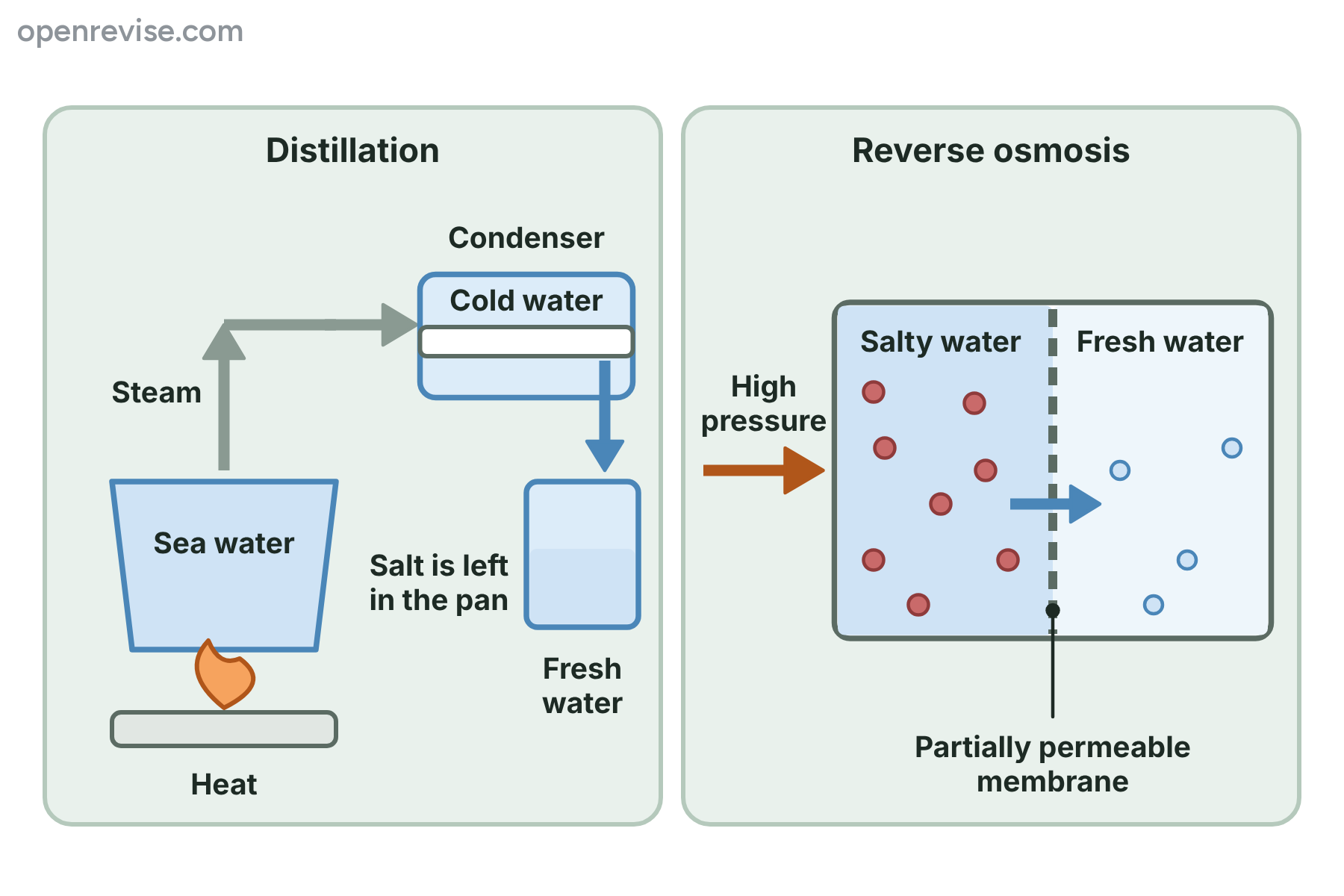
Distillation: the sea water is boiled, the steam is cooled in a condenser to liquid water, and the salt is left behind. Reverse osmosis: the sea water is forced at high pressure through a partially permeable membrane that lets water through but not the salt.