Flashcards · Biology · Exchange and Transport in Animals
Blood Vessels
-
What is an artery?
A vessel that carries blood away from the heart.
-
What is a vein?
A vessel that carries blood back to the heart.
-
What is a capillary?
A tiny vessel with a wall one cell thick, where exchange happens.
-
Why do arteries have thick walls?
The blood is at high pressure, so the walls must be strong and able to stretch and recoil.
-
What are in an artery wall to help it stretch?
Muscle and elastic fibres.
-
Why do veins have valves?
To stop the low-pressure blood flowing backwards.
-
Why is a vein's lumen wide?
It gives less resistance to the flow of low-pressure blood.
-
Why is a capillary wall only one cell thick?
It gives a short diffusion path for exchanging substances.
-
Why do capillaries form huge networks?
They give a large surface area for exchange with the cells.
-
Does an artery always carry oxygenated blood?
No. The pulmonary artery carries deoxygenated blood to the lungs.
-
Does a vein always carry deoxygenated blood?
No. The pulmonary vein carries oxygenated blood from the lungs.
-
What is the formula for rate of blood flow?
Rate = volume of blood ÷ time.
-
600 cm³ of blood flows through a vessel in 2 minutes. What is the rate?
600 ÷ 2 = 300 cm³ per minute.
-
Which vessel type can you feel a pulse in?
An artery.
-
Why does blood move slowly through capillaries?
It gives more time for substances to diffuse.
-
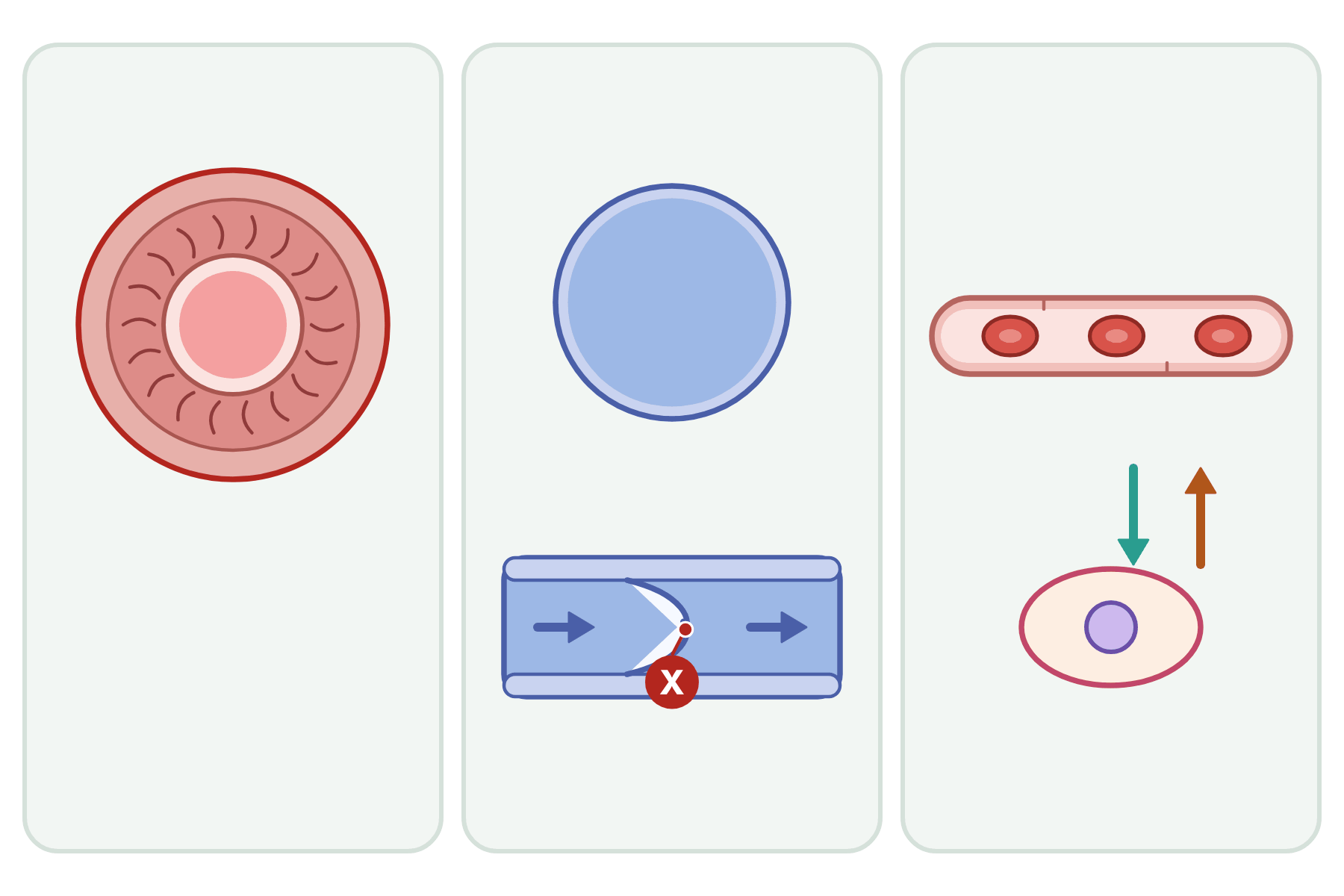 Name the vessel marked X and say how its structure suits its job.
 A valve in a vein. It closes to stop blood flowing backwards, because the blood is at low pressure.
-
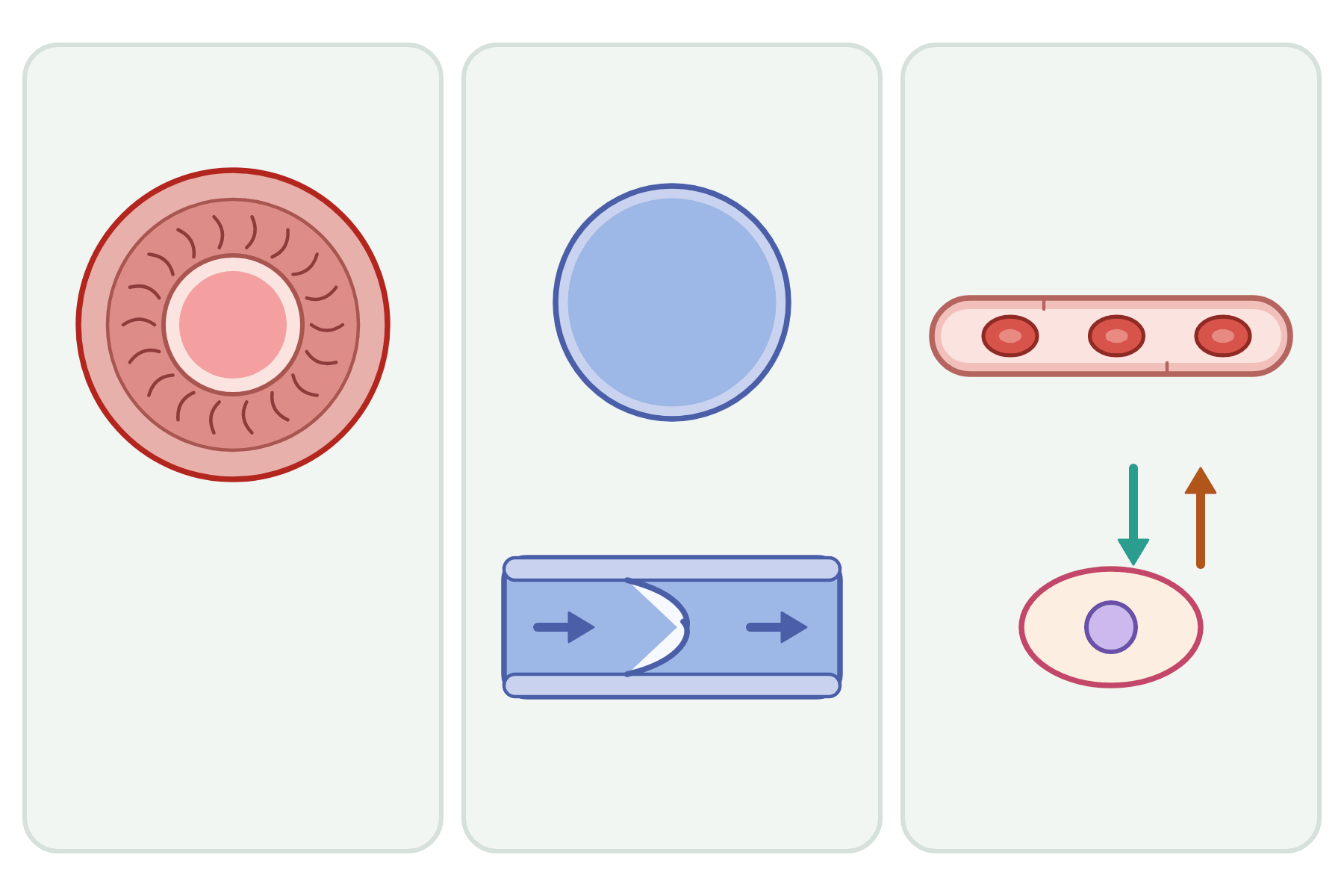 Label the three blood vessels and their features.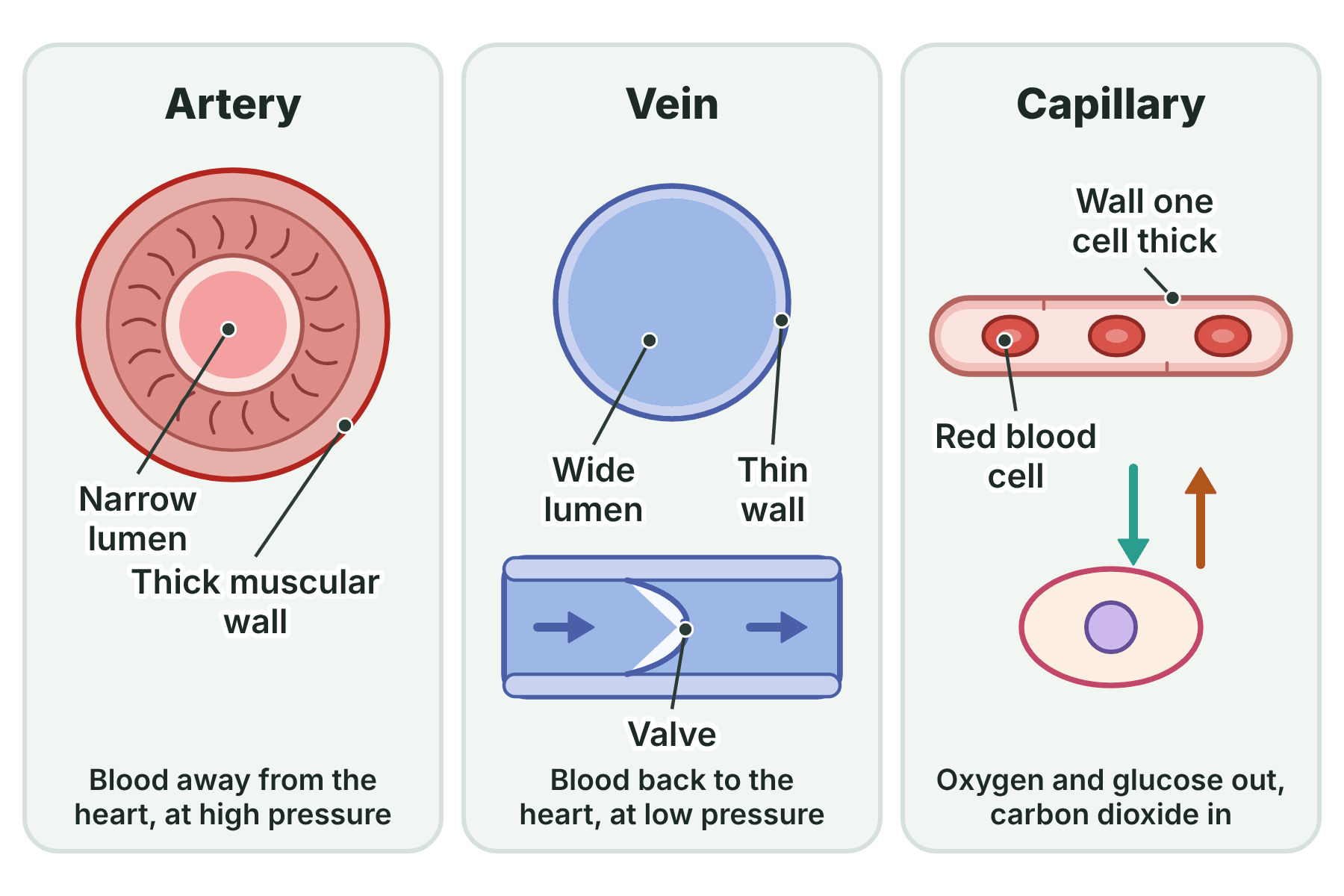
Artery: thick muscular wall, elastic fibres, narrow lumen. Vein: thin wall, wide lumen, valve. Capillary: wall one cell thick.