Flashcards · Biology · Homeostasis
Temperature Control and the Skin
-
At what temperature is the body kept?
About 37 °C.
-
Where are temperature receptors found?
In the skin and in the hypothalamus.
-
What is the coordination centre for temperature control?
The hypothalamus in the brain.
-
Name the effectors for temperature control.
Sweat glands, muscles in the walls of blood vessels, hair erector muscles and skeletal muscles.
-
How does sweating cool the body?
Sweat evaporates and takes heat from the skin.
-
What is vasodilation?
The widening of blood vessels near the surface of the skin.
-
How does vasodilation help when too hot?
More blood near the surface, so more heat is lost.
-
What is vasoconstriction?
The narrowing of blood vessels near the surface of the skin.
-
How does vasoconstriction help when too cold?
Less blood near the surface, so less heat is lost.
-
How does shivering warm the body?
Muscle respiration releases heat.
-
What happens to hairs when it is cold?
They stand up, trapping an insulating layer of air.
-
What does the fat layer do?
It insulates the body.
-
Why does the skin look red when hot?
Blood vessels widen and more blood flows near the surface.
-
Why does the skin look pale when cold?
Blood vessels narrow, so less blood flows near the surface.
-
Why is temperature control an example of negative feedback?
A change causes a response that reverses the change.
-
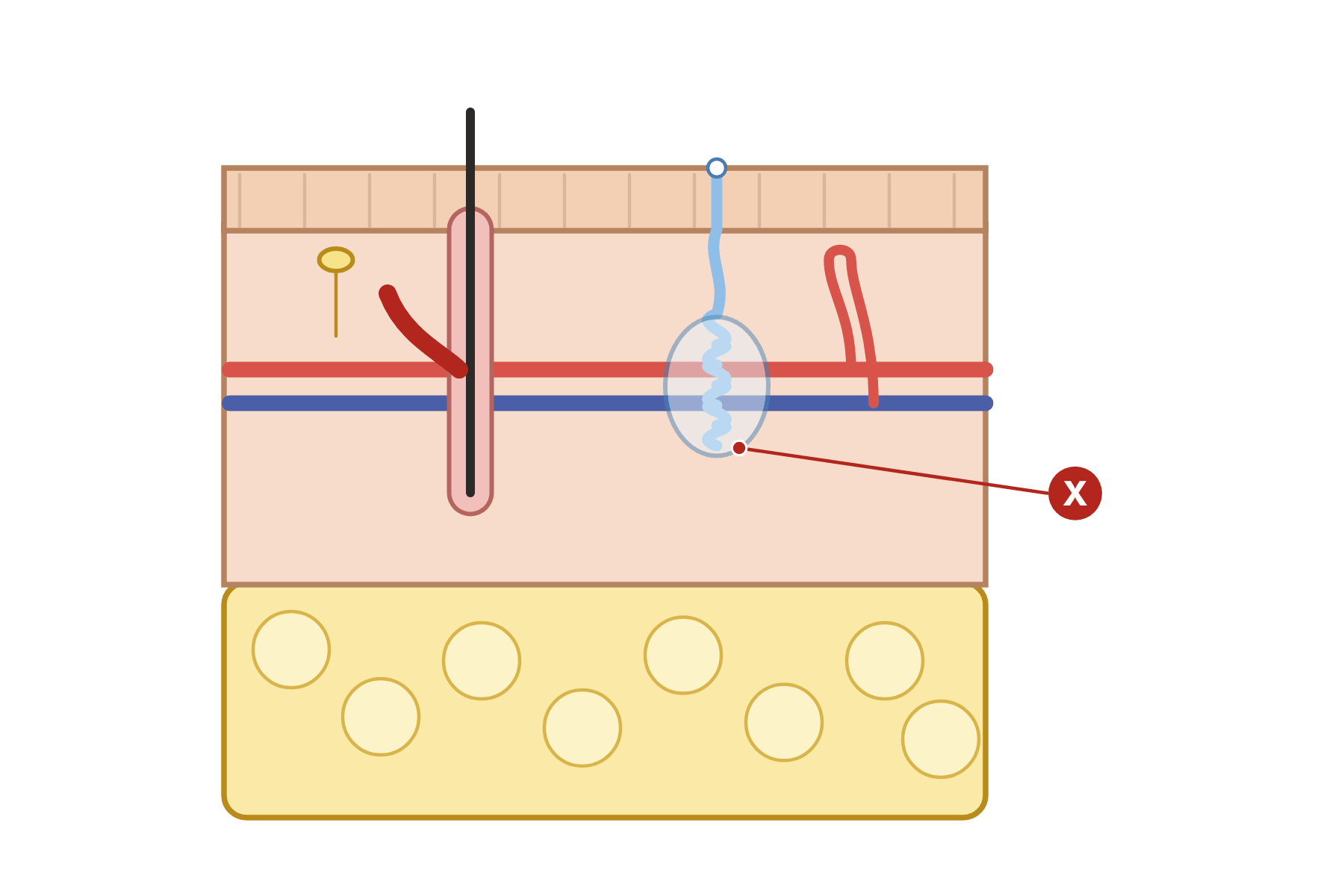 Name the part of the skin marked X and say what it does when it is hot.
 The sweat gland. It releases more sweat, which evaporates from the skin and cools the body.
-
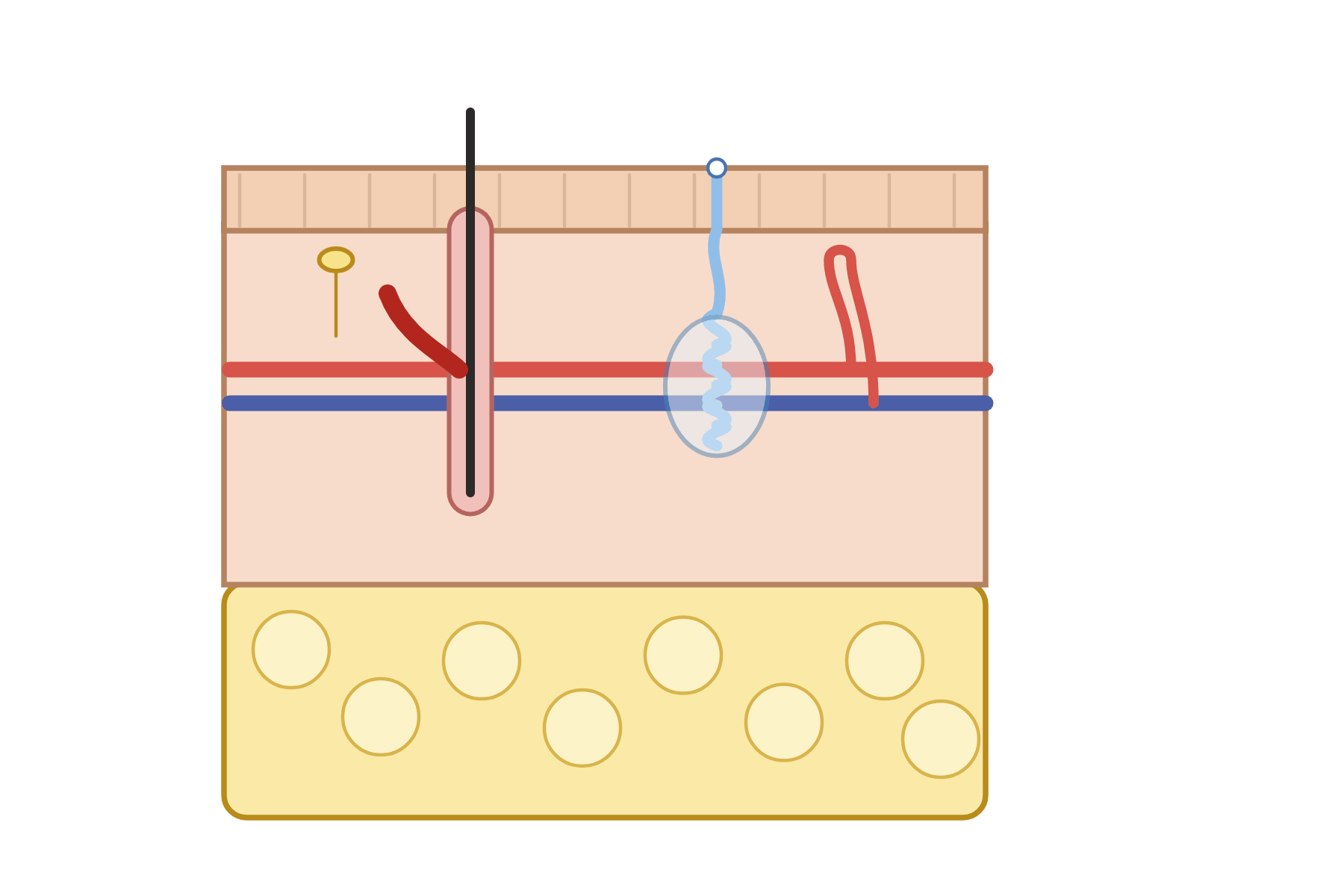 Label the skin.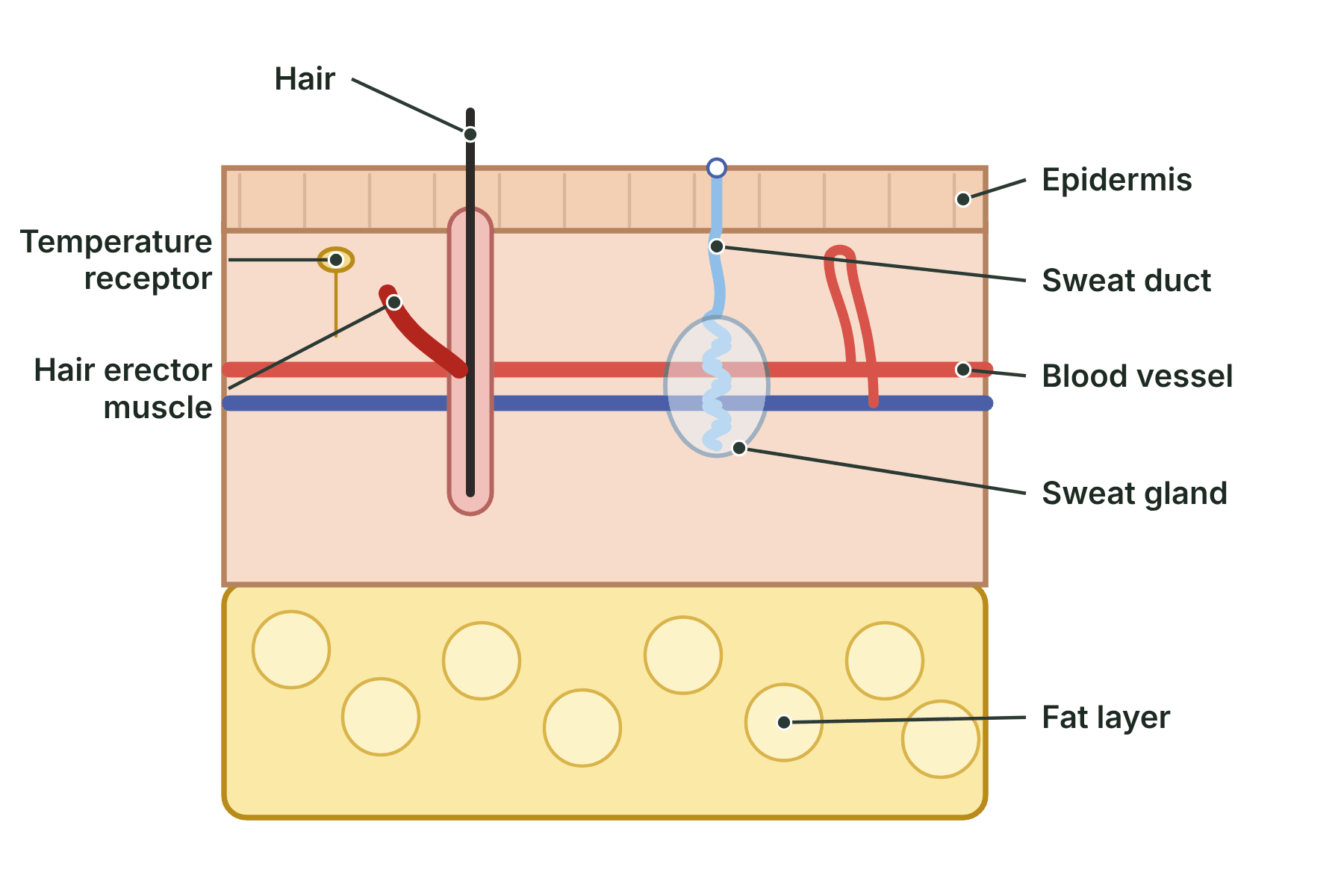
Epidermis, hair, hair erector muscle, sweat gland, sweat duct, blood vessel, temperature receptor and fat layer.
-
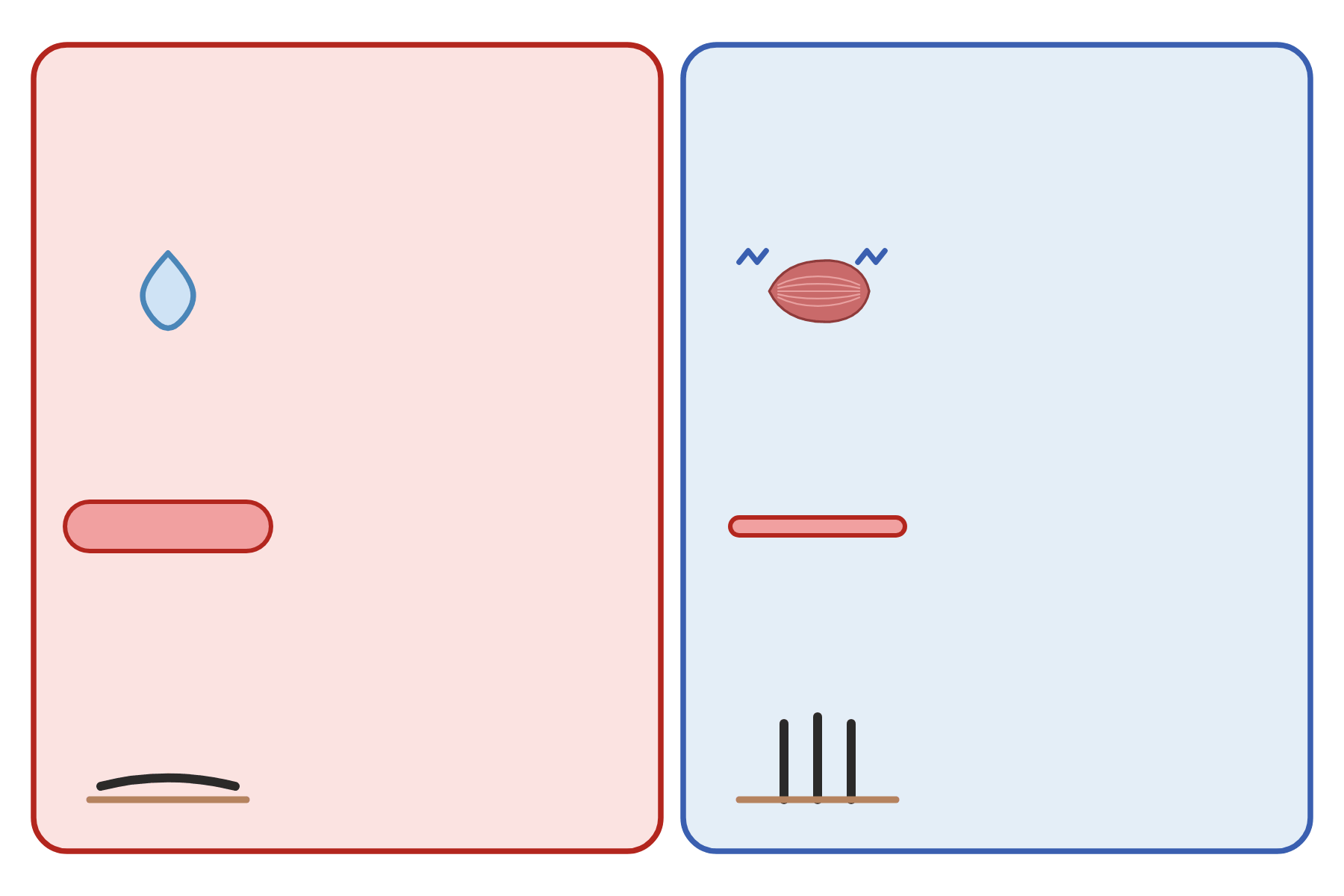 Describe the body's responses to being too hot and too cold.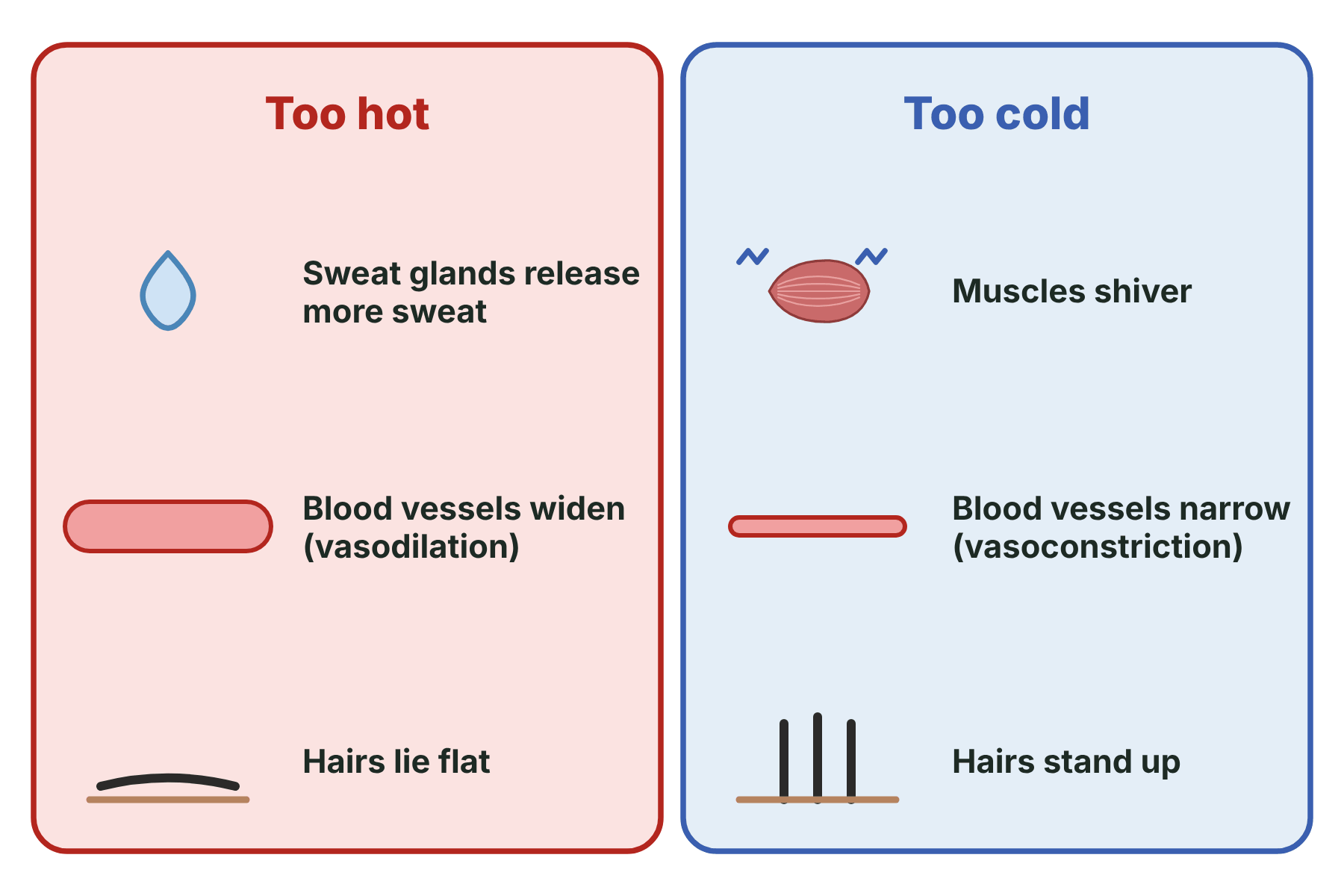
Too hot: more sweat, blood vessels widen, hairs lie flat. Too cold: shivering, blood vessels narrow, hairs stand up.