Flashcards · Biology
Respiration and Biological Molecules
-
What does respiration supply in all living cells?
ATP, which carries energy to where it is needed.
-
What does ATP stand for?
Adenosine triphosphate.
-
How much ATP does aerobic respiration make per glucose?
About 30 ATP.
-
How much ATP does anaerobic respiration make per glucose?
2 ATP.
-
Why is respiration called a universal process?
It happens in all living cells.
-
What is respiration?
An exothermic reaction in living cells that transfers energy from glucose.
-
Is respiration endothermic or exothermic?
Exothermic.
-
How often does respiration happen in living cells?
It is continuously occurring.
-
Name three uses of the energy from respiration.
Building larger molecules, movement and keeping warm.
-
Write the word equation for aerobic respiration.
Glucose + oxygen → carbon dioxide + water.
-
Write the symbol equation for aerobic respiration.
C₆H₁₂O₆ + 6O₂ → 6CO₂ + 6H₂O.
-
Where do most aerobic respiration reactions take place?
In the mitochondria.
-
What is anaerobic respiration?
Respiration without oxygen.
-
Write the equation for anaerobic respiration in muscles.
Glucose → lactic acid.
-
Write the equation for anaerobic respiration in yeast and plant cells.
Glucose → ethanol + carbon dioxide.
-
Why does anaerobic respiration transfer much less energy?
The oxidation of glucose is incomplete.
-
What is fermentation?
Anaerobic respiration in yeast cells.
-
How does yeast make bread rise?
It releases carbon dioxide, which makes bubbles in the dough.
-
Name two industries that use fermentation.
Bread making and making alcoholic drinks.
-
What is the difference between breathing and respiration?
Breathing brings oxygen in. Respiration is the reaction in cells that transfers energy.
-
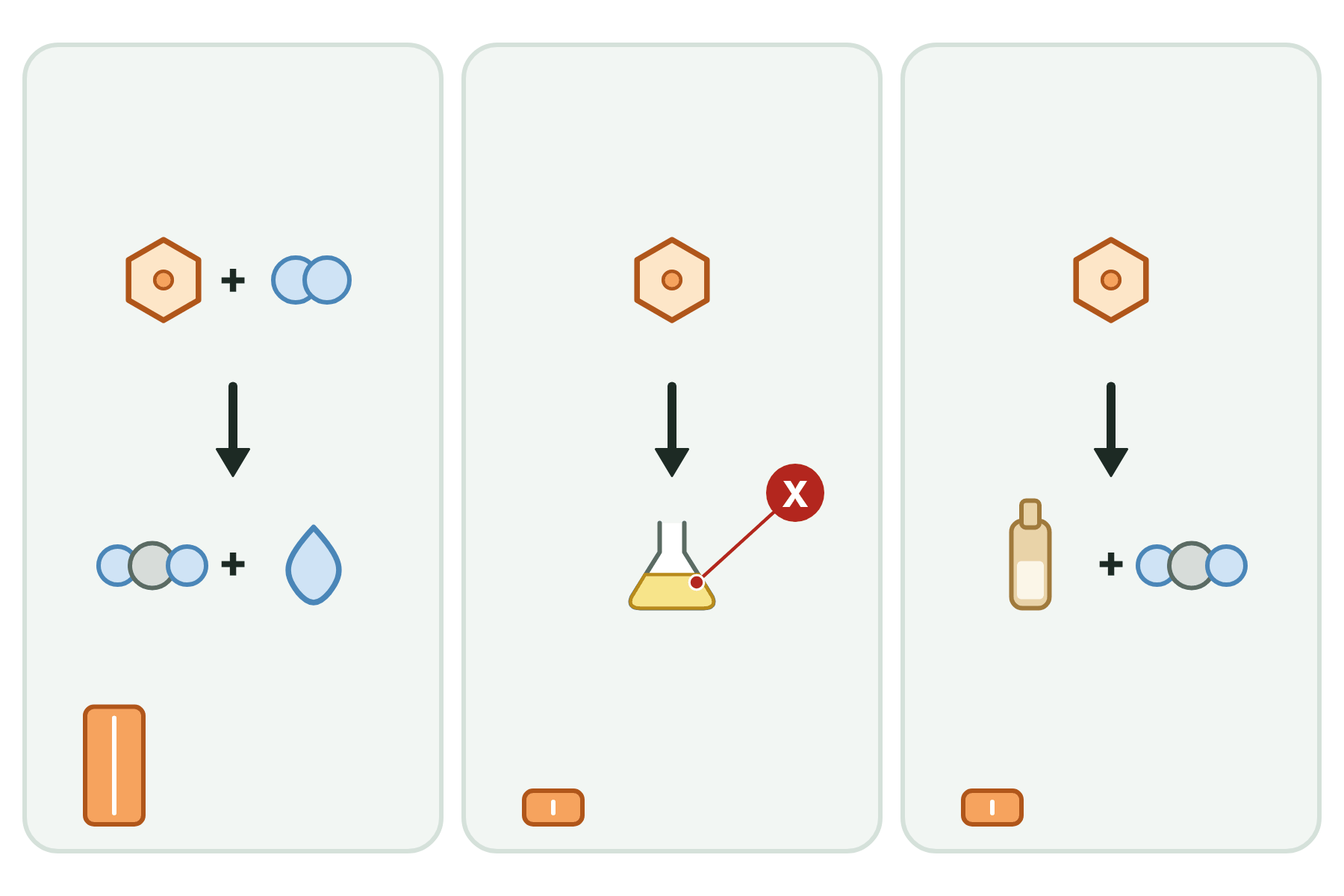 Name the product marked X.
 Lactic acid. It is made when muscles respire anaerobically.
-
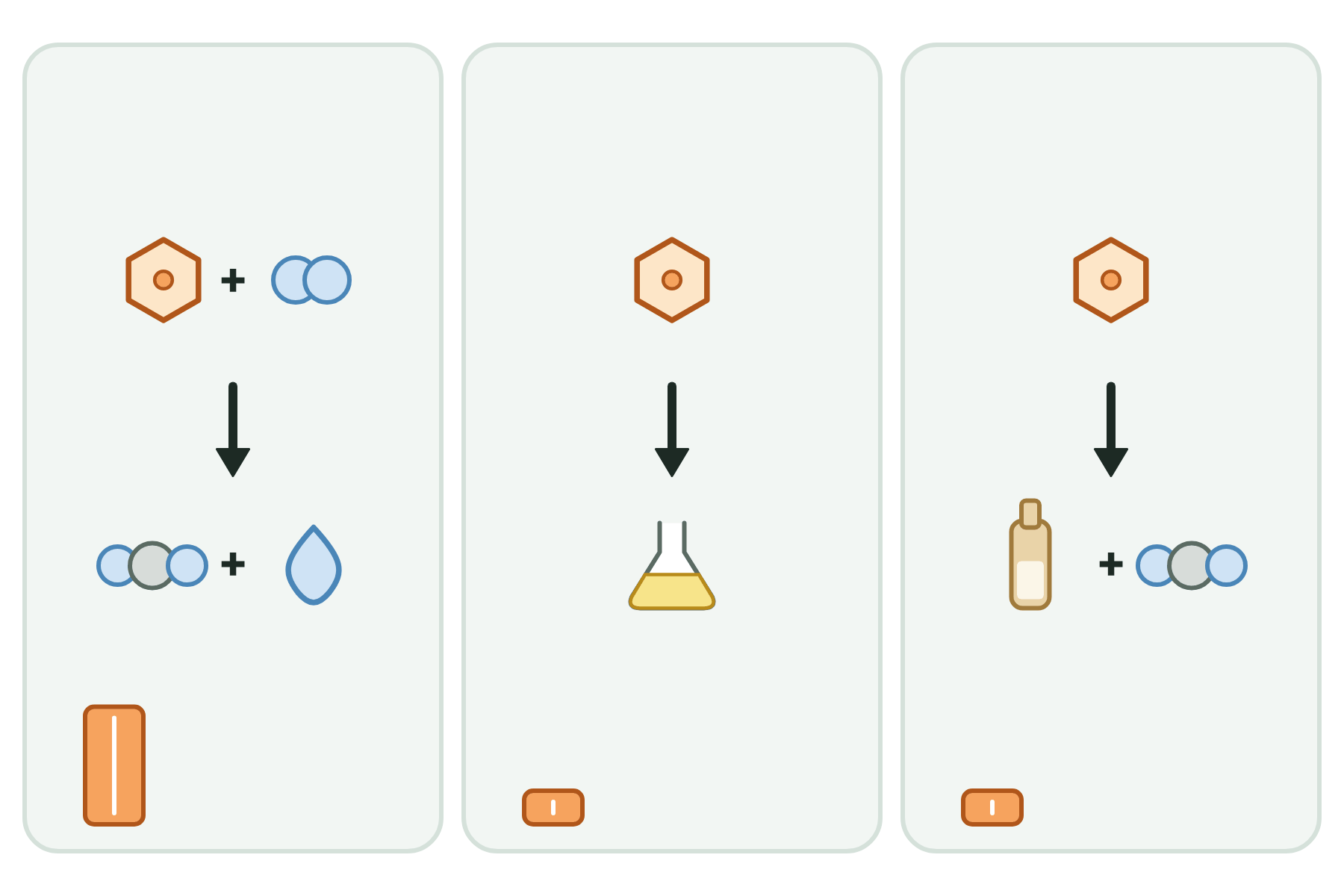 Name each type of respiration and the substances on the diagram.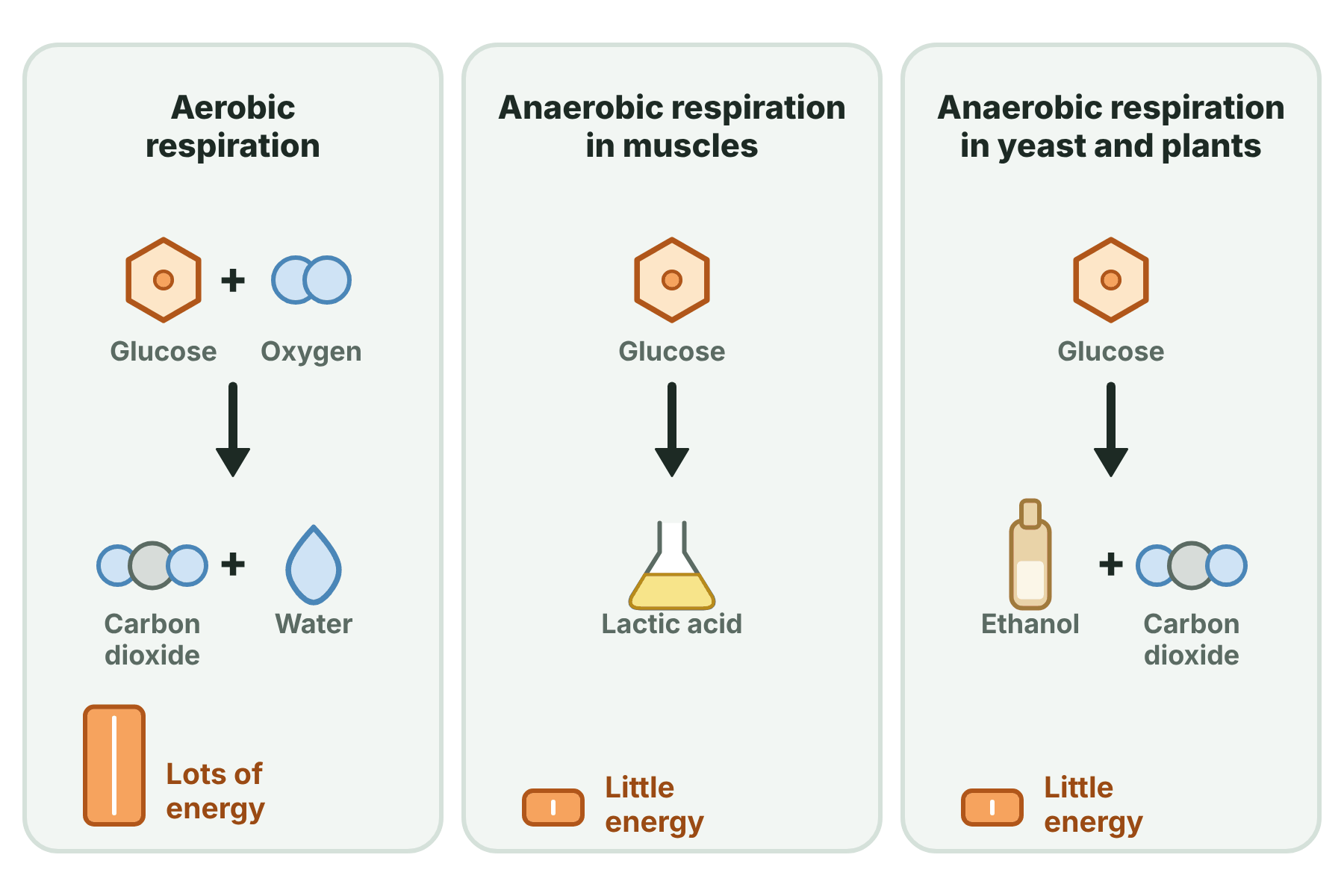
Aerobic respiration: glucose + oxygen → carbon dioxide + water, lots of energy. Anaerobic respiration in muscles: glucose → lactic acid, little energy. Anaerobic respiration in yeast and plants: glucose → ethanol + carbon dioxide, little energy.
-
What is a monomer?
A small molecule that can join with many others to make a polymer.
-
What is a polymer?
A large molecule made of many monomers joined together.
-
What are the monomers of carbohydrates?
Sugars.
-
Name three carbohydrates made from sugars.
Starch, glycogen and cellulose.
-
What are the monomers of proteins?
Amino acids.
-
What is a lipid made from?
One molecule of glycerol and three molecules of fatty acids.
-
Which enzyme breaks down carbohydrates?
Carbohydrase, such as amylase.
-
Which enzyme breaks down proteins?
Protease.
-
Which enzyme breaks down lipids?
Lipase.
-
What are lipids broken down into?
Fatty acids and glycerol.
-
What does the body need to synthesise new molecules?
Enzymes and energy from respiration.
-
What is the test for starch?
Iodine solution turns from orange-brown to blue-black.
-
What is the test for sugars?
Benedict's reagent, heated, turns from blue to green, yellow, orange or brick-red.
-
What is the test for protein?
Biuret reagent turns from blue to purple.
-
What is the test for lipids?
Shake with ethanol, then add water: a cloudy white emulsion.
-
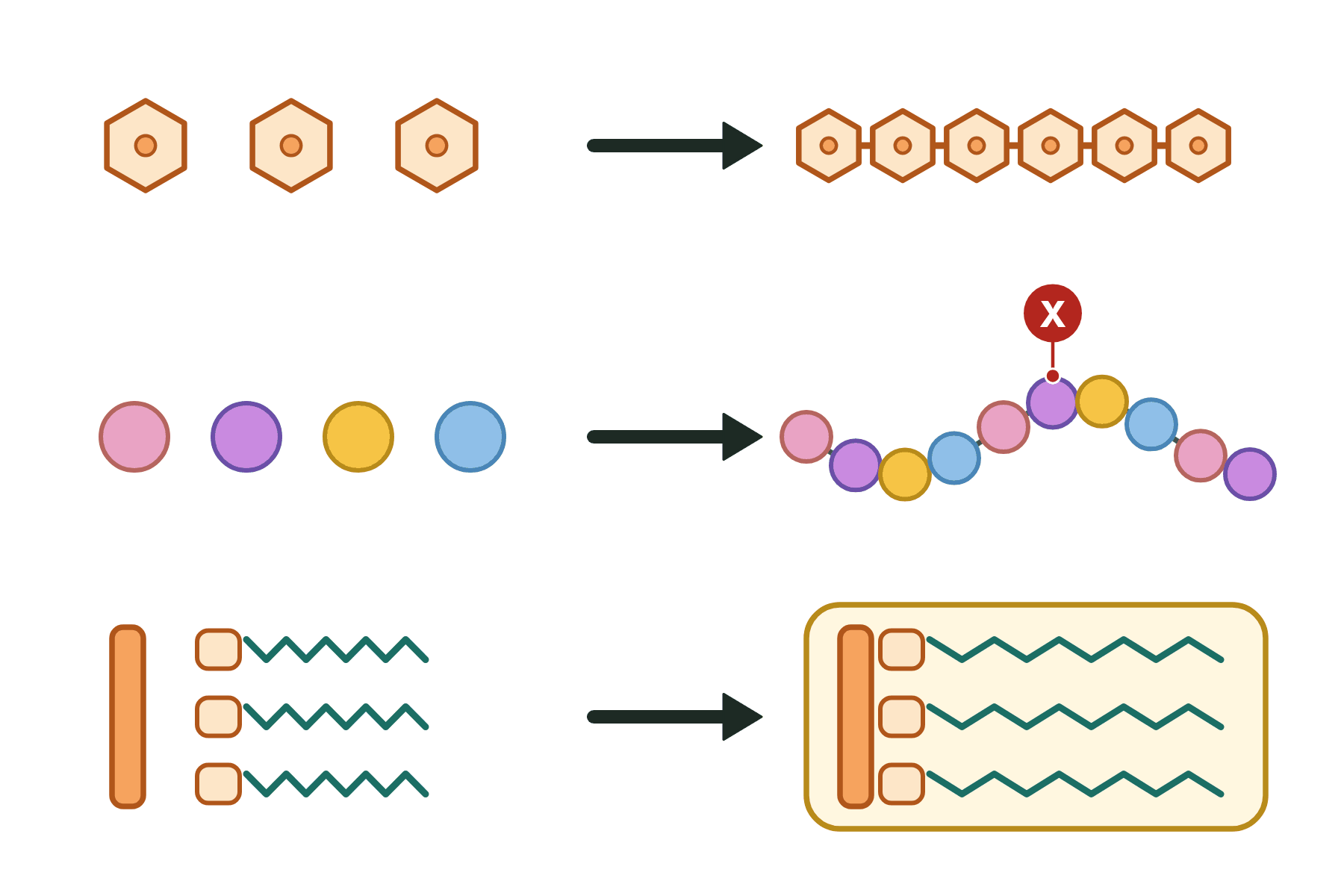 Name the large molecule marked X and the monomers it is made from.
 A protein. It is a polymer made of amino acids.
-
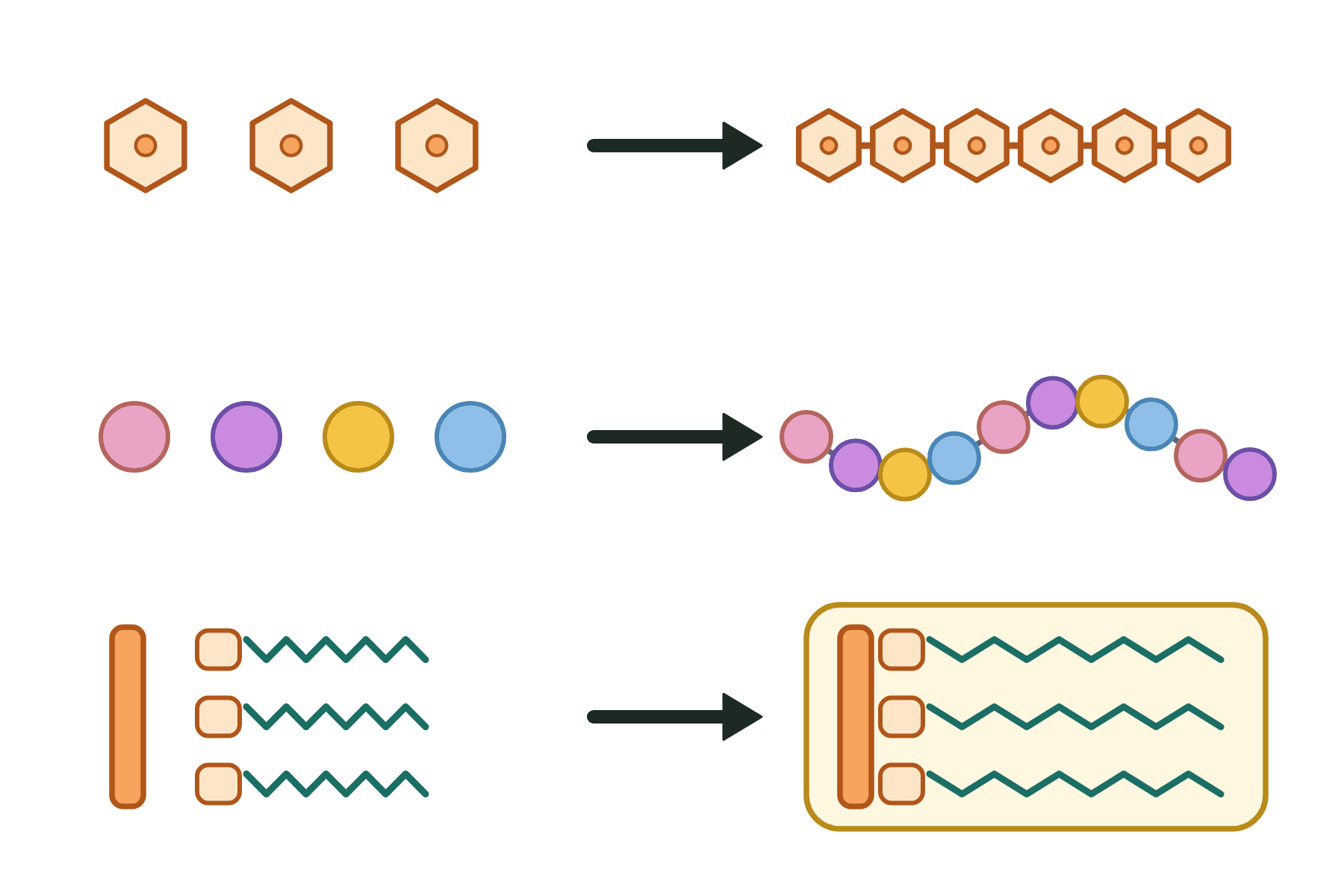 Name each large molecule and what it is made from.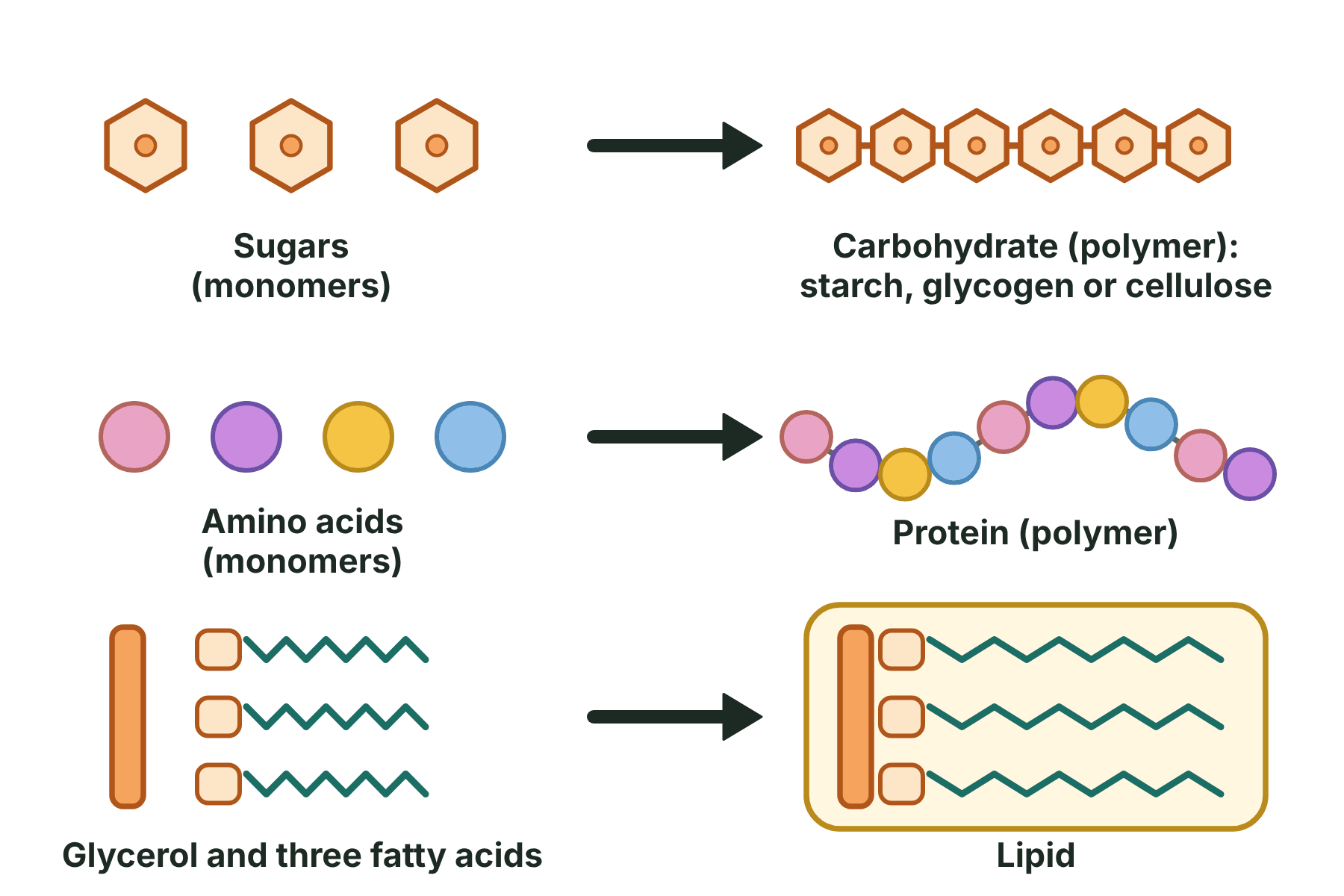
Sugars make a carbohydrate. Amino acids make a protein. One glycerol and three fatty acids make a lipid.
-
What is a food test?
A test that uses a reagent which changes colour when a particular type of molecule is present.
-
What does qualitative mean?
The test shows whether something is present, not how much.
-
Which reagent tests for starch?
Iodine solution.
-
What is a positive result for starch?
Orange-brown changes to blue-black.
-
Which reagent tests for sugar?
Benedict's reagent.
-
What is the colour of Benedict's reagent at the start?
Blue.
-
What is a positive result for sugar?
The blue changes to green, yellow, orange or brick red.
-
What must you do for Benedict's test?
Heat it in a water bath at about 75 °C.
-
What does a brick-red result mean in Benedict's test?
A large amount of sugar is present.
-
Which reagent tests for protein?
Biuret reagent.
-
What is a positive result for protein?
Blue changes to purple.
-
Does the Biuret test need heating?
No.
-
Which test is used for lipids?
The emulsion test: shake with ethanol, then pour into water.
-
What is a positive result for lipids?
A cloudy white emulsion.
-
What is a negative result for the iodine test?
The solution stays orange-brown.
-
What is a negative result for Benedict's test?
The mixture stays blue.
-
How do you prepare a solid food for testing?
Grind it with distilled water, stir to dissolve some of it, and filter it.
-
Why is ethanol used for the lipid test?
Lipids dissolve in ethanol.
-
Why use a water bath instead of a flame?
So the liquid cannot boil over, and the temperature is steady.
-
Why should you wear eye protection?
Some reagents are corrosive or harmful, such as Biuret reagent and Benedict's reagent.
-
Why is ethanol kept away from flames?
It is flammable.
-
Why test distilled water as a control?
To show what a negative result looks like.
-
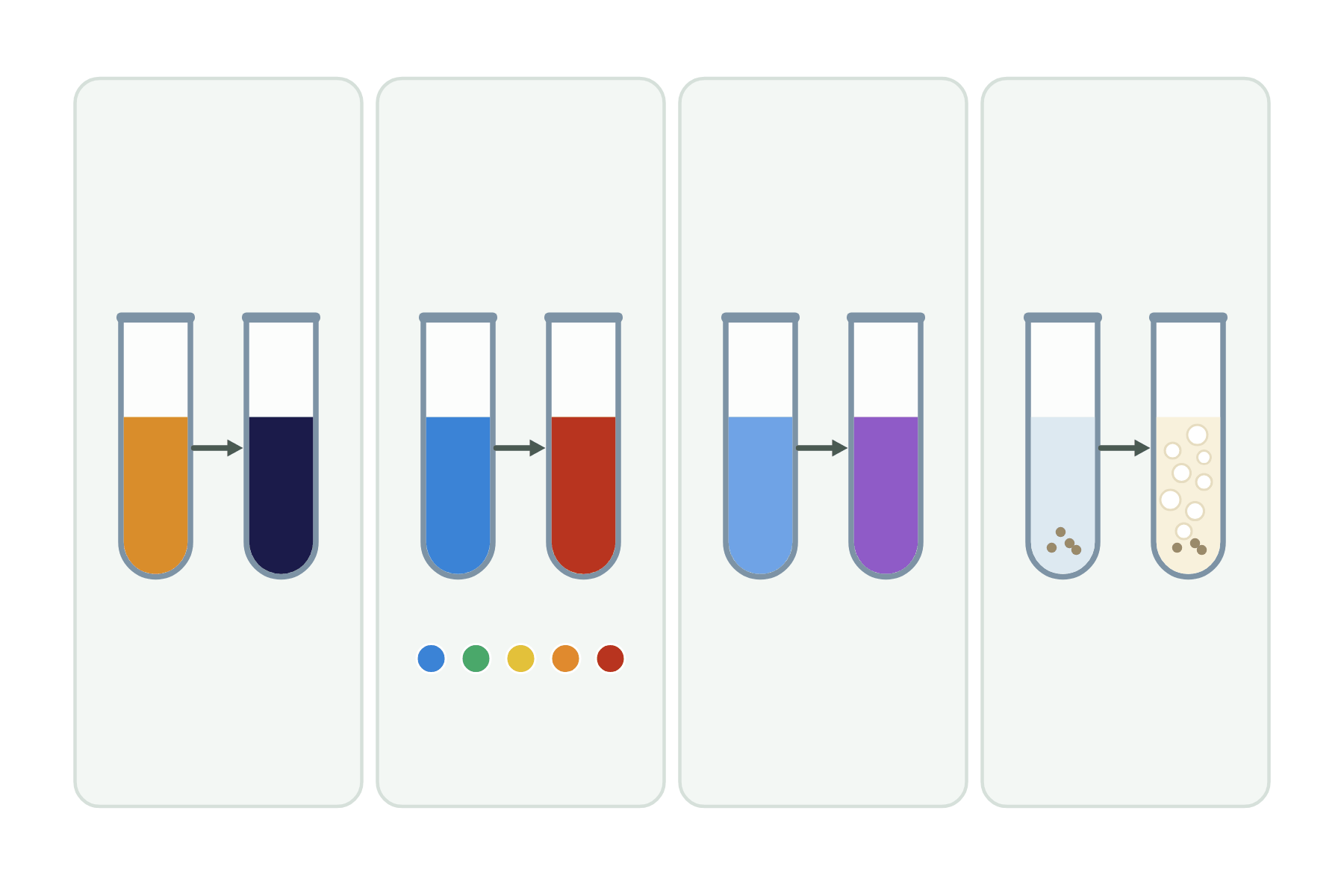 Name the test, the reagent and the positive result for starch, sugar, protein and lipids.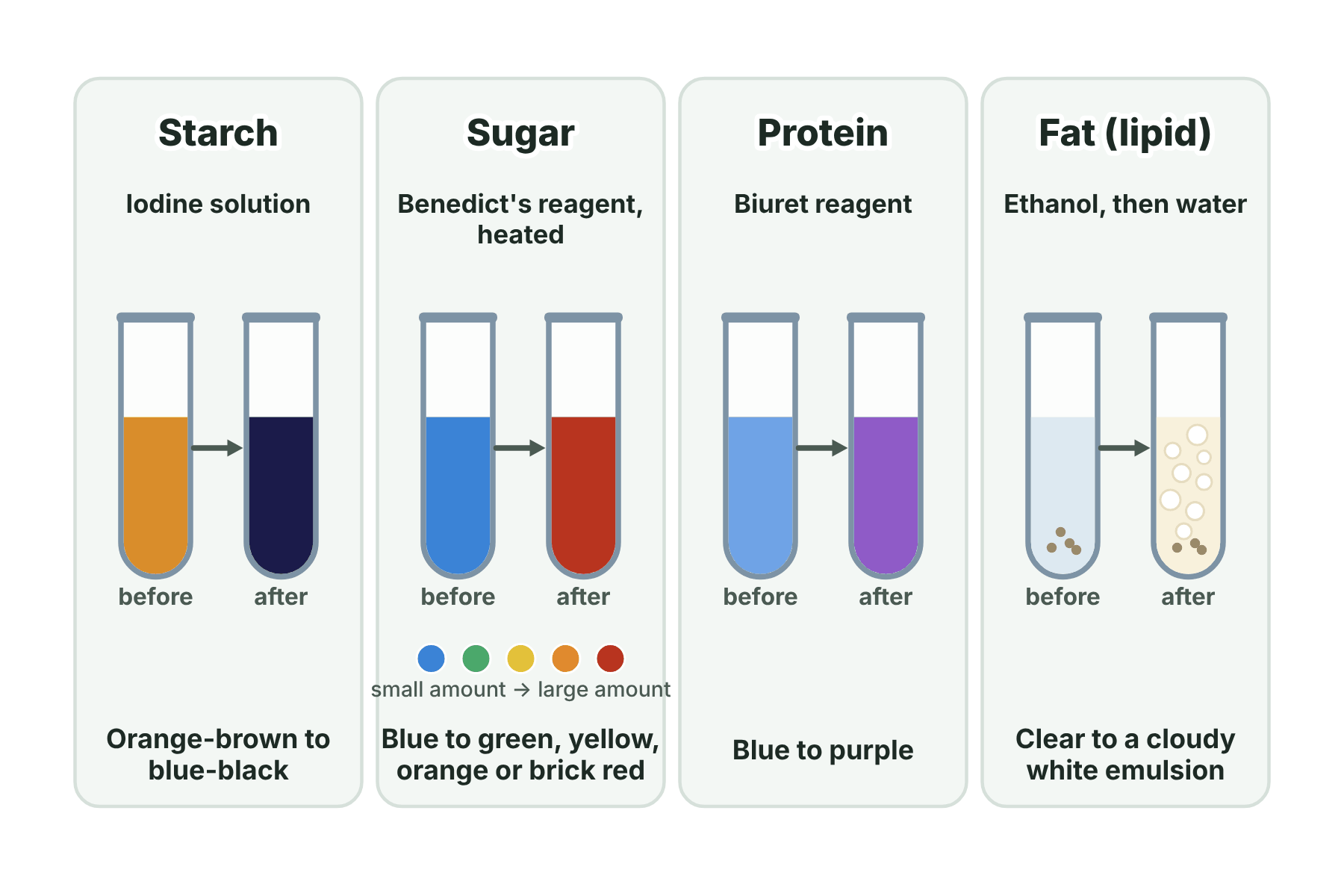
-
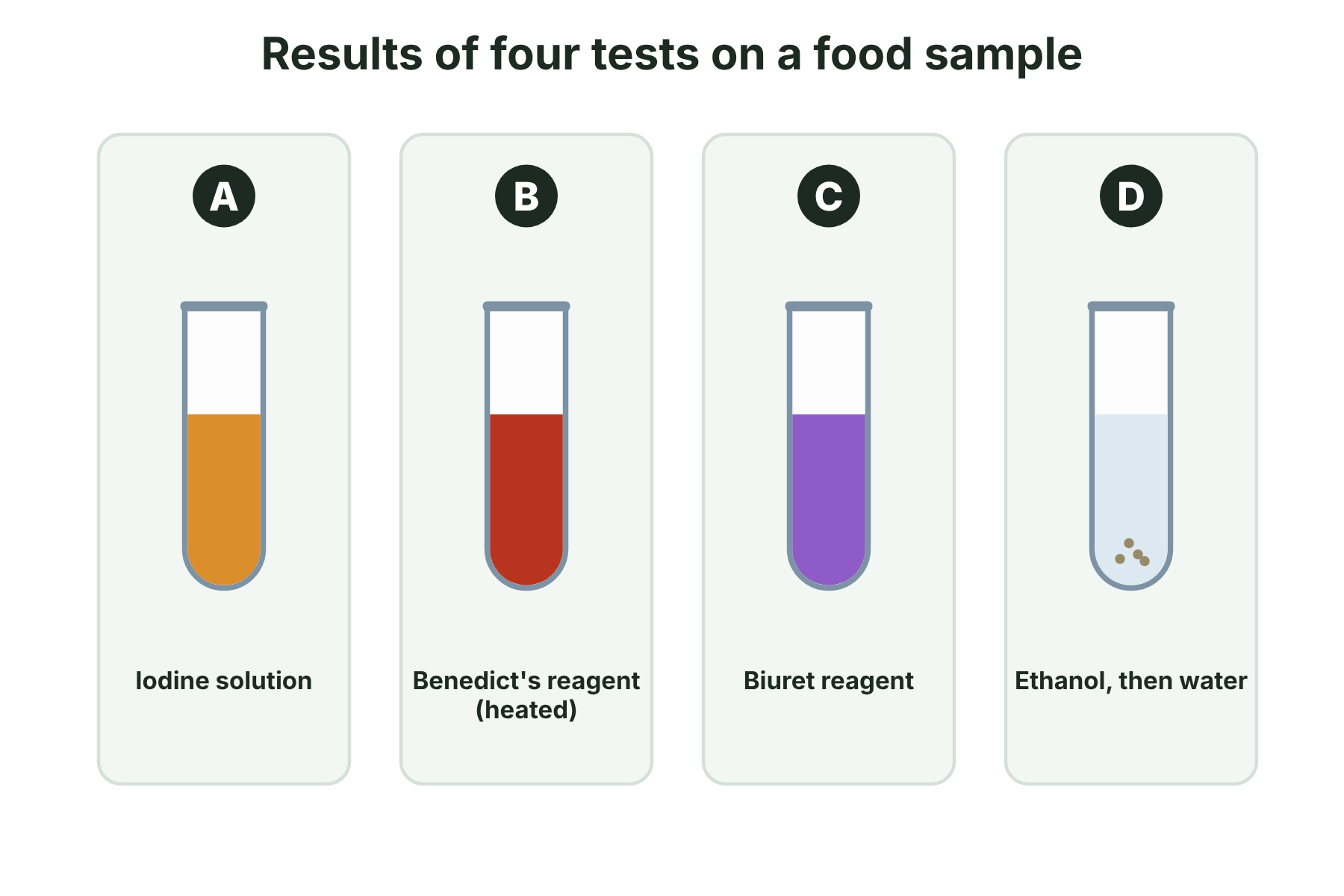 Four tests were done on a food sample, as shown. Say which food groups are present in the sample.
 Sugar is present (B, brick red) and protein is present (C, purple). Starch is not present (A stayed orange-brown) and lipid is not present (D stayed clear).
-
What does each colour in the Benedict's test tell you?
Blue means no sugar. Green means a very small amount, yellow a small amount, orange a moderate amount, and brick red a large amount.