Flashcards · Biology · Respiration and Biological Molecules
Aerobic and Anaerobic Respiration
-
What does respiration supply in all living cells?
ATP, which carries energy to where it is needed.
-
What does ATP stand for?
Adenosine triphosphate.
-
How much ATP does aerobic respiration make per glucose?
About 30 ATP.
-
How much ATP does anaerobic respiration make per glucose?
2 ATP.
-
Why is respiration called a universal process?
It happens in all living cells.
-
What is respiration?
An exothermic reaction in living cells that transfers energy from glucose.
-
Is respiration endothermic or exothermic?
Exothermic.
-
How often does respiration happen in living cells?
It is continuously occurring.
-
Name three uses of the energy from respiration.
Building larger molecules, movement and keeping warm.
-
Write the word equation for aerobic respiration.
Glucose + oxygen → carbon dioxide + water.
-
Write the symbol equation for aerobic respiration.
C₆H₁₂O₆ + 6O₂ → 6CO₂ + 6H₂O.
-
Where do most aerobic respiration reactions take place?
In the mitochondria.
-
What is anaerobic respiration?
Respiration without oxygen.
-
Write the equation for anaerobic respiration in muscles.
Glucose → lactic acid.
-
Write the equation for anaerobic respiration in yeast and plant cells.
Glucose → ethanol + carbon dioxide.
-
Why does anaerobic respiration transfer much less energy?
The oxidation of glucose is incomplete.
-
What is fermentation?
Anaerobic respiration in yeast cells.
-
How does yeast make bread rise?
It releases carbon dioxide, which makes bubbles in the dough.
-
Name two industries that use fermentation.
Bread making and making alcoholic drinks.
-
What is the difference between breathing and respiration?
Breathing brings oxygen in. Respiration is the reaction in cells that transfers energy.
-
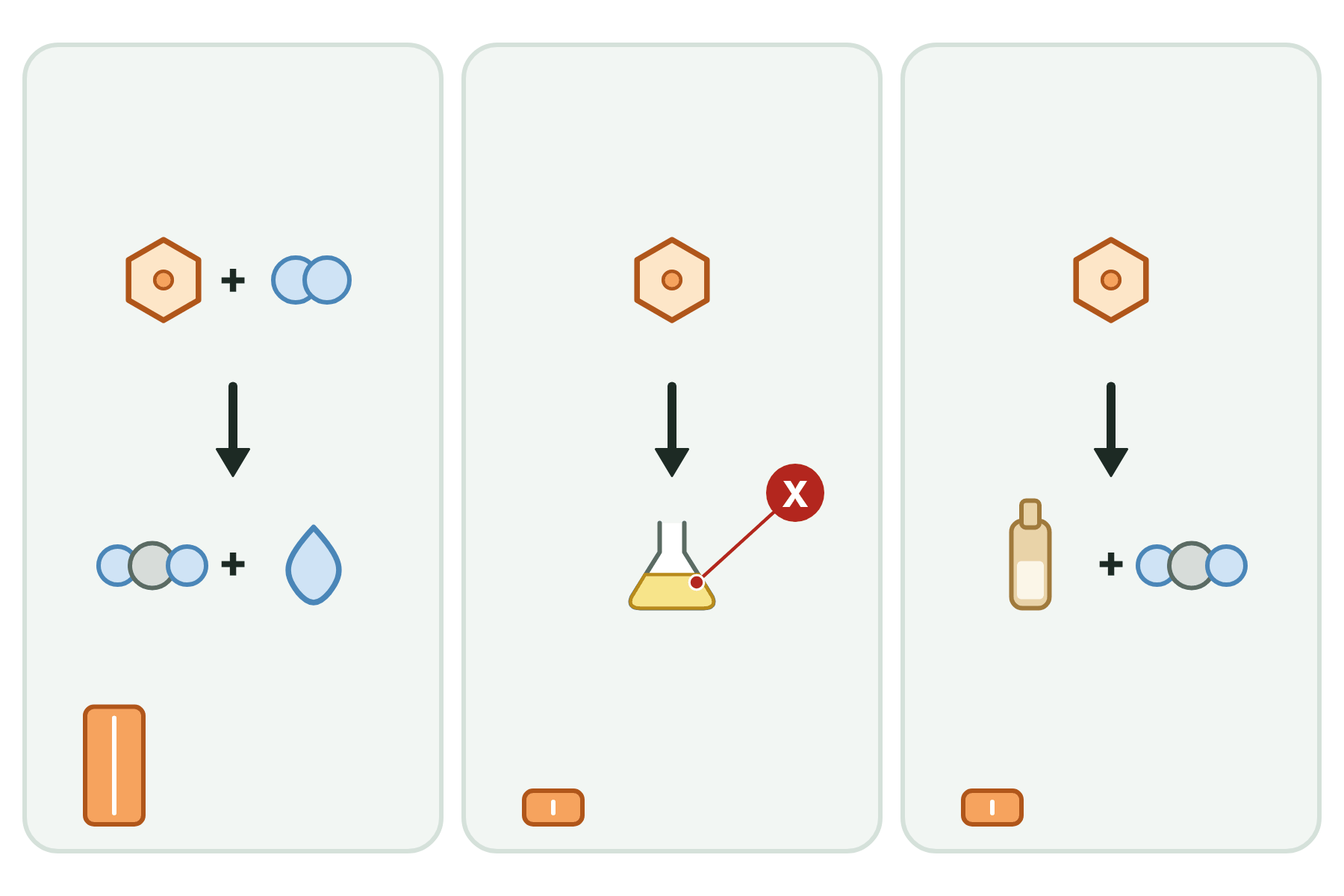 Name the product marked X.
 Lactic acid. It is made when muscles respire anaerobically.
-
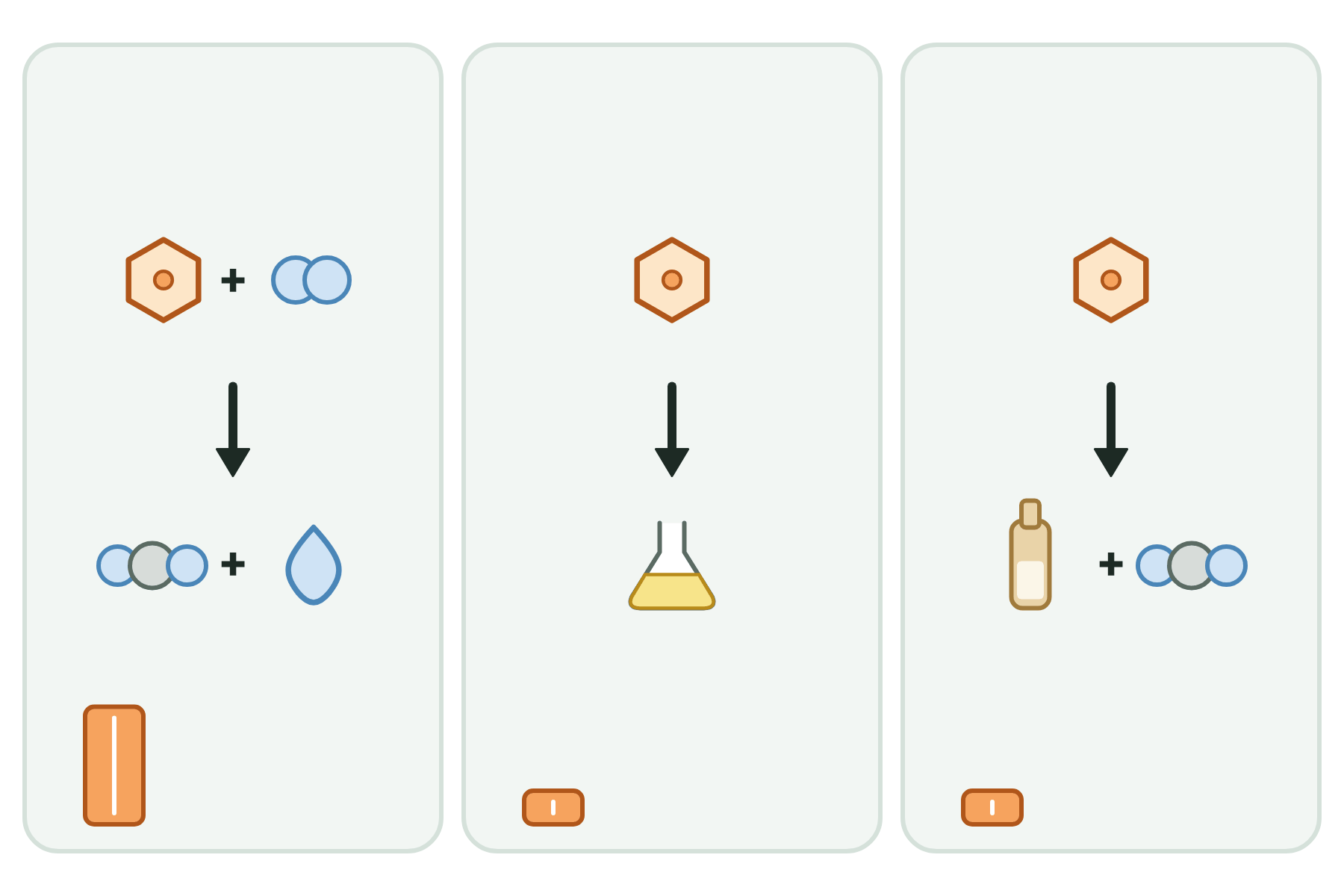 Name each type of respiration and the substances on the diagram.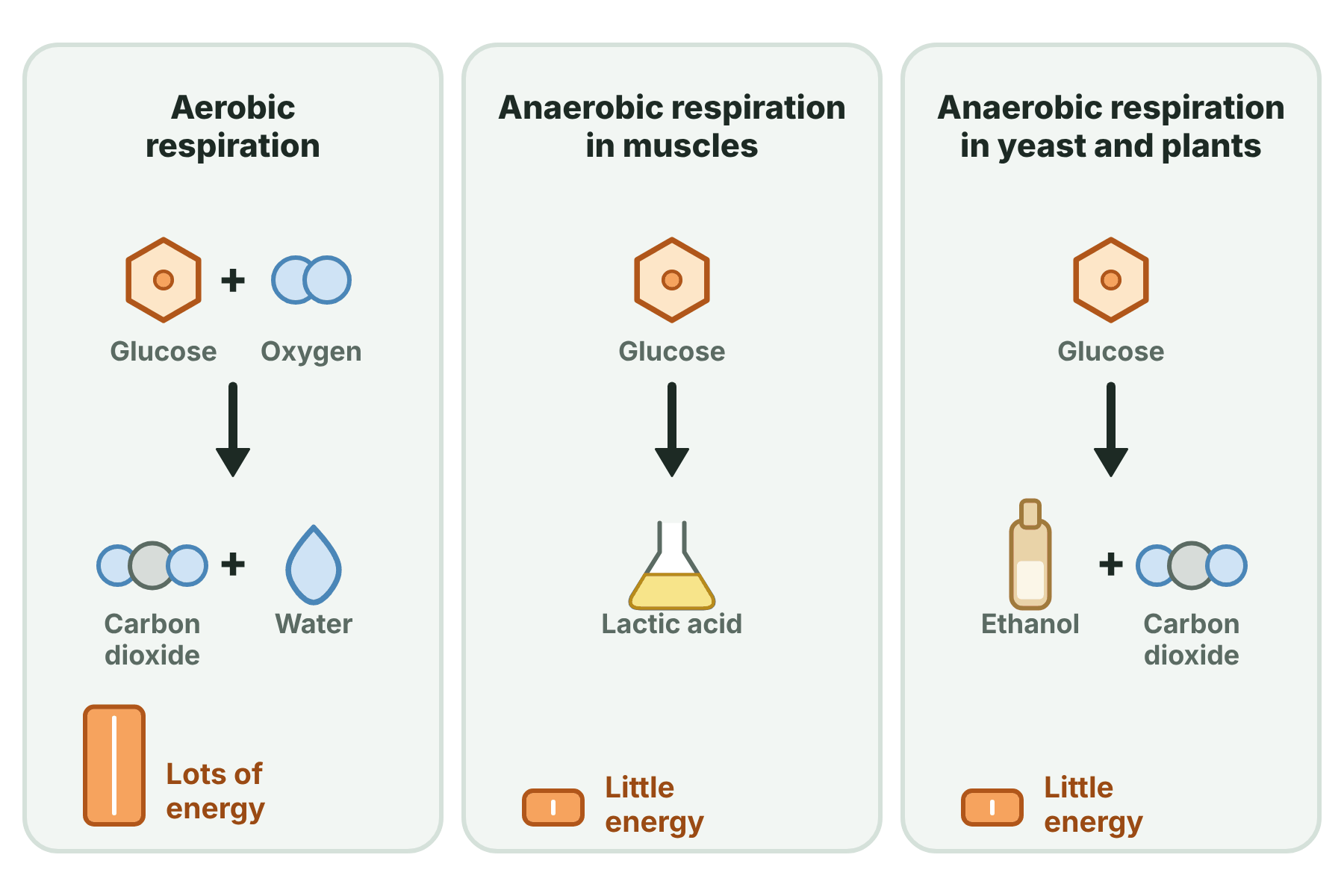
Aerobic respiration: glucose + oxygen → carbon dioxide + water, lots of energy. Anaerobic respiration in muscles: glucose → lactic acid, little energy. Anaerobic respiration in yeast and plants: glucose → ethanol + carbon dioxide, little energy.