Flashcards · Biology · The Nervous System
Reflex Arcs
-
What is a reflex action?
A rapid, automatic response that protects the body.
-
Why is a reflex fast?
The pathway is short, with few neurones and synapses.
-
Why is a reflex automatic?
It does not need conscious thought.
-
Name the parts of a reflex arc in order.
Receptor, sensory neurone, relay neurone, motor neurone, effector.
-
Where is the relay neurone in a reflex arc?
In the spinal cord.
-
What does the motor neurone do in a reflex arc?
It carries the impulse from the spinal cord to the effector.
-
What is the effector in a reflex such as pulling away a hand?
A muscle.
-
How does an impulse cross a synapse?
Neurotransmitter diffuses across the gap and binds to receptors.
-
Why do impulses only pass one way across a synapse?
The neurotransmitter is released from one side only.
-
How is a reflex action different from a voluntary action?
A reflex is faster and automatic; a voluntary action is chosen and involves the brain.
-
Give an example of a reflex.
Pulling a hand away from a hot object, or blinking.
-
How can reaction time be measured?
By a ruler drop test.
-
In the ruler drop test what does a shorter distance mean?
A faster reaction time.
-
Why should the test be repeated?
To calculate a mean and reduce the effect of anomalies.
-
What does the myelin sheath do?
It speeds up the impulse.
-
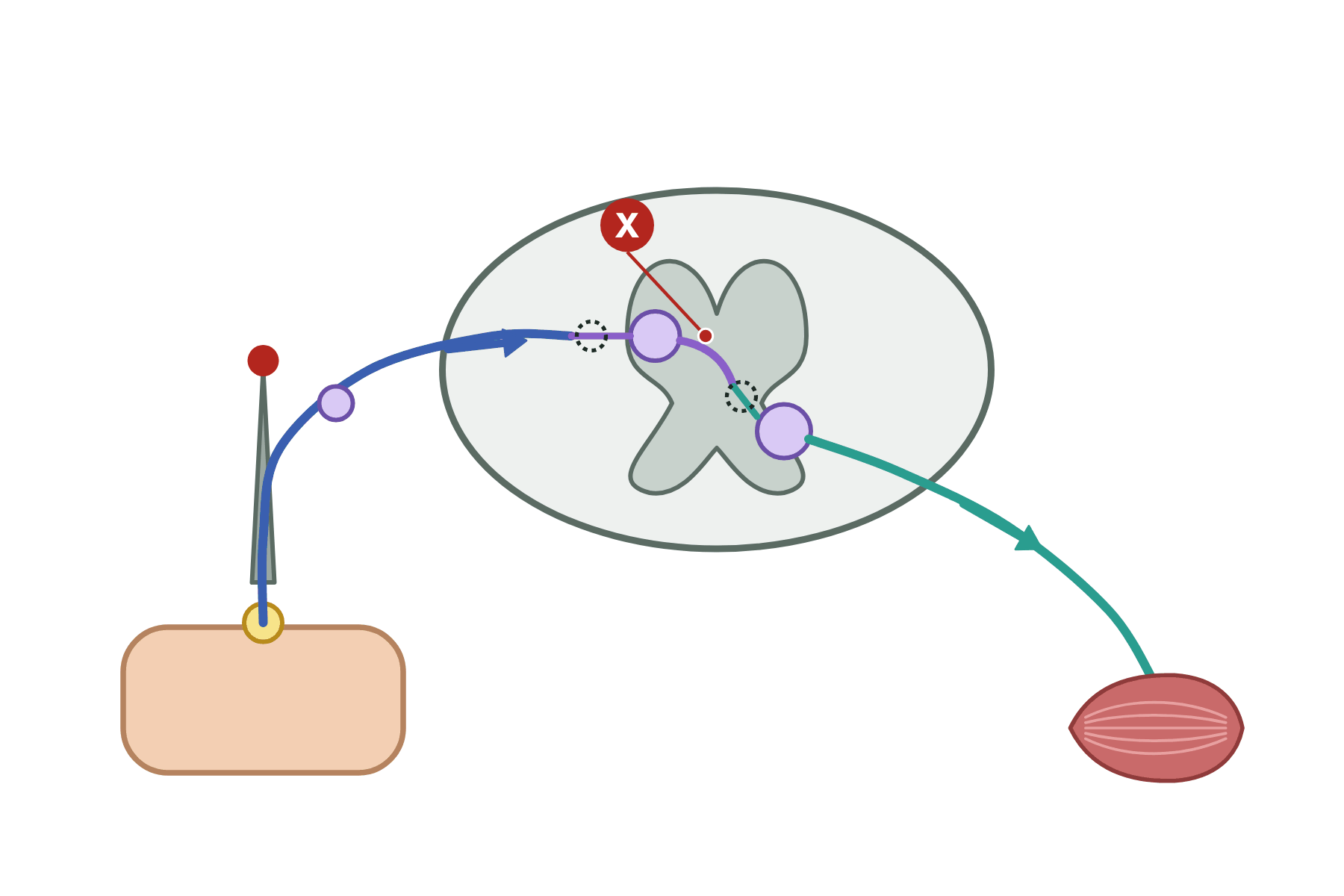 Name the neurone marked X and say what it does.
 The relay neurone. It links the sensory neurone to the motor neurone inside the spinal cord.
-
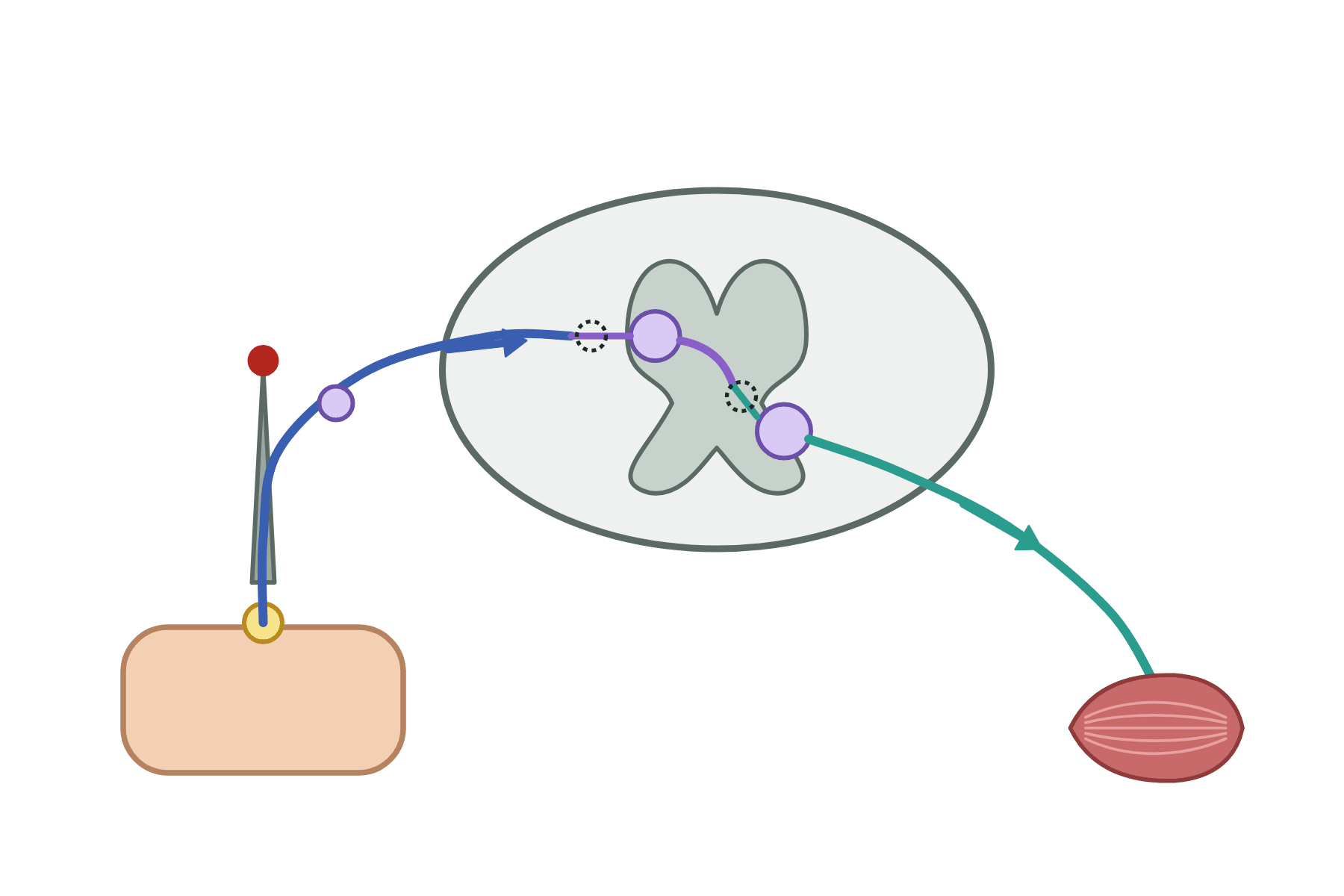 Label the parts of this reflex arc.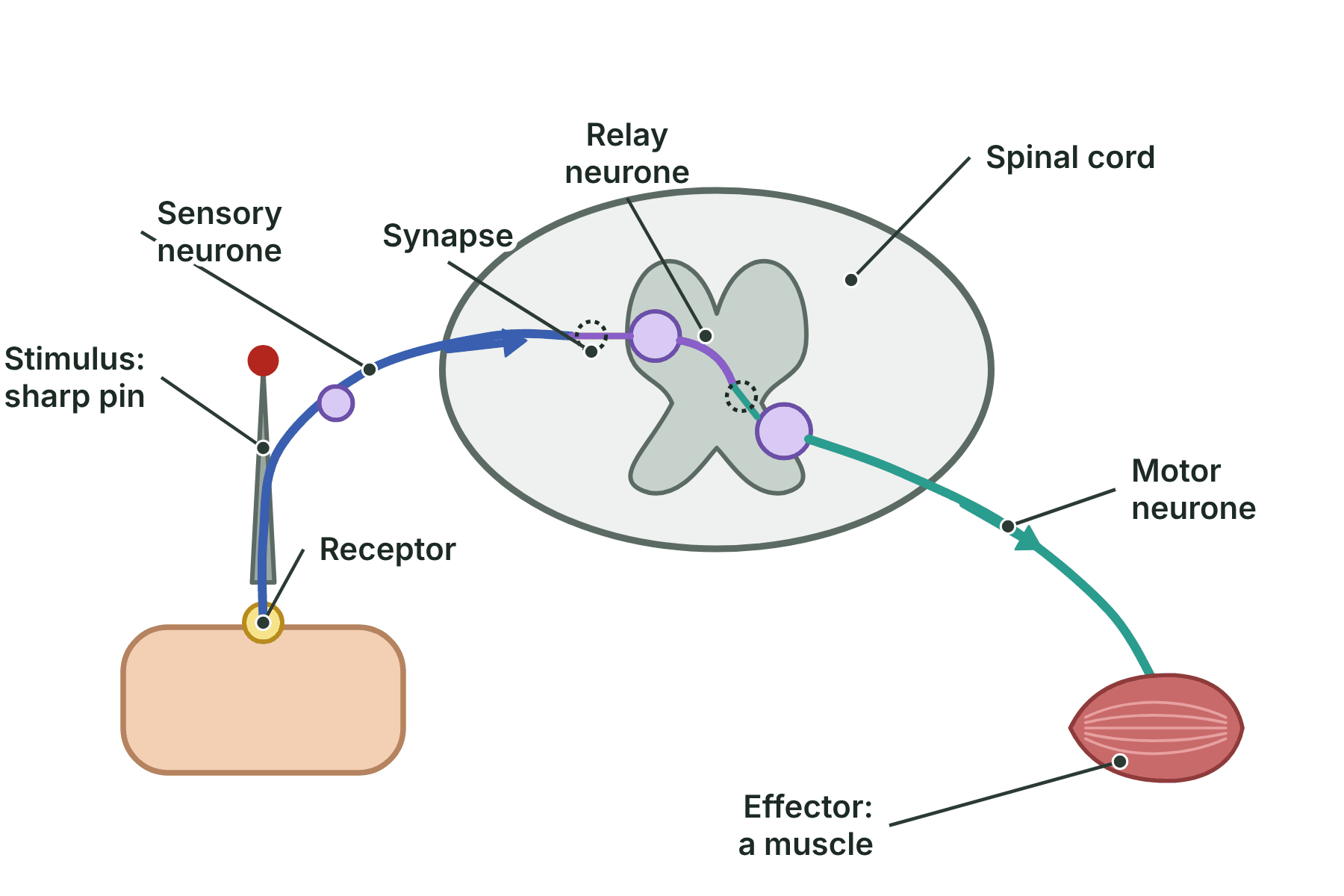
Stimulus, receptor, sensory neurone, relay neurone, motor neurone and effector. The relay neurone is in the spinal cord, and synapses join the neurones.
-
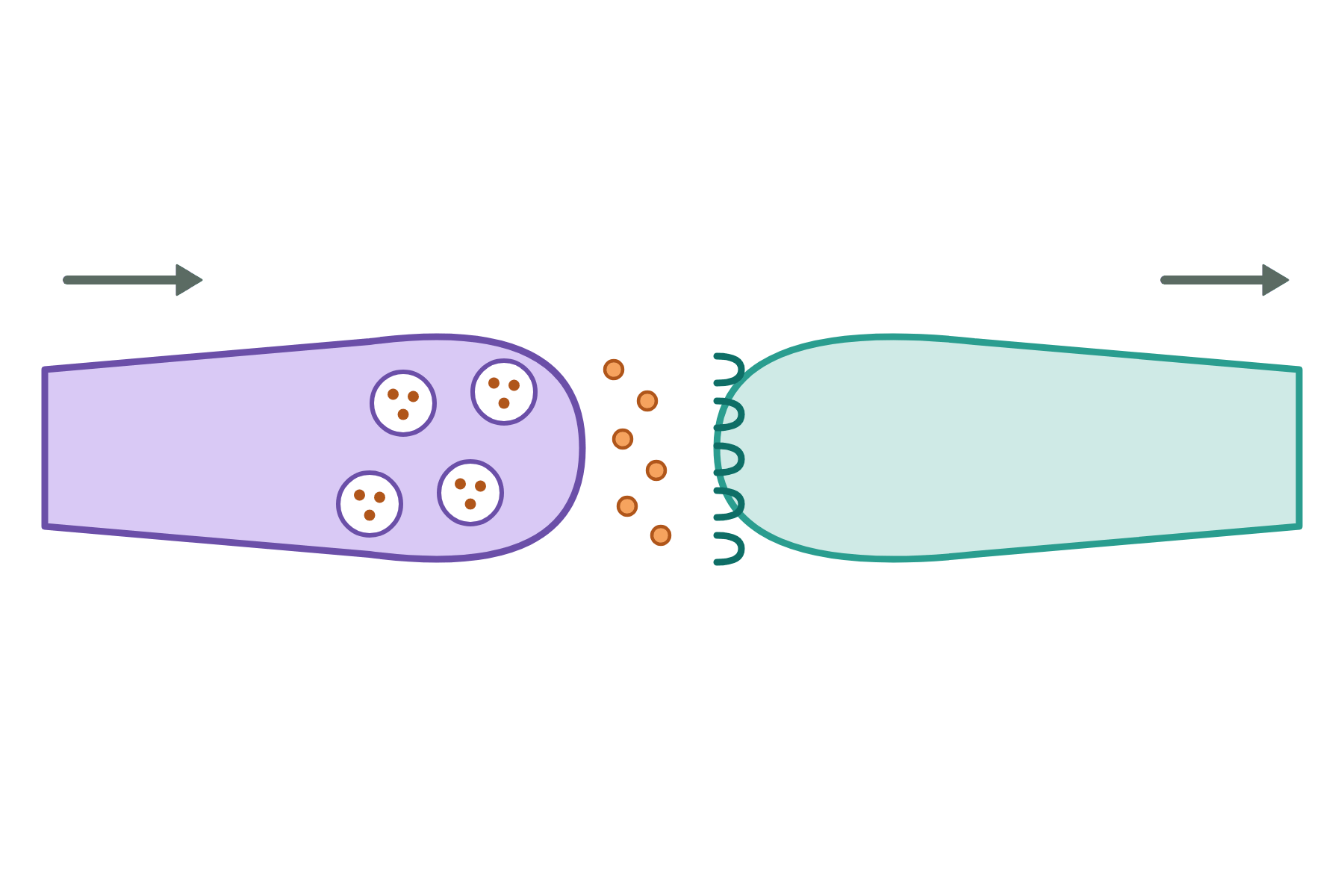 Describe what happens at the gap between the neurones.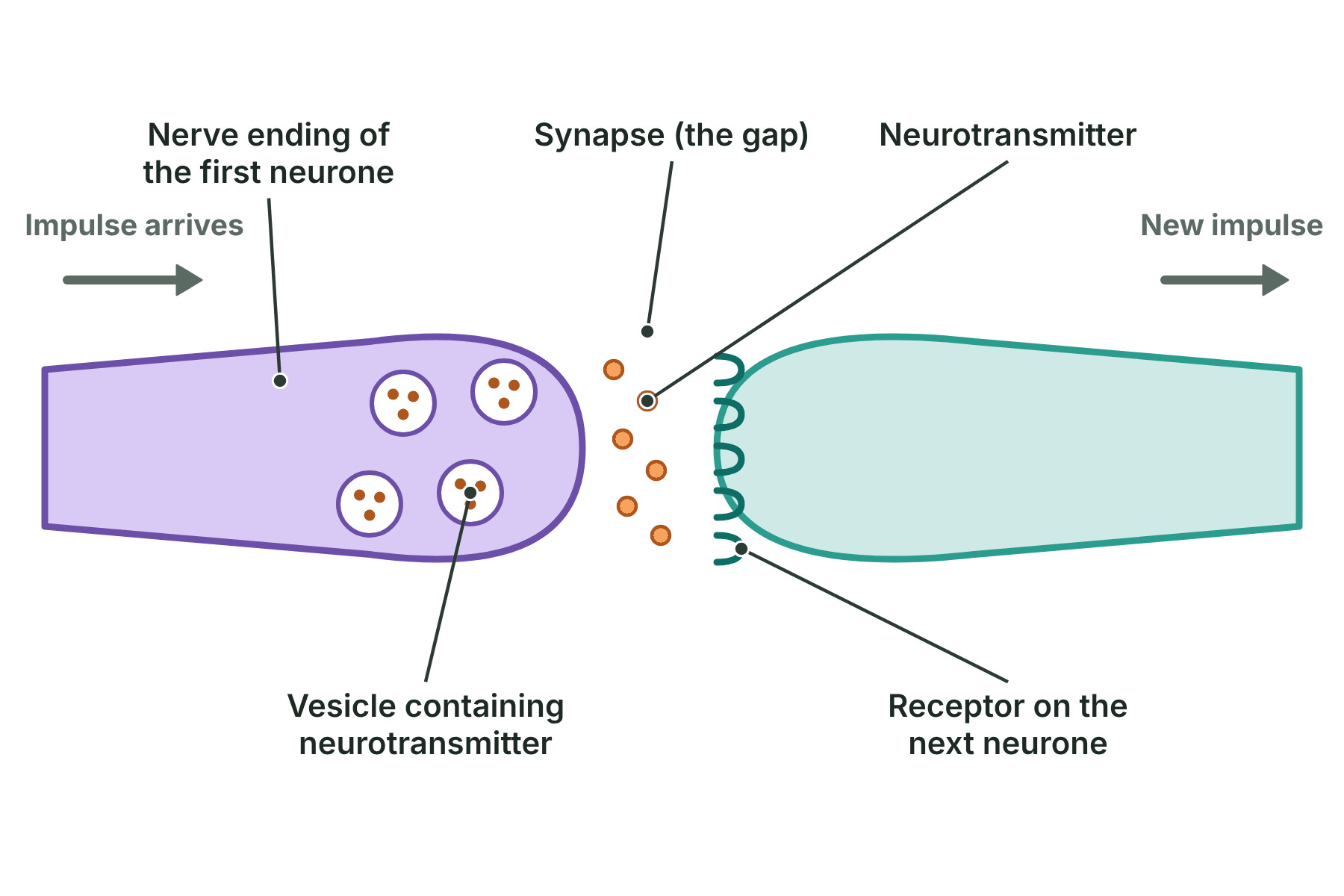
The impulse makes the nerve ending release neurotransmitter. It diffuses across the gap and binds to receptors on the next neurone, starting a new impulse.