Flashcards · Biology · What Happens in Cells
Nucleotides and Protein Synthesis
-
What are the four bases in DNA?
Adenine, thymine, guanine and cytosine (A, T, G and C).
-
What are the three parts of a nucleotide?
A phosphate group, a sugar and a base.
-
What forms the backbone of a DNA strand?
The sugars and phosphate groups.
-
Which base pairs with A?
T.
-
Which base pairs with G?
C.
-
What is complementary base pairing?
A always pairs with T, and G always pairs with C.
-
What holds the two strands of DNA together?
Weak bonds between pairs of bases.
-
What happens to the gene first in protein synthesis? (Higher tier)
The DNA unzips and a copy of the gene is made.
-
What is mRNA? (Higher tier)
A copy of a gene that carries the code to the ribosome.
-
What is transcription? (Higher tier)
Making the mRNA copy of a gene in the nucleus.
-
What is translation? (Higher tier)
Reading the mRNA at the ribosome and joining amino acids in order.
-
What does tRNA do? (Higher tier)
It carries amino acids to the ribosome.
-
What is a triplet? (Higher tier)
A group of three bases that codes for one amino acid.
-
How does DNA decide the order of amino acids? (Higher tier)
The order of triplets in the gene gives the order of amino acids.
-
Why can a change in a gene change a protein? (Higher tier)
A different base order can give different amino acids, so the protein folds into a different shape.
-
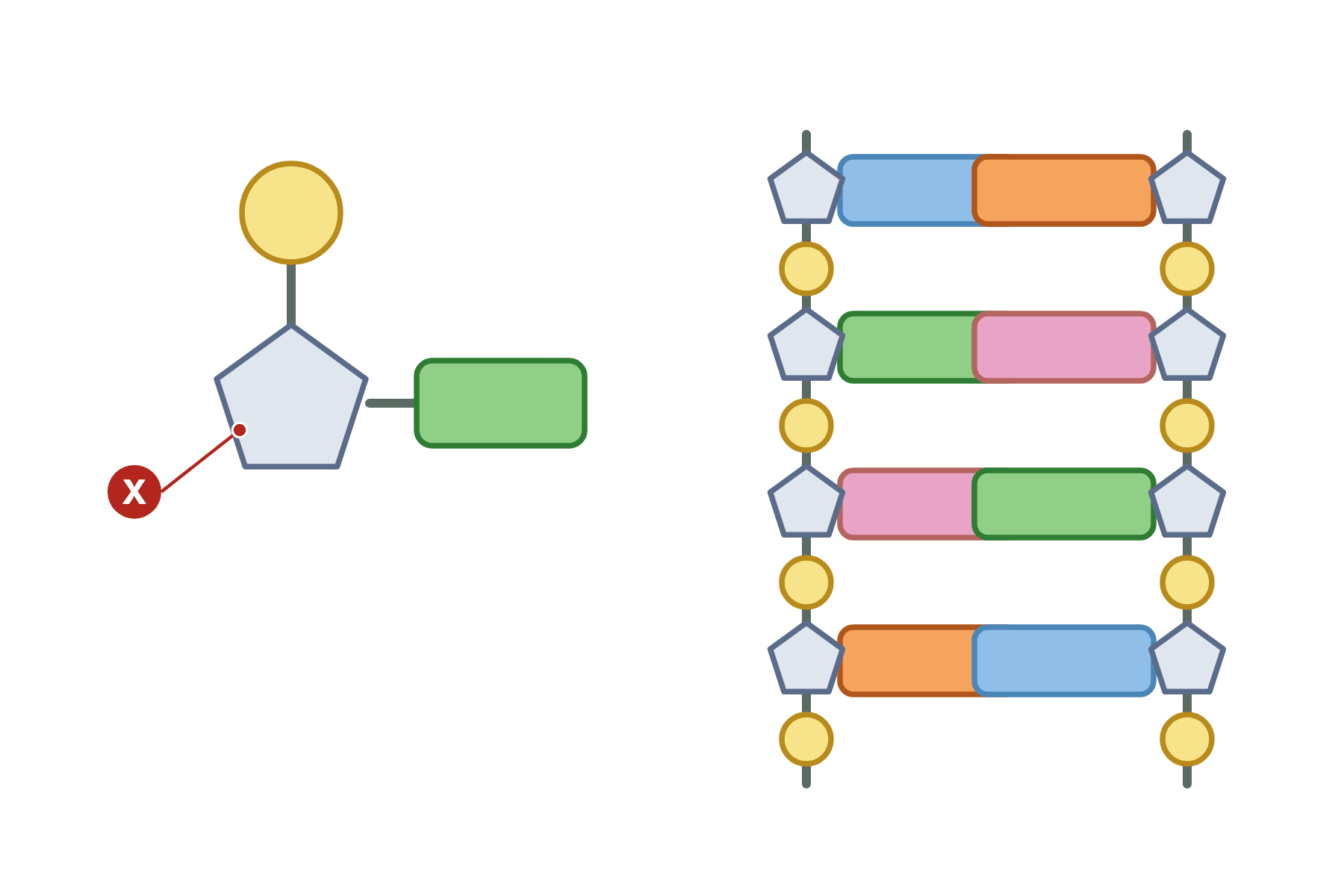 Name the part of the nucleotide marked X.
 The sugar. It joins to the phosphate group and to the base.
-
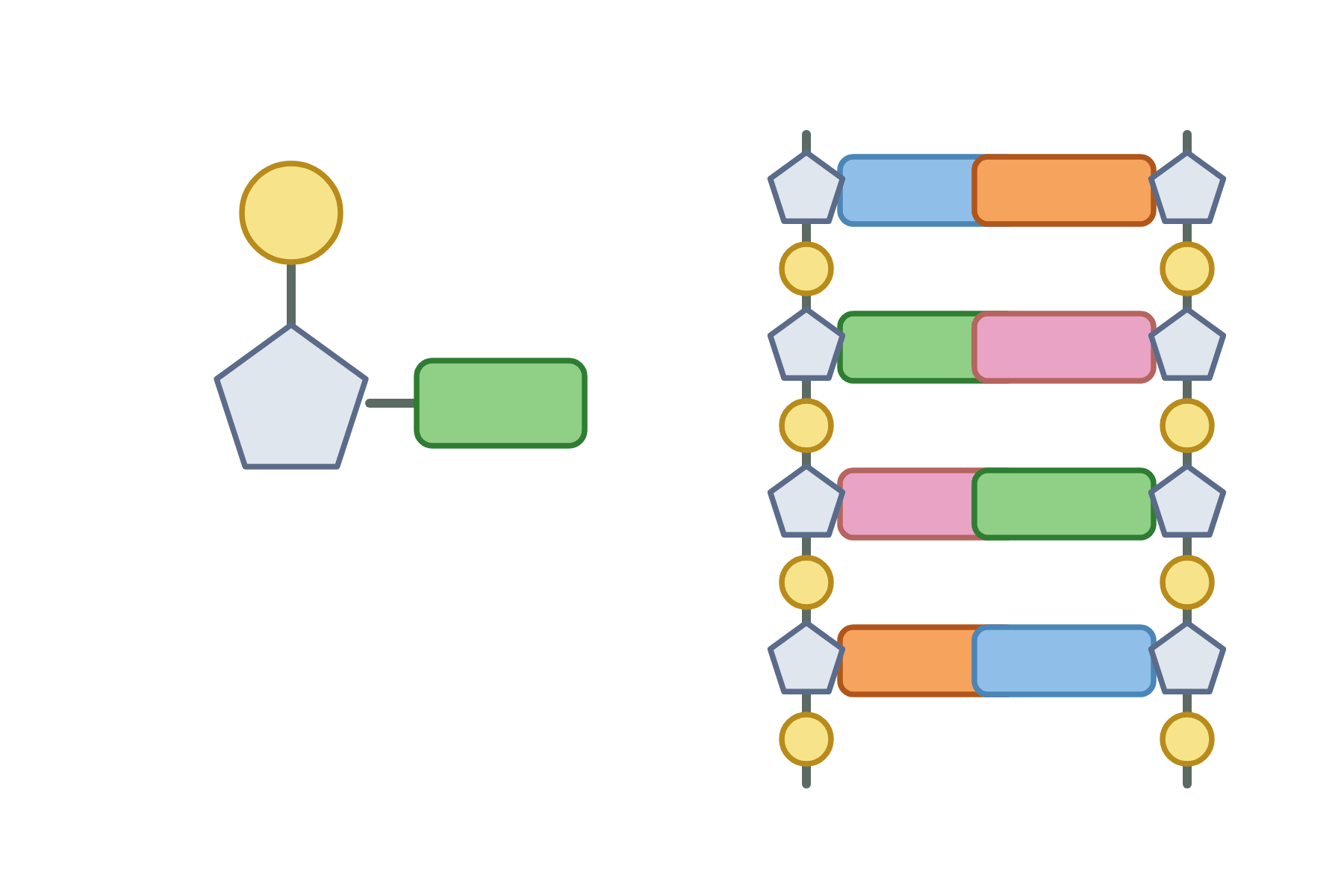 Label the nucleotide and say which bases pair.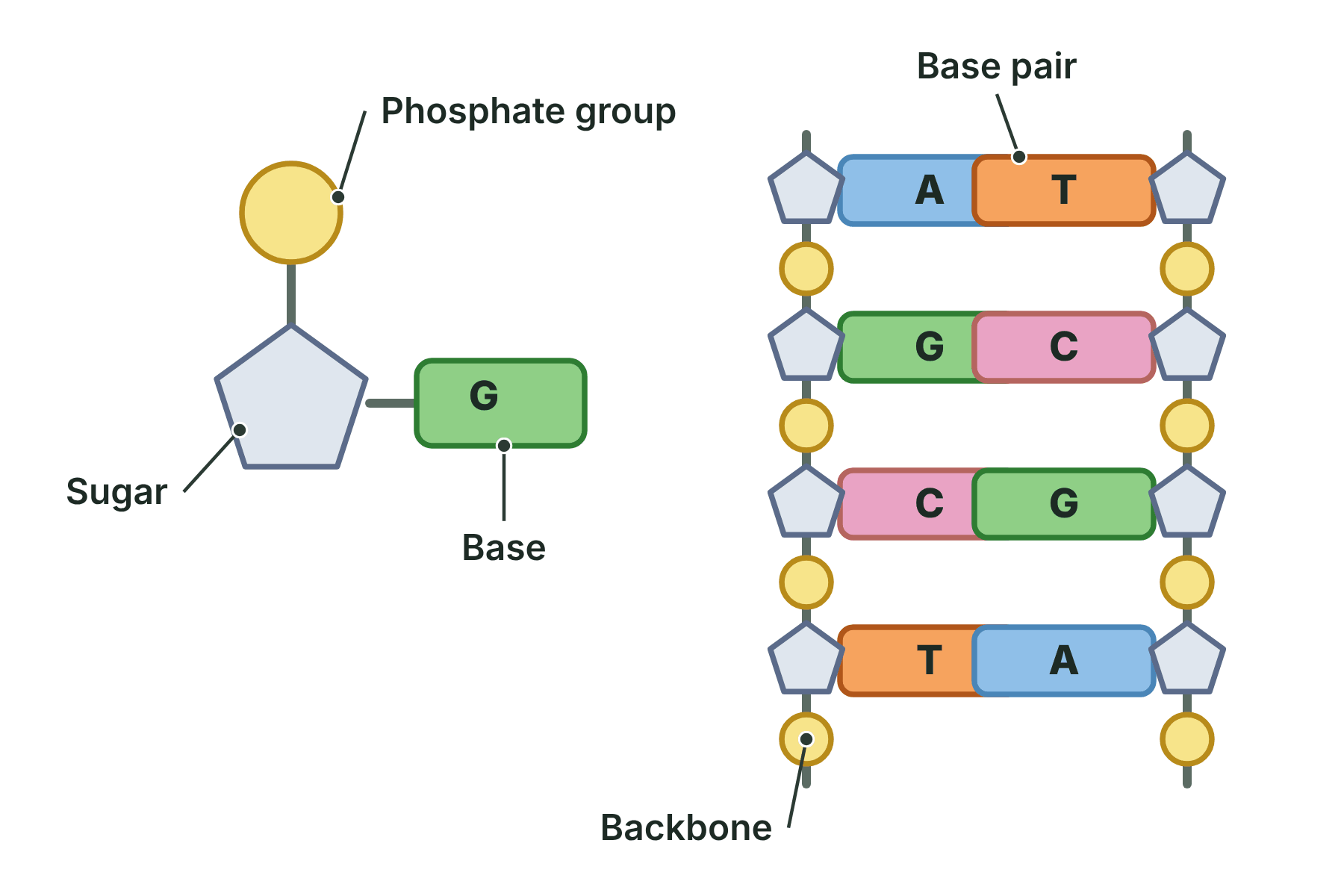
The nucleotide has a phosphate group, a sugar and a base. A pairs with T, and G pairs with C.
-
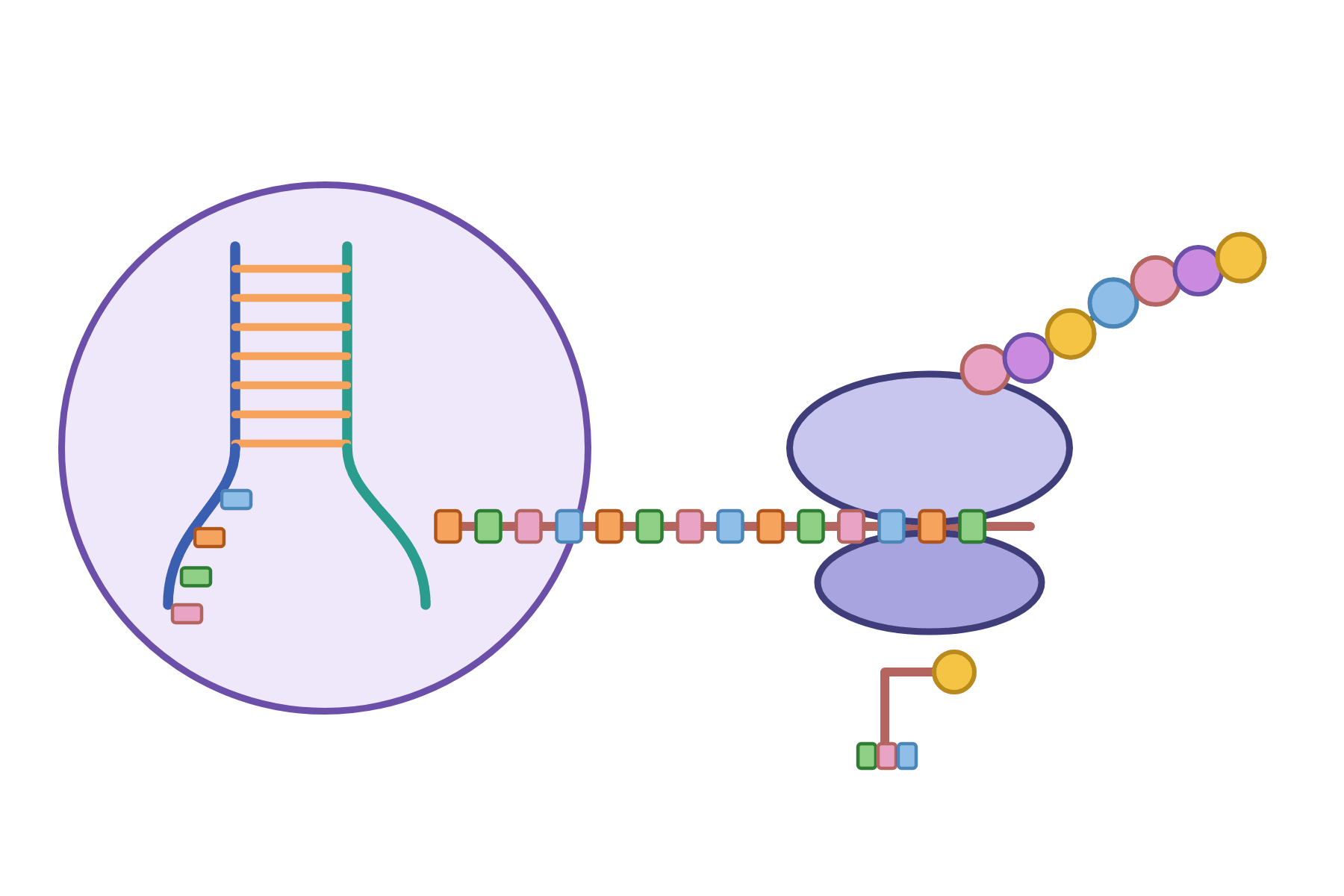 Describe what happens at each stage of protein synthesis.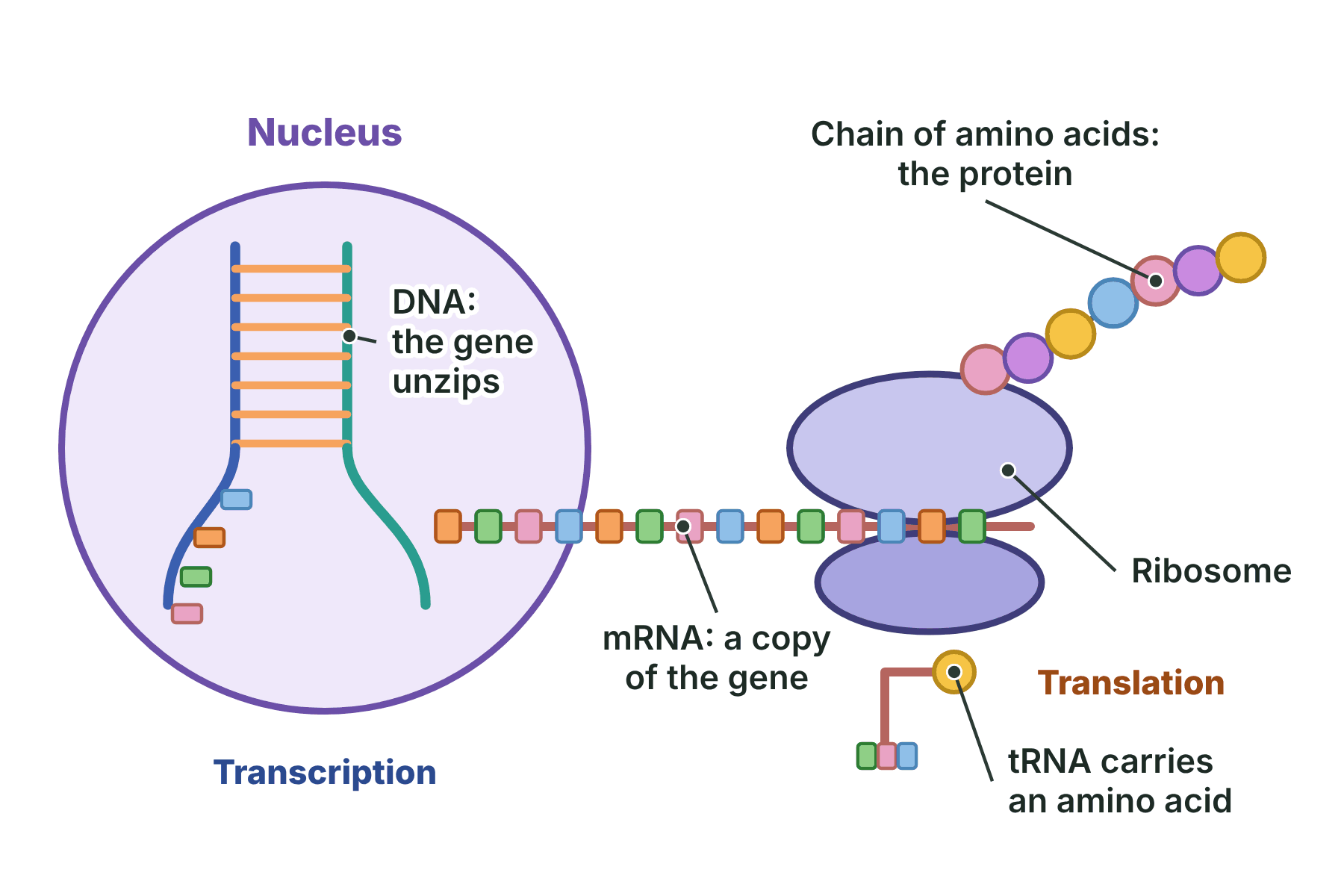
In the nucleus the gene is copied as mRNA (transcription). The mRNA leaves and is read by a ribosome. tRNA brings amino acids, which are joined in order (translation).