Flashcards · Biology · Communities in Ecosystems
Levels of Organisation in an Ecosystem
-
What is an organism?
A single living thing.
-
What is a species?
A group of similar organisms that can breed together to produce fertile offspring.
-
What is a population?
All the organisms of one species living in an area.
-
What is a community?
All the populations of different species living in an area.
-
What is an ecosystem?
A community and its non-living surroundings.
-
What is a habitat?
The place where an organism lives.
-
Which level includes the abiotic factors?
The ecosystem.
-
Which level of organisation is only made of one species?
A population.
-
Name the four levels in order, from smallest to largest.
Organism, population, community, ecosystem.
-
What is an example of a population in a pond?
All the sticklebacks.
-
What is an example of a community in a pond?
All the plants and animals living in it.
-
Give an example of an abiotic part of a pond ecosystem.
The water, light or temperature.
-
Can an ecosystem be small?
Yes, for example a puddle or a rotting log.
-
How many species are in a population?
One.
-
Why can many species share an ecosystem?
Each species has its own habitat and role.
-
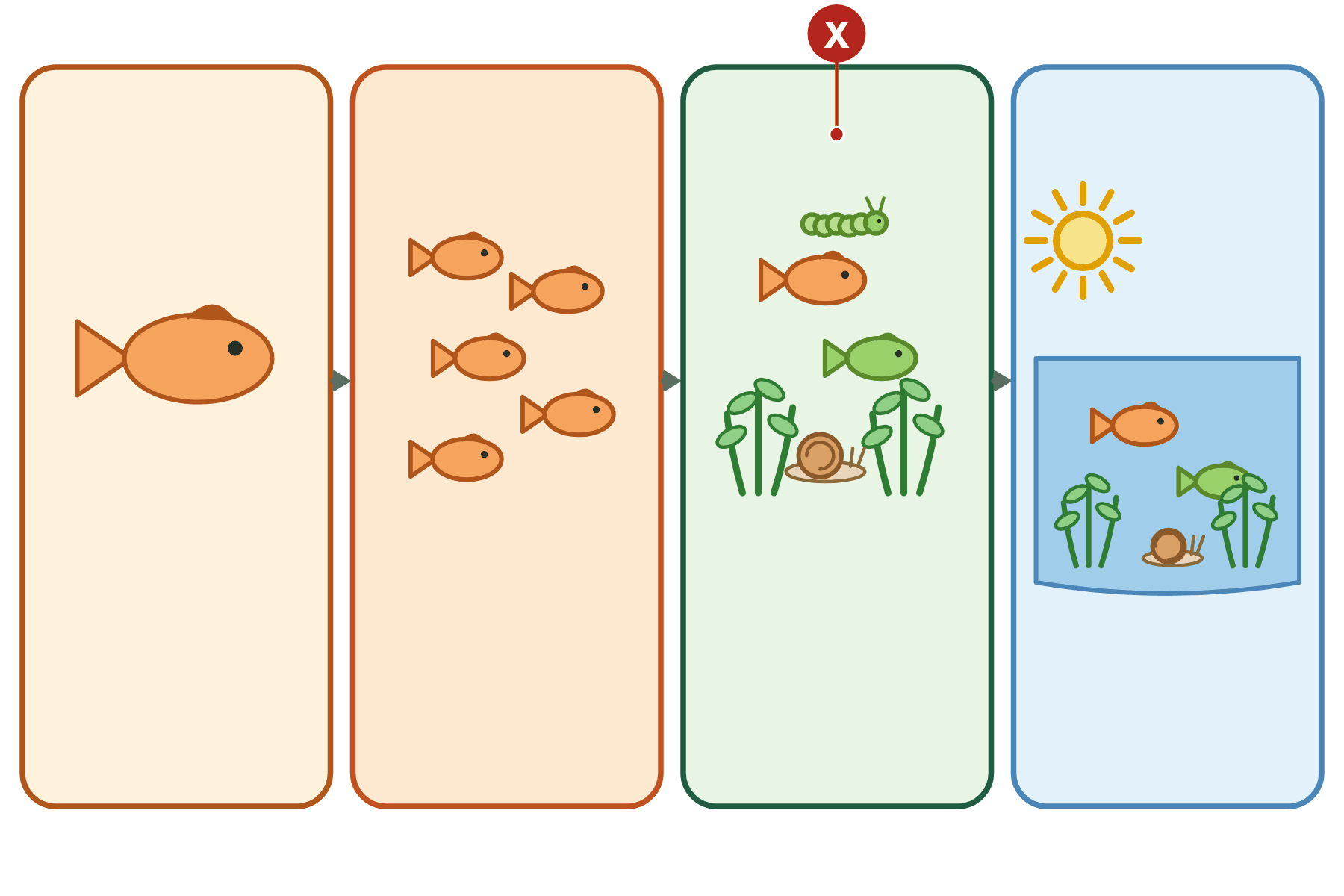 Name the level of organisation marked X.
 A community. It is all the populations of different species living in an area.
-
 Describe each level of organisation.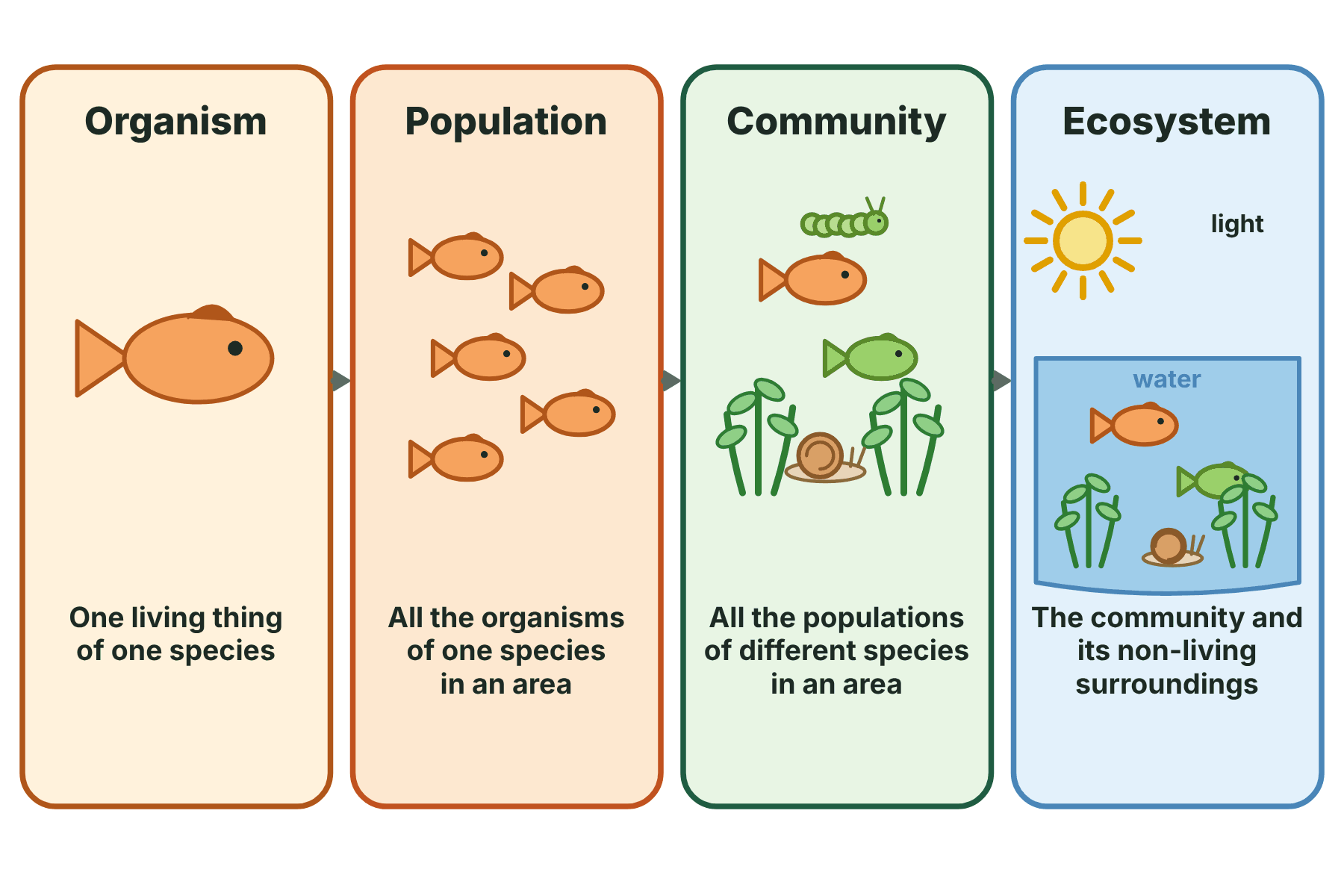
Organism: one living thing. Population: all the organisms of one species in an area. Community: all the populations of different species in an area. Ecosystem: the community and its non-living surroundings.