Flashcards · Biology · Cycles in Ecosystems
Cycling of Materials and Decomposers
-
Why do materials have to be cycled?
The supply of materials on Earth is limited.
-
Name two materials that are cycled.
Carbon and nitrogen.
-
What are the abiotic parts of an ecosystem?
The non-living parts such as air, water and soil.
-
What are the biotic parts of an ecosystem?
The living things.
-
What do producers take from the environment?
Carbon dioxide, water and mineral ions.
-
Which organisms are decomposers?
Bacteria and fungi.
-
What do decomposers feed on?
Dead plants and animals and waste.
-
How do decomposers break down dead material?
They release enzymes that digest it into soluble molecules, which they absorb.
-
What do decomposers release into the air?
Carbon dioxide, from their respiration.
-
What do decomposers return to the soil?
Mineral ions such as nitrates.
-
How do plants get nitrogen?
By taking up nitrates from the soil.
-
What do nitrogen-fixing bacteria do?
They turn nitrogen from the air into compounds that plants can use.
-
What do earthworms and woodlice do in decomposition?
They break dead material into smaller pieces.
-
Where do decomposers work in a pond?
In the mud, breaking down dead plants and animals.
-
What would happen if there were no decomposers?
Dead material would build up and the nutrients would stay locked up.
-
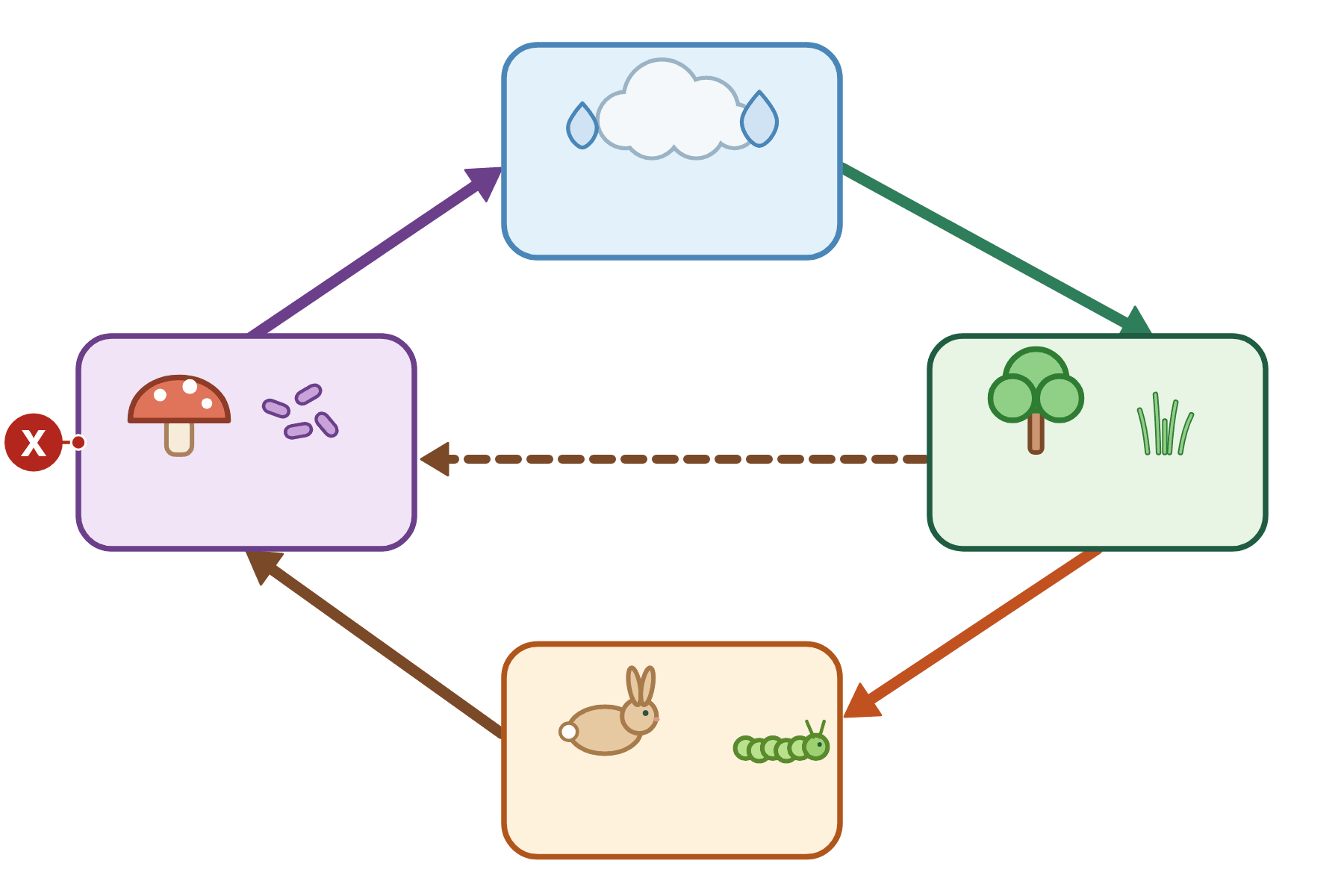 Name the group of organisms marked X and say what it does.
 The decomposers, bacteria and fungi. They break down dead plants, dead animals and waste, and return carbon dioxide and mineral ions to the environment.
-
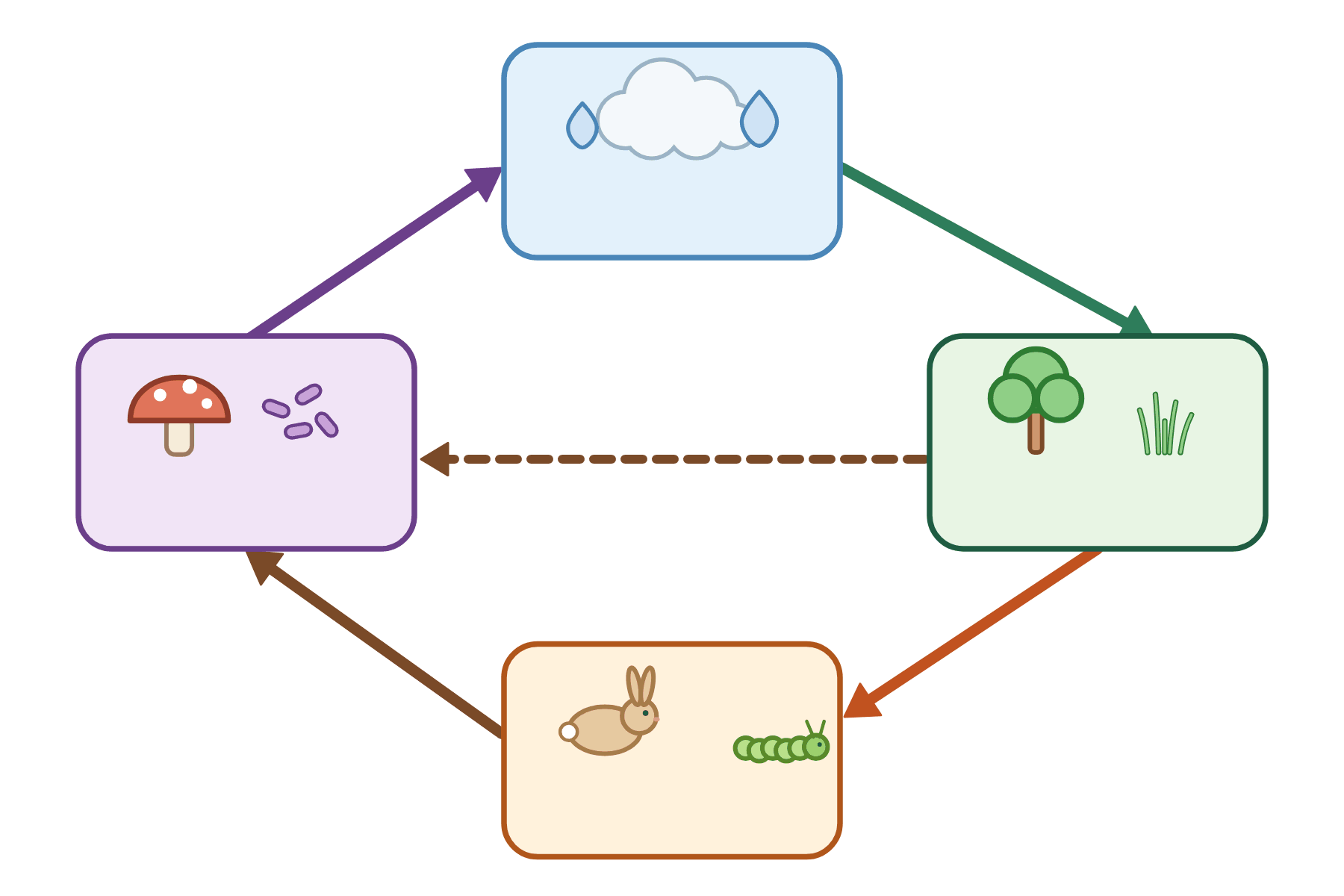 Describe how materials move through the ecosystem.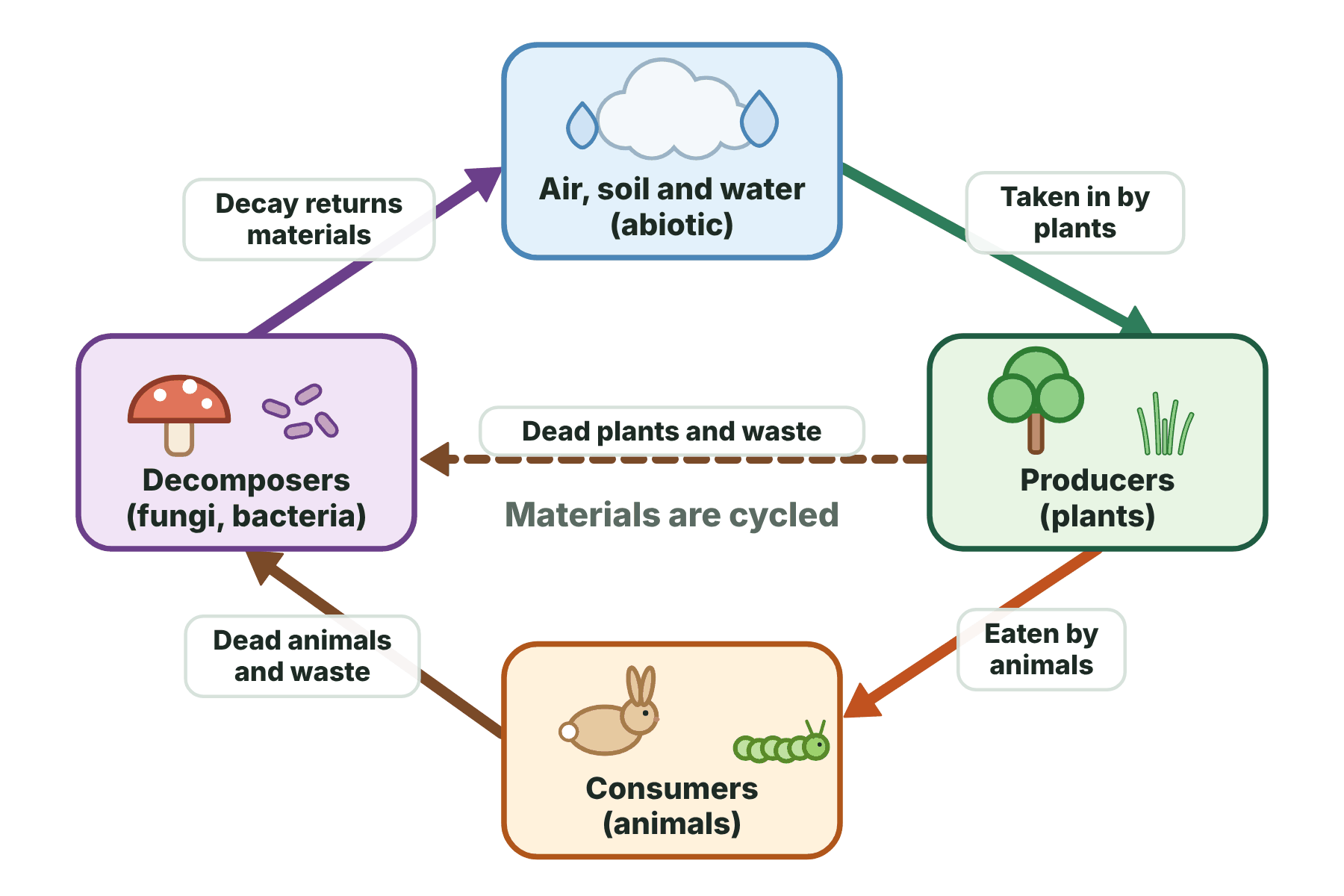
Plants take in materials from the air, soil and water. Animals eat plants. Dead plants, dead animals and waste are broken down by decomposers, which return the materials to the air, soil and water.