Exam questions · Biology · Respiration and Metabolism
Metabolism
- 7 exam questions
- 19 marks
- 8 quick checks
-
1 State [1 mark]
State what is meant by metabolism.
Show answerHide answer
Model answer
The sum of all the reactions in a cell or the body.
Mark scheme
- Sum of all the reactions in a cell or the body — 1 mark
-
2 Name [3 marks]
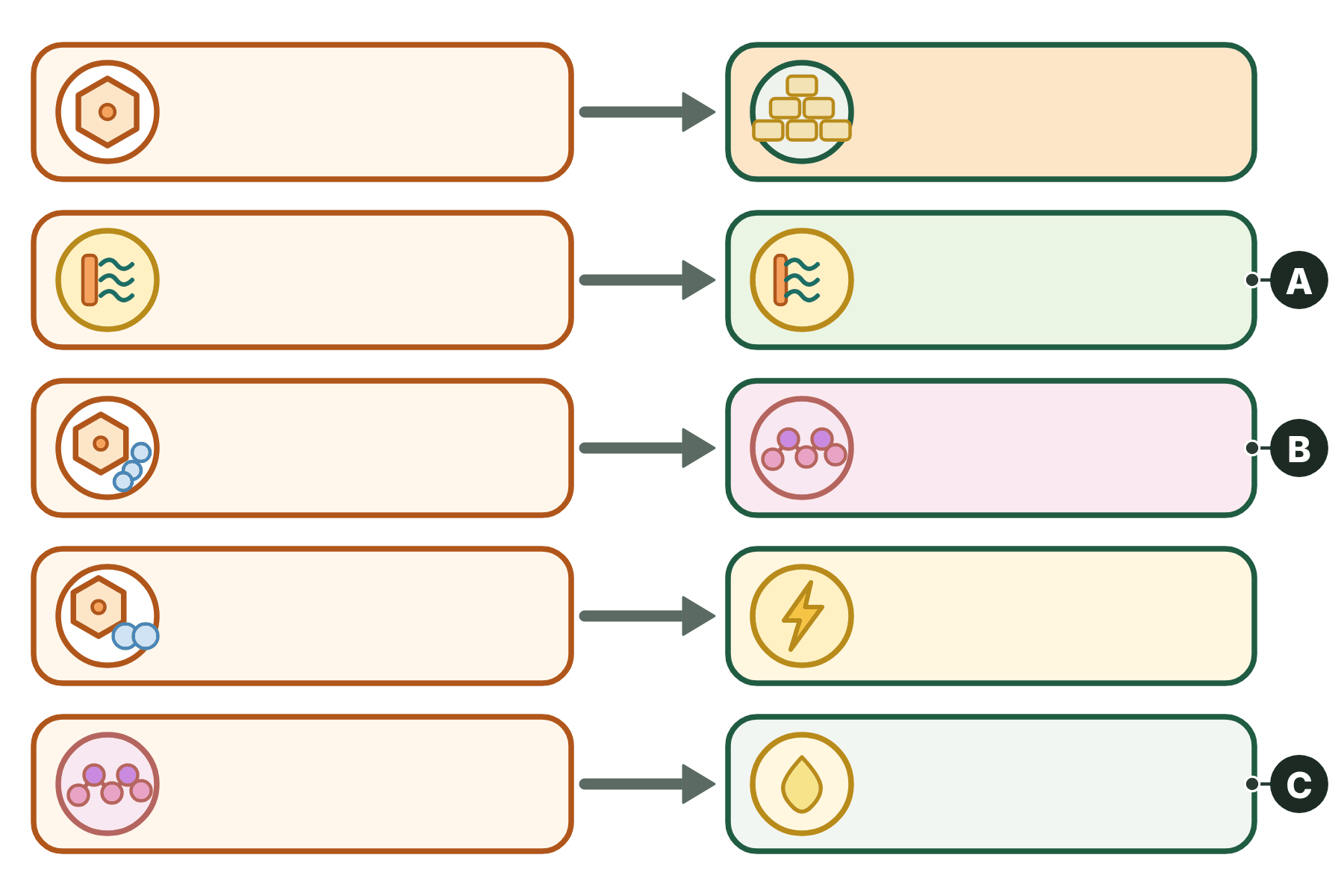
Figure 1 shows some of the reactions of metabolism. Name the substances made at A, B and C.
Show answerHide answer
Model answer
A is a lipid. B is amino acids (that are used to make proteins). C is urea.
Mark scheme
- A: lipid — 1 mark
- B: amino acids — 1 mark
- C: urea — 1 mark
-
3 Name [3 marks]
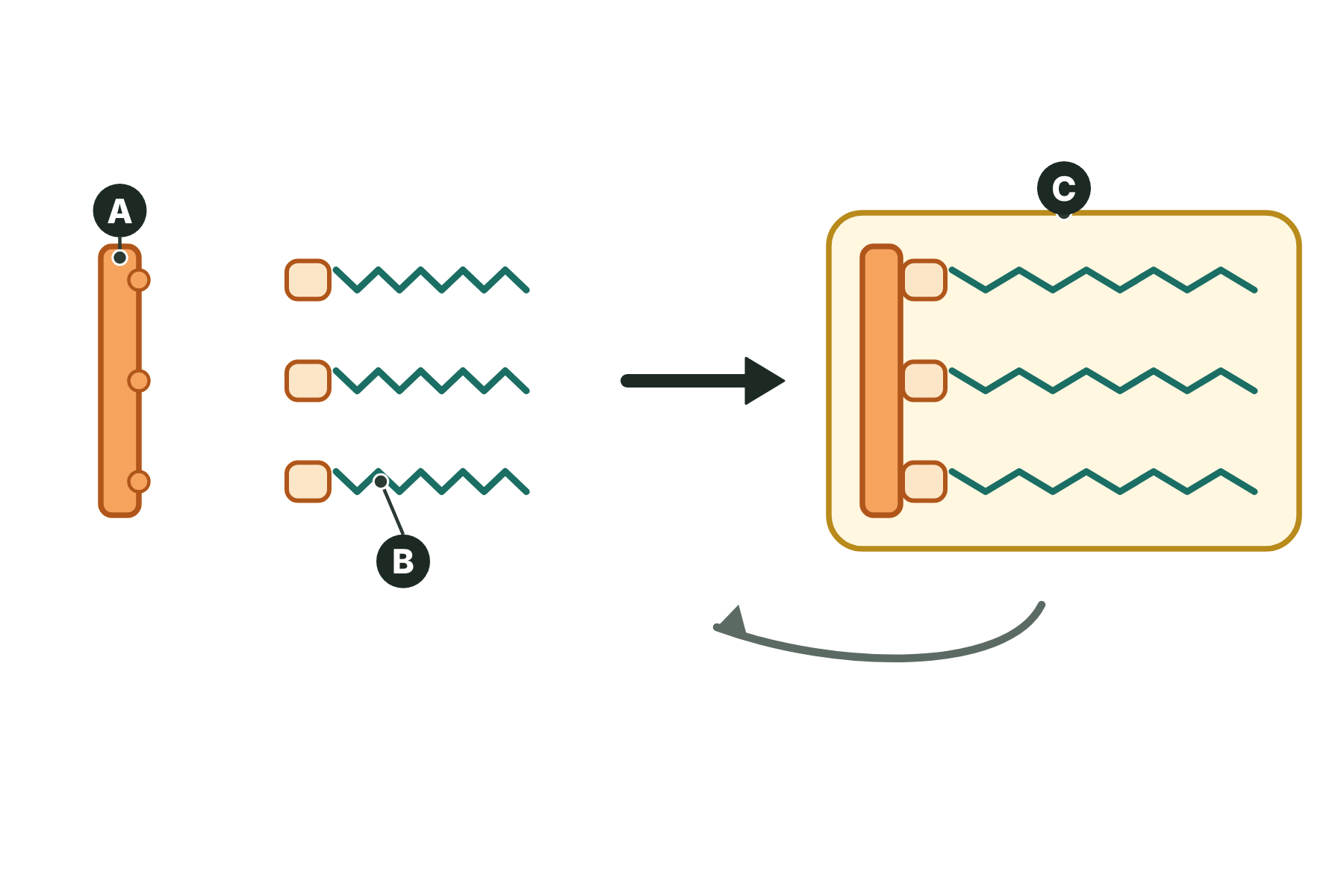
Figure 2 shows how a lipid molecule is made. Name the parts shown at A, B and C.
Show answerHide answer
Model answer
A is glycerol. B is a fatty acid. C is a lipid (molecule).
Mark scheme
- A: glycerol — 1 mark
- B: fatty acid — 1 mark
- C: lipid — 1 mark
-
4 Describe [3 marks]
Describe how a plant makes protein.
Show answerHide answer
Model answer
The plant uses glucose, made in photosynthesis, and nitrate ions from the soil to make amino acids. The amino acids are then joined together to make proteins. Energy from respiration is used.
Mark scheme
- Glucose and nitrate ions make amino acids — 1 mark
- Amino acids are joined to make proteins — 1 mark
- Energy from respiration is used — 1 mark
-
5 Explain [3 marks]
Explain why metabolism needs energy from respiration.
Show answerHide answer
Model answer
Many of the reactions of metabolism build large molecules from smaller ones, which is called synthesis. These reactions need energy. The energy is transferred by respiration.
Mark scheme
- Metabolism includes building (synthesising) new molecules — 1 mark
- These reactions need energy — 1 mark
- The energy is transferred by respiration — 1 mark
-
6 Explain [2 marks]
Explain why urea is made in the body.
Show answerHide answer
Model answer
The body cannot store excess protein, so it is broken down. The nitrogen is made into urea, which is excreted.
Mark scheme
- Excess protein is broken down — 1 mark
- To form urea for excretion — 1 mark
-
7 Explain [4 marks]
Explain the importance of sugars, amino acids, fatty acids and glycerol in the body.
Show answerHide answer
Model answer
Sugars are joined to make carbohydrates such as glycogen. Amino acids are joined to make proteins. Fatty acids and glycerol are joined to make lipids. They are also made when the large molecules are broken down again.
Mark scheme
- Sugars make carbohydrates — 1 mark
- Amino acids make proteins — 1 mark
- Fatty acids and glycerol make lipids — 1 mark
- They are produced when the molecules are broken down — 1 mark
Quick check
-
1
What is metabolism?
Show answerHide answer
B: The sum of all the reactions in a cell or the body
Metabolism is the sum of all the reactions in a cell or the body.
-
2
Which molecules join to make a lipid?
Show answerHide answer
C: One glycerol and three fatty acids
A lipid is made from one molecule of glycerol and three molecules of fatty acids.
-
3
Which substances are used to make amino acids in a plant?
Show answerHide answer
A: Glucose and nitrate ions
Glucose and nitrate ions are used to make amino acids.
-
4
What do animals store glucose as?
Show answerHide answer
D: Glycogen
Animals store glucose as glycogen, mainly in the liver and muscles.
-
5
What is made when excess protein is broken down?
Show answerHide answer
B: Urea
Excess protein is broken down to form urea, which is excreted.
-
6
What is the energy released by respiration used for in metabolism?
Show answerHide answer
C: To synthesise new molecules
Respiration transfers the energy used to synthesise new molecules.
-
7
Which molecule is made from amino acids?
Show answerHide answer
A: Protein
Proteins are made by joining amino acids.
-
8
Which carbohydrate strengthens plant cell walls?
Show answerHide answer
D: Cellulose
Cellulose is made from glucose and strengthens the cell walls of plants.