Flashcards · Biology · Communicable Diseases
Bacterial Diseases
-
How is salmonella food poisoning spread?
In food, or on food prepared in unhygienic conditions.
-
What are the symptoms of salmonella food poisoning?
Fever, abdominal cramps, vomiting and diarrhoea.
-
What causes the symptoms of salmonella poisoning?
The bacteria and the toxins they secrete.
-
How is salmonella controlled in the UK poultry industry?
Poultry are vaccinated against it.
-
Name one way to prevent salmonella at home.
Cook food thoroughly, wash hands, or keep raw and cooked food apart.
-
What is gonorrhoea?
A sexually transmitted disease caused by a bacterium.
-
What are the symptoms of gonorrhoea?
A thick yellow or green discharge and pain when urinating.
-
How is gonorrhoea spread?
By sexual contact.
-
How can the spread of gonorrhoea be controlled?
By treating with antibiotics and using a barrier method of contraception, such as a condom.
-
Which antibiotic used to treat gonorrhoea easily?
Penicillin.
-
Why is penicillin no longer enough for many cases of gonorrhoea?
Many resistant strains have appeared.
-
What is an STD?
A sexually transmitted disease.
-
What is cross-contamination?
Passing bacteria from raw food or dirty surfaces to other food.
-
Why should chicken be cooked thoroughly?
To kill any salmonella bacteria.
-
Which of the two diseases is spread by food?
Salmonella food poisoning.
-
 Describe how each disease is spread and controlled.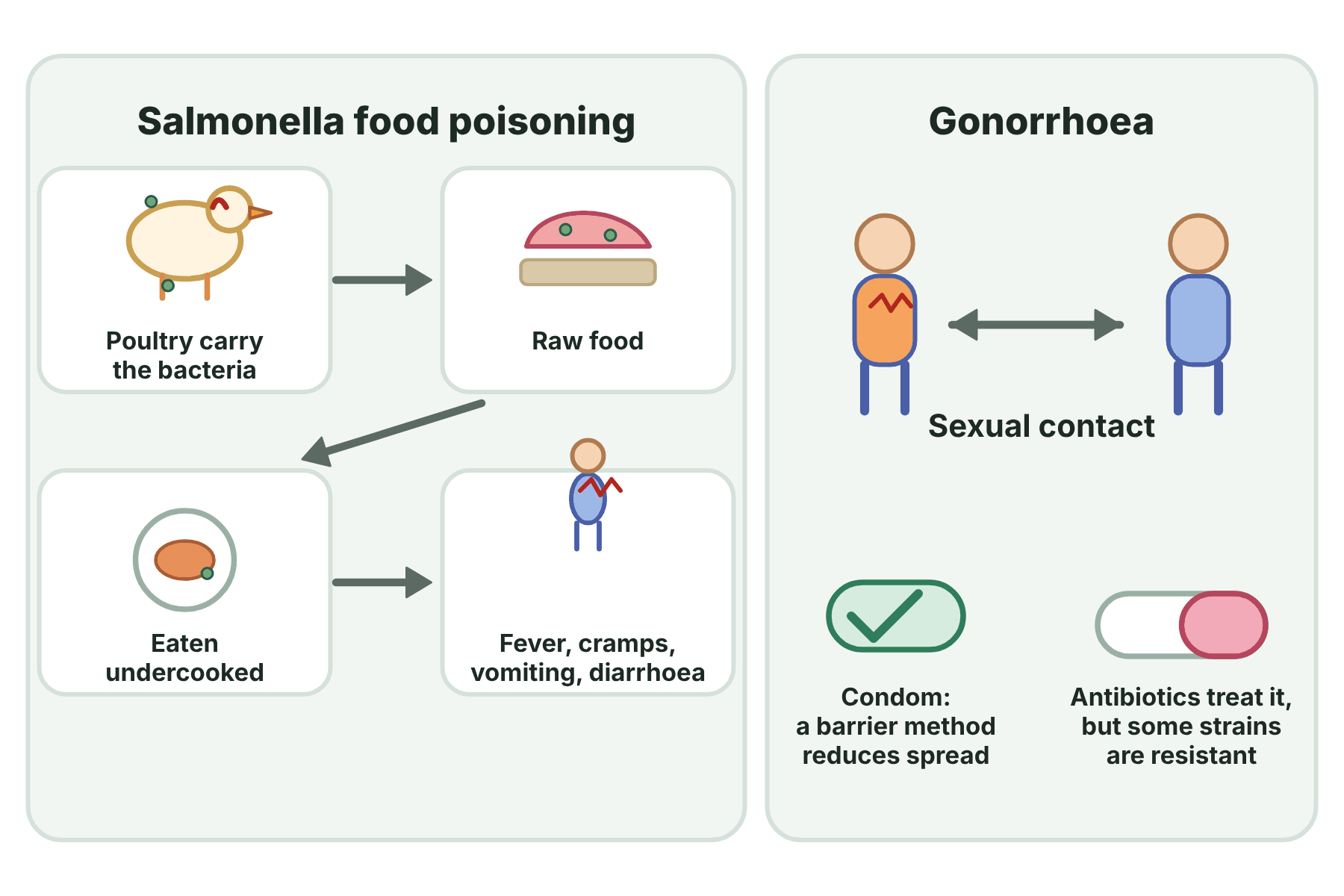
Salmonella is spread by poultry, raw food and undercooked meals, and is controlled by vaccinating poultry and hygiene. Gonorrhoea is spread by sexual contact and is controlled by condoms and antibiotics, although some strains are resistant.