Flashcards · Biology · Communicable Diseases
Fungal and Protist Diseases
-
What causes rose black spot?
A fungus.
-
What are the symptoms of rose black spot?
Purple or black spots on the leaves, which often turn yellow and drop early.
-
Why does rose black spot affect growth?
The damaged leaves photosynthesise less.
-
How is rose black spot spread?
By water and by wind.
-
How can rose black spot be treated?
With fungicides, and by removing and destroying the affected leaves.
-
What type of pathogen causes malaria?
A protist.
-
What are the symptoms of malaria?
Recurrent episodes of fever. It can be fatal.
-
What is the vector for malaria?
The mosquito.
-
How does a mosquito pass on malaria?
It takes up protists when it bites an infected person and passes them on when it bites someone else.
-
How can the spread of malaria be controlled?
Prevent mosquitoes breeding, and use mosquito nets.
-
Where do mosquitoes breed?
In standing water.
-
Why are nets useful?
They stop people being bitten.
-
Does the mosquito get malaria?
No. It only carries the protist.
-
Which of these affects plants, rose black spot or malaria?
Rose black spot.
-
What is a fungicide?
A chemical that kills fungi.
-
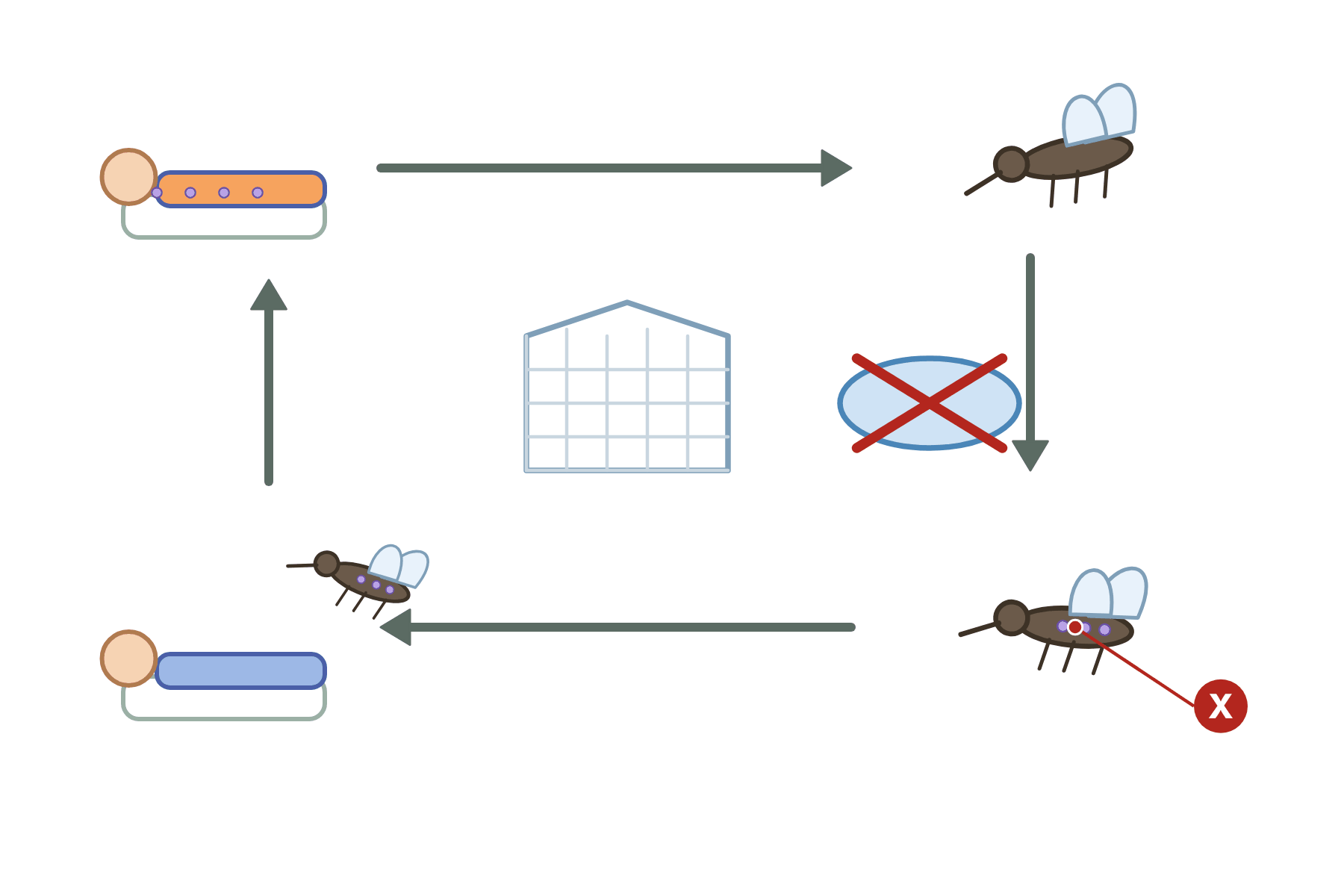 Name the part marked X and say what it does in spreading malaria.
 The mosquito. It is the vector that carries the protist from an infected person to a healthy person.
-
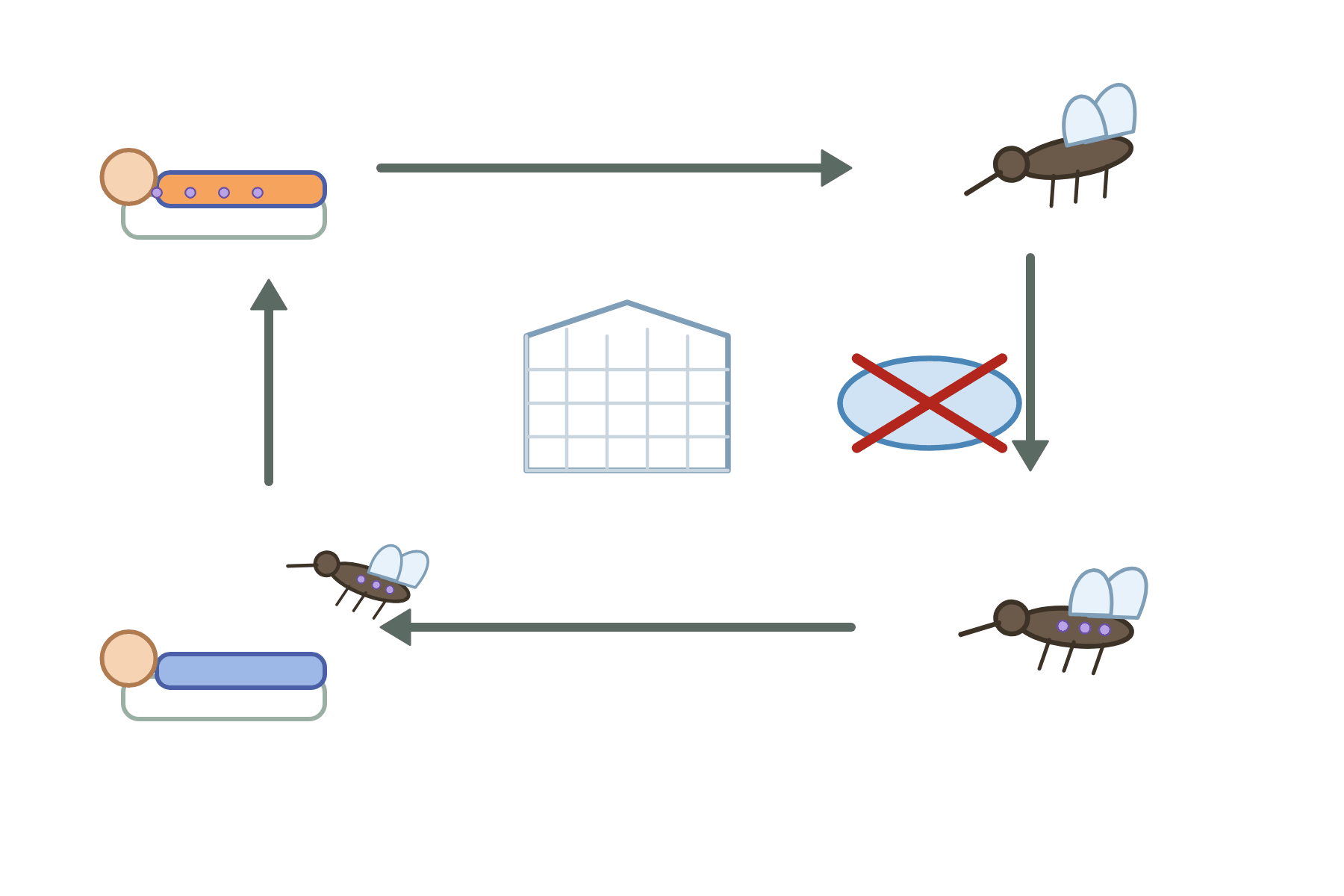 Describe each step in the spread of malaria.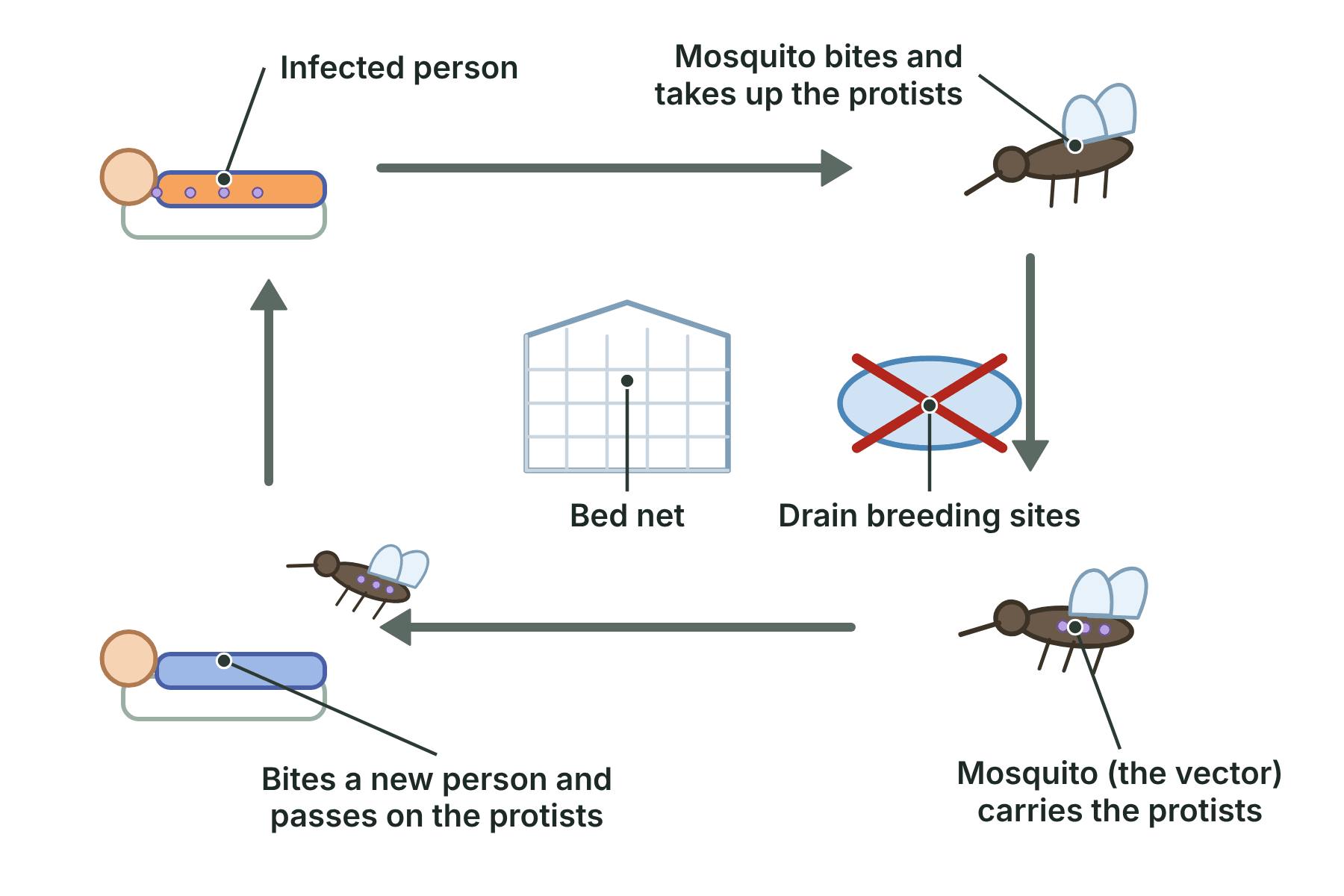
An infected person. A mosquito bites and takes up the protists. The mosquito, the vector, carries them. It bites a new person and passes them on. Nets and draining breeding sites control it.